
Your pool pump runs at 3,450 RPM for eight hours every day while you sleep, work, and travel. It does not know the water is already clean, the chemicals are balanced, and you are spending $90 more on electricity this month than you need to.
Pool automation fixes this problem by giving your equipment a brain. Instead of manual switches and guesswork timers, automation systems control pumps, heaters, lights, valves, and chemical feeders based on actual conditions, not a clock. This guide covers every major pool automation system, controller type, and integration option available for residential pools. It explains what automation actually controls, how much it costs installed, and whether the savings justify the upfront price for pools from 5,000 to 40,000 gallons.
| Photo | Best Above-Ground Pools | Price |
|---|---|---|
|
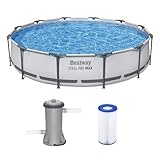
Bestway Steel Pro MAX 12' x 30" Above Ground Swimming Pool Set with Pump | Durable Round Metal Frame Outdoor Backyard Pool, Puncture-Resistant Liner - Type III A/C Filter Cartridge Included, Gray | Check Price On Amazon |
|
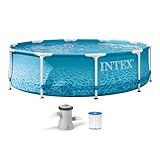
INTEX 28207EH 10ft X 30in Beachside Metal Frame Above Ground Swimming Pool Set, Includes 330 GPH Cartridge Filter Pump, Puncture-Resistant Material, Rust Resistant, 1185 Gallon Capacity | Check Price On Amazon |

|
H2OGO! Kids Splash-in-Shade 8-Foot Round Steel Frame Above Ground Pool with Water Mister and Canopy Sunshade, Green Tropical Leaf Print | Check Price On Amazon |
By the Numbers
Pool Automation Adoption and Savings — What the Research Shows
Sources: EPA EnergyStar, PHTA Industry Reports, Pentair Energy Calculator
What Is Pool Automation and How Does It Work?
Pool automation is a control system that manages pool equipment electronically instead of manually. It replaces individual switches, mechanical timers, and manual valve adjustments with a central controller that runs pumps, heaters, lights, salt chlorine generators, water features, and chemical feeders from a single interface.
This happens because automation controllers use low-voltage signals and relay switches to turn high-voltage equipment on and off based on programmed schedules, sensor readings, or user commands from a smartphone app. The controller brain is a circuit board inside a weatherproof enclosure, typically mounted on the equipment pad wall.
A basic system controls two to four devices. Advanced systems manage eight or more. Every automation controller includes a user interface (a physical panel, wireless remote, or smartphone app), one or more relay banks for switching equipment, and communication ports for connecting sensors and accessories.
According to the Pool and Hot Tub Alliance (PHTA) technical standards, automation controllers must be listed to UL 1563 for safety. Installers mount the controller within 15 feet of the pump and filter, inside a NEMA-rated enclosure that protects against rain, dust, and chlorine off-gassing from nearby chemical storage.
What Does a Pool Automation System Control?
A pool automation system controls every electrically powered device connected to your pool equipment pad. Pump speed and run time are the most common targets. Heater temperature, valve positions for water features, pool lights, landscaping lights, salt chlorine generators, chemical feeders, and even covers on motorized tracks all connect to the same controller.
This only works correctly when each piece of equipment is compatible with the automation brand you choose. A Pentair IntelliFlo pump communicates natively with a Pentair IntelliCenter controller using RS-485 digital protocol. The same pump connected to a Hayward OmniLogic controller may need an adapter or may not communicate pump status back to the controller at all.
Most systems also accept inputs from sensors. A flow sensor confirms water is moving before the heater fires. A temperature sensor in the return line lets the controller modulate the heater. An ORP sensor measures oxidation-reduction potential in millivolts and triggers a chlorine feeder to add sanitizer when the reading drops below 650 mV. A water level sensor tells an autofill valve to top off the pool.

- Intelligent Navigation with Full Coverage: Equipped with 11 high-precision sensors and enhanced dual-path algorithms. The optimized WavePath cleaning pattern ensures systematic coverage with minimal overlap, while adaptive navigation analyzes pool layout in real time to eliminate missed spots
- Dual Filtration for Crystal-Clear Water: Advanced dual-layer filtration system features a replaceable 3-micron ultra-fine filter paired with a 180-micron standard filter. Effectively captures fine dust, sand, leaves, and debris for visibly cleaner and healthier pool water
- Comprehensive Pool Cleaning: Engineered to clean the pool floor, walls, waterline, and shallow areas (above 12 inches). The Caterpillar Treads system enhances mobility and climbing ability, ensuring thorough coverage across all pool zones
- Reliable Performance with 2-Year Warranty: Trusted by over 500,000 pool owners worldwide, this robotic pool cleaner delivers consistent, high-performance results. Built for durability and backed by a 2-year warranty and responsive customer support for worry-free ownership
If any sensor fails or reports an out-of-range value, the automation system must shut down the affected equipment and send an alert to the owner’s phone. A flow sensor that falsely reports zero flow will prevent a gas heater from firing, protecting the heat exchanger from meltdown damage that costs $1,200 to $2,500 to replace.
According to the Pentair IntelliCenter installation manual, a properly configured system monitors equipment status every 500 milliseconds and logs error codes that service technicians use to diagnose problems before making a service call.
Quick Reference
Pool Automation — Key Terms Explained
Quick reference for the terms used throughout this guide
A digital communication protocol used by all major automation brands. Lets the controller send commands to and receive data from pumps, chlorinators, and valve actuators.
An electrically operated switch inside the controller that turns 120V or 240V equipment on and off. Each relay controls one device.
A small motorized unit that mounts on top of a PVC diverter valve and rotates it 90 or 180 degrees on command from the automation controller.
Oxidation-Reduction Potential sensor that measures the water’s sanitizing power in millivolts. A reading of 650-750 mV typically corresponds to proper free chlorine levels.
National Electrical Manufacturers Association rating for electrical enclosures. Pool automation controllers require NEMA 3R or 4X rating for outdoor use.
The main power distribution panel at the pool equipment pad where circuit breakers and the automation controller are installed together.
A relay output that closes or opens a circuit without supplying power. Used to trigger external devices like cover motors or alarm systems.
Unit of measurement for chemical concentration in pool water. Free chlorine at 2-4 ppm is the standard target range for residential pools.
Flow rate measurement. A 20,000-gallon pool needs roughly 50 GPM to achieve one complete turnover in 6.7 hours.
Salt Water Chlorine Generator. Produces chlorine from dissolved salt using electrolysis. Must be integrated with automation to adjust output based on demand.
A schedule runs equipment at fixed times. A trigger responds to sensor input like temperature, flow, or chemical readings regardless of time.
How Much Does Pool Automation Cost Installed?
A complete pool automation system costs between $1,200 and $4,500 installed for a basic setup controlling pump, heater, lights, and one water feature. Entry-level systems like the Hayward AquaPlus or Pentair EasyTouch start near the low end. Premium systems like the Pentair IntelliCenter or Jandy Aqualink RS with full smartphone integration and chemical sensing push toward the upper end.
Installation labor adds $400 to $1,200 depending on the number of relays, valve actuators, and communication wiring required. Electricians charge $85 to $150 per hour, and a basic four-relay installation with two valve actuators typically takes four to six hours.
This price only applies when the pool pump is already a variable speed model compatible with the controller. If you need to upgrade from a single-speed pump to a variable speed pump at the same time, add $800 to $1,400 for the pump plus $300 to $500 for installation labor and PVC plumbing modifications.
According to EnergyStar data, a variable speed pump upgrade adds $600 to $900 in annual electricity savings. Combined with automation that optimizes pump run time to match actual filtration needs rather than a fixed 8-hour schedule, the full system including pump pays for itself in roughly two to three years at average residential electricity rates of 12 cents per kilowatt-hour.
Cost Reference
Pool Automation — Cost Per Year by System Tier and Pool Size
All values include equipment and installation. Find your system tier and pool size.
| System tier ↓ Pool size → | 10K gal | 20K gal | 30K gal | 40K gal |
|---|---|---|---|---|
| Basic — 4 relays, no chem | $1,500 2.1 yr payback |
$1,700 2.4 yr payback |
$1,900 2.7 yr payback |
$2,100 3.0 yr payback |
| Mid-range — 6 relays + ORP/pH | $2,800 2.8 yr payback |
$3,200 3.2 yr payback ★ most common |
$3,600 3.6 yr payback |
$4,000 4.0 yr payback |
| Premium — 8+ relays full chem | $4,500 4.5 yr payback |
$5,200 4.8 yr payback |
$5,800 5.1 yr payback |
$6,400 5.5 yr payback |
Payback calculated assuming 12¢/kWh electricity rate and single-speed pump baseline of $1,000/yr. ★ highlights the most common reader scenario.
Top Pool Automation Systems: Pentair vs Hayward vs Jandy Compared
Use the table below to compare the three major residential pool automation brands across every factor that affects daily use and long-term reliability.
Product Comparison
Pentair IntelliCenter vs Hayward OmniLogic vs Jandy Aqualink RS
Side-by-side comparison of the three major automation platforms
| Feature | Pentair IntelliCenter | Hayward OmniLogic | Jandy Aqualink RS |
|---|---|---|---|
| Controller price | $1,200-$1,800 | $1,100-$1,600 | $1,000-$1,500 |
| Max relays | 10 (expandable to 40+) | 8 (expandable to 20) | 8 (expandable to 32) |
| Smartphone app | Pentair Home (free) | OmniLogic app (free) | iAquaLink (free) |
| Chemical sensing | IntelliChem (ORP + pH) | Sense and Dispense (ORP + pH) | TruGuard or PURELINK |
| Best for | Large complex pools with many features | Mid-size pools with salt systems | Budget-conscious buyers wanting proven reliability |
| Our verdict | Best overall for expandability | Best value for Hayward ecosystem users | Best entry-level price point |
Prices verified at time of publication. Controller price includes base unit with 4 relays and load center.
For the most common residential scenario of a 15,000 to 25,000 gallon pool with a heater, salt chlorine generator, and two water features, the Pentair IntelliCenter i5P or i8P package provides the best balance of expandability and value. The system communicates natively with Pentair IntelliFlo variable speed pumps using RS-485 protocol without adapters.
The Hayward OmniLogic works best when the pool already has a Hayward salt system and Hayward variable speed pump installed. Mixing brands forces reliance on dry contact relays that turn equipment on and off but cannot adjust pump speed, heater temperature, or chlorinator output remotely. For a deeper explanation of how automation systems communicate with each piece of equipment, read our beginner’s guide to how pool automation wiring and protocols work.
Is Pool Automation Worth the Money? A Cost vs Savings Analysis
Pool automation is worth the upfront cost when the pool has a gas heater or heat pump, a variable speed pump, and at least two accessory features like lights or water features. The combination of energy savings from optimized pump scheduling and reduced chemical waste from automated dosing creates a payback period of 18 to 30 months for most mid-range installations.
For a 20,000-gallon pool with a 1.5 HP variable speed pump and gas heater, the annual savings break down this way. Pump electricity drops from $1,000 per year at single-speed full rpm to $250 per year at optimized automated speeds. Heater runtime drops 30% because the automation only heats to the set temperature when the pool is scheduled for use—use our pool heater calculator to size your heater correctly and maximize savings. Chemical costs drop $150 to $300 per year because automated ORP and pH control prevents overfeeding.
Total annual savings run $600 to $900. Against a mid-range system cost of $1,800 to $3,200 installed, the payback arrives in 2 to 3.5 years. After that, the system produces net positive cash flow for its remaining 10 to 15 year lifespan. For the detailed breakdown of where the time and money savings come from, refer to our complete guide on pool automation time and money savings with real homeowner examples.
Pools without heaters or with single-speed pumps see much longer payback periods. A basic relay-only automation system controlling lights and a single-speed pump saves very little electricity because the pump must run at full speed whenever it operates. The convenience of smartphone control and scheduled lighting has value, but the financial return is minimal. For these pools, automation is a luxury purchase rather than a cost-saving investment.
Buying Guide
Before You Buy — Pool Automation Checklist
Check off each point before making your decision.
How to Automate Chemical Control: ORP and pH Management
Chemical automation uses sensors and dosing pumps to maintain chlorine and pH at target levels without daily testing or manual chemical additions. An ORP sensor measures the water’s oxidation-reduction potential in millivolts, which correlates to the sanitizing power of free chlorine. A pH sensor measures acidity on the standard 0 to 14 scale.
This happens because the sensor readings feed into the automation controller, which activates peristaltic pumps or solenoid valves to inject liquid chlorine or acid into the return line. The ORP target for residential pools is 650 to 750 millivolts, corresponding to roughly 2 to 4 ppm free chlorine (use our chlorine calculator to determine your exact dosage needs) when cyanuric acid is maintained at 30 to 50 ppm.
The mechanism behind ORP-based control is electrochemical. Chlorine molecules accept electrons from contaminants, creating an electrical potential that the sensor measures across platinum and reference electrodes. Higher ORP values mean stronger sanitizing power. The condition for accurate measurement requires pH to be below 7.8, because chlorine’s oxidation potential decreases sharply as pH rises above this threshold.
If pH climbs above 7.8, the ORP reading drops even when free chlorine ppm is adequate. The controller interprets the low ORP as insufficient sanitizer and doses more chlorine, creating a feedback loop of overfeeding and chemical waste. Fix this by testing pH weekly with a Taylor K-2006 liquid drop test kit and adding muriatic acid to bring pH down to 7.4 before relying on ORP readings for chlorine control.
According to NSF/ANSI 50 standards for chemical feeding equipment, automated chemical controllers must include a flow switch that prevents dosing when no water circulates. A peristaltic pump injecting chlorine into stagnant water creates a localized concentration high enough to damage PVC pipe and pool finish. The Pentair IntelliChem system includes this safety interlock as a standard feature.
Myth vs Fact
Pool Automation — Common Myths Debunked
Separating fact from fiction on the most common automation misconceptions
✗ Myth
Automation eliminates the need to test pool water manually.
✓ Fact
ORP and pH sensors drift over time and require weekly calibration against a liquid drop test kit. Sensor failure or fouling produces false readings that lead to under-dosing or over-dosing. Manual testing remains essential for verifying sensor accuracy.
✗ Myth
Any brand of automation controller works with any brand of pool equipment.
✓ Fact
True digital communication between pump and controller requires matching RS-485 protocols. Mixing brands usually limits control to simple on/off relay switching. The pump runs at its last manually set speed and the controller cannot throttle it up or down.
✗ Myth
Automation always saves money on a pool with a single-speed pump.
✓ Fact
A single-speed pump draws the same wattage at all times. Automation can reduce total run hours but cannot reduce the energy cost per hour of operation. The financial payback from automation comes primarily from variable speed pump control, not from scheduling alone.
✗ Myth
DIY installation of pool automation is straightforward for a handy homeowner.
✓ Fact
Automation controllers involve 120V and 240V wiring inside the load center, low-voltage communication wiring to the equipment pad, and configuration of RS-485 protocols. Mistakes cause equipment damage, voided warranties, or electrical shock hazards. Licensed electricians with pool experience are recommended.
✗ Myth
A basic mechanical timer is just as effective as an automation system.
✓ Fact
Timers run equipment on a fixed schedule regardless of weather, water temperature, or chemical demand. An automation system with a freeze protection sensor shuts off equipment when temperatures approach 32°F to prevent freeze damage. Timers cannot adapt to changing conditions.
Smart Pool Controllers: WiFi, App Control, and Voice Integration
Modern pool automation controllers connect to home WiFi networks and offer smartphone apps that replicate every function of the physical control panel. The Pentair Home app, Hayward OmniLogic app, and Jandy iAquaLink all provide pump speed control, heater temperature adjustment, light color selection, and chemical level monitoring from anywhere with an internet connection.
This connectivity requires the controller to maintain a stable WiFi connection to a 2.4 GHz network. The equipment pad location often sits 30 to 80 feet from the house in a metal enclosure that partially blocks wireless signals. A WiFi range extender or mesh network node placed inside the house nearest the equipment pad solves most connection problems.
Voice control integration works through Amazon Alexa and Google Home for basic commands. You can say “Alexa, turn on the pool lights” or “Hey Google, set the spa to 102 degrees.” The automation controller receives these commands through its cloud server connection, not directly from the voice assistant. A stable internet connection is required for voice control to function.
For pools with Pentair color LED pool lights, the app provides a color wheel interface to select from millions of colors and create light shows that cycle through pre-programmed sequences. The automation controller sends digital commands through the same RS-485 bus that controls the pump, switching the LED driver between color modes without a separate lighting controller.
For a complete look at pool lighting options and how automation controls them, see our detailed LED lighting guide covering types, colors, and best product picks for automated pools.
DIY Pool Automation vs Professional Installation: What To Know
Professional installation is the recommended path for pool automation because the work spans both high-voltage electrical wiring and low-voltage communication cabling. A licensed electrician pulls permits, installs the controller load center with proper circuit breakers, and wires each relay to the equipment it controls. The electrician also bonds the automation enclosure to the pool bonding grid per NEC Article 680.
DIY installation is possible for homeowners with electrical experience and comfort working inside a live breaker panel. The risks include incorrect breaker sizing, reversed hot and neutral conductors, missing GFCI protection on pump circuits, and failure to bond the metal enclosure. Any of these mistakes creates a shock hazard around water and voids the manufacturer warranty on the controller.
For a complete step-by-step breakdown of the DIY path including required tools, permit requirements, and when professional help is mandatory, read our guide on DIY pool automation installation versus hiring a professional electrician.
The controller configuration after wiring is less hazardous but equally complex. Naming each relay, setting pump speeds for each circuit, programming schedules, and calibrating chemical sensors requires understanding the specific automation brand’s setup menu structure. Most pool service companies charge $200 to $400 for initial configuration and owner training.
Interactive Tool
Where Do You Fall on the Pool Automation Spectrum?
Slide to your budget and feature preference — your recommendation updates instantly.
Premium / Fully Loaded
Pool Automation With Water Features and Lighting Control
Water features like waterfalls, deck jets, bubblers, and laminar fountains require automated valve control to switch between different operating modes. A valve actuator mounts on a PVC diverter valve and rotates it 90 or 180 degrees when the automation controller sends a 24V AC signal. This lets you switch from normal pool circulation to waterfall mode from a smartphone.
Each water feature circuit uses one valve actuator and one relay for the feature pump if a dedicated pump is installed. A pool with a waterfall, three deck jets, and two bubblers might use three valve actuators, one relay for the feature pump, and programming to coordinate which features activate together. For detailed costs and installation methods for automated water features, read our guide on pool water features and waterfalls including types and installation costs.
Lighting automation controls both pool lights and landscape lighting around the pool area. Basic automation turns lights on and off on a schedule. Advanced systems with color LED lights sync multiple light fixtures to the same color or light show mode. The Jandy WaterColors LED engine and Pentair Microbrite lights both accept color commands through the automation RS-485 bus.
Lighting automation also extends to practical safety. Automating pool lights to turn on at sunset and turn off at 11 PM ensures the pool area is visible during evening use without wasting electricity overnight. A simple astronomical timer function built into most controllers handles this without programming skills.
How Pool Automation Prevents Equipment Damage and Extends Lifespan
Automation protects expensive pool equipment by monitoring operating conditions and shutting down devices before damage occurs. Freeze protection is the most valuable safety feature. When the air temperature sensor reads 35°F or below, the automation controller activates the pump and, if programmed, the heater to circulate water and prevent ice from forming inside pipes and heat exchangers.
This happens because water expands by approximately 9% when it freezes. Standing water in a pump housing, filter tank, or heater manifold can crack cast metal and PVC components when ice forms, causing leaks that cost $500 to $2,500 to repair. The automation controller runs the pump continuously at low speed during freeze conditions, consuming only 150 to 300 watts at 1,200 RPM while protecting thousands of dollars of equipment.
The mechanism also protects heaters through flow verification. A flow sensor in the return line confirms water is moving at least 20 GPM before the controller sends the fire command to the gas valve. If flow drops below this threshold while the heater operates, the controller cuts power to the gas valve within 2 seconds to prevent heat exchanger damage from dry firing.
If the flow sensor fails or is incorrectly bypassed, the heater will fire with no water flowing. The copper heat exchanger reaches temperatures above 500°F internally and deforms within 30 seconds. Replacement cost for a heat exchanger on a 400,000 BTU gas heater runs $1,200 to $2,500 including labor. A properly configured automation system prevents this failure mode entirely.
For information on other pool equipment that benefits from automated control and protection, consult our complete swimming pool equipment guide covering every major component from pumps to heaters.
Step-by-Step Guide
How to Set Up Freeze Protection on Your Automation Controller
5 steps · Takes about 20 minutes at the control panel
Locate the freeze protection menu
On Pentair IntelliCenter, go to Settings > Advanced > Freeze Protection. On Hayward OmniLogic, go to Configuration > Freeze Protection. On Jandy Aqualink, navigate to System Setup > Freeze Protection.
Enable freeze protection on the filter pump circuit
Toggle freeze protection to ON for the main filter pump relay. Set the activation temperature to 35°F. The pump will run at the speed you designate when freeze protection activates.
Add auxiliary circuits that need protection
Enable freeze protection on any circuit with water flowing through it. This includes water feature pumps, booster pumps for pressure cleaners, and spa jet pumps. Do not enable on air blowers or lights.
Set the pump speed for freeze protection mode
Assign a pump speed between 1,200 and 1,800 RPM for freeze protection. This speed moves enough water to prevent ice formation while consuming minimal electricity. Most 1.5 HP variable speed pumps draw 150 to 300 watts in this range.
Test the system before winter arrives
Lower the activation temperature temporarily to 60°F to verify all protected circuits activate. Return to 35°F after testing. Run this test in late fall before the first freeze of the season to catch misconfigured circuits.
How Much Electricity Does Pool Automation Save Per Year?
Pool automation combined with a variable speed pump saves $600 to $900 per year on electricity for a 20,000-gallon pool, compared to a single-speed pump running on a mechanical timer. The savings come from running the pump at lower speeds for longer periods rather than at full speed for a shorter window. Hydraulic law dictates that pump power consumption changes with the cube of the speed ratio.
A pump running at half speed (1,725 RPM instead of 3,450 RPM) draws approximately one-eighth the power. Moving the same daily water volume at 1,500 RPM for 12 hours instead of 3,450 RPM for 6 hours reduces daily energy consumption from 12 kWh to 3 kWh. At 12 cents per kWh, that is $985 per year versus $263 per year.
Automation increases these savings by matching pump run time to actual filtration demand. On cool days with no swimmers, the pool needs less filtration. The automation controller integrates with a temperature sensor and can reduce run time when the water is cold and algae growth slows. Smart scheduling that adjusts run time seasonally adds another 10 to 15% savings beyond a fixed schedule.
A Pentair IntelliFlo VSF variable speed pump running on an IntelliCenter automation system averages $250 to $350 per year in electricity for a typical 20,000-gallon pool in a moderate climate. The same pool with a 1.5 HP single-speed pump running 8 hours daily costs $900 to $1,100 per year. The automation plus pump upgrade pays for both itself and the controller within 2 to 3 years.
Energy Efficiency Standards: What EnergyStar and CARB Require
The EPA EnergyStar program certifies pool pumps that meet minimum efficiency thresholds. Certified variable speed pumps must demonstrate at least 30% energy savings compared to a baseline single-speed pump at equivalent daily turnover. The California Energy Commission (CARB) requires all new residential pool pumps sold in California to be variable speed or dual-speed, effectively banning single-speed pump sales.
These regulations drive the economics of automation adoption. A single-speed pump cannot legally be sold as a replacement in California as of current CARB standards. Any pool automation installation that includes a pump upgrade will use a variable speed pump by default, which unlocks the full energy savings potential of automated speed control and scheduling.
According to EnergyStar market data, a certified variable speed pump saves an average of $500 per year compared to a single-speed pump when paired with automation that optimizes the daily run schedule. Over the 10 to 12 year typical lifespan of a residential pool pump, lifetime savings reach $5,000 to $6,000 in electricity costs alone.
This means the pump and automation system pay for themselves roughly three times over during their usable life, even before accounting for reduced chemical costs, extended equipment life from better water management, and the convenience value of smartphone control and monitoring.
How Long Does Pool Automation Equipment Last?
Pool automation controllers last 10 to 15 years with proper installation in a weather-protected location. The circuit boards inside the enclosure are the most vulnerable component. Surge damage from lightning strikes or utility switching events can destroy the controller's main board instantly. A whole-house surge protector at the main electrical panel reduces this risk significantly.
Valve actuators last 5 to 8 years under normal use. The internal gears and microswitches wear with each rotation cycle. An actuator that rotates twice daily for a water feature will outlast one that cycles 10 times daily for a pool and spa combination. Replacement actuators cost $120 to $200 each and take 15 minutes to swap with the old unit.
ORP and pH sensors last 1 to 3 years depending on water chemistry and cleaning frequency. Sensors exposed to consistently balanced water at pH 7.4 to 7.6 last longer than those in pools that swing between 7.0 and 8.0. Cleaning sensors monthly with a soft brush and calibrating them against a liquid drop test kit every 2 to 4 weeks extends sensor life and maintains dosing accuracy.
For pools with Hayward AquaRite salt chlorine generator cells controlled by automation, the salt cell lasts 3 to 7 years or approximately 10,000 operating hours. The automation controller tracks cell runtime and notifies the owner when replacement is approaching. Without automation, many salt cell failures go unnoticed until algae appears.
What Are The First Steps To Automating an Existing Pool?
Start by identifying which brand of equipment you already own. If you have a Pentair pump, Pentair heater, and Pentair salt system, choose a Pentair automation controller. Matching brands eliminates compatibility issues and enables full digital control rather than basic on/off relay switching.
Next, decide how many relays you need. Count every device that requires independent control. The filter pump uses one relay. The pool light uses one. The heater uses one relay if it draws power separately from its own circuit. Each water feature pump uses one. Add two spare relays for future expansion. A typical pool needs 4 to 6 relays minimum.
Hire a licensed electrician who has installed pool automation before. Ask specifically about experience with the brand you chose. Request a load calculation to verify your existing subpanel at the equipment pad has sufficient capacity for the automation load center. Pull an electrical permit through your city or county building department.
Install the controller, then configure the schedules and settings. Program the daily pump schedule, set freeze protection thresholds, calibrate chemical sensors if included, and connect the system to WiFi. Test every circuit individually before relying on automated operation. For help with the installation decision, see our detailed comparison of DIY versus professional pool automation installation.
How Do I Know If My Pool Pump Is Compatible With Automation?
Variable speed pumps manufactured after 2010 by Pentair, Hayward, or Jandy almost always include RS-485 communication ports for automation integration. Look for a small rectangular connector on the pump motor with four screw terminals labeled COM, A, B, and sometimes C or GND. This connector allows the pump to receive speed commands from an automation controller of the same brand.
Single-speed pumps cannot communicate digitally with automation systems regardless of brand. They can only be controlled by a relay that turns the pump on and off at full speed. If energy savings are a primary goal of adding automation, replace a single-speed pump with a variable speed model at the same time.
Cross-brand compatibility using dry contact relays is possible but limited. A Pentair automation controller can turn a Hayward variable speed pump on and off using a relay, but it cannot change the pump speed. The pump will run at the last speed manually set on the pump's onboard control panel. This setup provides scheduling but eliminates the largest source of energy savings.
When replacing pool lights as part of an automation project, our guide on pool light bulb and full fixture replacement covers the electrical safety steps and fixture options that work with automated control systems.
Will Automation Work With My Existing Salt Chlorine Generator?
Yes, if the salt chlorine generator and automation controller are the same brand. A Pentair IntelliChlor salt cell connects to a Pentair IntelliCenter using a dedicated RS-485 port and the controller adjusts chlorine output as a percentage from 0 to 100 based on ORP sensor readings or manual setting. The controller also monitors salt level, water temperature, and cell status through the same connection.
A Hayward AquaRite salt system works with Hayward OmniLogic automation. Jandy AquaPure works with Jandy Aqualink. Mixing brands typically requires running the salt system independently at a fixed output percentage and using a separate timer. The automation controller cannot adjust chlorine output in response to changing demand.
The integration also enables the controller to reduce chlorine production when the pump runs at low speed, preventing gas buildup in the cell. Salt chlorine generators produce chlorine gas that must be carried away by water flow. At very low pump speeds below 800 RPM, flow through the cell may be insufficient and the cell can overheat. Automation that links pump speed and chlorine output prevents this failure.
Do You Need Automation For a Small Above-Ground Pool?
Above-ground pools under 10,000 gallons see a longer payback period for automation because the absolute dollar savings are smaller. A variable speed pump upgrade on a 5,000-gallon pool saves $150 to $250 per year in electricity compared to a single-speed pump. Adding automation for $1,200 to $1,800 extends the payback to 6 to 10 years, which may exceed the remaining life of the pool equipment.
Above-ground pools also typically lack gas heaters and multiple water features, reducing the number of devices that benefit from automated control. A simple plug-in timer that controls the pump and a separate switch for the pool light costs $30 to $50 and provides basic scheduling without the cost of a full automation system.
The exception is above-ground pools used frequently with attached spas or expensive heating systems. If an above-ground pool has a heat pump that costs $400 to $600 per year to operate, automating the heater to run only during off-peak electricity hours and on a usage-based schedule can produce meaningful savings that justify the controller cost.
Can I Use Bleach Instead of Pool Chlorine With an Automated Chemical Feeder?
Liquid chlorine in the form of sodium hypochlorite at 10% to 12.5% concentration is chemically identical to the chlorine produced by a salt chlorine generator and is compatible with automated peristaltic dosing pumps. Pool-grade liquid chlorine contains no calcium or cyanuric acid, avoiding the buildup of these stabilizers that eventually require partial draining to correct.
Household bleach at 6% to 8.25% concentration contains the same active ingredient but at lower strength. Using household bleach in an automated chemical feeder requires calibrating the pump run time to deliver the required dose at the lower concentration. The dose calculation is straightforward: to raise 10,000 gallons by 1 ppm free chlorine, add 13 ounces of 10% liquid chlorine or 20 ounces of 6% bleach.
The critical safety rule for automated chemical feeders: never store acid and chlorine containers adjacent to each other. Accidental mixing produces chlorine gas, which is toxic at concentrations above 0.5 ppm in air and can cause severe respiratory injury. Automated acid dosing pumps for pH control should be mounted on the opposite side of the equipment pad from chlorine pumps, with separate containment trays under each pump to catch leaks.
According to the CDC Healthy Swimming guidelines, any automated chemical feeding system must include a flow switch that prevents injection when the circulation pump is off. Stenner peristaltic pumps are the most common brand for residential automated chemical dosing and include this safety feature as standard.
Why Does My Automated Pool Keep Losing WiFi Connection?
Most pool automation WiFi disconnection problems stem from signal strength at the equipment pad. The controller is mounted inside a metal enclosure, typically 30 to 80 feet from the nearest interior wall of the house. Metal reflects and absorbs 2.4 GHz WiFi signals. A WiFi signal that measures three bars at the back door may drop to zero bars inside the metal controller box.
Fix this by installing a TP-Link outdoor WiFi range extender or mesh network satellite node at the nearest interior wall or exterior wall closest to the equipment pad. If the distance exceeds 100 feet, run an outdoor-rated Ethernet cable from the house router to the controller and use the controller's wired Ethernet port instead of WiFi.
Some automation systems only support 2.4 GHz WiFi, not 5 GHz. If your home router broadcasts a single SSID for both bands, the controller may fail to connect because it cannot distinguish between the two. Create a separate 2.4 GHz only SSID on your router for the pool controller and connect it to that network exclusively for a stable connection.
What Happens If The Power Goes Out While Automated Chemical Dosing Is Running?
When power returns after an outage, most automation controllers reboot and resume their pre-outage state. This is safe for pump scheduling and lighting but risky for chemical dosing. A controller that was mid-dose when power failed may restart and begin dosing again at the full programmed amount, doubling the intended chemical dose.
Prevent this by programming the controller to run chemical dosing only during hours when someone is typically home to notice a problem. Set the dosing window to late morning or early afternoon rather than overnight. If a double dose occurs, it is visible as cloudy water or an unusual pH reading before anyone swims.
Install a small UPS battery backup on the automation controller's power input. A UPS provides 30 to 60 minutes of runtime during an outage, enough to complete the current dosing cycle and shut down cleanly. When power returns, the controller resumes normal scheduling without starting a new dose mid-cycle.
What Is the Difference Between a Pool Automation Controller and a Smart Plug Timer?
A smart plug timer costs $15 to $40 and turns a single device on and off based on a smartphone app schedule. It works for basic pump and light control on small pools. A pool automation controller costs $1,000 to $5,000 and coordinates multiple high-voltage and low-voltage devices, responds to sensor inputs, and communicates using industry-specific protocols.
The fundamental difference is that a smart plug controls one outlet with a maximum 15 amp rating, while an automation controller manages an entire equipment pad through relays rated for 20 to 30 amps each, with dedicated circuit breakers, bonding to the pool grounding grid, and weatherproof construction designed for permanent outdoor installation near water.
Smart plugs also lack the safety interlocks required for pool equipment. There is no freeze protection, no flow verification for heaters, and no ability to coordinate pump speed with chemical dosing. Using a smart plug to control a pool pump creates an electrical code violation if the plug is installed within 10 feet of the pool edge without GFCI protection rated for permanent pool pump loads.
How Do I Calibrate an ORP Sensor on a Pool Automation System?
Calibrate an ORP sensor by placing it in a calibration solution with a known millivolt value, typically 470 mV or 650 mV, and adjusting the controller reading to match. Start by removing the sensor from the plumbing tee, rinsing it with distilled water, and placing it in fresh 470 mV calibration solution. Let it stabilize for 2 to 3 minutes, then adjust the controller calibration setting until it reads 470 mV within 5 mV.
Clean the sensor tip with a soft brush and rinse with distilled water before calibration. Oil, scale, or biofilm on the sensor electrodes causes false readings that are typically 50 to 100 mV below the actual value. A sensor that reads 550 mV in water that a liquid test kit confirms has 3 ppm free chlorine is fouled and needs cleaning before calibration.
After calibration, verify accuracy by testing the pool water with a Taylor K-2006 FAS-DPD test kit and comparing the free chlorine reading to the expected ORP range. At pH 7.5 with 30 to 50 ppm cyanuric acid, 3 ppm free chlorine should produce an ORP reading of roughly 680 to 720 mV. If the controller reads outside this range, recalibrate or replace the sensor.
Can I Retrofit Automation Onto a 20-Year-Old Pool?
Yes, automation can be retrofitted onto any pool with electrical service at the equipment pad. The existing pump, filter, and plumbing remain in place. An electrician installs a new load center with the automation controller and connects each piece of equipment to its own relay. The main constraint is whether the existing electrical subpanel has sufficient capacity and spare breaker slots for the new automation load center.
Older pools with single-speed pumps benefit from upgrading to a variable speed pump during the automation installation. The cost of the automation system plus pump upgrade is offset by the energy savings described earlier. If the budget only allows one upgrade at a time, install the automation controller first and replace the pump when the existing single-speed pump fails.
Concrete or brick equipment pads from the 1990s and 2000s are completely suitable for mounting modern automation controllers. The electrician anchors the controller enclosure to the pad with concrete anchors and runs PVC conduit between the controller and each piece of equipment according to current NEC code requirements. Age of the pool does not limit automation compatibility.
Is Pool Automation Worth It For a Vacation Rental or Airbnb Property?
Pool automation provides exceptional value for vacation rental properties by preventing guest complaints and reducing service calls. Remote monitoring lets the owner or property manager check pump status, water temperature, and chemical levels from anywhere. If a guest reports a cold pool, the owner can verify the heater is running and adjust the temperature from a smartphone before dispatching a technician.
The ability to lock out certain functions prevents guest tampering. The automation controller can be set to Service or Timeout mode, limiting heater maximum temperature to 85°F and preventing access to pump speed settings. This protects equipment from well-meaning guests who might set the heater to 104°F and leave it running 24 hours daily, generating an $800 monthly gas bill.
Chemical automation with ORP and pH control is especially valuable for rentals. High bather load from successive guest groups causes chlorine demand to spike unpredictably. Automated dosing maintains consistent sanitation without daily visits from a pool service. The investment in a full chemical automation system typically pays back within one rental season through reduced service costs and eliminated emergency chemical treatments between guest stays.
For the complete picture of how pool automation saves time and money for every type of pool owner, revisit our benefits guide with real-world examples of time and cost savings from automated pool control. Pool automation transforms a manually managed pool into a smart system that pays for itself in 2 to 3 years. The pump runs only when needed, chemicals dose precisely on demand, and the heater activates only during scheduled swim hours. For a typical 20,000-gallon residential pool with a gas heater and salt chlorine generator, the numbers support the upgrade decisively.
Budget-conscious buyers should target a mid-range system from the same brand as their existing variable speed pump. Budget $2,500 to $3,500 for equipment and professional installation. Expect $600 to $900 in annual savings. After 3 years, the system has paid for itself and will continue generating savings for another decade. That return on investment is difficult to find in any other home improvement.
| Photo | Best Above-Ground Pools | Price |
|---|---|---|
|
|
Bestway Steel Pro MAX 12' x 30" Above Ground Swimming Pool Set with Pump | Durable Round Metal Frame Outdoor Backyard Pool, Puncture-Resistant Liner - Type III A/C Filter Cartridge Included, Gray | Check Price On Amazon |
|
|
INTEX 28207EH 10ft X 30in Beachside Metal Frame Above Ground Swimming Pool Set, Includes 330 GPH Cartridge Filter Pump, Puncture-Resistant Material, Rust Resistant, 1185 Gallon Capacity | Check Price On Amazon |
|
|
H2OGO! Kids Splash-in-Shade 8-Foot Round Steel Frame Above Ground Pool with Water Mister and Canopy Sunshade, Green Tropical Leaf Print | Check Price On Amazon |