
What Is Pool Automation Installation?
Pool automation installation means wiring and configuring a central control system that manages your pool equipment from a single interface. This system takes over the manual switching of pumps, heaters, valves, lights, and chemical feeders, running them on programmed schedules or responding to sensor inputs without your intervention.
The installation itself involves mounting a control panel, connecting it to your electrical panel, running low-voltage communication wires to each piece of equipment, and programming the system to match your pool’s specific setup. The control panel becomes the brain of your pool.
| Photo | Best Above-Ground Pools | Price |
|---|---|---|
|
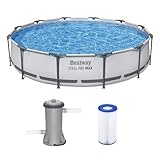
Bestway Steel Pro MAX 12' x 30" Above Ground Swimming Pool Set with Pump | Durable Round Metal Frame Outdoor Backyard Pool, Puncture-Resistant Liner - Type III A/C Filter Cartridge Included, Gray | Check Price On Amazon |
|
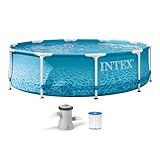
INTEX 28207EH 10ft X 30in Beachside Metal Frame Above Ground Swimming Pool Set, Includes 330 GPH Cartridge Filter Pump, Puncture-Resistant Material, Rust Resistant, 1185 Gallon Capacity | Check Price On Amazon |

|
H2OGO! Kids Splash-in-Shade 8-Foot Round Steel Frame Above Ground Pool with Water Mister and Canopy Sunshade, Green Tropical Leaf Print | Check Price On Amazon |
Most modern systems use a digital control center with wireless connectivity that connects to relays, valve actuators, temperature sensors, and flow switches throughout the equipment pad. The installation complexity depends entirely on how many devices you want the system to manage.
A basic system controlling just a pump and heater requires 4 to 6 hours of installation time and roughly 8 to 12 wire terminations. A full system managing pump speeds, heater temperature, solar panels, multiple valves, LED color lighting, spa jets, water features, and a salt chlorine generator can require 12 to 20 hours and 40 or more individual connections.
What Does a Pool Automation System Actually Control?
A pool automation system manages every electrically powered device on your equipment pad and in your pool. The control panel sends commands to individual relays that switch equipment on and off, to valve actuators that rotate water flow direction, and to variable-speed pump drives that set precise RPM levels.
This happens because the control board uses solid-state relays to complete or break 120V or 240V circuits on command, while sending 24V DC signals to valve actuators that rotate 90 or 180 degrees to redirect water through different plumbing paths. The system reads inputs from temperature sensors (thermistors), flow switches, and pressure transducers to make automated decisions.
The core devices a system manages include the filtration pump with programmable speed settings, the pool heater or heat pump with temperature set points, motorized valves that switch between pool and spa modes or activate water features, and lighting circuits that control color-changing LED fixtures. Secondary devices include salt chlorine generators, chemical dosing pumps, solar heating panels, automatic pool covers, and landscape lighting zones.
This only works correctly when the control panel has a dedicated circuit from the main electrical panel with the correct amperage rating and GFCI protection. If the panel is under-powered or shares a circuit with other high-draw appliances, the result is relay chatter, communications failures, or tripped breakers. Fix it by running a dedicated 20-amp circuit for the control panel alone.
Most modern systems also connect to your home WiFi network for smartphone control. The Pentair IntelliCenter, Hayward OmniLogic, and Jandy iAquaLink all offer apps that let you adjust pump speeds, water temperature, and lighting colors from anywhere.
Water features like waterfalls, deck jets, bubblers, and laminar fountains each require their own valve actuator and relay circuit. Our complete guide to pool water features and waterfalls explains how different feature types integrate with automation systems and what plumbing changes each one needs.
Pump Speed and Filtration Scheduling
The automation system tells your variable-speed pump what RPM to run at different times of day. A typical schedule runs the pump at 2,800 RPM for two hours in the morning for surface skimming, drops to 1,500 RPM for six hours for efficient filtration, then runs at 2,200 RPM for two hours during peak swim time.
Programming these schedules into the automation panel eliminates the need to walk to the equipment pad and press buttons on the pump drive. The system can also increase pump speed automatically when the heater fires because most heaters require a minimum flow rate of 30 to 40 GPM to operate safely. To calculate the ideal turnover rate and daily run time for your pool, try our pool turnover calculator.

- Intelligent Navigation with Full Coverage: Equipped with 11 high-precision sensors and enhanced dual-path algorithms. The optimized WavePath cleaning pattern ensures systematic coverage with minimal overlap, while adaptive navigation analyzes pool layout in real time to eliminate missed spots
- Dual Filtration for Crystal-Clear Water: Advanced dual-layer filtration system features a replaceable 3-micron ultra-fine filter paired with a 180-micron standard filter. Effectively captures fine dust, sand, leaves, and debris for visibly cleaner and healthier pool water
- Comprehensive Pool Cleaning: Engineered to clean the pool floor, walls, waterline, and shallow areas (above 12 inches). The Caterpillar Treads system enhances mobility and climbing ability, ensuring thorough coverage across all pool zones
- Reliable Performance with 2-Year Warranty: Trusted by over 500,000 pool owners worldwide, this robotic pool cleaner delivers consistent, high-performance results. Built for durability and backed by a 2-year warranty and responsive customer support for worry-free ownership
Heater and Temperature Management
The automation panel reads water temperature from a sensor installed in the plumbing and compares it to your set point. When the water temperature drops below the set point by more than 1 degree Fahrenheit, the system sends a signal to fire the heater and increases pump speed to meet the heater’s minimum flow requirement.
Solar heating integration adds complexity because the automation must compare roof sensor temperature to pool water temperature, then actuate a diverter valve to send water through the solar panels only when the roof is warmer than the pool by at least 4 degrees Fahrenheit. This valve actuation requires a 24V actuator and a dedicated relay in the control panel. If you’re sizing a new heater for your pool, try our pool heater calculator (BTU).
Pool and Spa Mode Switching
Switching between pool and spa modes involves actuating two or three motorized valves simultaneously. The intake valve rotates to draw from the spa drain instead of the pool skimmer and main drain, while the return valve rotates to send heated water exclusively to the spa jets instead of the pool returns.
This coordinated valve movement requires the automation panel to energize multiple valve actuators at the same time, which draws significant current from the 24V transformer inside the panel. An undersized transformer rated below 2 amps total capacity will fail to rotate all valves simultaneously, leaving the system stuck in one mode.
LED lighting control extends to color selection and show modes. Our guide on the best pool LED lights covers which fixtures work with which automation protocols and how to match light brands to your control system for full color and brightness control.
By the Numbers
Pool Automation Installation — Key Statistics
Sources: PHTA industry data, manufacturer installation manuals, contractor surveys
DIY Pool Automation Installation: What It Actually Takes
DIY pool automation installation is possible for someone with residential electrical experience, comfort working inside a live electrical panel, and the patience to read a 60-page installation manual cover to cover. The work involves mounting the control panel, running conduit, pulling low-voltage wire through conduit, landing wires on screw terminals, and programming the system through a series of configuration menus.
Most pool automation manufacturers sell their systems through authorized dealers only, which means DIY buyers typically purchase equipment through online retailers that offer limited or no technical support. Pentair, Hayward, and Jandy warranty their automation systems for three years when installed by a qualified professional, but the warranty drops to 60 days or is voided entirely for self-installation on many product lines.
Step-by-Step Guide
How to Install a Pool Automation System — DIY Steps
8 steps · Estimated time: 8-16 hours over 2-3 days · Skill level: Advanced electrical
Shut off all power and plan conduit routes
Turn off the main breaker feeding the pool subpanel. Map every piece of equipment and plan low-voltage wire paths before drilling a single hole.
Mount the control panel and run dedicated power
Mount the panel on a wall within 15 feet of the equipment pad. Run a dedicated 20-amp 120V or 240V circuit from the main panel using 12-gauge THWN wire in liquid-tight conduit.
Connect high-voltage equipment relays
Land the line and load wires for each pump, heater, and light circuit on the correct relay terminals. Each relay handles one 120V or 240V device. Torque terminals to manufacturer specifications.
Pull and terminate low-voltage control wires
Run 18-22 gauge 2-conductor wire from the panel to each valve actuator, temperature sensor, and flow switch. Strip 1/4 inch of insulation and land each wire under its screw terminal.
Connect communication cables for variable-speed pumps
Variable-speed pumps use RS-485 digital communication, not relay switching. Run a dedicated 2-conductor shielded cable between the pump drive and the automation panel’s comm port.
Power up and configure the system
Restore power and run the initial configuration wizard. Assign each relay to its equipment type in the software. Set the date, time, and WiFi credentials.
Program schedules and test every output
Set pump speeds for each time block, heater temperature set points, valve positions for pool and spa modes, and lighting color scenes. Test every relay and valve actuator individually.
Label everything and document wire routing
Attach labels to every wire at both ends. Photograph all terminations. Write down each relay assignment and comm port configuration. Future troubleshooting depends on this documentation.
Professional Pool Automation Installation: What You Pay For
Professional installation costs $1,200 to $2,800 in labor for a full automation system on top of the equipment cost of $1,500 to $4,500 depending on the system size and brand. The total project cost for equipment plus professional installation typically lands between $3,000 and $7,000 for a mid-range system controlling a pump, heater, valves, and lights on a typical 20,000-gallon inground pool.
A professional installer brings several things a DIY installer cannot replicate. They carry liability insurance that covers water damage if a plumbing connection leaks or fire damage if an electrical termination fails. They have an established relationship with the manufacturer for warranty processing. They own diagnostic tools like RS-485 signal analyzers and thermal cameras to verify connections.
This only works correctly when the installer follows the manufacturer’s installation checklist exactly. If the installer skips steps like torquing terminals to specification or testing communication signal strength, the result is intermittent failures that are hard to diagnose later. Demand a commissioning report that documents every test that was performed.
Licensed pool automation installers also handle the electrical permit process. Most municipalities require a permit for any new circuit installation or subpanel work associated with an automation system. The permit typically costs $75 to $200 and requires an inspection that the contractor schedules and attends.
Key Specifications for professional installation:
– Labor cost: $1,200-$2,800 depending on system complexity and number of controlled devices
– Permit cost: $75-$200 for electrical permit
– Installation time: 1-2 full days for a complete system
– Warranty: 3 years parts and labor when professionally installed vs 60 days for DIY
For a deeper understanding of what automation systems can do and whether the investment makes sense for your specific pool setup, read our complete guide to pool automation covering what it controls and the full cost and energy savings analysis before making an installation decision.
DIY vs Professional Installation: Cost Comparison
The cost difference between DIY and professional installation shrinks considerably when you account for tools you must buy, potential warranty losses, and the value of your time. A DIY install on a $2,500 automation system might save $2,000 in labor, but loses $500 to $1,000 in warranty value and requires $200 to $400 in specialized tools and materials you cannot reuse.
Use the table below to compare DIY and professional installation costs across different automation system sizes and see the true difference after accounting for all hidden costs.
Product Comparison
DIY vs Professional Pool Automation Installation — Full Cost Breakdown
Costs include equipment, labor, tools, permits, and warranty value for a typical 20,000-gallon inground pool
| Cost Factor | DIY Installation | Professional Installation |
|---|---|---|
| Automation system equipment | $2,500 | $2,500 |
| Installation labor | $0 (your time) | $1,800 |
| Specialized tools and materials | $300 | $0 (included) |
| Electrical permit | $120 | $120 |
| Warranty value (3-year equivalent) | $0 (voided) | $800 (included coverage) |
| True total cost accounting | $2,920 plus your time | $4,420 |
The effective cost gap between DIY and professional installation narrows from $1,800 to approximately $1,500 after accounting for tools, permits, and warranty value. Your 8-16 hours of labor must be valued against this difference.
How Much Does Pool Automation Installation Cost at Every Level?
Pool automation installation costs break into three clear tiers based on system size and number of controlled devices. A basic single-device system runs $800 to $1,500 total installed. A standard multi-device system for a typical pool and spa runs $3,000 to $6,000. A full luxury system controlling every device on a complex pool with multiple water features runs $6,000 to $12,000.
Use the table below to find your exact cost based on your system size and whether you choose DIY or professional installation.
Cost Reference
Pool Automation — Total Installed Cost by System Size and Install Method
All values include equipment, labor, permits, and typical materials. Find your system size in the rows and install method in the columns.
| System size ↓ Install method → | DIY Basic | Pro Basic | Pro Full Service |
|---|---|---|---|
| Pump only (1 device) | $900-$1,500 | $1,500-$2,200 | $1,800-$2,800 |
| Pump and heater (2 devices) | $1,600-$2,500 | $2,500-$3,800 | $3,000-$4,500 |
| Pump, heater, valves, lights | $2,500-$4,000 ★ most common | $4,000-$6,500 | $5,000-$8,000 |
| Full system with water features | $4,000-$6,500 | $7,000-$10,000 | $8,500-$12,000 |
| Luxury estate with spa, solar, SWCG | $6,000-$9,000 | $10,000-$14,000 | $12,000-$18,000 |
Cost ranges reflect variation in brand choice, region, existing electrical infrastructure, and permit fees. ★ highlights the system size most residential pool owners install. Professional installation includes 3-year warranty coverage.
When DIY Pool Automation Installation Makes Sense
DIY installation makes sense for a homeowner who has previously wired a subpanel, pulled conduit, and terminated low-voltage control wiring, and who is installing a simple system that controls only a single variable-speed pump with no valve actuators, no heater integration, and no lighting circuits. The electrical work is straightforward and the programming is limited to setting pump speed schedules.
DIY also makes sense when you are replacing an existing automation system with a newer model from the same brand because the high-voltage wiring is already in place and the low-voltage wire paths are already established. You are essentially swapping the control board and reconnecting existing labeled wires. This replacement scenario cuts installation time to 3 to 5 hours.
You need a true-RMS digital multimeter to verify voltage at every termination point before powering up the system. A non-contact voltage tester is not sufficient. You also need a torque screwdriver calibrated in inch-pounds to properly tighten terminal screws to manufacturer specifications, which are typically 4 to 7 inch-pounds for low-voltage terminals and 20 to 25 inch-pounds for high-voltage relay terminals.
When DIY Installation Absolutely Does Not Make Sense
Do not attempt DIY installation if your system includes multiple motorized valve actuators for pool/spa switching or water feature control, if you are integrating a gas heater with safety interlocks and fireman’s switch circuits, or if your existing equipment pad has corroded wiring or an outdated subpanel that needs replacement before the automation system can be safely connected.
Valve actuator synchronization is the single most common DIY failure point. The automation panel must energize two or three actuators simultaneously while monitoring cam position feedback to confirm each valve reached its commanded position. If the 24V transformer is undersized or the wiring gauge is too thin, voltage drops cause actuators to stall mid-rotation.
This damage is expensive because a stalled valve actuator draws locked-rotor current until it burns out. A single replacement pool valve actuator costs $150 to $250, and replacing two or three actuators after a wiring mistake wipes out any savings from skipping professional installation.
Common DIY Pool Automation Installation Mistakes
The five most expensive DIY installation mistakes are running undersized wire for valve actuators causing voltage drop and actuator burnout, landing high-voltage wires on low-voltage terminals destroying the control board, failing to install GFCI protection on the control panel supply circuit creating a shock hazard, reversing RS-485 communication polarity between the pump and panel preventing digital control, and neglecting to install a water bond on the equipment pad creating an electrocution risk from stray voltage.
A proper equipment pad bonding grid connects every metal component including the pump motor, heater chassis, control panel enclosure, and metal conduit to a common 8-gauge solid copper wire that runs back to the pool’s bonding loop. Skipping this step creates a voltage potential between metal components that can be fatal to anyone touching two components simultaneously.
This bonding requirement exists because pool water and wet concrete are conductive. If a pump motor develops a ground fault, the current seeks any path back to source. Without an equipotential bonding grid, the path can run through a person standing on wet concrete touching a metal pool rail. With a proper bond, all metal components sit at the same voltage potential and current cannot flow through a person.
This only protects you when every metal component within 5 feet of the pool wall is bonded with a continuous 8-gauge solid copper conductor connected to the pool’s perimeter bonding loop. If any component is missed, the result is a voltage differential that can reach 120V or more under fault conditions. Fix it by hiring a licensed electrician to inspect and complete your bonding grid before energizing the equipment pad.
What to Look for When Hiring a Pool Automation Installer
Hire an installer who carries active electrical and pool contractor licenses in your state, who is factory-trained and certified by the specific automation brand you are purchasing, and who provides a commissioning report documenting every relay test, valve actuator test, communication signal verification, and safety interlock check they performed. A qualified installer will also pull an electrical permit and schedule the inspection.
The commissioning report matters because it proves the installer verified every function before leaving your property. A proper report lists each relay by number with its connected equipment and a pass/fail test result, each valve actuator with its rotation range and synchronization status, the pump communication signal strength in dB, and the water temperature sensor calibration against a known reference thermometer.
Buying Guide
Before You Hire — Pool Automation Installer Checklist
Check off each point before signing the installation contract.
Life Before and After Pool Automation
Pool automation transforms daily pool ownership from a series of manual trips to the equipment pad into a background system you adjust from your phone. The difference is measured in time, energy cost, and chemical stability.
Results
What Changes When You Install Pool Automation
Before and after comparison for a typical 20,000-gallon inground pool with pump, heater, and lights
Before
- ✗Walk to equipment pad to change pump speed manually
- ✗Forget to adjust pump speed after heating, wasting energy
- ✗Manually rotate valves to switch between pool and spa
- ✗Lights stuck on one color with no scheduling
- ✗No energy tracking or run-time logging
After
- ✓Adjust pump speed from your phone anywhere
- ✓Pump ramps to heater minimum flow automatically
- ✓One-touch spa mode from inside the house
- ✓Color shows and schedules for every evening
- ✓Real-time energy monitoring and usage history
Most pool owners report saving 4 to 6 hours per month on manual adjustments and $40 to $80 per month on electricity after automation installation.
Quick Reference
Pool Automation Installation — Key Terms Explained
Quick reference for the technical terms used throughout this guide
A 24V motorized device that rotates a pool valve 90 or 180 degrees on command from the automation panel to redirect water flow between pool, spa, and water features
A digital communication protocol used by variable-speed pumps and chlorinators to receive speed and output commands from the automation panel over a 2-conductor shielded cable
An electrically operated switch inside the control panel that completes or breaks a 120V or 240V circuit to turn equipment on and off
A safety grid of 8-gauge solid copper wire connecting all metal components on the equipment pad to eliminate voltage differences that could cause electric shock
A safety circuit on gas heaters that allows the automation panel to shut down the heater immediately by interrupting the control circuit rather than cutting power directly
A temperature sensor that changes electrical resistance predictably with temperature, allowing the automation panel to read water and air temperature with 0.5 degree Fahrenheit accuracy
A document the installer produces after installation listing every relay test result, valve actuator verification, and communication signal check performed
The manufacturer-specified tightness in inch-pounds for each screw terminal. Low-voltage terminals require 4 to 7 inch-pounds. High-voltage terminals require 20 to 25 inch-pounds
Ground Fault Circuit Interrupter: a safety device that trips the circuit within 25 milliseconds if current leakage exceeds 5 milliamps, required on all pool equipment circuits per NEC 680
Salt Water Chlorine Generator: a device that produces chlorine from dissolved salt in pool water through electrolysis, controlled by the automation panel via RS-485 or relay
What electrical permits are required for pool automation installation?
Most municipalities require an electrical permit for pool automation installation because it involves adding a new circuit or modifying existing circuits in the pool subpanel. The permit typically costs $75 to $200 depending on your jurisdiction and must be pulled before any wiring work begins.
The National Electrical Code Article 680 governs all pool-related electrical installations and requires GFCI protection on all pool equipment circuits rated 120V or 240V. An inspector will verify correct GFCI installation, proper wire gauge for the circuit amperage, and adequate working clearance around the control panel before signing off.
Installing without a permit risks a stop-work order, a failed home inspection when selling your property, and denied insurance claims if an electrical fire traces back to unpermitted work. Pull the permit yourself or confirm your installer handles it in the contract.
Can I install a pool automation system on an older pool with a single-speed pump?
Yes, you can install automation on a pool with a single-speed pump, but you lose the energy savings that variable-speed control provides. The automation panel will simply switch the pump on and off via a relay rather than commanding specific RPM levels through digital communication.
Single-speed pumps run at a fixed 3,450 RPM whenever energized, consuming 1,500 to 2,500 watts continuously depending on horsepower rating. A variable-speed pump running at 1,500 RPM consumes only 250 to 400 watts for the same daily turnover volume. The annual electricity savings from upgrading to a variable-speed pump typically cover the pump cost within 24 months at 12 cents per kWh.
Install the automation system with a variable-speed pump upgrade simultaneously to avoid paying for labor twice. The pump communication cable can be pulled through the same conduit as the low-voltage control wiring during the automation install. To determine the correct pump size for your pool, use our swimming pool pump sizing calculator.
What is the difference between Pentair IntelliCenter and Hayward OmniLogic for DIY installation?
Pentair IntelliCenter uses a modular design with clearly labeled plug-in relay cards and color-coded terminal blocks that make DIY wiring more intuitive. Hayward OmniLogic uses a single-board design with tightly spaced terminals that require more precision to land wires correctly without bridging adjacent terminals.
Pentair provides detailed installation manuals with full wiring diagrams available for public download. Hayward restricts full technical documentation to authorized dealers, which makes troubleshooting wiring errors harder for a DIY installer without dealer support access.
Both systems void the full warranty for self-installation, but Pentair offers a 60-day limited warranty on equipment purchased through authorized online retailers, while Hayward provides no warranty coverage at all for systems not installed by a factory-authorized technician.
Why does my automation system keep losing WiFi connection after installation?
WiFi disconnection after automation installation is usually caused by the control panel being mounted inside a metal enclosure on a wall that blocks the WiFi signal, or by the panel being too far from the router with intervening concrete walls or metal equipment between them.
Pool equipment pads are often located 50 to 100 feet from the house with the router on the opposite side of the building. The metal control panel enclosure acts as a Faraday cage, attenuating the WiFi signal by 20 to 30 dB. A signal that is barely adequate at the panel location drops below the connection threshold when the panel door is closed.
Install a weatherproof outdoor WiFi extender within 15 feet of the equipment pad with line-of-sight to the control panel antenna. Alternatively, run an Ethernet cable through the low-voltage conduit and use a hardwired connection if the automation panel supports it.
Can I use a generic control board instead of a name-brand pool automation system?
Generic industrial control boards and home automation hubs like Raspberry Pi with relay hats cannot safely control pool equipment because they lack the UL listing required by the National Electrical Code for pool equipment controllers. Using unlisted control equipment voids your homeowner insurance coverage for any resulting damage or injury.
Pool automation systems from Pentair, Hayward, and Jandy carry UL 1563 listing specifically for pool and spa equipment control. This listing certifies that the enclosure is weather-resistant, the relays are rated for motor loads with adequate arc suppression, and the safety interlocks function correctly under fault conditions.
Home automation platforms can supplement a listed pool controller for scheduling and remote access through the manufacturer’s API, but they cannot replace the primary control panel. Always install a UL-listed pool automation controller as the primary equipment interface.
What went wrong when my valve actuators stopped moving after DIY installation?
Valve actuators that stop moving after DIY installation typically failed because the 24V transformer in the control panel is undersized for the number of actuators connected, the low-voltage wiring is too thin and causes voltage drop, or the actuator cam settings were not adjusted to match the valve rotation limits.
Each valve actuator draws 0.75 to 1.0 amps during rotation. A control panel with a 2-amp transformer can rotate two actuators simultaneously but stalls if three actuators are commanded at once. Running 22-gauge wire over 50 feet to an actuator drops the voltage from 24V to approximately 18V, which is below the actuator’s minimum operating voltage of 20V.
Replace the wiring with 18-gauge or 16-gauge 2-conductor cable for runs longer than 30 feet. Verify the transformer rating printed on its label and count your actuators. Install a separate 24V power supply with adequate capacity if the built-in transformer cannot handle the total actuator load.
Is it safe to install pool automation myself if I have basic electrical knowledge?
Basic electrical knowledge such as replacing outlets and switches is not sufficient for pool automation installation. Pool equipment circuits operate at 120V or 240V with 15 to 30 amps, are exposed to water and weather continuously, and are governed by NEC Article 680 which imposes stricter requirements than standard residential wiring.
The specific hazards include working in a live subpanel to add new circuit breakers, running conduit that must remain watertight to prevent moisture intrusion into the control panel, and establishing an equipotential bonding grid that protects swimmers from electric shock drowning. Each of these tasks requires knowledge that goes beyond basic residential electrical work.
If you have not previously installed a subpanel, pulled and terminated THWN wire in liquid-tight conduit, and tested a bonding grid with a milliohm meter, hire a professional. The cost of hiring an electrician to fix a dangerous installation always exceeds the cost of professional installation done correctly the first time.
Do I need to upgrade my electrical panel before installing pool automation?
You need to upgrade your electrical panel if the existing pool subpanel does not have at least two unused breaker slots for the automation control panel’s dedicated circuit and any new equipment circuits, or if the main house panel lacks capacity for an additional 20-amp 240V circuit to feed the subpanel.
A typical pool subpanel for an automated system needs a 60-amp or 100-amp main breaker with individual 20-amp breakers for the pump, the control panel, and the heater, plus 15-amp breakers for lights and accessories. If your existing subpanel is a 30-amp or 40-amp unit with only two breaker slots, it cannot support automation equipment.
Subpanel replacement costs $800 to $1,500 including labor and materials. This cost should be factored into your automation budget before purchasing equipment. An installer can assess your panel capacity during the initial site visit.
What is the difference between a relay and a valve actuator in pool automation?
A relay is an electrically operated switch that turns equipment on and off by completing or breaking a 120V or 240V power circuit. A valve actuator is a motorized device that physically rotates a plumbing valve to redirect water flow between different pipes without turning anything on or off.
Relays control electrical power to pumps, heaters, lights, and chlorinators. Valve actuators control water direction for pool/spa switching, water feature activation, and solar heating bypass. An automation system needs both types of outputs to fully manage a pool.
Confusing these two functions during installation causes immediate equipment damage. Landing a valve actuator control wire on a relay output sends 120V into a 24V motor, destroying the actuator instantly. Landing a pump control wire on a valve actuator output provides 24V to a 240V pump relay coil that will never energize.
How long does a professionally installed pool automation system last?
A professionally installed pool automation system from Pentair, Hayward, or Jandy lasts 10 to 15 years on average before requiring replacement of the main control board or a full system upgrade. The relay modules, valve actuators, and temperature sensors typically last 7 to 10 years and are replaceable as individual components.
The primary failure mode is corrosion of the control board traces and relay contacts from humidity and chlorine off-gassing inside the enclosure. Relays have a rated life of 100,000 cycles at full load, which translates to roughly 15 to 20 years of daily switching. Communication chips fail earlier due to voltage spikes on the RS-485 data lines from nearby lightning strikes.
Install a whole-panel surge protector at the pool subpanel to extend the life of the automation system’s electronic components. This $100 to $200 device absorbs voltage spikes before they reach the control board.
Can I add more controlled devices to my automation system later?
Yes, most automation systems support expansion by adding relay modules, valve actuator connections, and communication ports as your pool equipment grows. The base control panel typically supports 4 to 8 relays and 2 to 4 valve actuators out of the box, with expansion modules adding 4 more relays each up to a maximum of 16 to 32 total relays depending on the brand.
The expansion is limited by the physical space inside the control panel enclosure, the capacity of the 24V transformer, and the number of available auxiliary relay slots in the panel’s internal wiring harness. Adding equipment later costs more in labor than installing it initially because the installer must open the sealed panel, pull new wire through existing conduit, and reconfigure the programming.
Plan for future expansion during the initial installation by running spare 2-conductor cables through the conduit to blank junction boxes near likely future equipment locations. The incremental cost of $30 to $50 in wire during initial installation saves $300 to $500 in future labor.
Why does my pool light flicker when controlled by automation?
Pool light flickering under automation control is caused by using a standard relay to switch an LED light circuit, which creates a rapid on-off cycling visible in LED fixtures. LED pool lights require a specific relay type or a dimmer module that provides clean switching without voltage ripple.
Standard mechanical relays bounce slightly when contacts close, producing a momentary open-close-open sequence over 50 to 100 milliseconds. An incandescent bulb filament does not react fast enough to show this, but LED drivers respond instantly and produce visible flicker. The fix is installing a solid-state relay designed for LED loads or using the automation panel’s dedicated light control output if available.
Pool light bulb and fixture replacement involves additional wiring considerations that differ from standard equipment control. Our step-by-step guide on replacing pool light bulbs and full fixtures covers the electrical safety requirements and waterproof sealing steps that apply whether your lights are automated or not.
Does pool automation actually save money on electricity?
Pool automation saves $40 to $80 per month on electricity for a typical 20,000-gallon pool by optimizing pump run times and speeds rather than running a single-speed pump at full RPM for 8 to 12 hours daily. The automation system reduces pump speed during filtration hours and ramps up only when the heater or water features require higher flow.
A single-speed 1.5 HP pump running 10 hours per day at 3,450 RPM consumes about 22 kWh daily, costing roughly $80 per month at 12 cents per kWh. The same pool with an automated variable-speed pump running 2 hours at 2,800 RPM for skimming, 6 hours at 1,500 RPM for filtration, and 2 hours at 2,200 RPM for heating consumes about 8 kWh daily, costing roughly $29 per month.
The $51 monthly savings pays back a $3,000 automation system investment in 59 months from pump energy alone. Adding heater optimization and reduced chemical consumption from better circulation shortens the payback period to 36 to 48 months.
Pool automation installation is a significant project that rewards careful planning. The choice between DIY and professional installation comes down to one factor: your experience with residential electrical work at the subpanel level. If you have installed a subpanel and pulled conduit before, you can handle a simple single-pump automation system. If you have never worked inside an electrical panel, the safety risks and warranty losses make professional installation the clear choice. A properly installed automation system pays for itself through energy savings within 3 to 5 years while giving you control of your pool from anywhere. For most pool owners with multi-device systems including valve actuators, heaters, and lighting, professional installation from a factory-certified installer delivers the best combination of safety, reliability, and long-term support.
| Photo | Best Above-Ground Pools | Price |
|---|---|---|
|
|
Bestway Steel Pro MAX 12' x 30" Above Ground Swimming Pool Set with Pump | Durable Round Metal Frame Outdoor Backyard Pool, Puncture-Resistant Liner - Type III A/C Filter Cartridge Included, Gray | Check Price On Amazon |
|
|
INTEX 28207EH 10ft X 30in Beachside Metal Frame Above Ground Swimming Pool Set, Includes 330 GPH Cartridge Filter Pump, Puncture-Resistant Material, Rust Resistant, 1185 Gallon Capacity | Check Price On Amazon |
|
|
H2OGO! Kids Splash-in-Shade 8-Foot Round Steel Frame Above Ground Pool with Water Mister and Canopy Sunshade, Green Tropical Leaf Print | Check Price On Amazon |