
Most pool owners replace their pool light the same week the bulb burns out and notice nothing different about the water. A 500-watt incandescent pool light costs $300 to $450 per year in electricity alone. The same brightness from a 60-watt LED pool light costs $36 to $48 per year. The $250 to $600 upfront price difference pays for itself in 12 to 18 months on energy savings, and the LED lasts 15 to 30 times longer than any incandescent bulb you can buy.
This guide covers every pool LED lighting type (full fixture replacements, screw-in retrofit bulbs, strip lights, and fiber optic LED drivers), every available color option from warm white to full RGBW with app control, and the best products for inground and above-ground pools at every budget level, with real wattage, lumen output, and compatibility details for Pentair, Hayward, Jandy, and niche housing systems.
| Photo | Best Above-Ground Pools | Price |
|---|---|---|
|
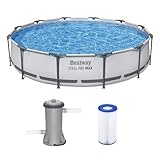
Bestway Steel Pro MAX 12' x 30" Above Ground Swimming Pool Set with Pump | Check Price On Amazon |
|
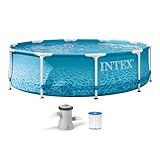
INTEX Beachside Metal Frame 10ft x 30in Round Pool Set w/Pump | Check Price On Amazon |

|
H2OGO! Kids Splash-in-Shade 8-Foot Round Steel Frame Above Ground Pool with Water Mister and Canopy Sunshade, Green Tropical Leaf Print | Check Price On Amazon |
By the Numbers
Pool LED Lighting, What the Research Shows
Sources: U.S. Department of Energy Lighting Facts, PHTA Service Tech Manual, manufacturer spec sheets
What Are Pool LED Lights and How Do They Work?
A pool LED light is a submersible lighting fixture that uses light-emitting diodes (LEDs) instead of incandescent or halogen bulbs to illuminate swimming pool water and surfaces. LED pool lights produce 80 to 120 lumens per watt compared to 12 to 17 lumens per watt from incandescent pool bulbs. This happens because LEDs convert electrical energy directly into photons through electroluminescence at the semiconductor junction, producing almost no waste heat. Incandescent bulbs lose roughly 90 percent of input energy as infrared radiation that never reaches the pool water.
This efficiency difference only matters when the fixture is correctly matched to the pool volume and the housing is watertight. If the lens gasket fails and water reaches the LED driver board, the light fails within hours regardless of rated lifespan. An LED pool light consists of the LED array on a metal-core printed circuit board, a constant-current driver that converts 12V or 120V AC input to low-voltage DC, a thermally conductive housing that transfers heat away from the LEDs, and a tempered glass or polycarbonate lens sealed with a silicone gasket. According to the 2023 PHTA Service Tech Manual, pool light niche temperatures can exceed 100 degrees Fahrenheit in direct summer sun, which degrades LED driver capacitors over time if the fixture lacks adequate thermal management.

- Intelligent Navigation with Full Coverage: Equipped with 11 high-precision sensors and enhanced dual-path algorithms. The optimized WavePath cleaning pattern ensures systematic coverage with minimal overlap, while adaptive navigation analyzes pool layout in real time to eliminate missed spots
- Dual Filtration for Crystal-Clear Water: Advanced dual-layer filtration system features a replaceable 3-micron ultra-fine filter paired with a 180-micron standard filter. Effectively captures fine dust, sand, leaves, and debris for visibly cleaner and healthier pool water
- Comprehensive Pool Cleaning: Engineered to clean the pool floor, walls, waterline, and shallow areas (above 12 inches). The Caterpillar Treads system enhances mobility and climbing ability, ensuring thorough coverage across all pool zones
- Reliable Performance with 2-Year Warranty: Trusted by over 500,000 pool owners worldwide, this robotic pool cleaner delivers consistent, high-performance results. Built for durability and backed by a 2-year warranty and responsive customer support for worry-free ownership
What Types of Pool LED Lights Are Available?
Pool LED lights come in four distinct form factors, and choosing the wrong one means the light will not fit your existing niche or will require wiring work you did not budget for. The four types are full LED fixture replacements, screw-in LED retrofit bulbs, surface-mount LED strip lights, and fiber optic illuminators with LED light engines. Each fits a different pool construction type, niche housing, and budget level.
A full LED fixture replacement swaps the entire light assembly including housing, lens, LED array, driver, and power cord. This is the only option when the existing niche housing is corroded, the lens is cracked, or the fixture is a non-standard size from a discontinued brand. Full fixtures cost $250 to $900 per unit and require pulling a new cord through the conduit, which means the pool must be drained below the light niche or the job must be done by a licensed electrician who can replace the fixture underwater using the existing cord as a pull line.
A screw-in LED retrofit bulb replaces only the bulb inside an existing incandescent fixture housing. This works only when the housing, lens, gasket, and cord are in good condition and the fixture uses a standard Edison E26 or E27 screw base. Retrofit bulbs cost $40 to $150 and install in 10 minutes without draining the pool. The limitation is that the LED bulb must fit inside the original fixture’s internal depth, and many older Pentair Amerlite and Hayward AstroLite housings have only 4.5 to 5 inches of internal clearance. According to Jandy product specifications, the Jandy WaterColors LED retrofit bulb requires exactly 5.25 inches of internal depth, which excludes it from several common shallow-niche housings made before 1995.
Surface-mount LED strip lights adhere to pool walls, steps, benches, or tanning ledges using a waterproof adhesive backing and connect to a low-voltage transformer. These are the only LED option for above-ground pools, vinyl-liner pools without pre-installed niches, and fiberglass pools where cutting a new niche voids the shell warranty. Strip lights cost $30 to $120 per 16-foot roll and run on 12V DC, which eliminates the need for a bonded and grounded junction box. The trade-off is that strip lights produce 200 to 400 lumens per linear foot compared to 1,500 to 4,000 lumens from a full LED fixture, so they illuminate steps and ledges well but do not light the entire pool volume.
Fiber optic illuminators with LED light engines replace the older metal-halide illuminator box with an LED source that feeds light through fiber optic cables to the pool wall lenses. This system keeps all electrical components in a dry location 20 to 50 feet from the pool and is the safest option from an electrical hazard perspective because there is zero voltage in the water. LED fiber optic illuminators cost $400 to $1,200 and produce 300 to 800 lumens at the fiber endpoints. This is lower than direct LED fixtures, so fiber systems work best for accent lighting and perimeter glow rather than full-pool illumination.
Choosing Pool LED Light Colors: What Works Best for Your Pool?
Pool LED light color is determined by the LED chips installed on the circuit board and the control protocol that drives them. Single-color LED pool lights use monochromatic LED chips that emit one fixed wavelength. Color-changing LED pool lights use RGB (red, green, blue) or RGBW (red, green, blue, white) multi-chip LEDs where each color channel is independently dimmed by the driver to produce millions of blended colors. The choice between single-color and color-changing affects not just aesthetics but also how the pool looks at night when the light is the only illumination source.
Warm white LED pool lights at 2700K to 3000K color temperature produce a golden glow similar to the incandescent pool lights most pool owners are replacing. This color temperature renders pool tile, plaster, and aggregate finishes most naturally and creates the least glare because warm white has lower blue-wavelength content that scatters less in water. Cool white at 5000K to 6500K produces a crisp blue-white light that makes water look clearer and more inviting but can make certain plaster colors appear washed out. According to Cree LED application notes, cool white LEDs produce approximately 15 to 20 percent more lumens per watt than warm white from the same LED die size, so a 5000K fixture appears brighter than a 3000K fixture drawing the same wattage.
Blue LED pool lights between 450 and 470 nanometers create the deep tropical lagoon effect that most pool owners associate with resort pools. Blue light penetrates water deeper than any other visible wavelength because water absorbs red and green wavelengths first. This is why even a modest 30-watt blue LED can illuminate an 8-foot deep end while a 30-watt warm white LED struggles to reach the bottom. The trade-off is that blue light makes it difficult to see pool steps, swimmers, and debris clearly, creating a potential safety issue if the pool is used for night swimming without additional white perimeter lighting. Green LED pool lights create a natural pond or lagoon appearance and work well for pools surrounded by heavy landscaping, but green light makes skin tones look unflattering and can make the water appear murky even when it is chemically balanced.
Full RGBW color-changing LED fixtures with app or automation control offer pre-programmed light shows that cycle through colors on adjustable timers. The Pentair IntelliBrite 5G, Hayward ColorLogic 4.0, and Jandy WaterColors Nicheless each include 7 to 12 fixed color modes plus a white mode selectable from a standard wall switch by toggling power on and off in a specific sequence. For pools integrated with automation systems like Pentair IntelliCenter or Hayward OmniLogic, color selection and custom light shows are programmable from a smartphone app and can be synchronized with landscape lighting and spa jets. The full guide on pool automation covers how lighting integrates with other systems for synchronized control of pumps, heaters, and water features from a single app.
Product Comparison
Pool LED Light Types, At-a-Glance Comparison
Key specs compared across all four LED pool light form factors
| Type | Price Range | Brightness | Installation | Best For |
|---|---|---|---|---|
| Full LED Fixture | $250-$900 | 1,500-4,000 lumens | Professional, drain pool or cord-pull | Full replacement, damaged niche, new build |
| Screw-In Retrofit Bulb | $40-$150 | 800-2,000 lumens | DIY, 10 minutes, no draining | Good housing, standard E26 base, tight budget |
| LED Strip Lights | $30-$120/roll | 200-400 lumens/ft | DIY, adhesive mount, 12V transformer | Above-ground, steps, ledges, accent lighting |
| Fiber Optic LED Engine | $400-$1,200 | 300-800 lumens | Professional, dry location, no voltage in water | Perimeter glow, zero-voltage safety, accent only |
Use the table above to match your existing pool setup and budget to the correct LED light type before comparing specific products in the sections below.
How Much Do Pool LED Lights Cost? Complete Price Breakdown
A single pool LED light installation costs between $40 and $2,500 depending on whether you are screwing in a retrofit bulb yourself or hiring an electrician to pull a new full fixture through 80 feet of conduit. The LED product itself accounts for 40 to 70 percent of the total project cost. Labor, electrical work, transformer replacement, and automation integration make up the rest.
Retrofit LED bulbs cost $40 to $150 per bulb and require zero labor cost if you can open the fixture housing, remove the old bulb, screw in the LED replacement, replace the gasket, and reseal the lens. This is a 10-minute job for most standard pool light housings. A color-changing LED retrofit pool bulb at $80 to $120 replaces a 300-watt incandescent and saves $250 to $350 per year in electricity at 12 cents per kWh running 8 hours per night for a 6-month swim season.
Full LED fixtures cost $250 to $900 for the fixture itself. Professional installation adds $300 to $800 depending on whether the existing cord can be used as a pull line or new conduit must be trenched. If the pool must be drained below the light niche for the replacement, add $200 to $400 for water disposal and refill costs. The total project for one full LED fixture replacement typically lands between $550 and $2,100. This is the cost when the existing niche housing is compatible. If the niche itself must be replaced because it is a discontinued size from a brand that no longer manufactures pool lights, the cost can exceed $3,500 because it requires cutting into the pool wall. For pools with multiple lights, the per-fixture cost drops because the electrician is already on site with equipment set up.
LED strip lights cost $30 to $120 per 16-foot roll plus $40 to $80 for a waterproof 12V transformer and $20 to $40 for silicone adhesive sealant. A full above-ground pool perimeter installation with two 16-foot rolls and transformer costs $120 to $300 in materials and takes 1 to 2 hours to install. The transformer plugs into a standard GFCI outdoor outlet, so no electrician is required. Strip lights must be replaced every 3 to 5 years because the adhesive degrades underwater and the flexible PCB eventually delaminates from the backing.
Fiber optic LED illuminator systems cost $400 to $1,200 for the LED engine plus $150 to $400 per fiber optic cable run. A two-cable system with an LED illuminator costs $700 to $2,000 in materials plus $500 to $1,000 for professional installation because the fiber cables must be pulled through existing or new conduit to each lens location. Fiber optic LED systems have the lowest ongoing maintenance cost because the illuminator sits in a dry equipment pad location and individual fiber cables can be replaced without draining the pool.
Best Pool LED Light Options for Every Pool Type
The best pool LED light for your specific pool depends on the niche housing type, voltage (12V or 120V), pool wall material, and whether you have an automation system already installed. The top products across all categories come from Pentair, Hayward, and Jandy for inground pools, with niche-market options from Spa Electrics and S.R. Smith for specialty applications. For above-ground pools, Intex, Blue Square, and no-name LED strip kits dominate the market.
The Pentair IntelliBrite 5G is the most widely compatible full LED fixture for inground pools with standard 8-3/8 inch niche housings. It produces 1,800 lumens at 12V or 120V, includes 7 fixed colors plus 5 pre-programmed light shows, and integrates directly with Pentair IntelliTouch and IntelliCenter automation systems. The 5G designation refers to the fifth generation of IntelliBrite LED technology, which increased lumen output by 30 percent over the 4G while reducing LED junction temperature through an improved thermal path to the housing. IntelliBrite 5G fixtures cost $350 to $600 depending on cord length and voltage.
The Hayward ColorLogic 4.0 uses a proprietary universal niche adapter that fits Hayward, Pentair, and Sta-Rite housings without an adapter ring. It produces 1,600 lumens at 12V with 10 fixed colors and 7 light shows. ColorLogic 4.0 is the only major LED fixture that offers a 3200K warm white mode that accurately replicates the color of an incandescent pool light. This matters for pool owners replacing a single incandescent light who do not want the remaining incandescent lights to look yellow by comparison. ColorLogic 4.0 fixtures cost $300 to $550.
The Jandy WaterColors Nicheless LED is designed for new pool construction where no niche housing exists. It mounts into a 1.5-inch threaded wall fitting and is secured by a locking ring from inside the pool. This eliminates the large 8-3/8 inch niche cutout and makes the fixture suitable for vinyl-liner and fiberglass pools where cutting a full niche is problematic. The WaterColors Nicheless produces 1,200 lumens at 12V and includes 7 colors with Jandy AquaLink automation compatibility. Each fixture costs $200 to $350, and a typical 20,000-gallon pool uses 2 to 4 of these spaced 8 to 10 feet apart to achieve even illumination.
For above-ground pools, the Intex LED magnetic pool light at $25 to $40 attaches to the pool wall with a magnetic bracket and runs on AA batteries. It produces approximately 80 to 120 lumens, which is sufficient to make an above-ground pool visible and usable at night but does not create dramatic lighting effects. For brighter above-ground lighting, 12V LED strip lights running the full perimeter produce 800 to 1,600 total lumens and hide behind the top rail for a clean installation.
Buying Guide
Before You Buy, Pool LED Light Checklist
Check off each point before making your purchase decision.
How to Install Pool LED Lights: Step-by-Step Guide
Pool LED light installation ranges from a 10-minute bulb swap to a full-day professional job depending on the product type and the condition of the existing equipment. The most common mistake is installing a 12V LED fixture on a circuit still wired for 120V because the transformer was removed when the old light failed. This destroys the LED driver instantly and is not covered under warranty. Always test voltage at the junction box with a multimeter before connecting any LED fixture.
For retrofit bulb installation, the process is straightforward but the water sealing step is where most DIY failures occur. The lens gasket must be replaced every time the fixture is opened, even if the old gasket looks fine. A gasket compressed for 3 to 5 years takes a permanent set and will not reseal reliably. Gaskets cost $8 to $15 and are specific to the fixture brand and model. For full step-by-step fixture replacement including cord pulling, niche inspection, and electrical safety verification, the complete guide on how to replace a pool light bulb and full fixture covers every detail with photos of each stage.
Step-by-Step Guide
How to Install an LED Retrofit Bulb, Step by Step
6 steps, estimated time: 15 to 20 minutes per light
Turn off power at the breaker and confirm zero voltage
Switch off the pool light circuit breaker and the GFCI at the junction box. Test voltage at the junction box with a multimeter set to AC. Confirm 0 volts before touching any wiring.
Remove the fixture from the niche and bring it to the pool deck
Remove the single screw at the top of the niche ring. Pull the fixture out by the top tab. There should be enough cord coiled behind the fixture to place it on the pool deck without disconnecting any wiring.
Open the fixture and replace the bulb
Remove the lens screws or clamp ring. Lift off the lens and old gasket. Unscrew the old incandescent bulb. Screw in the LED retrofit bulb. Do not touch the LED bulb face with bare fingers. Skin oil etches the lens over time.
Install a new lens gasket and reseal the fixture
Place a brand new gasket into the lens channel. Do not reuse the old gasket. Tighten lens screws in a star pattern to compress the gasket evenly. A compressed but not flattened gasket is watertight.
Submerge the fixture to test for leaks before reinstalling
Hold the sealed fixture underwater in the pool for 2 minutes. Watch for a stream of tiny bubbles from the lens seal. If bubbles appear, reopen the fixture and reseat the gasket. No bubbles means the seal is good.
Reinstall in niche and test operation
Coil excess cord behind the fixture in the niche. Secure the single niche screw. Restore power and test the light on all color modes. Leave the light on for 10 minutes and recheck for bubbles at the niche.
Pool LED Light Troubleshooting: Common Problems and Fixes
LED pool lights fail differently than incandescent lights, and most failures are not the LED chips themselves but the driver, the seals, or the wiring connections. The most common failure is water intrusion past the lens gasket, which corrodes the LED driver board within hours. This happens because the gasket was reused, the lens screws were not tightened in the correct sequence, or the fixture housing has a hairline crack that opens when the fixture warms up underwater.
LED flickering is almost always a voltage problem, not a failing LED. This only occurs when the input voltage to the driver drops below the driver’s minimum threshold, typically 10.5V on a 12V system or 108V on a 120V system. The cause is usually a corroded connection at the junction box, a failing transformer, or a shared circuit where another appliance starting up causes a momentary voltage sag. If flickering is intermittent and correlates with the pool pump turning on, the transformer is undersized for the combined load and must be replaced with a higher VA rating.
An LED pool light that does not turn on at all after installation is usually a polarity issue on 12V DC systems or a tripped internal thermal protection on the driver. 12V LED pool lights are polarity-sensitive on the DC side. If the positive and negative leads are reversed at the junction box, the LED will not illuminate but nothing will be damaged. Swap the two low-voltage wires and test again. If the light turns on for a few seconds and then shuts off, the driver is overheating because the fixture is not submerged. LED pool lights rely on water contact for cooling. Operating an LED pool light out of water for more than 30 to 60 seconds can trigger the internal thermal cutoff. Submerge the fixture fully and wait 5 minutes before retesting.
Color-changing LED pool lights stuck on one color or not responding to the wall switch toggle sequence have a control board communication failure. Most color-changing pool LED lights use power-cycle memory logic: toggling the wall switch off and on within 1 to 3 seconds advances to the next color mode. If the driver’s capacitor takes too long to discharge because the circuit has a long wire run, the toggle window is missed and the light stays on the same color. The fix is to turn the light off for at least 15 seconds, then toggle rapidly. If this does not work, the internal control board has failed and the fixture must be replaced. This failure mode is more common in pools with automation-controlled relays because relay debounce timing varies by manufacturer.
Myth vs Fact
Pool LED Lighting, Common Myths Debunked
Separating fact from fiction on the most common pool LED light misconceptions
Myth
LED pool lights last forever and never need replacement.
Fact
LED chips are rated for 30,000 to 50,000 hours, but the driver capacitors and gaskets fail long before the LEDs themselves. A 50,000-hour LED rating means 17 years at 8 hours per night for a 6-month season, but the driver typically fails at 8 to 12 years due to thermal cycling and capacitor degradation. The LED chips are not the weak point in a pool light. The power electronics and water seals are.
Myth
Any LED retrofit bulb will fit any standard pool light housing.
Fact
LED retrofit bulbs are physically larger than incandescent bulbs because they contain an integrated driver and heat sink. Many older Pentair Amerlite and Hayward AstroLite housings have internal depths of 4.5 to 5 inches. Popular LED retrofit bulbs like the Jandy WaterColors LED require 5.25 inches of depth and will not fit. Always measure the internal depth from the bulb base to the inside of the lens before ordering a retrofit LED bulb.
Myth
Blue LED pool lights attract fewer bugs than white lights.
Fact
Blue light in the 450 to 470 nanometer range attracts fewer flying insects than warm white or yellow light, but LED pool lights in general attract far fewer insects than incandescent lights because LEDs produce almost no ultraviolet radiation. Insects navigate using UV light reflected from the moon and stars. Incandescent bulbs emit measurable UV in the 320 to 400 nanometer range. LEDs emit effectively zero UV. The color matters less than the absence of UV.
Myth
A 12V pool LED light is safe even if the lens cracks and water enters.
Fact
While 12V is below the 30V threshold considered hazardous in wet locations by NEC 680, a cracked lens with water inside creates a ground fault that will trip the GFCI and can cause electrolysis that corrodes the niche housing, ladder anchors, and any metal within several feet. The light itself may not electrocute a swimmer, but the resulting stray current accelerates metal corrosion throughout the pool shell and equipment pad. Fix a water-leaking fixture immediately regardless of voltage.
Myth
You can replace a pool light yourself if you are comfortable with basic electrical work.
Fact
NEC Article 680 requires pool lighting circuits to have GFCI protection, proper bonding to the equipotential bonding grid, and a listed junction box at least 8 inches above the maximum water level and at least 4 feet from the pool edge. A retrofit bulb swap inside the existing fixture is a homeowner-level job. Pulling a new cord through conduit, replacing a junction box, or installing a new niche requires a licensed electrician in most jurisdictions. The electrical inspection for a new pool light installation is not optional. An uninspected pool light can invalidate homeowner insurance coverage for any pool-related electrical incident.
Can LED Pool Lights Be Used With Saltwater Pools?
Yes, LED pool lights are fully compatible with saltwater pools generating chlorine at 3,000 to 3,500 ppm salt concentration, but the fixture housing material must be saltwater-rated. Standard stainless steel housings with 304-grade steel will pit and rust within 2 to 3 years in a saltwater pool. Pool LED lights for saltwater pools must use 316 marine-grade stainless steel, thermoplastic, or bronze housings specifically labeled for saltwater use. The Pentair IntelliBrite 5G saltwater model uses a thermoplastic housing with a 316 stainless steel face ring that resists salt corrosion for the rated 50,000-hour LED lifespan.
Salt does not affect the LED electronics directly because the driver and LED array are sealed inside the watertight housing. The risk is that saltwater accelerates corrosion of the external metal components and the niche bonding lug. Inspect the niche bonding connection annually in saltwater pools. A corroded bonding lug breaks the equipotential bonding grid connection and creates a voltage differential between the pool light and other metal components. According to the 2023 NEC 680.26, all metal parts within 5 feet of the pool must be bonded, and the pool light niche is a critical bonding point.
What Is the Lifespan of a Pool LED Light Compared to Incandescent?
A pool LED light is rated for 30,000 to 50,000 hours of operation versus 2,000 to 5,000 hours for an incandescent pool bulb. At 8 hours per night for a 6-month swim season, that translates to 9 to 17 years for the LED and 0.8 to 1.7 years for the incandescent. The driver electronics inside the LED fixture typically fail before the LED chips themselves. Electrolytic capacitors inside LED drivers have a rated lifespan of 8,000 to 15,000 hours at 105 degrees Celsius, and pool light driver boards regularly reach 70 to 85 degrees Celsius during operation. The capacitor lifespan doubles for every 10 degrees Celsius reduction in operating temperature, so fixtures with better thermal management last significantly longer.
The real-world lifespan of a premium LED pool light like the Pentair IntelliBrite or Hayward ColorLogic is 8 to 12 years before either the driver fails or the gasket leaks. Budget LED retrofit bulbs from non-major brands often fail at 3 to 5 years because the driver uses lower-grade capacitors and the gasket seal is less precise. The LED chips in any product from a major manufacturer will outlast the driver. When an LED pool light stops working after several years, the fix is almost never replacing an LED. It is replacing the entire fixture or the driver module because water has entered or capacitors have dried out.
Do Pool LED Lights Require a Special Transformer or Wiring?
12V LED pool lights require a magnetic or electronic transformer that steps 120V AC down to 12V AC at the junction box. The transformer must be rated for pool and spa use, listed for wet location installation, and sized to handle the total wattage of all LED fixtures on the circuit with at least 20 percent headroom. A single 60-watt LED pool light needs a transformer rated for at least 75 VA. Two 60-watt LEDs need a 150 VA transformer minimum. Magnetic transformers are heavier and more expensive but produce cleaner AC waveforms that some LED drivers prefer. Electronic transformers are smaller and cheaper but can cause flickering with certain LED drivers that are sensitive to the higher-frequency switching waveform.
The existing wiring from the junction box to the niche is almost always reusable for an LED retrofit as long as the insulation is intact and the conductors are not corroded. Pool light cord is specifically listed for underwater use and is typically 16/3 or 14/3 AWG stranded copper with a neoprene or PVC jacket rated for wet locations. The cord inside the conduit is not accessible for inspection without pulling the fixture, but a simple continuity test from the junction box to the fixture confirms the wiring is intact. If the existing cord shows signs of cracking, discoloration, or brittleness at the junction box end, replace the entire cord. A cord failure underwater creates a ground fault hazard that the GFCI will detect only after water has already entered the conduit.
Why Does My LED Pool Light Flicker When the Pool Pump Turns On?
LED pool light flickering when the pump starts is caused by a voltage drop on a shared circuit or an undersized transformer that cannot handle the inrush current from the pump motor. A pool pump motor draws 3 to 7 times its running current for the first 0.2 to 0.5 seconds during startup. If the LED transformer shares a circuit with the pump, this momentary current surge drops the voltage available to the LED driver below its minimum operating threshold, and the LED flickers or briefly shuts off. The fix is to ensure the pool LED light and the pool pump are on separate dedicated circuits, which is required by NEC 680 for new installations anyway.
If the pump and light are already on separate circuits, the flickering may be caused by a loose neutral connection in the main panel or a failing transformer that cannot maintain stable output voltage under varying load. Test the transformer output voltage with a multimeter while the pump cycles on and off. If the voltage sags below 10.5V on a 12V system during pump startup, replace the transformer with a higher VA rating or install a dedicated transformer for the LED lights alone.
Can I Use a Standard LED Bulb Meant for Home Use in My Pool Light Housing?
No, a standard home LED bulb must never be used in a pool light fixture. Home LED bulbs are not designed for submersion, do not have a waterproof housing, and are not tested to UL 676 for underwater luminaire safety. A standard LED bulb installed in a pool light fixture will fill with water within hours, creating an immediate ground fault hazard. The bulb base may also not seal correctly against the pool fixture’s internal gasket because home bulbs have different envelope shapes and dimensions than pool-specific bulbs.
Pool LED retrofit bulbs are built with a sealed waterproof housing, an internal driver rated for high-humidity environments, and a bulb envelope designed to fit precisely inside standard pool light fixture bodies. They are tested to operate fully submerged at depths of up to 20 feet and are listed under UL 676 specifically for underwater pool lighting. Using a non-listed bulb in a pool light is a code violation and will void any insurance coverage for pool-related electrical incidents. A UL 676 listed pool LED retrofit bulb is the only safe option for replacing an incandescent pool bulb with LED.
How Many Pool LED Lights Do I Need for My Pool Size?
The number of LED pool lights needed depends on pool surface area, depth, finish color, and the desired effect. One 1,500 to 2,000 lumen LED fixture illuminates approximately 400 to 600 square feet of pool surface for basic visibility and up to 300 square feet for dramatic color-changing effects with even coverage. A standard 20,000-gallon inground pool measuring 16 by 32 feet has 512 square feet of surface area and needs 1 full LED fixture for basic illumination or 2 fixtures for even color washing without dark spots. To get an accurate measurement of your own pool’s surface area, use our pool surface area calculator.
Deeper pools require more light because water absorbs LED output exponentially with depth. A single 1,800-lumen LED fixture at 8 feet of depth loses approximately 60 to 70 percent of its apparent brightness at the pool floor compared to the same fixture in 4 feet of water. Pools with dark-colored plaster, pebble, or aggregate finishes absorb more light than white plaster or fiberglass and require approximately 30 percent more lumens for the same perceived brightness. For the exact number of fixtures and placement pattern for your pool dimensions and finish type, the complete guide on the best pool LED lights for every pool size and budget includes a fixture count calculator for common pool dimensions. For a more interactive approach, try our free pool light design visualizer.
What Is the Difference Between 12V and 120V Pool LED Lights?
12V pool LED lights operate on low-voltage AC power stepped down by a transformer located at the equipment pad or junction box. 120V pool LED lights connect directly to line voltage without a transformer. The LED driver inside the fixture converts either input to the low-voltage DC that the LED chips require. The difference is where the voltage conversion happens and what safety implications that creates for the wiring in the pool wall.
12V pool lights are safer by design because the voltage in the pool wall conduit is below the 30V threshold that NEC considers hazardous in wet locations. If the cord insulation fails underwater on a 12V system, the potential shock hazard is minimal. 120V pool lights have full line voltage running through the conduit in the pool wall, making cord integrity and GFCI protection absolutely critical. 12V LED pool lights require a transformer that adds $60 to $200 to the installation cost. 120V LED pool lights eliminate the transformer cost but require more rigorous bonding and GFCI protection. For new pool construction, 12V is the predominant standard in residential pools. For retrofit situations where a 120V incandescent fixture is being replaced with LED, a 120V LED fixture uses the existing wiring without modification and is the simpler installation.
Do LED Pool Lights Work With Older Pool Automation Systems?
Most modern LED pool lights are compatible with older automation systems for basic on and off control because the automation relay simply switches 120V power to the light circuit, which is identical for incandescent and LED. Color-changing functionality through the automation system requires a compatible control protocol. Pentair IntelliBrite LED lights communicate color changes to IntelliTouch and IntelliCenter systems through a proprietary power-cycle timing protocol. Hayward ColorLogic lights use a similar protocol for OmniLogic and ProLogic systems. Jandy WaterColors lights communicate with AquaLink systems.
If your automation system is more than 15 years old and does not support the specific LED protocol of your chosen light, you can still change colors manually using the wall switch toggle method. Most LED pool lights include a built-in power-cycle memory that advances through color modes when you flip the switch off and on within 1 to 3 seconds. This works independently of any automation system. For the full breakdown of which LED pool lights work with which automation platforms and what retrofit options exist for older controllers, the complete pool automation guide explains compatibility across all major brands.
Are Cheap LED Pool Lights From Online Marketplaces Safe?
Cheap LED pool lights from non-listed manufacturers sold on online marketplaces are not safety-tested to UL 676, may lack proper GFCI compatibility, and often use substandard cord insulation that degrades in chlorinated water. A UL or ETL listing mark on a pool light means the fixture has been tested for underwater operation at rated depth, electrical insulation integrity, ground fault protection compatibility, and material resistance to pool chemicals. Products without this mark have not been verified to meet any safety standard.
Non-listed LED pool lights also frequently lack the thermal management required for submerged operation. An LED driver that overheats because the housing does not transfer heat to the water effectively will fail within months. The cost savings on a $40 non-listed LED pool light versus a $100 to $150 UL-listed retrofit bulb disappears the moment the fixture leaks, trips the GFCI, or requires replacement after one season. For pool lighting, the UL or ETL listing is not optional. It is the minimum safety standard. Only buy pool LED lights with a visible UL or ETL listing mark and a manufacturer that provides a warranty of at least 2 years.
Can Pool LED Lights Be Synced With Landscape Lighting?
Yes, pool LED lights can be synchronized with landscape lighting, patio lights, and spa lights when all fixtures are connected to a compatible automation system or a third-party smart lighting controller. Pentair IntelliCenter and Hayward OmniLogic can group pool LED lights, spa lights, and landscape lighting into synchronized scenes with coordinated colors and brightness levels. This requires all lights in the group to use the same control protocol, which usually means all lights must be from the same manufacturer or use a bridge device that translates between protocols.
For pools without full automation, third-party Wi-Fi LED controllers like the WiFi RGBW pool light controller can group multiple 12V LED fixtures and landscape lights on the same app-controlled network. These controllers install between the transformer and the light fixtures and communicate via a smartphone app. The limitation is that the controller must be compatible with the specific LED driver in each fixture. Check the driver’s PWM frequency specification before purchasing a third-party controller. Mismatched PWM frequencies cause visible flickering at low brightness settings. For pools with water features like waterfalls and deck jets, integrating LED lighting with water features creates dramatic nighttime effects when the light placement and waterfall orientation are coordinated during the design phase.
What Color Temperature Looks Best for a Natural Swimming Pool Look?
Warm white LED pool lights at 2700K to 3000K produce the most natural pool appearance that closely replicates sunlight and renders water, tile, stone coping, and surrounding landscaping in their true colors. This color temperature makes pool water appear clear and inviting without the artificial blue or green cast that colored LEDs produce. Warm white is the best choice for pools with natural stone coping, tanning ledges, and extensive landscaping where the pool is viewed as part of a broader outdoor living space.
Cool white at 4000K to 5000K creates a crisp, modern look that makes water appear slightly blue-white and is preferred for contemporary pool designs with white plaster, glass tile, and minimalist hardscaping. The trade-off is that cool white can make natural stone and warm-toned decking appear flat or gray at night. For pools that transition between daytime natural appearance and nighttime dramatic effect, dual-mode RGBW LED fixtures that include a dedicated warm white mode plus color-changing capability offer the best of both. The Hayward ColorLogic 4.0 with its 3200K warm white mode is the only major inground LED fixture that accurately replicates incandescent warmth while also offering full RGB color. For most pools where the primary goal is a natural look, 3000K warm white LED is the right default choice. To see how different color temperatures and colors appear in a virtual pool, use our 3D pool light color simulator.
How Do I Prevent Algae Growth Around Pool LED Light Niches?
Algae growth behind and around the pool light niche happens because water circulation inside the niche housing is nearly zero. The niche is a dead zone where chlorine does not reach effectively. The standard solution is to remove the fixture from the niche every 3 to 6 months and brush the inside of the niche housing with a long-handled niche cleaning brush to physically dislodge algae before it spreads to the pool water. After brushing, shock the pool to the breakpoint chlorination level of 10 ppm free chlorine for a 30 to 50 ppm CYA pool, or higher if CYA is elevated.
Prevention is better than periodic cleaning. Some pool service technicians pack the niche housing behind the fixture with chlorine tablets wrapped in a nylon stocking, but this creates a highly corrosive micro-environment that accelerates metal niche corrosion and voids the fixture warranty. A safer approach is to add a small chlorine floater near the light niche when the pool is not in use, or to remove the fixture and spray the niche interior with a concentrated algaecide every 3 months during the swim season. The niche housing should be inspected for algae whenever the pool light is pulled for bulb replacement or gasket service. A niche full of green or black algae is a source of persistent water quality problems that no amount of pool-wide shocking will permanently fix because the niche dead zone immediately re-seeds algae into the circulating water.
Conclusion
LED pool lighting saves 80 to 87 percent on electricity compared to incandescent, lasts 15 to 30 times longer, and adds color-changing capability that transforms how your pool looks and feels at night. The right choice comes down to your existing niche type, voltage, and whether you want a 10-minute screw-in retrofit or a full fixture upgrade with smart control integration.
Measure your niche housing depth and voltage at the junction box before ordering anything. Buy only UL 676 listed products with at least a 2-year warranty. Replace the lens gasket every time the fixture is opened. Test for bubbles before reinstalling. If the installation involves pulling new cord or modifying the junction box, hire a licensed electrician who understands NEC 680 pool bonding requirements. A correctly installed LED pool light runs maintenance-free for a decade or more while cutting your pool electricity bill by hundreds of dollars per year.
| Photo | Best Above-Ground Pools | Price |
|---|---|---|
|
|
Bestway Steel Pro MAX 12' x 30" Above Ground Swimming Pool Set with Pump | Check Price On Amazon |
|
|
INTEX Beachside Metal Frame 10ft x 30in Round Pool Set w/Pump | Check Price On Amazon |
|
|
H2OGO! Kids Splash-in-Shade 8-Foot Round Steel Frame Above Ground Pool with Water Mister and Canopy Sunshade, Green Tropical Leaf Print | Check Price On Amazon |