
Filling a pool seems simple. Turn on a hose and wait. But the first fill exposes every decision you made during construction. The water source you choose, the chemical sequence you follow, and the startup procedure for new plaster or liner all determine whether your first month is crystal clear or a green, cloudy mess.
By the Numbers
| Photo | Best Above-Ground Pools | Price |
|---|---|---|
|
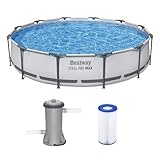
Bestway Steel Pro MAX 12' x 30" Above Ground Swimming Pool Set with Pump | Check Price On Amazon |
|
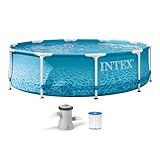
INTEX Beachside Metal Frame 10ft x 30in Round Pool Set w/Pump | Check Price On Amazon |

|
H2OGO! Kids Splash-in-Shade 8-Foot Round Steel Frame Above Ground Pool with Water Mister and Canopy Sunshade, Green Tropical Leaf Print | Check Price On Amazon |
Your First Pool Fill — What the Math Says
Sources: EPA WaterSense, U.S. Geological Survey, industry cost surveys
This guide covers every step from choosing a water source through the final chemical balance. It addresses new plaster, vinyl liner, and fiberglass surfaces separately because they each demand different startup procedures. Getting the fill wrong stains surfaces, voids warranties, and creates water chemistry problems that take weeks to fix. Getting it right means swimming in clear, balanced water the first week.
What Water Source Should You Use to Fill a Pool?
Municipal tap water is the best choice for most residential pool fills. It arrives pretreated, filtered, and chlorinated by the water utility. It also carries a known pH, alkalinity, and hardness profile you can test before filling begins.
Well water is the second most common source. It often contains dissolved iron, manganese, and calcium at levels that municipal water does not. Iron above 0.3 ppm turns pool water brown or green the moment you add chlorine. This happens because chlorine oxidizes dissolved ferrous iron into ferric iron, which is a visible rust-colored precipitate that stains surfaces and clouds water. The oxidation only occurs when chlorine contacts the iron in solution. If the well water sits untreated in the pool before chlorination, the staining reaction happens across the entire pool surface simultaneously. The fix is to fill through a pre-filter that captures iron before the water enters the pool, using a hose-end pre-filter designed for iron and sediment removal, or to use a metal sequestrant dosed at 1 quart per 10,000 gallons before adding chlorine.
Trucked-in bulk water is the most expensive option. Commercial water delivery services charge $200 to $600 per 6,000-gallon tanker load depending on distance. A 20,000-gallon pool needs three to four truckloads. This option makes sense only when well water is too iron-heavy to treat practically or when local water restrictions prohibit filling from the municipal supply. Bulk water is typically unchlorinated municipal water, so you still need to balance and sanitize it after delivery. Always test bulk water before it goes in the pool because the source can change between deliveries.
According to the U.S. Geological Survey, groundwater in roughly 40 percent of U.S. regions contains iron above the 0.3 ppm threshold that causes pool staining. Testing your well water before filling is not optional if you are on a well. Use a Taylor iron test kit or multi-metal test strips to check iron, copper, and manganese levels before water touches the pool.
For most new pool fills with access to city water, municipal tap water is the default. It is predictable, tested, and costs $3 to $6 per thousand gallons compared to $35 to $100 per thousand gallons for trucked water.
How to Fill a Pool Step by Step
The fill process matters as much as the water source. Pausing mid-fill, filling too slowly, or skipping the pre-filter on well water creates problems that chemical treatment cannot fully reverse. Follow these steps in exact order.
Step-by-Step Guide

- Intelligent Navigation with Full Coverage: Equipped with 11 high-precision sensors and enhanced dual-path algorithms. The optimized WavePath cleaning pattern ensures systematic coverage with minimal overlap, while adaptive navigation analyzes pool layout in real time to eliminate missed spots
- Dual Filtration for Crystal-Clear Water: Advanced dual-layer filtration system features a replaceable 3-micron ultra-fine filter paired with a 180-micron standard filter. Effectively captures fine dust, sand, leaves, and debris for visibly cleaner and healthier pool water
- Comprehensive Pool Cleaning: Engineered to clean the pool floor, walls, waterline, and shallow areas (above 12 inches). The Caterpillar Treads system enhances mobility and climbing ability, ensuring thorough coverage across all pool zones
- Reliable Performance with 2-Year Warranty: Trusted by over 500,000 pool owners worldwide, this robotic pool cleaner delivers consistent, high-performance results. Built for durability and backed by a 2-year warranty and responsive customer support for worry-free ownership
How to Fill a New Pool — Step by Step
7 steps · 24 to 72 hours total depending on fill rate and surface preparation
Clean the pool shell thoroughly before water enters
Remove all construction debris, plaster dust, or packaging material. Vacuum the floor if it is dry. Any dirt left in the shell becomes part of the fill water and adds phosphate load that feeds algae during the first week.
Attach a pre-filter to every hose if using well water
Use a hose-end sediment and iron filter rated for 5 microns or finer. Two hoses with separate pre-filters cut fill time in half while still capturing dissolved metals before they oxidize.
Place hoses at the deepest point or away from wall surfaces
Position hose ends in a bucket to prevent erosion of a new plaster or aggregate surface. Direct water stream away from vertical walls on vinyl liner pools to prevent a concentrated water jet from shifting the liner or creating wrinkles behind it.
Fill without stopping until water reaches the middle of the skimmer opening
A stopped fill on a vinyl liner pool creates a water line stain that is difficult to remove from a new liner. On a new plaster pool, stopping mid-fill leaves a visible ring at the pause point that may etch into the curing plaster surface.
Record the water meter reading at start and finish
Subtract the start reading from the end reading to get the exact pool volume in gallons. One cubic foot equals 7.48 gallons. This is the only accurate way to know your pool volume. Every chemical dose from this point on depends on this number.
Start the pump only after water covers the returns by 2 to 3 inches
Never start a pool pump dry or with water only partially covering the suction port. Running a pump dry for even 30 seconds destroys the shaft seal. Water must reach mid-skimmer before the pump can prime and circulate properly.
Run the pump on low speed for 24 hours before adding chemicals
Circulate raw fill water for a full day to dissolve any settled particulates and equalize temperature throughout. Test the water after circulation, not before. A standing sample from the top 12 inches is not representative of the pool.
The fill time for a standard half-inch garden hose at 40 to 60 PSI delivers 9 to 17 gallons per minute. At 12 GPM average, a 20,000-gallon pool fills in roughly 28 hours. For your exact fill time based on hose diameter and water pressure, use our pool fill time calculator. A 5/8-inch hose fills about 30 percent faster. Do not use multiple hoses from the same supply line because the shared pressure drops and the combined flow rate is only marginally higher than one hose at full pressure.
How to Calculate Your Pool Volume During the Fill
Knowing your exact gallon count is the foundation of every chemical calculation you will make for the life of the pool. Estimating from pool dimensions is a useful starting point. Measuring from a water meter is definitive.
Use the dimensional formula for your pool shape to estimate before filling. A rectangular pool uses length times width times average depth times 7.48. A 32-foot by 16-foot rectangle with a 4.5-foot average depth holds 32 times 16 times 4.5 times 7.48, which equals 17,234 gallons. A circular pool uses diameter squared times average depth times 5.9. A kidney or freeform pool uses the longest length times the widest width times average depth times 5.9 as a reasonable approximation. For a quick and precise estimate without manual calculation, use our pool volume calculator to get your pool’s gallon count in seconds.
The water meter method is exact. Record the meter reading before turning on the hose. Record it again when the water reaches the middle of the skimmer. Subtract and multiply by the meter unit conversion, typically 7.48 gallons per cubic foot or 1 gallon per displayed unit on newer meters. Do not use any water inside the house during the fill because every toilet flush or dishwasher cycle adds to the meter total and throws off the calculation.
Mark this volume number somewhere permanent. Write it inside the pump lid, on the equipment pad, or in your phone. Every chlorine tablet dose, every shock treatment, and every alkalinity adjustment uses this number for the next decade.
Cost Reference
Pool Fill Cost by Water Source and Volume
Cost per complete fill. Municipal rates based on $5 per thousand gallons average U.S. residential water rate. Trucked rates based on $45 per thousand gallons delivered.
| Pool volume ↓ Water source → | Municipal tap | Well (free but unfiltered) | Trucked bulk water |
|---|---|---|---|
| 10,000 gallons (small) | $50 | $0 (filter costs: $30 to $60) | $450 to $600 |
| 15,000 gallons (medium) | $75 | $0 (filter costs: $40 to $80) | $675 to $900 |
| 20,000 gallons (large) | $100 ★ most common | $0 (filter costs: $50 to $100) | $900 to $1,200 |
| 30,000 gallons (XL) | $150 | $0 (filter costs: $60 to $120) | $1,350 to $1,800 |
Municipal cost calculated at $5 per thousand gallons, the approximate U.S. national average. Trucked water cost varies by distance. ★ highlights the most common pool size scenario.
What Is the Correct Startup Chemical Sequence for a New Pool Fill?
Chemical sequencing is where most first-time pool fills go wrong. Pouring in chlorine before adjusting alkalinity or adding acid before the pump circulates fully produces localized chemical reactions that damage surfaces. The correct order follows water chemistry logic. Each step creates the proper conditions for the next chemical to work.
The sequence applies to all pool types but the timing between steps differs by surface material. New plaster pools need a delay before chlorine because fresh plaster releases calcium hydroxide into the water for the first several days as it cures. Vinyl liner and fiberglass pools can move through the sequence faster because their surfaces are inert and do not chemically interact with the fill water.
Here is the universal sequence for any pool fill.
First, test the raw fill water after 24 hours of circulation. Measure pH, total alkalinity, calcium hardness, and metals using a Taylor K-2006 liquid drop test kit. Test strips are not accurate enough for startup because the tolerance is too wide. A pH reading that is off by 0.3 is the difference between effective chlorine and ineffective chlorine.
Second, add a metal sequestrant if testing shows iron above 0.3 ppm or copper above 0.2 ppm. Dose at 1 quart per 10,000 gallons using a product like Jack’s Magic or Orenda SC-1000. Pour it slowly into the skimmer with the pump running. The sequestrant binds dissolved metals into a chemically stable complex that stays soluble even when chlorine is added later. Skip this step if your fill water shows zero metals, but never skip it on a well water fill.
Third, adjust total alkalinity to 80 to 120 ppm using sodium bicarbonate. Broadcast it evenly across the deep end with the pump running. Total alkalinity acts as a pH buffer. If total alkalinity starts below 80 ppm, pH will swing wildly with every acid or chlorine addition. If it starts above 120 ppm, pH will drift upward constantly and be difficult to lower. For new plaster, target the high end of the range at 100 to 120 ppm because curing plaster consumes alkalinity.
Fourth, adjust pH to between 7.2 and 7.6 using muriatic acid to lower it or soda ash to raise it. Muriatic acid at 31.45 percent concentration requires 12 fluid ounces per 10,000 gallons to lower pH by approximately 0.2 units. Pour acid slowly into a return jet stream with the pump on high speed. Never pour acid into the skimmer because it etches pump seals and filter internals. Wait 4 hours between pH adjustments before retesting.
Fifth, adjust calcium hardness to 200 to 400 ppm using calcium chloride flakes broadcast across the deep end. For vinyl liner pools, target 150 to 250 ppm. For concrete or plaster pools, target 200 to 400 ppm. Low calcium hardness causes water to leach calcium from plaster surfaces, etching and pitting them over time. High calcium hardness causes scale formation on tile, heat exchangers, and salt cells.
Sixth, add cyanuric acid (CYA) to 30 to 50 ppm using granular stabilizer. CYA protects chlorine from UV degradation. Without CYA, sunlight destroys free chlorine in about 2 hours. With CYA at 30 ppm, chlorine persists for 8 to 12 hours in direct sun. Add CYA through the skimmer sock method. Fill a skimmer sock or nylon stocking with the granular stabilizer, tie it closed, and hang it in the skimmer basket or in front of a return jet. Do not pour granular CYA directly into the skimmer because it takes days to dissolve and can clog plumbing. Do not backwash a sand or DE filter for 48 hours after adding CYA because undissolved stabilizer flushes out with the backwash water.
Seventh, add chlorine last. For new plaster pools, wait a minimum of 48 hours after fill, and often 72 hours depending on the plaster startup method prescribed by the manufacturer. For vinyl liner and fiberglass pools, add chlorine within 3 to 4 hours after CYA is fully dissolved and circulating. The target free chlorine level is 2 to 4 ppm for the first week with CYA at 30 to 50 ppm. Use liquid chlorine (sodium hypochlorite 10 to 12.5 percent) for startup. One gallon of 12.5 percent liquid chlorine adds approximately 6.25 ppm free chlorine to 20,000 gallons. Do not use trichlor tablets during startup because their low pH of roughly 3.0 combined with already-adjusting water makes pH control impossible.
This sequence works because each step conditions the water for the next. Alkalinity provides the buffer that pH adjustment requires. Calcium prevents the etching that low-pH water causes. CYA protects the chlorine that sanitizes the pool. Reversing the order wastes chemicals and creates wild pH swings that require days to correct.
Quick Reference
Startup Chemical Sequence — Order and Targets
Add in this exact order. Adjust. Circulate. Test. Then move to next step.
| Step | Chemical | Target range | Wait time after adding | Adds per 10,000 gal to raise by this amount |
|---|---|---|---|---|
| 1 | Metal sequestrant | Per label dose | 2 hours | 1 qt per 10K gal (if metals present) |
| 2 | Sodium bicarbonate | 80 to 120 ppm TA | 6 hours | 1.5 lbs raises TA by 10 ppm |
| 3 | Muriatic acid or soda ash | 7.2 to 7.6 pH | 4 hours | 12 fl oz acid lowers pH by 0.2 |
| 4 | Calcium chloride | 200 to 400 ppm CH | 8 hours | 1.25 lbs raises CH by 10 ppm |
| 5 | Cyanuric acid | 30 to 50 ppm CYA | 24 to 48 hours to dissolve | 13 oz raises CYA by 10 ppm |
| 6 | Liquid chlorine | 2 to 4 ppm FC | 4 hours before swimming | 20 fl oz 12.5% raises FC by 1 ppm per 20K gal |
Doses are approximate for 10,000 gallons. Always test and retest after each addition. For new plaster pools, delay chlorine addition per the plaster manufacturer’s startup instructions, typically 48 to 72 hours.
For new plaster pools, the plaster manufacturer’s startup procedure takes priority over the general sequence above. National Plasterers Council (NPC) guidelines and major plaster manufacturers like 3M and PebbleTec specify a bicarbonate startup or an acid startup method that controls the pH rise from curing plaster. The bicarbonate startup method holds pH in a 7.8 to 8.2 range intentionally for the first 7 to 10 days to control plaster dust release. The acid startup uses lower pH to accelerate curing. Follow the plaster manufacturer’s written procedure exactly. Deviating from it voids the plaster warranty.
How Do You Start Up a New Plaster Pool After Filling?
New plaster releases calcium hydroxide into the water as it cures. This chemical is highly alkaline with a pH of roughly 12. The result is a rapid pH rise in the pool water that peaks around day 3 to 5 after filling. This happens because calcium hydroxide dissolves from the plaster surface into the water column. The reaction only occurs when the plaster is submerged. If the pool sits empty for weeks before filling, the plaster carbonates from exposure to air and the pH spike is less severe when filling finally happens. If the pool is filled within 24 hours of plaster application, the pH spike is at its maximum and the plaster dust is heavy.
The National Plasterers Council recommends keeping pH between 7.2 and 8.2 for the first 28 days. Allowing pH to climb above 8.2 causes calcium carbonate scaling on the new plaster surface. Allowing pH to drop below 7.0 during the first week etches the plaster before it fully cures.
Test pH twice daily for the first 2 weeks. New plaster pools can drift from 7.4 to above 8.0 in a single day during the first week. Use muriatic acid to control it. A 20,000-gallon new plaster pool may require 2 to 4 gallons of muriatic acid during the first 2 weeks, added in 12 to 16 ounce increments spread throughout the day. Never add more than 16 ounces of acid at once in a new plaster pool because large pH drops are worse for the surface than a gradual drift corrected frequently.
Do not add chlorine for the first 48 hours minimum, and follow the plaster manufacturer’s startup instructions for the exact timing. Some require 72 hours. During this chlorine-free window, brush the entire pool surface twice daily with a nylon brush. Brushing removes plaster dust that rises to the surface and keeps the surface smooth as it cures. Plaster dust is a fine white powder that clouds the water. It is not harmful but must be filtered out. Run the pump 24 hours per day for the first 7 days and clean the filter when the pressure gauge reads 25 percent above clean baseline.
Do not heat the water for the first 14 days. Heat accelerates curing unevenly and causes thermal cracking in new plaster. Do not use a suction-side automatic cleaner for the first 28 days because the wheels and brushes can leave track marks in uncured plaster. Do not add salt to a new plaster pool with a saltwater chlorine generator for 30 days because salt attacks uncured plaster. The plaster warranty from every major manufacturer explicitly states a 28 to 30 day waiting period before salt addition.
After the first 48 to 72 hours, add chlorine to reach 2 to 4 ppm free chlorine. Then follow the normal chemical sequence with CYA and calcium hardness adjustments. The new plaster maintenance period lasts 28 days total. During this time, the water chemistry targets are slightly different than normal operation: maintain pH between 7.2 and 7.6, total alkalinity between 80 and 120 ppm, calcium hardness at 200 to 400 ppm, and CYA at 30 to 50 ppm. After 28 days, transition to normal maintenance chemistry and start your regular testing schedule.
Quick Reference
New Plaster vs Vinyl vs Fiberglass — First-Fill Differences
Startup procedures differ by surface. Follow the column that matches your pool type.
| Startup detail | Plaster / Pebble | Vinyl liner | Fiberglass |
|---|---|---|---|
| Chlorine delay after fill | 48 to 72 hours | 3 to 4 hours | 3 to 4 hours |
| Brushing required | Twice daily, 28 days | Once, after fill | Not required |
| pH drift first week | Rises 0.3 to 0.8 daily | Stable after adjustment | Stable after adjustment |
| Calcium target | 200 to 400 ppm | 150 to 250 ppm | 150 to 250 ppm |
| Heater safe to use | After 14 days | Immediately | Immediately |
| Salt system activation | After 30 days | After 24 hours | After 24 hours |
| Auto cleaner use | After 28 days | Immediately | Immediately |
Always follow the specific manufacturer startup instructions for your plaster, liner, or gelcoat finish. These are general guidelines from the National Plasterers Council, vinyl liner manufacturers, and fiberglass gelcoat producers.
How to Prevent Fill-Water Metal Staining
Metal staining during the first fill is entirely preventable with pre-filtration and sequencing. The mechanism is simple. Dissolved metals in the fill water are invisible. When chlorine is added, it oxidizes ferrous iron into ferric iron and dissolved copper into copper oxide. Both are colored precipitates that deposit on pool surfaces within hours. The condition required for this reaction is the presence of both free chlorine and dissolved metals in solution at the same time. If metals are removed before chlorine is added, no precipitation occurs. If a sequestrant binds the metals into a chlorine-resistant complex before chlorine is added, no precipitation occurs.
The failure mode is adding chlorine to metal-laden water without pretreatment. The result is brown iron stains on the plaster or liner within 24 hours. Fixing it requires a metal sequestrant at quadruple the normal dose and sometimes an ascorbic acid treatment that costs $30 to $100 in chemicals and requires lowering pH to 7.0 or below for 24 hours while the treatment works.
Prevention costs far less. A hose-end pre-filter rated at 1 to 5 microns captures oxidized iron particles that form inside well plumbing before the water reaches the pool. These filters cost $15 to $40 and treat 5,000 to 10,000 gallons before needing replacement. Use two filters in parallel on separate hoses for a faster fill with continuous filtration. After the fill is complete, add a metal sequestrant at the maintenance dose of 1 quart per 20,000 gallons monthly to bind any residual metals that slip through or enter via top-off water later in the season.
For municipal water fills in older neighborhoods with galvanized iron pipes, run the hose for 5 minutes before placing it in the pool. This flushes out the iron-laden water that sat in the home plumbing overnight. The standing water in old iron pipes can contain 1 to 5 ppm of dissolved iron even when the municipal supply is clean.
Why Does the Pump Need to Circulate Before Adding Chemicals?
Raw fill water sitting in a pool is stratified. The top 12 inches are warmer and have different chemistry than the water at the deepest point. Water from different sources, measured at different times during a long fill, can also differ in chemistry. Adding chemicals to still water applies them to only a small volume where they create locally extreme conditions before slowly diffusing.
Circulating the pool for 24 hours before the first chemical addition equalizes temperature from top to bottom. It mixes fill water from different times and sources into a homogeneous body. It also dissolves any settled dust or debris into the water column where the filter can capture it.
After chemical additions begin, always add chemicals to moving water with the pump running on high speed. Pour liquid chemicals slowly into the stream of a return jet. Broadcast granular chemicals across the deep end away from the walls. Never add more than one chemical at a time to the same area. Muriatic acid and liquid chlorine poured into the same spot create a toxic chlorine gas cloud. Muriatic acid and calcium chloride mixed in concentrated form create a violent exothermic reaction that can splash acid onto skin and surfaces.
The pump should run continuously for the first 72 hours after fill on all pool types. After the initial startup, transition to a normal runtime based on your pool volume and pump flow rate. For a detailed walkthrough of matching pump runtime to pool volume and turnover requirements, our complete pool installation guide covers pump sizing, equipment pad layout, and circulation design in detail.
Common First-Fill Mistakes and How to Avoid Them
Mistake one is stopping the fill partway. A pause leaves a visible water line on plaster, vinyl, or fiberglass. On plaster, that line etches as the surface above it cures dry and the surface below cures wet at different rates. The line persists as a cosmetic defect for the life of the plaster. On vinyl, the pause line stains from airborne dust settling on the exposed liner above the water. Once filled, run the garden hose or bulk water delivery hose without interruption until water reaches the middle of the skimmer.
Mistake two is adding chlorine before CYA. In direct sun, chlorine without CYA protection degrades in about 2 hours. A pool owner adds chlorine, tests an hour later, sees a good reading, and assumes the pool is sanitized. By the next morning, chlorine is zero because the sun destroyed it overnight. Cyanuric acid at 30 ppm stabilizes chlorine so it remains active for a full day. The correct sequence is CYA first, then chlorine.
Mistake three is using trichlor tablets during startup. Trichlor is roughly 50 percent CYA by weight and has a pH of approximately 3.0. During startup, CYA and pH are already being adjusted independently. Trichlor adds both CYA and acid in uncontrolled amounts, making it impossible to reach stable targets. Use liquid chlorine for startup. Switch to tablets as a maintenance convenience once the pool is balanced and stable, typically after the second week.
Mistake four is skipping the metal test on well water. One in three well water fills nationwide contains enough iron to stain. The $15 test kit is cheaper than the $50 to $100 in sequestrant and acid needed to remove stains after the fact.
Mistake five is failing to record the exact gallon volume. Every chemical dose for every treatment for the life of the pool depends on knowing the real volume. The water meter method takes 30 seconds of effort before and after filling and provides the single most valuable piece of data for long-term pool care.
Mistake six is adding salt to a saltwater chlorine generator pool on day one. Salt at 3,000 to 3,500 ppm attacks uncured plaster and voids the plaster warranty. Every plaster manufacturer and the National Plasterers Council specify a 28 to 30 day waiting period before salt addition. If a salt system is part of the equipment package, leave the salt cell turned off and bypassed for the first month. Balance the pool with liquid chlorine during the plaster curing period. Understanding long-term chemical differences between salt and chlorine pools helps set expectations for maintenance after the first month. Our saltwater versus chlorine pool cost comparison breaks down the annual chemical, equipment, and maintenance differences so you can anticipate ongoing costs after startup.
Mistake seven is running an automatic pool cleaner during the first 28 days on new plaster. The wheels, tracks, and brushes on robotic and pressure-side cleaners scour uncured plaster and leave permanent wear marks. Brush manually for the first month. After 28 days, automatic cleaners are safe to use on fully cured plaster.
How to Start Up the Filtration System for the First Time
The filter needs startup attention just like the water chemistry. A new filter contains manufacturing oils, assembly debris, and sometimes loose media that must be flushed before it filters startup debris from the fill.
For a new sand filter, backwash it before the first use. Sand filters ship with sand already loaded or require sand to be added on-site. In either case, backwash for 2 to 3 minutes or until the sight glass runs clear, then rinse for 30 seconds to settle the sand bed. This removes fine sand particles that would otherwise blow into the pool through the returns on first startup. Use number 20 silica pool filter sand or a sand alternative like zeolite or glass media if specified by the filter manufacturer.
For a new cartridge filter, remove and rinse each cartridge with a garden hose before assembling the filter. Manufacturing dust and loose fibers from new cartridges cloud the water if not rinsed first. If the filter is already assembled and full, open the air relief valve on top during pump startup to purge air from the tank. A filter running with an air pocket compresses the cartridges unevenly and reduces effective filtration area. Replacement cartridges come in standard sizes matching common filter models. Confirm the cartridge part number matches your filter before the first deep clean or replacement cycle.
For a new DE filter, the first startup is more involved. The filter grid assembly inside the tank must be coated with DE powder before it filters effectively. Add DE powder through the skimmer with the pump running. The correct dose is printed on the filter label. Typically 1 pound of DE for every 10 square feet of filter area. A 60-square-foot DE filter needs 6 pounds of diatomaceous earth pool filter powder added slowly to the skimmer so it coats the grids evenly. Adding DE without water flow clogs the grids with dry clumps that reduce flow and create channeling where water bypasses the DE coating. This only happens when DE is added to a stopped pump or dumped in all at once. If the filter grids run without adequate DE coating, unfiltered plaster dust and construction debris circulate back to the pool through the returns. The fix is to backwash the filter, then add the correct DE dose through the skimmer with the pump running on high speed.
Monitor the filter pressure gauge during the first 48 hours. New fill water carries plaster dust, construction debris, and dirt that loads the filter quickly. When the pressure gauge reads 8 to 10 PSI above the clean starting pressure, clean the filter. A new plaster pool may require filter cleaning every 24 to 48 hours during the first week as the plaster dust peaks and then tapers off.
Electrical Safety and Bonding Before System Startup
Before powering on any pool equipment for the first time, confirm the pool bonding and grounding system is complete and connected. Pool bonding connects all metal components, the water, and the equipment to a common copper grounding network that prevents voltage differentials from developing between parts a swimmer can touch simultaneously. This is not a ground wire for overcurrent protection. It is an equipotential bonding grid that keeps everything at the same electrical potential.
The bond wire must connect the pool shell rebar or metal wall, the pump motor, the heater, any metal ladders or handrails, underwater lights, and the water itself via a water bond fitting. This is required by the National Electrical Code Article 680.26. Do not start the pump or heater without confirming the bonding system is installed and tested. Our pool bonding and grounding guide explains the difference between bonding and grounding, the code requirements, and how to verify the system is correct before the first equipment startup.
How Much Does It Cost to Fill and Start Up a Pool?
The total first-fill cost includes water, chemicals, and electricity for continuous pump operation during startup. The water itself is the smallest line item for municipal fills. Chemical startup costs are predictable if no metal treatment is needed.
Cost Breakdown
First Fill Startup Costs — 20,000-Gallon Pool Example
All costs approximate for a 20,000-gallon residential pool with municipal water. Chemical prices from pool supply retailers verified at time of publication.
| Cost item | Approximate cost |
|---|---|
| Municipal water, 20,000 gallons | $60 to $120 |
| Sodium bicarbonate (4 to 8 lbs) | $8 to $16 |
| Muriatic acid (2 to 4 gallons) | $16 to $32 |
| Calcium chloride (10 to 20 lbs) | $15 to $30 |
| Cyanuric acid (5 lbs) | $12 to $20 |
| Liquid chlorine (2 to 4 gallons) | $12 to $24 |
| Metal sequestrant (if needed) | $20 to $40 |
| Test kit (Taylor K-2006) | $60 to $80 |
| Total startup cost (excluding test kit) | $123 to $262 |
Costs vary by location, water quality, and fill source. Trucked bulk water adds $500 to $1,500 to the water line item for a 20,000-gallon pool. A one-time test kit purchase of $60 to $80 is required for accurate startup but is reusable for years.
To get a cost estimate tailored to your local water rates and pool volume, try our pool fill cost calculator.
Electricity for continuous pump operation during startup adds $15 to $50 depending on pump type and local electricity rates. A single-speed 1.5 HP pump running 24 hours per day for 7 days at 12 cents per kWh costs roughly $22. A variable-speed pump running at 1,500 RPM for the same period costs under $5. For a complete picture of pool construction costs including the equipment that drives ongoing operation, see our swimming pool cost guide that breaks down inground and above-ground options at every budget level.
Above-Ground Pool Fills: What Is Different?
Above-ground pools follow the same chemical sequence as inground pools. The fill procedure differs in two ways. The pool wall and liner must be supported correctly before filling, and the water volume is typically smaller.
For soft-sided above-ground pools, fill to 1 inch of water depth and then stop. Walk inside the pool and smooth all wrinkles from the liner floor working from the center outward. Wrinkles left under the water weight become permanent. Restart the fill and keep the water flowing until it reaches the recommended level. Leaving water in a partially filled above-ground pool for more than a few hours strains the frame unevenly and can cause the wall to bow.
For hard-sided above-ground pools with metal frames, confirm the pool is level to within 1 inch across the entire diameter before filling. A pool out of level by more than 1 inch concentrates thousands of pounds of water pressure on the low side wall. The wall can buckle. This happens because water pressure increases with depth. A 1-inch height difference across 24 feet creates a pressure differential of roughly 60 pounds per square foot at the low side versus the high side. If the pool wall is already under tension from an unlevel installation, the added water weight can cause a catastrophic collapse.
Above-ground pool volumes are typically smaller. A 24-foot round above-ground pool at 52 inches deep holds roughly 15,000 gallons. A 15-foot round holds approximately 5,300 gallons. The smaller volume means chemical doses are smaller and mistakes are magnified. Double-check every dose calculation for the actual gallon volume. For a deeper look at above-ground pool options, construction differences, and what to expect during installation, check our guide to the best above-ground pools for different yard sizes and budgets.
Frequently Asked Questions About Filling a Pool for the First Time
Can I fill my pool with softened water from my home water softener?
Quick Answer: No. Home water softeners use ion exchange resin that replaces calcium and magnesium with sodium. Softened water has near-zero calcium hardness and high sodium content. Filling a plaster or concrete pool with softened water causes aggressive leaching of calcium from the surface because the water seeks to balance its mineral content. This etches plaster and pits concrete. For vinyl or fiberglass pools, softened water is less damaging to surfaces but still creates a zero-calcium environment that corrodes metal components like heaters and pump seals.
The volume of a pool fill also exceeds what a residential water softener can produce continuously. A typical softener regenerates after 500 to 1,500 gallons. A 20,000-gallon fill would trigger 13 to 40 regeneration cycles, each consuming salt and flushing brine to the drain. The salt cost alone exceeds the municipal water cost. Fill from the unsoftened municipal line or well and adjust calcium hardness chemically after the fill.
How long after filling can I swim in a new pool?
Quick Answer: For a vinyl liner or fiberglass pool with balanced chemicals, swimming is safe within 8 to 12 hours after the last chemical addition. For a new plaster pool, wait 48 to 72 hours minimum for the plaster to cure sufficiently and for the startup chemicals to stabilize pH. Always test free chlorine between 2 and 4 ppm and pH between 7.2 and 7.6 before entering any newly filled pool.
New plaster pools also shed plaster dust during the first several days. Swimming while plaster dust is active irritates eyes and skin. The pool should be clear of visible plaster dust and the plaster should pass a touch test where it feels smooth and not chalky before swimmers enter.
Why did my pool water turn green or brown right after adding chlorine?
Quick Answer: Green or brown water immediately after adding chlorine is almost always iron oxidation. Dissolved iron in the fill water, invisible before chlorination, turns into visible rust-colored ferric oxide particles when chlorine contacts it. The same reaction can produce a green tint from copper oxidation. This is the most common well water fill problem.
The fix requires a metal sequestrant dosed at 1 to 2 quarts per 10,000 gallons to rebind the oxidized metals into solution. If the metal has already precipitated onto surfaces as stains, an ascorbic acid treatment lowers pH to 7.0 or below and dissolves iron stains back into the water where a sequestrant captures them. After treatment, filter continuously and clean the filter when pressure rises 25 percent above baseline.
Do I need to shock a newly filled pool?
Quick Answer: No, not if you follow the startup sequence correctly. Shock dosing raises free chlorine to 10 to 30 ppm to oxidize contaminants. A newly filled pool with fresh water has no contaminants to oxidize. Shocking is unnecessary and wastes chemicals. Establish a baseline free chlorine level of 2 to 4 ppm with CYA at 30 to 50 ppm and maintain it through daily testing during the first week.
The exception is if the fill water sat untreated for several days before chemicals were added, during which bacteria or algae spores could have entered. In that case, a single shock dose to 10 ppm free chlorine resolves the issue. This is uncommon if the fill and chemical sequence is completed within 72 hours.
Should I add algaecide during the first fill?
Quick Answer: No. Algaecide is a preventive treatment, not a startup chemical. With proper chlorine levels and circulation, algae cannot establish in a newly filled pool. Adding algaecide during startup introduces copper-based compounds or quaternary ammonium that complicate the chemical balance and can react with other startup chemicals.
Algaecide belongs in a maintenance routine after the pool is balanced and stable. It is useful for closing a pool for winter or treating a confirmed algae bloom weeks or months after startup. During the first fill, chlorine and circulation provide complete algae prevention without additional products.
What is the difference between filling with a hose versus a water truck?
Quick Answer: A garden hose delivers 9 to 17 GPM and fills a 20,000-gallon pool in 24 to 48 hours at a cost of $60 to $120. A water truck delivers 6,000 gallons in roughly 20 to 30 minutes per load at $200 to $600 per load. Three to four truckloads fill a 20,000-gallon pool in under 2 hours at a total cost of $600 to $2,400.
The hose is slower but cheaper and gives you time to pre-filter well water or monitor the fill. The truck is fast but expensive and the delivered water is an unknown quality that may differ between loads. Truck delivery is practical when a well cannot produce enough water without running dry or when municipal restrictions ban filling from the tap.
Can I use my pool heater during the first week after filling?
Quick Answer: Only on a vinyl liner or fiberglass pool. Do not heat a new plaster pool for the first 14 days because uneven heating stresses the curing plaster surface and can cause thermal cracking. For vinyl and fiberglass pools, the heater can be used immediately after the chemical balance is stable and the filter is running. Set the heater to raise temperature no faster than 1 to 2 degrees Fahrenheit per hour during the first use to avoid thermal shock to any pool components.
How soon can I add salt to a saltwater pool after filling?
Quick Answer: For a vinyl liner or fiberglass pool, add salt 24 hours after the chemical balance is stable and the salt cell is installed. For a new plaster pool, wait 30 days. This waiting period is non-negotiable for plaster warranty compliance. Salt at 3,000 to 3,500 ppm chemically attacks uncured plaster and causes surface deterioration.
During the plaster curing period, use liquid chlorine to maintain the free chlorine level. After 30 days, add pool-grade salt at the rate prescribed by the salt chlorine generator manufacturer. One 40-pound bag of pool salt raises salinity by approximately 480 ppm in 10,000 gallons. Broadcast the salt across the deep end with the pump running and brush any undissolved salt piles until fully dissolved.
Why does my new pool water look cloudy even though chemicals are balanced?
Quick Answer: Cloudy water in a new fill with balanced chemistry is most often plaster dust from curing plaster or fine sediment from the fill water. Plaster dust creates a white cloud that filters out over 3 to 7 days with continuous pump operation. Sediment cloudiness comes from unfiltered particles in the fill water and clears within 24 to 48 hours of filtration.
If cloudiness persists beyond a week, test for combined chlorine above 0.5 ppm, which indicates a chlorine demand from contaminants, or check calcium hardness above 400 ppm, which can cause calcium carbonate precipitation that appears as a white haze. A clarifier or flocculant may be needed if fine suspended particles are too small for the filter to capture. However, avoid adding clarifier during the first week because it complicates the chemical balance that is still stabilizing.
Do I need to run the pool pump 24 hours a day after filling?
Quick Answer: Yes, run the pump continuously for the first 72 hours after fill. This ensures complete chemical distribution, continuous filtration of plaster dust or fill sediment, and prevents stagnant water zones where algae can start. After 72 hours, new plaster pools benefit from continuous operation for the first 7 days. Vinyl liner and fiberglass pools can transition to the normal daily runtime based on turnover calculation.
A pump running at 50 GPM on a 20,000-gallon pool achieves one full turnover in 6.7 hours. Two turnovers per day is the baseline recommendation during normal operation. For the first 72 hours, continuous operation provides roughly 3.6 turnovers per day and ensures uniform chemical mixing. To determine the ideal runtime for your specific pump and pool, use our pool turnover calculator.
What if my fill water pH or alkalinity is extremely high or low from the tap?
Quick Answer: Test the raw fill water after 24 hours of circulation but before adding any chemicals. Municipal water typically arrives at pH 7.0 to 8.0 and alkalinity 60 to 120 ppm. Well water can be outside these ranges. If pH is below 6.8, add soda ash at 6 ounces per 10,000 gallons to raise pH by 0.2 units. If pH is above 8.2, add muriatic acid at 12 fluid ounces per 10,000 gallons to lower pH by 0.2 units. Adjust alkalinity to 80 to 120 ppm using sodium bicarbonate before making the final pH correction because alkalinity buffers the pH and makes it easier to hold steady.
Is it safe to leave the hose running overnight to fill the pool?
Quick Answer: Yes, and overnight filling is standard practice because a 20,000-gallon pool takes 24 to 48 hours. The risks are manageable. Use a hose timer that shuts off the water when a set volume is reached. Place the hose securely in the pool so it cannot fall out and flood the equipment pad or the yard. Check the hose connection at the spigot for leaks before leaving it unattended. If using well water, confirm the well pump can run continuously without overheating by checking the manufacturer duty cycle rating. Most residential well pumps are rated for continuous operation, but older pumps may overheat during a 24-hour run.
Can I use the pool vacuum to clean up after filling?
Quick Answer: Yes on vinyl liner and fiberglass pools. Wait 28 days on new plaster pools before using any automatic or manual vacuum that contacts the surface. Plaster continues to cure and harden during the first month. Vacuum wheels, brushes, and even vacuum heads dragged across the floor can leave permanent marks.
During the plaster curing period, brush the pool walls and floor with a nylon brush twice daily. The brushing action lifts plaster dust into the water column where the filter captures it. After 28 days, a manual or automatic vacuum is safe. For vinyl and fiberglass pools, vacuuming is safe immediately after the fill is complete and the pump is running.
Do I need to install the pool cover immediately after filling?
Quick Answer: No. A new pool needs full exposure to air and sunlight during the first week. A cover traps carbon dioxide that would otherwise off-gas from the water, which drives pH up. A cover also prevents plaster dust from being skimmed and filtered out of a new plaster pool. Leave the pool uncovered for at least the first 7 days or until the water chemistry is stable and the plaster dust has cleared.
After the first week, a solar cover or safety cover can be used normally. If evaporation or debris is a concern during the uncovered period, skim the surface daily with a leaf net and top off water as needed at the end of the startup week.
Should I backwash my sand filter right after filling?
Quick Answer: Yes, backwash a new sand filter before it filters the pool for the first time. Backwash for 2 to 3 minutes or until the sight glass water runs clear. This removes fine sand particles that would otherwise blow into the pool through the returns. Then rinse for 30 seconds to resettle the sand bed. After backwashing, note the clean pressure gauge reading. This is the baseline. When the gauge reads 8 to 10 PSI above baseline, backwash again.
| Photo | Best Above-Ground Pools | Price |
|---|---|---|
|
|
Bestway Steel Pro MAX 12' x 30" Above Ground Swimming Pool Set with Pump | Check Price On Amazon |
|
|
INTEX Beachside Metal Frame 10ft x 30in Round Pool Set w/Pump | Check Price On Amazon |
|
|
H2OGO! Kids Splash-in-Shade 8-Foot Round Steel Frame Above Ground Pool with Water Mister and Canopy Sunshade, Green Tropical Leaf Print | Check Price On Amazon |