
Water inside the pool light housing does not always mean the fixture has failed. It often means the gasket was not seated correctly during the last bulb change, and that $4 rubber ring is all that stands between a working light and a shorted fixture full of water.
This guide covers every step of pool light replacement for both bulb-only swaps and full fixture replacements, including the safety protocols that prevent electrocution, the diagnostic steps that tell you which repair you actually need, and the sealing techniques that keep water out of the housing for years after the job is done.
| Photo | Best Above-Ground Pools | Price |
|---|---|---|
|
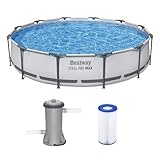
Bestway Steel Pro MAX 12' x 30" Above Ground Swimming Pool Set with Pump | Durable Round Metal Frame Outdoor Backyard Pool, Puncture-Resistant Liner - Type III A/C Filter Cartridge Included, Gray | Check Price On Amazon |
|
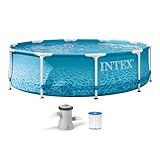
INTEX 28207EH 10ft X 30in Beachside Metal Frame Above Ground Swimming Pool Set, Includes 330 GPH Cartridge Filter Pump, Puncture-Resistant Material, Rust Resistant, 1185 Gallon Capacity | Check Price On Amazon |

|
H2OGO! Kids Splash-in-Shade 8-Foot Round Steel Frame Above Ground Pool with Water Mister and Canopy Sunshade, Green Tropical Leaf Print | Check Price On Amazon |
By the Numbers
Pool Light Replacement — What the Data Shows
Sources: U.S. Consumer Product Safety Commission, industry service data
What Makes Pool Light Replacement Different from Standard Electrical Work?
Pool light replacement is not a standard electrical job. The fixture sits submerged in water, which means every connection, every seal, and every component must function perfectly or the result is not a flickering light but a potentially lethal electrical hazard.
The National Electrical Code (NEC) Article 680 governs all underwater pool lighting. It requires that any light fixture operating below the waterline must be connected to a Ground Fault Circuit Interrupter (GFCI) that trips within 25 milliseconds when it detects a current leak as small as 5 milliamps. A standard household circuit breaker trips at 15 or 20 amps, which is 3,000 to 4,000 times higher than the 5 milliamps that can cause cardiac arrest.

- Intelligent Navigation with Full Coverage: Equipped with 11 high-precision sensors and enhanced dual-path algorithms. The optimized WavePath cleaning pattern ensures systematic coverage with minimal overlap, while adaptive navigation analyzes pool layout in real time to eliminate missed spots
- Dual Filtration for Crystal-Clear Water: Advanced dual-layer filtration system features a replaceable 3-micron ultra-fine filter paired with a 180-micron standard filter. Effectively captures fine dust, sand, leaves, and debris for visibly cleaner and healthier pool water
- Comprehensive Pool Cleaning: Engineered to clean the pool floor, walls, waterline, and shallow areas (above 12 inches). The Caterpillar Treads system enhances mobility and climbing ability, ensuring thorough coverage across all pool zones
- Reliable Performance with 2-Year Warranty: Trusted by over 500,000 pool owners worldwide, this robotic pool cleaner delivers consistent, high-performance results. Built for durability and backed by a 2-year warranty and responsive customer support for worry-free ownership
A GFCI is not optional equipment on a pool light circuit. It is the single most important safety device between your family and a lethal electrical accident. Test the GFCI before beginning any pool light work by pressing the test button and confirming power to the light cuts off completely.
Buying Guide
Before You Start — Pool Light Safety Checklist
Check off each point before touching any pool light component.
How to Diagnose Whether You Need a Bulb or Full Fixture Replacement
The distinction between a bulb failure and a fixture failure determines whether you spend $30 and 45 minutes or $500 and half a day. Getting this wrong means you replace a bulb, reseal everything, refill the pool, and then watch the light fail again two weeks later because water was entering through a cracked housing the whole time.
Start with a visual inspection of the light while it is still installed. With the light turned on, look through the water at the lens. If the bulb flickers or glows weakly but does not produce full brightness, the bulb filament is failing. This is a bulb replacement job.
If you see water sloshing behind the lens or a visible waterline inside the housing, the fixture seal has failed. Water inside the housing corrodes the socket, the wiring connections, and eventually the inside of the brass or stainless steel shell. A fixture with visible internal water needs full replacement. No gasket swap will save it once the interior has been submerged for weeks.
Use the table below to match your symptoms to the correct repair.
Product Comparison
Bulb Replacement vs Full Fixture Replacement — Side by Side
Match your symptoms to the right repair before spending a dollar.
| Factor | Bulb Replacement | Fixture Replacement |
|---|---|---|
| Symptom | Bulb is dim, flickering, or completely dark with no water inside housing | Water visible inside housing, rust on housing, or GFCI trips instantly on reset |
| Typical cost (DIY) | $25-$60 | $150-$400 |
| Time required | 30-90 minutes | 2-4 hours |
| Water drainage needed | No — fixture cord lets you work on the deck | Usually no — same cord-access method |
| Professional labor cost | $150-$250 | $350-$600 |
| Best for | Burned-out bulb, failed filament, old halogen bulb | Water-damaged housing, corroded socket, cracked lens, tripping GFCI |
Safety First: How to Completely Disconnect Power to Your Pool Light
Turning off the pool light switch on the wall is not enough. Many pool light circuits have a junction box located behind the light niche, in a deck box, or at the equipment pad. Power can still be live at the fixture even with the switch in the off position if the circuit is miswired or if there is a shared neutral from another circuit.
Locate the correct breaker in your main electrical panel. Pool light circuits are typically labeled at the subpanel near the pool equipment. Flip the breaker to the off position and then use a non-contact voltage tester at the junction box to verify zero voltage. Hold the tester against every wire, every terminal, and the box itself.
The junction box for an inground pool light is typically located above the waterline, set into the deck or wall behind the light niche. This box contains the connection where the light fixture cord joins the conduit wiring from the panel. It is also the point where any water that traveled along the cord would collect. Open this box carefully and check for moisture. A wet junction box means water has been tracking along the fixture cord and the cord itself may need replacement.
Keep a non-contact voltage tester in your hand at every step. Test it on a known live circuit first to confirm it works, then test the pool light circuit. Test again after turning the breaker back on temporarily for diagnostics, and test again before touching any wire. There is no step in this process where double-checking for voltage is excessive.
How to Replace a Pool Light Bulb: Step-by-Step Guide
Most inground pool lights are installed in a niche with enough extra cord coiled behind the fixture to lift the entire assembly up onto the deck. You do not need to drain the pool below the light. This is the single most important fact that saves hours of work and hundreds of gallons of water.
The fixture is held in place by a single screw at the top of the housing ring, usually a Phillips or flathead brass screw. Remove this screw and the fixture will swing forward and can be carefully lifted to the deck. The cord follows through the conduit. Lay the fixture lens-up on a towel on the deck.
Step-by-Step Guide
How to Replace a Pool Light Bulb — Step by Step
8 steps · 45-90 minutes
Kill power at the breaker and test for zero voltage
Turn off the breaker, then use a non-contact voltage tester at the junction box and at any accessible wiring point. Confirm the GFCI trips correctly before proceeding.
Remove the single retaining screw at the top of the light ring
This is typically a brass Phillips screw at the 12 o’clock position. Do not lose it — replacements are specific to your fixture model and hard to source locally.
Pry the fixture from the niche and lift it to the deck
Use a flathead screwdriver gently under the bottom edge if the fixture is stuck. The cord will pull through the conduit. Set the fixture lens-up on a clean towel.
Open the fixture by removing the clamp band or face ring screws
Most pool lights use a stainless steel clamp band with a tension screw. Loosen this slowly. Others use a threaded face ring. The lens and gasket will separate from the housing.
Remove the old bulb and inspect the socket and housing interior
Halogen bulbs must not be touched with bare fingers — oil from skin creates hot spots that cause premature failure. Use a clean cloth or the packaging sleeve. If the socket shows green corrosion, the fixture needs replacement.
Install the new bulb with clean hands or gloves
Insert the new bulb into the socket firmly but do not overtighten. A LED pool light replacement bulb offers significantly longer life and lower energy use than halogen. Match the voltage exactly to your fixture.
Replace the gasket with a new one and reassemble the fixture
Never reuse an old gasket. A new pool light lens gasket costs $5-$15 and is the only barrier between the bulb and the pool water. Clean both sealing surfaces completely before placing the new gasket.
Test the light on deck for 2-3 seconds, then reinstall underwater
Restore power briefly with the fixture still on the deck to confirm the bulb works. Then kill power again, submerge the fixture back into the niche, and secure the retaining screw. Restore power for final testing.
The gasket is the single most critical component in a pool light bulb replacement. When reassembling, tighten the clamp band or face ring evenly and progressively. Tighten one side partially, then the other, working around the fixture in a star pattern. An unevenly tightened clamp band distorts the gasket and creates a leak path that may take weeks to show itself.
Once the fixture is back in the niche and secured, restore power at the breaker and test. The light should illuminate steadily with no flickering. Check the GFCI by pressing the test button — the light should cut off immediately. Press reset and confirm the light comes back on.
How to Replace the Entire Pool Light Fixture: Step-by-Step Guide
A full fixture replacement is required when water has entered the housing and corroded the socket, when the lens is cracked, when the housing itself has visible rust or pitting, or when the GFCI trips instantly upon resetting even with a new bulb installed. The fixture and its attached cord are replaced as a single sealed unit.
The process starts identically to bulb replacement: kill power, remove the retaining screw, and lift the fixture to the deck. The difference is that instead of opening the fixture and swapping a bulb, you disconnect the entire cord from the junction box and pull it through the conduit. Then you feed the new fixture cord back through the conduit using the old cord as a pull line.
Step-by-Step Guide
How to Replace a Pool Light Fixture — Full Process
11 steps · 2-4 hours
Identify your existing fixture model and order the correct replacement
Look for a model number on the back of the housing or the lens ring. Common brands include Pentair Amerlite, Hayward AstroLite, and Jandy WaterColors. The replacement must match the niche size, voltage, and cord length.
Kill all power at the main breaker panel
Turn off the breaker for the pool light circuit and any adjacent circuits that might share a junction box. Confirm with a non-contact voltage tester at every accessible point.
Remove the retaining screw and lift the old fixture to the deck
Same process as bulb replacement. Lay the fixture on a towel. Note the condition of the cord as it comes out of the conduit — any cracks or brittleness confirm replacement was needed.
Locate and open the junction box
The junction box is typically a round or rectangular box set into the deck or wall, above the waterline and behind the light niche. Open it carefully and note the wire connections.
Disconnect the old fixture wires at the junction box
Photograph the connections before undoing anything. Typically black to black (hot), white to white (neutral), and green or bare copper to the ground screw. The fixture cord has an outer jacket that seals against water ingress.
Attach a pull cord to the old fixture cord at the junction box
Tie a strong nylon pull string or fish tape securely to the old cord. This pull line will draw the new cord back through the conduit. Wrap the connection with electrical tape to prevent snagging.
Pull the old cord out from the fixture end
Pull steadily from the deck side. The cord slides through the conduit. Stop when the pull string reaches the fixture end. Detach the old cord and keep the pull string in the conduit.
Attach the new fixture cord to the pull string and draw it through
Tie the pull string securely to the cord end of the new pool light fixture. Lubricate the cord with a small amount of wire-pulling lubricant to ease it through. Pull steadily from the junction box side.
Wire the new fixture at the junction box
Match the connections exactly as photographed in step 5. Use waterproof wire nuts or heat-shrink connectors rated for wet locations. The NEC requires a potting compound or sealed junction box for pool light connections.
Test the fixture on deck before final installation
Restore power briefly with the fixture on the deck to confirm it illuminates. Check that the GFCI does not trip. Kill power again before submerging the fixture.
Install the fixture in the niche and secure the retaining screw
Coil any excess cord behind the fixture in the niche. Seat the fixture properly against the niche wall. Tighten the retaining screw. Restore power and test.
The cord pull is the most technically demanding part of a fixture replacement. If the conduit has a tight bend or if the old cord is damaged and breaks during the pull, you may need a fish tape or even professional assistance. Never force a cord through resistance — a damaged cord jacket inside the conduit creates a shock hazard that no GFCI can protect against until the damage is already done.
What Type of Pool Light Bulb Do You Need? LED vs Incandescent vs Halogen
Pool light bulbs are not interchangeable across voltage, wattage, and base type. Installing the wrong bulb creates either a light that does not work at all or, worse, one that overheats the fixture, melts internal components, and creates a fire hazard inside a sealed underwater housing.
Check the old bulb for its specifications printed on the base or glass. The three critical numbers are voltage (12V or 120V), wattage (typically 100W to 500W for incandescent or halogen, 15W to 45W for LED equivalent), and base type (most common is a bayonet-style double-contact base). Never exceed the wattage rating printed on the fixture itself.
Product Comparison
LED vs Halogen vs Incandescent Pool Light Bulbs — Full Comparison
Use the table below to match your priorities to the right bulb type.
| Feature | LED | Halogen | Incandescent |
|---|---|---|---|
| Typical wattage | 15-45W | 100-500W | 300-500W |
| Lifespan | 15,000-30,000 hours | 2,000-4,000 hours | 1,000-2,000 hours |
| Annual energy cost (8hr/day) | $15-$45 | $85-$250 | $130-$260 |
| Color options | White plus full RGB color changing available | Warm white only | Warm white only |
| Bulb cost | $25-$80 | $8-$25 | $5-$15 |
| Best for | Long-term savings, color effects, infrequent replacement | Budget replacement, original spec match | Vintage fixtures pre-1990, lowest upfront cost |
LED retrofit bulbs are now available for most standard pool light fixtures including the Pentair Amerlite and Hayward AstroLite series. These bulbs screw directly into the existing socket and draw approximately 85% less power than the halogen bulbs they replace. To see what a color-changing LED can do for your pool’s ambiance, try our free pool light design visualizer and experiment with different lighting layouts. For a full breakdown of LED color options and the best LED pool lights available, read our complete guide to LED pool lighting types, colors, and the best available options.
One caveat with LED retrofit bulbs: some older 12V magnetic transformers do not provide the stable DC current that LED bulbs require. If your LED retrofit flickers or does not illuminate on a 12V system, you may need to replace the transformer with an LED-compatible electronic driver. This is a $40-$80 additional cost at the junction box.
Common Pool Light Problems and How to Troubleshoot Them
Most pool light failures follow predictable patterns. Learning to diagnose by symptom rather than assuming the worst saves time and money. The following problems account for approximately 90% of all pool light service calls according to field data from certified pool operators.
GFCI tripping immediately when the light is turned on is the most serious symptom. It means current is leaking to ground somewhere in the circuit. The most common cause is water inside the fixture housing creating a path from the hot wire to the grounded housing shell. Less commonly, a damaged cord inside the conduit or a failed GFCI outlet itself can cause nuisance tripping.
Myth vs Fact
Pool Light Replacement — Common Myths Debunked
Separating fact from fiction on the most common pool light misconceptions
✗ Myth
You must drain the pool below the light to replace the bulb or fixture.
✓ Fact
Pool light fixtures are designed with extra cord coiled in the niche so the entire assembly can be lifted to the deck for service. The NEC requires enough cord to allow the fixture to be serviced without draining.
✗ Myth
Turning off the wall switch makes it safe to work on the pool light.
✓ Fact
The breaker must be turned off at the panel. Wall switches can be miswired, can fail internally while appearing off, or may control only one leg of a circuit. A non-contact voltage tester at the junction box is the only reliable confirmation.
✗ Myth
You can reuse the old gasket if it looks fine.
✓ Fact
Gaskets compress permanently after their first installation. A reused gasket will not form a reliable seal, even if it looks visually intact. The $5-$15 cost of a new gasket is the cheapest insurance against a $400+ flooded fixture repair.
✗ Myth
Any 120V light bulb works in a pool light fixture.
✓ Fact
Pool light bulbs must match the fixture’s rated voltage and wattage exactly. A 120V bulb in a 12V fixture will barely glow. A 500W bulb in a 300W-rated fixture overheats the housing and can melt the lens gasket from the inside.
✗ Myth
A GFCI that trips means the GFCI itself is faulty.
✓ Fact
GFCI outlets do fail over time, but a tripping GFCI on a pool light circuit is far more likely to be detecting a real ground fault from water-damaged wiring. Do not replace the GFCI without first inspecting the fixture and cord for water intrusion.
How Much Does Pool Light Replacement Cost? A Detailed Breakdown
The cost difference between a DIY bulb swap and a professional full fixture replacement spans an order of magnitude. Understanding exactly where the money goes helps you decide whether the savings justify doing the work yourself.
A DIY bulb replacement costs $25 to $60 for the bulb itself plus $5 to $15 for a new gasket. A DIY full fixture replacement costs $150 to $400 depending on whether you choose a standard halogen fixture or upgrade to a full LED model. Professional labor adds $150 to $350 for bulb replacement and $200 to $400 for fixture replacement, reflecting the electrician’s time, insurance, and the liability of working on submerged electrical equipment.
Cost Reference
Pool Light Replacement — Total Cost by Repair Type and Service Level
All values pre-calculated. Find your row and column to see your real cost.
| Repair type | DIY — Budget Parts | DIY — Premium Parts | Professional Install |
|---|---|---|---|
| Bulb only (halogen) | $30-$40 $8 bulb + $5 gasket |
$55-$75 $25 bulb + $15 gasket |
$150-$250 Parts + labor |
| Bulb only (LED retrofit) | $45-$65 $25 LED + $5 gasket |
$85-$110 $80 LED + $15 gasket ★ most common |
$175-$300 Parts + labor |
| Full fixture (halogen) | $150-$250 Fixture + cord |
$250-$350 Name-brand fixture |
$400-$600 Parts + labor |
| Full fixture (LED color) | $250-$400 LED fixture + cord |
$400-$600 Premium RGBW LED |
$600-$900 Parts + labor |
★ highlights the most common scenario: a homeowner upgrading a burned-out halogen bulb to an LED retrofit with a new premium gasket. Professional labor costs vary by region; figures shown are national averages.
When Should You Call a Licensed Electrician Instead?
Pool light replacement sits at the intersection of electrical work and submerged equipment. There are specific scenarios where proceeding without a licensed electrician is genuinely dangerous, not just legally inadvisable. Recognizing these boundary cases is part of being a responsible pool owner.
Call an electrician if the junction box shows any sign of corrosion, moisture, or melted wire insulation. These indicate a long-term water leak that has compromised the wiring beyond the fixture itself. Also call a professional if the conduit pull meets resistance and the old cord will not budge — forcing it risks breaking the cord inside the conduit, which turns a 2-hour job into a concrete-cutting excavation to access buried conduit.
If the existing fixture was installed before 1990 and does not have a GFCI on the circuit, stop immediately. Pre-GFCI pool light installations lack the fundamental safety protection that modern code requires. A licensed electrician must retrofit the circuit with GFCI protection at the panel or at a GFCI outlet upstream of the junction box before any pool light work proceeds. This is not optional.
For those upgrading to a full LED system with color-changing capabilities, our review of the best pool LED lights available covers specific models that match common fixture niches.
Can Water Chemistry Damage a Pool Light Fixture?
Pool water chemistry directly affects the lifespan of the metal housing, the lens, and the gasket that seals the fixture. Low pH water below 7.0 is corrosive and attacks the stainless steel clamp band and brass housing components over time. Use our swimming pool pH calculator to keep your water in the ideal range and protect your light fixture. High pH water above 8.0 promotes calcium scale formation on the lens surface, which reduces light output and creates a rough surface that can damage the gasket during future bulb changes. Maintaining proper chemical balance with a tool like our pool LSI calculator helps you avoid both corrosive and scaling conditions that damage pool equipment.
Saltwater pools present an additional corrosion risk. The salt concentration in a typical salt chlorine generator pool (3,000-3,500 ppm) is approximately one-tenth the salinity of seawater. This is mild enough that standard pool light fixtures with stainless steel components are rated for saltwater use, but the fixture should be inspected annually for any pitting or rust spots that signal the beginning of corrosion failure. To maintain the correct salt concentration and reduce corrosion risk, use our pool salt calculator to determine exact amounts when adding salt. If you are also dealing with water clarity issues alongside your lighting project, our guide on cloudy pool water causes and how to fix them can help restore full visibility.
Why Does My Pool Light Keep Burning Out Bulbs Every Few Months?
Frequent bulb failure with less than one year of service life indicates a problem beyond normal bulb wear. The three most common causes are overheating from an over-wattage bulb, voltage spikes from a failing transformer on 12V systems, or water droplets inside the housing that hit the hot bulb surface and cause thermal shock.
Check the wattage of the bulb against the fixture rating. A fixture rated for 300W will overheat internally with a 500W bulb even though the bulb physically fits. On 12V systems, test the transformer output voltage with a multimeter. Voltage above 14V indicates a failing transformer that is sending excess voltage to the bulb. Even small water droplets entering past a compromised gasket will vaporize on contact with the hot bulb and cause stress fractures in the glass.
Can I Use a Standard LED Bulb from the Hardware Store in My Pool Light?
Standard household LED bulbs must never be used in a pool light fixture. Household LED bulbs are not sealed against moisture intrusion, do not have the correct base type for pool fixtures, and lack the thermal management design required for operation in a sealed underwater housing. They can overheat and fail catastrophically inside the fixture.
Pool-specific LED bulbs are built with sealed electronics, corrosion-resistant contacts, and thermal management systems designed for the confined, non-ventilated environment of an underwater light housing. They carry UL or ETL listing specifically for wet-location and submerged use. Using a non-listed bulb in a pool light voids the fixture’s safety certification and creates a shock hazard that a GFCI may not catch until current is already flowing through the water.
What Is the Difference Between a 12-Volt and 120-Volt Pool Light?
A 12-volt pool light operates on low voltage supplied by a step-down transformer located between the breaker panel and the junction box. A 120-volt pool light connects directly to line voltage from the panel. The 12-volt system is inherently safer because the voltage present at the fixture is below the level that can cause serious electrical shock even without GFCI protection, though GFCI is still required by code.
To determine which you have, check the breaker in the panel. A 120-volt system has a standard single-pole breaker. A 12-volt system has a transformer somewhere in the circuit, often in a separate enclosure near the equipment pad or inside the junction box. You can also read the voltage printed on the old bulb. Never assume the voltage based on the fixture appearance — a 12V and 120V Amerlite fixture look nearly identical from the outside.
How Do I Know If the Gasket Is Sealed Correctly After Reassembly?
The only reliable test for a correctly sealed gasket is a brief power-on test with the fixture on the deck followed by 24 hours of submerged operation with no GFCI trips. During reassembly, inspect the gasket channel on both the lens and the housing for any debris, old gasket material, or pitting.
After tightening the clamp band or face ring, run your finger around the entire seam between the lens and housing. The gap should be perfectly uniform. An uneven gap means the clamp band tension is uneven and the gasket is compressed more on one side than the other. Loosen and retighten, working around the fixture in a star pattern until the gap is consistent. An uneven gasket seal may hold for days or weeks before water ingress finally trips the GFCI.
Can a Tripping GFCI Be Caused by Something Other Than the Pool Light?
A GFCI protecting a pool light circuit can trip due to moisture in the junction box, a damaged cord inside the conduit, a failing GFCI outlet itself, or even another device sharing the same GFCI-protected circuit. Before assuming the light fixture is the problem, unplug or turn off everything else on that GFCI circuit and reset it.
If the GFCI holds with the light switch off but trips the moment the switch is turned on, the problem is downstream of the switch, which narrows it to the light fixture, the cord, or the junction box connections. If the GFCI will not reset at all even with the switch off, the fault may be in the GFCI itself or in the wiring between the panel and the junction box. An electrician can perform an insulation resistance test with a megohmmeter to isolate the exact location of the ground fault.
Do Above-Ground Pool Lights Follow the Same Replacement Process?
Above-ground pool lights are typically lower-voltage, surface-mounted, and designed for much simpler replacement than inground fixtures. Most above-ground pool lights are 12-volt LED units that mount through a single hole in the pool wall with a gasket and lock nut on the outside. Replacing them does not require pulling cord through conduit or opening a junction box.
The process is typically: kill power, unscrew the lock nut from outside the pool wall, remove the old light, clean both sides of the wall opening, install a new gasket with the new light, and tighten the lock nut. The electrical connection is often a simple plug near the pool wall. The entire job takes 15 to 30 minutes. If you own an above-ground pool and need more guidance on maintaining it properly, our Bestway pool setup and complete care guide covers lighting alongside other essential maintenance tasks.
What Happens If I Drop the Retaining Screw Into the Pool?
The brass retaining screw that holds the light fixture in the niche is small, dense, and will go straight to the bottom of the pool. It is brass specifically so it does not rust, which means it will not be attracted to a magnet on a retrieval tool. The best retrieval method is to use a pool pole with a fine-mesh leaf rake attachment and scoop it from the floor.
If the screw is lost, do not substitute a stainless steel screw from a hardware store. The retaining screw threads into a brass insert in the niche, and a dissimilar metal screw will cause galvanic corrosion that permanently damages the threads. Order an exact replacement from the fixture manufacturer. A Pentair or Hayward replacement retaining screw costs $5 to $10 and is available from pool supply retailers.
Can Pool Light Replacement Damage the Pool Liner?
The pool light niche is a sealed unit embedded in the pool wall behind the liner. The liner is clamped to the niche flange by the light’s face ring and gasket assembly. Removing the light fixture does not disturb the liner-to-niche seal, so a standard bulb or fixture replacement should not cause liner damage.
However, if the liner is old, brittle, or already pulling away from the niche flange, the movement of removing and reinstalling the fixture can worsen the separation. Inspect the liner around the niche before starting. If you see wrinkles, gaps, or the liner bead pulling out of the track near the light, address those issues first. For liner-specific repairs, refer to our guide on how to repair pool liner holes and tears and our advice on preventing and fixing pool liner wrinkles. If your liner is heavily damaged and replacement is necessary, our pool liner cost calculator can help you budget for a new liner installation.
Why Does the Pool Light Bulb Have a Weird Base That Does Not Match Any Household Bulb?
Pool light bulbs use a specialized double-contact bayonet base or a wedge base that is deliberately incompatible with household bulb sockets. This is a safety design feature required by UL standards for underwater luminaires. It prevents anyone from accidentally installing a standard household bulb, which lacks the sealed construction and thermal management required for submerged operation.
The most common pool light base is the BA15d double-contact bayonet, which has two small pins on opposite sides of the base that lock into corresponding slots in the socket. When purchasing a replacement, match both the base type and the voltage. LED retrofit bulbs are available in all common pool light base types, including the Pentair Amerlite R40 base and the Hayward AstroLite wedge base.
Is It Normal for a Pool Light to Flicker for a Few Seconds When First Turned On?
A halogen or incandescent pool light should illuminate steadily within one second of being turned on. Flickering that lasts more than a second suggests a loose connection at the socket, corrosion on the bulb contacts, or a failing transformer on 12V systems.
LED pool lights may exhibit a brief start-up delay of one to three seconds, which is normal for the internal driver circuit. However, sustained flickering or strobing in an LED bulb indicates an incompatible transformer or a failing driver inside the bulb. If the LED flickers continuously, test with a known LED-compatible transformer. If it still flickers, the bulb is defective and should be returned.
How Do I Know What Size or Model of Fixture I Need for Full Replacement?
The pool light niche is the fixed mounting point embedded in the pool wall, and the fixture must match the niche manufacturer and size. The three most common inground niches are the Pentair Amerlite niche (8-3/8 inch opening), the Hayward AstroLite niche (8-3/8 inch opening), and the Sta-Rite SunLite niche (slightly smaller at approximately 8 inches).
The niche manufacturer is often stamped on the face ring of the existing fixture or on a label inside the junction box. If no label is visible, measure the inside diameter of the niche opening with the fixture removed. An 8-3/8 inch opening will accept either Pentair or Hayward fixtures, but the mounting tab positions differ between brands. Buy the fixture that matches the niche brand. A Pentair fixture will not correctly seat in a Hayward niche because the retaining screw tab is at a different clock position.
Pool light replacement done correctly restores not just illumination but also the safety integrity of the submerged electrical system in your pool. The single most important decision in the entire process is whether to reuse a gasket. Do not. A new pool light gasket kit costs less than $15 and is the difference between a repair that lasts five years and one that fails in five weeks.
If the fixture shows any sign of internal water damage or if the GFCI will not hold with the light circuit energized, stop troubleshooting and plan for a full fixture replacement. The cost difference between a bulb and a fixture is real, but the safety difference between a compromised underwater electrical fixture and a new sealed unit is absolute. When in doubt about any electrical aspect of this job, a licensed electrician with pool experience is the correct next call.
| Photo | Best Above-Ground Pools | Price |
|---|---|---|
|
|
Bestway Steel Pro MAX 12' x 30" Above Ground Swimming Pool Set with Pump | Durable Round Metal Frame Outdoor Backyard Pool, Puncture-Resistant Liner - Type III A/C Filter Cartridge Included, Gray | Check Price On Amazon |
|
|
INTEX 28207EH 10ft X 30in Beachside Metal Frame Above Ground Swimming Pool Set, Includes 330 GPH Cartridge Filter Pump, Puncture-Resistant Material, Rust Resistant, 1185 Gallon Capacity | Check Price On Amazon |
|
|
H2OGO! Kids Splash-in-Shade 8-Foot Round Steel Frame Above Ground Pool with Water Mister and Canopy Sunshade, Green Tropical Leaf Print | Check Price On Amazon |