
Pool automation is not about turning lights on from your phone. It is about a controller that reads water temperature, pH, and flow rate, then adjusts pump speed, salt chlorine output, and valve positions without you touching anything. The right system saves 4 to 8 hours of manual adjustments per month and cuts chemical expenses by 15 to 25 percent through precision dosing. This guide covers Pentair IntelliCenter, Hayward OmniLogic, and Jandy Aqualink, the three automation platforms that dominate the residential pool market, with a focus on compatibility, installation requirements, long-term support, and real operating costs that spec sheets leave out.
You do not need to be a pool technician to understand the differences. You do need to know which system plays nicely with the equipment you already own, because replacing a full equipment pad to match an automation brand is a $3,000 to $8,000 mistake that happens more often than anyone admits.
| Photo | Best Above-Ground Pools | Price |
|---|---|---|
|
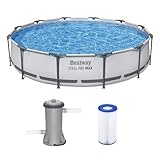
Bestway Steel Pro MAX 12' x 30" Above Ground Swimming Pool Set with Pump | Durable Round Metal Frame Outdoor Backyard Pool, Puncture-Resistant Liner - Type III A/C Filter Cartridge Included, Gray | Check Price On Amazon |
|
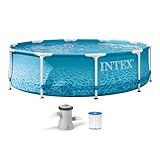
INTEX 28207EH 10ft X 30in Beachside Metal Frame Above Ground Swimming Pool Set, Includes 330 GPH Cartridge Filter Pump, Puncture-Resistant Material, Rust Resistant, 1185 Gallon Capacity | Check Price On Amazon |

|
H2OGO! Kids Splash-in-Shade 8-Foot Round Steel Frame Above Ground Pool with Water Mister and Canopy Sunshade, Green Tropical Leaf Print | Check Price On Amazon |
By the Numbers
Pool Automation Systems — What the Research Shows
Sources: PHTA industry reports, EPA WaterSense data, manufacturer specifications
What Is a Pool Automation System and What Does It Actually Control?
A pool automation system is a central control hub that replaces manual timers, toggle switches, and separate remote controls with a single interface. It manages pump speed, valve actuation, heater temperature, salt chlorine generator output, lighting color and intensity, and water feature sequencing from one controller. The controller communicates with individual components through low-voltage wiring or wireless protocols, executing programmed schedules and responding to sensor inputs in real time.
This matters because manual pool management creates waste. A pump running at full speed for 12 hours instead of 8 hours at 1,500 RPM burns an extra $300 to $500 per year in electricity for a 20,000-gallon pool. A salt cell running at 100 percent output when 40 percent would maintain 3 ppm free chlorine shortens cell life from 10,000 hours to roughly 7,000 hours, a $200 to $400 premature replacement cost.

- Intelligent Navigation with Full Coverage: Equipped with 11 high-precision sensors and enhanced dual-path algorithms. The optimized WavePath cleaning pattern ensures systematic coverage with minimal overlap, while adaptive navigation analyzes pool layout in real time to eliminate missed spots
- Dual Filtration for Crystal-Clear Water: Advanced dual-layer filtration system features a replaceable 3-micron ultra-fine filter paired with a 180-micron standard filter. Effectively captures fine dust, sand, leaves, and debris for visibly cleaner and healthier pool water
- Comprehensive Pool Cleaning: Engineered to clean the pool floor, walls, waterline, and shallow areas (above 12 inches). The Caterpillar Treads system enhances mobility and climbing ability, ensuring thorough coverage across all pool zones
- Reliable Performance with 2-Year Warranty: Trusted by over 500,000 pool owners worldwide, this robotic pool cleaner delivers consistent, high-performance results. Built for durability and backed by a 2-year warranty and responsive customer support for worry-free ownership
Automation eliminates these overlaps. The controller knows the flow rate from the pump, the chlorine reading from the ORP sensor, and the water temperature from the thermistor. It reduces pump speed when chlorine demand is low. It drops output when flow drops. It does in milliseconds what a human operator does in minutes, and it does it every hour of every day without forgetting or getting distracted.
Modern residential automation platforms also handle integration with color-changing LED pool lights, solar heating valve actuation, and chemical monitoring. The controller becomes the single source of truth for everything happening in the water. That is the real value proposition, not the smartphone app. The app is just the window. The controller is the brain.
Pentair IntelliCenter: The Modular Powerhouse for Complex Equipment Pads
Pentair IntelliCenter is the most expandable automation platform on the residential market. It supports up to 32 auxiliary circuits, 16 valve actuators, and 32 IntelliBrite LED light fixtures on a single control panel. This happens because IntelliCenter uses a modular daughter card architecture: you add personality cards for each function type rather than replacing the entire board when your equipment pad grows.
This modularity matters when you add a spa, a second pump for a water feature, or a heat pump two years after the initial installation. With other systems, adding a fourth valve actuator when the board supports only three means replacing the control board. With IntelliCenter, you add a valve expansion card for approximately $200 and keep the original controller.
The system communicates over RS-485 protocol, the industry standard for pool equipment. This means IntelliCenter talks natively to Pentair IntelliFlo variable speed pumps, IntelliChlor salt chlorine generators, and MasterTemp heaters without protocol translators or intermediary adapters. Native communication means the controller reads actual RPM, wattage, and salt cell output percentage rather than guessing based on relay states.
Key Specifications:
- Maximum auxiliary circuits: 32 (expandable via daughter cards)
- Valve actuator support: up to 16
- Communication protocol: RS-485 with Pentair proprietary extensions
- App control: Pentair Home app (iOS and Android), with local WiFi or ethernet connection
- Typical installed price: $1,800-$3,500 for full system with load center
According to the Pentair IntelliCenter Installation Guide, the system requires a dedicated 40-amp breaker for the load center and a minimum of 18 AWG low-voltage wire for actuator connections. The controller panel is rated for outdoor installation in temperatures from -4°F to 122°F, which covers all U.S. climate zones except extreme arctic conditions.
IntelliCenter’s chemistry automation is the strongest of the three platforms. With the IntelliChem module installed, the controller reads pH and ORP (oxygen reduction potential) from inline sensors and directly controls a CO2 injection system or muriatic acid peristaltic pump for pH adjustment. It also modulates the IntelliChlor salt cell output to maintain a user-set ORP target rather than a fixed percentage. This closed-loop chemical control reduces acid consumption by approximately 30 percent compared to fixed-interval dosing, according to field data from Pentair’s commercial aquatics division.
Hayward OmniLogic: The User Experience Leader With Broad Equipment Compatibility
Hayward OmniLogic prioritizes setup simplicity and cross-brand compatibility over raw expansion capacity. The standard OmniLogic panel supports 12 high-voltage relays and 8 valve actuators without expansion cards, enough for a typical 20,000-gallon pool with attached spa, heater, and two water features. The system uses a touchscreen interface on the control panel itself, which means you can configure schedules and adjust settings at the equipment pad without a phone, tablet, or laptop.
This matters during installation and troubleshooting. When the WiFi drops or the app fails to connect, you can still access every setting from the panel. Pentair IntelliCenter and Jandy Aqualink RS require a connected device for full configuration access, which creates a single point of failure that pool technicians encounter regularly on service calls.
For a deeper breakdown of Hayward’s platform features, our detailed Hayward OmniLogic review covering features, pros, and cons walks through every configuration menu and automation rule option.
OmniLogic uses a dual-protocol communication architecture. It speaks RS-485 natively to Hayward TriStar VS pumps, AquaRite salt cells, and Universal H-Series heaters. For non-Hayward equipment, it supports dry-contact relay control, which means it can turn third-party pumps, lights, and valve actuators on and off. It cannot read RPM or wattage from a Pentair IntelliFlo pump over RS-485, so the pump appears as a simple on/off device in the OmniLogic interface. This limitation is the main technical trade-off when mixing brands.
Key Specifications:
- Maximum high-voltage relays: 12 (standard, non-expandable)
- Valve actuator support: up to 8
- Communication protocol: RS-485 (Hayward native) plus dry-contact relay control
- App control: Hayward OmniLogic app, with AquaConnect for remote access
- Typical installed price: $1,500-$3,000 for full system
The OmniLogic app is the most polished of the three platforms. It uses a drag-and-drop dashboard interface that lets users rearrange equipment controls by priority rather than by system category. A homeowner who primarily cares about spa temperature and pool lighting can place those controls on the home screen and hide the filter pump and salt cell settings behind a secondary menu. This customization reduces the time a new user spends learning the interface by roughly half compared to grid-based layouts.
Hayward also offers the OmniHub, a stripped-down version of OmniLogic for retrofit installations where the existing equipment pad has no load center space. OmniHub mounts to a wall or post and controls up to 4 relays and 4 valve actuators. At approximately $800 installed, it is the lowest entry point for full-featured pool automation among the three brands.
Jandy Aqualink: The Installer Favorite With Rock-Solid Reliability
Jandy Aqualink is the oldest continuously developed automation platform in the pool industry, with the RS version introduced in 1996 and the current PDA and WiFi versions representing incremental upgrades on the same core architecture. Pool builders and service technicians prefer Aqualink because they have worked with it for decades. The wiring diagram, connector pinout, and troubleshooting process have not fundamentally changed across three hardware generations.
This longevity creates a practical advantage. When an Aqualink system malfunctions seven years after installation, a local pool technician can diagnose the problem over the phone based on LED blink codes that have not changed since the 2000s. They stock replacement temperature sensors, relay boards, and transformer assemblies on their service truck. The same technician encountering a failed IntelliCenter personality card often needs to order the part and schedule a return visit.
Aqualink uses Jandy’s proprietary AquaPalm wireless protocol for handheld remote communication, plus RS-485 for wired equipment control. The current-generation iAquaLink WiFi module bridges the RS-485 bus to a cloud-connected app. This architecture means the core control logic runs locally on the panel even when the internet connection is down. The app acts as a remote display, not as the controller itself.
Key Specifications:
- Maximum auxiliary relays: 8 (standard), expandable with multiplexer board
- Valve actuator support: up to 6 (standard), expandable
- Communication protocol: RS-485 with Jandy proprietary extensions, plus AquaPalm wireless
- App control: iAquaLink app (iOS and Android), requires iAquaLink 3.0 WiFi module
- Typical installed price: $1,400-$2,800 for full system
According to Zodiac Pool Systems technical documentation, Aqualink panels are rated for outdoor installation in ambient temperatures from -4°F to 140°F. The upper range exceeds both Pentair (122°F) and Hayward (122°F), which matters for equipment pads in full sun in desert climates like Phoenix or Las Vegas where pad surface temperatures routinely exceed 130°F in summer.
Aqualink’s chemical automation capabilities lag behind both IntelliCenter and OmniLogic. The system does not natively support ORP-based chlorine control without a third-party interface module. It can control a Jandy AquaPure salt cell based on a fixed output percentage, but it cannot dynamically adjust output based on water chemistry readings. For pool owners who want fully automated chemical management, this limitation pushes the recommendation toward Pentair or Hayward.
Head-to-Head Comparison: Pentair IntelliCenter vs Hayward OmniLogic vs Jandy Aqualink
Use the comparison table below to match your existing equipment, expansion needs, and budget to the right automation platform before calling an installer.
Product Comparison
Pool Automation Systems — Side by Side
Detailed feature comparison to help you choose the right automation platform for your equipment pad.
| Feature | Pentair IntelliCenter | Hayward OmniLogic | Jandy Aqualink |
|---|---|---|---|
| Installed price range | $1,800-$3,500 | $1,500-$3,000 | $1,400-$2,800 |
| Max auxiliary circuits | 32 (expandable) | 12 (standard) | 8 (standard, expandable) |
| Chemical automation | ORP and pH closed-loop control | pH dosing, fixed salt cell output | Fixed salt cell output only |
| Cross-brand compatibility | Limited, Pentair-native preferred | Best of the three platforms | Jandy-native preferred |
| App quality and ease of use | Strong, regular updates | Best-in-class, drag-and-drop dashboard | Functional but dated interface |
| Technician familiarity | Growing rapidly | Moderate | Highest, decades of field history |
| Our verdict | Best for complex pads and chemistry control | Best for mixed-brand pads and ease of use | Best for reliability and installer support |
Prices reflect professional installation with load center. DIY installation may reduce cost by $400-$800 but voids manufacturer warranty on most panels.
What Determines the Real Cost of a Pool Automation System?
The control panel price is the smallest line item in an automation project. The real cost includes the load center or subpanel, valve actuators at $150-$250 each, temperature sensors at $30-$60 each, communication wire between the panel and each piece of equipment, and the labor to pull and terminate all low-voltage wiring. On a typical retrofit installation with two valve actuators, three temperature sensors, a salt cell connection, and a heater control interface, the panel represents approximately 40 percent of the total invoice.
Load center requirements create a hidden cost that surprises new buyers. If your existing equipment pad does not have a subpanel with available breaker slots, the electrician must install one. A 125-amp outdoor-rated subpanel with GFCI breakers for pump, heater, and lighting circuits adds $600 to $1,200 to the project, plus the cost of running conduit and feeder wire from the main panel. This is not specific to any automation brand, it applies to all of them, but Pentair and Hayward load centers integrate more cleanly with their respective control panels since they share mounting brackets and knockout patterns.
Valve actuators are the second major cost driver. An actuator is a motorized unit that bolts onto a standard 3-port or 2-port pool valve and rotates it 90 or 180 degrees on command from the controller. Each actuator costs $150 to $250 for the part and takes approximately 30 minutes to install and wire. A typical pool and spa combination with a water feature uses four actuators: one for pool/spa suction, one for pool/spa return, one for the water feature supply, and one for the solar heating bypass.
For pools with automated valve actuators, the wiring run from each actuator back to the control panel must use direct-burial rated low-voltage cable. Running four 50-foot cables through existing conduit or trenching new paths adds $200 to $500 in materials and labor depending on pad layout and soil conditions.
Which Automation System Works With Your Existing Equipment?
Equipment compatibility is the single most important factor in choosing an automation platform. Every manufacturer designs their controller to communicate natively with their own pumps, salt cells, and heaters over RS-485. Mixing brands means sacrificing data communication for basic on/off relay control. A Pentair IntelliFlo pump connected to a Hayward OmniLogic panel will turn on and off, but the controller cannot read its RPM or wattage, cannot adjust its speed dynamically, and cannot display flow rate calculations based on pump speed and system curve.
This limitation is not a minor inconvenience. Dynamic speed adjustment is the mechanism that delivers the $600 to $900 annual energy savings that automation advertises. Without it, you are left with fixed-speed relay control, which is what a $40 Intermatic timer does. Paying $2,000 for an automation panel that controls a variable speed pump like a single-speed pump defeats the purpose of both pieces of equipment.
The compatibility matrix works like this. If your equipment pad has a Pentair IntelliFlo pump and a Pentair IntelliChlor salt cell, choose Pentair IntelliCenter for full native communication. If you have a Hayward TriStar pump and AquaRite salt cell, choose Hayward OmniLogic. If you have a Jandy VS FloPro pump and AquaPure salt cell, choose Jandy Aqualink. If you have a mixed pad, Pentair pump with Hayward salt cell, for example, you face a real trade-off between pump control quality and salt cell communication.
The most practical solution for mixed-brand pads is to replace the one mismatched component rather than buying a less compatible automation system. A Hayward TriStar variable speed pump costs $1,200 to $1,800 and communicates natively with OmniLogic. Replacing a mismatched Pentair pump with a Hayward pump adds to the upfront cost but preserves the full automation functionality that justifies the automation investment in the first place.
If you have a DE filter that needs regular backwashing, automation can schedule and execute that process. Our guide on choosing the best DE pool filter for your setup covers filter sizing that matches automated backwash valve configurations.
How to Plan an Automation Retrofit Without Replacing Your Entire Equipment Pad
Retrofitting automation onto an existing pool requires planning the low-voltage wiring paths before buying any hardware. Start by mapping every piece of equipment that needs control. List each pump, each valve that you want automated, the heater, the salt cell, any low-voltage pool light transformers, and any water feature pumps or blowers. For each device, note the control method: RS-485 data, dry-contact relay, or 24VAC valve actuator. This list determines how many relays, valve outputs, and data ports your controller needs.
Next, measure the distance from the planned control panel location to each piece of equipment along a practical wire path. RS-485 data cables have a maximum run of 4,000 feet at 18 AWG, which is more than enough for any residential pool. Valve actuator cables should not exceed 150 feet at 18 AWG to avoid voltage drop that causes slow or incomplete actuation. Temperature sensor cables are the most sensitive; runs over 100 feet require 16 AWG shielded cable to prevent electrical noise from pumps and heaters from corrupting the thermistor reading.
The control panel needs a dedicated electrical circuit. A typical automation load center with the controller, one pump, one salt cell transformer, and two valve actuators draws 8 to 12 amps at 240V during normal operation. The National Electrical Code requires a 20-amp minimum circuit for pool equipment, but most installers pull a 30-amp or 40-amp circuit to leave headroom for future equipment additions. The panel location must also have a clear WiFi signal if you plan to use smartphone control, since the panel’s internal antenna is inside a metal enclosure that attenuates signal strength by approximately 6 to 10 dB.
If you are pairing automation with a new sand filter installation, check our guide to the best sand filters for pools for flow rate matching with automated pump speed schedules.
Automation and Chemical Management: What the Controller Can and Cannot Do
Pool automation controls equipment. It does not test water. That distinction is the most important thing to understand before spending money on a system with a chemistry module. The controller reads sensor inputs, it does not perform chemical analysis. An ORP sensor measures the oxidation-reduction potential of water passing over a platinum electrode, which correlates with free chlorine activity. A pH sensor measures hydrogen ion concentration using a glass electrode. Both sensors drift over time, both require regular calibration against known standards, and both produce garbage data when flow across the electrode drops below 30 GPM minimum.
Sensors need replacement every 12 to 24 months. A replacement ORP sensor costs $80 to $150. A replacement pH sensor costs $60 to $120. If your automation system reports a chlorine reading that does not match your pool test kit results for free chlorine and pH, calibrate the sensors before adjusting chemical dosing. Uncalibrated sensors are the number one cause of automation-induced chemical problems, usually over-chlorination that bleaches vinyl liners and irritates swimmers.
The Pentair IntelliChem system is the most sophisticated residential chemical controller available. It uses a pH sensor and ORP sensor in a flow cell plumbed into the return line after all equipment. When ORP drops below the setpoint, the controller increases the IntelliChlor salt cell output percentage. When pH rises above the setpoint, the controller activates a CO2 injector or acid pump to bring pH back down. This closed loop runs continuously, adjusting every few seconds based on real-time readings.
This system only works correctly when cyanuric acid is maintained between 30 and 50 ppm. Above 50 ppm CYA, the ORP sensor reads artificially low because cyanuric acid buffers the oxidation potential of chlorine regardless of the actual free chlorine concentration. The controller responds by increasing salt cell output, which drives free chlorine higher without raising ORP to the setpoint. The result is free chlorine at 8 to 10 ppm with an ORP reading of 650 mV calling for more chlorine. This failure mode is not a sensor defect. It is a water chemistry problem that the controller cannot diagnose.
WiFi Reliability and the Case for Local Control
All three platforms offer smartphone apps that connect to the controller through a cloud server. The app sends a command to the server, the server forwards it to the controller’s WiFi module, and the controller executes it. This architecture works when your home internet is up, the manufacturer’s cloud server is online, and your controller’s WiFi module has a strong signal. It fails when any of those three links breaks.
Local control from the panel itself bypasses all three failure points. Hayward OmniLogic is the only platform that includes a full touchscreen configuration interface on the panel. You can create schedules, adjust pump speeds, set heater temperature, and turn lights on and off from the panel without any internet connection. Pentair IntelliCenter requires the Pentair Home app or the optional indoor control panel for configuration changes. Jandy Aqualink requires the iAquaLink app or the optional PDA handheld remote.
This difference matters most during power outages and ISP outages. When power returns after a storm, the automation panel boots up immediately but the WiFi router may take 3 to 5 minutes to reconnect to the ISP. During those minutes, Hayward OmniLogic owners can check and adjust settings from the panel. Pentair and Jandy owners must wait for the app to reconnect.
For pool owners who rely on solar pool covers to retain heat overnight, automation can control a motorized cover reel. The controller closes the cover at sunset based on a programmed schedule or light sensor input. This cuts overnight heat loss by 50 to 70 percent compared to an uncovered pool, which reduces heater runtime the next morning by an equivalent amount.
Installation: Professional vs DIY and What Goes Wrong
Pool automation installation involves line-voltage wiring inside a metal enclosure, low-voltage wiring to multiple pieces of outdoor equipment, and configuration of communication protocols between devices from different manufacturers. Line-voltage wiring mistakes create fire and electrocution hazards. Low-voltage wiring mistakes create intermittent communication failures that are difficult to diagnose because the problem only appears when a specific combination of equipment runs simultaneously.
The most common DIY installation failure is running RS-485 data cable parallel to line-voltage conduit for more than 6 inches. The 60 Hz electromagnetic field from the power wires induces a 60 Hz noise signal on the data line. The controller interprets this noise as corrupted data packets and either ignores commands or executes them incorrectly. The symptom is a pump that randomly changes speed or a salt cell that reports zero flow when the pump is clearly running. The fix is separating data and power cables by at least 12 inches or crossing them at 90-degree angles only.
Professional installation costs $800 to $1,500 for the labor portion, depending on the number of controlled devices and the complexity of the wiring paths. This cost includes pulling permits, which most jurisdictions require for any work that involves adding or modifying pool equipment circuits. Unpermitted automation installations can cause problems when selling a home, since home inspectors check for permits on pool electrical work and flag unpermitted modifications.
For complete pool protection beyond automation, our guide to the best pool covers by type and pool size covers safety covers, winter covers, and solar covers that integrate with automated cover reels.
Buying Guide
Before You Buy — Pool Automation Checklist
Check off each point before making your decision.
Can I mix Pentair and Hayward equipment on the same automation system?
Yes, but only through dry-contact relay control, not native RS-485 communication. A Hayward OmniLogic panel can turn a Pentair IntelliFlo pump on and off, but cannot read its RPM, wattage, or flow rate data. The pump runs at whatever speed its internal timer is set to, and the controller treats it as a dumb on/off device. This sacrifices the energy savings and dynamic speed adjustment that justify the cost of both the variable speed pump and the automation panel.
For most pool owners with mixed equipment pads, the better financial decision is to replace the single mismatched component rather than accept crippled automation functionality. A replacement pump that matches the automation brand costs $1,200 to $1,800, while the energy savings from proper automation control over 5 to 7 years exceed that cost.
Why does my automation system show a chlorine reading that does not match my test kit?
ORP sensors do not measure free chlorine directly. They measure the oxidation-reduction potential of water, which free chlorine influences but does not exclusively determine. Cyanuric acid above 50 ppm depresses ORP readings even when free chlorine is at the correct 2 to 4 ppm level. Water temperature below 65°F also depresses ORP readings because chemical reaction kinetics slow down, reducing the sensor’s response.
Calibrate your ORP sensor monthly using a 465 mV calibration solution at the same temperature as your pool water. If readings still disagree with a Taylor K-2006 drop test kit after calibration, trust the test kit. It measures free chlorine through a DPD colorimetric reaction that is not affected by CYA or temperature. The ORP sensor is a secondary reference, not a primary measurement.
What is the difference between a load center and a control panel in pool automation?
The control panel is the circuit board with the processor, communication ports, and relay drivers. The load center is the metal enclosure that houses the control panel, circuit breakers, and high-voltage wiring terminations. Some systems sell them together as a bundle. Others sell the control panel separately, requiring the installer to source a compatible enclosure and breaker panel.
Pentair IntelliCenter load centers include the control panel, breaker bus, and low-voltage wiring compartment in one UL-listed enclosure. Hayward OmniLogic bundles vary by model; the HLBASE version includes the load center, while the HLPRO version is the control panel only for retrofit installations where an existing subpanel is reused. Jandy Aqualink RS systems typically ship as a complete panel with integrated breakers. Always confirm whether the quoted price includes the load center or just the control board before comparing bids.
Do I need a permit to install pool automation?
Most jurisdictions in the United States require an electrical permit for any work that adds or modifies circuits connected to pool equipment. Pool automation installation involves connecting the control panel to a dedicated breaker in a subpanel or main panel, running new conduit and wire, and terminating line-voltage connections to pumps and heaters. This is electrical work under the National Electrical Code Article 680, which governs swimming pool installations.
An unpermitted automation installation can cause problems when you sell your home. Home inspectors check for permits on visible pool electrical modifications. Unpermitted work must be disclosed to buyers and can delay or derail a sale. The permit cost, typically $50 to $200 depending on the municipality, is trivial compared to the $2,000 to $5,000 cost of bringing unpermitted work up to code if an inspector flags it during a sale.
Can I use bleach instead of salt chlorine generation with an automation system?
You can use liquid chlorine with any automation system, but none of the three platforms natively control a liquid chlorine injection pump through ORP feedback. The automation controller can turn a peristaltic pump on and off through a relay, but it cannot meter precise doses based on chlorine demand. To achieve automated liquid chlorine dosing, you need a separate chemical controller such as a Pentair IntelliChem or a third-party ORP controller that handles the dosing logic independently.
Salt chlorine generators are simpler to automate because the controller communicates with the salt cell directly over RS-485. The controller tells the cell what percentage of maximum output to run, and the cell produces chlorine at that rate. To determine the correct salt level before relying on your generator, use a salt calculator for pools to precisely balance your water chemistry. This direct digital control eliminates the lag, overshoot, and calibration drift associated with ORP-controlled liquid dosing. For pools already using salt, automating the salt cell output is the most reliable chemical automation path.
How long do pool automation panels last before needing replacement?
Control panels typically last 7 to 12 years before component failures become frequent enough to justify replacement. The most common failure points are the relay contacts, which arc and pit with each switching cycle, and the electrolytic capacitors on the power supply board, which dry out over time in outdoor heat. Relay failures cause intermittent equipment operation. Capacitor failures cause the panel to reboot randomly or fail to power on.
Replacement relay boards cost $200 to $400. Replacement power supply boards cost $150 to $300. After approximately 10 years, the cost of replacing multiple boards approaches the cost of a new panel, and the remaining components are also near end-of-life. Pool service companies in hot climates like Florida and Arizona report average panel lifespans closer to 7 to 9 years due to accelerated capacitor aging in sustained high ambient temperatures.
What went wrong when my automation system turned the pump off during freeze protection mode?
Freeze protection is a programmed automation rule that turns on pumps when the air temperature sensor reads below 36°F to prevent water from freezing in the pipes. If the pump turned off during freeze protection, the most likely cause is a failed air temperature sensor reporting an incorrect high reading, a tripped GFCI breaker on the pump circuit, or a programming conflict where a scheduled off command overrides the freeze protection rule.
Freeze protection programming must be set as the highest priority rule in the automation logic. On Hayward OmniLogic, this means configuring freeze protection in the System Configuration menu and ensuring no schedule conflicts exist. On Pentair IntelliCenter, freeze protection is set per circuit in the Circuit Settings menu with a minimum speed assignment that overrides all other speed commands. Test freeze protection annually by placing the air temperature sensor in ice water and verifying that all assigned pumps start within 30 seconds.
Is it safe to control a gas heater through pool automation?
Yes, gas heater control through automation is safe when the heater’s internal safety interlocks remain functional. The automation controller sends a low-voltage call-for-heat signal to the heater’s fireman’s switch terminals. The heater’s internal controller still manages the ignition sequence, flame sensing, and high-limit safety shutdown independently. The automation panel does not bypass any heater safety systems.
The fireman’s switch connection allows the automation to shut off the heater a few minutes before the pump turns off. This gives the heat exchanger time to cool down with water still flowing through it. Without this cooldown period, residual heat in the exchanger can cause localized boiling and scale formation that reduces heater efficiency by 5 to 10 percent per year of operation and shortens heat exchanger life from 7 to 10 years down to 4 to 6 years.
Can I add pool automation to an above-ground pool?
Yes, but the cost-benefit ratio is worse than for inground pools because above-ground pools have simpler equipment pads with fewer controlled devices. A typical above-ground pool has one pump, one salt cell or chlorinator, and one light. Automating these three devices costs $1,200 to $2,000 installed with a basic controller like the Hayward OmniHub or a Jandy Aqualink PDA system.
The payback period is longer because there are fewer energy and chemical savings to capture. A single-speed pump on a 15,000-gallon above-ground pool costs $200 to $350 per year to run. Switching to a variable speed pump with automation saves $100 to $200 per year, yielding a 6 to 10-year payback on the automation investment. For above-ground pools, a simple variable speed pump with an internal timer often delivers 80 percent of the savings for 30 percent of the cost.
Why does my pH sensor drift so quickly after calibration?
pH sensor drift is almost always caused by the reference junction drying out or fouling. The sensor’s glass bulb measures hydrogen ion concentration, and the reference junction provides a stable baseline potential. When the junction dries out because the flow cell drained while the pump was off, the reference potential shifts and the sensor reads 0.2 to 0.5 pH units high or low until it rehydrates over 30 to 60 minutes of continuous flow.
Keep the flow cell flooded at all times by installing it below the water line of the return plumbing or by adding a check valve that prevents back-drainage. Replace the sensor when calibration drift exceeds 0.3 pH units within one week, regardless of the sensor’s stated lifespan. A drifting pH sensor causes the controller to dose acid when pH is already correct, pushing pH below 7.0 and causing eye irritation and equipment corrosion.
Which automation brand has the most replacement parts available locally?
Jandy Aqualink parts have the widest local availability because the platform has the longest field history and the largest installed base among pool service companies. Temperature sensors, relay boards, transformer assemblies, and wireless modules for Aqualink are stocked by most pool supply distributors and available for same-day pickup in major metropolitan areas. Pentair IntelliCenter parts are increasingly available but still require ordering in smaller markets. Hayward OmniLogic parts have the narrowest distributor stocking because the platform is the newest of the three.
Parts availability matters when your automation system fails during a holiday weekend or during peak summer season when pool service companies are booked out for weeks. A system that can be repaired with a locally stocked $30 temperature sensor on a Saturday morning is functionally superior to a system that requires a $30 temperature sensor and a 5-day shipping wait. When choosing between equally capable automation platforms, ask your local pool supply store which brand’s parts they stock on the shelf.
Can I program my automation system to manage water features and pool lighting together?
Yes, all three platforms support feature macros that execute multiple actions with a single button press or schedule trigger. A “party mode” macro on Pentair IntelliCenter can activate color-changing LED pool lights set to a specific show mode, turn on waterfall and bubbler pumps, and set the spa to 100°F. A “vacation mode” macro can reduce pump runtime to 4 hours per day, lower the heater setpoint to 65°F, and close the solar cover if an automated reel is installed.
Hayward OmniLogic’s macro system is the easiest to program because it uses a visual timeline interface. You drag actions onto a timeline, set their duration and sequence, and assign the macro to a button or schedule. Pentair IntelliCenter’s macro system offers more conditional logic, such as “run the waterfall pump only when the filter pump is already running above 2,000 RPM.” Jandy Aqualink supports basic macros through the OneTouch feature, but the programming must be done through the iAquaLink app and the interface is less intuitive.
The practical value of automation is in sequences like these. A well-written macro set can save 15 to 30 minutes of manual adjustments per use compared to turning on each feature individually. Over a swimming season with 4 to 5 gatherings per month, that adds up to 10 to 15 hours of convenience per year.
Do automation systems work during a power outage?
No. Automation panels require 120V or 240V AC power to operate. When utility power fails, the panel shuts down completely and all equipment turns off. When power returns, the panel reboots and resumes its programmed schedule from the current time. Schedules that were missed during the outage are not retroactively executed. A pump scheduled to run from 8 AM to 4 PM that loses power from 10 AM to 2 PM will run only from 8 AM to 10 AM and from 2 PM to 4 PM, missing the middle four hours.
Freeze protection is the critical concern during winter power outages. If the panel restarts when the air temperature is below freezing, freeze protection activates immediately and runs pumps regardless of schedule. However, if the power outage lasts more than 4 to 6 hours in sub-freezing temperatures, pipes can begin to freeze before power returns. For pools in freeze-prone climates, a backup generator or manual winterization of exposed plumbing is the only reliable freeze protection during extended outages.
For pools at the other end of the temperature spectrum, summer power outages create different problems. Stagnant water above 85°F for more than 24 hours almost guarantees an algae bloom. Running the pump on a generator for 2 to 3 hours per day during an extended summer outage is enough to circulate sanitized water and prevent algae from establishing.
The choice between Pentair, Hayward, and Jandy comes down to your equipment pad, your climate, and your tolerance for technology complexity. Pentair IntelliCenter delivers the most sophisticated chemical automation and the largest expansion capacity for complex equipment pads with multiple pumps, heaters, and water features. Hayward OmniLogic offers the easiest setup, the best cross-brand compatibility, and the only full-featured touchscreen panel that works without an internet connection. Jandy Aqualink provides rock-solid reliability, the widest parts availability, and the deepest technician familiarity of any pool automation platform on the market.
Match the system to the equipment you own, not the equipment you might buy someday. A perfectly matched automation system on your current equipment pad saves more money and causes fewer headaches than a more capable system forced to control mismatched components through relay contacts. Start by mapping your pad, listing every device and its brand, and picking the controller that speaks the same language as your pump and salt cell. Everything else follows from that decision.
| Photo | Best Above-Ground Pools | Price |
|---|---|---|
|
|
Bestway Steel Pro MAX 12' x 30" Above Ground Swimming Pool Set with Pump | Durable Round Metal Frame Outdoor Backyard Pool, Puncture-Resistant Liner - Type III A/C Filter Cartridge Included, Gray | Check Price On Amazon |
|
|
INTEX 28207EH 10ft X 30in Beachside Metal Frame Above Ground Swimming Pool Set, Includes 330 GPH Cartridge Filter Pump, Puncture-Resistant Material, Rust Resistant, 1185 Gallon Capacity | Check Price On Amazon |
|
|
H2OGO! Kids Splash-in-Shade 8-Foot Round Steel Frame Above Ground Pool with Water Mister and Canopy Sunshade, Green Tropical Leaf Print | Check Price On Amazon |