
A pool equipment pad built 2 inches too small causes more long-term damage than a bad pump seal. Pump vibration transfers directly into PVC plumbing when the concrete base is undersized. Schedule 40 pipe cracks at glued joints under constant 60 Hz vibration. The repair bill for a plumbing manifold replacement runs $1,200 to $3,000 including labor and water damage remediation. A correctly sized pad costs $150 in materials and takes one afternoon to pour. Here is everything you need to build a pad that protects your pool equipment for 20-plus years.
What Is a Pool Equipment Pad and Why Does It Matter for Equipment Longevity?
A pool equipment pad is a reinforced concrete slab that anchors and levels your pool pump, filter, heater, chlorinator, and automation system. It prevents equipment from shifting due to freeze-thaw cycles, soil settlement, or pump torque. A properly built pad absorbs 60 Hz vibration from pump motors before it reaches PVC plumbing joints.
| Photo | Best Above-Ground Pools | Price |
|---|---|---|
|
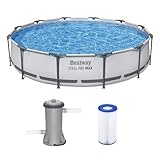
Bestway Steel Pro MAX 12' x 30" Above Ground Swimming Pool Set with Pump | Check Price On Amazon |
|
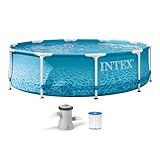
INTEX Beachside Metal Frame 10ft x 30in Round Pool Set w/Pump | Check Price On Amazon |

|
H2OGO! Kids Splash-in-Shade 8-Foot Round Steel Frame Above Ground Pool with Water Mister and Canopy Sunshade, Green Tropical Leaf Print | Check Price On Amazon |
This happens because a 4-inch thick, 3,500 PSI concrete slab has approximately 160 lbs per square foot of mass to resist lateral movement. Vibration energy dissipates into the concrete mass rather than transferring through Schedule 40 PVC. This condition only functions correctly when the pad sits on 4 inches of compacted granular base with zero organic material. If soil settles unevenly beneath one corner, the pad tilts and creates strain at every glued PVC joint above it. Fix a settled pad by mudjacking the low corner within 30 days of the first visible crack.
By the Numbers
Pool Equipment Pad Setup — Key Specifications
Sources: Pentair Installation Manuals, Hayward Technical Specifications, PHTA Service Technician Handbook
According to the Pool and Hot Tub Alliance Service Technician Handbook, equipment vibration accounts for 18 percent of inground pool plumbing failures that require excavation repair. A pad replacement after settlement costs $800 to $2,200 depending on equipment disconnection and reconnection labor. The $150 pad prevents that outcome entirely.

- Intelligent Navigation with Full Coverage: Equipped with 11 high-precision sensors and enhanced dual-path algorithms. The optimized WavePath cleaning pattern ensures systematic coverage with minimal overlap, while adaptive navigation analyzes pool layout in real time to eliminate missed spots
- Dual Filtration for Crystal-Clear Water: Advanced dual-layer filtration system features a replaceable 3-micron ultra-fine filter paired with a 180-micron standard filter. Effectively captures fine dust, sand, leaves, and debris for visibly cleaner and healthier pool water
- Comprehensive Pool Cleaning: Engineered to clean the pool floor, walls, waterline, and shallow areas (above 12 inches). The Caterpillar Treads system enhances mobility and climbing ability, ensuring thorough coverage across all pool zones
- Reliable Performance with 2-Year Warranty: Trusted by over 500,000 pool owners worldwide, this robotic pool cleaner delivers consistent, high-performance results. Built for durability and backed by a 2-year warranty and responsive customer support for worry-free ownership
For most residential pools with a single pump, filter, and heater, a 4-foot by 8-foot pad provides sufficient working clearance on all sides. The decision to add a pad or install equipment directly on the ground determines whether your plumbing manifold lasts 8 years or 25 years.
How to Size Your Pool Equipment Pad Correctly: Step-by-Step Guide
Measure every piece of equipment before ordering concrete or building forms. Equipment dimensions are not standard. A Pentair IntelliFlo VSF pump measures 26 inches long by 14 inches wide. A Hayward SwimClear 525 cartridge filter measures 48 inches tall with a 25-inch diameter. A Raypak 266,000 BTU gas heater measures 30 inches by 20 inches.
Add 12 inches of clearance on every side of each device. That means a pump needs a 50-inch by 38-inch footprint, not 26 by 14 inches. This clearance allows a technician to remove the pump lid, pull the motor for bearing replacement, or adjust the multiport valve on the filter without stepping off the pad. Insufficient clearance leads to rushed service work. Rushed work leads to skipped o-ring lubrication and premature seal failure.
Step-by-Step Guide
How to Size Your Pool Equipment Pad — Step by Step
4 steps · Estimated time: 30 minutes for measurement and layout
Lay Out All Equipment on Level Ground
Position pump, filter, heater, and chlorinator in the exact order they will be installed. Leave space between devices for union fittings and valve installation.
Add 12-Inch Clearance Perimeter
Mark 12 inches out from the furthest points of each side of your equipment layout. This is your form perimeter. Pump motors need rear clearance specifically for fan airflow. Blocking the rear fan vent causes motor overheating within one pool season.
Verify Code Clearances for Gas and Electrical
Gas heaters require 3 feet of clearance from any building opening including windows and doors per the National Fuel Gas Code. Electrical subpanels require 30 inches of width and 36 inches of front working clearance per NEC Article 110.26.
Add Future Equipment Space
Add 24 inches on one side for a future salt chlorine generator, UV sanitizer, or automation panel. Tearing out and repouring a pad for a device you add in year 3 is a $2,000 mistake that costs $24 in extra concrete today.
The minimum pad size for any pool equipment set should be 4 feet by 6 feet. Before deciding on pad dimensions, calculate your pool’s exact volume with our pool volume calculator; a 20,000-gallon pool with a standard pump, sand filter, and heater requires a 4-foot by 8-foot pad minimum. Pools with heat pumps, salt chlorine generators, and automation systems need a 5-foot by 10-foot pad.
Where Should You Place the Equipment Pad for Best Performance?
The equipment pad must sit within 25 feet of the pool for optimal suction head. This happens because centrifugal pool pumps create negative pressure on the suction side. Every foot of suction pipe above the pool water level adds approximately 0.43 PSI of static lift the pump must overcome. Beyond 25 feet of horizontal suction run with standard 2-inch plumbing, the pump cannot achieve full flow rate as specified on the pump curve. To avoid cavitation and ensure your pump performs at the correct point on its curve, use our pool pump sizing calculator to match the pump to your pool’s hydraulic requirements.
This condition requires the pad elevation to be no more than 6 feet above the pool water surface for flooded suction operation. If the pad sits 8 feet above the water line, the pump operates under suction lift conditions. Suction lift conditions cause net positive suction head problems. Net positive suction head below the pump requirement causes cavitation. Cavitation pits the pump impeller within one season. Fix it by lowering the pad or switching to a self-priming pump rated for your specific suction lift height.
Place the pad on the north or east side of the house in southern climates. Direct afternoon sun exposure heats PVC plumbing to 140 degrees Fahrenheit. Repeated thermal cycling at these temperatures accelerates plasticizer loss in Schedule 40 PVC. The pipe becomes brittle and cracks at threaded connections within 5 to 7 years instead of the rated 25-year lifespan.
The National Electrical Code Section 680.12 requires a dedicated equipment disconnecting means within sight of the pad. If your pad location does not have line of sight from the main electrical panel, you need a separate disconnect switch mounted near the equipment. This is not optional. Inspectors will fail a pool installation without it.
Quick Reference
Pool Equipment Pad — Key Terms Explained
Quick reference for the terms used throughout this guide
The compressive strength of cured concrete measured in pounds per square inch. 3,500 PSI is standard for equipment pads. 2,500 PSI is too weak and will spall under vibration.
Standard wall thickness PVC pipe rated for pool plumbing at 50 PSI maximum working pressure at 73 degrees Fahrenheit. Pressure rating drops at higher temperatures.
The vertical distance and friction loss between the pool water surface and the pump inlet. Expressed in feet of head (1 foot of head equals 0.43 PSI).
Formation and collapse of vapor bubbles inside a pump volute due to insufficient suction pressure. Collapsing bubbles physically erode the impeller surface.
Water in soil beneath a pad freezes and expands by 9 percent volume then thaws and contracts. Repeated cycles cause differential heaving that cracks unreinforced concrete.
Process of pumping a cement slurry under a settled concrete slab to lift it back to grade. Less expensive than full pad replacement for minor settlement.
Neoprene or EPDM rubber pad installed between a pump motor foot and the concrete pad. Reduces structure-borne vibration transmission by approximately 70 percent.
Crushed stone or gravel layer compacted under concrete to provide drainage and prevent frost heave. Typically 4 inches of 3/4-inch minus crushed stone.
Network of 8 AWG solid bare copper wire connecting all metallic components on the equipment pad to create an equipotential bonding plane. Required by NEC 680.26.
Manufacturer graph showing the relationship between flow rate in GPM and total dynamic head in feet. Selecting the wrong point on the curve causes chronic turnover problems.
How to Build a Reinforced Concrete Equipment Pad That Lasts
Excavate 8 inches below final grade for your pad footprint plus 6 inches on every side. The extra depth accommodates 4 inches of compacted granular base plus 4 inches of concrete. The 6-inch overdig allows form placement and removal without disturbing the base edge. A concrete pad edge that sits on uncompacted soil will spall within two freeze-thaw cycles.
Pour 4 inches of 3/4-inch minus crushed stone into the excavation. Compact it with a plate compactor making two passes in perpendicular directions. Compaction test is simple: step on the compacted stone with your full weight. Your footprint should be less than 1/4 inch deep. Deeper than that means more compaction is needed. Uncompacted base settles 1 to 2 inches over five years and cracks the slab at equipment anchor points.
Build forms from 2×6 lumber set with the top edge at final pad elevation. Stake forms every 24 inches with 1/2-inch rebar driven 12 inches into undisturbed soil. Check form elevations with a 4-foot level. The pad should slope 1/8 inch per foot away from the house foundation for drainage. Water pooling under a pump motor housing creates corrosion on the shaft seal within one season.
Install a grid of 3/8-inch steel reinforcing bar at 12-inch spacing both directions. Support the rebar on 2-inch concrete chairs so it sits at mid-depth of the 4-inch slab. Wire-tie all intersections. Rebar at the bottom of the slab does nothing. Tensile stress from soil settlement acts on the bottom of the concrete section. Rebar at mid-depth resists this tensile force and prevents through-cracking.
A 6 mil polyethylene vapor barrier under the rebar prevents moisture wicking through the slab. Moisture wicking introduces dissolved salts that corrode rebar and spall concrete from the inside. Tape all vapor barrier seams with contractor-grade sheathing tape.
Cost Reference
Pool Equipment Pad — Material Cost by Concrete Thickness
All values pre-calculated for a 4-foot by 8-foot pad. Prices are current estimates from national home improvement retailers.
| Concrete thickness | Concrete bags (60 lb) | Rebar (3/8-inch) | Gravel base | Total material cost |
|---|---|---|---|---|
| 3 inches (undersized) | 24 bags $108 at $4.50/bag |
$22 5 lengths |
$18 0.5 ton |
$148 |
| 4 inches (recommended) | 32 bags $144 at $4.50/bag ★ most common |
$27 6 lengths |
$18 0.5 ton |
$189 |
| 5 inches (heavy equipment) | 40 bags $180 at $4.50/bag |
$27 6 lengths |
$18 0.5 ton |
$225 |
| 6 inches (commercial) | 48 bags $216 at $4.50/bag |
$35 8 lengths |
$18 0.5 ton |
$269 |
Material costs only. Labor and equipment rental not included. Prices verified at time of publication from national retailers. ★ highlights the scenario most residential pool owners will select.
Order 3,500 PSI concrete with a 4-inch slump. Higher slump mixes are easier to pour but lose compressive strength. 3,500 PSI specifically resists the 60 Hz vibration frequency of pool pump motors without micro-cracking. Pour the concrete continuously without stopping. A cold joint where partially cured concrete meets fresh concrete creates a permanent weak plane. Anchor bolts installed at dry pour joints will spall concrete within two years.
Screed the concrete level with the form tops using a straight 2×4 in a sawing motion. Immediately bull-float the surface to close the texture and bring cement paste to the top. Wait until surface bleed water evaporates completely. Then use a steel concrete finishing trowel for a smooth final surface. Insert 1/2-inch by 6-inch galvanized wedge anchors where each pump foot, filter flange, and heater leg will bolt down. Place a polyurethane concrete sealant bead around all anchor inserts after removal to prevent water intrusion.
What Equipment Goes on the Pad and in What Order?
All pool circulation and treatment equipment belongs on the pad. The minimum list includes the pool pump, filter unit, heater or heat pump, and a chlorine feeder or salt chlorine generator. Larger equipment sets add a pool automation control panel, UV sanitizer, ozone generator, acid feeder, and water feature pump.
Equipment arrangement follows the water flow path. The pump suction side connects directly to the pool skimmer and main drain lines. The pump discharge connects to the filter inlet. The filter outlet feeds the heater inlet. The heater outlet connects to the chlorine feeder or salt chlorine generator. Finally the treated water returns to the pool through return lines. Any deviation from this sequence creates backpressure problems on equipment not rated for it.
The pump must sit at the lowest point on the pad if any elevation difference exists across the slab. A flooded pump suction performs better than a pump that must pull water uphill even a few inches. A pool filter cartridge replacement access requires the filter to be located where a technician can remove the top half and pull cartridges without obstruction. Top-mount multiport valve filters need 36 inches of overhead clearance minimum for valve removal.
Gas heaters need 4 feet of clearance between the exhaust vent and any vertical obstruction. This is a carbon monoxide safety requirement from the National Fuel Gas Code, not a convenience suggestion. Heat pump pool heaters need 24 inches of clearance on the coil side for adequate airflow. Restricted airflow across evaporator coils drops efficiency by 30 percent and causes the compressor to short-cycle.
For new pool construction, the equipment pad placement and size should match the pool volume and intended turnover rate. Use our pool turnover calculator to determine the proper turnover time for your pool. Our guide to planning a pool installation from excavation to finish covers how to coordinate pad location with plumbing trench routing before any concrete is poured.
Electrical Conduit and Bonding Wire Routing Under the Pad
Install all electrical conduit before pouring concrete. PVC Schedule 40 electrical conduit sweeps must stub up exactly where the pump motor junction box will sit. A misplaced conduit stub-up means chipping out concrete to relocate it. Chipped concrete around electrical penetrations creates a water intrusion path that corrodes copper bonding wire.
This happens because dissimilar metal corrosion between copper bonding wire and steel rebar accelerates when water bridges the two metals. The condition requires a continuous 8 AWG solid bare copper bonding wire connecting every metallic component on the pad. This only functions when the bonding wire is unbroken from the pump motor bond lug through the heater bond point and into the main bonding grid around the pool. If the bonding wire has a splice or mechanical connection that corrodes, the equipotential plane fails and creates a voltage gradient hazard.
Run a separate 8 AWG insulated stranded copper equipment grounding conductor inside the power conduit. This ground wire connects the pump motor frame to the electrical panel ground bus. It serves a different purpose than the bonding wire. The grounding conductor clears electrical faults. The bonding wire equalizes voltage potential. Both are required. Neither replaces the other.
Consult with a licensed electrician who understands the specific equipotential bonding requirements for pools. The work is governed by detailed code requirements for pool bonding that prevent dangerous stray voltage around water.
Plumbing Connections to the Equipment Pad: Unions, Valves, and Flexible Couplings
Every piece of equipment connects to the plumbing system with threaded union fittings, not glued adapters. Threaded unions allow equipment removal without cutting pipe. Cutting PVC to replace a pump motor takes a 45-minute job and turns it into a 3-hour plumbing repair. A 2-inch PVC union costs $6. A plumber visit to cut and re-pipe a pump costs $250 minimum.
Install a full-port 2-inch PVC ball valve on the pump suction line and another on the return line after the heater. These isolation valves allow equipment removal without draining the pool below the skimmer level. Draining a 20,000-gallon pool to replace a pump seal wastes 20,000 gallons of water and requires complete chemical rebalancing.
Use a flexible rubber coupling between rigid PVC and equipment connections. The thermal expansion differential between PVC (3.0 by 10 to the negative 5 inches per inch per degree Fahrenheit) and cast iron pump volutes (6.0 by 10 to the negative 6) creates stress at threaded connections during seasonal temperature changes. A flexible coupling absorbs this differential movement. Without it, the threaded PVC adapter on the pump discharge cracks, and the crack propagates along the thread root within three seasonal cycles.
The cost of a pool varies significantly based on equipment quality and pad preparation. Understanding the full swimming pool cost breakdown by type and region helps you allocate budget to pad construction at the right time in your project timeline.
How to Prevent Equipment Pad Settlement Over Time
Pad settlement occurs when the soil beneath the granular base is not compacted to 95 percent proctor density. Settlement of 1 inch over a 4-foot pad creates a 2-degree tilt. That tilt causes the pump shaft to run out of alignment. A misaligned pump motor shaft destroys the mechanical seal within 500 operating hours. A mechanical seal replacement costs $150 in parts plus pump disassembly labor.
Soil compaction requires mechanical equipment, not hand tamping. Rent a plate compactor for $65 per day. Make four passes over the native soil before placing granular base. Test by probing with a 3/8-inch rod. It should resist penetration past 4 inches with firm
| Photo | Best Above-Ground Pools | Price |
|---|---|---|
|
|
Bestway Steel Pro MAX 12' x 30" Above Ground Swimming Pool Set with Pump | Check Price On Amazon |
|
|
INTEX Beachside Metal Frame 10ft x 30in Round Pool Set w/Pump | Check Price On Amazon |
|
|
H2OGO! Kids Splash-in-Shade 8-Foot Round Steel Frame Above Ground Pool with Water Mister and Canopy Sunshade, Green Tropical Leaf Print | Check Price On Amazon |