
Most pool builders will tell you an inground pool takes 8 to 12 weeks from excavation to the first swim. That number is only accurate for a vinyl liner pool in perfect weather with no permit delays, no utility conflicts, and a builder whose schedule is wide open.
| Photo | Best Above-Ground Pools | Price |
|---|---|---|
|
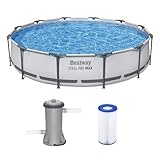
Bestway Steel Pro MAX 12' x 30" Above Ground Swimming Pool Set with Pump | Check Price On Amazon |
|
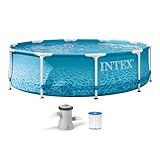
INTEX Beachside Metal Frame 10ft x 30in Round Pool Set w/Pump | Check Price On Amazon |

|
H2OGO! Kids Splash-in-Shade 8-Foot Round Steel Frame Above Ground Pool with Water Mister and Canopy Sunshade, Green Tropical Leaf Print | Check Price On Amazon |
The real timeline for an inground pool installation ranges from 4 weeks to over 6 months depending on the pool type, your local building department, and the time of year you sign the contract. A fiberglass shell can be installed and swimming in 2 to 4 weeks of active construction. A custom gunite pool typically takes 3 to 6 months. A vinyl liner pool sits somewhere in the middle at 6 to 10 weeks of active work.
By the Numbers
Inground Pool Installation Timelines — What the Research Shows
Sources: Pool & Hot Tub Alliance (PHTA), National Association of Home Builders, builder survey data
This guide covers every major inground pool type — fiberglass, vinyl liner, and gunite/concrete — with timelines broken down phase by phase. You will learn exactly what happens each week, why delays occur, and which pool type makes the fastest path from an empty backyard to floating in your own water.
What Determines How Long Your Inground Pool Takes?
An inground pool is not one project. It is a sequence of 12 to 18 separate subcontractor visits that must happen in a specific order. Each trade depends on the one before it. A single missed day by one crew can cascade into a week of delays.
The three factors that control your timeline more than anything else are pool type, permitting speed, and your builder’s current backlog. According to the Pool & Hot Tub Alliance (PHTA) technical construction standards, the minimum curing and settling time for certain materials cannot be accelerated by any amount of money or urgency.
Climate also sets hard limits on construction speed. Gunite cannot be applied below 40°F because the hydration reaction in concrete slows to a crawl. Vinyl liners become brittle and cannot be installed below 50°F without risk of tearing. Fiberglass shells can be set year-round but the surrounding concrete deck still needs temperatures above freezing for proper curing.
Pool Type: The Single Biggest Timeline Variable
The construction method itself dictates minimum realistic timelines. A fiberglass pool arrives as a finished shell on a truck. A vinyl liner pool requires building structural walls and then stretching a custom liner into place. A gunite pool is essentially a custom concrete structure built entirely on site.
Each method has different curing requirements, different weather dependencies, and different numbers of trade visits. This is where the real timeline differences come from, not from one builder being faster than another.

- Intelligent Navigation with Full Coverage: Equipped with 11 high-precision sensors and enhanced dual-path algorithms. The optimized WavePath cleaning pattern ensures systematic coverage with minimal overlap, while adaptive navigation analyzes pool layout in real time to eliminate missed spots
- Dual Filtration for Crystal-Clear Water: Advanced dual-layer filtration system features a replaceable 3-micron ultra-fine filter paired with a 180-micron standard filter. Effectively captures fine dust, sand, leaves, and debris for visibly cleaner and healthier pool water
- Comprehensive Pool Cleaning: Engineered to clean the pool floor, walls, waterline, and shallow areas (above 12 inches). The Caterpillar Treads system enhances mobility and climbing ability, ensuring thorough coverage across all pool zones
- Reliable Performance with 2-Year Warranty: Trusted by over 500,000 pool owners worldwide, this robotic pool cleaner delivers consistent, high-performance results. Built for durability and backed by a 2-year warranty and responsive customer support for worry-free ownership
Permitting and Approvals: The Waiting You Cannot Control
Before any excavation begins, your project needs permits from your local building department. Most residential pool permits take 2 to 6 weeks but some municipalities stretch to 8 weeks or more during peak construction season.
Homeowners associations (HOAs) add another approval layer that can add 2 to 4 weeks. Some HOAs have architectural review committees that meet only monthly. If you miss a meeting by one day, that is a 30-day delay before a shovel has touched the ground.
Utility locates and easement checks also run on their own schedule. Calling 811 to mark underground lines is free and legally required, but the 2 to 5 business day wait must be factored into your timeline right at the start.
Builder Backlog and Seasonality
Most pool builders run on a 3 to 12 month backlog. Signing a contract in March often means excavation in June or July. The actual active construction time on your property might be 8 weeks, but those 8 weeks may not start for months after you sign.
Builders in cold-weather states typically have a narrower construction window, compressing all their work into 7 to 8 months. This creates longer backlogs. Builders in warm climates like Texas, Arizona, and Florida build year-round and often have shorter wait times but still experience peak-season crunch in spring.
Seasonal Guide
Best Months to Start Pool Construction — Month-by-Month Guide
When to sign your contract for the fastest build timeline
Expect delays or limited availability
Fiberglass Pool Timeline: The Fastest Route to a Finished Pool
A fiberglass pool can go from excavation to swimming in 2 to 4 weeks of active construction. The shell is manufactured off-site in a factory and delivered on a flatbed truck. There is no curing time, no panel assembly, and no custom liner to measure and fabricate.
This speed comes from eliminating the most time-consuming steps in other pool types. There is no steel reinforcement to tie, no concrete to shoot and cure for 28 days, and no liner to wait on while a factory measures and cuts custom vinyl. The shell arrives ready for water.
This happens because the fiberglass shell cures in a climate-controlled factory where temperature and humidity are optimized for the polyester resin and glass fiber matrix. The shell achieves its full structural strength before it ever leaves the manufacturing facility. On-site work is limited to excavation, setting the shell on a gravel base, backfilling the sides, and pouring the surrounding concrete deck.
Week by Week: Fiberglass Pool Construction
Week 1: Excavation of the hole to the exact dimensions of your shell, typically completed in 1 to 2 days. A gravel base is leveled with laser precision to within 1/4 inch tolerance across the entire floor. The shell arrives on a truck and is lifted into place by crane, often on the same day as excavation.
Backfilling begins immediately. Water is added to the pool as backfill material goes in around the sides. This equalizes pressure and prevents the shell from bowing inward. The backfill is compacted in 6 to 12 inch lifts to prevent future settling.
Week 2: Plumbing trenches are dug and pipes run from the pool to the equipment pad. The pool pump and filter system are installed and connected. Selecting the right pump size is crucial for energy efficiency and proper circulation; use our pool pump sizing calculator to determine the correct flow rate for your pool. Electrical bonding of the pool shell, rebar in the deck, and all metal components within 5 feet of the water is completed per National Electrical Code Article 680.
Week 3: Concrete coping forms are set and the pool deck is poured. This deck pour typically requires 2 to 3 days of form work and 1 day of concrete placement. The concrete needs 3 to 7 days of curing before it can bear full foot traffic.
Week 4: Final grading around the deck, equipment startup, chemical balancing, and a walk-through orientation with the builder. Getting the chlorine level right from day one is essential — our swimming pool chlorine calculator helps you determine the exact dosage. The pool is ready to swim. Total elapsed time from excavation to swimming: 18 to 28 days.
Why Fiberglass Is Fastest
The entire build process involves fewer trade visits and almost no material curing time on site. There are roughly 6 to 8 subcontractor visits compared to 14 to 18 for a gunite pool. Each trade visit is a potential scheduling gap, so fewer visits means fewer delays.
The limitation on fiberglass speed is almost entirely at the start: factory lead times. Most manufacturers keep common sizes and colors in stock. Custom colors or less common sizes may have 4 to 12 week factory lead times before the shell ships. This is a pre-construction wait, not active construction time, and it should be confirmed before signing.
Product Comparison
Fiberglass Shell Manufacturers — Lead Time Comparison
Factory lead times for common models. Custom colors and sizes add 4-8 weeks.
| Manufacturer | In-Stock Lead Time | Custom Order Lead Time |
|---|---|---|
| Latham Pool Products | 2-4 weeks | 6-10 weeks |
| Thursday Pools | 1-3 weeks | 5-8 weeks |
| Leisure Pools | 3-6 weeks | 8-14 weeks |
| San Juan Pools | 2-4 weeks | 6-12 weeks |
Lead times verified at time of publication. Regional availability varies. Contact local dealers for current estimates.
Vinyl Liner Pool Timeline: Mid-Range Speed With a Critical Wait
A vinyl liner inground pool typically takes 6 to 10 weeks of active construction time. The structural walls go up quickly, but the liner itself introduces a unique delay: it must be custom-fabricated after the walls are complete and precise measurements are taken.
This is the single biggest timeline risk in vinyl liner construction. The liner cannot be ordered until the pool walls and floor are finished. Measuring errors of even 2 inches produce wrinkles or gaps that require a remake. A liner remake adds 2 to 4 weeks to the project. Every conscientious builder measures twice and sends dimensions to the factory with a 1/4-inch tolerance.
The wall panels themselves are prefabricated steel, aluminum, or polymer sections that bolt together on a concrete footer. Panel assembly takes only 2 to 4 days for a standard rectangular pool. The floor is then troweled with sand or vermiculite to create a smooth, compacted surface the liner will rest against.
Week by Week: Vinyl Liner Pool Construction
Week 1: Layout, excavation, and rough grading. The hole is dug to a depth approximately 6 inches deeper than the finished pool depth. This extra depth accommodates the sand or vermiculite floor base.
Week 2: Steel or polymer wall panels are assembled on a poured concrete footer. Panels are bolted together, leveled to within 1/8 inch, and braced with temporary supports. A concrete collar is poured around the outside base of the walls to lock them in place permanently.
Week 3: The pool floor is shaped using sand or a vermiculite-cement mix. Plumbing stub-outs are installed through the wall panels for skimmers, returns, and main drains. The shallow end and deep end transitions are sculpted by hand to match the liner specifications.
Week 4: Precise measurements are taken — length, width, and diagonal dimensions at multiple points, plus corner angles and step dimensions. These numbers are sent to the liner manufacturer. The builder orders the custom vinyl pool liner at this point. Factory fabrication typically takes 2 to 4 weeks.
Weeks 5-6: Waiting period. During this time, the equipment pad can be poured, the pump and filter can be set, and electrical rough-in can continue. Deck forms can also be set. But the pool itself sits empty and liner-less.
Week 7: The liner arrives and is installed. Installation takes 1 day. The liner is draped over the walls and a vacuum is used to pull it tight against the walls and floor while water begins filling. Filling a 20,000-gallon pool with a garden hose takes 24 to 48 hours — you can get a precise time estimate with our pool fill time calculator based on your hose’s flow rate. The liner stretches into its final position as water weight presses it into every contour.
Weeks 8-10: Coping installation, concrete deck pour, final grading, equipment startup, and chemical balancing. The pool is ready to swim once water reaches mid-skimmer level and the pump has been running for 24 hours.
Cost Reference
Vinyl Liner — Wait Time vs Pool Size
Liner fabrication time varies by factory backlog and pool complexity.
| Pool dimensions | Standard rectangle | L-shaped or freeform | With steps or benches | Deep-end hopper |
|---|---|---|---|---|
| Small (under 14×28) | 2 weeks | 3 weeks | 3 weeks | 3 weeks |
| Medium (16×32 to 18×36) | 3 weeks ★ typical | 4 weeks | 4 weeks | 4 weeks |
| Large (over 20×40) | 4 weeks | 5 weeks | 5 weeks | 5 weeks |
Fabrication times are based on manufacturer estimates at time of publication. ★ highlights the most common residential pool scenario.
Gunite Pool Timeline: The Longest but Most Customizable Build
A gunite or shotcrete pool takes 3 to 6 months of active construction. It is a custom concrete structure built from scratch on your property using a high-pressure application process that shoots a dry cement-sand mixture (gunite) or a pre-mixed wet concrete (shotcrete) through a hose onto a steel-reinforced framework.
This method allows any shape, any depth, and any feature configuration imaginable. The trade-off is time. Gunite requires steel reinforcement tying, multiple days of concrete application, and a mandatory 7 to 28 day curing period before any interior finish can be applied. No amount of money shortens concrete curing chemistry.
This curing delay happens because the hydration reaction between cement and water continues for weeks after application. Stopping it early by adding water or chemicals weakens the final structure. The Pool & Hot Tub Alliance specifies a minimum 7-day cure before tile work and a minimum 28-day full cure before the pool should be considered at design strength.
Phase by Phase: Gunite Pool Construction Timeline
Excavation (Week 1): Heavy equipment digs the hole to a rough shape approximately 2 feet larger than the finished pool dimensions in all directions. This extra space allows workers to access the outside of the shell for plumbing and electrical work. Excavation takes 2 to 5 days depending on soil conditions and access.
Steel Reinforcement (Week 1-2): Rebar is tied into a grid on 6 to 12 inch centers across the entire pool floor and walls. The steel cage is the structural skeleton of the pool. Building inspectors must approve the steel placement and the bonding grid before gunite application can proceed. This inspection is a common delay point.
Plumbing Rough-In (Week 2): All suction and return lines are trenched and stubbed up through the steel cage. Main drains, skimmers, and return fittings are positioned and secured. Hydrostatic relief valves are installed in the deep end floor to prevent groundwater pressure from lifting the empty shell.
Gunite Application (Week 2-3): The dry gunite mix or wet shotcrete is sprayed onto the steel cage at high velocity, compacting on impact to approximately 4,000 to 6,000 PSI compressive strength. Application takes 1 to 3 days for a typical residential pool. The shell must be kept damp during the initial 7-day cure period to prevent cracking.
Curing Period (Week 3-6): The shell cures for a minimum of 7 days before tile and coping work begins. Many builders extend this to 14 to 28 days to ensure complete hydration and minimize the risk of shrinkage cracks. During this time, some exterior work like equipment pad installation and deck forming can proceed.
Tile and Coping (Week 6-8): Waterline tile is set and grouted. Stone or precast concrete coping is installed around the pool perimeter. Tile work typically requires 3 to 5 days. Grout needs 24 to 48 hours to cure before the pool can be filled.
Interior Finish (Week 8-10): The interior surface is applied. This is typically white plaster, colored quartz plaster, or pebble aggregate. Plaster is troweled on by hand in a continuous operation that takes 4 to 8 hours. The pool must begin filling immediately after plastering is complete.
Fill and Startup (Week 10): The pool fills over 24 to 48 hours with a garden hose. The first 30 days of water chemistry are critical for proper plaster curing. pH and alkalinity must be monitored daily. You can use our swimming pool pH calculator to stay on top of adjustments during this critical period. This is called the startup or burn-in period.
Deck and Final Work (Week 10-14): The concrete deck is poured after the pool shell has settled and backfill has been compacted. Final grading, landscaping, equipment startup, and a chemical orientation complete the project. Total elapsed construction: 12 to 14 weeks minimum, often extending to 18 to 24 weeks when delays occur.
Step-by-Step Guide
Gunite Pool Construction — Phase-by-Phase Timeline
12 to 16 weeks typical · Minimum unavoidable curing time built in
Excavation and steel (Weeks 1-2)
Dig hole, tie rebar grid, install bonding wire. Inspection required before proceeding.
Gunite application and curing (Weeks 2-6)
Spray concrete at high pressure. Keep shell damp for 7 days minimum. Curing cannot be rushed.
Tile, coping, and plumbing trim (Weeks 6-8)
Set waterline tile, install coping stones, trim out skimmers and returns.
Interior plaster and fill (Weeks 8-10)
Apply plaster in single continuous pour. Begin filling immediately. 24-48 hours to fill.
Deck, startup, and final inspection (Weeks 10-14)
Pour concrete deck, complete startup chemical protocol, walkthrough with builder.
Side-by-Side Timeline Comparison: All Three Pool Types
Time is only one variable in this decision. Cost, longevity, and customization are equally important. But if timeline is your primary concern, the differences are clear.
Use the table below to compare every phase across all three construction methods side by side.
Product Comparison
Inground Pool Types — Construction Timeline by Phase
All times in weeks of active work. Pre-construction permitting and factory lead times not included.
| Construction Phase | Fiberglass | Vinyl Liner | Gunite/Concrete |
|---|---|---|---|
| Excavation and base prep | 1 week | 1-2 weeks | 1 week |
| Shell / structure installation | 1-2 days | 1-2 weeks | 2-3 weeks |
| Curing / settling wait | None | Liner fab: 2-4 weeks | 7-28 days |
| Plumbing and equipment | 1 week | 1 week | 1-2 weeks |
| Interior finish | Already done | 1 day install + fill | 1-2 days + startup period |
| Deck and coping | 1 week | 1-2 weeks | 1-2 weeks |
| Final clean and startup | 2-3 days | 2-3 days | 3-5 days |
| Total active construction | 4-5 weeks | 8-11 weeks | 12-18 weeks |
Additional pre-construction time for permitting (2-8 weeks), HOA approval (2-4 weeks), and builder backlog (4-52 weeks) applies to all types equally.
For most homeowners who want the fastest possible build, fiberglass is the clear winner. The fiberglass timeline is shorter by a factor of 2 to 3 compared to gunite. If you are weighing overall project cost against construction speed, comparing inground pool costs against above-ground alternatives helps you see where timeline and budget intersect. For a personalized estimate based on your pool type, size, and features, try our inground pool cost calculator.
Quick Reference
Pool Construction — Key Terms Explained
Quick reference for the terms used throughout this guide
— A dry mixture of cement and sand applied through a high-pressure hose, mixed with water at the nozzle. Achieves 4,000-6,000 PSI compressive strength.
— Wet-mix concrete delivered through a hose under pressure. Similar to gunite but pre-mixed with water before pumping.
— The finished edge cap around the top perimeter of the pool. Typically stone, precast concrete, or poured concrete.
— An electrical safety system connecting all metal components within 5 feet of the pool to equalize voltage potential per NEC Article 680.
— A lightweight mineral mixed with cement to form the smooth floor base under a vinyl liner. Moisture-resistant and easily shaped.
— A one-way valve in the deep end floor that opens to let groundwater in if the pool is empty, preventing the shell from floating out of the ground.
— The 30-day period after filling a newly plastered pool. Requires daily chemical monitoring to ensure proper plaster cure and prevent scaling.
— Material packed around the outside of a pool shell after it is set. Must be compacted in lifts to prevent deck settlement.
Common Delays That Extend Pool Construction Timelines
Even a well-planned pool build encounters delays. Some are predictable. Some are not. Knowing what to expect prevents the stress that comes from watching an empty hole in your backyard for weeks with no visible progress.
The most common delays fall into four categories: weather, inspections, material availability, and subsurface conditions. Each can add anywhere from a few days to several weeks to your timeline.
Weather Delays: Rain, Cold, and Extreme Heat
A heavy rainstorm with 2 or more inches of accumulation can shut down a site for 3 to 5 days. Excavated holes fill with water. The soil turns to mud that heavy equipment cannot operate on without creating ruts. Every pool builder budgets for weather days.
In most climates, expect 3 to 7 weather delay days per month during the active construction season. Builders in the Southeast and Gulf Coast regions often factor 10 to 14 weather days per summer month into their schedules due to afternoon thunderstorms.
Cold weather stops gunite and shotcrete application entirely when temperatures drop below 40°F. The hydration reaction that gives concrete its strength essentially stops. Vinyl liners become brittle below 50°F and risk cracking during stretching. Only fiberglass can be installed year-round, though deck concrete still needs temperatures above freezing.
Inspection Delays: The Hidden Schedule Killer
Most pool builds require 3 to 5 separate inspections from the local building department. Each inspection means the site must be ready, the inspector must be available, and the contractor must be present. Missing any of these three conditions resets the clock.
A single failed inspection typically adds 3 to 7 days. The correction must be made, the inspector must be rescheduled, and the crew must return. Two failed inspections on a complex gunite project can push the timeline back by 2 to 3 weeks.
Subsurface Surprises: Rock, Water, and Bad Soil
No amount of site planning reveals what is underground until excavation begins. Hitting solid rock or a large boulder can add 2 to 5 days of jackhammering or even require bringing in specialized rock-breaking equipment. Some builders charge extra for rock excavation, which creates a change-order discussion that also consumes time.
High groundwater discovered during excavation requires dewatering pumps and possibly a modified drainage plan. This can add 3 to 7 days to the dig phase alone. In extreme cases where groundwater is within 2 feet of the surface, the pool design may need engineering modifications that add weeks to the timeline.
Expansive clay soils that swell when wet and shrink when dry require soil treatment or over-excavation and replacement with compacted fill. This adds 2 to 5 days. Skipping this step leads to future deck cracking and shell movement.
How to Shorten Your Pool Construction Timeline
You cannot control the weather. You cannot control the building inspector’s schedule. But you can control several factors that meaningfully affect how fast your pool gets built.
The single most effective thing you can do is sign your contract in late summer or early fall. Most homeowners sign in March through May, creating a flood of demand that fills builder schedules for the next 4 to 6 months. Signing in August or September often means starting excavation in 4 to 8 weeks instead of 16 to 24 weeks.
Choose a builder with demonstrated schedule reliability by asking for references from projects completed in the past 60 days. Call those references and ask one specific question: did the builder show up when they said they would, and did
| Photo | Best Above-Ground Pools | Price |
|---|---|---|
|
|
Bestway Steel Pro MAX 12' x 30" Above Ground Swimming Pool Set with Pump | Check Price On Amazon |
|
|
INTEX Beachside Metal Frame 10ft x 30in Round Pool Set w/Pump | Check Price On Amazon |
|
|
H2OGO! Kids Splash-in-Shade 8-Foot Round Steel Frame Above Ground Pool with Water Mister and Canopy Sunshade, Green Tropical Leaf Print | Check Price On Amazon |