
An above ground pool sitting just one inch out of level puts over 2,400 pounds of extra pressure on one side of the wall. That pressure folds pool walls, pulls liners out of their tracks, and turns a new pool into scrap metal in a single season.
Leveling ground is the single most important step in above ground pool installation. Get it right and your pool lasts 15 to 20 years. Get it wrong and you will watch the walls buckle before the water even warms up.
| Photo | Best Above-Ground Pools | Price |
|---|---|---|
|
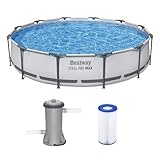
Bestway Steel Pro MAX 12' x 30" Above Ground Swimming Pool Set with Pump | Check Price On Amazon |
|
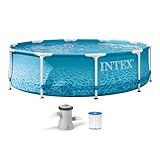
INTEX Beachside Metal Frame 10ft x 30in Round Pool Set w/Pump | Check Price On Amazon |

|
H2OGO! Kids Splash-in-Shade 8-Foot Round Steel Frame Above Ground Pool with Water Mister and Canopy Sunshade, Green Tropical Leaf Print | Check Price On Amazon |
By the Numbers
Ground Leveling for Above Ground Pools — What the Research Shows
Sources: Pool & Hot Tub Alliance technical manuals, manufacturer installation guides
Why Does Ground Leveling Matter for an Above Ground Pool?
Water pressure inside the pool pushes outward evenly in all directions when the ground is perfectly level. This happens because hydrostatic pressure acts perpendicular to every surface at equal intensity when the water column height is uniform.
When one side sits lower, the water column is taller on that side. The taller column creates higher pressure at the bottom of the low wall. This pressure differential concentrates stress on specific wall sections and support posts.

- Intelligent Navigation with Full Coverage: Equipped with 11 high-precision sensors and enhanced dual-path algorithms. The optimized WavePath cleaning pattern ensures systematic coverage with minimal overlap, while adaptive navigation analyzes pool layout in real time to eliminate missed spots
- Dual Filtration for Crystal-Clear Water: Advanced dual-layer filtration system features a replaceable 3-micron ultra-fine filter paired with a 180-micron standard filter. Effectively captures fine dust, sand, leaves, and debris for visibly cleaner and healthier pool water
- Comprehensive Pool Cleaning: Engineered to clean the pool floor, walls, waterline, and shallow areas (above 12 inches). The Caterpillar Treads system enhances mobility and climbing ability, ensuring thorough coverage across all pool zones
- Reliable Performance with 2-Year Warranty: Trusted by over 500,000 pool owners worldwide, this robotic pool cleaner delivers consistent, high-performance results. Built for durability and backed by a 2-year warranty and responsive customer support for worry-free ownership
This only occurs when the deviation exceeds 1 inch across the pool diameter. If the ground stays within 1 inch of level, the pressure difference remains within the manufacturer’s design tolerance for wall strength and track retention.
If the deviation exceeds 1 inch, the result is a progressive wall failure pattern. The low side wall begins bowing outward at the bottom track. Fix it by draining the pool completely, removing the liner, and releveling the entire site from the lowest point.
According to the Pool & Hot Tub Alliance technical installation standards, above ground pool manufacturers uniformly void structural warranties when installation exceeds 1 inch out of level. No major manufacturer covers wall failure attributed to improper ground preparation.
For most above ground pool owners, investing 4 to 8 hours in proper ground leveling before installation prevents the single most common and most expensive failure mode in above ground pool ownership.
What Tools Do You Need to Level Ground for a Pool?
You need specific tools to achieve a 1-inch tolerance across a 24-foot or larger circle. Guessing by eye does not work. The human eye cannot detect a 2-inch slope across 24 feet on grass or dirt.
Start with a rotary laser level kit for the fastest and most accurate results. A self-leveling rotary laser with a grade rod gives exact elevation readings at every point around your pool site in under 30 minutes.
Key Specifications for a rotary laser level: accuracy to within 1/8 inch at 100 feet, self-leveling range of at least 5 degrees, and a visible beam range of 50 feet minimum for outdoor use.
A line level and nylon string set works for smaller pools under 18 feet. Attach the line level to taut string between stakes and check elevation at multiple points.
You also need a 48-inch carpenter’s level for working with a 2×4 as a long straightedge. Lay the 2×4 across the site and check the level on top to find high spots.
For digging and moving soil, a flat digging shovel and steel landscape rake handle most residential pool sites. A manual tamper or plate compactor compacts any filled areas.
Other essentials include 24-inch wooden stakes, 100-foot measuring tape, marking spray paint, and heavy duty work gloves.
If you plan to install the pool yourself as a DIY project, the right leveling tools make the difference between a successful installation and a costly do-over in the middle of summer.
How to Level Ground for an Above Ground Pool: Step by Step
Follow these steps in exact order. Skipping a step or changing the order produces an unlevel pool. The process is not complicated but every step is mandatory.
Step-by-Step Guide
How to Level Ground for an Above Ground Pool — Step by Step
8 steps · 4 to 8 hours total time for a typical 24-foot round pool
Mark Your Pool Location and Clear All Vegetation
Place a center stake and mark a circle 1 foot larger than your pool diameter using string and marking paint. Remove all sod, roots, rocks, and organic material down to bare mineral soil. Organic material decomposes and creates soft spots under the liner.
Find the Lowest Point of Your Site
Set up your laser level or line level at the center point. Take elevation readings at 12 to 16 evenly spaced points around the circle. The lowest reading is your reference point. You must cut or fill everything else to match this elevation.
Cut Down All High Spots — Never Fill Low Spots
Remove soil from every point higher than your low point reference. Use a shovel to shave down high areas gradually. Adding fill dirt to build up low spots is the number one leveling mistake. Filled soil compacts unevenly under 100,000+ pounds of water weight.
Check Level Continuously With a 2×4 Straightedge
Place an 8-foot 2×4 across the site and set a 48-inch carpenter’s level on top. Check in a grid pattern across the entire circle. Any gap under the 2×4 larger than 1/4 inch needs correction. Rotate the 2×4 like a clock hand around the center stake to check all angles.
Compact the Entire Surface
Run a plate compactor or hand tamper over the entire prepared area. Walk the compactor in overlapping passes covering every square foot. Loose soil settles under water weight and creates low spots within weeks of filling the pool.
Add a 2-Inch Sand Base and Screed Level
Spread clean masonry sand 2 inches deep across the entire pool area. Use a 2×4 as a screed board to pull the sand perfectly flat. Check level again across the sand with the 2×4 and carpenter’s level method. The sand base protects the liner from sharp soil edges and provides a smooth floor.
Set Patio Blocks Under Each Upright Post Location
Mark the exact position of every vertical post on the prepared sand. Dig out sand at each mark and set a 12x12x2-inch solid concrete patio block. Each block must sit flush with the sand surface and be individually leveled with a torpedo level in both directions.
Final Level Check Across All Patio Blocks
Place your 2×4 across pairs of patio blocks and check level between every adjacent pair. Adjust any block that is high or low. This is your last check before the pool wall goes up. If the blocks are level, the pool frame will be level.
For sites with a pronounced slope, the digging becomes more extensive. If your yard slopes more than 6 inches across the pool area, you may need to evaluate whether an above ground pool on a slope is feasible before committing to the excavation work.
Common Mistakes When Leveling Ground for a Pool
Most failed above ground pool installations share the same three or four mistakes. These are errors made by homeowners who understand the concept of leveling but skip the details that make the difference.
The first mistake is filling low areas with soil instead of cutting high areas down. Added fill soil, even when compacted, settles at different rates under 8 to 10 pounds per gallon of water weight. A 24-foot round pool holds roughly 14,000 gallons weighing over 116,000 pounds. To get an exact calculation of your pool’s water capacity, use our pool volume calculator.
This weight compresses any added fill. The compression is never uniform. Within three months of filling, the pool develops a measurable lean toward the filled side.
The second mistake is not removing sod and organic material. Grass and roots decompose slowly under the sand base. The decomposition creates voids and soft spots. The liner stretches into these voids over time, thinning the vinyl and creating weak points that eventually tear.
The third mistake is checking level only at the perimeter. A pool base must be level across the entire floor, not just where the wall sits. High spots in the center push the liner upward when water fills. Low spots in the center collect debris and create uneven wear patterns on the liner.
The fourth mistake is setting patio blocks directly on soil without checking individual level. Each block supports a post that bears thousands of pounds of outward water pressure. A block tilted even 5 degrees transfers that force at an angle into the post, causing the post to lean over time.
Results
Properly Leveled Ground vs Unlevel Ground — The Difference
What changes when ground preparation is done correctly
Before (Unlevel)
- ✗Water level visibly uneven at the top rail
- ✗Wall bowing on the low side within weeks
- ✗Liner bead pulling out of track on high side
- ✗Posts sinking unevenly into uncompacted soil
After (Properly Leveled)
- ✓Water perfectly flush with top rail all around
- ✓Even pressure distribution on all wall sections
- ✓Liner seated securely in coping track 360 degrees
- ✓Patio blocks stable and posts plumb on compacted base
A properly leveled pool distributes 116,000 pounds of water weight evenly, eliminating the lateral forces that cause structural failure.
How Much Does It Cost to Have Someone Level Ground for a Pool?
Professional ground leveling for an above ground pool costs between $500 and $3,000 depending on the slope, soil type, access to the site, and your location. The average cost for a moderately sloped yard with good access runs $800 to $1,500.
A flat site requiring less than 4 inches of cutting across the pool area costs $500 to $800. A site on a 6 to 12 inch slope requiring significant cutting and soil removal costs $1,200 to $2,000. Sites with slopes exceeding 12 inches or requiring a retaining wall cost $2,000 to $3,000 or more. For a detailed breakdown of the full installation expense, check our above-ground pool installation cost calculator.
Equipment rental adds cost if you do it yourself. A plate compactor rents for $60 to $90 per day. A rotary laser level kit rents for $50 to $80 per day. Most homeowners spend $200 to $400 on equipment rental and masonry sand delivery for a DIY leveling project.
The expense of professional leveling makes sense when you consider the alternatives. Releveling a failed pool means draining 14,000 gallons of water, removing and possibly replacing a liner that costs $200 to $600. To get a custom estimate for your pool’s liner replacement, try our pool liner cost calculator, and paying for the same excavation work you skipped the first time.
If you already own the pool and need to replace the liner due to ground settlement issues, the releveling adds $500 to $1,500 to what would have been a simpler liner swap on a properly prepared base.
For most pool buyers, spending $800 to $1,500 on professional ground preparation or $200 to $400 on DIY equipment rental and sand is the cheapest money you will spend on your pool over its lifetime.
Buying Guide
Before You Start Leveling — Preparation Checklist
Check off each point before you begin moving soil.
Frequently Asked Questions About Leveling Ground for an Above Ground Pool
Can I use sand to level my above ground pool instead of cutting the soil?
Quick Answer: No. Sand cannot be used to build up low areas for leveling. Sand shifts and washes out under the pool over time. Leveling must be done by cutting down high soil areas to match the lowest natural ground point.
Sand is only for the 2-inch smooth base layer on top of already-level mineral soil. Building up 4 or 6 inches of sand on a low side means that sand will compress, erode, and shift. The pool will go out of level within the first season.
The only acceptable material for filling low areas is crusher run gravel compacted in 2-inch lifts with a plate compactor, and even this approach is riskier than simply cutting down the high side to match the low point.
How do I level ground for a pool on a hill or steep slope?
Quick Answer: For slopes exceeding 12 inches across the pool area, you need to build a retaining wall on the low side and cut into the hill on the high side. This is not a DIY project for most homeowners.
Cutting more than 12 inches into a slope creates an embankment above the pool that needs retention. Without a retaining wall, heavy rain erodes the cut bank and washes soil under the pool. This soil intrusion lifts the liner and creates an uneven floor.
A professional excavator with a mini skid steer can cut and level a sloped site in 4 to 6 hours, often for $500 to $1,200. This cost is usually less than the damage caused by attempting it with hand tools and getting the drainage wrong.
What happens if my above ground pool is not perfectly level?
Quick Answer: A pool more than 1 inch out of level concentrates water pressure on the low wall, causing bowing, post sinking, liner bead separation, and eventual structural collapse. The pool will not fail immediately but degrades progressively over weeks to months.
The water surface being visibly closer to the top rail on one side is the earliest warning sign. Once the water level difference is visible to the naked eye, the pool is already at least 1 inch out of level. Partial draining and releveling is required at that point.
If the unlevel condition is not corrected, the low wall will eventually fold inward. When that happens, 14,000 gallons of water release in under 60 seconds. The force damages property, landscaping, and anything in the flood path downhill from the pool.
Do I need a permit to level ground for an above ground pool?
Quick Answer: Most municipalities require a building permit for above ground pool installation, which includes the ground leveling and site preparation phase. Check with your local building department before starting any excavation.
Permit requirements typically include: property line setback verification (usually 5 to 10 feet), electrical bonding inspection for the pump and any metal components, and a final safety barrier inspection for fencing and gate latches.
Installing an above ground pool without a permit can result in fines, an order to remove the pool, and denial of homeowner’s insurance claims if the pool causes property damage or injury.
Can I level the ground myself or should I hire someone?
Quick Answer: Most homeowners can level a site with less than 6 inches of slope across the pool area using hand tools in 4 to 8 hours. Sites with more than 6 inches of slope or heavy clay soil benefit from professional excavation equipment.
The physical demand is significant. Cutting and moving 3 to 5 cubic yards of soil by hand is a full day of hard labor. Renting a compact tractor or hiring an excavator operator for $75 to $150 per hour often makes more sense than struggling through it with a shovel.
If you have any back problems, physical limitations, or simply value your weekend, the $500 to $1,200 for professional site preparation is money well spent.
What type of sand goes under an above ground pool?
Quick Answer: Use clean masonry sand, not play sand, concrete sand, or river sand. Masonry sand is fine, washed, and screened to have consistent particle size without gravel or organic debris that could puncture the liner.
Masonry sand compacts evenly and drains well. Avoid sand with shell fragments, large pebbles, or sharp particles. Any sharp object under the pool liner will eventually work its way through the vinyl under 8 pounds per square inch of constant water pressure.
Two cubic yards of masonry sand covers a 24-foot round pool at 2 inches depth. Delivery from a landscape supply yard costs $30 to $60 for the sand plus a $40 to $80 delivery fee depending on distance.
How long after leveling can I install the pool?
Quick Answer: You can install the pool immediately after completing the leveling, compaction, and sand base. There is no waiting or curing period required for a properly leveled pool base.
The critical factor is weather. Do not install if rain is forecast within 24 hours. Rain on exposed leveled soil creates mud, fills low spots, and can wash away your sand base. Wait for a forecast of at least 2 dry days before committing to the installation. Once your pool is assembled, filling it with water is the final step—use our pool fill time calculator to estimate how long it will take based on your water pressure and hose diameter.
If rain does hit your prepared site before the pool is up, you will need to let the ground dry for 24 to 48 hours, then recheck level and re-screed the sand base before proceeding with wall assembly.
Should I put a tarp or ground cloth under the sand?
Quick Answer: A ground cloth or heavy-duty landscaping fabric between the compacted soil and the sand base is recommended. It prevents weed growth from penetrating the sand and liner, and adds a secondary barrier against any sharp objects in the soil.
Do not use plastic sheeting or a tarp that does not breathe. Non-permeable barriers trap moisture between the soil and sand, creating conditions for mold, odor, and soil softening under the pool. Use a purpose-made pool ground cloth or woven geotextile fabric.
If you are comparing different above ground pool models to find the right one, check the manufacturer’s instructions. Some brands include a ground cloth in the installation kit, others specify exact material requirements.
How do I know if my ground is level enough for a pool?
Quick Answer: Use a rotary laser level or a 2×4 with a carpenter’s level to check the entire pool area. The maximum acceptable deviation is 1 inch from the lowest to highest point. Any difference greater than 1 inch requires additional cutting and releveling.
Take measurements at the center point of the pool and at 12 to 16 evenly spaced points around the circle perimeter. Also check across the middle of the pool floor at four angles crossing through the center like spokes on a wheel.
Write down each measurement. If the range from your lowest to highest reading exceeds 1 inch, you need to cut down the high spots until all readings fall within that 1-inch window.
What is the best tool for leveling ground for a pool?
Quick Answer: A self-leveling rotary laser level with a grade rod is the best tool for accuracy and speed. It allows one person to check elevation at any point on the site in seconds without repositioning the tool.
A line level and string is the most affordable option at $5 to $15 and works adequately for pools under 18 feet. The 2×4 and carpenter’s level method works for the final surface check but is less efficient for the initial elevation survey across the full site.
A transit level on a tripod provides professional-grade accuracy and is the standard tool used by pool installers. Transit level kits with tripod and grade rod cost $150 to $300 for a quality entry-level setup.
Can I build a deck before leveling for an above ground pool?
Quick Answer: Level the pool site first, then build any deck to match the established pool height. Building the deck first locks you into a pool height that may not match your actual site conditions after leveling.
The pool top rail height is determined by where the ground ends up after cutting down to the lowest natural point. That final height is difficult to predict exactly before you start digging. Build the deck after the pool is up, or at minimum after the site is fully leveled and you know the exact finished ground elevation.
If you are still deciding between pool types, comparing inground and above ground pool options can help you understand the different site preparation requirements for each. Above ground pools have the advantage of not needing the deep excavation that inground pools require.
Conclusion
A perfectly level ground base keeps your above ground pool standing straight and strong for 15 to 20 years. Spend the 4 to 8 hours on proper leveling now, or spend $2,000 to $5,000 replacing a collapsed pool later.
Cut down the high spots, compact everything, lay your sand base, and set those patio blocks with a level on every single one. The water will not forgive a shortcut.
Get your tools together, call 811 before you dig, and build a base that holds 14,000 gallons of water as steady as a concrete pad.
| Photo | Best Above-Ground Pools | Price |
|---|---|---|
|
|
Bestway Steel Pro MAX 12' x 30" Above Ground Swimming Pool Set with Pump | Check Price On Amazon |
|
|
INTEX Beachside Metal Frame 10ft x 30in Round Pool Set w/Pump | Check Price On Amazon |
|
|
H2OGO! Kids Splash-in-Shade 8-Foot Round Steel Frame Above Ground Pool with Water Mister and Canopy Sunshade, Green Tropical Leaf Print | Check Price On Amazon |