
The Pool Installation Mistake That Costs Homeowners $15,000 Before Water Ever Touches the Shell
Most pool buyers spend months choosing tile colors and coping styles. They spend almost no time verifying soil bearing capacity, groundwater depth, and local permit trigger points. The result: change orders, excavation day surprises, and budget overruns that average $12,000 to $15,000 on a $65,000 inground pool project.
This guide covers every pool type (fiberglass, concrete/gunite, vinyl liner, and above-ground), the full construction sequence from permit to plaster, equipment pad sizing and placement, bond beam and grounding requirements, drainage and retaining wall considerations, and the hidden costs that separate a realistic budget from a sales brochure quote. Read our detailed pool cost breakdown with pricing by type and region for the full numbers behind every construction method discussed below.
| Photo | Best Above-Ground Pools | Price |
|---|---|---|
|
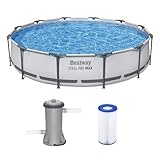
Bestway Steel Pro MAX 12' x 30" Above Ground Swimming Pool Set with Pump | Check Price On Amazon |
|
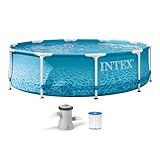
INTEX Beachside Metal Frame 10ft x 30in Round Pool Set w/Pump | Check Price On Amazon |

|
H2OGO! Kids Splash-in-Shade 8-Foot Round Steel Frame Above Ground Pool with Water Mister and Canopy Sunshade, Green Tropical Leaf Print | Check Price On Amazon |
By the Numbers
Pool Installation Costs — What the Research Shows
Sources: HomeGuide contractor survey, Pool & Hot Tub Alliance industry data, RSMeans construction cost database
What Are the Main Types of Inground Pools and How Do They Differ?
Three inground pool construction methods dominate the US market: concrete (gunite/shotcrete), fiberglass, and vinyl liner. Each differs in installation speed, long-term cost, structural behavior, and suitability for specific soil conditions and climate zones.
Concrete pools are pneumatically applied (shotcrete or gunite) over a steel rebar framework. They cure to a structural shell 6 to 12 inches thick with a compressive strength of 4,000 to 6,000 psi. This shell can be built in any shape, any depth, and on slopes where prefabricated shells cannot be delivered. The tradeoff is a 10-to-16-week build timeline and a surface that requires acid washing or replastering every 10 to 15 years at a cost of $6,000 to $15,000 per resurface.

- Intelligent Navigation with Full Coverage: Equipped with 11 high-precision sensors and enhanced dual-path algorithms. The optimized WavePath cleaning pattern ensures systematic coverage with minimal overlap, while adaptive navigation analyzes pool layout in real time to eliminate missed spots
- Dual Filtration for Crystal-Clear Water: Advanced dual-layer filtration system features a replaceable 3-micron ultra-fine filter paired with a 180-micron standard filter. Effectively captures fine dust, sand, leaves, and debris for visibly cleaner and healthier pool water
- Comprehensive Pool Cleaning: Engineered to clean the pool floor, walls, waterline, and shallow areas (above 12 inches). The Caterpillar Treads system enhances mobility and climbing ability, ensuring thorough coverage across all pool zones
- Reliable Performance with 2-Year Warranty: Trusted by over 500,000 pool owners worldwide, this robotic pool cleaner delivers consistent, high-performance results. Built for durability and backed by a 2-year warranty and responsive customer support for worry-free ownership
Fiberglass pools arrive as a single factory-molded shell made of fiberglass-reinforced polymer laminate. The shell is delivered on a flatbed truck, lowered into the excavation by crane, and backfilled with clean gravel or sand while water is simultaneously added to equalize pressure. Installation takes 3 to 5 days once the hole is ready. The gelcoat surface is non-porous, resists algae adhesion, and never requires replastering. The limitation is size (16 feet wide maximum for highway transport) and shape (pre-molded, no custom curves).
Vinyl liner pools use a structural wall system (steel, aluminum, or polymer panels) bolted together on a concrete footing. A custom-fabricated vinyl sheet (20 to 30 mil thick) is draped over the walls and floor, then vacuum-sealed to the structure. This is the lowest-cost inground option. The liner must be replaced every 8 to 15 years at $3,000 to $5,000. Sharp objects, pets, and certain automatic cleaners can puncture the liner, requiring underwater patching or premature replacement.
For a detailed side-by-side of ownership costs between construction types, see our full inground vs above-ground cost comparison with 10-year ownership projections.
Product Comparison
Concrete vs Fiberglass vs Vinyl Liner — Side by Side
Use the table below to compare pool types across the factors that affect your 20-year cost and experience.
| Feature | Concrete (Gunite) | Fiberglass | Vinyl Liner |
|---|---|---|---|
| Installed cost (standard 16×32) | $65,000-$100,000 | $45,000-$75,000 | $35,000-$55,000 |
| Build time | 10-16 weeks | 3-5 days (after excavation) | 4-8 weeks |
| Surface lifespan | 10-15 years (replaster) | 25-50 years (gelcoat) | 8-15 years (liner replacement) |
| Shape flexibility | Unlimited | Pre-molded only | Limited to panel geometry |
| Chemical demand | High (porous surface raises pH) | Low (non-porous gelcoat) | Medium |
| Our verdict | Best for custom shapes and slopes | Best for low maintenance and fast install | Best for lowest upfront cost |
Costs include standard excavation, backfill, basic coping, and startup. Does not include decking, fencing, electrical, gas, or landscaping.
How Much Does Pool Installation Cost at Every Budget Level?
A complete inground pool project costs $50,000 to $100,000 for concrete, $45,000 to $75,000 for fiberglass, and $35,000 to $55,000 for vinyl liner. These numbers include the pool shell, basic equipment, standard coping, 3 to 4 feet of concrete decking around the perimeter, and the required electrical bonding and grounding. For a personalized estimate tailored to your region and pool type, try our inground pool cost calculator.
They do not include the 30 to 40 percent of total project cost that goes to items beyond the pool shell: fencing ($3,000-$8,000), landscaping ($5,000-$25,000), gas line for a heater ($2,000-$5,000), upgraded decking like travertine or pavers ($10,000-$30,000), or an automatic cover system ($8,000-$15,000). These extras frequently push the final project cost 50 to 80 percent above the pool builder’s quoted shell price.
The single largest cost variable is soil condition. Excavation in stable, dry soil with no rock costs $3,000 to $6,000. Hitting bedrock, groundwater within 4 feet of grade, or expansive clay can add $10,000 to $25,000 in over-excavation, stone backfill, dewatering pumps, and engineered retaining structures. No pool builder can quote these costs accurately without a geotechnical soil boring report taken at the exact pool location.
For a complete breakdown of every cost line item with regional pricing differences and financing options, refer to our swimming pool cost guide covering equipment, excavation, decking, and permit fees by pool type.
What Permits, Setbacks, and Regulations Govern Pool Construction?
Every municipality requires a building permit for inground pool construction. The permit package typically includes a site plan showing the pool location relative to property lines, structures, and utility easements, an engineer-stamped structural drawing for the pool shell and bond beam, and an electrical permit for the bonding grid, equipment subpanel, and any pool lighting circuits.
Standard setback requirements place the pool shell and equipment pad 5 to 10 feet from property lines and 10 to 15 feet from any structure. Utility easements (often 10 to 20 feet wide along rear and side property lines) are no-build zones. Placing a pool over a sewer, water, or drainage easement means the utility company can legally excavate through your pool to access their infrastructure, and your homeowners insurance will not cover the damage.
Electrical bonding and grounding is the most inspected and most commonly failed element of pool construction. The National Electrical Code (NEC) Article 680 requires an equipotential bonding grid connecting the pool shell rebar, any metal within 5 feet of the water’s edge (handrails, ladders, diving boards, light niches), the pump motor, heater, and any metal fence posts or deck rebar within that zone. Our detailed guide on pool bonding and grounding explains the NEC requirements, common inspection failures, and the difference between bonding and grounding that most electricians misunderstand.
Additional permits may be required for: gas line to heater (mechanical permit), fence and self-closing gate (separate building permit), retaining walls over 4 feet (engineered wall permit), and stormwater management if the pool and decking increase impervious surface beyond local lot coverage limits. These triggers vary by municipality. The only reliable source is a pre-application meeting with your local building department before signing a construction contract.
What Is the Full Pool Construction Sequence From Excavation to Fill?
The pool construction process follows a fixed sequence that cannot be reordered without compromising structural integrity. Each phase has a minimum cure time, weather dependency, and inspection trigger. Understanding this sequence lets you schedule realistically and recognize when a builder is cutting corners on cure times to rush to the next phase.
Step-by-Step Guide
How a Concrete Pool Is Built — Step by Step
10 steps · 10-16 weeks total · Each step has weather and inspection dependencies
Site Layout and Utility Marking (1 day)
Pool perimeter is painted on the ground. Underground utilities are located by 811 service. This is your last chance to verify the pool is positioned correctly relative to the house, property lines, and planned decking.
Excavation (2-5 days)
The hole is dug 2-3 feet larger than the pool shell in all directions to provide working room. Soil is either trucked away or stockpiled for backfill. Groundwater or rock at this stage triggers change orders.
Plumbing Trenching and Rough-In (2-3 days)
Trenches for main drains, skimmers, returns, and cleaner lines are dug below the frost line (typically 18-36 inches depending on climate zone). Schedule 40 PVC pipe is laid and pressure-tested before backfill.
Steel Rebar Installation (2-4 days)
Grade 60 rebar (#3 or #4) is tied on 8-12 inch centers forming a grid cage. The bond beam (top perimeter) gets 4 continuous #4 bars. This rebar grid becomes part of the equipotential bonding system per NEC 680.26.
Bonding Grid and Electrical Rough-In (1-2 days)
A #8 solid copper bonding wire connects the rebar cage, all metal components, and a copper ground ring encircling the pool. An electrical inspection must pass before gunite can be applied. This is the most commonly failed inspection point.
Gunite or Shotcrete Application (1-2 days)
A dry-mix (gunite) or wet-mix (shotcrete) concrete is pneumatically sprayed onto the rebar cage at high velocity. The shell is built to 6-12 inches thick and shaped by hand. Minimum compressive strength is 4,000 psi at 28 days.
Cure Period (7-28 days)
The shell must be kept damp (water-cured) for a minimum of 7 days to achieve design strength and minimize shrinkage cracking. Tile, coping, and plaster cannot be applied until the shell has cured sufficiently.
Tile, Coping, and Decking (2-3 weeks)
Waterline tile is set in thinset mortar. Coping (precast concrete, natural stone, or poured-in-place) caps the bond beam. The concrete deck is poured with a 1/4-inch-per-foot slope away from the pool. An expansion joint (foam or mastic) separates the deck from the coping.
Interior Finish Application (1-3 days)
White plaster, colored quartz, or pebble aggregate is troweled onto the shell at 3/8 to 1/2 inch thickness. This surface determines chemical demand for the first year. Pebble finishes last longer (15-20 years vs 10-15 for plaster) but cost $5,000-$10,000 more.
Fill, Equipment Startup, and Chemical Balancing (3-5 days)
The pool is filled with a garden hose (never a water truck for new plaster, which can scour the surface). The equipment is started, the plaster dust is brushed twice daily for 10-14 days, and water chemistry is gradually brought to balance. The new plaster startup protocol is critical and must be followed exactly per the plaster manufacturer’s instructions.
What Equipment Does a New Pool Installation Include?
A standard equipment package includes a pump, filter, control system (timer or automation), and sanitization system (chlorinator or saltwater chlorine generator). The equipment pad size, plumbing layout, and electrical capacity must be designed to accommodate future upgrades to a variable speed pump, heat pump, or automation system even if those are not installed initially.
The pump is the heart of the circulation system. A single-speed 1.5 HP pump running at 3,450 RPM costs $600 to $900 per year in electricity on a 20,000-gallon pool running 8 hours daily. A variable speed pump like the Pentair IntelliFlo VSF variable speed pool pump running at 1,500 RPM for the same daily turnover costs $150 to $200 per year. The $600 to $900 upfront price difference pays back in 18 to 24 months at the national average electricity rate of $0.14 per kWh.
The filter type determines maintenance frequency and water clarity. Sand filters capture particles down to 20 to 40 microns and require backwashing every 2 to 4 weeks. Cartridge filters capture down to 10 to 15 microns and require cartridge removal and hosing every 4 to 8 weeks. DE (diatomaceous earth) filters capture particles as small as 2 to 5 microns, producing visibly clearer water, but require DE powder recharge after each backwash and generate DE-laden backwash water that some municipalities restrict from storm drains.
A cartridge pool filter like the Hayward SwimClear series eliminates backwash plumbing entirely and saves 200 to 500 gallons of water per backwash cycle compared to a sand filter. For regions with water restrictions or high water costs, cartridge filtration reduces annual water replacement by 5,000 to 10,000 gallons.
The sanitization choice affects daily chemical maintenance. A standard inline chlorinator using 3-inch 3-inch stabilized chlorine tablets (trichlor) is simple but adds cyanuric acid (CYA) with every tablet. Above 80 ppm CYA, chlorine effectiveness is severely reduced. A saltwater chlorine generator (SWCG) like the Hayward AquaRite salt chlorine generator produces chlorine on-site from pool salt at 2,700 to 3,400 ppm and never adds CYA. Read our saltwater vs chlorine pool cost comparison covering equipment, chemical, and electricity costs over 10 years to choose the right system for your installation.
How Do You Choose and Prepare the Pool Site?
Site selection is a soil engineering decision, not an aesthetic one. The pool must be placed where the soil has adequate bearing capacity (minimum 2,000 psf), groundwater is at least 2 feet below the deepest excavation point, and the finished pool deck can drain away from the shell at a minimum 1/4 inch per foot slope for at least 10 feet in all directions.
Sloped sites add structural complexity. A pool built into a hillside requires an engineered retaining wall on the downhill side capable of resisting the lateral earth pressure of saturated backfill soil plus the hydrostatic pressure of the pool water (62.4 lbs per cubic foot). This wall, typically a reinforced concrete cantilever or gravity block wall, can add $15,000 to $40,000 to the project. The alternative of building the pool partially above grade with a raised bond beam creates a natural seating wall but requires the same structural engineering.
Trees within 30 feet of the pool edge create three problems: root intrusion into plumbing, leaf and pollen load overwhelming the skimmer, and shade preventing solar heat gain. Tree roots will travel horizontally 1.5 to 2 times the canopy radius seeking moisture. Cutting roots inside the drip line can destabilize the tree. Root barrier panels (24 to 36 inches deep, HDPE or concrete) installed between the tree and pool can redirect root growth away from the shell and plumbing.
Overhead electrical lines are an absolute exclusion zone. The NEC prohibits pools under or within 22.5 feet horizontally of overhead power lines (up to 50 kV). This is measured from the edge of the pool water surface, not the property line. If your proposed pool location violates this clearance, the utility must either relocate the lines (at your expense, typically $10,000 to $30,000) or you must move the pool location.
What Are the Most Common Pool Installation Mistakes and How Do You Avoid Them?
The five most expensive pool installation mistakes are: inadequate soil investigation before excavation, undersized equipment pad and plumbing, incorrect bonding and grounding, improper backfill and compaction, and rushing the plaster cure and startup. Each can cost $5,000 to $25,000 to remediate after the pool is filled.
Inadequate soil investigation means signing a contract before a geotechnical engineer has taken a soil boring at the exact pool location. Expansive clay soils (found throughout Texas, Colorado, and the Southeast) swell up to 10 percent in volume when wet, exerting pressures exceeding 15,000 psf on the pool shell. Building on expansive clay without over-excavation (removing 2 to 4 feet of clay and replacing with compacted select fill or crushed stone) guarantees shell cracking within 5 to 10 years.
Undersized equipment pads mean running a pump too large for the plumbing diameter, which causes cavitation (the formation and collapse of vapor bubbles in the pump volute) that destroys impellers and seals. A pump that moves 80 GPM through 1.5-inch plumbing designed for 50 GPM maximum creates water velocities above 8 feet per second, the threshold at which PVC fittings begin to erode from the inside. The remedy is matching pump output to the smallest pipe diameter in the system, not the largest.
Improper bonding creates a voltage gradient between the pool water and any grounded metal object within reach. If the bonding grid is not continuous or a single component (like a handrail socket or light niche) is not connected to the #8 copper bonding wire, a swimmer touching that metal while in the water completes a circuit through their body. The voltage may be only 1 to 5 volts (from stray ground currents in the utility neutral), but in water, even 1 volt across the heart can induce ventricular fibrillation. This is why the bonding inspection is the one inspectors take most seriously.
Rushing the plaster startup is the most common cause of plaster failure in the first year. New plaster must be filled with water immediately after finishing (within 6 hours), and that water must be balanced to a specific startup chemistry (pH 7.2-7.4, total alkalinity 80-100 ppm, calcium hardness 200-250 ppm) within 48 hours. Brushing the plaster surface twice daily for the first 10 to 14 days removes plaster dust that would otherwise harden into a rough, uneven surface. Adding chlorine or salt before the plaster has cured for 28 days etches the surface and voids the plaster warranty.
What Financing Options Exist for Pool Installation?
Pool financing falls into three categories: home equity loans and HELOCs (secured by the home), cash-out refinancing, and unsecured pool loans from specialty lenders. The interest rate, term, and tax deductibility differ significantly between them.
A home equity line of credit (HELOC) typically offers the lowest interest rate (currently 7 to 9 percent on a 30-year draw period) because the loan is secured by the home’s equity. The interest may be tax-deductible if the funds are used for “substantial home improvement,” which includes inground pool construction. A cash-out refinance replaces your existing mortgage with a larger one at current rates and gives you the difference in cash. This makes sense only if current mortgage rates are lower than your existing rate, which has been rare since 2022.
Unsecured pool loans from companies like Lyon Financial, LightStream, or HFS Financial offer fixed rates (8 to 14 percent) with terms of 5 to 20 years and no home equity requirement. Approval is faster (24 to 48 hours vs 30 to 45 days for a HELOC), but the higher rate means significantly more total interest paid. On a $60,000 pool loan at 12 percent over 15 years, total interest is approximately $63,000, making the true cost of the pool $123,000. To see how different loan terms affect your monthly payment and total interest, use our pool loan and payment calculator.
Some pool builders offer in-house or partnered financing. These programs often feature promotional rates (0 percent for 12 months or 3.99 percent for 5 years) but the builder’s markup on the pool typically increases by 5 to 10 percent to cover the financing subsidy. Always compare the total project cost with builder financing against the total cost with independent financing plus the builder’s cash price. For a documented analysis of how pool construction affects property value and resale, read our guide on whether a pool adds value to your home with appraisal data by region.
How Do DIY Inground Pool Kits Compare to Professional Installation?
DIY inground pool kits cost $12,000 to $35,000 for materials only. This is 60 to 70 percent less than a professionally installed pool of the same size. The tradeoff is that the homeowner becomes the general contractor, responsible for permits, excavation, crane rental (for fiberglass), electrical, plumbing, backfill, decking, and all inspections.
Most DIY pool kit failures are not about construction skill. They are about excavation conditions that the homeowner could not have anticipated. Hitting rock, groundwater, or unstable soil on day one of digging turns a planned 4-week project into a 6-month ordeal requiring specialized equipment, engineered solutions, and re-permitting. A professional builder carries the contingency for these conditions in their price. A DIY builder carries it in their savings account.
Our in-depth analysis of DIY inground pool kits covers real installed costs including excavation, equipment, and the hidden expenses most kit buyers never budget for. For most homeowners, the DIY savings evaporate once the cost of a rental excavator, concrete pump truck, licensed electrician, and the 200 to 400 hours of labor are fully accounted for.
Value Analysis
DIY Pool Kit vs Professional Installation — Where the Money Goes
Cost comparison for a standard 14×28 fiberglass pool installation
$22,000-$35,000 (same either way)
DIY $4,000-$8,000 vs Pro (included in install price)
DIY $3,000-$7,000 vs Pro (included)
DIY $5,000-$12,000 (materials) vs Pro $12,000-$25,000
DIY $0 (your time) vs Pro $10,000-$25,000
DIY total: $30,000-$55,000 plus 200-400 hours. Professional total: $45,000-$75,000 turnkey. The gap narrows significantly when contingency for rock, groundwater, and inspection failures is included. Editorial assessment based on builder quotes and DIY forum data.
How Should You Plan for Long-Term Pool Maintenance After Installation?
The maintenance burden of a new pool is determined by equipment choices made before the first shovel hits the ground. A variable speed pump, large cartridge filter, saltwater chlorine generator, and robotic cleaner reduce weekly maintenance to 30 to 60 minutes. A single-speed pump, undersized sand filter, manual chlorination, and suction-side cleaner create 2 to 4 hours of weekly maintenance and $800 to $1,500 more in annual chemical and electricity costs.
The single most impactful equipment decision is the pump. A Department of Energy rule effective since 2021 requires all newly manufactured pool pumps over 1.1 THP to be variable speed. Installing a single-speed pump on a new pool today means buying old stock or a pump motor marketed as a replacement part. Variable speed pumps running at 1,200 to 1,800 RPM for circulation and only ramping to full speed for cleaning or heating reduce pump electricity consumption by 60 to 80 percent.
A robotic pool cleaner like the Dolphin Nautilus CC Plus robotic pool cleaner operates independently of the pool pump. It plugs into a GFCI outlet, scrubs the floor and walls with its own onboard pump and filter, and collects debris in a cartridge that is emptied after each cycle. This eliminates the need to run the main pump at high speed for a pressure-side or suction-side cleaner, saving an additional $200 to $400 per year in pump electricity.
For a realistic comparison of maintenance time, chemical costs, and service fees between doing it yourself and hiring a professional, see our breakdown of DIY pool maintenance vs hiring a pool service with weekly, monthly, and annual cost projections. A well-designed equipment pad with easy access to valves, pump basket, and filter makes the difference between a 20-minute weekly routine and a 45-minute wrestling match with poorly laid-out plumbing.
Buying Guide
Before You Sign a Pool Contract — Pre-Construction Checklist
Check off each point before making your final decision.
Frequently Asked Questions About Pool Installation
How long does pool installation take from contract to swimming?
Quick Answer: A concrete pool takes 10 to 16 weeks from excavation to fill. A fiberglass pool takes 3 to 5 days for shell installation after the hole is ready. Total project timeline including permits, design, and decking is 3 to 6 months for concrete and 2 to 4 months for fiberglass.
Permitting alone takes 2 to 8 weeks depending on your municipality. The construction phase cannot begin until the permit is issued and the 811 utility locate is complete. Weather delays (rain preventing excavation, freezing temperatures preventing gunite application) add unpredictability, especially for builds starting between October and March in northern climate zones.
Can I install a pool on a sloped backyard?
Quick Answer: Yes, but the cost increases significantly. Building on a slope over 12 inches of drop across the pool footprint requires an engineered retaining wall, raised bond beam, or both. Expect to add $15,000 to $40,000 to the project cost for a properly engineered and drained retaining structure.
The pool shell itself can be partially above grade on the downhill side, with the exposed shell faced in stone or stucco to match the house. This raised bond beam design doubles as a seating wall and waterfall feature. Drainage behind the retaining wall is critical. Without a gravel backfill column and perforated drain pipe at the wall base, hydrostatic pressure builds up behind the wall after heavy rain and can crack or overturn it within a few seasons.
What is the difference between gunite and shotcrete?
Quick Answer: Gunite is a dry-mix process where water is added at the nozzle. Shotcrete is a wet-mix process where concrete is premixed with water and pumped to the nozzle. Both produce a 4,000 to 6,000 psi structural shell. Shotcrete produces less rebound (waste material) and achieves higher compressive strength, but requires a ready-mix truck and pump on site.
Gunite is more common for residential pools because the dry-mix material can be delivered in bulk bags and mixed on site, giving the nozzle operator more control over water content for sculpting complex shapes. The tradeoff is that gunite rebound (material that bounces off the rebar and falls to the floor) is 15 to 25 percent of the total material, which becomes waste. Shotcrete rebound is under 10 percent but requires continuous delivery from a ready-mix plant, which can be problematic if the site is remote or traffic delays the truck.
Do I need a fence around my pool if my yard is already fenced?
Quick Answer: Most local codes require a dedicated pool safety barrier with self-closing, self-latching gates even if the yard has perimeter fencing. The pool fence must be at least 48 inches high with vertical gaps no wider than 4 inches, and the gate must open outward from the pool area with the latch at least 54 inches above grade.
The existing yard fence may not meet the specific pool barrier code, especially if it has horizontal rails that can be climbed, gaps wider than 4 inches, or gates that do not self-close. The pool barrier is typically required to separate the pool from the house as well. Doors and windows leading directly to the pool area need alarms or must be kept locked with a keyed lock beyond a child’s reach. These requirements come from the Virginia Graeme Baker Pool and Spa Safety Act and are enforced through local building codes.
Can I use a saltwater system from day one with new plaster?
Quick Answer: No. Salt must not be added to a new plaster pool for a minimum of 28 days after filling. Adding salt before the plaster has fully cured etches the surface permanently, creating roughness, staining, and shortened plaster life. The saltwater chlorine generator should remain off during the entire 28-day cure period.
During the first 28 days, use trichlor tablets in a floating dispenser or liquid chlorine to maintain 1 to 3 ppm free chlorine. After 28 days, add pool salt gradually (over 24 hours with the pump running) to reach 2,700 to 3,400 ppm per the SWCG manufacturer specification. You can determine the exact amount of salt to add using our pool salt calculator. Brushing the salt around the pool floor until fully dissolved prevents salt crystals from settling and staining new plaster. The manufacturer startup instructions override all general advice.
Why does pool excavation cost more than the builder quoted?
Quick Answer: Excavation quotes assume stable, dry soil with no rock, groundwater, or buried debris. Hitting any of these conditions triggers a change order. Rock requires a hydraulic hammer or blasting ($5,000-$15,000 extra). Groundwater requires dewatering pumps and possibly a well-point system ($3,000-$8,000 extra). Buried construction debris, tree stumps, or old foundations add time and disposal costs.
The contract should include an excavation contingency clause specifying what soil conditions are included in the base price and what conditions trigger additional charges at a pre-agreed hourly or daily rate. A geotechnical report reduces the likelihood of surprises but does not eliminate them. Test pits only show what is at the boring points. The 40-foot span between two borings can contain a boulder field, an old septic tank, or a groundwater seep that neither boring encountered.
What size pool pump do I need for a new pool?
Quick Answer: For a pool up to 25,000 gallons, a 1.5 to 2.0 THP variable speed pump is sufficient. The exact size depends on the Total Dynamic Head (TDH) of the plumbing system, which is calculated from pipe diameter, length, number of fittings, and the filter and heater pressure drop. A properly sized pump achieves one full water turnover in 6 to 8 hours at 1,200 to 1,800 RPM. To get a precise pump size recommendation based on your pool’s volume and plumbing layout, use our pool pump sizing calculator.
Oversizing the pump is a common and expensive mistake. A pump that turns over the pool in 4 hours at high speed costs 3 to 4 times more to run than one that turns it over in 8 hours at low speed, with no improvement in water quality. The turnover rate (pool volume in gallons divided by pump flow rate in GPM, then divided by 60 to get hours) is the key calculation. A 20,000-gallon pool with a pump producing 42 GPM at 1,500 RPM achieves one turnover in 7.9 hours, which is ideal.
Can I build a pool myself to save money?
Quick Answer: You can act as the owner-builder general contractor and save 20 to 30 percent on the total project cost, but you cannot physically build most of the pool yourself. Concrete application, electrical bonding, gas line connection, and plaster application all require licensed subcontractors in most jurisdictions. The owner-builder route saves the contractor’s overhead and profit margin ($15,000-$30,000) but requires you to manage permits, scheduling, inspections, and subcontractor disputes.
Owner-builder pool construction works best for those with construction management experience, flexible schedules, and the cash reserves to handle cost overruns without financing. Most pool lenders will not finance an owner-builder project. The owner-builder must also carry their own liability and builder’s risk insurance during construction, which adds $1,500 to $3,000 to the project cost.
Is a pool heater worth installing during initial construction?
Quick Answer: Installing a heater during initial construction costs $3,000 to $6,000 including the gas line and electrical connection. Retrofitting a heater later costs $5,000 to $10,000 because the gas line must be trenched through finished landscaping and the equipment pad electrical panel may need upgrading. If you want a heater within 5 years, install it now.
A gas heater extends the swim season by 2 to 3 months in most US climate zones. A heat pump is more energy-efficient (COP of 5 to 7 vs 0.82 for a gas heater) but heats more slowly and stops working efficiently below 50 degrees Fahrenheit air temperature. In the Sun Belt, a heat pump on a pool with a solar cover can maintain 80-plus degree water from March through November for $50 to $100 per month in electricity. In northern climates where the pool will be closed from October to April, a gas heater for shoulder-season swimming (May and September) is the practical choice. To find the right heater size for your pool, try our pool heater calculator (BTU).
What is the most important thing to check before the pool is filled with water?
Quick Answer: Verify that the bonding inspection has passed and the bonding grid is complete. This is the single safety item that cannot be added or repaired after the pool is filled and decking is poured. A failed bonding grid means breaking out deck sections and exposing the shell perimeter to install the missing connection, at a cost of $5,000 to $15,000.
Also verify that all plumbing lines were pressure-tested and the test results documented, that the main drain covers are VGB-compliant (anti-entrapment) and properly secured, and that the equipment pad has a level concrete base with adequate clearance for filter service and future equipment additions. These items are accessible during construction and permanently buried or inaccessible after fill.
Do I need a pool cover with a new installation?
Quick Answer: A pool cover is not required by code but is strongly recommended. A solar pool cover with reel system reduces water evaporation by 90 to 95 percent, cuts chemical consumption by 35 to 50 percent by reducing UV degradation of chlorine, and raises water temperature by 5 to 10 degrees Fahrenheit by capturing solar heat. The cost of $200 to $500 for a cover and reel pays back in chemical and water savings within one season.
An automatic safety cover (track-mounted, motor-driven) meets the pool barrier requirement in many jurisdictions and prevents debris, leaves, and animals from entering the pool. Installed cost is $8,000 to $15,000, but it eliminates the need for a separate pool fence and reduces annual maintenance costs significantly. If an automatic cover is in the long-term plan, the track and recessed housing must be incorporated into the deck design and bond beam during construction. Retrofitting a track into an existing deck is far more expensive.
What happens if it rains during pool construction?
Quick Answer: Rain during excavation can collapse trench walls, flood the hole, and turn the excavation floor into mud that must be over-excavated and replaced with stone. Rain during the gunite cure period is actually beneficial as it helps keep the shell damp for proper curing. Rain after plaster application but before fill can wash plaster off the walls and contaminate the surface.
A reputable builder will have a dewatering pump on site during excavation and will cover the plastered shell with plastic sheeting if rain is forecast between plaster application and fill. The most weather-sensitive phases are excavation (hole stability), electrical rough-in (conduit and bonding before gunite covers it), and plaster application (must stay dry until water fill begins within 6 hours).
Can I negotiate the price with a pool builder?
Quick Answer: Yes, but the most effective negotiation is on scope and timing, not on the builder’s margin. Builders with open slots in their construction schedule (typically late fall and winter in most markets) may discount 5 to 10 percent for a signed contract that fills a gap. Reducing scope (smaller deck, standard coping instead of premium, basic plaster instead of pebble) saves more than trying to get the same scope for less money.
Requesting competing bids from 3 to 4 builders on an identical, detailed scope of work document gives genuine price comparison. A bid that is 20 percent or more below the others on the same scope signals either a builder who has missed something in the scope or one who plans to make up the difference with change orders after excavation begins. The lowest bid on a pool is rarely the cheapest pool.
What Will Your Pool Installation Actually Cost and Take?
A well-planned pool installation costs what the contract says and takes the time the builder estimates, plus a 15 to 20 percent contingency for the excavation surprises that no planning can fully prevent. The homeowners who finish on budget and on schedule are those who did a geotechnical soil report before signing, verified their utility easements and overhead clearances, read the contract scope line by line, and chose equipment that reduces long-term operating costs rather than minimizing upfront price.
The single best investment in a new pool build is a variable speed pump matched to the plumbing system, a filter oversized by at least 25 percent beyond the minimum specification, and an equipment pad with room for the heater and automation system you will want in three years. These decisions cost $2,000 to $4,000 more at installation and save $800 to $1,500 per year in electricity and chemicals for the life of the pool. Over 20 years, that is a $16,000 to $30,000 return on a $4,000 investment, with far less weekly maintenance along the way.
| Photo | Best Above-Ground Pools | Price |
|---|---|---|
|
|
Bestway Steel Pro MAX 12' x 30" Above Ground Swimming Pool Set with Pump | Check Price On Amazon |
|
|
INTEX Beachside Metal Frame 10ft x 30in Round Pool Set w/Pump | Check Price On Amazon |
|
|
H2OGO! Kids Splash-in-Shade 8-Foot Round Steel Frame Above Ground Pool with Water Mister and Canopy Sunshade, Green Tropical Leaf Print | Check Price On Amazon |