
Most pool owners check their water level only when the skimmer starts making a sucking sound. By that point, the pump has already been running with reduced flow for hours, risking seal damage and motor burnout that costs $400-800 to repair.
The correct pool water level sits at the middle of the skimmer opening, typically one-third to one-half up from the bottom of the skimmer faceplate. This guide covers exactly how high your water should be for every pool type, how to adjust it up or down with specific costs and tools, and the seasonal factors that change everything.
| Photo | Best Above-Ground Pools | Price |
|---|---|---|
|
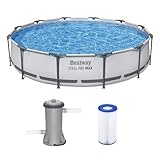
Bestway Steel Pro MAX 12' x 30" Above Ground Swimming Pool Set with Pump | Check Price On Amazon |
|
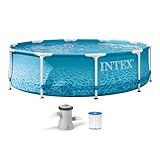
INTEX Beachside Metal Frame 10ft x 30in Round Pool Set w/Pump | Check Price On Amazon |

|
H2OGO! Kids Splash-in-Shade 8-Foot Round Steel Frame Above Ground Pool with Water Mister and Canopy Sunshade, Green Tropical Leaf Print | Check Price On Amazon |
By the Numbers
Pool Water Level — What the Research Shows
Sources: EPA WaterSense, Pool & Hot Tub Alliance, U.S. Geological Survey evaporation data
What Is the Correct Pool Water Level?
The correct pool water level sits at the midpoint of the skimmer opening, which is roughly one-third to one-half of the way up from the bottom of the skimmer faceplate. This positions the water high enough for the skimmer weir to function properly without drawing air into the suction line.
For most inground pools with rectangular skimmer openings measuring approximately 6 inches tall, the ideal water mark falls 2 to 3 inches above the bottom lip of the skimmer. Above-ground pools with through-the-wall skimmers follow the same rule: keep the water centered on the skimmer mouth so the floating weir door can move freely without gulping air or jamming shut.

- Intelligent Navigation with Full Coverage: Equipped with 11 high-precision sensors and enhanced dual-path algorithms. The optimized WavePath cleaning pattern ensures systematic coverage with minimal overlap, while adaptive navigation analyzes pool layout in real time to eliminate missed spots
- Dual Filtration for Crystal-Clear Water: Advanced dual-layer filtration system features a replaceable 3-micron ultra-fine filter paired with a 180-micron standard filter. Effectively captures fine dust, sand, leaves, and debris for visibly cleaner and healthier pool water
- Comprehensive Pool Cleaning: Engineered to clean the pool floor, walls, waterline, and shallow areas (above 12 inches). The Caterpillar Treads system enhances mobility and climbing ability, ensuring thorough coverage across all pool zones
- Reliable Performance with 2-Year Warranty: Trusted by over 500,000 pool owners worldwide, this robotic pool cleaner delivers consistent, high-performance results. Built for durability and backed by a 2-year warranty and responsive customer support for worry-free ownership
This standard exists for one reason. The skimmer is designed to pull only the top 1/8 to 1/4 inch of water off the surface, where floating debris and oils collect. When the water level drops below the lower edge of the skimmer opening, the pump draws air instead of water, a condition called cavitation that destroys pump seals and impellers within minutes of sustained operation.
Why Pool Water Level Matters for Equipment and Water Quality
Low water level starves the pump of water, creating a partial vacuum that collapses air bubbles against the impeller at thousands of pounds per square inch. This cavitation process pits the metal impeller surface and burns out the mechanical shaft seal, a repair costing $150-400 in parts plus labor at $85-125 per hour for a typical service call.
Beyond equipment damage, incorrect water level disrupts chemical distribution. The skimmer handles approximately 70-80% of total circulation in most residential pools, with the main drain contributing the remainder. When water falls below the skimmer, sanitized water no longer reaches the surface where algae spores and bacteria concentrate, creating hot spots of contamination even when your chemical readings test normal at the return jets.
According to the Pool & Hot Tub Alliance (PHTA) technical manual, proper skimmer flow requires a minimum water column of 2 inches above the skimmer throat to prevent vortex formation. Below this threshold, a visible whirlpool forms inside the skimmer housing, audible as a periodic gulping sound that signals intermittent air ingestion into the pump basket.
High water level creates a different set of problems. When water submerges the entire skimmer opening, the weir door cannot float up and down to control surface flow. Surface debris bypasses the skimmer entirely because the water column is too deep for the skimming action to reach floating leaves, pollen, and sunscreen oils.
How to Check Your Pool Water Level Accurately
Reading the water level requires looking at the skimmer faceplate from poolside, not from across the yard. Stand directly in front of the skimmer and sight across the waterline against the plastic frame. The water should hit the middle of the opening, typically marked by screws at the approximate center point on most Hayward, Pentair, and Waterway skimmer models.
For a more precise measurement, use a waterproof ruler or a pool water level indicator gauge placed against the skimmer face. Measure from the bottom of the skimmer throat upward. On a standard Hayward SP1084 skimmer with a 5.75-inch tall opening, you want 2.5 to 3.5 inches of water depth inside the skimmer mouth.
If your pool has a tile line at water level, use it as a quick visual reference only after confirming it aligns with the skimmer midpoint. Tile lines sometimes shift during construction and should not be your primary gauge without verification against the skimmer opening first.
How to Raise Pool Water Level: Step-by-Step Guide
Raising pool water is the simpler adjustment. Connect a standard garden hose to the nearest spigot, place the hose end in the deep end of the pool to prevent erosion of the shallow end floor material, and monitor the fill rate against your target level at the skimmer. Most municipal water systems deliver 6-12 gallons per minute through a 5/8-inch garden hose.
For a 20,000-gallon pool needing a 1-inch raise, you need approximately 1,250 gallons of water. At 8 GPM from a typical hose, that is roughly 2.6 hours of fill time. Set a timer on your phone. Forgetting the hose running overnight adds hundreds of gallons of unnecessary water and raises your water bill by $10-30 depending on local rates. A simple water hose timer with automatic shut-off costs $15-25 and prevents overfill accidents entirely.
Step-by-Step Guide
How to Raise Pool Water Level — Step by Step
5 steps · Approximately 2-4 hours total depending on pool size and hose flow rate
Check current water level at the skimmer
Measure from the bottom of the skimmer opening upward using a ruler. The target is 2-3 inches of water inside the skimmer throat on standard 6-inch faceplates.
Calculate the fill volume needed
Each inch of water in a 20,000-gallon rectangular pool (16×32 ft) equals approximately 1,250 gallons. For a 15,000-gallon pool, one inch is about 940 gallons. Measure your pool dimensions and multiply length x width x 0.0833 (1 inch in feet) x 7.48 to get exact gallons per inch.
Place the hose in the deep end and set a timer
Position the hose end in the deepest part of the pool to prevent shallow end erosion. Time how long it takes to fill a 5-gallon bucket from your spigot to calculate your actual GPM flow rate. Divide total gallons needed by your GPM to get the exact fill duration. If you want to skip the math, you can use our pool fill time calculator to determine exactly how long it will take to top off your pool based on your hose flow rate.
Recheck water level every 30 minutes
Check the skimmer water level periodically rather than relying solely on a timer. Flow rates vary based on municipal water pressure fluctuations throughout the day.
Stop at the skimmer midpoint and rebalance chemicals
Adding 1,000-plus gallons of fresh water dilutes your pool chemistry. Test and adjust free chlorine, pH, alkalinity, and cyanuric acid levels within 24 hours of a significant top-off. Untreated municipal water typically has pH of 7.0-7.4 and zero cyanuric acid, pulling your stabilized chlorine levels down.
For the most common residential pool scenario, a 20,000-gallon inground pool needing 1-2 inches of top-off, expect to run the hose for 2.5 to 5 hours at standard residential flow rates. Set a phone timer and check every 30 minutes to avoid overshooting into an overfill situation.
How to Lower Pool Water Level When It Is Too High
Lowering water level requires either a submersible pump, the waste setting on your multiport valve, or a siphon setup. The method you choose depends on how much water you need to remove and whether your filter has a backwash line plumbed to an approved discharge point per local municipal code.
For a filter with a multiport valve set to Waste, water bypasses the filter media entirely and discharges directly out the backwash line. This removes water at the full pump flow rate, typically 40-60 GPM, meaning a 1-inch reduction in a 20,000-gallon pool takes about 20-30 minutes. You must stay at the equipment pad while the pump runs on Waste because the water level drops fast, and running the pump dry even momentarily causes immediate seal damage.
A submersible pump rated at 1/3 HP moves 1,200-2,000 gallons per hour and costs $60-120. It is the safer option because it shuts off automatically when water level drops below its intake, eliminating the dry-run risk entirely. Place it on the top step or in the shallow end, attach a discharge hose directed to an approved drainage area, and plug it into a GFCI-protected outlet at least 10 feet from the pool edge per NEC code requirements.
A manual siphon with a standard garden hose works for small reductions of 1/2 inch or less. Submerge the entire hose to fill it with water, cap one end with your thumb, pull that end to a drainage point lower than the pool water level, and release. The siphon moves 3-6 GPM depending on hose diameter and vertical drop. This method costs nothing but moves water too slowly for anything beyond minor adjustments.
Product Comparison
Water Removal Methods — Side by Side
Compare the three main ways to lower pool water level
| Feature | Multiport Waste Setting | Submersible Pump | Garden Hose Siphon |
|---|---|---|---|
| Flow rate | 40-60 GPM | 20-33 GPM | 3-6 GPM |
| Equipment cost | Already installed | $60-120 | Free (existing hose) |
| Dry-run risk | High | None (auto shut-off) | None (stops when level equalizes) |
| Best for | Large reductions of 3+ inches | Medium reductions, no backwash line | Small adjustments under 1/2 inch |
| Key requirement | Approved discharge point per local code | GFCI outlet within cord length | Drainage point lower than pool level |
For most homeowners needing a 2-3 inch reduction, a submersible pump offers the safest balance of speed and equipment protection.
What Causes Pool Water Level to Drop or Rise?
Evaporation accounts for most normal water loss in swimming pools, removing 1/4 to 1/2 inch per day during hot, dry, or windy conditions. This rate varies dramatically by climate zone. Pool owners in Phoenix, Arizona routinely lose 1/2 inch or more daily in July, while Seattle pool owners may see less than 1/8 inch per day in the same month due to lower temperatures and higher humidity levels.
The evaporation rate depends on four measurable factors: air temperature difference between water and ambient air, wind speed across the pool surface, relative humidity, and whether the pool is covered at night. An uncovered 20,000-gallon pool in a climate with 90 degree Fahrenheit daytime temperatures, 15% humidity, and 10 mph winds can lose 500-700 gallons per week to evaporation alone. A solar pool cover reduces this loss by 50-70% by trapping water vapor at the surface and blocking wind contact with the water. For a precise estimate based on your local conditions, our pool water evaporation calculator lets you model daily and weekly water loss rates specific to your climate zone and pool dimensions.
Splash-out from heavy bather use, diving, and cannonballs eliminates water quickly. A single afternoon with 8-10 active swimmers can displace 200-400 gallons of water. This is normal and expected. What is not normal is water loss that continues overnight with no wind, no swimmers, and the pump turned off.
To distinguish evaporation from a leak, perform the bucket test. Place a 5-gallon bucket on the second step of the pool, fill it with pool water to match the pool level exactly, and mark both levels after 24 hours with the pump off. If the pool level drops more than the bucket level, you have a leak. The difference between the two measurements is your daily leak rate. According to the American Leak Detection Association, leaks as small as 1/8 inch in diameter waste over 3,000 gallons per month, a loss rate that far exceeds any possible evaporation rate in any North American climate.
Rising water levels nearly always come from rainfall. A 1-inch rain event on a 16×32-foot pool deposits approximately 400 gallons of water. If your area received 3 inches of rain in a week, your pool gained about 1,200 gallons. There is nothing to fix here. You simply lower the level back to the skimmer midpoint using one of the methods described above. For comprehensive pool care routines that include managing seasonal rain patterns, our complete pool maintenance guide covers the full yearly cycle with month-by-month checklists.
Seasonal Water Level Guide: How Needs Change Throughout the Year
Water level management follows distinct patterns through the seasons, and what works in July will not work in January. Pool owners in freeze zones face the additional concern of water expanding 9% in volume when it freezes, which can crack skimmer housings, pipes, and equipment if the water level is not lowered properly for winter.
In summer, you top off frequently due to evaporation and splash-out, checking the skimmer every 2-3 days during peak heat. In winter, if you close the pool, the water level must be dropped below the skimmer and return jets, typically 4-6 inches below the tile line, to prevent freeze damage. The complete winterization process requires precise water level adjustment before blowing out lines and adding antifreeze to plumbing.
Seasonal Guide
Pool Water Level — Month-by-Month Action Guide
What to check and adjust each month for correct water level
Off-season / closed
Spring opening requires filling back to operating level, typically adding several thousand gallons to replace what was drained at closing. The complete opening procedure walks through filling, priming the pump, and testing all equipment before the first swim of the season.
Automatic Pool Water Levelers: Are They Worth the Investment?
Automatic water levelers, also called auto-fill devices, connect to a water supply line and use a float valve mechanism identical to a toilet fill valve to maintain water at a preset level. Models like the Pentair T40-F or the PoolMiser install in the pool wall or deck and plumb directly to a garden hose connection or dedicated water line with a required backflow preventer per plumbing code.
Installed cost runs $400-800 for a professional installation including the unit, plumbing connection, backflow preventer, and concrete cutting if retrofitting into existing deck. The convenience is real: you never manually top off the pool again during swim season. The risk is also real: a stuck float valve wastes thousands of gallons before anyone notices a constantly running water line, and the water bill shock can run $200-500 for a single undetected failure month.
For pool owners in high-evaporation climates like the Southwest who currently top off weekly during summer, an auto-fill saves meaningful time and ensures consistent skimmer function. For owners in moderate climates who top off once or twice per month, the $400-800 install cost buys a lot of garden hose time before breaking even. Most pool service professionals recommend auto-fills for pools in arid climates with evaporation exceeding 1/2 inch daily, and suggest manual topping off for everyone else.
If you have an auto-fill, test the float valve monthly by pressing it down and verifying it shuts off cleanly when released. A replacement auto-fill float valve assembly costs $30-60 and takes 15 minutes to swap with basic tools. The backflow preventer must be tested annually per most municipal plumbing codes to prevent pool water from siphoning back into the potable water supply during a pressure drop event.
Common Pool Water Level Myths Debunked
Several persistent beliefs about pool water level circulate among pool owners, and acting on the wrong information leads directly to equipment damage or water waste. The following myths represent the most common misconceptions we encounter on service calls, corrected with the physics and hydraulics that actually govern pool water behavior.
Myth vs Fact
Pool Water Level — Common Myths Debunked
Separating fact from fiction on the most common water level misconceptions
✗ Myth
“Water level does not matter as long as the pump is moving water.”
✓ Fact
A pump moving aerated water at 50% of rated flow due to low water level is destroying its mechanical seal through cavitation. The seal replacement costs $150-400. The pump sounds like it is running because the motor is spinning, but the impeller is being damaged with every revolution.
✗ Myth
“Topping off the pool with a hose does not affect water chemistry.”
✓ Fact
Adding 1,000-2,000 gallons of fresh municipal water with zero cyanuric acid, pH of 7.0-7.4, and zero calcium hardness dilutes every chemical parameter in the pool. After a significant top-off, free chlorine drops proportionally, CYA drops by the dilution percentage, and calcium hardness drifts downward. Test all parameters within 24 hours of adding more than 500 gallons.
✗ Myth
“If water is disappearing, I definitely have a leak.”
✓ Fact
Evaporation alone can remove 500-700 gallons per week from an uncovered pool in hot, dry, windy conditions. Perform the bucket test before calling a leak detection service at $300-600 per visit. The bucket test takes 24 hours, costs nothing, and definitively separates evaporation from leakage.
✗ Myth
“Higher water level means better skimming because more water flows through.”
✓ Fact
Overfilled pools submerge the weir door completely, preventing it from floating up to create the surface draw effect. The skimmer pulls water from several inches below the surface instead of the top 1/8 inch where debris floats. Surface scum, pollen, and oils accumulate while the pump runs fine because the skimmer is still full of water.
✗ Myth
“A solar cover stops all evaporation so water level stays constant.”
✓ Fact
Solar covers reduce evaporation by 50-70%, not 100%. Water vapor still escapes at the edges, through small tears, and during the hours the cover is off for swimming. You still need to check water level, just less frequently. A covered pool in summer might need topping off every 2 weeks instead of every 3-4 days.
For pool owners who want the simplest possible routine, check the skimmer water level every time you empty the skimmer basket during swim season. The two tasks take 30 seconds combined and prevent the most common cause of pump damage we see on service calls.
Tools and Equipment for Managing Pool Water Level
You do not need much equipment to manage water level effectively, but a few specific tools make the job faster and reduce the risk of costly mistakes. Here is what experienced pool owners keep on hand.
A submersible utility pump rated at 1/4 to 1/3 HP is the single most useful water level tool beyond a garden hose. It lowers water after heavy rain, drains the winter cover, and removes water for repairs without risking the main pump running dry. Look for models with an automatic float switch that shuts off when water drops below about 1 inch.
A digital hose timer with automatic shut-off prevents overfill mistakes that waste water and money. Set the timer for your calculated fill duration, and it stops flow automatically even if you forget to check. These cost $15-30 and pay for themselves the first time they prevent an overnight overfill that sends hundreds of gallons into the yard.
Keep a liquid drop test kit for post-top-off chemical rebalancing. Test strips are accurate to within about 0.5 pH units. A drop kit gives readings accurate to 0.1 ppm for chlorine and 0.2 for pH, which matters when you just diluted the entire pool by 5-10% with fresh fill water.
How much water does a pool lose to evaporation per day?
An uncovered residential pool loses 1/4 to 1/2 inch of water per day to evaporation during hot, dry conditions. This equals 150-300 gallons daily in a typical 20,000-gallon rectangular pool, or roughly 1,000-2,000 gallons per week. In extreme desert climates like Phoenix with 110 degree Fahrenheit temperatures and single-digit humidity, daily loss can exceed 1/2 inch.
Evaporation rate is driven primarily by the vapor pressure difference between the pool water and the surrounding air. When air is hot and dry, it absorbs water vapor rapidly from the pool surface. Wind accelerates this by stripping the saturated air layer immediately above the water and replacing it with dry air. A pool cover interrupts both mechanisms and cuts water loss by half or more.
What is the difference between evaporation water loss and a leak?
Evaporation loss is uniform across the entire pool surface and stops when the air above the water reaches 100% relative humidity. A leak is localized to a specific point in the pool structure or plumbing and continues regardless of weather conditions. The bucket test separates them definitively: a bucket of pool water placed on the step loses water at the same rate as the pool if evaporation is the only cause.
If the pool level drops more than the bucket level after 24 hours with the pump off, the difference is your leak rate. Even a 1/8-inch difference between the two measurements over 24 hours indicates a leak losing approximately 90-120 gallons per day, which no evaporation rate can explain in any climate on earth.
Why does my pool pump make a loud noise when the water level is low?
The loud noise from a pump with low water level is cavitation: air bubbles forming and violently collapsing inside the pump housing as the impeller spins. This happens because the skimmer is drawing air along with water, creating a two-phase flow that reduces pump efficiency by 30-50% while the collapsing bubbles pit the metal impeller surface at thousands of PSI at the microscopic point of collapse.
The fix is immediate: turn off the pump, raise the water level to the skimmer midpoint, and verify the pump basket is full of water with no visible air pocket before restarting. Continuing to run a cavitating pump for even 5-10 minutes can score the impeller and damage the mechanical seal enough to require replacement. A replacement pump seal kit costs $25-50 in parts but $150-300 in labor for a service call.
Can I use a garden hose vs calling a water delivery service to fill my pool?
A garden hose is the correct tool for topping off water level by 1-3 inches. At 6-12 GPM from a standard 5/8-inch hose, raising a 20,000-gallon pool by 2 inches takes about 4-5 hours and costs $5-15 in municipal water depending on local rates. A bulk water delivery service makes sense only when filling an entire pool from empty, where 20,000 gallons delivered by tanker truck costs $400-800 but takes 2 hours instead of 35-40 hours from a hose.
For routine water level maintenance, the hose is always the right choice. The cost difference is extreme: $5-15 for hose water versus $400-plus for a truck delivery of the same volume. Water delivery services have a 3,000-6,000 gallon minimum per trip and charge per gallon at rates 4-8 times higher than municipal water. If you are filling an entire pool from empty and want to compare the true cost of municipal water versus bulk delivery, our pool fill cost calculator factors in your local water rates and tier pricing to give you an accurate side-by-side comparison.
Can low water level damage my pool heater?
Yes, low water level can destroy a pool heater within minutes. Gas heaters and heat pumps require a minimum flow rate, typically 25-40 GPM depending on the model, to carry heat away from the heat exchanger. When low water level reduces flow through the skimmer, the heater’s internal pressure switch may allow the heater to fire with inadequate water flow, causing the heat exchanger to overheat and crack.
A cracked heat exchanger in a gas heater is typically a total-loss failure because replacement cost exceeds 60-70% of a new unit. New gas pool heaters run $2,500-4,500 installed. The pressure switch is designed to prevent this, but sediment or a stuck switch can fail to trip, and the damage happens fast at combustion temperatures exceeding 1,000 degrees Fahrenheit inside the exchanger tubes.
Why did my water level drop overnight after heavy pool use?
Heavy bather load displaces water through splash-out. Eight to ten active swimmers moving constantly for several hours can displace 200-400 gallons of water, which drops a 20,000-gallon pool by roughly 1/3 to 2/3 of an inch. This is visible the next morning as a noticeable drop concentrated in one day rather than the gradual decline of evaporation spread across a week.
This is normal and expected. Top off to the skimmer midpoint and recheck your chlorine level since heavy bather load also consumes sanitizer rapidly. If the water level drops similarly overnight with no swimmers and the pump off, that pattern points to a leak, not splash-out.
How long does it take to fill a pool from a garden hose?
Filling an empty 20,000-gallon pool from a standard garden hose delivering 8 GPM takes approximately 42 hours of continuous flow. This assumes consistent municipal water pressure and no interruptions. At 6 GPM, the same fill takes about 56 hours. At 12 GPM from a high-pressure system with a larger diameter hose, it takes about 28 hours.
For a partial top-off of 2 inches in the same pool, the fill time is 4-5 hours at 8 GPM. This is why you use a hose timer or phone alarm: 4 hours is long enough that you will forget if you do not set a reminder. The overfill from forgetting the hose another 4 hours wastes about 2,000 gallons and adds $10-30 to your water bill.
Is an automatic water leveler better than manual topping off?
An automatic water leveler is better if you live in a climate where evaporation exceeds 1/2 inch daily and you currently top off twice per week or more during summer. In that scenario, the installed cost of $400-800 pays back in convenience within 2-3 seasons. For moderate climates requiring top-off once or twice per month, manual topping off with a hose timer is more cost-effective.
The auto-fill convenience comes with a trade-off: a stuck float valve wastes thousands of gallons silently before detection. Monthly float valve testing takes 30 seconds and prevents catastrophic water bills. If you are not willing to test the float valve monthly, stick with manual top-off where the hose timer provides a hard stop on water flow regardless of human error.
Can I leave my pool water level low over winter?
In freeze zones, you must leave the water level low over winter, specifically 4-6 inches below the tile line and below the skimmer and return jet openings. This allows for ice expansion without cracking the skimmer housing or plumbing fittings. The pool cover rests on the lowered water surface, and standing water on the cover must be pumped off periodically throughout the winter with a submersible cover pump.
In non-freeze zones where pools stay open year-round, you maintain normal operating level at the skimmer midpoint through winter. Evaporation slows significantly in cooler months but does not stop. Check water level every 2-3 weeks during winter in warm climates, and top off as needed to keep the skimmer functioning for the reduced winter pump schedule of 4-6 hours daily.
How much does it cost to refill pool water after draining?
Refilling a completely drained 20,000-gallon pool from municipal water costs $80-200 at typical U.S. residential water rates of $4-10 per 1,000 gallons, depending on your local utility tier pricing structure. Some municipalities charge higher rates at higher usage tiers, and filling 20,000 gallons in a single billing cycle can push your usage into the top tier where rates double or triple.
Call your water utility before filling an entire pool from empty. Ask about their tier structure, whether they offer a one-time pool fill adjustment (some utilities waive sewer charges on documented pool fills since the water does not enter the sewer system), and what the total cost will be at your expected gallonage. A bulk water delivery at $400-800 may be cheaper than municipal water at top-tier rates plus the sewer charge on 20,000 gallons.
Is it safe to swim in a pool with water level below the skimmer?
Swimming in a pool with water below the skimmer is safe for swimmers in the short term. The water itself is not hazardous. However, leaving the pump running with the water too low risks equipment damage. If swimmers are present, splashing may temporarily raise the water level at the skimmer enough to prevent air draw, but this is not a reliable solution.
Turn off the pump before swimming if the water is below the skimmer midpoint, then top off after the swim session. The skimmer provides 70-80% of circulation, and without it, surface debris and body oils accumulate rapidly. If you must run the pump with marginal water level, monitor it continuously and shut it off the moment you hear gulping or see a vortex forming inside the skimmer.
Do I need to adjust water level before a big pool party?
Yes, adjust water level to the upper end of the acceptable range, roughly two-thirds up the skimmer opening, before a party with 10 or more swimmers expected. Heavy bather load displaces 200-400 gallons through splash-out over several hours. Starting slightly high ensures the level stays within the functional range through the event without requiring a mid-party top-off.
After the party, check the level and chemical balance. The water will have dropped, and chlorine demand will be elevated from bather waste. Test free chlorine and pH, shock if combined chlorine exceeds 0.2 ppm, and top off to the midpoint the following morning once the water has settled.
Why does my pool skimmer make a sucking or slurping sound?
A slurping or gulping sound from the skimmer means the water level is too low and the skimmer is drawing air along with water. The weir door is cycling between open and closed as water surges in and out, creating an intermittent suction break that produces the characteristic sound. This is an emergency condition for the pump if allowed to continue.
The immediate action is to turn off the pump and add water to the midpoint of the skimmer opening. Check the pump basket for debris that may have been pulled in during the low-water period. Restart the pump only after confirming the water level is correct and the pump housing is full of water with the lid sealed properly. If the slurping sound persists with correct water level, the weir door may be stuck, and a replacement skimmer weir door costs $10-20 and snaps in without tools on most models.
How do I measure exactly how much water my pool lost?
Use the bucket test for precise water loss measurement. Place a 5-gallon bucket on the second step, fill it with pool water to exactly match the pool water level outside the bucket, and mark both the inside and outside waterlines with tape. Turn off the pump and any auto-fill device. After 24 hours, measure the difference between the two levels with a ruler marked in 1/16-inch increments.
Multiply the difference in inches by your pool surface area in square feet, then multiply by 0.623 to get gallons lost. For a 512-square-foot pool (16×32) with a 1/8-inch difference between bucket and pool level, the leak rate is 512 x 0.125 x 0.623 equals approximately 40 gallons per day, or 1,200 gallons per month. If you want to skip the manual math, you can quickly calculate your pool’s total gallon capacity using our pool volume calculator to put your water loss numbers in proper context. This method is accurate enough to distinguish a $20 monthly water loss from a $100 monthly loss that justifies a $300-600 professional leak detection visit.
Maintain your pool water level at the skimmer midpoint, check it every time you empty the skimmer basket, and use a hose timer for every top-off. These three habits eliminate the vast majority of water level problems before they become pump repairs. For the complete seasonal maintenance picture that puts water level management in context with chemical balancing and equipment care, our comprehensive pool maintenance guide covers the full yearly routine with weekly, monthly, and seasonal checklists. If standing water around the pool from overfill or rain has created a mosquito problem, learn how to keep mosquitoes out of your pool with prevention strategies that work alongside proper water level management.
| Photo | Best Above-Ground Pools | Price |
|---|---|---|
|
|
Bestway Steel Pro MAX 12' x 30" Above Ground Swimming Pool Set with Pump | Check Price On Amazon |
|
|
INTEX Beachside Metal Frame 10ft x 30in Round Pool Set w/Pump | Check Price On Amazon |
|
|
H2OGO! Kids Splash-in-Shade 8-Foot Round Steel Frame Above Ground Pool with Water Mister and Canopy Sunshade, Green Tropical Leaf Print | Check Price On Amazon |