
A Bestway pool that turns green one week after setup did not fail because of a manufacturing defect. It failed because the filter pump included in the box moves only 1,000 gallons per hour while a 4,000-gallon pool needs at least 1,333 GPH to achieve one full turnover every 8 hours.
This guide covers every step of Bestway pool ownership: initial setup on uneven ground, water chemistry targets specific to vinyl liner pools, pump upgrades that actually work, weekly maintenance routines, seasonal opening and closing, and troubleshooting every common problem from cloudy water to frame rust. You will also find exact chemical doses per 1,000 gallons, filter pump GPH requirements by pool size, and the real cost of keeping a Bestway pool clear all season.
| Photo | Best Above-Ground Pools | Price |
|---|---|---|
|
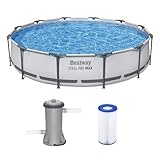
Bestway Steel Pro MAX 12' x 30" Above Ground Swimming Pool Set with Pump | Check Price On Amazon |
|
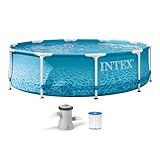
INTEX Beachside Metal Frame 10ft x 30in Round Pool Set w/Pump | Check Price On Amazon |

|
H2OGO! Kids Splash-in-Shade 8-Foot Round Steel Frame Above Ground Pool with Water Mister and Canopy Sunshade, Green Tropical Leaf Print | Check Price On Amazon |
By the Numbers
Bestway Pool Ownership, What the Data Shows
Sources: PHTA, CDC, manufacturer specifications, and reported user data
What Makes Bestway Pools Different from Other Above-Ground Pools?
Bestway pools use a triple-layer PVC and polyester mesh liner suspended in a snap-together steel frame. Unlike Intex pools that often use inflatable top rings, Bestway’s steel frame design supports more water volume and resists collapse better.
The liner material is the same PVC-coated polyester used in entry-level permanent above-ground pools. It resists punctures from pool toys and dog claws but will degrade under direct UV exposure if the pool is not covered when idle. The frame is powder-coated steel tubing, not stainless steel. This means every scratch through the powder coating becomes a rust point within one season if not treated.

- Intelligent Navigation with Full Coverage: Equipped with 11 high-precision sensors and enhanced dual-path algorithms. The optimized WavePath cleaning pattern ensures systematic coverage with minimal overlap, while adaptive navigation analyzes pool layout in real time to eliminate missed spots
- Dual Filtration for Crystal-Clear Water: Advanced dual-layer filtration system features a replaceable 3-micron ultra-fine filter paired with a 180-micron standard filter. Effectively captures fine dust, sand, leaves, and debris for visibly cleaner and healthier pool water
- Comprehensive Pool Cleaning: Engineered to clean the pool floor, walls, waterline, and shallow areas (above 12 inches). The Caterpillar Treads system enhances mobility and climbing ability, ensuring thorough coverage across all pool zones
- Reliable Performance with 2-Year Warranty: Trusted by over 500,000 pool owners worldwide, this robotic pool cleaner delivers consistent, high-performance results. Built for durability and backed by a 2-year warranty and responsive customer support for worry-free ownership
Bestway pools ship with a cartridge filter pump rated between 330 GPH and 1,500 GPH depending on the model. The smallest pumps are inadequate for pools over 1,500 gallons. The largest included pump, the 1,500 GPH model, is adequate for pools up to about 4,500 gallons if run 10-12 hours per day. For pools larger than 4,500 gallons, upgrading the pump is not optional. It is required for water clarity and algae prevention.
For most home pool owners, a Bestway pool gives 2-4 summers of reliable use at a fraction of the cost of a permanent above-ground pool. The key is understanding the equipment limitations and planning upgrades before problems start.
How to Set Up Your Bestway Pool: Step-by-Step Instructions
The single most important setup decision is ground preparation. A Bestway pool on unlevel ground will lean, stress the frame joints, and eventually collapse. The ground must be level within 1 inch across the entire pool footprint.
Do not place the pool on sand alone. Sand shifts under 4,000-8,000 gallons of water weight. Use a commercial pool pad or interlocking foam tiles under the liner. This protects the liner from rocks, roots, and grass that will puncture the bottom over time. A ground cloth alone is not enough.
Step-by-Step Guide
How to Set Up Your Bestway Pool, Step by Step
7 steps · Estimated total time: 4-6 hours including ground prep
Level the ground within 1 inch
Remove all grass and vegetation from a circle 2 feet larger than the pool diameter. Use a 4-foot carpenter’s level on a long 2×4 board to check for level. Fill low spots with screened sand, tamp firmly. Never build up a low side — always dig down the high side.
Place a pool pad or foam base
Lay down interlocking foam tiles or a commercial above-ground pool pad across the entire area. This prevents liner punctures and insulates the pool bottom from ground temperature changes. Overlap the pool footprint by 6 inches on all sides.
Assemble the frame on the ground cloth
Lay out the included ground cloth first. Connect all T-joints and horizontal frame tubes in a circle. Insert vertical legs into each T-joint. Do not tighten anything yet. The frame should be loose and adjustable at this stage.
Spread the liner and attach to frame
Drape the liner over the frame with the drain valve positioned near your planned drain location. Clip the liner over the top rail around the entire pool. Ensure the liner is not twisted and the bottom seam sits flat. Pull the liner gently outward as you work around the circle.
Fill with 2 inches of water, then adjust
Add 2 inches of water, then stop. Walk around the pool and smooth out all liner wrinkles by pulling outward from the center. Wrinkles left now will become permanent creases. Check that the frame is still level and adjust legs if needed.
Install the filter pump and fill completely
Connect the filter pump to the inlet and outlet ports according to the manual. The outlet (return) goes to the upper port. The inlet (suction) connects to the lower port. Fill the pool to the recommended water level, typically 80-90% of the liner height.
Add starter chemicals and run pump 24 hours
Add a pool startup chemical kit or dose individually: chlorine to 2-4 ppm, pH to 7.4-7.6, alkalinity to 80-120 ppm. Run the filter pump continuously for 24 hours before swimming. Test water again before first use.
For a detailed spring opening routine that applies to Bestway pools stored over winter, see our complete pool opening checklist with step-by-step instructions.
Essential Water Chemistry for Bestway Pools
Water chemistry in a Bestway pool is not the same as in a permanent inground pool. The smaller water volume means chemical levels change faster. A 4,000-gallon pool reacts to a single heavy rain or a weekend of heavy bather load in hours, not days. Testing once per week is not enough during peak summer.
Test free chlorine and pH every other day at minimum. Test total alkalinity and cyanuric acid weekly. The target ranges for a vinyl liner Bestway pool are: free chlorine 2-4 ppm, pH 7.4-7.6, total alkalinity 80-120 ppm, cyanuric acid 30-50 ppm, and calcium hardness 150-250 ppm. Calcium hardness matters less for vinyl pools than for plaster pools, but very low calcium (below 100 ppm) can cause foaming and equipment corrosion.
The most common chemistry mistake Bestway owners make is using only stabilized chlorine tablets. Trichlor tablets add cyanuric acid continuously. In a 4,000-gallon pool, three 3-inch trichlor tablets per week can push CYA above 100 ppm within 6-8 weeks. At that level, chlorine becomes chemically locked and algae blooms even when free chlorine tests at 2-4 ppm. Switch to liquid chlorine or calcium hypochlorite shock for half of your chlorine dosing to slow CYA accumulation.
Use the table below to match each chemical parameter to its correct adjustment product and dose.
Chemical Reference
Bestway Pool Chemical Adjustment Guide, Doses per 1,000 Gallons
All doses are per 1,000 gallons of pool water. Multiply by your pool volume in thousands of gallons. If you’re unsure of your pool’s exact volume, use our pool volume calculator to get an accurate measurement.
| Parameter | Target Range | Too Low Symptom | Too High Symptom | Raise With (Dose/1,000 gal) | Lower With (Dose/1,000 gal) |
|---|---|---|---|---|---|
| Free Chlorine | 2-4 ppm | Cloudy water, algae | Eye irritation, liner bleaching | 0.5 oz granular chlorine | Sunlight or time |
| pH | 7.4-7.6 | Corrosion, eye irritation | Scale, chlorine ineffective | 2 oz soda ash (pH Up) | 1.5 oz dry acid (pH Down) |
| Total Alkalinity | 80-120 ppm | pH bounce, corrosion | pH lock, scale | 2.5 oz baking soda | 3 oz dry acid |
| Cyanuric Acid | 30-50 ppm | Chlorine loss to UV | Chlorine lock, algae | 2 oz CYA granules | Partial drain and refill |
| Calcium Hardness | 150-250 ppm | Foaming, corrosion | Cloudy water, scale | 2.5 oz calcium chloride | Partial drain and refill |
Doses are approximate. Always test after adding chemicals and wait 4-6 hours before retesting. Never mix chemicals directly — add each separately to the pool.
For a complete guide on water chemistry testing and adjustment, see our detailed above-ground pool maintenance guide covering every chemical parameter.
Weekly Maintenance Routine for Bestway Pools
A consistent weekly routine prevents 90% of the water quality problems that Bestway owners report. The routine takes 30-45 minutes per week. Skip a week during peak summer heat and algae can establish in as little as 72 hours when water temperatures exceed 85 degrees Fahrenheit.
The core tasks are: test water chemistry, skim the surface, brush the walls and floor, vacuum debris, clean or replace the filter cartridge, and shock treat if needed. Each task has a specific purpose and skipping any one creates a chain reaction that leads to cloudy or green water.
Test water first. Use a liquid drop test kit for accurate free chlorine and pH readings. Test strips are acceptable for quick checks but are accurate only to within 0.5 pH units. A drop kit gives readings accurate to 0.2 ppm for chlorine and 0.1 for pH. Adjust chemicals based on the dosing table above before doing anything else.
Skim the surface with a leaf net to remove floating debris before it sinks. Brush the walls and floor with a nylon brush (never use a wire brush on a vinyl liner). Brushing dislodges algae spores before they form visible colonies. Vacuum the pool floor using either a manual vacuum head on a telescoping pole connected to the filter pump suction or a robotic pool cleaner designed for above-ground pools.
Clean the filter cartridge weekly. A clogged cartridge reduces flow rate by 50% or more. The pump moves less water, turnover time increases, and chlorine distribution becomes uneven. Rinse the cartridge with a garden hose spray nozzle. Replace the cartridge every 2-4 weeks during heavy use. Keep a spare Bestway filter cartridge replacement on hand so you can swap instantly and soak the dirty one overnight.
Shock treat weekly or after heavy use. For a 4,000-gallon Bestway pool, add 2-3 ounces of calcium hypochlorite shock or 4-6 ounces of non-chlorine shock per 1,000 gallons of pool water. Run the pump for at least 8 hours after shocking. Do not swim until free chlorine drops below 5 ppm, typically 4-8 hours after a standard shock dose. For a precise shock amount tailored to your pool size, use our pool shock calculator.
Buying Guide
Before You Buy, Bestway Pool Maintenance Supply Checklist
Check off each point before making your purchase decision.
Bestway Pool Filter Pump Options and Upgrades
The filter pump included with most Bestway pools is the weakest link in the system. A pool that is chemically balanced but has inadequate filtration will still turn cloudy because suspended particles are not being removed. Cloudy water is a filtration problem first, not a chemical problem.
The included cartridge filter pumps are single-speed units with a flow rate that is optimistic at best. The stated GPH is measured with a clean filter cartridge and zero head pressure. In real conditions with a partially loaded filter and 3-4 feet of head, actual flow is 20-30% lower than the rated number. A pump rated at 1,000 GPH delivers about 700-800 GPH in actual service.
For a 4,000-gallon Bestway pool, the minimum actual flow rate needed is 500 GPH to achieve one turnover in 8 hours. The included pump achieves this when clean. The problem is that a cartridge filter begins loading immediately and flow drops over the course of a week. By day 5, the pump may be moving only 400 GPH, and turnover time stretches to 10 hours. This is why pools turn cloudy mid-week even with good chemicals.
Upgrading to a pump with a higher flow rate and a sand filter instead of a cartridge provides two benefits. First, higher flow means faster turnover even with a partially loaded filter. Second, sand filters maintain flow longer between backwashes than cartridge filters maintain flow between cleanings. A sand filter pump combo rated for 2,000+ GPH on a 4,000-gallon pool means you can run the pump 6 hours instead of 10 and still achieve 1.5 turnovers per day.
Use the table below to match your Bestway pool size to the right filter pump upgrade. For a more tailored recommendation, try our pool pump sizing calculator to find the ideal pump for your specific pool volume and plumbing.
Pump Sizing Guide
Filter Pump Recommendations by Bestway Pool Size
Minimum pump GPH based on achieving 1 full turnover in 8 hours, with 30% real-world flow reduction factored in.
| Pool Size (Gallons) | Included Pump GPH | Adequate? | Recommended Upgrade GPH | Filter Type |
|---|---|---|---|---|
| 1,000-1,500 | 330-530 | Yes | Not needed | Cartridge |
| 2,500-3,500 | 800-1,000 | Borderline | 1,500 | Cartridge or Sand |
| 4,000-5,000 | 1,000-1,500 | No | 2,000-2,500 | Sand |
| 6,000-8,000 | 1,500 | No | 2,800-3,500 | Sand |
GPH ratings are manufacturer-stated. Actual flow is 20-30% lower. Upgrade recommendations include this reduction factor.
How to Troubleshoot Common Bestway Pool Problems
Most Bestway pool problems have a root cause that is easy to identify once you know what to look for. The symptom is usually visible: green water, cloudy water, strong chlorine smell, or algae spots. The cause is almost always one of three things: inadequate filtration, low free chlorine relative to cyanuric acid level, or pH outside the 7.2-7.8 range.
Green water 24-48 hours after adding chlorine means cyanuric acid is above 80 ppm. The chlorine is present but chemically bound and cannot kill algae. Test CYA. If it is above 80 ppm, you must drain and replace 25-50% of the pool water. There is no chemical that removes CYA from water. This is the most common Bestway pool problem that gets misdiagnosed as a need for more chlorine.
Cloudy water that does not clear with shock treatment is a filtration problem. Dead algae and suspended particles are too small for the cartridge filter to capture. Add a pool water clarifier to clump small particles together so the filter can catch them. Run the pump continuously for 24-48 hours. If the filter pressure gauge (if equipped) reads 25% above the clean baseline, the cartridge is loaded and must be cleaned or replaced.
For more help with cloudy water, read our complete guide to cloudy pool water causes, fixes, and prevention and our article on why pool water goes cloudy after rain and what to do about it.
Strong chlorine smell is not a sign of too much chlorine. It means the pool has combined chlorine (chloramines), which forms when free chlorine reacts with ammonia from sweat and urine. The fix is to shock the pool to break apart the chloramines. Add 2-3 ounces of calcium hypochlorite shock per 1,000 gallons. Run the pump for 8 hours. The smell will dissipate as the chloramines are oxidized.
Algae spots on the liner walls or floor mean circulation is poor in those areas. Even with good chemistry, dead spots where water does not move will grow algae. Point the return jet downward at a 45-degree angle to create a circular flow pattern. Brush the affected areas daily until the algae is gone. Add an algaecide safe for vinyl liners as a preventive after the algae is killed.
If your pool turns green despite your best efforts, see our step-by-step guide on how to clear green pool water fast and learn how long it typically takes for a cloudy pool to clear.
How to Extend the Life of Your Bestway Pool Liner and Frame
The Bestway liner is the most expensive component to replace and the one most vulnerable to damage from chemicals, UV, and physical wear. A liner that lasts 5 years instead of 2 saves you the cost of a replacement and the labor of a complete teardown and rebuild.
Keep pH between 7.2 and 7.6 at all times. Low pH below 7.0 leaches plasticizers from the vinyl, making the liner brittle. High pH above 8.0 causes calcium scale that abrades the liner surface. Both extremes shorten liner life. Test pH every other day and adjust immediately when it drifts outside the range.
Use a solar pool cover whenever the pool is not in use. This reduces chlorine loss from UV degradation by 50-75% and slows cyanuric acid accumulation. It also keeps debris out, which reduces the load on the filter cartridge. A cover pays for itself in reduced chemical consumption within one season.
Inspect the frame joints monthly for rust. The powder coating on Bestway frames is thin and scratches easily during assembly. Any bare metal spot will rust within weeks when exposed to chlorinated water splash. Sand light rust with fine-grit sandpaper and apply a rust-inhibiting spray paint rated for outdoor metal. Severe rust on a T-joint means the joint should be replaced before it fails under load.
For information on replacing a damaged liner, refer to our guide on how to replace an above-ground pool liner with step-by-step instructions.
Seasonal Care: Opening and Closing Your Bestway Pool
Bestway pools have two seasonal options: leave them up year-round (if climate permits) or drain and store them for winter. In regions where temperatures drop below freezing, the pool must be either fully drained and stored or kept running with freeze protection. Leaving a full Bestway pool to freeze solid will crack the liner and split the frame joints.
For winter storage, drain the pool completely. Remove all water from the filter pump and hoses. Dry the liner thoroughly before folding. Any moisture trapped in folds will grow mold and mildew over the winter. Store the liner in a sealed plastic bin in a heated space if possible. Freezing temperatures make the vinyl brittle, and a frozen liner will crack when unfolded in spring.
For spring opening, inspect every frame component for rust before assembly. Replace any T-joint or leg that shows more than surface rust. Set up on a fresh pool pad. The old pad will have compressed over the previous season and may have developed divots. Fill the pool, add a startup dose of chlorine and pH adjuster, and run the pump for 24 hours before testing.
What Are the Most Common Reasons Bestway Pools Collapse?
Bestway pool collapses almost always result from one of three setup errors: an unlevel foundation, an overloaded frame from filling above the recommended water level, or a rusted T-joint that fails under the outward pressure of thousands of gallons of water. An unlevel pool puts uneven stress on the frame.
The low side bears more water weight than the high side. The T-joints on the low side experience constant outward pressure that exceeds the design load. Over weeks or months, the metal fatigues until one joint snaps, and the entire pool wall drops. This is why leveling the ground within 1 inch across the entire footprint is the single most important setup step.
Overfilling above the recommended water line strains the top rail and the liner seam. The water pressure at the top of a filled pool is zero at the surface. At the bottom of a 4-foot-deep pool, it is about 1.7 PSI. Filling above the recommended level adds pressure to the top rail and the uppermost liner seam, which are not designed for sustained water contact. The seam can separate if water sits against it for weeks.
Can I Use a Saltwater System with a Bestway Pool?
Yes, a saltwater chlorine generator (SWCG) can be used with a Bestway pool, but the steel frame will rust faster. Saltwater accelerates corrosion on any exposed metal. The powder coating on the steel frame is the only barrier between the salt and the metal underneath. Every scratch, every chip, and every joint where the coating is worn thin becomes a rust entry point.
If you use a salt system, inspect the frame weekly for rust spots. Treat any rust immediately with sanding and spray paint. Apply a clear rust-inhibiting spray to all frame joints at the start of the season as a preventive measure. The liner itself is compatible with saltwater at the 2,700-3,400 ppm salt concentration that SWCG systems require. You can use our salt calculator for pools to figure out exactly how many pounds of salt to add. The liner is the same material used in permanent saltwater above-ground pools.
Use a saltwater chlorine generator designed for above-ground pools rated for your pool volume. Oversize the SWCG by 50% for Bestway pools. If your pool is 4,000 gallons, get a unit rated for 6,000 gallons. This lets you run the generator at a lower output setting, which extends the cell life and provides more consistent chlorine production.
Why Does My Bestway Pool Liner Feel Slimy?
A slimy liner surface is a biofilm of bacteria and algae that has attached to the vinyl. Free chlorine at 2-4 ppm kills free-floating bacteria but does not always penetrate the biofilm layer. The slime is a protective matrix that the bacteria produce, and it shields them from chlorine. This biofilm is the same type that forms in pipes and on pool surfaces in commercial pools.
To remove it, brush the entire liner surface aggressively with a nylon brush. This physically breaks the biofilm. Then shock the pool to 10-12 ppm free chlorine and run the pump for 24 hours. Add a non-foaming algicide designed for vinyl pools. This combination of mechanical removal and chemical oxidation eliminates the biofilm and prevents it from returning if regular brushing continues.
How Often Should I Replace the Filter Cartridge?
Replace the filter cartridge every 2-4 weeks during peak swimming season. Rinse it weekly with a garden hose spray nozzle to extend its life between replacements. A cartridge that looks clean but has been in service for 4 weeks is no longer filtering effectively. The paper fibers swell and the pore structure changes over time, reducing the cartridge’s ability to trap particles smaller than 20 microns.
When flow from the return jet is noticeably weaker than when the cartridge is clean, the cartridge is loaded and must be cleaned or replaced. If cleaning does not restore flow, the cartridge is exhausted and must be replaced. Keep a minimum of 3 spare cartridges on hand. At $8-15 each for Bestway Type III filter cartridges, this is a $25-45 seasonal cost that prevents most water clarity problems.
What Causes Brown Stains on the Bottom of My Bestway Pool?
Brown stains on a Bestway pool liner are almost always iron or manganese from well water. When you fill the pool with untreated well water, dissolved iron is invisible. As chlorine is added, the iron oxidizes and precipitates as visible brown particles that settle on the liner. These particles stain the vinyl if left in place for more than a few days.
To prevent iron staining, use a metal sequestrant for pools when filling with well water. The sequestrant binds to the iron and keeps it dissolved so it does not precipitate. If stains are already present, treat with a vitamin C tablet placed directly on the stain for 30 seconds. If the stain lightens, it is iron. Use an ascorbic acid treatment to remove the stain, then add a sequestrant to prevent recurrence.
Do I Need to Run the Pump All Day?
No, you do not need to run the pump 24 hours per day. The goal is to achieve at least one full water turnover per day. For a 4,000-gallon Bestway pool with a pump that moves 1,000 GPH (actual 700 GPH), one turnover takes about 5.7 hours. You can quickly determine your pool’s required run time with our pool turnover calculator. Running the pump 8-10 hours per day during summer is sufficient for most Bestway pools.
If bather load is high or the pool is in full sun, extend the run time to 12 hours. Run the pump during daylight hours when the sun is hitting the pool and chlorine is being consumed by UV. Running at night is less effective because chlorine demand is lower and the pump is just moving water with no sanitizer demand to meet.
Can I Use Bleach Instead of Pool Chlorine in My Bestway Pool?
Unscented household bleach (sodium hypochlorite) is chemically identical to liquid pool chlorine. The difference is concentration. Household bleach is typically 6% sodium hypochlorite. Pool liquid chlorine is 10-12.5%. You can use household bleach in a Bestway pool, but you must adjust the dose upward by roughly 60% to account for the lower concentration.
Do not use splashless, scented, or thickened bleach. These contain additives that will cause foaming and leave residues in the pool. The only acceptable bleach is plain, unscented, regular bleach with no additives. Check the label for sodium hypochlorite as the only active ingredient. For a 4,000-gallon pool, adding 1 cup of 6% bleach raises free chlorine by approximately 1.5 ppm.
Why Is My Bestway Pool Water Foaming?
Foaming in a Bestway pool is caused by dissolved organic compounds that reduce the surface tension of the water. The most common sources are laundry detergent residue on swimsuits, hair products, lotions, sunscreen, and algaecide overdosing. Cheap algaecides contain ammonium compounds that are surfactants and produce foam when aerated by the return jet.
To eliminate foam, identify and remove the source. Do not allow swimmers in the pool wearing clothes washed with fabric softener. Use a non-foaming polyquat algaecide instead of budget quaternary ammonium algaecides. If foam is already present, add a pool defoamer or anti-foam agent, which breaks the surface tension and collapses the bubbles. Run the pump for 4 hours after treatment.
What Is the Difference Between a Bestway Pool and an Intex Pool?
Bestway and Intex pools are the two dominant brands of temporary above-ground pools. The primary differences are in the frame design and the liner material. Bestway uses a snap-together steel frame with horizontal tubes and T-joints. Intex offers both inflatable top ring pools and steel frame pools similar to Bestway. The Bestway steel frame is generally considered more rigid than the Intex equivalent at the same price point.
Both brands use triple-layer PVC and polyester mesh liners. Bestway liners tend to be slightly thicker in the mid-range and premium models. The filter pumps included with both brands are functionally identical and equally underpowered for pools over 3,000 gallons. For either brand, upgrading the pump is the single most impactful improvement you can make to water clarity and maintenance ease.
How Do I Store My Bestway Pool Over Winter?
Drain the pool completely using the drain valve. Tip the pool slightly toward the drain to get the last few inches of water out. Remove all water from the filter pump, hoses, and any accessories. Water left in the pump housing will freeze, expand, and crack the plastic. Disconnect all hoses and store them indoors.
Clean the liner with a mild soap and water solution. Scrub off any algae, biofilm, or chemical residue. Dry the liner completely. Lay it flat in the sun for 2-3 hours to evaporate all moisture. Fold the liner loosely, not tightly. Tight folds create crease lines that can become permanent. Store the liner in a sealed plastic bin in a dry location that does not freeze. A basement or heated garage is ideal. Freezing temperatures will embrittle the vinyl and cause cracking when unfolded in spring.
For the frame, disassemble all T-joints and legs. Wipe down each piece with a dry cloth. Apply a light coat of rust-inhibiting spray to any exposed metal areas. Store the frame components in a dry location. Stack them flat, not leaning, to prevent bending. Label the T-joints and legs with tape if your pool model has different sizes for different positions.
Myth vs Fact
Bestway Pool Care, Common Myths Debunked
Separating fact from fiction on the most common Bestway pool misconceptions
Myth
The filter pump that came with my Bestway pool is enough because it was included in the box.
Fact
The included pump is adequate only for pools under 2,500 gallons. For larger pools, it is undersized for the water volume. Real-world flow is 20-30% below the rated GPH, and a partially loaded filter cartridge reduces flow further. Upgrade to a pump rated at 2-2.5 times your pool volume in gallons per hour for reliable water clarity.
Myth
Chlorine smell means the pool has too much chlorine and needs less.
Fact
Chlorine smell is caused by chloramines, which form when free chlorine reacts with ammonia from sweat and urine. A strong chlorine smell means the pool has too little free chlorine to break apart the chloramines. The fix is to shock the pool, not to reduce chlorine dosing.
Myth
You can leave a Bestway pool up all winter if you live in a warm climate.
Fact
In climates where the temperature never drops below freezing, a Bestway pool can stay up year-round if you maintain water chemistry and run the pump daily. However, the liner and frame still degrade from UV exposure. A cover extends the life of the pool even in warm climates. In any region where freezing is possible, the pool must be drained and stored or kept running with freeze protection.
Myth
Test strips are accurate enough for a Bestway pool.
Fact
Test strips are accurate to within 0.5 pH units and roughly 1 ppm for chlorine. A liquid drop test kit gives accuracy to 0.1 pH units and 0.2 ppm for chlorine. In a 4,000-gallon pool, a 0.5 pH error means the difference between water that is safe to swim in and water that will irritate eyes. A drop kit costs $30-50 and lasts a full season. It is the best-value investment in pool care.
Myth
A Bestway pool is a temporary pool, so you do not need to test cyanuric acid.
Fact
Cyanuric acid accumulates faster in small Bestway pools than in large inground pools because the water volume is smaller relative to the number of chlorine tablets used. Three 3-inch trichlor tablets per week add approximately 5 ppm of CYA per week to a 4,000-gallon pool. Above 80 ppm CYA, chlorine becomes chemically locked and algae will bloom even with free chlorine at 2-4 ppm. Test CYA monthly and drain water if it exceeds 80 ppm.
Quick Reference
Bestway Pool Care, Key Terms Explained
Quick reference for the terms used throughout this guide
The active form of chlorine available to kill bacteria and algae. Measured in ppm. Target 2-4 ppm for Bestway pools.
Chlorine that has already reacted with ammonia or organic waste. Produces the chlorine smell. Must be oxidized by shock treatment.
A stabilizer that protects chlorine from UV degradation. Required outdoors but accumulates with trichlor tablet use. Above 80 ppm causes chlorine lock.
One complete cycle of all pool water passing through the filter. Target a minimum of one turnover per day. Calculated as pool volume divided by pump flow rate.
Adding a large dose of chlorine or non-chlorine oxidizer to break apart chloramines and kill algae. Typically 2-3 oz calcium hypochlorite per 1,000 gallons.
Trichloroisocyanuric acid, the active ingredient in most chlorine tablets. Contains both chlorine and CYA. Each tablet adds CYA to the pool.
Granular chlorine shock that does not contain CYA. Used for weekly shocking. Adds calcium to the water, which is beneficial for soft water but can cause clouding if calcium is already high.
The flow rate of the filter pump. Manufacturer ratings are with a clean filter and zero head. Actual flow is 20-30% lower in real conditions.
A slimy layer of bacteria and algae that adheres to the liner surface. Chlorine alone cannot penetrate it. Requires physical brushing to break the protective matrix.
A measure of the water’s ability to resist pH changes. Acts as a pH buffer. Target 80-120 ppm. Low alkalinity causes pH bounce. High alkalinity causes pH lock.
A Bestway pool is the most affordable way to own a swimming pool. The trade-off is that the included equipment is designed to meet a price point, not to make maintenance easy. Understanding this from day one lets you plan for the upgrades and the routines that will keep your water clear all season.
Focus on three things: upgrade the filter pump if your pool is over 2,500 gallons. Test free chlorine and pH every other day with a drop kit. Manage cyanuric acid by alternating between stabilized tablets and unstabilized shock. These three practices prevent 95% of the problems that Bestway owners report.
For more help with water clarity issues, see our guides on cloudy pool water causes and fixes and how to clear green pool water fast.
| Photo | Best Above-Ground Pools | Price |
|---|---|---|
|
|
Bestway Steel Pro MAX 12' x 30" Above Ground Swimming Pool Set with Pump | Check Price On Amazon |
|
|
INTEX Beachside Metal Frame 10ft x 30in Round Pool Set w/Pump | Check Price On Amazon |
|
|
H2OGO! Kids Splash-in-Shade 8-Foot Round Steel Frame Above Ground Pool with Water Mister and Canopy Sunshade, Green Tropical Leaf Print | Check Price On Amazon |