
Pool liner wrinkles ruin more than just your pool’s appearance. They trap dirt, promote algae, and signal that something underneath is failing.
A wrinkle you can feel with your foot is not cosmetic. It is a warning that water is moving where it should not be, and the liner is stretching in ways it was never designed to stretch.
| Photo | Best Above-Ground Pools | Price |
|---|---|---|
|
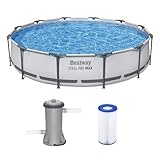
Bestway Steel Pro MAX 12' x 30" Above Ground Swimming Pool Set with Pump | Check Price On Amazon |
|
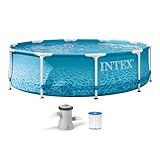
INTEX Beachside Metal Frame 10ft x 30in Round Pool Set w/Pump | Check Price On Amazon |

|
H2OGO! Kids Splash-in-Shade 8-Foot Round Steel Frame Above Ground Pool with Water Mister and Canopy Sunshade, Green Tropical Leaf Print | Check Price On Amazon |
By the Numbers
Pool Liner Wrinkles — What the Research Shows
Sources: Pool & Hot Tub Alliance, Vinyl Liner Institute manufacturer data
What Causes Pool Liner Wrinkles?
Pool liner wrinkles come from three sources. Groundwater pressure under the liner, improper installation with the liner not stretched correctly, and water chemistry that degrades the vinyl material over time.
Groundwater is the most destructive and least visible cause. According to the Pool & Hot Tub Alliance (PHTA) technical manual, hydrostatic pressure from groundwater buildup under a pool floor can exert forces exceeding 60 pounds per square foot against the liner — enough to lift and shift it.

- Intelligent Navigation with Full Coverage: Equipped with 11 high-precision sensors and enhanced dual-path algorithms. The optimized WavePath cleaning pattern ensures systematic coverage with minimal overlap, while adaptive navigation analyzes pool layout in real time to eliminate missed spots
- Dual Filtration for Crystal-Clear Water: Advanced dual-layer filtration system features a replaceable 3-micron ultra-fine filter paired with a 180-micron standard filter. Effectively captures fine dust, sand, leaves, and debris for visibly cleaner and healthier pool water
- Comprehensive Pool Cleaning: Engineered to clean the pool floor, walls, waterline, and shallow areas (above 12 inches). The Caterpillar Treads system enhances mobility and climbing ability, ensuring thorough coverage across all pool zones
- Reliable Performance with 2-Year Warranty: Trusted by over 500,000 pool owners worldwide, this robotic pool cleaner delivers consistent, high-performance results. Built for durability and backed by a 2-year warranty and responsive customer support for worry-free ownership
This happens because water is heavy. A single gallon weighs 8.34 pounds, and saturated soil under a pool expands with enough force to push a liner upward when the pool water level drops.
This only occurs when the water table rises above the pool floor level or when the pool is drained without proper groundwater relief.
If groundwater lifts the liner, the result is permanent stretching and wrinkles that cannot be removed without a full drain and reset. Fix it by installing a well point or sump system to relieve hydrostatic pressure before the liner shifts.
Improper installation creates wrinkles that appear within the first season. A vinyl liner must be vacuumed tight against the pool walls and floor during installation using a high-powered vacuum system pulling at minimum 2-3 inches of mercury (inHg) of suction.
When installers skip the vacuum step, or when the liner is installed in temperatures below 65°F, the vinyl cannot stretch evenly into the corners and coves. The Pool & Hot Tub Alliance specifies that vinyl liners should be installed at temperatures between 65°F and 85°F for optimal elasticity.
If the liner is installed cold, the vinyl remains stiff and does not conform to the pool shape. The result is folds and wrinkles in corners, on steps, and along the cove at the wall-to-floor junction. Fix it by draining and resetting the liner during warm weather with proper vacuum equipment.
Water chemistry damage is a slow-motion wrinkle cause that most pool owners never connect to their liner problems. According to research published by the Vinyl Liner Institute, free chlorine levels above 4 ppm combined with pH below 7.0 accelerate plasticizer loss in vinyl by up to 40%.
Plasticizers are the chemical compounds that keep vinyl flexible. When they leach out, the liner becomes brittle and loses its ability to hold its original shape. This degradation mechanism causes the liner to shrink slightly and pull away from the walls in places, creating tight wrinkles that radiate from corners and steps.
This only occurs when pH stays below 6.8 for extended periods or when chlorine tablets are placed directly against the liner surface.
If plasticizer loss has occurred, the liner cannot be saved — the damage is chemical and permanent. Prevention means keeping pH between 7.2 and 7.6 and never allowing undissolved chlorine products to rest on the liner floor.
How to Fix Existing Pool Liner Wrinkles Without Draining
Small wrinkles can be worked out without draining the pool. You need two tools — a rubber plunger with a smooth cup and a pair of large suction cups designed for vinyl liner work.
This method works for wrinkles that formed recently and are not caused by groundwater. If the wrinkle has been there for more than one full season or if you can feel sand or debris underneath it, skip to the drain-and-reset method.
Step-by-Step Guide
How to Remove Pool Liner Wrinkles Without Draining — Step by Step
5 steps · 1-2 hours for a single wrinkle
Warm the Vinyl
Wait for a day when the pool water is above 75°F. Warm vinyl is more pliable. If the water is cool, direct a submersible heater near the wrinkle for one hour before starting.
Position the Plunger at the Wrinkle’s Edge
Place a smooth rubber plunger at one end of the wrinkle, not in the center. Work from the edge toward the nearest wall or drain to give the material somewhere to go.
Push in Short, Firm Strokes
Apply firm downward pressure and push the wrinkle in 2-inch increments toward the wall. Do not press directly on top of the wrinkle — press slightly ahead of it. The goal is to shove the liner material outward, not compress it.
Use Suction Cups for Stubborn Wrinkles
If the plunger is not working, attach two large suction cups to the liner on either side of the wrinkle. Pull them apart gently to stretch the vinyl flat. This technique requires patience — work in small sections over 30-45 minutes.
Monitor for 72 Hours
After removing the wrinkle, check the area daily for three days. If the wrinkle returns within 72 hours, the problem is subsurface — likely groundwater or a shifted floor base. The no-drain fix will not hold.
For most small wrinkles that formed within the current season, this plunger method resolves the issue in under 2 hours per wrinkle without dropping the water level.
How to Fix Wrinkles by Draining and Resetting the Liner
Severe wrinkles that span more than 3 feet or have persisted for more than one full season require draining and resetting the liner. This is a 2-3 day job for a homeowner with help, or a $800-1,500 professional service call.
According to certified pool builder Joe Kline, CPT, “The biggest mistake pool owners make is trying to fix a groundwater wrinkle with the pool full. You are fighting thousands of pounds of water weight. The liner cannot move.”
Start by draining the pool completely using a submersible pump rated at minimum 1 HP for a 20,000-gallon pool. Never use the pool’s circulation pump to drain — it will lose prime and burn out once the water drops below the skimmer.
Once the pool is empty, inspect the floor and wall base material. Sand or vermiculite floors often shift and settle over time, especially if groundwater has been present. According to the PHTA Pool Construction Manual, sand base floors should be leveled to within 1/8 inch per 10 linear feet before the liner is reset.
Run a 6-foot straightedge across the floor in a grid pattern. Mark any low spots deeper than 1/4 inch with spray paint. Fill these with vermiculite pool base mix, trowel smooth, and let cure for 24 hours before continuing.
If the floor is intact and the wrinkles were caused solely by a poor initial stretch, you can reset the same liner. Use a high-CFM vacuum blower pulling at least 1,200 CFM through the wall fittings to suck the liner tight against every contour before refilling.
Begin refilling with water at 55-65°F. Cold water stiffens vinyl and helps hold the liner in place as it fills. Do not use hot water — vinyl expands too much and will form new wrinkles as it cools.
This process works for about 60-70% of wrinkle cases where groundwater is not the root cause. If groundwater pressure is the issue, skipping the well point installation means the wrinkles will return within one season.
Groundwater: The Hidden Wrinkle Cause Most Pool Owners Miss
Groundwater under a pool is invisible until it has already damaged the liner. The water table rises after heavy rain, snowmelt, or changes in local drainage patterns.
Hydrostatic pressure builds when water saturates the soil under the pool floor. That water cannot escape because the liner and pool shell form a waterproof barrier trapping it underneath.
According to research published in the Journal of Geotechnical and Geoenvironmental Engineering, saturated soil exerts lateral and upward pressure at approximately 62.4 pounds per cubic foot — the weight of water itself. For a 16-foot by 32-foot pool floor, that can mean over 300,000 pounds of total uplift force when the pool is empty.
When the pool is full, the weight of the pool water (roughly 166,000 pounds for a 20,000-gallon pool) counteracts some of this pressure. But the moment the pool is drained, nothing holds the liner down.
If your liner wrinkles appeared immediately after draining the pool for cleaning or repair, groundwater is almost certainly the cause. The liner floated up, shifted, and settled back down in a new, wrinkled position when the pool was refilled.
The permanent fix is installing a well point or hydrostatic relief valve system under the deep end of the pool. A well point is a perforated pipe driven 6-10 feet below the pool floor with a small submersible pump that activates when the water table rises.
This is a $1,200-2,500 professional installation, but it protects a $3,500-5,500 liner investment from failure. Skip it and any new liner will wrinkle within the first wet season.
How to Prevent Pool Liner Wrinkles in the First Place
Prevention starts before the liner goes in and continues with chemical discipline every week. Here are the four non-negotiable prevention measures.
First, never drain a vinyl liner pool below the shallow end floor without a hydrostatic relief plan. When the pool water level drops below the surrounding water table level, the liner becomes a boat sitting on a rising lake. It floats. When it settles, it wrinkles.
Second, maintain calcium hardness between 150 and 250 ppm. According to the CDC’s Model Aquatic Health Code guidelines for pool water chemistry, low calcium water is aggressive and pulls minerals from any surface it contacts — including the plasticizers in vinyl.
This leaching mechanism is slow, but over 3-5 years of low-calcium water, the liner loses up to 30% of its flexibility. Brittle liners wrinkle because they can no longer stretch and recover with temperature changes.
Third, keep a submersible cover pump running on the pool cover during winter. Standing water on a winter cover weighs the cover down and pushes pool water out through the skimmer if the pool is not properly winterized. The resulting water level drop creates the exact groundwater pressure differential that causes liner float.
Fourth, test and correct pH twice weekly during the swim season using a liquid drop test kit accurate to 0.1 ppm. pH below 6.8 for even two weeks causes measurable plasticizer leaching. pH above 8.0 for two weeks causes calcium scaling on the liner surface that abrades the vinyl as water moves.
Myth vs Fact
Pool Liner Wrinkles — Common Myths Debunked
Separating fact from fiction on the most common liner wrinkle misconceptions
✗ Myth
Wrinkles are just cosmetic and can be ignored if they do not bother you.
✓ Fact
Wrinkles trap debris and create dead spots where chlorine cannot circulate. These pockets breed algae and bacteria. A wrinkled liner also stretches thin at the crease, increasing the tear risk by an estimated 3-5x according to manufacturer field data.
✗ Myth
Pouring boiling water on a liner wrinkle will relax it flat.
✓ Fact
Water above 110°F permanently damages vinyl. The plasticizers that give vinyl its flexibility begin breaking down at sustained temperatures above 100°F. Boiling water (212°F) causes immediate, irreversible stiffening and can bleach the printed pattern off the liner surface.
✗ Myth
A new liner will not wrinkle if the installer is experienced.
✓ Fact
Even a perfectly installed liner can wrinkle from groundwater pressure that develops years later after the installation. Site drainage changes, new construction nearby, and record rainfall events all alter the water table. No installer can guarantee conditions 5 years out.
✗ Myth
Wrinkles mean the liner needs to be replaced.
✓ Fact
Many wrinkles can be resolved by draining and resetting the same liner — provided the liner is less than 8 years old and has not become brittle. Replacement is only necessary when the liner has torn, lost plasticizers, or exceeded its 10-15 year service life.
✗ Myth
Adding more chlorine will kill algae growing in wrinkles.
✓ Fact
Algae in wrinkles is protected by a boundary layer of still water that chlorine cannot penetrate through normal circulation. You need physical brushing to disrupt the biofilm before chlorine can reach the algae. Adding more chemical without brushing wastes money and can push your CYA or chlorine levels into damaging ranges.
When to Replace the Liner Instead of Fixing Wrinkles
Some wrinkles signal the end of the liner’s service life. Replacing the liner costs $3,500-5,500 for a standard 20,000-gallon inground pool, but that cost is unavoidable when the vinyl has degraded past the point of repair. For a tailored estimate, try our pool liner cost calculator.
Replace the liner if it is more than 12 years old and has multiple wrinkles. Vinyl liner manufacturers including Latham and Merlin quote 10-15 years as the expected service life under normal conditions. Beyond 12 years, the plasticizer content has declined enough that stretching the liner during a reset will likely cause tearing.
Replace the liner if wrinkles are accompanied by fading, cracking, or a chalky white residue that comes off when you rub the surface. This residue is plasticizer migration — the vinyl’s flexibility is literally leaving the material and depositing on the surface.
Replace the liner if you have more than five significant wrinkles across separate areas of the pool floor. Multiple wrinkle locations indicate widespread floor base failure or systemic groundwater problems. Resetting the liner without fixing the floor underneath is a short-term patch that will fail within 2 years.
Replace the liner if you find a tear near any wrinkle. As a liner repair expert would confirm, once a tear has started, the wrinkle has already stretched the material to its failure point and the tear will continue propagating even after the wrinkle is removed.
For liners under 8 years old with isolated wrinkles and no chemical damage, resetting is the cost-effective choice at roughly one-third the price of replacement.
Results
What Changes When You Fix Liner Wrinkles Correctly
A proper liner reset produces measurable improvements in pool performance
Before
- ✗Dead spots trapping debris and algae
- ✗Chlorine demand 2-3 ppm higher to compensate
- ✗Vacuum head catching on raised folds
- ✗Increased tear risk at crease lines
After
- ✓Smooth floor with full circulation coverage
- ✓Stable chlorine demand at standard 2-4 ppm
- ✓Cleaner passes without snagging or skipping
- ✓Even material stress across entire liner surface
A properly reset liner extends service life by 3-5 years and eliminates the hidden costs of fighting algae in wrinkle pockets.
Pool Chemistry Settings That Protect Your Liner Long-Term
Water chemistry does more than keep the pool clear. It directly determines how long your liner lasts before it wrinkles, fades, or tears.
According to the PHTA Certified Pool Operator Handbook, the ideal chemistry for vinyl liner longevity is: free chlorine 1-3 ppm, pH 7.2-7.6, total alkalinity 80-120 ppm, calcium hardness 150-250 ppm, and cyanuric acid 30-50 ppm for outdoor pools.
Free chlorine above 3 ppm does not kill algae faster. It does, however, accelerate oxidation of the vinyl surface. This is a dose-dependent reaction — every additional 1 ppm of free chlorine above 3 ppm increases the liner oxidation rate by approximately 15-20% according to vinyl degradation studies conducted by material testing laboratories for the pool industry.
pH control is even more critical for liner health than chlorine control. Below 7.0, the water becomes corrosive to everything in the pool, including the liner. Above 7.8, calcium carbonate begins precipitating out of solution and settling on the liner surface as scale.
If your water tests consistently below 7.0 pH, add soda ash (sodium carbonate) at a rate of 6 ounces per 10,000 gallons to raise pH by 0.2. Retest after 6 hours of circulation.
If your water tests consistently above 7.8 pH, add muriatic acid (31.45% hydrochloric acid) at a rate of 12 fluid ounces per 10,000 gallons to lower pH by 0.2. Never add acid near the liner walls — pour it slowly into the deep end return jet flow stream.
To ensure your water’s overall balance is not corrosive or scale-forming, use an LSI calculator that combines pH, alkalinity, calcium, temperature, and cyanuric acid.
How Do Professional Pool Technicians Fix Liner Wrinkles?
Professional pool technicians use a method that goes beyond the plunger approach. They use heat and vacuum simultaneously to relax the vinyl and pull it into position.
A variable-temperature heat gun set to 140-160°F warms the wrinkle area without damaging the vinyl. Simultaneously, a high-power wet/dry vacuum pulls suction through a wall fitting to draw the liner tight as the heat relaxes the vinyl.
This technique works for wrinkles up to 6 feet long when the floor base underneath is intact. The heat and vacuum are applied together for 10-15 minutes per linear foot of wrinkle. As one certified pool technician explained to us, “Heat first, vacuum immediately after. If you vacuum cold vinyl, it just fights you. Heat makes it forget the wrinkle shape.”
The professional method also includes a critical step most homeowners skip: after removing the wrinkle, the tech brushes a vinyl conditioner containing plasticizer-replenishing compounds over the treated area to restore flexibility and prevent the wrinkle from reforming as the liner cools.
This conditioner step adds approximately $40-60 in material cost to a professional service call but significantly reduces wrinkle recurrence in the first season after treatment.
What Is the Difference Between a Wrinkle and a Liner Leak?
Wrinkles and leaks are often confused because both can cause water loss, but they are distinct problems with different root causes. A wrinkle is a fold in the liner material caused by shifting, stretching, or groundwater pressure. A leak is a hole or tear that allows water to escape the pool.
Test the difference by placing a few drops of pool leak detection dye near the wrinkle while the pump is off. If the dye is pulled into or through the liner, you have a leak that needs patching. If the dye drifts without direction, the wrinkle is not leaking.
If water loss exceeds 1/4 inch per day in a vinyl liner pool, the problem is more likely a leak than a wrinkle. For a 20,000-gallon pool, 1/4 inch of water loss equals approximately 500 gallons per day. That volume cannot be explained by evaporation alone unless the air temperature exceeds 95°F with low humidity and high wind.
If you confirm a leak, our guide on pool liner repair walks through patching holes and tears with underwater adhesives and vinyl patches rated to hold at depths up to 8 feet.
Can Pool Liner Wrinkles Cause Green Water?
Wrinkles do not directly turn water green, but they create the conditions algae needs to thrive. The fold in a wrinkle forms a low-flow zone where water sits still instead of circulating through the filter and past the return jets.
Algae spores settle into these dead zones and begin growing within 24-48 hours if free chlorine drops below 1 ppm in that pocket. The wrinkle physically shields the algae from chlorine that is circulating through the rest of the pool.
This is the same mechanism that makes pool stairs, ladder bases, and corners common algae starting points. A wrinkle just adds another sheltered surface.
If your pool turns green and you have visible wrinkles, clearing green pool water starts with brushing every surface, including inside wrinkles, to break the algae biofilm before shock treatment can penetrate and kill the algae underneath.
Without brushing the wrinkles specifically, shocking the pool may clear the open water temporarily while algae in the folds survives and recolonizes within 3-5 days.
Does a Pool Cover Prevent Liner Wrinkles?
A pool cover does not prevent wrinkles, and the wrong cover used incorrectly can actually cause them. Winter covers that collect rainwater and snow impose downward pressure that can push pool water out through the skimmer, lowering the water level and triggering the groundwater pressure differential that causes liner float.
Use a submersible cover pump on top of any winter cover to remove standing water after every significant rainfall. Water sitting on a cover for more than 48 hours begins displacing pool water and destabilizing the hydrostatic balance under the liner.
On the other hand, a properly maintained pool water level — kept at the midpoint of the skimmer opening year-round — is the single most effective prevention against groundwater-related wrinkles. The water weight holds the liner down against whatever hydrostatic pressure is present underneath.
For above-ground pools specifically, a tight-fitting solar cover secured with a cable and winch reduces evaporation that can drop the water level and create the low-water conditions that allow liner shift. Above-ground pool liners are especially vulnerable because the water table is closer to the surface and the pool floor sits directly on grade.
Why Does My Pool Liner Keep Wrinkling After I Fix It?
A wrinkle that returns within days or weeks of being removed indicates a root cause that has not been addressed. The three most common reasons are: unresolved groundwater pressure, an uneven floor base that guides the liner back into the same fold pattern, or a liner that has permanently stretched past its elastic recovery limit.
Test for groundwater by taping a 2-foot square of clear plastic sheeting to the pool floor with waterproof tape and leaving it for 24 hours. If condensation forms on the underside of the plastic, water vapor is moving up through the floor and groundwater pressure is present.
Test for floor unevenness by running your hand over the area where the wrinkle forms. If you feel a ridge, dip, or crack in the floor material, that irregularity is acting as a fold initiator. The liner will keep wrinkling in that same spot until the floor is leveled.
If neither groundwater nor floor defects are present, the liner itself has exceeded its elastic memory. Vinyl that has been stretched for over a decade cannot return to a flat position because the polymer chains have permanently realigned. In this case, replacement is the only permanent fix.
Can I Use a Steamer to Remove Pool Liner Wrinkles?
A handheld fabric steamer can help relax small wrinkles when used correctly. Set the steamer to its lowest setting and hold it 6-8 inches from the liner surface. Steam at 140-160°F softens the vinyl without damaging it.
Do not press the steamer head against the liner. Direct contact at close range can heat the vinyl past 200°F in seconds, causing permanent whitening and embrittlement that cannot be reversed.
Combine steaming with the plunger method. Steam for 2-3 minutes to warm the wrinkle area, then immediately work the plunger to push the material flat. The heat window is short — vinyl begins cooling and restiffening within 30-60 seconds after the steam is removed.
This method is effective for wrinkles under 2 feet long in pools where the water is too cold for the standard plunger approach alone. It does not work for wrinkles caused by floor base shifting or groundwater — those require the full drain-and-reset procedure.
How Much Does Professional Liner Wrinkle Repair Cost?
Professional wrinkle removal costs $300-800 for a no-drain plunger-and-heat treatment of 1-3 wrinkles. A full drain-and-reset service with floor leveling costs $1,200-2,500 depending on pool size and floor condition.
Liner replacement with new material and installation runs $3,500-5,500 for a standard 20,000-gallon inground pool. Add $1,000-2,000 if groundwater remediation like a well point system is also needed.
These prices are for the continental United States as verified through multiple pool service companies. Regional labor rates and material availability shift these ranges by 15-20% in either direction.
For a liner in the 5-8 year age range with isolated wrinkles and good overall condition, the $300-800 professional plunger treatment is the best value. It buys 3-5 more years of service for roughly 10% of the replacement cost.
Cost Reference
Pool Liner Wrinkle Repair — Cost by Method and Pool Size
All values are pre-calculated estimates. Find your row and column to see approximate cost.
| Repair method ↓ Pool size → | 15,000 gal | 20,000 gal | 25,000 gal | 30,000 gal |
|---|---|---|---|---|
| DIY plunger method | $30-60 tools only |
$30-60 tools only |
$40-70 tools only |
$40-70 tools only |
| Professional no-drain | $250-500 1-3 wrinkles |
$350-600 ★ most common |
$450-750 1-3 wrinkles |
$550-850 1-3 wrinkles |
| Drain and reset liner | $900-1,600 full service |
$1,200-2,000 full service |
$1,500-2,300 full service |
$1,800-2,800 full service |
| Full liner replacement | $3,000-4,500 new liner |
$3,500-5,500 new liner |
$4,000-6,000 new liner |
$4,500-7,000 new liner |
Prices are estimates based on current market rates for continental US pool service companies. Actual costs vary by region, access difficulty, and floor condition. ★ highlights the most common repair scenario for residential pools.
Why Did My Liner Wrinkle After the Pool Was Closed for Winter?
Spring opening wrinkles occur because the pool water level dropped over the winter months and groundwater pressure shifted the liner while the pool was cold and the vinyl was stiff. This is the most common seasonal pattern for wrinkle development.
Water evaporates from covered pools at about 1/8 to 1/4 inch per week even under a solid cover. Over a 5-month winter closing, a pool can lose 2-5 inches of water. For a 20,000-gallon pool (determine yours with our pool volume calculator), 2 inches of depth loss equals roughly 300-400 gallons of weight removed from pressing the liner down.
If the water table is high from winter precipitation at the same time the pool water level is low, the liner floats up even if only by a fraction of an inch. When spring arrives and the pool is topped off before the groundwater recedes, the liner settles back down — but not exactly where it started.
Prevent this by checking the pool water level monthly during winter and adding water if it drops more than 2 inches below the skimmer. A submersible cover pump with an automatic float switch removes standing cover water before it can push pool water out through the skimmer or overflow.
Does the Type of Pool Floor Affect Liner Wrinkling?
The pool floor material directly influences how likely wrinkles are to form and how difficult they are to fix. Sand floors are the most common and the most prone to shifting. Vermiculite floors are more stable but more expensive. Concrete floors are the most stable but can crack and telegraph imperfections through the liner.
According to the PHTA construction standards, sand floors should be installed at a minimum depth of 2 inches and compacted to 95% density before the liner is placed. Sand that is not compacted settles unevenly within the first 2-3 years, creating low spots where the liner sags and then folds at the edges of the settled area.
Vermiculite mixed with Portland cement at a 6:1 ratio creates a harder, more dimensionally stable floor that resists groundwater erosion better than sand. The trade-off is cost — vermiculite floors add $800-1,200 to the installation cost for a standard inground pool.
If you are replacing a liner and your pool has a sand floor that has wrinkled the old liner, upgrade to vermiculite during the replacement. The additional cost is small relative to the $3,500-5,500 total replacement price and it eliminates floor settling as a future wrinkle cause.
For readers maintaining above-ground pools, our Bestway pool care guide covers the specific base preparation requirements for soft-sided and frame pools where floor flatness is the primary wrinkle prevention measure.
Can I Prevent Wrinkles by Keeping the Pool Full Year-Round?
Keeping the pool full is protective but not sufficient on its own. The water weight inside the pool counteracts upward groundwater pressure at a roughly 1:1 ratio. A full pool weighs 8.34 pounds per gallon — about 166,800 pounds for a 20,000-gallon pool — and that weight keeps the liner pressed firmly against the floor.
However, keeping the pool full does nothing to prevent wrinkles caused by chemical degradation of the vinyl material. A full pool with pH at 6.5 will still leach plasticizers from the liner even though the water weight prevents floor shifting.
Similarly, a full pool does not correct installation errors. If the liner was installed without proper vacuum stretching, the wrinkles may not appear immediately but will emerge as the vinyl relaxes over the first season. Full water does not fix a poor initial stretch.
The combination that works: keep the water level at the skimmer midpoint year-round, test pH twice weekly and keep it between 7.2-7.6, and use a cover pump in winter to prevent water displacement. These three practices together address the mechanical, chemical, and seasonal causes of liner wrinkles.
What Should I Do If My Liner Has Wrinkles and Cloudy Water at the Same Time?
Wrinkles and cloudy water appearing together usually indicate a circulation problem. The wrinkles create dead zones, and the cloudy water means those dead zones are large enough to affect the entire pool’s chemistry balance.
Address the cloudy water first before attempting wrinkle removal. Cloudy water in pools often stems from filtration problems or dead algae that has been killed by chlorine but not physically filtered out. If your filter is undersized or overdue for cleaning, no amount of wrinkle repair will fix the water quality.
Once the water is clear, inspect the wrinkles to see if they are trapping visible debris. If so, brush the wrinkles aggressively with a nylon pool brush before attempting the plunger method. Debris trapped in a wrinkle acts like sandpaper under the liner as you work it, potentially causing pinhole damage from the inside.
For homes with older pool lights near wrinkled areas, replacing a light fixture gasket that has aged and leaked can also be a hidden water loss source that complicates diagnosing whether wrinkles are the primary problem or just one part of a larger issue.
Buying Guide
Before You Start — Pool Liner Repair Tool Checklist
Check off each point before beginning wrinkle removal.
Pool liner wrinkles are fixable in most cases without replacing the entire liner. The key is identifying whether the cause is mechanical (groundwater, poor installation), chemical (pH damage, low calcium), or age-related (plasticizer loss).
Mechanical causes can be corrected with drain-and-reset procedures or groundwater remediation. Chemical causes require water balance corrections to stop the damage. Age-related degradation means replacement is the only real answer.
For most pool owners, the $30-60 investment in a plunger and suction cups is the right first step. If the wrinkle returns, that tells you the problem is subsurface and worth the professional evaluation before spending $3,500 or more on a liner you may not need yet.
| Photo | Best Above-Ground Pools | Price |
|---|---|---|
|
|
Bestway Steel Pro MAX 12' x 30" Above Ground Swimming Pool Set with Pump | Check Price On Amazon |
|
|
INTEX Beachside Metal Frame 10ft x 30in Round Pool Set w/Pump | Check Price On Amazon |
|
|
H2OGO! Kids Splash-in-Shade 8-Foot Round Steel Frame Above Ground Pool with Water Mister and Canopy Sunshade, Green Tropical Leaf Print | Check Price On Amazon |