
Most pool owners replace a burnt-out pool light with the same old incandescent bulb they have always used. That single decision costs them roughly $300 extra per year in electricity and another bulb replacement within 12 months.
LED pool lights use 75 to 85 percent less electricity than incandescent bulbs and last 30,000 to 50,000 hours instead of 5,000. A single LED fixture at 30 watts produces the same brightness as a 300-watt incandescent bulb. This guide covers every LED pool light type, color option, brand, and installation consideration to help you pick the right light for your specific pool.
| Photo | Best Above-Ground Pools | Price |
|---|---|---|
|
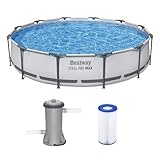
Bestway Steel Pro MAX 12' x 30" Above Ground Swimming Pool Set with Pump | Durable Round Metal Frame Outdoor Backyard Pool, Puncture-Resistant Liner - Type III A/C Filter Cartridge Included, Gray | Check Price On Amazon |
|
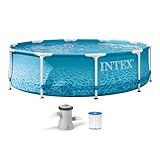
INTEX 28207EH 10ft X 30in Beachside Metal Frame Above Ground Swimming Pool Set, Includes 330 GPH Cartridge Filter Pump, Puncture-Resistant Material, Rust Resistant, 1185 Gallon Capacity | Check Price On Amazon |

|
H2OGO! Kids Splash-in-Shade 8-Foot Round Steel Frame Above Ground Pool with Water Mister and Canopy Sunshade, Green Tropical Leaf Print | Check Price On Amazon |
By the Numbers
Pool LED Lighting – Key Statistics
Sources: Energy.gov, manufacturer specifications, PHTA technical data
What Makes LED Pool Lights Different from Traditional Pool Lighting?
LED pool lights use light-emitting diodes on a printed circuit board instead of a tungsten filament inside a glass bulb. This fundamental design difference changes everything about how the light performs underwater. LEDs convert roughly 80 percent of input electricity into visible light. Incandescent bulbs convert only 10 percent into light and waste the remaining 90 percent as heat.
According to the U.S. Department of Energy, a 30-watt LED pool light produces approximately 3,000 to 4,000 lumens of output. A 300-watt incandescent bulb produces the same lumens but draws 10 times the wattage. The heat difference matters underwater. Incandescent bulbs operate at surface temperatures above 200 degrees Fahrenheit inside the fixture housing. This heat cycling stresses gaskets, lens seals, and the bulb socket itself.

- Intelligent Navigation with Full Coverage: Equipped with 11 high-precision sensors and enhanced dual-path algorithms. The optimized WavePath cleaning pattern ensures systematic coverage with minimal overlap, while adaptive navigation analyzes pool layout in real time to eliminate missed spots
- Dual Filtration for Crystal-Clear Water: Advanced dual-layer filtration system features a replaceable 3-micron ultra-fine filter paired with a 180-micron standard filter. Effectively captures fine dust, sand, leaves, and debris for visibly cleaner and healthier pool water
- Comprehensive Pool Cleaning: Engineered to clean the pool floor, walls, waterline, and shallow areas (above 12 inches). The Caterpillar Treads system enhances mobility and climbing ability, ensuring thorough coverage across all pool zones
- Reliable Performance with 2-Year Warranty: Trusted by over 500,000 pool owners worldwide, this robotic pool cleaner delivers consistent, high-performance results. Built for durability and backed by a 2-year warranty and responsive customer support for worry-free ownership
LED lights run cool at under 120 degrees Fahrenheit at the circuit board level. Cooler operation means fixture seals last longer and water intrusion failures drop significantly. Most LED pool light failures stem from water getting past old gaskets during bulb-only retrofits. The LED electronics survive. The corroded socket from the old incandescent days does not.
Color production works differently between the two technologies. Incandescent lights produce a single warm white color temperature around 2,700 to 3,000 Kelvin. You change the color by snapping a colored plastic lens over the fixture face. LED lights use individual red, green, and blue diodes on the same board. The controller mixes these diodes digitally to produce millions of distinct colors without any plastic lens.
The brightness does not degrade the same way either. Incandescent bulbs dim steadily over their 5,000-hour life as the tungsten filament slowly evaporates and deposits on the inside of the glass. After 2,000 hours, output drops roughly 20 percent. LED lights maintain over 70 percent of original brightness through their entire rated life. The light does not look dimmer at year 10 than it did at year 1.
For a complete breakdown of LED lighting types, color options, and fixture styles, our detailed guide to pool LED lighting types and color choices covers every option with specific wattage and lumen comparisons for common pool sizes.
How to Choose the Best LED Pool Lights for Your Swimming Pool
The right LED pool light depends on four factors: your existing fixture type, pool size, desired brightness, and whether you want white-only or full color. Match the light to your niche first. Pool light niches are the plastic or metal housings set into the pool wall during construction. They determine which fixtures physically fit.
Standard inground pool niches accept 10-inch diameter fixtures from most major brands. Above-ground pools use smaller niches or completely different mounting systems. Check your niche type before ordering any light. A Pentair IntelliBrite fits a standard 10-inch niche. A Hayward ColorLogic 320 fits the same niche but uses a different locking mechanism. Both work in the same hole.
Determine Your Existing Fixture Voltage: 12V vs 120V
Pool lights run on either 12 volts AC or 120 volts AC. The voltage determines which LED replacements you can use. Most residential pools built after 1990 use 12-volt systems with a step-down transformer located near the equipment pad. Older pools may use 120-volt lights wired directly to a GFCI circuit breaker.
Check the label on your existing fixture or measure voltage at the junction box with a multimeter. A 12-volt system requires a functioning transformer rated for the total wattage of all lights on the circuit. LED retrofits reduce the total wattage so significantly that existing transformers almost always have ample capacity. A pool with three old 300-watt incandescent lights draws 900 watts. Three 30-watt LED replacements draw 90 watts total.
Match Lumens to Pool Size and Depth
Pool light brightness is measured in lumens, not watts. Lumens describe actual light output. Watts describe electricity consumption. A 20,000-gallon inground pool with average depth of 5 to 6 feet needs roughly 3,000 to 4,000 lumens from a single light for comfortable nighttime swimming. If you’re unsure of your pool’s exact volume, use our pool volume calculator to get the number before selecting a light.
Larger pools or pools with dark-colored surfaces need more lumens. Dark plaster or pebble finishes absorb light instead of reflecting it. A 30,000-gallon pool with a dark bottom may require two 4,000-lumen fixtures placed on opposite walls to eliminate shadow areas. Shallow pools under 4 feet deep can use lower-output lights since less water column absorbs less light.
Choose Between White-Only and Full-Color LED Lights
White-only LED lights cost less and produce a single fixed color temperature. Warm white around 3,000 Kelvin creates a traditional incandescent look. Cool white at 5,000 to 6,000 Kelvin produces a crisp modern appearance. Some white-only LEDs let you toggle between warm and cool white.
Full-color RGB LED lights cost roughly 30 to 50 percent more than white-only equivalents. They produce millions of colors through red, green, and blue diode mixing. Most color-changing lights include preset light shows that cycle through color sequences automatically. The Hayward ColorLogic 320 offers 10 fixed colors and 7 color-changing light shows. The Pentair IntelliBrite offers 5 fixed colors and 7 shows.
Color lights require a controller to change settings. Some controllers mount as a physical switch on the wall near the equipment. Others use smartphone apps over WiFi or Bluetooth. The best WiFi pool controllers for automating schedules and equipment can integrate color light control alongside pump and heater management from a single app.
Product Comparison
LED vs Incandescent vs Halogen Pool Lights – Side by Side
Detailed feature comparison to help you choose the right lighting technology.
| Feature | LED | Incandescent | Halogen |
|---|---|---|---|
| Lifespan | 30,000-50,000 hours | 5,000 hours | 2,000-3,000 hours |
| Typical wattage (3,500 lumens) | 30-35 watts | 300 watts | 150-200 watts |
| Annual electricity cost (8 hrs/day) | $12-$15 | $105-$130 | $52-$70 |
| Color options | White + millions of RGB colors | Warm white only (2,700K) | Warm white only (3,000K) |
| Heat output at fixture | Under 120°F | 200-300°F | 180-250°F |
| Fixture cost (parts only) | $200-$800 | $40-$120 | $60-$150 |
Electricity cost based on national average 12 cents per kWh. Actual cost varies by local utility rate.
Top LED Pool Light Brands and Models Compared
Three manufacturers dominate the inground LED pool light market: Pentair, Hayward, and Jandy. Each brand sells fixtures compatible with standard 10-inch niches. Each uses proprietary connector and locking systems. You cannot mix a Pentair light with a Hayward niche without an adapter.
Beyond the big three, several companies sell universal LED replacement bulbs that fit inside existing incandescent fixture housings. These retrofits cost less but do not offer the same brightness or color quality as full fixture replacements from major brands. A retrofit bulb drops into your old housing. A full fixture replacement removes the entire old unit and installs a new sealed LED assembly.
Price Comparison
Price Comparison – Top LED Pool Light Fixtures
Price per fixture, sorted lowest to highest. Prices verified at time of publication.
$45-$70
$250-$350
$350-$500
$400-$600
$500-$650
$650-$850
Prices are fixture-only before installation labor ($150-$400 typical per fixture). Cord lengths above 50 feet add cost.
Pentair IntelliBrite 5G: Best Overall for Inground Pools
The Pentair IntelliBrite 5G uses 36 watts and produces approximately 3,500 lumens across 5 fixed colors and 7 light shows. It fits standard 10-inch niches and comes with 30, 50, or 100-foot power cords pre-attached. The sealed LED engine eliminates the need to replace bulbs inside the housing.
Pentair claims a 30,000-hour rated life on the IntelliBrite line. At 8 hours of daily use during a 6-month pool season, that works out to roughly 12 years of operation before the LEDs degrade to 70 percent brightness. The fixture housing is stainless steel with a tempered glass lens rated for continuous submersion to 30 feet.
Pentair IntelliBrite 5G LED pool lights work with Pentair automation systems for scheduled color changes and integration with other pool equipment. Key specifications: 36 watts, 3,500 lumens, 120V or 12V options, 50-foot cord standard, stainless steel faceplate.
Hayward ColorLogic 320: Best Color Range and Brightness
The Hayward ColorLogic 320 outputs 4,200 lumens from 40 watts of LED power. It offers 10 fixed colors and 7 light shows. Hayward uses a proprietary universal niche adapter that fits most standard niches without tools. The locking mechanism turns by hand rather than requiring a screwdriver.
The 320 model produces noticeably brighter output than the IntelliBrite 5G at only 4 additional watts. Color saturation at the deep blue and deep red ends of the spectrum is richer because Hayward uses more individual diodes per color channel on the PCB. The trade-off is a slightly higher price at $350 to $500 per fixture.
Jandy WaterColors: Best Value from a Major Brand
Jandy WaterColors LED lights start around $250 per fixture. They produce 2,800 lumens from 30 watts in the standard model and offer 5 fixed colors with 7 light shows. The lower lumen output works well for smaller pools under 15,000 gallons or as accent lights in larger pools.
The HydroCool model adds a dedicated white mode at 5,000 Kelvin for a crisp modern look. Jandy lights integrate with the iAquaLink automation platform for smartphone control. The price advantage narrows once you factor in the controller cost if you want full color-changing capability beyond the basic toggle-switch operation.
Universal LED Replacement Bulbs: Budget Option for Existing Fixtures
If your existing light fixture housing is in good condition, a screw-in LED replacement bulb costs $45 to $90 and installs in under 15 minutes. These bulbs fit standard E26/E27 sockets inside most pool light housings. Brands like universal LED pool light replacement bulbs produce 1,500 to 2,500 lumens from 20 to 35 watts.
The trade-off is lower brightness and fewer color options. Universal bulbs cram the LEDs into a smaller space than a dedicated LED fixture. Heat dissipation is more limited. Expect 15,000 to 20,000 hours of life from a quality universal LED replacement bulb rather than the 30,000-plus hours from a full fixture. The gasket on your old housing also remains a potential leak point.
For step-by-step instructions on swapping a bulb without pulling new wire, read our guide to replacing pool light bulbs and full fixture installations with details on gasket inspection and water testing before reassembly.
LED Pool Light Color Options and Effects Explained
Pool LED color technology uses additive RGB mixing. Each LED board contains clusters of red diodes at roughly 625 nanometers, green at 525 nanometers, and blue at 465 nanometers. The controller sends pulse-width modulation signals to each color channel independently. Varying the duty cycle from 0 to 100 percent on each channel produces any visible color.
This digital color production means the light can produce pure saturated colors that colored plastic lenses cannot match. A red lens over an incandescent bulb filters out everything except red wavelengths. The bulb still burns 300 watts but most of the light energy is wasted as heat in the plastic filter. An LED producing red fires only the red diodes and uses a fraction of the total board wattage. To visualize these color possibilities in your own pool, try our 3D pool light color simulator to preview vibrant hues before making a choice.
Fixed Colors vs Light Shows: What Each Brand Offers
Every major brand includes a set of fixed colors selectable by toggling the light switch off and on in a specific sequence. Pentair IntelliBrite uses the following sequence: white, blue, green, red, magenta, and then the 7 light shows. Hayward ColorLogic uses a similar toggle pattern with 10 fixed colors before the shows begin.
Light shows cycle through colors at preset speeds. The “party mode” on the IntelliBrite cycles quickly through all colors. The “romance mode” fades slowly between deep blues and purples. “Caribbean mode” transitions through aqua, teal, and green. Most owners find one or two favorite fixed colors and rarely use the shows after the first season.
White Color Temperature: Warm vs Cool vs Neutral
White LED pool lights come in three standard color temperatures. Warm white at 2,700 to 3,000 Kelvin matches the look of traditional incandescent pool lights. Cool white at 5,000 to 6,500 Kelvin creates a bright modern appearance that makes pool water look especially clear. Neutral white at 3,500 to 4,100 Kelvin splits the difference.
Water absorbs red wavelengths first as depth increases. At 4 feet deep, warm white light loses some of its warmth because the red component gets absorbed by the water column. Cool white penetrates deeper because blue wavelengths travel farther underwater. For pools deeper than 6 feet, cool white produces more visible brightness at the bottom.
Installation Considerations: What You Need to Know Before Buying
Installing a new LED pool light fixture involves pulling the new fixture cord through the conduit from the niche to the junction box. This is not a plug-and-play swap. The existing fixture cord is typically 30 to 150 feet long and runs through underground conduit. You attach the new fixture cord to the old cord at the niche end and pull it through from the junction box side.
This pull requires two people for longer conduit runs. A cord that snags inside the conduit can damage the outer jacket and create a future ground fault. Most professional pool electricians charge $150 to $400 per fixture for a standard replacement pull. The labor cost is roughly the same whether you install a $50 incandescent fixture or an $800 LED fixture.
Transformer Compatibility for 12V Systems
Check your transformer rating before installing multiple LED lights on a single 12V circuit. Most pool light transformers are rated for 300 watts. Multiple incandescent lights on one transformer could approach that limit. Three 300-watt incandescent bulbs draw 900 watts and require multiple transformers or a larger unit.
LED lights eliminate this problem. Three 35-watt LED fixtures draw 105 watts total on a transformer rated for 300 watts. The transformer runs cooler and lasts longer at lower load. If your existing transformer hums or runs hot, the switch to LED will likely solve the problem without replacing the transformer itself.
Junction Box and GFCI Requirements
Every pool light connects to a junction box mounted at least 8 inches above the maximum pool water level and at least 4 feet from the pool edge. The National Electrical Code requires this placement to prevent water from reaching the electrical connections. The junction box must be accessible for service but sealed against moisture intrusion.
GFCI protection is mandatory on all pool lighting circuits per NEC Article 680. The GFCI must trip at 4 to 6 milliamps of ground fault current. LED lights with their lower current draw sometimes cause nuisance GFCI tripping if the circuit has existing minor leakage that stayed below the trip threshold with higher-draw incandescent loads.
For pools with automation systems, a programmable pool timer for automatic pump and light scheduling can handle the light on/off cycling that color-changing LED lights use to switch between modes.
LED Pool Light Lifespan and Energy Savings: The Real Numbers
The financial case for LED pool lights rests on two numbers: annual electricity savings and avoided bulb replacement costs. A single 300-watt incandescent pool light running 8 hours per day for 180 days per year consumes 432 kilowatt-hours annually. At the national average electricity rate of 12 cents per kWh, that costs $52 per year in electricity alone.
A 35-watt LED replacement consumes 50 kilowatt-hours annually under the same conditions. That costs $6 per year. The annual savings of $46 per fixture may not sound dramatic for a single light. But pools with three lights save $138 per year on electricity. Over a 15-year LED lifespan, cumulative electricity savings total roughly $2,070 for three lights.
Bulb replacement costs add up faster than electricity savings. Incandescent pool bulbs cost $25 to $50 each and fail every 12 to 18 months under normal use. Over 15 years, a single incandescent light requires 10 to 12 bulb replacements at a total parts cost of $300 to $600. Labor for each bulb swap adds $100 to $200 if you hire an electrician. The total cost of ownership for one incandescent fixture over 15 years runs $750 to $1,800 excluding electricity.
A single LED fixture at $400 to $600 purchase price with zero replacement bulbs over the same 15 years comes out ahead by $150 to $1,200 even before counting the electricity savings. The break-even point on an LED upgrade versus staying with incandescent typically arrives in year 3 or 4 for pools with two or more lights.
For pools that also use solar heating, combining LED lighting with a high-quality solar pool cover for heat retention maximizes overall energy efficiency. The reduced heat loss from the cover pairs well with the reduced electrical load from LED lights.
Common Mistakes to Avoid When Buying LED Pool Lights
The most common mistake pool owners make is buying an LED replacement bulb without checking the condition of the existing fixture housing. A corroded socket, cracked lens, or dried-out gasket will allow water into the housing. Water destroys LED electronics within hours even though the bulbs themselves are waterproof when submerged. The failure point is almost always the old housing, not the new LED.
The second common mistake is assuming all LED pool lights produce the same brightness. A 20-watt budget LED bulb from an online marketplace may produce only 800 lumens. That is dangerously dim for an inground pool. Swimmers cannot see the bottom or each other clearly at 800 lumens in a 20,000-gallon pool. Match lumens to pool volume. Do not shop by wattage alone.
The third mistake is buying a color-changing LED without verifying the control method. Some color lights require a specific proprietary controller that adds $100 to $200 to the total cost. Others use simple toggle-switch patterns that work with any standard wall switch. Confirm what is included in the box before ordering.
Are LED Pool Lights Worth the Higher Upfront Cost?
LED pool lights cost more upfront than incandescent or halogen equivalents. A single Pentair IntelliBrite 5G costs $400 to $600 for the fixture alone. An equivalent incandescent fixture costs $80 to $150. The $300 to $450 price difference intimidates buyers who focus only on the initial purchase.
Factor in 15 years of electricity and bulb replacements and the LED saves money. The break-even analysis above shows positive ROI by year 3 or 4 for most pools. The non-financial benefits strengthen the case: better color options, no bulb changes, cooler operation that extends gasket life, and consistent brightness across the entire lifespan. For most pool owners, LED lights are worth the higher upfront cost provided the existing fixture housing is in good condition or you are replacing the full fixture.
Can You Mix LED and Incandescent Lights in the Same Pool?
You can mix LED and incandescent lights in the same pool. The electrical circuits are independent. One light does not affect the other. The visual result looks unbalanced. A bright white LED light next to a dim yellow incandescent light creates an obvious mismatch that most pool owners find unattractive.
If budget prevents replacing all lights at once, replace the deep-end light first. The deep-end light is hardest to access for bulb changes and benefits most from the long LED lifespan. Replace the shallow-end light the following season. The mismatched look for one season is a minor cosmetic issue.
How Long Do LED Pool Lights Actually Last in Real-World Conditions?
LED pool light manufacturers rate their products for 30,000 to 50,000 hours. At 8 hours per day for 180 pool season days, that rating equals 20 to 34 years of seasonal use. Real-world lifespan is shorter because the rating measures time until the LEDs reach 70 percent of original brightness, not time until total failure.
Electronic driver boards inside LED fixtures can fail before the diodes themselves degrade. Heat buildup inside the sealed fixture housing stresses capacitors and solder joints over time. Most LED pool light failures reported in pool forums occur between years 8 and 12 of service. The LED diodes still work. The power supply or control board failed. A full fixture replacement at year 10 to 12 is a reasonable expectation for year-round pools or pools in hot climates where fixture housings reach higher internal temperatures.
Do LED Pool Lights Attract Fewer Bugs at Night?
LED pool lights attract fewer insects than incandescent lights because bugs navigate partially by ultraviolet and near-UV light wavelengths. Incandescent bulbs emit a broad spectrum including significant near-UV output below 400 nanometers. LED pool lights emit almost no UV radiation. The spectral output is concentrated entirely in the visible range from roughly 450 to 650 nanometers.
This does not eliminate bugs entirely. Insects still see the visible light and some species use visible light for navigation. The reduction in bug attraction is noticeable but not dramatic. Warm white LED settings attract slightly more insects than cool white or blue settings because the warmer spectrum extends closer to the near-UV range.
What Is the Difference Between 12V and 120V LED Pool Lights?
The difference between 12-volt and 120-volt LED pool lights is the input voltage required to operate the fixture. A 12-volt light runs on low voltage supplied by a step-down transformer. A 120-volt light connects directly to standard household line voltage through a GFCI circuit breaker. Both produce identical light output at the same wattage.
Twelve-volt systems are safer because the voltage at the fixture is below the threshold for serious electric shock. Most modern residential pools use 12-volt lighting for this reason. The transformer lives at the equipment pad, not underwater. The National Electrical Code permits 120-volt pool lights when installed with proper GFCI protection. They remain common in older pools built before the 1990s and in commercial pools where long cable runs make voltage drop a concern.
Why Does My LED Pool Light Flicker After Installation?
LED pool light flickering after installation usually indicates a loose connection somewhere in the circuit. Check the wire nuts inside the junction box first. A poorly twisted connection creates intermittent contact that causes visible flicker. Tighten all connections and retest before assuming the light is defective.
Transformer issues cause flicker in 12-volt systems. An undersized or failing transformer delivers unstable voltage under load. The LED driver board compensates briefly but eventually flickers as input voltage sags and recovers. Measure voltage at the junction box with the light on. A reading below 11 volts AC on a 12-volt system indicates a transformer problem. Flickering that happens only when other equipment starts suggests voltage drop from shared circuits.
Can I Install an LED Bulb in My Old Incandescent Pool Light Housing?
You can install an LED replacement bulb in an existing incandescent pool light housing provided the housing is watertight and the socket is free of corrosion. Inspect the housing gasket carefully before installing the LED bulb. A dried or cracked gasket allows water entry that will destroy the LED bulb within hours despite the bulb itself being rated for underwater use.
The socket must be clean and dry. Corrosion on the socket contacts creates resistance that generates heat at the connection point. LED bulbs run cooler than incandescent bulbs overall but the socket connection still needs clean metal-to-metal contact. Replace the gasket as preventive maintenance even if it looks acceptable. A $15 gasket replacement protects a $70 LED bulb.
How Many LED Pool Lights Do I Need for My Pool Size?
The number of LED lights needed depends on pool size, shape, and surface color. Accurately calculating your pool’s surface area helps determine light placement; try our pool surface area calculator. A rectangular pool up to 15 by 30 feet with a light-colored plaster surface needs one 3,000 to 4,000 lumen LED fixture mounted on the long wall facing away from the house. A freeform pool of similar surface area often needs two lights because the irregular shape creates shadow areas that a single point source cannot fill.
Dark-bottom pools need roughly 50 percent more lumens than light-bottom pools. The dark surface absorbs light instead of reflecting it. A 20,000-gallon pool with a dark pebble finish calls for two 4,000-lumen fixtures placed on opposite walls. Large L-shaped pools need at least three lights to illuminate each leg of the L without leaving dark zones.
Quick Reference
Pool LED Lighting – Key Terms Explained
Quick reference for the terms used throughout this guide
The measure of total visible light output from a source. Pool LEDs range from 1,500 to 6,000 lumens depending on wattage and design.
The unit measuring white light color temperature. Lower Kelvin values (2,700-3,000K) appear warm and yellow. Higher values (5,000-6,500K) appear cool and blue.
The plastic or metal housing cast into the pool wall during construction. It holds the light fixture and provides the conduit connection back to the junction box.
Red, green, and blue light-emitting diodes combined on a single board. Individual control of each color channel produces millions of distinct colors through additive mixing.
The weatherproof electrical box mounted above water level where the pool light cord connects to the building wiring. Must be at least 8 inches above water level per NEC code.
An electrical device that steps 120-volt household current down to 12 volts for low-voltage pool lighting systems. Rated in watts; must exceed total wattage of all connected lights.
Ground Fault Circuit Interrupter. A fast-acting circuit breaker that trips at 4-6 milliamps of current leakage to ground. Mandatory on all pool lighting circuits per NEC Article 680.
Pulse Width Modulation. A digital control method that varies LED brightness by rapidly switching power on and off. The duty cycle percentage determines perceived brightness without color shift.
The watertight compression fitting where the power cord enters the back of the light fixture housing. A failed cord gland allows water into the fixture and is the most common leak point.
The buried PVC pipe carrying the light fixture cord from the niche to the junction box. Also called the light conduit or fixture conduit. Cord pulls through this during fixture replacement.
What Are the Best Pool LED Lights for Above-Ground Pools?
The best LED lights for above-ground pools are magnetic-mount or bracket-mount fixtures that attach to the pool wall without a niche. Above-ground pools do not have the cast-in niches that inground pools use. The Intex LED magnetic light and the Pentair Amerlite above-ground bracket-mount light are the two most common quality options. Intex magnetic lights produce roughly 800 lumens and run on 12 volts from a plug-in transformer included in the box.
Above-ground LED lights typically produce fewer lumens than inground fixtures because the water volume and depth are both smaller. An 18-foot round above-ground pool holds roughly 7,500 gallons at 4 feet deep. One 800 to 1,200 lumen magnetic-mount light provides adequate illumination. Two lights mounted on opposite walls eliminate shadow areas for larger 24-foot or 27-foot round pools.
Can Pool LED Lights Be Repaired or Are They Sealed Units?
Most branded LED pool fixtures from Pentair, Hayward, and Jandy are sealed units with no user-serviceable internal parts. The LED engine and driver board are potted in epoxy or sealed inside a waterproof housing. Opening the fixture voids the warranty and usually destroys the watertight seal. When these lights fail after the warranty period, replacement is the only practical option.
Universal LED replacement bulbs that screw into old housings are disposable. They cost $45 to $90 and are not designed for repair. A failed driver board or individual dead diode means replacing the entire bulb. Some electronics repair specialists can replace failed capacitors on driver boards, but the labor cost typically exceeds the price of a new bulb. The repair is only worthwhile for $400-plus full fixtures where a $50 capacitor replacement saves a $400 replacement.
Do LED Pool Lights Require Special Pool Chemistry Ranges?
LED pool lights do not require special water chemistry beyond normal balanced pool water. They tolerate standard pool chemical ranges without degradation. The stainless steel faceplates on most fixtures resist corrosion at pH levels between 7.2 and 7.8 and free chlorine between 1 and 3 ppm. Extremely aggressive water with pH below 7.0 or total alkalinity below 60 ppm can eventually pit stainless steel over years of exposure.
The plastic lenses on LED fixtures resist chemical attack better than the glass lenses on old incandescent fixtures. Glass slowly etches in poorly balanced water. Polycarbonate and acrylic LED lenses show no visible degradation over a decade or more even in water that occasionally drifts outside ideal ranges. Maintaining proper water chemistry protects the pool surfaces and equipment rather than the LED light specifically.
Regular testing with a reliable pool test kit for accurate water chemistry readings helps maintain the balanced water that protects every piece of pool equipment including light fixtures. Consistent pH control prevents the corrosion that shortens equipment life across the entire pool system.
Buying Guide
Before You Buy – Pool LED Light Checklist
Check off each point before making your purchase decision.
Why Did My New LED Pool Light Stop Working After a Few Months?
LED pool light failure within the first few months almost always points to water intrusion into the fixture housing or junction box. A pinhole leak in the gasket allows water to reach the LED driver board. The board works for weeks or months while corrosion slowly builds. Eventually a trace on the circuit board corrodes through and the light stops working entirely. Pull the fixture and look for moisture inside the lens.
A failed cord gland at the back of the fixture is the second most common cause of early LED failure. The cord gland seals where the power cord enters the housing. If the cord was pulled too hard during installation, the gland can tear microscopically. Water seeps in over time. The fix is a full fixture replacement since the gland is molded into most sealed LED housings and cannot be replaced separately.
What Is the Brightest LED Pool Light Available?
The Hayward ColorLogic 320 produces 4,200 lumens from 40 watts. It is the brightest single-fixture LED pool light from a major manufacturer as of current models. The Pentair IntelliBrite Architectural series offers a larger 160-LED model that approaches 5,000 lumens for very large pools and commercial applications. This larger fixture costs roughly $650 to $850 and requires a standard 10-inch niche.
For pools requiring extreme brightness, install two or three 4,000-lumen fixtures rather than searching for a single ultra-bright light. Multiple fixtures eliminate shadow areas that a single point source cannot reach. Two 4,000-lumen lights produce 8,000 lumens total and create more even illumination than one theoretical 8,000-lumen light mounted in a single niche.
Can I Use a Standard Wall Dimmer with LED Pool Lights?
Standard wall dimmers do not work with pool LED lights. Pool LEDs use PWM dimming built into the fixture’s driver board. External voltage dimming from a wall dimmer causes the LED driver to malfunction. The light will flicker, shut off, or fail prematurely. Pool light brightness is fixed at the fixture level and is not designed for external dimming control.
Some high-end automation systems offer digital brightness control for compatible LED fixtures. Pentair IntelliBrite lights pair with the IntelliTouch or EasyTouch automation panels for 5-level brightness adjustment. This control is digital communication over the power line using proprietary protocols. It is not the same as analog voltage dimming from a wall dimmer switch.
Does Pool Water Temperature Affect LED Light Performance?
Pool water temperature does not affect LED light performance in any practical way. LED pool lights operate correctly in water from 40 degrees Fahrenheit to 105 degrees Fahrenheit. The water acts as a heatsink, carrying heat away from the fixture housing more efficiently than air ever could. Pool water temperature variation across seasons is well within the operating range of all major brand LED fixtures.
Cold water actually improves LED lifespan slightly by keeping the driver board and diodes cooler. Winter pool closing with the light remaining submerged in near-freezing water causes no damage to a properly sealed LED fixture. The fixture must be winterized correctly by removing it from the niche and storing it below the frost line or leaving it submerged with adequate freeze protection.
Conclusion
LED pool lights deliver 75 to 85 percent electricity savings, 6 to 10 times longer lifespan, and vastly superior color options compared to incandescent or halogen alternatives. The upfront cost of $200 to $800 per fixture pays back in year 3 or 4 for most pools.
Match the fixture to your niche type, verify your voltage, and inspect the existing housing before buying. For the best combination of brightness, color quality, and long-term reliability, the Pentair IntelliBrite 5G and Hayward ColorLogic 320 are the top two choices for standard inground pools.
For complete protection of your pool investment, explore our guides on selecting the right pool cover for your specific pool type and size and the full breakdown of pool LED lighting types with detailed color and brightness comparisons.
| Photo | Best Above-Ground Pools | Price |
|---|---|---|
|
|
Bestway Steel Pro MAX 12' x 30" Above Ground Swimming Pool Set with Pump | Durable Round Metal Frame Outdoor Backyard Pool, Puncture-Resistant Liner - Type III A/C Filter Cartridge Included, Gray | Check Price On Amazon |
|
|
INTEX 28207EH 10ft X 30in Beachside Metal Frame Above Ground Swimming Pool Set, Includes 330 GPH Cartridge Filter Pump, Puncture-Resistant Material, Rust Resistant, 1185 Gallon Capacity | Check Price On Amazon |
|
|
H2OGO! Kids Splash-in-Shade 8-Foot Round Steel Frame Above Ground Pool with Water Mister and Canopy Sunshade, Green Tropical Leaf Print | Check Price On Amazon |