
Most homeowners shopping for an inground pool assume all three types cost roughly the same. They do not. A gunite pool costs $50,000 to $100,000 on average, roughly two to three times what a fiberglass pool costs installed.
That price gap is the first thing every buyer notices. The second thing they notice is that gunite pools last 50 to 100 years when the others need major work in 10 to 25 years.
| Photo | Best Above-Ground Pools | Price |
|---|---|---|
|
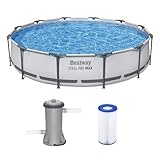
Bestway Steel Pro MAX 12' x 30" Above Ground Swimming Pool Set with Pump | Check Price On Amazon |
|
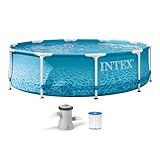
INTEX Beachside Metal Frame 10ft x 30in Round Pool Set w/Pump | Check Price On Amazon |

|
H2OGO! Kids Splash-in-Shade 8-Foot Round Steel Frame Above Ground Pool with Water Mister and Canopy Sunshade, Green Tropical Leaf Print | Check Price On Amazon |
By the Numbers
Gunite Pools — What the Research Shows
Sources: PHTA industry reports, RSMeans construction cost data, National Association of Realtors
What Is a Gunite Pool?
A gunite pool is a concrete pool built by spraying a dry mixture of sand and cement through a high-pressure hose where water is added at the nozzle just before application. This application method produces a dense, structural shell with 4,000 to 6,000 PSI compressive strength once cured.
Gunite is a specific subtype of shotcrete. The term “gunite” refers only to the dry-mix process where the water-cement ratio is controlled by the nozzle operator in real time. Shotcrete more broadly can refer to either dry-mix gunite or wet-mix shotcrete where the water is premixed before pumping.

- Intelligent Navigation with Full Coverage: Equipped with 11 high-precision sensors and enhanced dual-path algorithms. The optimized WavePath cleaning pattern ensures systematic coverage with minimal overlap, while adaptive navigation analyzes pool layout in real time to eliminate missed spots
- Dual Filtration for Crystal-Clear Water: Advanced dual-layer filtration system features a replaceable 3-micron ultra-fine filter paired with a 180-micron standard filter. Effectively captures fine dust, sand, leaves, and debris for visibly cleaner and healthier pool water
- Comprehensive Pool Cleaning: Engineered to clean the pool floor, walls, waterline, and shallow areas (above 12 inches). The Caterpillar Treads system enhances mobility and climbing ability, ensuring thorough coverage across all pool zones
- Reliable Performance with 2-Year Warranty: Trusted by over 500,000 pool owners worldwide, this robotic pool cleaner delivers consistent, high-performance results. Built for durability and backed by a 2-year warranty and responsive customer support for worry-free ownership
Most residential pools labeled “gunite” in the United States are actually built using the wet-mix shotcrete process today. True dry-mix gunite is less common but the name has stuck industry-wide. Both processes produce a structurally identical shell when properly applied by a certified nozzle operator.
The key differentiator of gunite pools is the steel rebar framework underneath. Before any concrete is sprayed, crews build a grid of steel reinforcing bar set to exact engineering specifications. This rebar skeleton gives gunite pools their structural strength and is what enables the custom freeform shapes that fiberglass and vinyl liner pools cannot achieve.
Gunite pools carry a permanent structural warranty from most builders covering 10 to 25 years. The actual lifespan of the shell often exceeds 50 years with proper water chemistry maintenance. For a deeper look at how gunite compares to other inground types, our detailed comparison of concrete and fiberglass pool installation breaks down the key differences in cost, timeline, and long-term ownership.
How Gunite Pools Are Built: Step by Step
Building a gunite pool follows a specific sequence that no other pool type shares. Understanding this process helps you evaluate builder quotes and timelines accurately.
The construction of a gunite pool takes 6 to 12 weeks from excavation to the first swim. Weather delays, permitting backlogs, and builder schedules can extend this timeline by 2 to 4 additional weeks.
Step-by-Step Guide
How a Gunite Pool Is Built — Step by Step
7 steps · 6 to 12 weeks total construction time
Excavation and Site Preparation
Heavy equipment digs the pool shape 2 to 3 feet larger than the finished dimensions. Over-dig accounts for the thickness of the gunite shell and plumbing trenches.
Plumbing and Electrical Rough-In
Plumbers install schedule 40 PVC suction and return lines, main drains, skimmers, and any spa jets. Electricians run bonding wire and conduit for lights and equipment.
Steel Rebar Installation
Crews tie a grid of #3 or #4 steel rebar spaced 8 to 12 inches on center. This steel skeleton carries the tensile loads that concrete alone cannot handle.
Gunite or Shotcrete Application
A high-pressure hose sprays the concrete mixture onto the rebar grid at 200 to 300 cubic yards per hour. A nozzle operator builds the shell to 6 to 12 inches of thickness in a single continuous application.
Curing Period
The shell cures for 7 to 28 days while crews wet it down 2 to 3 times daily. This slow hydration process reaches design strength and prevents shrinkage cracks.
Tile, Coping, and Deck Installation
Waterline tile, stone or brick coping, and the surrounding deck are installed after the shell cures. These finishes define the visual character of the completed pool.
Interior Finish Application and Fill
A crew applies the final plaster, pebble, or quartz interior finish in a single day. The pool is immediately filled with water and must not stop filling until water reaches the middle of the skimmer opening.
The curing timeline is the biggest variable in gunite construction. For an overview of how pool construction timelines compare across all inground types, our guide on inground pool installation timelines covers what to expect from excavation day through the first swim.
Gunite application uses a steel trowel for finishing the surface before it sets. The nozzle operator controls the water-cement ratio by adjusting a valve on the nozzle handle. This happens because the dry sand-cement mix travels through the hose under compressed air pressure and water is injected only at the final 3 feet of hose before the nozzle tip.
This only occurs when the nozzle operator maintains a consistent spray distance of 3 to 5 feet from the receiving surface. If the operator sprays too far away, the mix loses velocity and the resulting concrete has lower density and strength. The result is a weaker shell with potential voids behind the rebar. Fix it by requiring an ACI-certified nozzle operator on your project and confirming the builder’s certification before the shoot day.
Gunite Pool Cost Breakdown
A residential gunite pool costs $50,000 to $100,000 for a standard 400 to 800 square foot pool with basic plaster finish in most U.S. markets. This price range covers the pool shell, basic equipment, standard coping, and a concrete deck. For a more precise estimate tailored to your specific design parameters, you can use our dedicated gunite pool cost calculator.
High-end gunite pools with pebble interior finishes, raised spas, waterfalls, and travertine decking run $100,000 to $200,000 or more. The single largest cost variable is the interior finish material, not the pool size.
Here is where the cost goes on a typical 600-square-foot gunite pool built at $75,000 total.
Cost Breakdown
Gunite Pool Cost Allocation — 600 Sq Ft Pool at $75,000
Typical percentages based on RSMeans data and builder estimates
$5,000-$8,000
$6,000-$10,000
$12,000-$18,000
$8,000-$12,000
$5,000-$15,000
$8,000-$20,000
$6,000-$12,000
Ranges reflect regional labor rate differences and material grade choices. Permits, engineering, and landscaping are additional costs not included above.
Interior finish choice has the widest cost swing of any single line item. White plaster costs $5 to $7 per square foot. A premium pebble finish from a brand like PebbleTec runs $10 to $15 per square foot. On a 600-square-foot pool, that difference alone is $3,000 to $6,000.
Equipment pad components add $4,000 to $8,000 depending on pump type and automation level. A variable speed pool pump adds $400 to $800 upfront over a single-speed pump but recovers that in 18 to 24 months through electricity savings on a gunite pool with typical 8 to 12 hour daily runtime.
For most homeowners building a gunite pool, the smartest cost decision is choosing a mid-grade interior finish and allocating the savings toward better equipment. A variable speed pump and saltwater chlorine generator improve daily ownership experience more than a premium finish upgrade does.
Gunite vs Fiberglass vs Vinyl Liner: Complete Comparison
Gunite, fiberglass, and vinyl liner pools represent three fundamentally different construction methods with different costs, timelines, and long-term ownership profiles. The choice between them determines your pool’s shape options, maintenance requirements, and what you will spend over the next 20 years of ownership.
Gunite offers unlimited design flexibility and the longest structural lifespan. Fiberglass offers the fastest installation and lowest chemical maintenance. Vinyl liner offers the lowest initial cost but requires liner replacement every 8 to 15 years at $3,000 to $6,000 each time.
Use the table below to compare the three pool types across the dimensions that matter most to long-term ownership cost and daily experience.
Product Comparison
Gunite vs Fiberglass vs Vinyl Liner — Side by Side
Detailed feature comparison to help you choose the right pool type for your property.
| Feature | Gunite | Fiberglass | Vinyl Liner |
|---|---|---|---|
| Installed cost (standard) | $50,000-$100,000 | $25,000-$50,000 | $30,000-$60,000 |
| Construction time | 6-12 weeks | 3-6 weeks | 4-8 weeks |
| Structural lifespan | 50-100 years | 25-50 years | 20-30 years (walls) |
| Shape options | Unlimited custom shapes | Pre-molded shapes only | Limited custom shapes |
| Surface feel | Rough to smooth (varies by finish) | Smooth gel coat | Smooth vinyl |
| Chemical maintenance | Higher (alkaline surface raises pH) | Lower (inert gel coat) | Lower (inert vinyl) |
| Resurfacing interval | 10-15 years (plaster) | 15-25 years (gel coat) | 8-15 years (liner replacement) |
| Resale value add | Highest (permanent structure) | Moderate | Lower (liner disclosure required) |
Costs are national averages for standard sizes. Local labor rates, access difficulty, and material choices shift all figures by 15-30%.
The maintenance difference matters more than most buyers realize. Gunite pools have an alkaline plaster surface that continuously raises pH. You will add 1 to 2 quarts of muriatic acid per week to keep pH between 7.4 and 7.6 on a 20,000-gallon gunite pool.
Fiberglass pools have an inert gel coat surface that does not affect water chemistry. Chemical costs on fiberglass run 30 to 50 percent lower per season. For buyers who want the fastest build with the lowest ongoing chemical expense, the fiberglass pool installation process delivers a pool in 3 to 6 weeks with almost no pH drift.
Vinyl liner pools split the difference on initial cost but carry a replacement liability. A vinyl liner replacement costs $3,000 to $6,000 and is needed every 8 to 15 years depending on chemical balance and UV exposure. Over 30 years, a gunite pool owner might replaster once at $8,000 to $15,000. A vinyl liner pool owner replaces the liner three times at a total cost of $12,000 to $24,000. If you want to estimate the exact cost of future liner replacements, our pool liner cost calculator can give you a precise figure based on your pool’s dimensions.
Build time is the other factor that sways decisions. A gunite pool typically takes 6 to 12 weeks from dig to fill. A fiberglass pool can be swimming in 2 to 3 weeks after the shell arrives. For buyers with a tight event deadline, this timeline gap is the deciding factor regardless of cost or longevity arguments.
For homeowners considering a more affordable inground option that blends above-ground economics with inground aesthetics, our semi-inground pool guide covers costs, types, and pros and cons of this hybrid approach.
For most homeowners choosing between gunite and fiberglass, the decision comes down to two questions. Do you need a custom shape? Choose gunite. Do you want the lowest 20-year total cost of ownership? Choose fiberglass.
Gunite Pool Pros and Cons
Every pool type has trade-offs that only become apparent after you own it. Gunite pools offer unmatched design freedom and structural permanence in exchange for higher upfront cost and more involved maintenance.
Product Review
Gunite Pools — Pros and Cons
Honest assessment based on long-term gunite pool ownership and industry data.
Pros
- ✓Unlimited custom shapes, depths, and features
- ✓50 to 100 year structural lifespan with proper chemistry
- ✓Adds permanent real estate value to the property
- ✓Integrates seamlessly with spas, tanning ledges, and grottos
- ✓Interior finish options range from budget plaster to luxury glass bead
- ✓Can be built on slopes and challenging sites where fiberglass shells cannot go
Cons
- ✗Highest upfront cost of any pool type at $50,000 to $100,000+
- ✗Plaster surface continuously raises pH, requiring weekly acid additions
- ✗Rough plaster surface can abrade swimwear and skin
- ✗Replastering needed every 10 to 15 years at $8,000 to $15,000
- ✗Algae adheres more readily to porous plaster than to gel coat or vinyl
- ✗Longest construction timeline at 6 to 12 weeks
Gunite is the right choice for buyers who want a permanent custom pool and accept higher maintenance costs. It is the wrong choice for buyers who prioritize low upfront cost, fast installation, or minimal weekly chemical adjustment.
Gunite Pool Interior Finish Options
The interior finish of a gunite pool determines how the surface looks, how it feels underfoot, and how long it lasts before resurfacing. This is the most important material choice you make after deciding on gunite itself.
White plaster is the standard entry-level finish. It costs $5 to $7 per square foot and lasts 5 to 10 years before etching and staining become visible. Plaster is a mixture of white Portland cement and marble dust troweled onto the gunite shell at a thickness of 3/8 to 1/2 inch.
Quartz aggregate finishes mix colored quartz crystals into the plaster base. The quartz resists etching better than pure marble dust. These finishes cost $7 to $10 per square foot and last 10 to 15 years. The quartz crystals also add visual depth that plain plaster lacks.
Pebble aggregate finishes like PebbleTec embed small river pebbles in a cement matrix. They cost $10 to $15 per square foot installed and last 15 to 25 years. The pebble surface is highly resistant to chemical etching and staining. The tradeoff is a rougher texture that some swimmers find uncomfortable on feet and swimwear.
Glass bead and polished aggregate finishes represent the top of the market. These finishes cost $15 to $25 per square foot and incorporate crushed glass or polished stone for a smooth, luminous surface that reflects light through the water. They last 20 to 30 years with proper care.
Use the table below to match your budget and desired surface feel to the right finish choice.
Buyer’s Guide
Gunite Pool Interior Finishes Compared
Cost, lifespan, and feel across the four main finish categories
| Finish Type | Cost per Sq Ft | Lifespan | Surface Feel | Best For |
|---|---|---|---|---|
| White Plaster | $5-$7 | 5-10 years | Smooth | Budget projects |
| Quartz Aggregate | $7-$10 | 10-15 years | Smooth with texture | Best value for most buyers |
| Pebble Aggregate | $10-$15 | 15-25 years | Textured | Longest durability |
| Glass Bead / Polished | $15-$25 | 20-30 years | Very smooth | Luxury builds |
Lifespan assumes balanced water chemistry with pH maintained at 7.4-7.6 and calcium hardness at 200-400 ppm.
For most homeowners building a gunite pool, quartz aggregate finishes offer the best balance of cost, appearance, and longevity. Pebble finishes make sense for pools with heavy use and high bather loads. Glass bead finishes belong on high-end projects where the budget allows and the visual impact justifies the premium.
Gunite Pool Maintenance Requirements
Gunite pools require more active chemical management than fiberglass or vinyl liner pools. The plaster surface is alkaline. It continuously releases calcium hydroxide into the water as it cures over its entire service life. This ongoing reaction drives pH upward every day the pool is filled.
Plan to test and adjust pH at least twice per week during swim season. A typical 20,000-gallon gunite pool with fresh plaster consumes 2 to 4 quarts of muriatic acid per week for the first year. After the first year, acid demand drops to 1 to 2 quarts per week as the plaster surface stabilizes. To simplify these adjustments, keep our swimming pool pH calculator bookmarked for precise dosing recommendations based on your current readings and pool volume.
A reliable liquid drop test kit like the Taylor K-2006 is essential for gunite pool owners. Test strips are not accurate enough to manage the narrow pH and calcium hardness ranges that protect plaster from etching and scaling. The K-2006 measures free chlorine, combined chlorine, pH, total alkalinity, calcium hardness, and cyanuric acid with accuracy within 0.2 ppm on chlorine and 0.1 on pH.
Calcium hardness must be maintained at 200 to 400 ppm in gunite pools. This happens because pool water naturally wants to dissolve calcium. If the water has low calcium hardness, it pulls calcium directly out of the plaster surface. This causes pitting and etching that shortens the life of the finish and creates rough spots.
This only occurs when calcium hardness drops below 150 ppm in a plaster pool. The result is progressive surface etching that roughens the plaster and provides ideal attachment points for algae. Fix it by testing calcium hardness monthly and adding calcium chloride increaser when levels fall below 200 ppm.
Weekly maintenance tasks for a gunite pool include brushing the walls and floor to prevent algae from colonizing the porous plaster surface. Use a stainless steel bristle pool brush for plaster surfaces. Nylon brushes are for vinyl liners only.
Algae management is more hands-on with gunite. The rough plaster texture at the microscopic level gives algae spores more surface area to grip than smooth gel coat or vinyl. A robotic pool cleaner that scrubs the floor and walls daily reduces the manual brushing burden significantly.
Gunite Pool Equipment Selection
The equipment pad on a gunite pool should be specified for the pool’s exact gallonage and hydraulic requirements. Undersized equipment creates problems that show up as cloudy water, poor circulation, and premature filter loading.
A variable speed pump is not optional on a gunite pool. It is mandatory for cost control. A single-speed 1.5 HP pump running 8 hours per day at 3,450 RPM costs $600 to $900 per year in electricity at the national average rate of 12 cents per kWh. That same pool served by a Pentair variable speed pump at 1,500 RPM for 12 hours costs $180 to $250 per year for the same daily turnover.
Cartridge filters are the standard recommendation for gunite pools today. A large cartridge filter with 300 to 500 square feet of media area needs cleaning only 2 to 3 times per season on a residential gunite pool. Sand filters require more frequent backwashing and send thousands of gallons of chemically treated water to waste each year.
Saltwater chlorine generators pair well with gunite pools. The steady low-level chlorine output of a salt system reduces the shock-and-bleach cycle that stresses plaster over time. However, salt cells need salt level testing every 2 weeks. Salt at 2,700 to 3,400 ppm is the target range for most residential salt systems.
For pools with attached spas, a 400,000 BTU gas pool heater delivers spa heat in 20 to 30 minutes and extends the swim season by 2 to 3 months in most climates. Heat pump pool heaters are more efficient for maintaining a set temperature over long periods but cannot provide the fast temperature rise needed for a spa.
Design Flexibility: What Gunite Pools Can Do That Others Cannot
Gunite pools are the only inground pool type that can be built in any shape, any depth, and on any buildable site. This complete design freedom is the single feature that justifies the cost premium for most buyers.
Beach entries that slope gradually from deck to deep water require a custom-formed shell. Fiberglass molds cannot produce a smooth zero-depth entry. Vinyl liner pools can approximate a beach entry but the liner cannot conform to the gradual slope without wrinkling. If you’re drawn to this gentle, resort-style entry, explore our gallery of beach entry pool designs, also known as zero-entry pools, to visualize how the look integrates with a gunite build.
Infinity edges depend on a perfectly level vanishing edge weir that must be integral to the pool shell. Only a cast-in-place concrete structure can hold the tolerances required for an infinity edge to function correctly. Any imperfection in the weir shows as an uneven water sheet over the edge.
Tanning ledges, also called Baja shelves, are shallow 6 to 12 inch deep platforms built into the pool. Gunite forms these as part of the original shell pour. Fiberglass shells have limited integrated ledge options. Vinyl liner pools require a separate frame structure that the liner drapes over.
Grottos, swim-up bars, underwater seating, and integrated spas are all gunite-only features. These structures require steel reinforcement and concrete forming that no pre-manufactured pool system can accommodate.
Quick Reference
Gunite Pools — Key Terms Explained
Quick reference for the terms used throughout this guide
A dry-mix concrete application where sand and cement are pumped dry through a hose and water is added at the nozzle tip just before spraying onto the rebar grid.
A broader term covering both dry-mix gunite and wet-mix concrete spraying. Most “gunite” pools today are built with wet-mix shotcrete for consistency.
Steel reinforcing bar tied in a grid pattern before concrete application. Provides tensile strength that concrete lacks. Typically #3 or #4 bar at 8-12 inch spacing.
The finished edge cap at the top of the pool wall. Usually stone, precast concrete, or brick. Provides a finished transition from pool wall to deck.
A cement and marble dust finish troweled over the gunite shell. The standard watertight interior surface. Requires maintenance of calcium hardness and pH to prevent etching.
An interior finish embedding river pebbles in a cement matrix. More durable than plaster but rougher to the touch. Lasts 15-25 years with proper chemistry.
The time required to pump the entire pool volume through the filter once. Residential pools target one turnover per 6-8 hours. Faster turnover means better water clarity.
When Gunite Is the Wrong Choice
Gunite pools are not the right answer for every homeowner. Acknowledging when another pool type serves the buyer better is how you avoid an expensive mistake.
Choose fiberglass over gunite if your property has flat access and you want the lowest maintenance pool available. The inert gel coat surface of a fiberglass shell does not alter water chemistry. Chemical costs run 30 to 50 percent lower year after year compared to a gunite pool of the same size.
For a full breakdown of fiberglass pool advantages and limitations, our step-by-step guide to fiberglass pool installation covers the process from shell delivery to the first swim.
Choose vinyl liner over gunite if your budget ceiling is firm at $40,000 to $50,000 and you accept the liner replacement schedule. A vinyl liner pool offers clear pros and cons that make sense for cost-conscious buyers who plan to own the home for 10 to 15 years rather than 30.
Gunite is also the wrong choice for homes where the pool will see fewer than 20 swim days per year. The cost per swim on a $75,000 gunite pool used 20 times a summer over 20 years works out to roughly $187 per swim before maintenance. A fiberglass pool at $35,000 used the same number of times costs about $87 per swim. If the pool is an occasional amenity rather than a daily-use feature, the premium for gunite does not pay back.
What Is the Minimum Gunite Thickness for a Pool Shell?
Industry standards set the minimum gunite thickness at 6 inches for pool walls and floors per the American Concrete Institute (ACI) 506R guide for shotcrete application. Most residential builders specify 8 to 10 inches on walls and 6 to 8 inches on floors to exceed the minimum. Coves and radius areas where walls meet floors are built thicker, typically 10 to 12 inches, because these transitions carry the highest structural loads.
The Pool and Hot Tub Alliance (PHTA) specifies that no point in a gunite pool shell should measure less than 6 inches when tested with a probe. Builders achieve uniform thickness by attaching depth gauges to the rebar grid before shooting. These wire indicators tell the nozzle operator when the design thickness has been reached at every point in the shell.
How Long Does Gunite Take to Cure Before Plaster?
Gunite reaches sufficient strength for plaster application in 7 days under ideal conditions of 70 degrees Fahrenheit and daily wet curing. Builders spray the shell with water 2 to 3 times daily during this period. The hydration reaction that gives concrete its strength requires continuous moisture. Allowing gunite to dry out during the first 7 days can reduce its final compressive strength by 30 to 40 percent.
In cold weather below 50 degrees Fahrenheit, the curing period extends to 14 to 28 days. The hydration reaction slows dramatically as temperatures drop. Some builders use insulating blankets or heated enclosures to maintain curing temperature in cold-weather construction. The shell must reach 3,000 PSI compressive strength before crews apply plaster or any other interior finish.
Can a Gunite Pool Be Built on a Slope?
A gunite pool can be built on a slope where fiberglass and vinyl liner pools cannot go. The structural steel and cast-in-place concrete shell can be engineered with deeper footings, retaining walls, and grade beams to resist the lateral soil pressure that sloped sites create. This requires a structural engineer to design the pool shell for the specific slope and soil conditions.
The cost adder for building a gunite pool on a moderate slope, defined as a 10 to 20 percent grade, ranges from $10,000 to $25,000 for the additional engineering, excavation, retaining structures, and drainage systems. On steep slopes above 20 percent grade, the cost can double the base pool price. The pool effectively becomes a retaining wall in addition to being a swimming pool.
Is Gunite Pool Resurfacing Tax Deductible?
Gunite pool resurfacing is not tax deductible as a medical expense unless a physician prescribes pool therapy for a diagnosed medical condition and the pool is the primary treatment facility. The IRS has consistently treated pool construction and resurfacing as a capital improvement to real property. Resurfacing costs of $8,000 to $15,000 add to the home’s cost basis for capital gains calculation when the property is sold.
Document all pool resurfacing expenses with receipts and contractor invoices. When the home sells years later, these documented improvements reduce the taxable capital gain. The reduction is equal to the cost of the improvement, not a dollar-for-dollar tax credit. This applies to all permanent pool improvements including new plaster, tile replacement, and equipment upgrades.
What Causes Gunite Pool Plaster to Stain?
Gunite pool plaster stains come from metals dissolved in the fill water or introduced by pool chemicals. Iron stains appear as brown or rust-colored spots concentrated around fittings and in floor depressions. Copper stains show as blue-green discoloration, often around the waterline and on steps. Manganese produces dark brown to black staining in irregular patterns.
Metal staining happens because plaster is porous and metals in the water bond directly to the calcium carbonate matrix of the plaster surface. This chemistry is irreversible without physical or chemical treatment. Ascorbic acid treatment removes iron stains by reducing ferric iron to soluble ferrous iron. A metal sequestrant added weekly at 4 to 8 ounces per 10,000 gallons prevents dissolved metals from depositing on the plaster surface.
Does Gunite Crack Over Time?
Gunite pool shells develop small surface cracks, called shrinkage cracks, during the initial curing period. These are cosmetic and do not affect the structural integrity of the pool. Cracks wider than 1/8 inch that continue to grow or that leak water indicate a structural problem requiring professional evaluation.
Structural cracks in gunite pools are rare when the pool is built on properly compacted soil with adequate steel reinforcement. The most common causes of structural cracking are soil settlement, expansive clay soils that swell when wet, and frost heave in cold climates. A geotechnical soil report obtained before construction identifies these risks before the first yard of concrete is poured.
Can I Change the Color of My Gunite Pool?
A gunite pool color is determined by the interior finish material. The only way to change the color is to replaster or apply a new aggregate finish. White plaster can be tinted with colored quartz or pigment added during mixing. A darker finish absorbs more sunlight and can raise pool water temperature by 3 to 5 degrees Fahrenheit compared to a white plaster pool in the same location.
Replastering to change color costs $8,000 to $15,000 for a standard residential pool. The existing plaster is chipped or sandblasted off down to the gunite shell. A new bond coat is applied and the new finish is troweled on. This is a planned maintenance expense for every gunite pool owner, not an emergency repair. Most owners choose a new color or upgraded finish type when it comes time for their scheduled replaster.
What Is the Difference Between Gunite and Shotcrete Pools?
Gunite uses a dry-mix process where sand and cement travel through the hose as dry powder and water is added at the nozzle just before spraying. Shotcrete uses a wet-mix process where water is added to the sand and cement at the batch plant and the wet mixture is pumped through the hose. The finished product of both processes is structurally identical concrete.
The practical difference is in application control. Gunite gives the nozzle operator real-time control over the water-cement ratio. This allows adjustment for different areas of the pool but requires a highly skilled operator. Shotcrete produces a more consistent mix because the water-cement ratio is fixed at the plant. Most residential pools labeled gunite are actually built with wet-mix shotcrete because the consistency advantage outweighs the flexibility advantage for standard pool construction.
Do Gunite Pools Require More Chemicals Than Fiberglass Pools?
Gunite pools require 30 to 50 percent more pH adjustment chemical than fiberglass pools. The plaster surface continuously releases calcium hydroxide which drives pH upward. A 20,000-gallon gunite pool consumes roughly 1 to 2 quarts of muriatic acid per week during swim season. A fiberglass pool of the same size might need acid only once every 2 to 4 weeks.
Chlorine demand is also higher in gunite pools during the first year after construction. New plaster absorbs chlorine as it cures. Plan to use 25 to 50 percent more chlorine tablets or granular shock during the first season. After the plaster stabilizes in year two, chlorine demand drops to near-normal levels but pH demand remains permanently higher than in non-plaster pools.
Is a Gunite Pool Worth the Extra Cost?
A gunite pool is worth the extra cost if you plan to own the home for more than 15 years and value custom design over initial price. The 50 to 100 year structural lifespan means the pool outlasts the mortgage. The custom shape and depth options produce a pool that fits the property and the family’s use case exactly rather than adapting the use case to fit a pre-made mold.
A gunite pool is not worth the extra cost if you plan to sell the home within 10 years. The resale premium for a gunite pool over a fiberglass pool is typically $10,000 to $20,000. You will not recover the $25,000 to $50,000 construction cost difference in that timeframe. For shorter ownership horizons, fiberglass or vinyl liner pools offer better financial outcomes.
Conclusion
A gunite pool is the permanent custom solution that delivers the exact pool you design on a blank sheet of paper. The $50,000 to $100,000 investment buys you a structure that lasts 50 to 100 years with shapes, depths, and features no other pool type can match.
Your decision turns on three numbers: your budget today, your ownership timeline, and your tolerance for higher weekly chemical maintenance across decades of ownership. A gunite pool rewards the long-term owner with unmatched durability and design freedom.
If fiberglass or vinyl liner fits your situation better, the linked guides above cover those options in the same depth. If gunite is your pool, start interviewing builders who carry ACI shotcrete nozzle operator certification and who provide structural engineering as part of their standard contract.
| Photo | Best Above-Ground Pools | Price |
|---|---|---|
|
|
Bestway Steel Pro MAX 12' x 30" Above Ground Swimming Pool Set with Pump | Check Price On Amazon |
|
|
INTEX Beachside Metal Frame 10ft x 30in Round Pool Set w/Pump | Check Price On Amazon |
|
|
H2OGO! Kids Splash-in-Shade 8-Foot Round Steel Frame Above Ground Pool with Water Mister and Canopy Sunshade, Green Tropical Leaf Print | Check Price On Amazon |