Saltwater pools cost roughly $1,500 to $2,500 more upfront than chlorine pools of the same size, but most owners recover that gap within 3 to 5 years through lower annual chemical costs. The real question is not which system costs more to install, it is which system costs less over the 10 to 20 years you actually own the pool.
This guide breaks down every cost category side by side: installation, annual chemicals, equipment maintenance, energy, and long-term repairs. The numbers here are specific, sourced, and adjusted for pool size so you can calculate your actual break-even point, not just a generic estimate.
| Photo | Best Above-Ground Pools | Price |
|---|---|---|
|
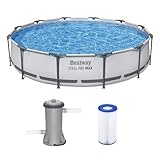
Bestway Steel Pro MAX 12' x 30" Above Ground Swimming Pool Set with Pump | Check Price On Amazon |
|
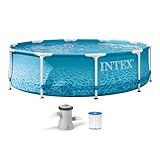
INTEX Beachside Metal Frame 10ft x 30in Round Pool Set w/Pump | Check Price On Amazon |

|
H2OGO! Kids Splash-in-Shade 8-Foot Round Steel Frame Above Ground Pool with Water Mister and Canopy Sunshade, Green Tropical Leaf Print | Check Price On Amazon |
Not sure of your pool’s exact gallon capacity? Use our pool volume calculator to find the number before running any cost analysis.
What Does It Cost to Install Each Pool Type?
A traditional chlorine pool and a saltwater pool have nearly identical construction costs because the pool shell, plumbing, and equipment are the same, the only structural difference is the addition of a salt chlorine generator (SCG), also called a saltwater chlorinator or salt cell system.
Installing a new inground pool costs between $35,000 and $70,000 depending on size, material (concrete/gunite, fiberglass, or vinyl liner), and regional labor rates. Adding a salt chlorine generator to that build costs an additional $1,500 to $2,500 installed, covering the control unit, the electrolytic cell, and plumbing integration.
If you already own a chlorine pool and want to convert, the cost is purely the salt system installation: $1,200 to $2,200 for the equipment plus 200 to 400 pounds of pool-grade sodium chloride to bring the water to the target salinity of 2,700 to 3,400 parts per million (ppm). The salt itself costs roughly $0.25 to $0.50 per pound in bulk bags, putting the initial salt load at $50 to $200 depending on pool volume. Use our pool salt calculator to determine the exact amount you’ll need based on your pool size.
Above-ground pool owners can add a smaller residential salt chlorine generator for $200 to $600, which changes the economics significantly, the break-even period shrinks to 12 to 24 months in many cases.
Upfront Installation Cost Comparison by Pool Type
| Pool Type | Traditional Chlorine | Saltwater System |
|---|---|---|
| New inground pool (20,000 gal) | $35,000 – $70,000 | $36,500 – $72,500 |
| Conversion of existing pool | N/A (baseline) | $1,200 – $2,200 installed |
| Above-ground pool addition | $50 – $150 (chlorinator) | $200 – $600 |
| Initial salt load (to 3,000 ppm) | N/A | $50 – $200 |
The upfront cost difference is modest relative to the total pool investment, which is why many builders now recommend including a salt system at construction – the incremental cost on a $50,000 project is under 4%.
Annual Chemical Costs: Saltwater Pool vs Chlorine Pool
Annual chemical costs are the single largest long-term cost difference between the two systems. A traditionally chlorinated 20,000-gallon pool costs $300 to $800 per year in chlorine alone, while the same pool running on a salt chlorine generator costs $70 to $100 per year in salt replenishment – a savings of $200 to $700 annually, every year the system runs.
The savings exist because the salt chlorine generator converts dissolved sodium chloride into chlorine through electrolysis, eliminating the need to purchase and add chlorine tablets, granular chlorine, or liquid chlorine separately. The chlorine is produced continuously on-site at a rate the owner sets via the generator’s output control.
What You Still Buy With a Saltwater Pool
Saltwater pools are not chemical-free. You still need to maintain pH (target 7.4 to 7.6), total alkalinity (80 to 120 ppm), calcium hardness (200 to 400 ppm), and cyanuric acid as a stabilizer (70 to 80 ppm, which is slightly higher than the 30 to 50 ppm target for traditional chlorine pools).
The chemical costs that remain in a saltwater pool include pH increaser (soda ash), pH decreaser (muriatic acid or dry acid), alkalinity increaser, calcium hardness increaser, cyanuric acid, and occasional algaecide or pool shock for heavy use periods. Budget $100 to $200 per year for these supporting chemicals in a saltwater pool – compared to $150 to $300 per year for the same chemicals plus significantly higher chlorine costs in a traditional chlorine pool.

- Intelligent Navigation with Full Coverage: Equipped with 11 high-precision sensors and enhanced dual-path algorithms. The optimized WavePath cleaning pattern ensures systematic coverage with minimal overlap, while adaptive navigation analyzes pool layout in real time to eliminate missed spots
- Dual Filtration for Crystal-Clear Water: Advanced dual-layer filtration system features a replaceable 3-micron ultra-fine filter paired with a 180-micron standard filter. Effectively captures fine dust, sand, leaves, and debris for visibly cleaner and healthier pool water
- Comprehensive Pool Cleaning: Engineered to clean the pool floor, walls, waterline, and shallow areas (above 12 inches). The Caterpillar Treads system enhances mobility and climbing ability, ensuring thorough coverage across all pool zones
- Reliable Performance with 2-Year Warranty: Trusted by over 500,000 pool owners worldwide, this robotic pool cleaner delivers consistent, high-performance results. Built for durability and backed by a 2-year warranty and responsive customer support for worry-free ownership
Annual Chemical Cost Breakdown: 20,000-Gallon Pool
| Chemical Category | Traditional Chlorine Pool | Saltwater Pool |
|---|---|---|
| Chlorine (tablets, granular, liquid) | $200 – $600/yr | $0 (generated on-site) |
| Pool salt replenishment | N/A | $70 – $100/yr |
| pH and alkalinity chemicals | $80 – $150/yr | $80 – $150/yr |
| Calcium hardness, CYA, algaecide | $50 – $100/yr | $50 – $100/yr |
| Pool shock (calcium hypochlorite) | $50 – $100/yr | $20 – $50/yr |
| Total Annual Chemical Cost | $380 – $950/yr | $220 – $400/yr |
The annual savings ranges from $160 to $550 in most residential pools, and the higher end of that range applies to pools with heavy bather loads, long swim seasons, or owners who previously purchased chlorine at retail price rather than in bulk.
One important note: saltwater pools cause pH to drift upward more consistently than traditional chlorine pools because the electrolysis process produces slightly alkaline byproducts. This means more frequent pH adjustment with muriatic acid or dry acid – which adds to the supporting chemical cost and is frequently underestimated in online comparisons. Use our pool pH calculator to quickly figure out how much acid to add so you keep the water balanced without guessing.
This side-by-side overview captures the key decision factors for owners choosing between the two systems before diving into the equipment-specific costs below.
COST COMPARISON
Saltwater Pool vs Chlorine Pool – Complete Side by Side
All figures based on a standard 20,000-gallon inground residential pool, average swim season
| Cost Factor | Traditional Chlorine Pool | Saltwater Pool |
|---|---|---|
| System add-on cost | $0 (baseline) | $1,200 – $2,500 |
| Annual chemical cost | $380 – $950/yr | $220 – $400/yr |
| Major equipment replacement | Chlorinator: $50 – $150 every 2-3 yrs | Salt cell: $800 – $2,000 every 3-7 yrs |
| Energy use (pump) | Same (not related to sanitizer type) | Same (not related to sanitizer type) |
| Equipment corrosion risk | Low (at correct chlorine levels) | Higher (salt accelerates corrosion on some metals and fixtures) |
| Water testing frequency | 2-3x per week (free chlorine, pH, ALK) | Weekly (salt, CYA, pH drift monitoring) |
| Typical break-even | N/A (lower upfront) | 3-5 years (depending on chemical savings) |
| Our verdict | Lower upfront, higher ongoing chemical cost | Higher upfront, lower ongoing chemical cost, salt cell is the wildcard |
Figures represent residential use. Commercial pool costs differ substantially due to bather load and regulatory requirements. All costs in USD.
The Salt Cell: The Biggest Hidden Cost of Saltwater Pools
The electrolytic cell (commonly called the salt cell or salt plate) is the component inside the salt chlorine generator that converts sodium chloride into hypochlorous acid, which is the same active sanitizer found in traditional chlorine. Salt cells have a finite lifespan of 3 to 7 years depending on the hours of operation, cyanuric acid levels, water chemistry balance, and how consistently the cell is cleaned.
Replacement salt cells cost $800 to $2,000 for most residential units, with mid-range options from brands like Hayward Goldline, Pentair IntelliChlor, and Jandy AquaPure typically falling between $400 and $700 for the cell alone – with compatible control boards adding $200 to $500 if those also need replacement.
This replacement cost is the single most underrepresented factor in saltwater pool cost comparisons. Spread over 5 years, a $700 cell replacement adds $140 per year to the effective annual cost of a saltwater pool – which narrows the chemical savings advantage considerably.
How to Extend Salt Cell Life and Reduce Replacement Frequency
The primary cause of premature salt cell failure is calcium scale buildup on the cell plates, which reduces chlorine output and forces the cell to work harder. Cleaning the cell every 3 months with a diluted muriatic acid solution (4 parts water to 1 part acid) removes this scale and can extend cell life by 1 to 2 full years.
Maintaining calcium hardness between 200 and 400 ppm and cyanuric acid (stabilizer) between 70 and 80 ppm also protects cell longevity. Running the generator at 50 to 70% output rather than maximum output reduces electrode wear, provided the pool still maintains free chlorine at 1 to 3 ppm, verify this with a liquid drop test kit that accurately reads the low-end chlorine range that salt pools operate in.
Energy Costs: Does Either System Use More Electricity?
The salt chlorine generator itself draws 50 to 200 watts of electricity depending on cell size and output setting, adding roughly $30 to $80 per year to electricity costs at average residential rates of $0.13 per kilowatt-hour. This is a small but real additional operating cost that traditional chlorine pools do not have.
Pump energy, which is the dominant pool electricity cost at $500 to $1,200 per year for older single-speed pumps, is identical between the two systems, it is determined by pump type and run time, not by the sanitization method. Upgrading to a variable speed pump saves 65 to 80% on pump electricity regardless of whether your pool uses salt or traditional chlorine, cutting annual pump costs from $800 to $150 to $300 per year on a 20,000-gallon pool.
The important point is that saltwater pool owners sometimes credit all their electricity savings to the salt system when the savings actually came from a simultaneous pump upgrade. These are independent improvements, evaluate them separately.
Equipment Wear and Corrosion Costs: A Factor Most Guides Ignore
Saltwater at 3,000 ppm accelerates corrosion on certain pool materials that traditional chlorinated water at standard chlorine levels does not affect at the same rate. The materials most vulnerable to salt-related degradation include aluminum pool ladders and handrails, certain heater components, zinc anodes in heat exchangers, and decorative metal pool lighting fixtures.
Pool and Spa News industry data notes that salt corrosion complaints represent a meaningful share of service calls on pools installed prior to salt-resistant product lines becoming standard. Budget $50 to $200 in additional preventive hardware costs over a 10-year period, including zinc pool anodes (around $20 to $40 each, replaced every 1 to 2 years) that sacrifice themselves to protect metal equipment from galvanic corrosion.
Concrete and gunite pool surfaces require special attention with saltwater systems. Maintaining calcium hardness above 200 ppm prevents the slightly corrosive saltwater from etching the plaster surface, a repair that costs $5,000 to $15,000 for full resurfacing. Vinyl liner pools and fiberglass pools are generally more compatible with saltwater chemistry, with fiberglass pools experiencing the fewest corrosion-related issues.
Which Pool Surface Materials Are Best for Saltwater?
| Pool Surface Material | Salt Compatibility | Key Risk | Additional Maintenance Cost |
|---|---|---|---|
| Fiberglass | Excellent | Minimal with correct chemistry | Low ($0 to $50/yr extra) |
| Vinyl liner | Good | Liner fading slightly accelerated | Low ($0 to $100/yr extra) |
| Concrete / Gunite (plaster) | Moderate | Plaster etching if Ca hardness falls below 200 ppm | Moderate ($100 to $300/yr to maintain hardness) |
| Pebble Tec / Exposed aggregate | Good | Salt deposit staining on textured surfaces | Low to moderate ($50 to $150/yr) |
The following table pre-calculates the cumulative chemical cost savings of switching to a saltwater system at different pool sizes and ownership time horizons, factoring in both the average annual chemical savings and the amortized salt cell replacement cost.
COST REFERENCE
Saltwater System – Net Savings Over Time by Pool Size
Figures show net cumulative savings after subtracting $1,800 conversion cost and $700 salt cell replacement at year 5. Find your pool size and ownership horizon.
| Pool size (gallons) / Years owned | 3 Years | 5 Years | 10 Years | 15 Years |
|---|---|---|---|---|
| 10,000 gal (small pool) | -$1,140 Still in payback |
-$1,300 Cell replaced yr 5 |
+$300 Modest savings |
+$1,950 Break-even ~yr 9 |
| 20,000 gal (average inground) | -$600 Still in payback |
+$200 Break-even ~yr 4.5 ★ |
+$2,200 Clear savings |
+$4,950 Strong long-term savings |
| 30,000 gal (large inground) | -$150 Near break-even |
+$950 Break-even ~yr 3.3 |
+$4,200 Significant savings |
+$8,200 Best ROI case |
| 40,000 gal (commercial-residential) | +$300 Break-even ~yr 2.8 |
+$1,700 Strong savings |
+$6,200 Excellent ROI |
+$11,500 Strongest case for salt |
Calculated using: $400/yr chemical savings (20k gal baseline, scaled by pool volume), $1,800 conversion cost, $700 cell replacement at year 5. Annual savings scaled proportionally by pool volume. ★ marks the most common reader scenario for residential inground pools.
What Is the Real Break-Even Period for a Saltwater Pool?
The break-even period for a saltwater conversion is the point at which cumulative chemical savings equal the total upfront investment in the salt system. For a 20,000-gallon inground pool with $400 in annual chemical savings and a $1,800 conversion cost, the break-even occurs at 4.5 years, without accounting for the salt cell replacement that typically occurs around year 5.
When you factor in a $700 salt cell replacement at year 5, the adjusted break-even extends to 6.5 to 7 years for an average residential pool. For pools larger than 30,000 gallons, where annual chemical savings run $500 to $700, the break-even including cell replacement falls at 4 to 5 years, making saltwater clearly cheaper long-term for large pools.
The break-even calculation changes significantly based on four variables: how much you currently spend on chlorine (retail vs. bulk pricing matters enormously), your pool volume, how long your salt cell lasts (cell lifespan of 7 years vs. 3 years produces very different outcomes), and whether you install the system yourself on an above-ground pool or hire a contractor for an inground conversion.
The following figures anchor the core cost comparison before we go section by section into the details.
BY THE NUMBERS
Saltwater vs Chlorine Pool – Real Cost Comparison
Sources: PHTA Industry Survey, Pool and Spa News, HomeAdvisor cost data, manufacturer specifications
Maintenance Time and Effort: Does Either System Require More Work?
Saltwater pools require slightly less weekly chemical handling because you are not measuring and adding chlorine manually, the generator does it automatically. You still need to test free chlorine (target 1 to 3 ppm in a saltwater pool vs. 2 to 4 ppm in a traditional chlorine pool), pH (7.4 to 7.6 in both systems), and salt level (2,700 to 3,400 ppm) at least weekly.
The additional maintenance task unique to saltwater pools is cell inspection and cleaning. Every 3 months, you should remove the salt cell and inspect the plates for calcium scale. If white or gray deposits are present, a 15-minute soak in a 4:1 water-to-muriatic-acid solution dissolves the scale. This process takes 20 to 30 minutes total and extends cell life by 1 to 3 years with consistent application.
Traditional chlorine pools require more frequent chemical additions, typically adding 3-inch trichlor chlorine tablets to a floating feeder or inline chlorinator every 5 to 7 days, plus biweekly or monthly pool shock (calcium hypochlorite) treatments. The total time commitment is comparable, but the task type differs: traditional pools require more frequent chemical additions while saltwater pools require less frequent but more technical maintenance.
Myth vs Fact: Common Saltwater Pool Cost Misconceptions
Several claims about saltwater pool economics appear repeatedly online that are either partially true, context-dependent, or outright incorrect, each one affects how owners calculate their real costs.
MYTH VS FACT
Saltwater Pool Cost Myths – Debunked
Separating fact from fiction on the most common saltwater pool cost misconceptions
X MYTH
Saltwater pools are chemical-free and require no additional chemicals after the initial salt addition.
✓ FACT
Saltwater pools still require pH balancers, alkalinity increaser, cyanuric acid (stabilizer at 70 to 80 ppm), calcium hardness increaser, and occasional shock. Annual supporting chemical costs run $100 to $200 per year, the savings come from eliminating purchased chlorine, not from eliminating chemistry altogether.
X MYTH
Saltwater pools save so much on chemicals that they pay for themselves in the first year or two.
✓ FACT
For a 20,000-gallon pool with a $1,800 conversion cost and $400 in annual savings, the simple payback is 4.5 years, not 1 to 2 years. Small pools with lower chlorine usage can take 7 to 10 years to break even.
X MYTH
The salt in a saltwater pool will damage your pool equipment, landscaping, and everything around it.
✓ FACT
Residential saltwater pools operate at 3,000 ppm salinity, roughly one-tenth the salinity of seawater (35,000 ppm). This level presents minimal risk to landscaping with normal splash-out, though certain metals (aluminum, galvanized steel) do corrode faster. Using salt-compatible equipment and zinc anodes prevents most hardware issues.
X MYTH
Saltwater pools use less electricity than chlorine pools because they do not need as much pump run time.
✓ FACT
Pump run time and electricity use are determined by pool volume, filtration requirements, and pump type, not by the sanitization system. Saltwater generators actually add 50 to 200 watts of electricity draw on top of the pump cost. Energy savings in saltwater pools come from pump upgrades, not the salt system itself.
X MYTH
Salt cells last 10 to 15 years, so replacement cost is not a significant factor in the long-term cost calculation.
✓ FACT
Most manufacturers rate salt cells at 10,000 hours of operation, which translates to 3 to 7 calendar years at typical residential run times of 8 to 10 hours per day. Without regular cleaning and proper chemistry, cells can fail in 2 to 3 years. Cell replacement at $400 to $1,000 is a real and recurring cost.
10-Year Total Cost of Ownership: Saltwater Pool vs Traditional Chlorine Pool
The 10-year total cost comparison is the most accurate frame for the saltwater pool vs chlorine pool decision because it captures the full cycle of chemical savings, equipment replacement, and compounding costs in both systems. For a 20,000-gallon inground pool in an average Sun Belt climate with a 6-month swim season, here is what 10 years of ownership costs in each system.
| Cost Category | Traditional Chlorine (10-yr total) | Saltwater Pool (10-yr total) |
|---|---|---|
| System conversion/setup cost | $0 | $1,800 |
| Chlorine / salt cost (10 yrs) | $3,500 – $6,000 | $700 – $1,000 |
| Supporting chemicals (10 yrs) | $1,500 – $3,000 | $1,000 – $2,000 |
| Salt cell replacement (x1 at yr 5) | N/A | $700 – $1,500 |
| Generator electricity (10 yrs) | $0 | $300 – $800 |
| Salt-related hardware (anodes, etc.) | $0 | $200 – $500 |
| 10-Year Total Cost Estimate | $5,000 – $9,000 | $4,700 – $7,600 |
Over 10 years, a saltwater pool saves the average residential owner $300 to $1,400 in total operating costs compared to a traditional chlorine pool, not the $3,000 to $5,000 in savings that some promotional materials suggest. The savings are real but modest, and they depend heavily on how much you currently spend on chlorine.
Owners who purchase chlorine in bulk (50-pound buckets of trichlor or calcium hypochlorite at warehouse prices) see narrower savings from saltwater conversion than owners who buy chlorine tablets at retail price from a pool supply store or home center.
Which Pool Type Is Cheaper Long-Term? The Definitive Answer
Saltwater pools are cheaper long-term for most owners of inground pools over 15,000 gallons who plan to own the pool for more than 5 to 7 years. Traditional chlorine pools are cheaper for small pools, above-ground pools with short expected lifespans, and owners who purchase chlorine in bulk and maintain water chemistry diligently.
The answer also depends on where you live. In regions with year-round pool use (Florida, Texas, Arizona, California), the annual chemical savings in a saltwater system accumulate faster because the swim season runs 8 to 12 months instead of 3 to 5 months. A Florida pool owner running a 20,000-gallon pool year-round saves $500 to $700 per year on chlorine vs. a Minnesota owner saving $200 to $300 per year on a 4-month season.
The saltwater system’s long-term cost advantage is real but not as dramatic as many pool companies suggest at the point of sale. The correct framing is: saltwater pools are slightly cheaper to operate long-term and meaningfully less work in terms of chemical handling, with the economic advantage growing larger for bigger pools, longer seasons, and longer ownership periods.
When a Traditional Chlorine Pool Is the Better Financial Choice
Stick with a traditional chlorine system if your pool is under 10,000 gallons, if you plan to sell your home within 5 years, or if you already have an automated chemical dosing system that removes the convenience argument for saltwater. The conversion cost does not pay back quickly enough in small or short-duration scenarios to justify the investment.
Also consider that certain pool configurations are incompatible with salt systems without significant additional investment. Pools with copper heat exchangers require a titanium or polymer heater upgrade ($1,500 to $3,000) before installing a saltwater system, and that additional cost changes the break-even calculation substantially. Review exactly what your existing equipment can handle before committing to conversion to avoid unexpected hardware replacement costs.
When a Saltwater Pool Is the Better Financial Choice
Choose saltwater if your pool is 15,000 gallons or larger, if you currently spend $500 or more annually on chlorine, if you plan to own the pool for 8 or more years, or if you are building a new pool (where the incremental cost of including a salt system at construction is $1,500 to $2,500, much less than a retrofit).
Saltwater systems also make financial sense if your current pool service uses weekly chemical additions that you pay a pool service company to manage, the labor component of those visits drops when the chlorine production is automated, and some owners find their service bill decreases $50 to $100 per month after converting. Understanding the full performance and lifestyle differences beyond just cost is important before making the final call.
How Pool Size Affects the Cost Comparison
Pool volume in gallons is the single most important variable in the saltwater vs. chlorine cost comparison because chlorine consumption scales directly with volume. A 10,000-gallon pool uses roughly half the chlorine of a 20,000-gallon pool, which cuts the annual savings potential of switching to salt from $400 to $200, extending the break-even period from 4.5 years to 9 years for the same $1,800 conversion cost.
Conversely, a 40,000-gallon pool using $800 to $1,200 per year in chlorine pays back a $2,000 saltwater conversion in under 3 years. Large inground pools, commercial-adjacent residential pools, and resort-style pools with extensive water features see the strongest financial case for saltwater. If you are still in the planning stage, building the right size pool for your actual usage patterns is the most impactful cost decision you will make, regardless of sanitization choice.
Chlorine Type Matters: How You Buy Chlorine Changes the Math
The cost of traditional chlorine is not fixed, it varies by form and purchase method by a factor of 2 to 3x, and this variation dramatically affects the saltwater break-even calculation. Trichlor 3-inch tablets bought in 50-pound buckets cost roughly $1.20 to $1.60 per pound, while the same product bought in 5-pound containers at a retail home center costs $2.50 to $4.00 per pound.
Owners paying retail prices for chlorine in small containers can spend $800 to $1,200 per year on chlorine for a 20,000-gallon pool, which produces annual savings of $700 to $1,100 when switching to saltwater, cutting the break-even period to just 2 to 3 years. Owners buying bulk chlorine at warehouse clubs or pool supply distributors may only save $200 to $300 per year, extending the break-even to 6 to 9 years. The deeper dive into how different chlorine forms compare on cost and effectiveness helps owners calculate their true baseline before deciding whether saltwater makes financial sense.
Granular chlorine (dichlor or calcium hypochlorite) costs $1.00 to $2.00 per pound in bulk. Liquid chlorine (sodium hypochlorite at 10 to 12.5% concentration) is the least expensive per unit of available chlorine when bought in cases, but requires more frequent purchase due to degradation in storage. The type of chlorine you currently use is a key input to your break-even calculation, not just the total dollar amount.
Professional vs DIY Installation: How It Affects the Return on Investment
Professional installation of a salt chlorine generator for an existing inground pool costs $1,200 to $2,200 total, including the unit, cell, plumbing connections, and electrical integration. DIY installation on an above-ground pool costs $200 to $600 for the unit and takes 1 to 3 hours without professional help, making the payback period for above-ground pool owners as short as 12 to 18 months.
For inground pools, most owners should hire a licensed pool contractor for salt system installation because the work involves plumbing the cell into the return line after the heater, connecting to the electrical panel, and programming the control board to match the pool volume and turnover requirements. Errors in installation, particularly cell placement before the heater rather than after, can void manufacturer warranties and cause equipment damage. When selecting a contractor for this work, asking the right questions about their salt system installation experience prevents costly mistakes.
Some municipalities require an electrical permit for salt system installation because the unit connects to dedicated 240V service. Check your local requirements before scheduling installation, unpermitted pool electrical work can complicate home sales and insurance claims. Your area’s specific permit requirements for pool equipment installation are worth confirming before you schedule any contractor.
Water Testing Costs and Frequency: Both Systems Compared
Both pool types require regular water chemistry testing, but the parameters and frequency differ slightly. Traditional chlorine pools require testing free chlorine, pH, and total alkalinity at least twice per week during swim season, a process that takes 3 to 5 minutes with a liquid drop test kit or 1 minute with 7-in-1 test strips.
Saltwater pools require the same baseline tests plus salt level measurement (with a dedicated digital salt tester or by sending water to a pool supply store monthly) and more careful monitoring of cyanuric acid levels, which tend to accumulate in saltwater pools due to high stabilizer requirements. Professional water testing at a pool supply store (typically free or $5 to $10) is worth doing monthly for both pool types to catch imbalances that home test kits miss.
Annual testing costs: $20 to $60 for test kit refills and strips in a traditional chlorine pool, and $30 to $80 per year in a saltwater pool due to the additional parameters. This cost difference is small enough to be irrelevant in the overall comparison. Understanding the full chlorine chemistry and testing protocol, regardless of sanitization method, keeps water safe and chemical costs predictable. A clear grounding in how chlorine levels, types, and addition methods work applies to both systems.
Frequently Asked Questions About Saltwater Pool Costs vs Chlorine Pool Costs
Is a saltwater pool cheaper to maintain than a chlorine pool?
Quick Answer: Yes, for most pools over 15,000 gallons, saltwater pools cost $200 to $550 less per year in chemicals, but the salt cell replacement every 3 to 7 years at $400 to $1,000 offsets some of those savings, making the net annual advantage $100 to $350 in most residential scenarios.
The maintenance cost advantage of a saltwater pool is real but narrower than most promotional content suggests. The savings grow larger with pool size, longer swim seasons, and consistent cell maintenance that extends cell life to 6 to 7 years.
How much does it cost to convert a pool to saltwater?
Quick Answer: Converting an existing inground pool to saltwater costs $1,200 to $2,200 for professional installation, including the salt chlorine generator, electrolytic cell, plumbing integration, and initial salt load of 200 to 400 pounds at $0.25 to $0.50 per pound.
Above-ground pool conversions are much less expensive: $200 to $600 for a compatible unit that clamps directly onto the return hose without professional installation.
How often do you have to add salt to a saltwater pool?
Quick Answer: Salt does not get consumed by the electrolysis process, it only leaves the pool through splash-out, backwashing, and rainwater dilution. Most pools need 50 to 100 pounds of salt added once or twice per season to maintain the 2,700 to 3,400 ppm target, costing $12 to $50 per addition.
After the initial salt load, annual salt costs run $70 to $100 for most residential pools. Pools in areas with heavy rainfall or that get backwashed frequently will fall at the higher end of that range due to increased dilution.
Does a saltwater pool cost more to build?
Quick Answer: Adding a salt chlorine generator to a new pool build costs $1,500 to $2,500 extra at construction, typically 2 to 5% of the total pool cost, which is significantly less expensive than retrofitting the system later at $1,200 to $2,200.
If you are building a new pool and want saltwater, include it in the initial build contract. The incremental cost at construction is lower because the plumbing and electrical integration happens during the build rather than as a separate project.
What are the hidden costs of a saltwater pool?
Quick Answer: The four most underestimated costs of saltwater pools are: salt cell replacement ($400 to $1,000 every 3 to 7 years), heater compatibility upgrades if your existing heater has copper components ($1,500 to $3,000), zinc anodes to prevent galvanic corrosion ($20 to $80 per year), and more frequent pH adjustment due to upward pH drift from the electrolysis process.
Owners who do not account for these costs often feel the saltwater system did not deliver the promised savings, when in reality those savings were offset by overlooked expenses.
Can you convert any pool to saltwater?
Quick Answer: Almost any pool can be converted to saltwater, but some configurations require additional upgrades first. Pools with copper heat exchangers, galvanized steel ladders, or aluminum light fixtures need those components replaced or protected with zinc anodes before conversion to prevent accelerated corrosion at 3,000 ppm salt levels.
Fiberglass and vinyl liner pools convert easily with minimal compatibility concerns. Concrete and gunite pools require careful calcium hardness management after conversion to prevent plaster etching, maintain calcium hardness at 200 to 400 ppm consistently.
Do salt pools really save money?
Quick Answer: Yes, but the savings depend on pool size and current chlorine spending. A 20,000-gallon pool saves approximately $200 to $550 per year in chlorine costs, paying back a $1,800 conversion in 4 to 7 years. Over 15 years, the same pool saves a net $3,000 to $6,000 after accounting for salt cell replacement.
Owners of small pools who buy bulk chlorine will see much smaller savings. Owners of large pools who buy retail-priced chlorine in small quantities see the fastest payback and strongest long-term savings.
Is the water in a saltwater pool actually salty?
Quick Answer: Residential saltwater pools maintain a salinity of 2,700 to 3,400 ppm, roughly one-tenth the salinity of ocean water at 35,000 ppm. This level is barely perceptible to taste or skin and is lower than human tears (approximately 9,000 ppm). The “saltwater feel” that swimmers notice is softer water, not a salty taste.
This low salinity level is also why saltwater pool splash-out does not significantly harm most landscaping, though grass immediately adjacent to the pool edge where water pools and concentrates can show stress over multiple seasons.
What is the lifespan of a salt chlorine generator?
Quick Answer: The control board of a salt chlorine generator typically lasts 5 to 10 years, while the electrolytic cell (the component that actually produces chlorine) lasts 3 to 7 years at 8 to 10 hours of daily operation. Cells are sold separately from the control board and most brands offer cell-only replacements.
Regular cleaning with a 4:1 diluted muriatic acid soak every 3 months and maintaining correct water chemistry (especially calcium hardness above 200 ppm) extends cell life toward the 7-year end of that range. Neglected cells with heavy calcium scale can fail in 2 years.
Is it worth switching from chlorine to saltwater mid-pool-life?
Quick Answer: A mid-life conversion is worth it if the pool has at least 10 to 12 years of service life remaining, is 15,000 gallons or larger, and if current chlorine spending exceeds $400 per year. Pools nearing resurfacing or major renovation are ideal conversion candidates because the additional work aligns with other planned upgrades.
For pools within 5 to 7 years of major renovation or potential sale, the break-even period may not be reached before the investment timeline ends, making conversion less financially compelling in those specific cases.
The larger question of whether a saltwater system delivers better water quality, ease of use, and swimmer comfort, beyond just cost, is equally important to most owners and shapes which system delivers better overall value for their specific situation.
Final Verdict: Which Pool System Is Cheaper Long-Term?
For pools over 15,000 gallons with owners planning a 10-plus-year horizon, saltwater pools are cheaper long-term by $2,000 to $5,000 over a decade, but the margin is narrower than most sales pitches suggest, and it depends heavily on current chlorine spending, cell maintenance, and whether equipment compatibility upgrades are needed.
The best financial decision is to calculate your specific break-even: divide your actual annual chlorine cost (not a generic estimate) by the total conversion cost including any required equipment upgrades, then add one year for the salt cell replacement you will face at year 3 to 5. If that number is under 7 years and you plan to own the pool that long, saltwater wins on cost. If you are still deciding between pool types altogether, working through the full operational comparison of both systems beyond cost alone gives you the complete picture before committing to either.
| Photo | Best Above-Ground Pools | Price |
|---|---|---|
|
|
Bestway Steel Pro MAX 12' x 30" Above Ground Swimming Pool Set with Pump | Check Price On Amazon |
|
|
INTEX Beachside Metal Frame 10ft x 30in Round Pool Set w/Pump | Check Price On Amazon |
|
|
H2OGO! Kids Splash-in-Shade 8-Foot Round Steel Frame Above Ground Pool with Water Mister and Canopy Sunshade, Green Tropical Leaf Print | Check Price On Amazon |