
A variable speed pool pump running at the wrong speed and schedule wastes more electricity than a single-speed pump ever could.
You bought the pump to save money. The factory default settings will not deliver those savings. Programming it correctly is what separates a $700 annual electric bill from a $180 one on the same 20,000-gallon pool.
| Photo | Best Above-Ground Pools | Price |
|---|---|---|
|
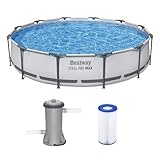
Bestway Steel Pro MAX 12' x 30" Above Ground Swimming Pool Set with Pump | Check Price On Amazon |
|
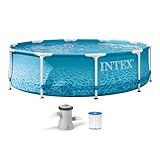
INTEX Beachside Metal Frame 10ft x 30in Round Pool Set w/Pump | Check Price On Amazon |

|
H2OGO! Kids Splash-in-Shade 8-Foot Round Steel Frame Above Ground Pool with Water Mister and Canopy Sunshade, Green Tropical Leaf Print | Check Price On Amazon |
By the Numbers
Variable Speed Pump Programming — What the Research Shows
Sources: U.S. Department of Energy, EPA WaterSense, Pentair Hydraulic Institute
What Makes Variable Speed Pump Programming Different From a Standard Timer?
A standard pool timer turns a pump on and off at set times. It delivers full-speed flow for every minute of that run cycle.
A variable speed pump controller lets you set different speeds for different parts of the day. Lower speeds for basic filtration. Higher speeds for skimming, vacuuming, or running a heater.

- Intelligent Navigation with Full Coverage: Equipped with 11 high-precision sensors and enhanced dual-path algorithms. The optimized WavePath cleaning pattern ensures systematic coverage with minimal overlap, while adaptive navigation analyzes pool layout in real time to eliminate missed spots
- Dual Filtration for Crystal-Clear Water: Advanced dual-layer filtration system features a replaceable 3-micron ultra-fine filter paired with a 180-micron standard filter. Effectively captures fine dust, sand, leaves, and debris for visibly cleaner and healthier pool water
- Comprehensive Pool Cleaning: Engineered to clean the pool floor, walls, waterline, and shallow areas (above 12 inches). The Caterpillar Treads system enhances mobility and climbing ability, ensuring thorough coverage across all pool zones
- Reliable Performance with 2-Year Warranty: Trusted by over 500,000 pool owners worldwide, this robotic pool cleaner delivers consistent, high-performance results. Built for durability and backed by a 2-year warranty and responsive customer support for worry-free ownership
This happens because a variable speed pump uses a permanent magnet motor controlled by an onboard digital drive. The drive adjusts the frequency and voltage reaching the motor windings. At 1,500 RPM, the impeller moves half as much water per minute but uses roughly one-eighth the electricity of 3,450 RPM. This only occurs when the pump controller is actively managing the drive output, not just receiving on/off power from an external timer.
If you wire a variable speed pump into an external mechanical timer and leave the pump at factory defaults, the result is a pump that cycles at speeds you never chose. It may run at 3,000 RPM at midnight when 1,200 RPM would work. Fix it by disconnecting the external timer and programming all schedules directly through the pump’s onboard controller.
According to the EPA WaterSense program, certified variable speed pool pumps must demonstrate at least 30% energy savings compared to baseline single-speed models under standardized test conditions. Most properly programmed units exceed 60% savings in real residential use.
A Pentair IntelliFlo VSF pump running at 1,500 RPM moves approximately 40-45 GPM and draws about 350 watts. That same pump at 3,450 RPM moves 90-100 GPM but draws over 2,200 watts. The programming decision is not just on/off. It is speed, duration, and sequencing.
How to Access and Navigate Your Pump’s Programming Menu
Every variable speed pump has a control panel with buttons or a touchscreen. The menu structures vary by brand but follow the same logic.
On Pentair IntelliFlo models, you press the Menu button, then scroll to Schedules using the arrow keys. On Hayward EcoStar and TriStar VS pumps, you press the Config button, then navigate to Timer Menu. On Jandy VS FloPro and ePump models, you access schedules through the Speed Setup menu.
Step-by-Step Guide
How to Program a Variable Speed Pool Pump — Step by Step
6 steps · 20-30 minutes total · No tools required beyond the pump manual
Calculate Your Pool Volume and Turnover Target
Measure your pool dimensions. Multiply length x width x average depth x 7.48 for gallons. If you’d prefer to skip the math, use our pool volume calculator for an instant, accurate result. Target one full turnover in 6-8 hours for daily filtration. For a 20,000-gallon pool, you need a flow rate of approximately 42-50 GPM for an 8-hour turnover window.
Set Your Base Filtration Speed (Duration 1)
Program the longest duration at the lowest effective speed. Most residential pools need 1,400-1,800 RPM for 6-8 hours. This speed moves enough water to filter the full volume while drawing 300-500 watts. Use a pool flow meter to verify actual GPM at your chosen RPM against your plumbing system’s head curve.
Add a Higher-Speed Skimming Window (Duration 2)
Program 2-3 hours at 2,400-2,800 RPM during peak debris hours. Morning skimming captures overnight leaf and insect accumulation. This speed pulls surface debris into the skimmers effectively. Water at higher velocity enters the skimmer opening and traps floating material before it sinks.
Program a Heater or Cleaner Speed (Duration 3, If Applicable)
Gas heaters require 30-40 GPM minimum flow to trigger the pressure switch. Program 2,200-2,600 RPM whenever the heater runs. If you use a suction-side cleaner like the Hayward Navigator, program 2,600-3,000 RPM for 2-3 hours. Robotic cleaners with their own pump do not need a dedicated pump schedule. Consult our complete pump sizing and flow rate guide for equipment-specific minimum flow requirements.
Set Start Times to Avoid Overlapping Durations
Most pump controllers allow 4-8 separate schedule slots. Each has a start time, stop time or duration, and RPM setting. Do not overlap two schedules at the same time. The pump typically follows the highest-speed instruction when schedules conflict, which defeats your energy strategy. Set Duration 1 from 8:00 AM to 4:00 PM at 1,500 RPM. Set Duration 2 from 6:00 AM to 8:00 AM at 2,600 RPM for skimming. This creates a clean handoff with no overlap.
Test Flow at Each Speed and Adjust Seasonally
Watch your filter pressure gauge at each programmed speed. Clean filter baseline at 1,500 RPM should read 2-5 PSI. At 2,800 RPM, expect 8-14 PSI on a clean filter. Record your clean baseline numbers. When pressure rises 25% above baseline, backwash or clean the filter. Adjust summer run times up by 2-3 hours and winter run times down by 2-3 hours based on bather load and debris.
Program your pump to run during daylight hours when electricity rates are lowest if you are on a time-of-use utility plan. Running at 1,500 RPM from 9 AM to 4 PM captures solar gain for heating and avoids peak evening rates. Learn more about automatic pump scheduling strategies to align programming with your utility rate structure.
What Speed Should You Set for Each Pool Function?
Different pool operations need different flow rates. Programming the right speed for each function is the core skill of pump management.
Filtration needs 1,400-1,800 RPM on most residential systems. Skimming needs 2,200-2,600 RPM. Heating needs whatever RPM produces 30-40 GPM through the heater. Vacuuming manually needs 2,400-2,800 RPM. Running a suction cleaner needs 2,600-3,000 RPM depending on the cleaner model.
Quick Reference
Variable Speed Pump — RPM Settings by Function
Target speeds for a typical 1.5-2.0 HP variable speed pump on 2-inch plumbing, 20,000-gallon pool
| Pool Function | Target RPM | Estimated GPM | Power Draw | Daily Duration |
|---|---|---|---|---|
| Basic Filtration | 1,400-1,800 | 35-50 | 300-550W | 6-8 hours |
| Surface Skimming | 2,400-2,800 | 60-75 | 900-1,500W | 2-3 hours |
| Gas Heater Operation | 2,200-2,600 | 55-70 | 750-1,200W | Per heating need |
| Manual Vacuuming | 2,400-2,800 | 60-75 | 900-1,500W | As needed |
| Suction Cleaner | 2,600-3,000 | 70-85 | 1,200-1,800W | 2-3 hours |
| Quick Clean / Priming | 3,100-3,450 | 85-100 | 1,800-2,300W | 5-15 min only |
Actual GPM varies by plumbing diameter, total dynamic head, filter condition, and pump model. Use a flow meter to verify your specific system.
The pump affinity laws govern why lower RPM saves so much energy. Flow is directly proportional to speed. But power consumption is proportional to speed cubed. Cutting RPM in half reduces flow by half but power draw by a factor of eight. Programming your pump to run at 1,500 RPM instead of 3,000 RPM moves half the water at one-eighth the electricity cost per hour.
A Hayward TriStar VS 950 draws 1,650 watts at 3,450 RPM and approximately 375 watts at 1,725 RPM. Over a 6-hour filtration cycle, the full-speed run costs about $1.19 per day at 12 cents per kWh. The half-speed run costs about $0.27 per day. That difference adds up to over $330 per year on filtration alone.
For most residential pools, programming 1,500 RPM for 6-8 hours plus 2,400 RPM for 2 hours of skimming is the optimal balance of water quality and energy cost.
Cost Reference
Annual Electricity Cost by Daily Schedule and Speed
Based on 12 cents/kWh, 1.5 HP variable speed pump, 2-inch plumbing. All values pre-calculated.
| Daily run time ↓ Pump RPM → | 1,500 RPM | 2,200 RPM | 2,800 RPM | 3,450 RPM |
|---|---|---|---|---|
| 4 hrs/day | $77/yr | $175/yr | $315/yr | $525/yr |
| 6 hrs/day | $115/yr | $263/yr ★ common | $473/yr | $788/yr |
| 8 hrs/day | $153/yr | $350/yr | $630/yr | $1,050/yr |
| 12 hrs/day | $230/yr | $525/yr | $945/yr | $1,575/yr |
| 24 hrs/day | $460/yr | $1,050/yr | $1,890/yr | $3,150/yr |
Costs calculated as: (watt draw at RPM) x (hours per day) x (365 days) x ($0.12/kWh) / 1000. ★ highlights the most common residential schedule: 6 hours at 2,200 RPM. Actual watt draw varies by total dynamic head.
How to Program a Pentair IntelliFlo Variable Speed Pump
Pentair IntelliFlo pumps use a menu-driven LCD interface. The programming logic centers on setting speed percentages or RPM values within numbered schedule slots.
Press the Menu button once. Scroll to Schedules using the up and down arrows. Press Select. The display shows Schedule 1. Press Select again. Set the start time using the arrows. Press Select. Set the stop time using the arrows. Press Select. Set the speed in RPM using the arrows (1,500 RPM is a common starting point for filtration). Press Select again to save. Press Menu to return and repeat for Schedule 2 through Schedule 4 or 8 depending on the model.
Key Specifications for Pentair IntelliFlo VSF: Operating range: 450-3,450 RPM. Programmable schedules: 8 independent slots. Flow control mode: 15-130 GPM in 1 GPM increments. Power range: 45-3,200 watts depending on speed and head.
A Pentair IntelliFlo VSF model 011028 lets you program either RPM or GPM targets. In flow control mode, the pump adjusts RPM automatically to maintain a set GPM as the filter loads with debris. This is useful for heater circuits that need a consistent flow rate regardless of filter condition. In RPM mode, the pump holds a fixed speed and flow declines gradually as the filter gets dirty.
According to Pentair’s published technical manual, the IntelliFlo’s permanent magnet synchronous motor maintains efficiency above 90% across its operating range. The controller adjusts pulse-width modulation to the motor windings at a frequency of 4-8 kHz, which is beyond human hearing and contributes to the pump’s low noise output.
Set Schedule 1 for 1,500 RPM from 8 AM to 4 PM for base filtration. Set Schedule 2 for 2,400 RPM from 4 PM to 6 PM for afternoon skimming. Leave Schedules 3 through 8 unused unless you run a separate cleaner or heater circuit. Our variable speed pump savings analysis covers the full payback math for different programming strategies and utility rates.
How to Program a Hayward EcoStar or TriStar VS Pump
Hayward variable speed pumps use a different menu structure but the same programming principles. The EcoStar and TriStar VS models have a configurable timer with 8 speed settings.
Press the Config button. The display shows Timer Menu. Press the plus or minus buttons to scroll to a numbered timer slot (1 through 8). Press Config again to enter that timer. Set the start time, then the duration in hours and minutes, then the speed in RPM. Press Config to save and move to the next slot.
A Hayward TriStar VS 950 comes with factory default settings that run at 3,000 RPM for 12 hours. That default wastes electricity. Erase every factory schedule and build your own. The pump will remember your custom schedules through power outages because they are stored in non-volatile memory on the drive board.
Hayward’s VSC controller displays real-time watt draw on the screen. Use this to verify that your programmed speed actually produces the expected power consumption. A reading of 450 watts at a programmed 1,725 RPM on 2-inch plumbing with a clean filter is normal. A reading of 700 watts at that same RPM typically indicates a clogged filter or a closed valve that is increasing head pressure.
What Is the Best Daily Schedule for a Variable Speed Pool Pump?
The ideal schedule runs the pump at low speed for filtration during daylight and at medium speed for skimming when debris accumulates.
For a 20,000-gallon pool in a moderate climate with average bather load, the recommended default schedule is: Duration 1 at 1,500 RPM from 8:00 AM to 4:00 PM (8 hours). Duration 2 at 2,400 RPM from 4:00 PM to 6:00 PM (2 hours). Total daily run time is 10 hours. Total daily electricity cost at 12 cents per kWh is approximately $0.45.
Results
What Changes When You Program Your Variable Speed Pump Correctly
Before and after comparison for a 20,000-gallon pool with 2-inch plumbing at 12 cents/kWh
Before: Factory Defaults
- ✗3,000 RPM for 12 hours daily
- ✗$1,050-1,575 annual electric cost
- ✗Excessive flow wastes filtration quality
- ✗No skimming or cleaner speed optimization
- ✗Pump noise at 65+ dB during evening hours
After: Properly Programmed
- ✓1,500 RPM for 8 hrs + 2,400 RPM for 2 hrs
- ✓$180-250 annual electric cost
- ✓Full turnover in 6.7 hours at optimal flow
- ✓Peak skimming during highest debris hours
- ✓Whisper-quiet operation at 40-45 dB
Annual savings from proper programming: $800-1,300. Payback on the pump itself accelerates to under 12 months.
Seasonal adjustments matter. Increase total run time by 2-3 hours during July and August when water temperature exceeds 85 degrees Fahrenheit and bather load peaks. Reduce run time by 2-3 hours during November through March when water temperature drops below 60 degrees Fahrenheit and algae growth slows dramatically. The Pool and Hot Tub Alliance recommends a minimum of one full water turnover per day regardless of season.
If you use a saltwater chlorine generator, coordinate pump run time with the SWCG’s production cycle. Most SWCGs need the pump running at a minimum of 1,200-1,400 RPM to close the flow switch. Program the pump to run during the SWCG’s active production window. See our inground pump recommendations for models with integrated SWCG control that simplify this coordination.
How to Program Speed Settings for Pool Heating
Pool heaters have a minimum flow requirement that dictates the lowest pump speed you can use while heating.
A gas heater’s pressure switch typically closes at 2-3 PSI of dynamic pressure. On most residential plumbing with a clean filter, that translates to 1,800-2,200 RPM minimum. Running below this threshold causes the pressure switch to open. The heater shuts down. The burner cycles off and on repeatedly. This short-cycling damages the heat exchanger over time because it creates thermal stress at the welds between copper and brass components.
Program a dedicated heater speed schedule. Set it to 2,400 RPM to provide a safe margin above the minimum. Run it only during hours when the heater thermostat is actively calling for heat. If you have an automation system like a Pentair EasyTouch or IntelliCenter automation panel, the controller can boost pump speed automatically when the heater fires. Without automation, program the heater speed window manually and adjust as needed.
Heat pump pool heaters have lower minimum flow requirements than gas heaters, typically 20-30 GPM. Program 1,800-2,000 RPM for heat pump operation. Heat pumps run for much longer cycles than gas heaters. The energy savings from running at the minimum effective speed add up significantly over a 12-18 hour heating cycle.
Common Programming Mistakes That Cost Hundreds Per Year
The most expensive mistake is programming too many hours at high speed. Every hour at 3,000 RPM instead of 1,500 RPM costs roughly 8 times more in electricity for the same volume of water moved if you doubled the hours at the lower speed.
The second most expensive mistake is overlapping schedules that confuse the pump controller. Most pumps default to the highest-speed instruction when two schedules conflict. A 30-minute overlap between a 1,500 RPM filtration schedule and a 2,800 RPM skimming schedule means the pump runs at 2,800 RPM for that half hour. Over a season, those overlaps add up to dollars.
Another common error is programming all run time during peak electricity rate hours. Many utilities charge 18-25 cents per kWh between 4 PM and 9 PM versus 8-12 cents during off-peak morning hours. Programming your 10-hour run from 8 AM to 6 PM keeps the entire cycle in off-peak territory on most rate plans.
Myth vs Fact
Variable Speed Pump Programming — Common Myths Debunked
Separating fact from fiction on the most common pump programming misconceptions
✗ Myth
Running the pump at low speed does not filter the water effectively.
✓ Fact
Lower flow rates actually improve filtration efficiency. Water spends more contact time passing through the filter media at lower velocity. Particles that would squeeze through at high flow get captured. NSF/ANSI 50 standards for pool filters validate filtration at flow rates as low as 0.5 GPM per square foot of filter area.
✗ Myth
The pump must run 24/7 to keep a pool clean in summer.
✓ Fact
A properly sized variable speed pump achieves one full water turnover in 6-8 hours. Running beyond one turnover provides diminishing returns for water clarity and wastes electricity. The PHTA technical manual states one turnover per day as the minimum standard for residential pools. Extend to 10-12 hours only during periods of heavy bather load or when water temperature exceeds 90 degrees Fahrenheit.
✗ Myth
Factory default settings are optimized for my pool.
✓ Fact
Factory defaults are set high to guarantee the pump starts and primes in every possible installation scenario, including poor plumbing and high head conditions. They are not optimized for efficiency or your specific pool volume. Every manufacturer manual explicitly instructs the installer to customize speed and duration settings after installation.
✗ Myth
If low speed is good, the lowest possible speed is even better.
✓ Fact
Below approximately 1,000 RPM, most residential pool plumbing cannot maintain sufficient flow to close the skimmer weir, feed the pump basket with consistent water, or keep the filter media evenly loaded. The pump may draw air, cavitate, or cycle erratically. The practical minimum for residential pools is 1,200-1,400 RPM depending on plumbing diameter and total dynamic head. Test your system to find the speed where flow becomes unstable and stay 200 RPM above it.
✗ Myth
Programming is a one-time task. Set it and forget it.
✓ Fact
Pool conditions change seasonally. Water temperature, debris load, bather count, and filter condition all shift throughout the year. A schedule programmed in May will be wrong by November. Adjust run times up by 2-3 hours in peak summer and down by 2-3 hours in winter. Reprogram after any major plumbing change, filter replacement, or equipment addition. Check your pressure gauge weekly to verify the programmed speeds still produce expected flow rates as the filter loads.
For most residential pool owners, the correct programming strategy is to run the pump between 1,400 and 1,800 RPM for 6-8 hours for base filtration, add a 2-hour skimming window at 2,400-2,600 RPM, and adjust seasonally.
Quick Reference
Variable Speed Pump Programming — Key Terms Explained
Quick reference for the terms used throughout this guide
Revolutions Per Minute. The speed at which the pump motor and impeller spin. Variable speed pumps range from 450 to 3,450 RPM.
Gallons Per Minute. The volume of water the pump moves. Directly proportional to RPM under constant head conditions.
The time required to circulate the entire pool volume through the filter once. Target one turnover in 6-8 hours for residential pools.
The total resistance to flow in the plumbing system, measured in feet of head. Includes pipe friction, elevation changes, and equipment restrictions.
Physical laws governing centrifugal pumps. Flow is proportional to speed. Power is proportional to speed cubed. This is why half speed uses one-eighth the power.
The high RPM burst at startup (typically 2,800-3,450 RPM) that fills the pump basket with water and expels air from the suction line before dropping to the programmed filtration speed.
A safety device in pool heaters that detects sufficient water flow before allowing the burner to fire. Closes at 2-3 PSI of dynamic pressure.
The electronic controller that adjusts the frequency and voltage delivered to the pump motor, enabling variable speed operation without wasting energy as heat.
A numbered program position in the pump controller that stores a start time, stop time or duration, and speed setting. Most pumps offer 4-8 slots.
EPA certification for pool pumps that meet minimum energy efficiency standards. Certified variable speed pumps use at least 30% less energy than baseline single-speed models in standardized testing.
How to Test That Your Programmed Schedule Is Working Correctly
After programming your schedules, verify the pump follows them. Stand at the equipment pad at the scheduled start time and watch the pump ramp up or down as programmed.
Check the filter pressure gauge at each speed. Record the PSI at 1,500 RPM with a clean filter. Record it again at 2,400 RPM. These are your clean baselines. When the pressure at either speed rises 25% above baseline, clean or backwash the filter. A rise from 4 PSI to 5 PSI at low speed is a 25% increase that signals the filter is loading with debris.
Use a Kill-A-Watt or similar power meter to measure actual watt draw at each programmed speed. Compare against the pump manufacturer’s published pump curve. A significant deviation from the expected wattage for a given RPM indicates a plumbing restriction, closed valve, or filter loading issue that needs attention.
If you notice the pump surging or the RPM display fluctuating, air is entering the suction side of the plumbing. Check the pump lid o-ring, the skimmer weir, and any suction-side valves for leaks. Our guide to submersible cover pumps covers water management during off-season when programming shifts to winter mode.
How Do You Program a Variable Speed Pump for Winter Operation?
Winter programming differs from summer programming in two ways. First, water temperature below 60 degrees Fahrenheit slows algae growth and chemical demand. Second, freeze protection becomes the priority in cold climates.
Most variable speed pumps have a built-in freeze protection mode. The pump automatically activates when the internal temperature sensor detects water temperature approaching 35-40 degrees Fahrenheit. It runs at a preset RPM to keep water moving through the plumbing and prevent ice formation. Set the freeze protection speed to 1,200-1,500 RPM. This moves enough water to prevent freezing while using minimal electricity during a cold snap.
For winter filtration in non-freezing climates, reduce run time to 4-6 hours at 1,200-1,400 RPM. The lower water temperature means less chemical demand and less debris shedding from surrounding vegetation. You still need one turnover per day but can achieve it with shorter run times or lower speeds than summer.
According to the CDC’s Healthy Swimming guidelines, maintaining proper sanitizer levels during winter is essential even with reduced pump run times. Test free chlorine weekly regardless of how few hours the pump runs. A Taylor K-2006 liquid drop test kit gives accurate chlorine readings year-round, unlike test strips which lose accuracy in cold water. After testing, use our swimming pool chlorine calculator to determine the exact amount of chlorine your pool needs.
How Do I Know If My Pool Volume Is Correctly Matched to My Pump Speed?
Calculate your pool volume in gallons. Multiply length by width by average depth by 7.48. Measure your pump’s GPM at your programmed filtration speed using a flow meter installed in the return line or by timing how long it takes to fill a 5-gallon bucket at the return jet and extrapolating.
Divide your pool volume in gallons by your GPM to get the minutes required for one turnover. Divide by 60 to get hours. A 20,000-gallon pool with 45 GPM flow needs 444 minutes or 7.4 hours for one turnover. For a quick calculation, use our pool turnover calculator to get your turnover time. Adjust run time up or down until you achieve one turnover in your programmed filtration window. Our above-ground pump guide covers volume calculations for round and oval pools where depth measurement is less straightforward.
Buying Guide
Ask Yourself These Questions Before You Program Your Pump
Tap each card to reveal what your answer means for your pump schedule decisions.
Why Does My Variable Speed Pump Run at Full Speed Even Though I Programmed a Lower Speed?
Check for overlapping schedule slots first. The pump follows the highest-speed instruction when two schedules conflict by even one minute.
Second, check if the priming cycle is set too aggressively. Most pumps have a priming duration setting separate from the run schedules. If priming is set to 5 minutes at 3,450 RPM but your pump loses prime between cycles, it may re-prime frequently. Shorten the priming duration or lower the priming speed to 2,800 RPM if your suction line stays primed between starts.
Third, check for external automation overrides. If your pump is connected to a pool automation panel, the automation system may be commanding a higher speed than your onboard schedule. Disconnect the automation control temporarily and test whether the pump follows its internal schedule correctly.
A Pentair IntelliComm interface adapter or similar communication module can cause speed override conflicts. Test by unplugging the comm cable and verifying onboard programming runs independently before reconnecting.
What Happens If the Power Goes Out: Will My Pump Lose Its Programming?
Modern variable speed pumps store schedule settings in non-volatile flash memory on the drive control board. Power outages do not erase your programming.
The clock may reset on some models, which shifts the schedule relative to actual time. Pumps with an internal battery-backed clock like the Pentair IntelliFlo retain the correct time through outages. Hayward EcoStar models may require clock resetting after an extended outage. Check the displayed time on the pump screen after power restoration and correct it if needed. A clock that is off by 4 hours means your filtration schedule shifts by 4 hours, which can push run time into peak rate windows unknowingly.
Can I Use an External Timer With a Variable Speed Pump?
No. External timers defeat the purpose of variable speed control and can damage the pump drive electronics.
Variable speed pumps are designed to receive constant AC power and manage their own on/off cycles and speed changes internally. Cycling power on and off with an external timer repeatedly powers down the drive electronics, which must reboot each time. This creates voltage transients that stress the drive capacitors and can cause premature failure of the controller board. The repair cost for a failed drive on a variable speed pump ranges from $400-800, often exceeding the cost of a new single-speed pump.
Remove any external timer from the pump circuit. Wire the pump directly to a dedicated breaker with constant power. Let the pump’s internal clock and schedule controller handle all timing. Our pool cover pump selection and setup guide covers electrical considerations for equipment that does benefit from external switching.
How Many Schedules Do I Actually Need for a Residential Pool?
Two schedules are sufficient for most residential pools without attached spas or water features.
Schedule 1 handles base filtration at 1,400-1,800 RPM for 6-8 hours. Schedule 2 handles skimming at 2,400-2,800 RPM for 2-3 hours. A third schedule may be needed if you run a suction-side cleaner at 2,800-3,000 RPM for 2 hours. A fourth schedule may be needed for heater operation if your heater requires a specific flow window that does not align with your other schedules.
Pool owners with water features such as waterfalls or deck jets often use Schedule 3 or 4 at 2,800-3,000 RPM for the feature’s operating hours. Program the feature speed to run only when someone is present to enjoy it. Running a waterfall at 3,000 RPM for 8 hours a day when no one is home wastes electricity with no aesthetic benefit.
What Is the Difference Between Programming in RPM vs GPM Mode?
RPM mode holds a fixed motor speed regardless of filter condition. GPM mode adjusts motor speed automatically to maintain a target flow rate as the filter loads.
In RPM mode, you program 1,500 RPM. The pump holds 1,500 RPM. As the filter collects debris over weeks, flow declines gradually from 45 GPM to 35 GPM. You clean the filter when pressure rises 25% above baseline. In GPM mode, available on pumps like the Pentair IntelliFlo VSF and Jandy VS FloPro with flow sensing, you program 45 GPM. The pump starts at 1,500 RPM on a clean filter. As the filter loads, the pump automatically ramps to 1,700 RPM, then 1,900 RPM to maintain 45 GPM. You clean the filter when the pump is running noticeably faster than baseline to achieve the same GPM.
GPM mode provides more consistent turnover but uses slightly more electricity as the filter loads because the pump compensates with higher speed. RPM mode uses constant electricity but turnover slows as the filter loads. For residential pools where exact turnover consistency is not critical, RPM mode is the more energy-efficient choice. For commercial pools or pools with critical flow requirements like laminar jets or heater minimums, GPM mode provides consistent performance.
How Do I Program a Variable Speed Pump for an Above-Ground Pool?
Above-ground pools have different plumbing characteristics that affect minimum speed requirements. Smaller pipe diameters (1.5 inches instead of 2 inches) and higher relative head loss through above-ground equipment mean the practical minimum RPM is often higher than for inground pools.
Start at 1,600-1,800 RPM for base filtration on an above-ground pool. Test for stable flow at the return jet. If the return jet produces a steady stream without surging or air bubbles, the speed is sufficient. Above-ground pools benefit from slightly higher skimming speeds because the single skimmer must capture all surface debris. Program 2,600-2,800 RPM for skimming for 2 hours. Variable speed pumps designed for above-ground pools like the Hayward PowerFlo VS 300 offer the same programming interface as inground models in a package sized for above-ground plumbing.
Above-ground pool volume is typically smaller (5,000-15,000 gallons), which means turnover occurs faster at a given flow rate. A 10,000-gallon above-ground pool with 35 GPM at 1,800 RPM achieves turnover in 4.8 hours. Do not over-filter. Run the pump for 6 hours at most and reduce run time further in cooler months.
The information in this guide explains how to program any variable speed pool pump for maximum energy savings while maintaining water quality. Proper programming cuts annual pump electricity costs from $600-1,500 to $150-300 on a typical residential pool. Program your pump once using the step-by-step sequence above. Verify it with a pressure gauge and power meter. Adjust seasonally. The savings compound every day the pump runs correctly.
| Photo | Best Above-Ground Pools | Price |
|---|---|---|
|
|
Bestway Steel Pro MAX 12' x 30" Above Ground Swimming Pool Set with Pump | Check Price On Amazon |
|
|
INTEX Beachside Metal Frame 10ft x 30in Round Pool Set w/Pump | Check Price On Amazon |
|
|
H2OGO! Kids Splash-in-Shade 8-Foot Round Steel Frame Above Ground Pool with Water Mister and Canopy Sunshade, Green Tropical Leaf Print | Check Price On Amazon |