
Most homeowners underestimate the yard space a pool actually needs by 30 to 40 percent. A 12 foot by 24 foot pool does not need a 12 foot by 24 foot hole. It needs that footprint plus 4 to 8 feet of decking on all sides, equipment pad space, access paths, and clearance from property lines, structures, and utilities.
What Is the Minimum Yard Size for an Inground Pool?
A 20 foot by 40 foot inground pool requires a minimum yard of approximately 2,500 square feet of usable flat space. This includes the pool shell itself at 800 square feet, plus 3 to 4 feet of decking on all four sides, plus the required setback distances from property lines, the house foundation, and any easements.
| Photo | Best Above-Ground Pools | Price |
|---|---|---|
|
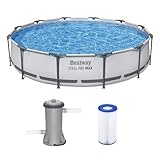
Bestway Steel Pro MAX 12' x 30" Above Ground Swimming Pool Set with Pump | Check Price On Amazon |
|
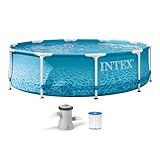
INTEX Beachside Metal Frame 10ft x 30in Round Pool Set w/Pump | Check Price On Amazon |

|
H2OGO! Kids Splash-in-Shade 8-Foot Round Steel Frame Above Ground Pool with Water Mister and Canopy Sunshade, Green Tropical Leaf Print | Check Price On Amazon |
The actual footprint multiplies quickly. A 20 foot by 40 foot rectangle with 4 feet of decking on every side becomes a 28 foot by 48 foot rectangle. That is 1,344 square feet of deck and pool combined. Add a 6 foot by 6 foot equipment pad. Add 5 to 10 feet of clearance from the house per your local building code. The total space consumed now exceeds 1,800 square feet before you even account for the rest of the yard.
This happens because pool builders calculate space radially from the water’s edge, not linearly from the shell footprint. Decking serves as a safety buffer. It catches splashed water, provides non-slip footing, and creates the transition zone between wet swimmers and dry surfaces. Most municipalities require a minimum 3 foot wide non-combustible walking surface on all sides of an inground pool under the International Swimming Pool and Spa Code.
The mechanism behind these space requirements is straightforward. Decking distributes concentrated point loads from foot traffic across the soil backfill around the pool shell. Without adequate decking, freeze-thaw cycles and soil settlement create voids next to the pool wall. These voids cause the pool structure to shift, crack, or bow outward. A properly sized deck apron acts as a structural collar that stabilizes the pool perimeter and prevents soil erosion from splash-out water.
This only occurs when the deck extends a minimum of 36 inches past the pool coping on all accessible sides. If the deck apron is narrower than 30 inches, the soil within 12 inches of the pool shell experiences repeated wet-dry cycling. The result is differential settlement that cracks concrete pool shells and distorts vinyl liner panels. Fix it by excavating the affected area and pouring a continuous concrete collar at least 12 inches deep and 36 inches wide around the entire pool perimeter.
How Much Space Do You Need Around Each Side of a Pool?
Plan for a minimum of 4 feet of clear deck space on all sides of the pool. Three feet meets code minimums in most jurisdictions. Four feet allows two people to pass each other without stepping off the deck. Eight to 10 feet on one long side creates a lounging zone where chaise chairs fit without blocking the walking path.
On the diving end, the American National Standard for Residential Inground Swimming Pools specifies a minimum 10 foot clear deck behind a diving board plus 3 feet on each side. Shallow ends used primarily for entry steps can function with 3 feet, though 5 feet feels significantly less cramped for groups entering and exiting repeatedly during a swim session. Spill-over spas built into the pool perimeter need an additional 2 feet of deck on the spa side to accommodate step-in seating access.
Above-ground pools have different side clearance rules. Most manufacturers require a minimum 24 inch clear zone around the entire pool for liner replacement access. The pump and filter system mounts outside this zone, typically adding another 3 foot by 3 foot footprint adjacent to one side. Oval above-ground pools with buttress supports need an additional 18 inches of clearance at each support point along the long side walls.
How Much Total Yard Space Does Each Pool Type Require?
A fiberglass pool needs the smallest total yard footprint. A vinyl liner pool needs a larger overdig zone. A custom gunite pool needs the most construction access space but can fit irregularly shaped yards that a pre-formed shell cannot. The choice between these three inground types changes the minimum yard size by 300 to 600 square feet even for the same swimming area dimensions.
A fiberglass pool shell measuring 15 feet by 35 feet requires a crane to lower it into the excavation. The crane needs a flat, stable access path at least 12 feet wide from the street to the excavation site. The excavation itself must be 2 feet wider and 2 feet longer than the shell on all sides. The total disturbed area during installation reaches approximately 1,100 square feet for a 525 square foot shell.
A vinyl liner pool with steel or polymer panel walls requires an overdig of roughly 3 feet on all sides for workers to assemble the wall panels, level them, and pour the concrete footing collar. A 16 foot by 32 foot vinyl liner pool disturbs a construction area of approximately 1,250 square feet. The pool itself occupies 512 square feet.

- Intelligent Navigation with Full Coverage: Equipped with 11 high-precision sensors and enhanced dual-path algorithms. The optimized WavePath cleaning pattern ensures systematic coverage with minimal overlap, while adaptive navigation analyzes pool layout in real time to eliminate missed spots
- Dual Filtration for Crystal-Clear Water: Advanced dual-layer filtration system features a replaceable 3-micron ultra-fine filter paired with a 180-micron standard filter. Effectively captures fine dust, sand, leaves, and debris for visibly cleaner and healthier pool water
- Comprehensive Pool Cleaning: Engineered to clean the pool floor, walls, waterline, and shallow areas (above 12 inches). The Caterpillar Treads system enhances mobility and climbing ability, ensuring thorough coverage across all pool zones
- Reliable Performance with 2-Year Warranty: Trusted by over 500,000 pool owners worldwide, this robotic pool cleaner delivers consistent, high-performance results. Built for durability and backed by a 2-year warranty and responsive customer support for worry-free ownership
A gunite pool built with shotcrete or gunite requires the largest construction footprint. The excavation happens with a tracked excavator that needs a 10 foot wide access path. The rebar cage is tied in place by a crew working inside the excavation. The shotcrete application creates rebound material that must be collected and removed. A custom 18 foot by 36 foot gunite pool disturbs a construction zone of 1,400 to 1,600 square feet.
This happens because shotcrete application throws concrete at high velocity against a rebar framework from a distance of 2 to 4 feet. The operator needs clearance to maneuver the nozzle around all curves, steps, and benches. The overspray zone extends 6 to 8 feet beyond the pool perimeter. If this overspray zone is obstructed by a fence, house wall, or tree, the application crew cannot work safely and the concrete placement will be inconsistent.
This only occurs when the gunite nozzle maintains a perpendicular angle within 15 degrees of the receiving surface. If the nozzle angle exceeds 30 degrees off perpendicular, the concrete compacts poorly and develops voids behind the rebar. The result is a weak zone in the pool shell that cracks within the first two years of freeze-thaw cycling. Fix it by ensuring the builder marks a 6 foot clear work zone around the entire pool outline before excavation begins.
Product Comparison
Pool Type Space Requirements — Side by Side for a Medium 16×32 Pool
Total disturbed yard area includes excavation, access, and equipment staging. Use the table below to compare each pool type’s land impact.
| Feature | Fiberglass | Vinyl Liner | Gunite |
|---|---|---|---|
| Pool shell footprint | 512 sq ft | 512 sq ft | 512 sq ft |
| Excavation overdig width | 2 ft beyond shell | 3 ft beyond shell | 4 ft beyond shell |
| Construction zone (total disturbed) | 1,100 sq ft | 1,250 sq ft | 1,500 sq ft |
| Crane or heavy equipment access path width | 12 ft minimum | 8 ft minimum | 10 ft minimum |
| Finished deck around pool (code minimum) | 3 ft all sides | 3 ft all sides | 3 ft all sides |
| Total yard consumed (pool + deck + equipment) | ~1,350 sq ft | ~1,400 sq ft | ~1,600 sq ft |
Construction zone is temporary and includes access paths and staging areas restored after installation. Finished yard consumption assumes 4 ft of decking (wider than code minimum) and a 6×6 equipment pad.
What Are the Standard Pool Sizes and Their Total Yard Footprints?
Pool builders work from a set of standard dimensions that optimize material use and avoid waste. Vinyl liner panels come in 4 foot and 8 foot sections. Fiberglass pool molds are built once and produce thousands of shells. Gunite pools are the only type where every inch is fully custom, but most builders still work within common dimensional ratios for structural reasons.
The smallest standard inground pool is a 10 foot by 20 foot plunge pool, which consumes approximately 600 square feet of finished yard including minimal decking. The most common family pool is 16 feet by 32 feet, consuming roughly 1,200 to 1,400 square feet with standard 4 foot decking. A 20 foot by 40 foot lap-capable pool with generous decking and an equipment pad demands 1,800 to 2,200 square feet of usable yard.
Cost Reference
Pool Size to Total Yard Footprint — Pre-Calculated Reference
All values assume 4 ft decking on all sides and a 6×6 ft equipment pad. Find your pool size row.
| Pool size ↓ / Deck width → | 3 ft deck (code min) | 4 ft deck (standard) | 6 ft deck (spacious) | 8 ft deck (entertaining) |
|---|---|---|---|---|
| 10×20 plunge | 448 sq ft | 540 sq ft | 704 sq ft | 900 sq ft |
| 12×24 compact | 540 sq ft | 640 sq ft | 840 sq ft | 1,080 sq ft |
| 14×28 (popular medium) | 680 sq ft | 792 sq ft ★ most common | 1,020 sq ft | 1,288 sq ft |
| 16×32 (family classic) | 880 sq ft | 1,008 sq ft | 1,280 sq ft | 1,584 sq ft |
| 18×36 (large) | 1,080 sq ft | 1,232 sq ft | 1,512 sq ft | 1,856 sq ft |
| 20×40 (lap swim) | 1,288 sq ft | 1,456 sq ft | 1,760 sq ft | 2,128 sq ft |
Total square footage includes pool water surface + deck + 36 sq ft equipment pad. Does not include setback distances from structures or property lines. Add setback space to these numbers for your total yard requirement. ★ highlights the most common residential pool configuration.
How Do You Measure Your Yard for a Pool Installation?
Start with a survey stake-out, not a tape measure. The most expensive pool mistakes happen when homeowners measure from a fence that is not actually on the property line. A 5 foot error on one corner eliminates 100 square feet of usable buildable area and can push the entire pool outside the permissible building envelope.
Request a property survey if you do not already have one. Most municipalities require a survey dated within the last 10 years for a pool permit application. The survey shows your actual property lines, any recorded easements, the house footprint, and the location of underground utilities. A licensed surveyor marks the corners with iron pins driven into the ground. These pins define the legal boundary of your buildable area.
Step-by-Step Guide
How to Measure Your Yard for a Pool — Step by Step
6 steps · Estimated time: 2 to 3 hours including utility locate request
Locate your property survey and corner pins
Find the iron pins at property corners using a metal detector if they are buried. Mark each corner with a stake and flagging tape. The pins define the legal limits of any construction.
Request utility locates by calling 811
This free service marks all underground gas, electric, water, sewer, and communication lines with colored paint or flags. Wait the required 48 to 72 hours after calling before any digging.
Measure setbacks from your local zoning code
Call your municipal building department and ask for the specific setback distances for swimming pools. Common numbers: 5 feet from side property lines, 10 feet from rear property lines, and 10 feet from the house foundation.
Spray-paint the buildable envelope on the ground
Measure inward from each property line by the setback distance. Mark these lines with spray paint. The area inside all four setback lines is your buildable envelope. This is the maximum rectangle your pool and deck can occupy.
Subtract easements and no-build zones
Check your survey for drainage easements, utility easements, and conservation setbacks. You cannot build a permanent structure on top of a recorded easement. Subtract these areas from your buildable envelope.
Compare your remaining space to the pool type reference chart above
Take your final buildable area measurements in square feet. Match them to the pre-calculated footprints in the reference table. Remember to add the equipment pad footprint and at least a 3 foot wide access path to the equipment.
What Are the Typical Setback and Code Requirements for a Pool?
Most residential zoning codes require a setback of 5 to 10 feet from side property lines and 10 to 15 feet from rear property lines for inground pools. The exact distance varies by municipality, by zoning district within the municipality, and sometimes by pool depth. Call your local building department before drawing any pool plans.
The International Swimming Pool and Spa Code serves as the model code adopted by most jurisdictions. It specifies that pool walls must be located at least 5 feet from any property line unless a greater distance is required by local zoning. Above-ground pools often fall under accessory structure rules with different setback requirements, typically 3 to 5 feet. Pools with diving boards have additional clearance requirements from overhead power lines under the National Electrical Code.
Easement restrictions create no-build zones that many homeowners discover only after the pool contractor flags them. A drainage easement along the rear property line typically extends 10 to 20 feet into the yard. A utility easement along a side yard removes another 5 to 10 feet. On a standard 60 foot wide suburban lot, a 10 foot easement on each side plus required 5 foot setbacks reduces the buildable width from 60 feet to 30 feet. That is a 50 percent reduction.
Buying Guide
Before You Build — Pool Space Planning Checklist
Check off each point before signing a pool contract.
Can You Build a Pool on a Small Lot or Sloped Yard?
Yes. A small lot under 0.25 acres can accommodate a pool if you choose a compact design and accept a smaller deck area. A 10 foot by 20 foot plunge pool with a 3 foot code-minimum deck and a compact equipment pad fits into a buildable envelope as small as 500 square feet. Plunge pools serve cooling and aesthetic purposes without requiring lap swimming dimensions. If you want to explore how compact designs can transform a tight backyard, our plunge pool designs visualizer lets you see what different shapes and deck configurations look like in a real yard setting.
Sloped yards add cost but do not eliminate the possibility. A yard with a slope of more than 5 percent requires a retaining wall on the downhill side to create a level building pad. The retaining wall adds $30 to $80 per square foot of wall face to the project cost. On a 16 foot by 32 foot pool built into a slope with a 3 foot grade change, the retaining wall alone can add $3,000 to $6,000. The pool builder must also engineer the pool shell as a retaining structure if the downhill excavation cuts into undisturbed soil.
This happens because water-saturated soil behind a pool wall exerts hydrostatic pressure of approximately 62.4 pounds per cubic foot. A pool built into a slope has soil pressing against one side wall that is not balanced by equal soil pressure on the opposite side. This unbalanced lateral load reaches thousands of pounds of force across a 32 foot long wall. The pool shell must be reinforced with additional steel rebar and a thicker concrete section on the downhill wall to prevent cracking.
This only occurs when the grade change across the pool footprint exceeds 2 feet. If the slope is less than 2 feet across the pool length, standard engineering is sufficient. If the slope exceeds 4 feet, the pool builder typically installs a hydrostatic relief valve in the deep end floor and may add a French drain behind the uphill wall. The result of ignoring this is a pool wall that bows inward over several years, causing tile line cracking and eventual structural failure. Fix it by having a geotechnical engineer evaluate the soil type and groundwater level before the pool design is finalized.
By the Numbers
Backyard Pool Space Requirements — What the Data Shows
Sources: Pool & Hot Tub Alliance (PHTA), National Association of Realtors, residential pool builder surveys
How Much Space Does Pool Equipment Need?
An equipment pad needs a minimum of 24 to 36 square feet for a basic pump and filter setup. A full system with a variable-speed pump, large cartridge or DE filter, gas heater, salt chlorine generator, and automation controller requires a pad measuring 8 feet by 10 feet, or 80 square feet. This pad must sit on level ground within 25 feet of the pool edge to minimize suction head loss.
The equipment pad location matters for space planning because it consumes yard area that cannot overlap with decking or landscaping. It also needs clearance around all four sides for service access. A heat pump needs 18 to 24 inches of clearance on the air intake side. A gas heater requires 12 inches of clearance from combustible materials on all sides. The pump lid needs overhead clearance equal to the height of the pump basket so it can be removed for cleaning.
Place the equipment pad where the pump suction line can run as short as practical. Every 10 feet of extra suction plumbing adds approximately 1 foot of head loss at 50 gallons per minute flow. This reduces pump efficiency and increases electricity consumption by 3 to 5 percent per additional 10 feet. Selecting the right pump for your plumbing layout is critical, and our pool pump sizing calculator can help you match the pump to your specific pool volume and total dynamic head. Keep the pad within 25 feet of the pool center and the pad elevation no more than 3 feet above the pool water level to stay within most pump priming limits.
For the full breakdown of equipment costs by system type, see our swimming pool cost guide covering every component from excavation to final electrical.
How Do Different Pool Shapes Affect Space Efficiency?
Rectangular pools use yard space most efficiently. A freeform or kidney-shaped pool wastes 10 to 15 percent more yard area because the irregular outline creates unusable triangular pockets between the pool edge and a rectangular property boundary. A rectangular 16 foot by 32 foot pool fits cleanly into a 40 foot by 60 foot rectangular buildable envelope. A freeform pool of the same surface area requires an envelope 2 to 4 feet wider and longer to contain all the curves.
L-shaped pools and pools with attached spas complicate the space equation further. An L-shaped 16 foot by 32 foot pool with a 7 foot by 7 foot attached spa requires a buildable envelope that accounts for both the main rectangle and the spa protrusion. The spa typically adds 4 to 6 feet of width to one end of the pool footprint. A rectangular buildable envelope must accommodate the widest point of the combined shape.
How Much Space Do You Need Between a Pool and a House?
Most building codes require a minimum 10 foot separation between an inground pool wall and the house foundation. This distance prevents pool excavation from undermining the foundation soil, keeps splashing chlorinated water away from siding and window frames, and provides a fire access path around the structure. Some municipalities require 15 feet if the pool is deeper than 5 feet.
The separation also serves a drainage function. The backfill around a pool shell must slope away from both the pool and the house at a minimum 2 percent grade. With 10 feet of separation, a 2 percent slope creates a 2.4 inch elevation difference. This is sufficient to direct surface water away from both structures. With only 5 feet of separation, the same slope produces only a 1.2 inch difference, which is inadequate for reliable drainage in heavy rain.
What About Fencing, Gates, and Safety Barriers Around a Pool?
Pool safety barriers consume additional yard space beyond the decking. Most codes require a fence at least 4 feet tall completely surrounding the pool area with a self-closing, self-latching gate. The fence must sit outside the deck perimeter, not on the deck edge. This adds another 2 to 3 feet of clearance around the entire pool and deck footprint.
The barrier cannot be climbable from the outside. Fences installed on top of a retaining wall need the wall itself to be non-climbable or the fence set back from the wall edge. Horizontal fence rails must be spaced so they do not create a ladder effect. The gate must swing outward from the pool area and the latch must be on the pool side at least 54 inches above ground level per the Virginia Graeme Baker Pool and Spa Safety Act requirements for residential pools. Budgeting for a code-compliant fence is a critical part of your overall project planning, and our pool fence cost calculator helps you estimate the expense based on your perimeter dimensions and material choice.
For pool cover options that meet safety barrier requirements in some jurisdictions, our guide to the best pool covers by type and size covers ASTM F1346-rated safety covers that may reduce fencing requirements in certain municipalities.
Can a Small Backyard Fit an Above-Ground Pool Instead?
Above-ground pools fit into tighter spaces than inground pools. A 15 foot diameter round above-ground pool requires a level pad roughly 17 feet in diameter after accounting for the support legs and a 1 foot clearance zone. That is 227 square feet of space. Add a 2 foot ladder platform and walkway and the total is still under 300 square feet. Many above-ground pools install successfully in yards too small for any inground option.
The trade-off is visual mass. An above-ground pool wall rises 48 to 54 inches above grade. It becomes a dominant visual feature in a small yard. Wrapping the pool with decking or building a semi-inground installation where the pool sits 2 feet below grade with 2 feet above reduces the visual impact but increases the excavation requirement. Our comparison of the best above-ground pools covers size options from 12 foot round mini-pools to 18 foot by 33 foot oval family pools.
What Is the Single Most Common Space Mistake Pool Buyers Make?
Measuring only the pool shell dimensions and forgetting the decking, equipment pad, fencing, setback, and access path requirements. A homeowner measures a 16 foot by 32 foot rectangle in the yard. That area fits comfortably. The pool builder arrives and explains that the actual construction zone plus finished footprint with decking will consume an area closer to 30 feet by 46 feet. The pool no longer fits. This conversation happens thousands of times every pool season across the country.
The second most common mistake is forgetting that pools cannot be built over easements or within setback zones that extend from the house, not just property lines. A 10 foot house setback plus a 5 foot side yard setback plus a 10 foot rear setback on a standard quarter-acre suburban lot can eliminate 40 to 60 percent of the backyard from consideration before a single pool dimension is drawn.
Myth vs Fact
Pool Space Requirements — Common Myths Debunked
Separating fact from fiction on the most common backyard pool misconceptions
✗ Myth
“A 12×24 foot pool only needs a 12×24 foot hole in my yard.”
✓ Fact
A 12×24 pool with 4 feet of decking on all sides becomes a 20×32 footprint. Add a 6×6 equipment pad and the total is 676 square feet, nearly 2.4 times the 288 square foot water surface. Excavation overdig, access paths, and setback distances add more during construction.
✗ Myth
“I can build right up to my fence since the fence is my property line.”
✓ Fact
Most zoning codes require 5 to 10 feet of setback from the actual property line, regardless of where the fence sits. A fence built 2 feet inside your property line does not move the property line. The pool must still meet setback requirements measured from the legal boundary.
✗ Myth
“Above-ground pools do not need permits or setbacks.”
✓ Fact
Most municipalities require permits for any pool deeper than 24 inches, including above-ground pools. Electrical bonding, barrier requirements, and setback rules apply equally. Unpermitted pools discovered during property sales often must be removed or brought into compliance at the seller’s expense.
✗ Myth
“A sloped yard cannot have a pool without extreme excavation costs.”
✓ Fact
Slopes under 5 percent grade can usually be accommodated with minor grading. Slopes of 5 to 15 percent require a retaining wall, adding $3,000 to $10,000. Slopes over 15 percent need engineered retaining structures and cost significantly more, but many builders specialize in hillside pool construction.
✗ Myth
“Small yards can only have tiny pools that are not worth building.”
✓ Fact
A well-designed 10×20 plunge pool with a swim jet system provides resistance swimming, cooling, and aesthetic value comparable to larger pools. Plunge pools with integrated spas and tanning ledges make small yards feel like resort spaces when the decking is designed to connect the house to the pool seamlessly.
How Much Does Adding More Decking Increase the Total Yard Requirement?
Every additional foot of deck width around a pool adds approximately 2 times the pool perimeter in square feet. For a 16 foot by 32 foot pool with a perimeter of 96 linear feet, adding 1 extra foot of decking width adds roughly 100 square feet to the total pad footprint. Going from a 3 foot code-minimum deck to a 6 foot entertaining deck on this pool adds approximately 300 square feet, nearly 30 percent more total yard consumption.
Wider decking transforms how the pool space functions. Three feet of deck lets one person walk around the pool. Six feet of deck accommodates chaise lounges, side tables, and two people passing comfortably. Ten feet on one long side creates a true outdoor living room with space for a dining table, lounge chairs, and traffic flow. Each widening of the deck adds significant lifestyle value but must be planned from the start.
Does the Pool Depth Affect Space Requirements?
Pool depth does not change the footprint on the ground. A 5 foot deep pool and an 8 foot deep pool of the same length and width consume the same yard area. However, deeper pools require larger setbacks from property lines and structures in some jurisdictions. The International Swimming Pool and Spa Code does not differentiate by depth for residential pools, but some local amendments increase the house setback by 2 to 5 feet for pools deeper than 5 feet.
Deeper pools also need more structural reinforcement on the walls and floor. A gunite pool wall at 8 foot depth experiences approximately 60 percent more hydrostatic pressure at the base than the same wall at 5 foot depth. This requires thicker concrete and more steel, which increases the excavation width needed for workers to access the deeper section. The construction zone expands slightly, but the finished footprint remains identical.
What Role Do Local Zoning and HOA Rules Play?
Homeowner association covenants can impose restrictions more stringent than municipal zoning codes. An HOA may require a 15 foot setback from the rear property line when the city only requires 10 feet. Some HOAs prohibit above-ground pools entirely. Others limit the percentage of the lot that can be covered by impermeable surfaces, which includes pool water surface plus concrete decking.
Read your HOA covenants before calling pool builders. A builder who designs a pool based on municipal code alone may deliver a plan the HOA architectural review committee rejects. The rejection adds weeks of delay and potentially thousands of dollars in redesign costs. Getting HOA pre-approval for the pool type, size, and location before signing a construction contract avoids the most common political delay in the pool building process.
How Much of Your Yard Will the Pool Construction Process Disturb?
Pool construction disturbs 2 to 3 times the finished pool footprint during excavation and installation. A 16 foot by 32 foot pool with a 4 foot deck disturbs approximately 1,000 square feet as its finished footprint. During construction, the total disturbed area including access paths, spoil piles, material staging, and equipment maneuvering reaches 2,000 to 3,000 square feet.
The complete guide to pool installation covers the step-by-step timeline from excavation to final grade. Understanding what each phase does to your yard helps you plan for restoration. Excavation equipment tracks compact soil and tear up grass. Concrete trucks need a stable access path. The spoil pile of excavated dirt is typically 8 to 12 feet tall and 20 feet wide and sits on the property for 2 to 4 weeks. Plan for landscaping restoration after the pool is complete.
How Do You Calculate the Total Yard Space Your Pool Will Need?
Start with the pool water surface dimensions. Add the desired deck width on all four sides to get the pool and deck combined footprint. Add the equipment pad footprint, typically 6 feet by 8 feet minimum. Add the fence setback from the deck edge, typically 2 to 3 feet. Then confirm that this entire assembly fits within your buildable envelope as defined by your property survey, setback requirements, and easement locations.
Use this formula for a quick estimate. For a rectangular pool of length L and width W in feet, with deck width D in feet all around: Total footprint equals (L plus 2D) times (W plus 2D) plus 48 square feet for the equipment pad. Example: A 16 foot by 32 foot pool with 4 foot decking equals (16 plus 8) times (32 plus 8) plus 48, which is 24 times 40 plus 48, totaling 1,008 square feet. Add the fence clearance zone and this pool needs roughly 1,200 square feet of dedicated yard space. If you want a precise breakdown of how different pool dimensions affect your total yard consumption and project budget, try our swimming pool size calculator to see the space footprint for any combination of length, width, and decking.
For pool heating costs and equipment space planning, see our comparison of the best pool heaters by fuel type and pool volume.
What Is the Smallest Yard That Can Realistically Have a Pool?
A yard with as little as 1,000 square feet of usable buildable area can accommodate a small plunge pool or a compact above-ground pool. A 10 foot by 16 foot fiberglass plunge pool with a 3 foot deck all around needs roughly 500 square feet for the pool and deck. Add a compact 4 foot by 4 foot equipment pad and a minimal fence setback. With 1,000 square feet available, this configuration fits with room to spare.
Below 800 square feet of usable yard, options narrow to above-ground pools 15 feet in diameter or smaller. A 12 foot round above-ground pool needs roughly 200 square feet of level ground. Below 500 square feet, a stock tank pool or a small freestanding hot tub becomes the most realistic water feature option. Some urban backyards successfully install 8 foot by 16 foot narrow lap pools with swim jets, consuming roughly 400 square feet total when built wall-to-wall between property lines with cantilevered decking.
What Is the Biggest Pool You Can Fit in an Average Suburban Backyard?
A typical 0.25 acre suburban lot with a 60 foot wide by 100 foot deep backyard and standard 10 foot rear and 5 foot side setbacks has a buildable envelope of roughly 50 feet wide by 90 feet deep, or 4,500 square feet. Within this envelope, a 20 foot by 40 foot pool with generous 8 foot decking all around occupies roughly 2,128 square feet. That leaves over 2,000 square feet for lawn, landscaping, and an equipment pad. This is a large pool by any measure and still leaves half the yard for other uses.
A 0.15 acre lot with a 50 foot by 85 foot backyard and the same setbacks shrinks the buildable envelope to roughly 40 feet by 75 feet, or 3,000 square feet. The largest comfortable pool in this yard is approximately 16 feet by 36 feet with 5 foot decking, occupying around 1,500 square feet. More than 16 feet of width on a 40 foot wide buildable envelope leaves insufficient space for the mandated side setbacks plus any landscaping buffer.
Can You Build a Pool Yourself to Save Space During Construction?
Owner-built pools do not use less yard space. The excavation dimensions, access requirements, and finished footprint are identical whether you hire a builder or do the work yourself. The one space-related advantage of an owner-build is scheduling flexibility. You can restore landscaping between phases rather than having heavy equipment on site continuously for 6 to 8 weeks.
Owner-builders sometimes assume they can skip setbacks or fit the pool closer to structures because they are “not a contractor.” Municipal inspectors enforce the same code regardless of who builds the pool. A pool built too close to a property line faces the same stop-work order and potential removal order as one built by the largest pool company in the state.
Why Do You Need 4 Feet of Deck Minimum Instead of 3 Feet?
Three feet of deck meets code minimums in most jurisdictions. Four feet is the practical minimum for comfortable use. At 3 feet, a single person walking the pool perimeter blocks the entire path. Anyone seated in a chair on a 3 foot deck has their feet at the pool coping with no pass-through space behind them. At 4 feet, one person can walk behind a seated person without stepping off the deck.
Four feet of deck also provides enough flat surface for a person exiting the pool to stand, dry off slightly, and turn around without immediately stepping onto grass or mulch. Wet feet on grass track clippings and dirt into the pool. Wet feet on mulch track wood particles onto the deck and eventually into the water. Four feet is the minimum width where most adults can perform a basic towel-dry without stepping onto landscaping.
Ask Yourself These Questions Before You Buy
Ask Yourself These Questions Before You Plan a Pool
Tap each card to reveal what your answer means for your space plan.
Does a Saltwater Pool Need More Space Than a Chlorine Pool?
No. A salt chlorine generator adds approximately 18 inches to the length of the equipment plumbing run but does not increase the equipment pad footprint enough to matter. The salt cell installs inline on the return plumbing between the filter and the pool. Most residential salt cells are 12 to 18 inches long and mount horizontally. The pad size remains the same as a traditional chlorine pool.
Saltwater pools do need a slightly larger equipment pad if you add a sacrificial zinc anode to the bonding grid. The anode protects metal components from galvanic corrosion caused by the salt. The anode installs in the ground near the equipment pad and connects to the bonding wire. It does not consume additional deck space.
How Much Space Does a Pool With a Diving Board Need?
A diving pool requires a significantly larger yard than a non-diving pool of the same water surface area. The American National Standard for Residential Inground Swimming Pools specifies a minimum 10 foot clear deck behind a diving board, extending 3 feet to each side of the board centerline. The pool itself must meet Type I through Type V diving envelope dimensions that dictate minimum depth, width, and length relative to the board height.
A pool with a 1 meter diving board typically needs a hopper bottom with a minimum depth of 7.5 to 9 feet extending forward for at least 12 to 16 feet from the board tip. The pool length often extends to 36 feet or more to accommodate the diving envelope plus a shallow end. This larger pool shell plus the 10 foot clear deck behind the board adds hundreds of square feet compared to a flat-bottom non-diving pool of the same width. Diving pools on small lots are rarely feasible due to the combined effect of pool length, depth requirements, and the rear deck clearance zone.
This happens because a diver entering the water from a 1 meter board travels forward approximately 10 to 14 feet from the board tip before contacting the water at an angle of roughly 45 degrees. The diving envelope is a three-dimensional volume of water that must be clear of walls, slopes, and steps to prevent impact injuries. The minimum envelope dimensions are calculated from anthropometric data on human dive trajectories published in the ANSI standard.
This only occurs when the board is installed at the correct height above the water and the pool depth, width, and length meet the Type requirements for that board height. If any dimension is too small, the diver can strike the pool floor or wall. The result is a catastrophic spinal cord injury. Fix it by having a pool builder who is certified in diving pool construction verify the envelope dimensions against the specific board model being installed. Never retrofit a diving board onto a pool not originally designed as a diving pool.
What Pool Size Gives the Best Value for Yard Space Used?
A 14 foot by 28 foot pool with 4 foot decking offers the best balance of swimming area, yard consumption, construction cost, and long-term maintenance expense for a typical family. This configuration uses approximately 800 square feet of finished yard including the pool, deck, and equipment pad. It provides enough length for short laps, enough width for multiple swimmers, and enough deck area for seating without overwhelming a medium-sized yard.
Going smaller than 12 feet by 24 feet limits the pool to cooling and casual floating with minimal swimming. Going larger than 18 feet by 36 feet pushes total yard consumption above 1,800 square feet and starts requiring more than half of the buildable area on a standard suburban lot. The 14 by 28 hits the sweet spot where the pool feels spacious while leaving significant yard for grass, gardens, play structures, or an outdoor kitchen.
A pool that fits your yard correctly adds usable living space and summer enjoyment for decades. A pool that overwhelms your yard eliminates every other outdoor use and can actually reduce your home’s appeal to future buyers who want some lawn or garden space. Measure carefully, add 30 to 40 percent to the pool shell dimensions for decking and equipment, and confirm your buildable envelope before you fall in love with a pool design that may not fit.
| Photo | Best Above-Ground Pools | Price |
|---|---|---|
|
|
Bestway Steel Pro MAX 12' x 30" Above Ground Swimming Pool Set with Pump | Check Price On Amazon |
|
|
INTEX Beachside Metal Frame 10ft x 30in Round Pool Set w/Pump | Check Price On Amazon |
|
|
H2OGO! Kids Splash-in-Shade 8-Foot Round Steel Frame Above Ground Pool with Water Mister and Canopy Sunshade, Green Tropical Leaf Print | Check Price On Amazon |