
The average pool raises homeowners insurance by $50 to $300 per year for a standard $100,000 liability coverage increase. A diving board or slide pushes that increase to $200 to $500 or more. Some insurers decline coverage entirely when these features are present.
This guide covers every factor that determines your pool insurance cost increase, including inground vs above-ground pools, diving boards, slides, safety fencing requirements, umbrella policy considerations, and state-by-state rate variations. You will learn exactly what your agent needs to know, which safety features cut your premium, and how to avoid the coverage gaps that leave pool owners exposed after an accident.
| Photo | Best Above-Ground Pools | Price |
|---|---|---|
|
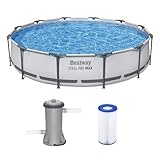
Bestway Steel Pro MAX 12' x 30" Above Ground Swimming Pool Set with Pump | Check Price On Amazon |
|
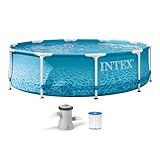
INTEX Beachside Metal Frame 10ft x 30in Round Pool Set w/Pump | Check Price On Amazon |

|
H2OGO! Kids Splash-in-Shade 8-Foot Round Steel Frame Above Ground Pool with Water Mister and Canopy Sunshade, Green Tropical Leaf Print | Check Price On Amazon |
By the Numbers
Pool Insurance Cost Increases — What the Research Shows
Sources: Insurance Information Institute, National Association of Insurance Commissioners, HomeAdvisor
What Makes a Pool Increase Homeowners Insurance Rates?
A pool raises your insurance premium because it introduces an attractive nuisance under liability law. Your insurer now faces a higher probability of paying a claim for injury or drowning on your property.
This happens because pool ownership creates strict liability exposure that did not exist before installation. The CDC reports approximately 3,960 fatal unintentional drownings annually in the United States, with residential pools accounting for a significant share of child drowning incidents.

- Intelligent Navigation with Full Coverage: Equipped with 11 high-precision sensors and enhanced dual-path algorithms. The optimized WavePath cleaning pattern ensures systematic coverage with minimal overlap, while adaptive navigation analyzes pool layout in real time to eliminate missed spots
- Dual Filtration for Crystal-Clear Water: Advanced dual-layer filtration system features a replaceable 3-micron ultra-fine filter paired with a 180-micron standard filter. Effectively captures fine dust, sand, leaves, and debris for visibly cleaner and healthier pool water
- Comprehensive Pool Cleaning: Engineered to clean the pool floor, walls, waterline, and shallow areas (above 12 inches). The Caterpillar Treads system enhances mobility and climbing ability, ensuring thorough coverage across all pool zones
- Reliable Performance with 2-Year Warranty: Trusted by over 500,000 pool owners worldwide, this robotic pool cleaner delivers consistent, high-performance results. Built for durability and backed by a 2-year warranty and responsive customer support for worry-free ownership
A standard homeowners policy includes $100,000 in liability coverage. Most insurers require at least $300,000 to $500,000 when you add a pool. That liability coverage increase accounts for roughly 60 to 70 percent of your premium increase.
The condition that triggers the largest cost jump is the presence of a diving board or slide. When these features exist, insurance companies classify the pool as high-risk. If no diving equipment is present and you have a locked safety fence meeting local code, the premium increase stays at the low end of the range, typically $50 to $150 per year for above-ground pools and $150 to $300 for inground pools.
Inground Pool vs Above-Ground Pool: Insurance Cost Differences
Inground pools raise insurance premiums more than above-ground pools. An inground pool typically adds $150 to $300 per year to your premium. An above-ground pool adds $50 to $150 per year.
The cost difference exists because inground pools are permanent structures that insurers view as higher risk. An above-ground pool can be removed. An inground pool is a permanent attractive nuisance that stays with the property forever.
Above-ground pools with locking ladders and decks that can be raised to prevent unsupervised access receive the lowest rate increases. Some insurers treat a properly secured above-ground pool the same as a large trampoline for liability rating purposes, adding only $30 to $75 per year.
Inground pools with automatic safety covers that meet ASTM F1346 standards can reduce the premium increase by $50 to $100 per year. The cover must be powered, must support the weight of an adult and child per ASTM specifications, and must be documented with your insurer at policy inception or renewal.
If the inground pool has a diving board or slide, the premium increase jumps to $300 to $500 or more annually, regardless of safety fencing. Some insurers, including major carriers like State Farm and Allstate, may decline to write the policy at all, forcing you into a surplus lines or high-risk carrier at significantly higher cost.
Cost Comparison
Inground vs Above-Ground Pool Insurance Cost Comparison
Annual premium increase estimates for a standard homeowners policy. Actual costs vary by state, insurer, and safety features.
| Pool Type and Features | Annual Premium Increase | Liability Requirement | Insurer Willingness |
|---|---|---|---|
| Above-ground, locking ladder, no deck | $30 – $75 | $100K – $300K | Most insurers accept |
| Above-ground, permanent deck, no diving | $75 – $150 | $300K | Most insurers accept |
| Inground, safety fence, no diving | $150 – $300 | $300K – $500K | Most insurers accept |
| Inground with diving board or slide | $300 – $500+ | $500K – $1M | Many decline; surplus lines may be required |
| Inground with diving board, no safety fence | $500+ or declined | $1M+ | Most standard carriers decline |
Estimates based on Insurance Information Institute data and agent surveys. Your actual cost depends on your specific insurer, location, claims history, and safety features.
How Much Does Liability Coverage Need to Increase for a Pool?
Your liability coverage must increase from the standard $100,000 to at least $300,000 when you install a pool. Many insurers require $500,000. This coverage protects you if a guest is injured or drowns in your pool and you are found legally responsible.
The Insurance Information Institute recommends $300,000 to $500,000 in liability coverage for pool owners. This range covers the average pool injury claim, which commonly exceeds $100,000 when medical costs, rehabilitation, and legal fees are factored in. A drowning claim can exceed $1 million.
If your net worth exceeds $500,000, you need a personal umbrella policy adding $1 million to $5 million in coverage above your homeowners liability limit. An umbrella policy for a pool owner costs $200 to $500 per year for the first $1 million in coverage. This umbrella premium is separate from and in addition to your homeowners policy premium increase.
Failure to carry adequate liability coverage leaves your personal assets exposed. That exposure includes your home equity, savings accounts, investment accounts, and future wage garnishment. A single pool drowning judgment can exceed your policy limits by hundreds of thousands of dollars.
Safety Features That Reduce Your Pool Insurance Premium
Specific safety features directly reduce the premium increase your insurer applies for a pool. A four-sided isolation fence at least 4 feet tall with a self-latching gate reduces the premium increase by approximately $50 to $100 per year. An ASTM F1346-compliant automatic pool cover reduces it by a similar amount.
This reduction happens because these features create a physical barrier between the pool and unsupervised access. Insurance underwriters use ISO (Insurance Services Office) rating factors that assign lower risk scores to properties with documented, code-compliant safety barriers. A property with both a fence and a cover receives the largest available credit.
The condition for the credit to apply is documentation. You must provide your insurer with photos of the installed fence or cover. For a pool cover, you must also provide the manufacturer specifications showing ASTM F1346 compliance. If your fence does not meet the 4-foot minimum height or the gate does not self-latch, the credit does not apply.
Additional safety features that reduce premiums include a pool alarm that meets ASTM F2208 standards, which triggers when a child or pet enters the water. A gate alarm on the fence adds a smaller but still meaningful credit. Document all safety features at the time of policy issuance or renewal, because retroactive credits are rarely granted.
For most pool owners, the combination of a code-compliant fence and an automatic safety cover provides the best balance of safety and premium reduction. The cost of installing these features, typically $4,000 to $12,000 combined, is partially offset by insurance savings over the life of the pool and fully justified by the risk reduction.
Buying Guide
Before You Insure Your Pool — Checklist
Check off each point before contacting your insurance agent.
How a Diving Board or Slide Changes Your Insurance Costs
A diving board or slide reclassifies your pool from standard risk to high risk. Your annual premium increase jumps from $150 to $300 to the $300 to $500 range or higher. Many standard insurance carriers will decline to write the policy entirely.
This reclassification occurs because diving boards are the single largest source of catastrophic pool injury claims. Spinal cord injuries from diving accidents generate medical costs that routinely exceed $1 million in the first year alone, according to the National Spinal Cord Injury Statistical Center. Lifetime costs for a quadriplegic injury exceed $5 million.
The condition that determines whether you can get coverage at all is the insurer’s specific underwriting guidelines. Some carriers, including USAA and Amica, categorically exclude properties with diving boards. Others will write the policy but add a specific diving board exclusion, meaning injuries related to diving are not covered.
If you have a diving board and cannot remove it, contact an independent insurance agent who works with surplus lines carriers. These specialized insurers accept higher-risk properties at higher premiums, typically $500 to $2,000 more per year than standard carriers for the same liability limits.
Umbrella Insurance for Pool Owners: Cost and Requirements
A personal umbrella policy provides liability coverage above your homeowners policy limits. For pool owners, a $1 million umbrella policy costs $200 to $500 per year. This coverage kicks in after your underlying homeowners liability limit is exhausted by a claim.
This additional coverage matters because pool injury claims frequently exceed standard homeowners liability limits. A child drowning claim with a wrongful death lawsuit can result in a judgment of $2 million to $5 million. Without an umbrella policy, you pay the amount above your homeowners limit from your personal assets.
Most insurers require you to carry $300,000 or $500,000 in underlying homeowners liability coverage before they will issue an umbrella policy. You must also typically have your auto insurance with the same carrier. The umbrella policy requires no additional safety features beyond what your homeowners policy requires, but the underwriting process may still review the pool’s safety profile.
For pool owners with a net worth above $500,000, an umbrella policy is not optional. The annual $200 to $500 cost protects assets that would otherwise be exposed to a single pool accident judgment. Increase umbrella coverage to match your total net worth, including home equity, retirement accounts, and taxable investments.
Does Homeowners Insurance Cover the Pool Itself?
Homeowners insurance covers your pool structure under the other structures coverage (Coverage B) of your policy. This coverage typically equals 10 percent of your dwelling coverage. For a $400,000 home, that is $40,000 for other structures, including your pool.
This coverage applies if your pool is damaged by a covered peril. Covered perils include fire, lightning, windstorm, hail, explosion, vandalism, and falling objects. An inground pool is typically covered at replacement cost. An above-ground pool may be covered at actual cash value, meaning depreciation is subtracted from the claim payment.
The condition that determines coverage is the cause of the damage. If a tree falls on your pool during a windstorm, that is a covered peril. If your pool develops a structural crack due to ground settling or freezing temperatures, that is typically excluded as a maintenance or earth movement issue. Pool equipment like pumps, heaters, and filters is covered under personal property coverage (Coverage C), subject to your policy’s deductible.
For a full breakdown of pool installation costs and what your insurance may reimburse after damage, review our complete pool installation guide covering every stage from excavation to final finish. An inground pool that cost $80,000, for instance, would be underinsured by $40,000 under the standard 10% Coverage B limit if your dwelling coverage is $400,000, so you may need to increase that limit or add a scheduled endorsement.
State-by-State Variation in Pool Insurance Costs
Pool insurance costs vary significantly by state. Florida, California, Texas, and Arizona have the highest pool insurance premiums because they have the highest number of residential pools and the longest swim seasons. States with shorter swim seasons, like Minnesota or Massachusetts, have lower pool insurance costs.
Florida pool owners pay the highest premiums in the country. The year-round swim season, high number of pools, and the state’s challenging overall insurance market combine to produce pool-related premium increases of $300 to $600 per year. California pool owners see increases of $200 to $400 per year, driven by high liability claim costs and legal environment factors.
Your state’s specific insurance regulations also affect costs. Some states require insurers to offer specific pool liability coverage. Others allow insurers to exclude pool coverage entirely. An independent insurance agent in your state can tell you which carriers write pool coverage and what each requires for safety features and liability minimums.
How to Tell Your Insurance Company About a New Pool
Notify your insurance company before construction begins, not after the pool is filled. Call your agent and state that you are installing a pool. Provide the type (inground or above-ground), dimensions, features (diving board, slide), and planned safety features (fence, cover, alarms).
Your agent will update your policy with the pool as a new risk exposure. The underwriting department may request photos of completed safety features before binding coverage. If you fail to notify your insurer and a claim occurs, the carrier may deny the claim for material misrepresentation, leaving you personally responsible for all damages.
Ask your agent to confirm in writing that your policy covers pool-related liability with no exclusions. If the pool will include a diving board, ask specifically whether diving board injuries are covered. Get the answer in writing. Verbal assurances from an agent do not bind the insurance company; only the written policy language does.
For a complete breakdown of all pool ownership costs beyond insurance, see our swimming pool cost guide covering installation, maintenance, chemicals, utilities, and long-term ownership expenses.
Myth vs Fact
Pool Insurance — Common Myths Debunked
Separating fact from fiction on pool insurance misconceptions
✗ Myth
Your homeowners policy automatically covers your pool at full value without any changes.
✓ Fact
Your pool is covered under other structures coverage (Coverage B) at 10 percent of your dwelling limit. A $400,000 home provides $40,000 for the pool. An inground pool that cost $80,000 would be underinsured by $40,000. You must increase Coverage B or add a scheduled endorsement to cover the full replacement cost.
✗ Myth
A fence around your yard is sufficient for insurance purposes.
✓ Fact
Insurers require a four-sided isolation fence that separates the pool from the house and yard. A perimeter fence around the property does not meet this requirement because it does not prevent a child from exiting the house directly into the pool area. The fence must be at least 4 feet tall with a self-latching, self-closing gate that opens outward.
✗ Myth
An above-ground pool does not affect your insurance at all.
✓ Fact
Above-ground pools still increase liability risk and premium costs, typically by $50 to $150 annually. Most insurers still require notification and may require a locking ladder or removable deck stairs. Failure to notify your insurer of an above-ground pool carries the same risk of claim denial as failing to notify for an inground pool.
✗ Myth
If your insurer does not specifically ask about a pool, you do not need to tell them.
✓ Fact
Your insurance policy imposes a duty to inform the insurer of material changes in risk. A pool is a material change. Failure to disclose it constitutes misrepresentation and is grounds for claim denial and policy rescission. You must notify your insurer regardless of whether they ask.
✗ Myth
All insurance companies charge roughly the same amount for pool coverage.
✓ Fact
Pool underwriting guidelines vary dramatically between carriers. Some insurers charge $50 per year more for an above-ground pool. Others charge $300 and require an umbrella policy. One company may exclude diving boards entirely while another includes them at a higher premium. Shopping with at least three carriers can save $200 to $500 per year.
What Happens If You Do Not Tell Your Insurer About a Pool?
If you fail to disclose a pool and a claim occurs, your insurer will investigate. The claims adjuster will discover the pool during the site inspection, which is standard procedure for any liability claim. The insurer will then deny the claim for material misrepresentation.
Material misrepresentation means you failed to disclose information that would have affected the insurer’s decision to write the policy or the premium charged. A pool is the definition of material information. The denial applies even if the pool did not cause the claim. A fire claim on a home with an undisclosed pool can be denied.
Policy rescission is a more severe consequence than claim denial. Rescission means the insurer voids the policy back to its inception date as if it never existed. You lose all coverage retroactively. You also become uninsurable with most standard carriers for three to five years due to the misrepresentation on your record.
Pool Insurance for Renters and Tenants
If you rent a home with a pool, your landlord’s insurance covers the pool structure. It does not cover your liability for pool use. You need renters insurance with at least $300,000 in personal liability coverage if you use the pool.
If you install a portable above-ground pool at a rental property, you must notify your landlord and your renters insurance company. Most lease agreements prohibit installing pools without written landlord permission. Your renters policy may exclude liability for watercraft and pools unless you add a specific endorsement.
How Pool Construction Affects Insurance During the Build Phase
During pool construction, your contractor’s insurance covers injuries to workers and damage to the partially built pool. Your homeowners insurance covers liability for injuries to non-workers on your property. The construction site itself is an attractive nuisance, and your liability exposure begins the day excavation starts.
Notify your insurer before construction begins. Request that your policy be endorsed to cover the construction phase. Confirm that your contractor carries general liability insurance with limits of at least $1 million and workers compensation insurance as required by your state. Get certificates of insurance naming you as an additional insured before any work begins.
For details on the full construction process from permits through final inspection, read our complete pool installation guide covering every phase of the build with timelines and cost breakdowns.
Does a Saltwater Pool Cost Less to Insure?
A saltwater pool does not cost less to insure than a traditional chlorine pool. Insurance underwriting does not distinguish between pool sanitation methods. The liability risk of drowning or injury is identical regardless of whether the water contains salt-generated chlorine or manually added chlorine.
The pool type that matters to insurers is inground versus above-ground, and whether diving features are present. A saltwater inground pool with a diving board costs the same to insure as a chlorine inground pool with a diving board. The salt chlorine generator equipment may add a small amount to your personal property coverage needs, as it is a piece of pool equipment covered under Coverage C.
For salt system selection and installation details, see our guide to the best salt chlorine generators sized for every pool volume from small above-ground to large inground.
Pool Cover Impact on Insurance Premiums
An automatic pool cover that meets ASTM F1346 standards reduces your insurance premium increase by $50 to $150 per year. The cover must be powered, must support at least 485 pounds per ASTM specifications (the combined weight of two adults and one child), and must be documented with your insurer.
A manual solar cover or winter cover provides no insurance discount. These covers are not safety devices. They do not prevent drowning because a child or pet that steps onto a floating cover can become trapped underneath it. Only ASTM F1346-compliant safety covers qualify for the premium reduction.
For the full comparison of cover types and their safety ratings, see our guide to the best pool covers selected by type, pool size, and safety compliance rating.
Does an Above-Ground Pool Need a Fence for Insurance?
Most insurers require a barrier for above-ground pools. If the pool wall is at least 4 feet tall and the ladder is removable or lockable, the pool wall itself may qualify as the barrier. The ladder or steps must be removed or locked in an upright position when the pool is not in use to prevent unsupervised access.
If your above-ground pool has a deck that provides access at the top rail height, the deck must have its own barrier. The pool wall no longer serves as an effective barrier if the deck eliminates the climb. A gate at the top of the deck stairs with a self-latching mechanism is the minimum requirement for most insurers.
For a complete comparison of above-ground pool options and what each requires for insurance-compliant safety, see our guide to the best above-ground pools with detailed safety and installation requirements.
How Much Does Homeowners Insurance Go Up with an Inground Pool?
Your homeowners insurance goes up 10 to 20 percent when you add an inground pool without diving features and with proper safety fencing. On a $1,500 annual homeowners premium, that equates to $150 to $300 per year. The exact increase depends on your state, insurer, liability coverage limits, and safety features.
If the pool has a diving board or slide, the increase rises to 20 to 35 percent or more, or coverage is declined entirely. A $1,500 annual premium becomes $1,800 to $2,025 per year. Adding an umbrella policy for $1 million in additional coverage adds $200 to $500 per year on top of the homeowners increase.
Get quotes from at least three insurers before building. Pool underwriting guidelines differ more than standard home underwriting. One company may charge $150 per year for your pool configuration while another charges $400. The savings from shopping are permanent and compound annually. For a complete picture of your total pool ownership costs, including insurance, use our pool ownership cost calculator.
Can an Insurance Company Drop You for Having a Pool?
An insurance company can decline to renew your policy if you install a pool that violates their underwriting guidelines. This is not the same as cancellation mid-term. Non-renewal means the insurer chooses not to offer you a new policy when your current term expires, and they must provide written notice, typically 30 to 60 days before expiration.
Installation of a diving board triggers non-renewal from carriers that do not write diving board risks. The same applies to pools without any safety barrier. If your current insurer sends a non-renewal notice, you must find a new carrier before your policy expires. Work with an independent agent who has access to multiple carriers, including surplus lines insurers if needed.
What Is the Difference Between an Umbrella Policy and Increased Liability on Homeowners Insurance?
Increased liability on your homeowners policy raises the per-claim limit on your primary policy from $100,000 to $300,000 or $500,000. An umbrella policy provides additional liability coverage that sits above your homeowners and auto policy limits. It pays after your underlying policy limits are exhausted.
The homeowners liability increase covers the first $300,000 to $500,000 of a pool claim. The umbrella covers the next $1 million to $5 million. A $2 million pool drowning judgment would be paid as $500,000 from homeowners liability and $1.5 million from the umbrella policy. Without the umbrella, you would owe $1.5 million from personal assets.
The condition for umbrella coverage to apply is that you carry the required underlying limits on your homeowners policy. Most umbrella carriers require $300,000 or $500,000 in underlying homeowners liability. If you only carry $100,000, the umbrella does not apply, and you have a coverage gap equal to the difference between $100,000 and your umbrella attachment point.
Do Pool Alarms Reduce Insurance Premiums?
Pool alarms that meet ASTM F2208 standards reduce insurance premiums by $25 to $75 per year when combined with a safety fence. A pool alarm alone without a fence provides a smaller credit, typically $10 to $25 per year, because it is not a physical barrier.
Surface wave alarms detect water displacement when someone enters the pool. Sub-surface alarms detect pressure changes underwater. Both types must meet ASTM F2208 to qualify for the insurance credit. A standard door alarm on the house exit leading to the pool area provides a separate, smaller credit that stacks with the pool alarm credit.
Why Does a Pool Cost More to Insure in Florida?
Florida pool insurance costs more because Florida has a year-round swim season, the highest number of residential pools per capita of any state, and a litigation environment that produces higher liability claim costs. The insurance market in Florida is already the most expensive in the country for homeowners coverage, and a pool adds proportionally more than in other states.
The Florida Office of Insurance Regulation reports that pool-related liability claims in the state settle for an average of 30 to 50 percent more than the national average. This is driven by higher medical costs, larger legal settlements, and the sheer volume of pool-related incidents in a state where pools are in use twelve months per year.
Do I Need a Survey or Inspection Before My Insurer Covers a Pool?
Most insurers require a photo inspection of the pool and safety features before binding coverage. This is typically a virtual inspection where you submit photos of the fence, gate, cover, and alarms. Some carriers send a field inspector to verify compliance in person, particularly for high-value homes or pools with diving features.
The inspection verifies that the safety features you disclosed actually exist and meet code requirements. If the inspection reveals missing or non-compliant safety features, the insurer may cancel the policy or add a surcharge. Submit complete documentation proactively to avoid post-binding surprise premium increases.
Can I Get Pool Insurance If My Pool Does Not Meet Current Code?
Older pools that do not meet current safety codes can still be insured, but with limitations. Most insurers will grandfather existing pools but require you to add specific safety features as a condition of coverage. The most common requirement is adding a compliant fence and gate if none exists, or upgrading an existing fence to meet the 4-foot minimum height.
If your pool cannot be retrofitted with a fence due to property constraints, some insurers will accept an automatic safety cover as an alternative barrier. Others will require both. If neither a fence nor a cover is feasible, your insurance options narrow to surplus lines carriers at significantly higher premiums.
| Photo | Best Above-Ground Pools | Price |
|---|---|---|
|
|
Bestway Steel Pro MAX 12' x 30" Above Ground Swimming Pool Set with Pump | Check Price On Amazon |
|
|
INTEX Beachside Metal Frame 10ft x 30in Round Pool Set w/Pump | Check Price On Amazon |
|
|
H2OGO! Kids Splash-in-Shade 8-Foot Round Steel Frame Above Ground Pool with Water Mister and Canopy Sunshade, Green Tropical Leaf Print | Check Price On Amazon |