
Most pool owners test their water once a week and hope nothing went wrong in between. A smart pool monitor tests your water every hour and sends the data to your phone before algae even has a chance to start.
This guide covers every major wireless pool water tester on the market right now: floating monitors like the Sutro and WaterGuru SENSE, handheld digital testers like the LaMotte ColorQ and PoolLab, and subscription-based systems like pHin. You will learn what each device actually measures, what the ongoing costs look like, and which one matches your pool type and maintenance style.
| Photo | Best Above-Ground Pools | Price |
|---|---|---|
|
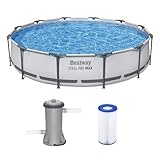
Bestway Steel Pro MAX 12' x 30" Above Ground Swimming Pool Set with Pump | Check Price On Amazon |
|
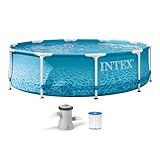
INTEX Beachside Metal Frame 10ft x 30in Round Pool Set w/Pump | Check Price On Amazon |

|
H2OGO! Kids Splash-in-Shade 8-Foot Round Steel Frame Above Ground Pool with Water Mister and Canopy Sunshade, Green Tropical Leaf Print | Check Price On Amazon |
By the Numbers
Smart Pool Monitoring — What the Research Shows
Sources: CDC Healthy Swimming Survey, Pool & Hot Tub Alliance, manufacturer published data
What Is a Smart Pool Monitor and How Does It Work?
A smart pool monitor is a wireless device that sits in your pool water and continuously measures chemical levels, sending real-time readings to a smartphone app. Unlike manual test kits that give you a single snapshot once or twice a week, a smart monitor checks your water chemistry between 12 and 24 times per day.
This matters because pool chemistry drifts constantly. A pH reading of 7.4 on Saturday can climb to 8.0 by Tuesday if alkalinity is off, rendering your chlorine far less effective without you ever knowing it.

- Intelligent Navigation with Full Coverage: Equipped with 11 high-precision sensors and enhanced dual-path algorithms. The optimized WavePath cleaning pattern ensures systematic coverage with minimal overlap, while adaptive navigation analyzes pool layout in real time to eliminate missed spots
- Dual Filtration for Crystal-Clear Water: Advanced dual-layer filtration system features a replaceable 3-micron ultra-fine filter paired with a 180-micron standard filter. Effectively captures fine dust, sand, leaves, and debris for visibly cleaner and healthier pool water
- Comprehensive Pool Cleaning: Engineered to clean the pool floor, walls, waterline, and shallow areas (above 12 inches). The Caterpillar Treads system enhances mobility and climbing ability, ensuring thorough coverage across all pool zones
- Reliable Performance with 2-Year Warranty: Trusted by over 500,000 pool owners worldwide, this robotic pool cleaner delivers consistent, high-performance results. Built for durability and backed by a 2-year warranty and responsive customer support for worry-free ownership
Most smart monitors use electrochemical sensors or optical sensors to measure free chlorine, pH, and temperature. Some add total alkalinity, cyanuric acid, and salt readings. The device communicates with your home WiFi network or a dedicated hub that plugs into an outlet near the pool.
The core mechanism works through potentiometric measurement for pH and amperometric measurement for free chlorine. A small electrical current passes between electrodes immersed in the pool water. The voltage difference between the electrodes changes in direct proportion to the concentration of hydrogen ions (pH) or the oxidizing potential of free chlorine in the water. This only occurs when the sensor membranes remain clean and calibrated, typically requiring replacement cartridges every 30 to 60 days depending on bather load and water temperature.
If the sensor membrane fouls with oils, sunscreen residue, or calcium scale, the readings drift low and the device recommends adding chemicals your pool does not actually need. Fix it by cleaning the sensor with a soft cloth and distilled water every two weeks during peak season.
Why a Wireless Water Tester Changes How You Maintain Your Pool
A wireless water tester catches chemistry problems before they become visible. Algae blooms, cloudy water, and chlorine lock all start at the molecular level days before you see any sign of trouble.
Manual testing misses these early warning windows because you only test once or twice per week. A floating monitor detects the pH drift, the chlorine demand spike, or the temperature shift that triggers algae growth as it happens.
This shifts pool maintenance from reactive to predictive. Instead of adding shock after the water turns green, you add a small dose of oxidizer (using a shock calculator to determine the exact amount) or adjust pH when the app alerts you that a trend is forming. The pool stays clear and you use fewer chemicals overall.
According to the Pool & Hot Tub Alliance (PHTA) service technician manual, pools that receive chemical adjustments within 24 hours of a chemistry drift consume 30-50% less sanitizer annually compared to pools adjusted only once per week. A smart monitor makes that 24-hour response window possible without hiring a service.
For pools with high bather load or pools in hot climates where water temperatures stay above 85°F, continuous monitoring is not a luxury. Chlorine demand doubles for every 10°F rise above 80°F. A manual test taken Sunday morning tells you nothing about what happened Saturday afternoon when six kids swam for three hours.
For most residential pool owners with a 15,000-25,000 gallon pool and average bather load, a smart monitor pays for itself in chemical savings within 12 to 18 months.
Best Wireless Pool Water Testers: Top Picks for Every Budget
The smart pool monitor market splits into three tiers: subscription-based floating monitors with full app guidance, one-time-purchase handheld digital photometers, and hybrid systems that combine floating sensors with manual test strip verification.
Each tier serves a different type of pool owner. Your choice depends on whether you want hands-off automation, precise digital readings without a subscription, or a middle ground that costs less upfront.
Price Comparison
Price Comparison — Top Smart Pool Monitors
Device cost plus first-year operating cost, sorted lowest to highest. Prices verified at time of publication.
$30 + strips
$99 + reagents
$130 + reagents
$265 + $99/yr
$199 + $89/yr
$299 + $99/yr
$325 + $149/yr
First-year operating cost includes replacement cartridges or reagents at recommended intervals. Subscription fees shown at annual rate where applicable.
Sutro Smart Pool Monitor: Best Overall for Hands-Off Monitoring
The Sutro Smart Monitor is a floating puck that measures free chlorine, pH, alkalinity, and water temperature every hour. It sends readings to the Sutro app through a dedicated WiFi hub that plugs in near your pool equipment.
The device uses replaceable sensor cartridges that last approximately 30 days. Each cartridge contains the electrochemical cells, calibration data, and reagents sealed inside a single disposable unit. When the app alerts you, you snap the old cartridge out and snap a new one in.
Sutro costs $199 for the monitor and hub kit. Replacement cartridges run $89 for a 3-pack covering roughly 90 days of monitoring during swim season. The app provides specific chemical dosing instructions based on your pool volume, which you set during setup. For accurate dosing, you need to calculate your exact pool volume in gallons before configuring the app.
Key Specifications: Measures: free chlorine (0-10 ppm), pH (6.5-8.5), total alkalinity (0-240 ppm), temperature. Battery: rechargeable, 7-10 day runtime. Connectivity: WiFi hub (included). App: iOS and Android. Cartridge life: 30 days. Pool compatibility: all pool types including saltwater.
WaterGuru SENSE S2: Best for Accurate Free Chlorine and pH
WaterGuru SENSE S2 takes a different design approach. Instead of floating freely, it sits inside your skimmer basket and samples water as it flows through the skimmer on its way to the pump. This placement means it measures water that is actively circulating, which the manufacturer claims improves reading accuracy.
The S2 measures free chlorine and pH using a disposable test cassette that contains both sensors and reagents. Each cassette lasts about 6 weeks depending on water temperature and bather load. A WiFi bridge connects the device to your home network.
WaterGuru also sells a separate CYA (cyanuric acid) test add-on. This is a manual test strip that you photograph with the app. The app reads the strip and combines the CYA reading with the continuous free chlorine data to calculate the true sanitizing power of your chlorine, known as the Langelier Saturation Index or the simpler WaterGuru Balance Score. This calculation matters because if CYA climbs too high, your chlorine test can read normal while the water has zero sanitizing power.
Key Specifications: Measures: free chlorine (0.5-10 ppm), pH (6.8-8.2), flow (on/off indicator), temperature. Optional: CYA via manual test strip plus app. Cassette life: 6 weeks. Power: 4 AA batteries (3-6 month life). Connectivity: WiFi bridge. Pool compatibility: inground skimmer systems only.
pHin Smart Water Monitor: Best for Chemical Delivery Integration
pHin is the only smart monitor that integrates directly with chemical dosing. The floating monitor measures free chlorine, pH, and temperature continuously. The app then tells you exactly how much of pHin-branded chemicals to add, broken down by pre-measured pods that treat either 500 or 1,000 gallons each.
This pod system eliminates measuring. You toss in the number of pods the app specifies based on your pool volume and the current readings. The trade-off is lock-in to pHin’s chemical line, which costs more per pound than generic pool chemicals. pHin also offers a separate chemical auto-dosing system called pHin FLO for an additional $399 plus installation.
If you already use an automatic chemical dosing system or are considering one, pHin provides the closest thing to a fully integrated monitoring plus dosing ecosystem without moving to a full commercial controller.
Key Specifications: Measures: free chlorine (0-10 ppm), pH (6.5-8.5), temperature. Monitor cost: $299 (includes first year of service). Subscription: $99/year after first year. Pod cost: $20-30 per pod pack treating 10,000 gallons. Connectivity: WiFi bridge included. Battery: rechargeable. Chemical lock-in: yes, pHin-branded pods only.
LaMotte ColorQ 2x Pro 7: Best Handheld Digital Tester
The LaMotte ColorQ 2x Pro 7 is not a smart monitor in the floating WiFi sense. It is a handheld digital photometer that replaces your liquid drop test kit with optical sensors and liquid reagents. You fill a test tube with pool water, add the appropriate reagent tablet or liquid, and insert it into the meter. The device shines light through the sample and calculates the chemical concentration based on color intensity.
This process removes the color-matching guesswork from manual testing. Instead of comparing a shade of pink against a gradient chart for chlorine, you get a digital readout accurate to 0.1 ppm. The ColorQ measures free chlorine, total chlorine, pH, alkalinity, calcium hardness, and cyanuric acid. This is the full set of parameters needed to calculate the Langelier Saturation Index for proper water balance—use our pool LSI calculator to get an instant water balance score.
Testing everything takes about 5 minutes. You can learn the full step-by-step balancing process in our guide on how to balance pool chemicals properly. The ColorQ does not have WiFi, an app, or continuous monitoring. You test manually just like with a drop kit, but the reading is digital rather than visual.
Key Specifications: Measures: free chlorine (0-10 ppm), total chlorine (0-10 ppm), pH (6.5-8.5), total alkalinity (0-300 ppm), calcium hardness (0-500 ppm), cyanuric acid (0-150 ppm). Accuracy: ±0.05 ppm for chlorine, ±0.1 for pH. Power: 3 AAA batteries. Reagent cost: approximately $0.40 per test across all parameters. No subscription required.
PoolLab 1.0: Best Budget Digital Photometer
The PoolLab 1.0 measures free chlorine, total chlorine, pH, alkalinity, cyanuric acid, and active oxygen (for pools using non-chlorine sanitizers). It uses the same optical photometer technology as the LaMotte ColorQ at roughly 25% lower cost.
The PoolLab connects to a smartphone app via Bluetooth. The app stores your test history, calculates LSI balance, and provides dosing recommendations based on your pool volume. The tablet reagents are individually foil-sealed and cost approximately $0.30 per test. If you need to adjust alkalinity with baking soda (use our baking soda calculator to find the exact dose) or lower pH with muriatic acid, the app calculates the exact dose.
Key Specifications: Measures: free chlorine, total chlorine, pH, total alkalinity, cyanuric acid, active oxygen. Bluetooth: yes, app-enabled. Accuracy: comparable to LaMotte ColorQ. Reagent cost: approximately $0.30 per test. No subscription. Power: 3 AAA batteries.
Floating Monitor vs Handheld Digital Tester: Which Type Is Right for Your Pool?
The choice between a floating smart monitor and a handheld digital tester comes down to one thing: do you want continuous automated testing, or do you want faster and more accurate manual testing?
A floating monitor like Sutro or WaterGuru checks your water 24 times a day without you touching it. A handheld photometer like LaMotte ColorQ or PoolLab gives you a lab-grade reading in 5 minutes but only when you choose to test. For a deeper understanding of how chemical levels interact, understanding what causes pool staining helps connect chemistry readings to visible problems.
This happens because floating monitors use electrochemical sensors that measure ion activity continuously but drift over time and require replacement cartridges. Handheld photometers use reagent-based optical measurement that is inherently more accurate per test but requires manual effort and consumable reagents on every use. If the sensor in a floating monitor fouls or the cartridge nears end of life, the chlorine reading can be off by 2-3 ppm without warning. Handheld photometers self-calibrate on each test because they compare the reacted sample against a blank water reference. Fix a drifting floating monitor by cross-checking it against a drop test kit or handheld photometer at least once every two weeks.
Use the table below to match your maintenance style to the right device type.
Product Comparison
Floating Smart Monitor vs Handheld Digital Tester — Side by Side
Detailed feature comparison to help you choose the right option for your pool.
| Feature | Floating Monitor (Sutro, WaterGuru, pHin) | Handheld Digital (ColorQ, PoolLab) |
|---|---|---|
| Test frequency | 12-24 times per day automatically | Manual, whenever you choose |
| Upfront cost | $199 – $325 | $99 – $130 |
| Annual operating cost | $89 – $199 (cartridges + subscription) | $20 – $50 (reagent refills) |
| Parameters measured | 2-3 continuously (FC, pH, temp) | 5-7 per test session |
| CYA measurement | No (except WaterGuru add-on strip) | Yes, digital readout |
| Best for | Hands-off owners who want alerts | DIY owners who want lab accuracy |
| Our verdict | Pick if you travel or hate testing | Pick if you want complete chemistry control |
Many experienced pool owners use both: a floating monitor for daily trending plus a handheld photometer for weekly verification and full parameter testing.
For most pool owners who want less daily effort and are comfortable trusting the monitor’s recommendations, a floating monitor is the right choice. For owners who want complete chemical knowledge and do not mind 5 minutes of manual testing twice a week, a handheld digital photometer delivers more parameters at lower long-term cost.
How to Choose a Smart Pool Monitor: Complete Buying Guide
Choosing a smart pool monitor means matching the device capabilities to your pool type, your existing maintenance routine, and how much you want to spend each year on cartridges and subscriptions.
Check Your Pool Compatibility: Skimmer Type and Circulation Pattern
WaterGuru SENSE must sit inside a skimmer basket. If your pool uses an overflow gutter system or you have a skimmer that runs dry frequently due to water level fluctuations, WaterGuru will not work reliably. Sutro and pHin float freely and work in any pool with at least 6 inches of water depth.
Above-ground pools with limited skimmer access or intex-style pools with small skimmer openings generally work better with floating monitors. For inground pools with standard skimmers, WaterGuru’s skimmer placement gives it access to the most representative water sample because it tests water right before it enters the pump.
Decide Which Parameters You Actually Need Measured
Every smart monitor measures free chlorine and pH. Those are the two parameters that change fastest and cause the most problems. The question is whether you also need alkalinity, cyanuric acid, calcium hardness, or salt readings from the same device.
Alkalinity drifts slowly over weeks, not hours. CYA changes only when you add it or when you drain and refill. A floating monitor that measures alkalinity continuously (like Sutro) gives you a nice trend line but does not change your daily decisions. A handheld photometer that measures all seven parameters once a week gives you the complete picture for balancing without paying for continuous sensors on slowly-changing values.
Calculate True Annual Cost, Not Just the Device Price
The device price is the smallest part of the total cost. Cartridges, cassettes, and subscription fees dominate over time. A Sutro at $199 plus $89 for a 3-pack of cartridges covering roughly 3 months means $356 in the first year and roughly $356 in every subsequent year (four 3-packs per year during a typical 6-month swim season in warmer climates).
A LaMotte ColorQ at $130 with reagent refills costing $40 per year means $170 in the first year and $40 each year after. Over five years, the ColorQ costs $330 total and the Sutro costs roughly $1,620. Continuous monitoring is valuable, but the value must be weighed against the cumulative cost.
Evaluate App Quality and Chemical Dosing Guidance
The app is where you actually use the data. A monitor with a bad app is just an expensive floating thermometer. Look for apps that calculate dosing amounts based on your pool volume and the specific chemical you use, not just apps that tell you the levels are off.
Sutro, pHin, and WaterGuru all provide dosing guidance in their apps. PoolLab provides dosing guidance through the free PoolLab app connected via Bluetooth. The LaMotte ColorQ does not have an app. You read the numbers off the screen and calculate doses manually or use a separate pool calculator.
Consider Cold-Weather and Off-Season Behavior
Most floating monitors are rated for water temperatures above 50°F. Below that, the electrochemical sensors become sluggish and readings lose accuracy. If you close your pool for winter, you remove the monitor entirely. If you keep your pool open year-round in a mild climate but water temperatures dip into the 40s, a floating monitor will not give reliable data during the coldest months.
A handheld photometer works at any water temperature because you bring the sample indoors or test at the equipment pad before the water cools significantly. The reagent reaction time may increase slightly in cold water, but accuracy remains acceptable down to about 40°F according to LaMotte technical documentation.
Buying Guide
Before You Buy — Smart Pool Monitor Checklist
Check off each point before making your decision.
How Accurate Are Smart Pool Monitors Compared to Drop Test Kits?
Smart pool monitors are accurate enough for daily trending and dosing decisions, but they are not as accurate as a properly performed drop test. The Taylor K-2006 FAS-DPD drop test kit remains the gold standard for free chlorine accuracy at ±0.2 ppm when used correctly.
Floating monitors typically deliver free chlorine accuracy of ±0.5 ppm and pH accuracy of ±0.2 pH units when the sensor cartridge is fresh. This is similar to test strip accuracy but with the advantage of taking 24 readings per day instead of one. A single slightly-off reading is corrected by the trend line across dozens of readings.
Handheld photometers like the LaMotte ColorQ and PoolLab achieve accuracy closer to ±0.1 ppm for free chlorine and ±0.1 for pH when reagents are fresh and the sample tube is clean. This approaches but does not quite match a well-executed drop test. The primary error source in photometers is scratched or dirty sample tubes and expired reagents.
According to testing published in the Journal of the Swimming Pool and Spa Industry, electrochemical chlorine sensors show a measurement drift of 0.1-0.3 ppm per week of continuous immersion in pool water. This drift is corrected when you replace the sensor cartridge. Optical photometer sensors show no drift across the life of the device because they self-reference against a blank on each test.
For daily chemical dosing decisions, a smart monitor reading 3.2 ppm vs a true value of 2.8 ppm will not cause a problem because you dose to a range, not a single point. For precise CYA measurements or when you need to calculate an exact LSI balance, verify with a drop test kit or handheld photometer weekly.
Common Smart Pool Monitor Problems and How to Fix Them
Smart monitors fail in predictable ways. Most problems trace to sensor fouling, WiFi connectivity, or cartridge exhaustion. Here is how to fix each one.
pH Reading Drifting Higher Every Day
This is the most common smart monitor failure mode. A drifting pH reading that climbs 0.1-0.2 pH units per day when your drop test shows stable pH means the sensor reference electrode is fouled. Sunscreen oils, calcium scale, or biofilm on the electrode surface change the electrical potential the sensor reads.
Remove the monitor from the pool. Rinse the sensor area with distilled water. Gently wipe with a soft microfiber cloth. Soak the sensor in a 50/50 white vinegar and distilled water solution for 15 minutes to dissolve calcium scale. Rinse again and return to the pool. If readings do not stabilize within 2 hours, replace the cartridge.
Free Chlorine Reading Shows Zero When You Know There Is Chlorine
Zero chlorine readings on a monitor when your drop test shows 3 ppm free chlorine usually mean the amperometric sensor membrane is depleted. The membrane that separates the electrode from the pool water degrades over time, especially in water above 85°F.
This failure is accelerated by high chlorine levels above 5 ppm and by direct sunlight exposure on the floating monitor body. Replace the cartridge. If the problem recurs within 2 weeks of installing a new cartridge, check that your CYA level is not above 100 ppm, which can interfere with some sensor chemistries.
Monitor Keeps Losing WiFi Connection
Water absorbs WiFi signals. A floating monitor sitting in a pool that is 50 feet from the WiFi bridge or hub with a wall in between will drop connection intermittently. The fix is placing the WiFi bridge as close to the pool edge as possible with no walls or metal equipment between the bridge and the water.
For WaterGuru systems, the skimmer lid acts as a partial signal blocker. If the skimmer is inside a concrete deck with a metal lid, signal strength drops significantly. An external antenna extension (available from WaterGuru support) solves this.
App Says to Add Chemicals Every Day
If your smart monitor app recommends daily chemical additions for more than 3 days in a row, stop adding and verify with a drop test. The most common cause is a sensor cartridge that has drifted out of calibration and is reading chlorine lower than reality or pH higher than reality.
Overdosing based on bad sensor data can push your pool chemistry far out of balance. A pH reading that is 0.3 units high will cause you to add muriatic acid you do not need, potentially dropping your actual pH below 7.0. That level damages pool surfaces and equipment.
Smart Pool Monitor Myths Debunked
Myth vs Fact
Smart Pool Monitors — Common Myths Debunked
Separating fact from fiction on the most common smart monitor misconceptions
✗ Myth
A smart monitor replaces all manual testing.
✓ Fact
Smart monitors measure 2-3 parameters continuously. You still need to test CYA, calcium hardness, and salt manually at least monthly. Cross-check the monitor against a drop test every 2 weeks.
✗ Myth
Floating monitors work the same in any pool type.
✓ Fact
WaterGuru requires a skimmer with consistent water flow. Saltwater pools above 3,500 ppm salt can accelerate electrochemical sensor degradation by 20-30% compared to non-salt pools per manufacturer service data.
✗ Myth
The app will dose chemicals for you automatically.
✓ Fact
Smart monitors only measure and recommend. You still have to buy the chemicals, measure the dose, and add it to the pool. Only pHin with the optional FLO system ($399 extra) connects to an auto-dosing unit.
✗ Myth
Digital photometers are always more accurate than drop tests.
✓ Fact
A properly executed FAS-DPD drop test with a Taylor K-2006 kit achieves ±0.2 ppm accuracy for free chlorine. Photometers achieve ±0.1 ppm only when reagents are fresh, the sample tube is scratch-free, and the blank reference was set correctly. A dirty tube produces errors larger than a drop test.
✗ Myth
Smart monitors save enough in chemicals to pay for themselves in one season.
✓ Fact
Chemical savings of 30-50% on a typical annual chemical spend of $300-500 equals $90-250 per year. A Sutro costs roughly $356 in year one. Payback takes 12-18 months in warm climates with year-round pool use and longer in seasonal climates with 4-6 month swim seasons.
Do I Need a Smart Pool Monitor If I Have a Pool Service?
If you pay for weekly pool service, a smart monitor can verify that your service is doing what you pay them for. A pool service that comes Monday morning and doses chemicals leaves your pool unmonitored for the next 6 days. By Thursday, pH could be out of range and your chlorine could be gone, especially in hot weather.
A smart monitor gives you a record of water chemistry every hour of every day. If the service consistently lets chlorine drop to zero between visits, you have the data to have a specific conversation rather than just suspecting something is off. Most pool services will adjust their dosing schedule when presented with continuous monitoring data showing exactly when and how fast chemistry drifts.
If your pool service already uses a commercial controller like a Pentair IntelliChem or Hayward Sense and Dispense, adding a consumer smart monitor is redundant. Those commercial systems monitor and dose automatically. Ask your service if they use automated chemistry control before buying your own monitor.
Can I Use a Smart Pool Monitor with a Saltwater Pool?
Yes, all three major floating monitors (Sutro, WaterGuru, pHin) work in saltwater pools with salinity up to 4,500 ppm. The saltwater chlorine generator produces chlorine that the monitor reads exactly the same as manually added chlorine because the free chlorine ion is chemically identical regardless of its source.
One important consideration: saltwater pools tend to run higher pH due to the aeration effect of the salt cell producing chlorine gas bubbles. A smart monitor that alerts you to pH drift is especially valuable on a saltwater pool because pH can climb from 7.4 to 8.0 in 3-4 days during peak summer, requiring frequent acid additions that the monitor helps you time precisely.
Salt water is more conductive than fresh water. This slightly accelerates sensor electrode wear. Expect cartridge life to be 10-15% shorter in a saltwater pool compared to a freshwater pool according to manufacturer service data from Sutro and WaterGuru support documentation.
How Do I Calibrate a Smart Pool Monitor?
Consumer smart monitors are designed to be calibration-free. The sensor cartridges arrive pre-calibrated from the factory and the calibration data is either encoded on the cartridge itself or downloaded by the app when you scan the cartridge QR code. You cannot manually calibrate a Sutro, WaterGuru, or pHin sensor.
This means when readings drift, the fix is always to replace the cartridge, not to adjust a calibration setting. For handheld photometers like the LaMotte ColorQ and PoolLab, calibration is performed by running a blank test with distilled water or the provided calibration standard before each test session. The meter zeroes itself against the blank, which effectively recalibrates for each measurement.
If you suspect your monitor is reading incorrectly, cross-check it against a Taylor K-2006 FAS-DPD drop test kit or a LaMotte ColorQ digital tester. If the monitor differs by more than 1.0 ppm for free chlorine or 0.3 for pH, replace the cartridge even if the app says the cartridge still has life remaining.
What Is the Difference Between Free Chlorine and Total Chlorine on a Monitor?
Free chlorine is the active sanitizer that kills bacteria and algae. Total chlorine is free chlorine plus combined chlorine (chloramines), which are the spent chlorine molecules that have already reacted with contaminants. Combined chlorine has no sanitizing power and causes the chlorine smell people associate with over-chlorinated pools.
Most smart monitors measure only free chlorine because the electrochemical sensor responds specifically to hypochlorous acid (HOCl), the active form of free chlorine. Handheld photometers can measure both free and total chlorine in separate tests using different reagent tablets. The difference between the two readings tells you the combined chlorine level. If total chlorine exceeds free chlorine by more than 0.2 ppm, you need to shock the pool to break apart the chloramines.
A smart monitor that reads 3.0 ppm free chlorine tells you the water is sanitized. It does not tell you whether combined chlorine is building up. If swimmers complain of eye irritation or you smell chlorine odor and the monitor shows normal free chlorine, test for total chlorine with a drop kit or photometer to check for chloramines.
My Smart Monitor Reading Does Not Match My Test Strips. Which One Is Right?
Trust the monitor if the cartridge is less than 2 weeks old and you have cross-checked it against a drop test kit. Test strips are accurate to approximately ±0.5 pH units and ±1.0 ppm for free chlorine at best. A smart monitor with a fresh cartridge achieves approximately ±0.2 pH units and ±0.5 ppm for free chlorine.
Test strip accuracy degrades rapidly if the bottle is opened frequently, stored in a humid environment, or exposed to temperatures above 90°F. If your test strips are more than 3 months old or the bottle has been left open near the pool, the strips are likely less accurate than the monitor. Verify with a fresh drop test or a digital pool water tester rather than trusting either the monitor or the strips alone.
Can a Smart Monitor Detect Algae Before It Is Visible?
No smart monitor directly detects algae. What it detects are the chemical conditions that precede an algae bloom. Algae spores are present in every pool at all times. They bloom into visible algae when free chlorine drops below the minimum effective level for the pool’s current CYA concentration.
Your monitor alerts you when free chlorine drops below your set threshold, typically 2 ppm. That alert gives you a 24-48 hour window to add chlorine before algae becomes visible. In warm water above 80°F, that window shrinks to 12-24 hours. The monitor does not see the algae itself. It sees the chlorine disappearing and warns you that conditions are ripe for growth.
How Long Do Smart Pool Monitor Batteries Last?
Battery life varies significantly by model. Sutro uses a rechargeable battery that lasts 7-10 days per charge. You remove the monitor from the pool and charge it via USB overnight roughly once per week during swim season. WaterGuru SENSE uses 4 AA batteries that last 3-6 months depending on how frequently the device wakes to transmit data. pHin uses a rechargeable battery similar to Sutro with approximately 10-14 day runtime.
Handheld photometers like the LaMotte ColorQ and PoolLab use 3 AAA batteries that typically last an entire swim season because the device only draws power during the few seconds of each test. Battery failure on a floating monitor means days of missed readings. Set a recurring weekly reminder to charge your Sutro or pHin if you rely on continuous monitoring data.
What Happens to My Smart Monitor If the Power Goes Out or WiFi Cuts Off?
Most smart monitors store readings in onboard memory when WiFi is unavailable. When the connection is restored, the stored readings upload to the app and fill in the gap. The monitor itself continues measuring chemistry regardless of connectivity because the sensor and local processor run on battery power.
The length of offline storage varies. Sutro stores approximately 72 hours of readings. WaterGuru stores approximately 48 hours. pHin stores approximately 24 hours. If your WiFi is down for longer than the buffer window, the readings from the gap period are lost permanently. During a power outage, the WiFi bridge or hub loses power and the monitor goes offline, but the sensor continues measuring and storing locally.
Are Smart Pool Monitor Chemicals Safe for Vinyl Liner Pools?
The chemicals you add based on monitor recommendations are the same standard pool chemicals used in all pool types: chlorine, muriatic acid, sodium bicarbonate, calcium chloride, and cyanuric acid. The monitor itself does not introduce any chemicals into the water. Vinyl liner pools require particular care with chemical dosing because concentrated chemicals poured directly onto a vinyl surface can bleach or weaken it.
The pHin pod system uses pre-dissolved chemicals that are less concentrated at the point of contact with the pool surface, which reduces the risk of liner damage compared to pouring liquid acid directly into the pool. For all other monitor systems, follow standard vinyl liner dosing precautions: add chemicals to the deep end with the pump running, predissolve granular products in a bucket of pool water, and never let undissolved granules settle on the liner.
Can Smart Pool Monitors Measure Phosphates?
No consumer smart pool monitor measures phosphates. Phosphate testing requires a separate test kit or a pool store test. Phosphates are nutrients that feed algae growth. They do not directly affect chlorine effectiveness, but high phosphate levels above 500 ppb make algae blooms more likely if chlorine drops even briefly.
If you live in an area with high phosphate levels in fill water or use phosphate-based stain treatments, test phosphates monthly with a phosphate test kit and treat with a phosphate remover if levels exceed 500 ppb. Your smart monitor will warn you of dropping chlorine, which is the immediate danger. Phosphate levels determine how fast algae grows once chlorine drops, not whether it drops in the first place.
I Left My Floating Monitor in the Pool Over Winter. Is It Ruined?
Probably yes. Freezing water expands and cracks the sensor housing, the battery, and the internal electronics. Most floating monitors are rated for water temperatures down to 32°F but not for freezing conditions. If your pool water froze with the monitor inside, the device is almost certainly destroyed.
If the water stayed liquid but cold (above 35°F), the monitor may survive. Remove it, let it dry completely for 24 hours, charge the battery, and test it in a bucket of pool water against a known test kit reading. If readings are more than 20% off from the test kit, the sensors were damaged by cold-temperature operation and the device should be replaced.
A smart pool monitor will not make your pool maintenance effortless. What it will do is give you information your manual test kit cannot: what happens to your water chemistry in the 167 hours between your weekly tests. That information translates directly into fewer algae blooms, less wasted chlorine, and water that stays clear without guesswork. For pool owners who want to spend less time worrying about their water and more time swimming in it, a wireless water tester is the single highest-impact purchase after a variable-speed pump.
| Photo | Best Above-Ground Pools | Price |
|---|---|---|
|
|
Bestway Steel Pro MAX 12' x 30" Above Ground Swimming Pool Set with Pump | Check Price On Amazon |
|
|
INTEX Beachside Metal Frame 10ft x 30in Round Pool Set w/Pump | Check Price On Amazon |
|
|
H2OGO! Kids Splash-in-Shade 8-Foot Round Steel Frame Above Ground Pool with Water Mister and Canopy Sunshade, Green Tropical Leaf Print | Check Price On Amazon |