
Pool owners guess their pool volume and get it wrong by 30 to 50 percent most of the time. That error means every chemical dose you add is either too weak to work or too strong and wasting money.
A pool that is actually 15,000 gallons treated as if it is 20,000 gallons gets 25 percent less chlorine than needed. Algae takes hold. The fix is not more chemicals. The fix is knowing your real gallon count first. If algae has already appeared, use our pool shock calculator to determine the right shock dose based on your accurate volume.
| Photo | Best Above-Ground Pools | Price |
|---|---|---|
|
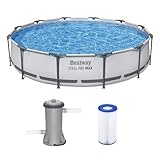
Bestway Steel Pro MAX 12' x 30" Above Ground Swimming Pool Set with Pump | Check Price On Amazon |
|
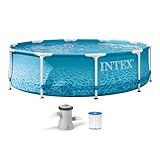
INTEX Beachside Metal Frame 10ft x 30in Round Pool Set w/Pump | Check Price On Amazon |

|
H2OGO! Kids Splash-in-Shade 8-Foot Round Steel Frame Above Ground Pool with Water Mister and Canopy Sunshade, Green Tropical Leaf Print | Check Price On Amazon |
By the Numbers
Pool Volume Calculator — What the Research Shows
Sources: Pool & Hot Tub Alliance, CDC Healthy Swimming, EPA WaterSense
Why Exact Pool Volume Matters for Chemical Safety and Cost
Every chemical you pour into your pool needs a target parts per million (ppm) to work. Chlorine must reach 2 to 4 ppm free chlorine to sanitize. Use our swimming pool chlorine calculator to determine the precise dose based on your pool’s volume. pH adjusters move readings in tenths of a unit per dose. Algaecide doses are calculated per 10,000 gallons.
If your real volume is 15,000 gallons and you dose for 20,000 gallons, your chlorine hits 1.5 ppm instead of 2 ppm. That is below the minimum sanitizing threshold set by the CDC Healthy Swimming guidelines. Bacteria survive. Algae spores germinate.

- Intelligent Navigation with Full Coverage: Equipped with 11 high-precision sensors and enhanced dual-path algorithms. The optimized WavePath cleaning pattern ensures systematic coverage with minimal overlap, while adaptive navigation analyzes pool layout in real time to eliminate missed spots
- Dual Filtration for Crystal-Clear Water: Advanced dual-layer filtration system features a replaceable 3-micron ultra-fine filter paired with a 180-micron standard filter. Effectively captures fine dust, sand, leaves, and debris for visibly cleaner and healthier pool water
- Comprehensive Pool Cleaning: Engineered to clean the pool floor, walls, waterline, and shallow areas (above 12 inches). The Caterpillar Treads system enhances mobility and climbing ability, ensuring thorough coverage across all pool zones
- Reliable Performance with 2-Year Warranty: Trusted by over 500,000 pool owners worldwide, this robotic pool cleaner delivers consistent, high-performance results. Built for durability and backed by a 2-year warranty and responsive customer support for worry-free ownership
This happens because pool chemical dosing is a linear function of water volume. A 25 percent error in volume produces a 25 percent error in ppm. There is no margin for guesswork when the target window for free chlorine is only 2 ppm wide.
According to the Pool & Hot Tub Alliance technical manual, the single largest source of chemical dosing error in residential pools is incorrect volume estimation. The choice between automatic and manual chemical dosing systems does not fix a bad volume number. Even automated systems rely on a volume input.
Accurate volume also determines pump runtime, filter sizing, and heater capacity. A pump sized for 20,000 gallons on a 15,000 gallon pool runs longer than needed and wastes electricity. A heater undersized by volume error cannot maintain target temperature on cold nights.
Pool Volume Formulas by Pool Shape
Pool volume calculation uses three measurements: length, width, and average depth. The formula changes with pool shape. The constant 7.5 converts cubic feet to gallons because one cubic foot of water weighs 62.4 pounds and holds 7.48 gallons.
Each formula below uses the 7.5 gallon per cubic foot constant for simplicity. The difference between 7.48 and 7.5 is less than 0.3 percent. That is well within the precision you need for chemical dosing.
Rectangular and Square Pools
The simplest formula applies to standard rectangular inground and above-ground pools. Multiply length by width by average depth by 7.5. A 16 foot by 32 foot rectangular pool with a 4.5 foot average depth holds 17,280 gallons (16 times 32 times 4.5 times 7.5).
For pools with a constant depth, use the single depth number. Most residential rectangular pools have a shallow end at 3 feet and a deep end at 8 feet. Average depth is (3 plus 8) divided by 2, which equals 5.5 feet. That single number changes gallon count significantly compared to guessing.
This happens because volume increases linearly with average depth. A 16 by 32 pool with 5.5 foot average depth holds 21,120 gallons. The same pool with a 4 foot average depth holds only 15,360 gallons. That 5,760 gallon difference requires completely different chemical dosing amounts.
Round and Circular Pools
Round pools use diameter squared times average depth times 5.9. The constant 5.9 is derived by dividing 7.5 by 4 and multiplying by pi. A 24 foot diameter round above-ground pool with 4 foot average depth holds 13,594 gallons (24 times 24 times 4 times 5.9).
This formula works for both above-ground round pools and inground circular spas. The diameter measurement must be taken at the widest point across the center. A measurement taken off-center produces an oval that inflates the gallon count.
The 5.9 constant is specific to circular shapes. Do not use it for oval or irregular pools. Using the wrong constant produces volume errors of 10 to 25 percent. Test your measurements twice before calculating.
Oval Pools
Oval pools use length times width times average depth times 6.7. The constant shifts from 5.9 to 6.7 because the oval shape holds more water per square foot of surface area than a circle of equivalent diameter. An 18 foot by 33 foot oval pool with 4 foot average depth holds 15,919 gallons (18 times 33 times 4 times 6.7).
Measure length and width at the longest and widest points. For true ovals with parallel sides, this is straightforward. For egg-shaped pools that taper at one end, take the average of the widest and narrowest widths. Use a 100-foot measuring tape for accuracy on larger pools.
Kidney-Shaped and Irregular Pools
Kidney-shaped pools require a two-width measurement method. Measure the widest point at each lobe. Add both widths together and multiply by 0.45. Then multiply by length and average depth and 7.5. A kidney pool with 16 foot and 12 foot lobe widths, 30 foot length, and 5 foot average depth holds 14,175 gallons.
The formula is: (Width A plus Width B) times 0.45 times Length times Average Depth times 7.5. The 0.45 factor converts the irregular shape to an equivalent rectangular area. This is the method recommended by the Pool & Hot Tub Alliance for freeform pool shapes.
For truly irregular pools with curves, coves, and tanning ledges, break the pool into geometric sections. Calculate each section separately. Add the volumes together. This segmented approach reduces error to under 5 percent compared to the 20 to 30 percent error from a single rough measurement.
Variable Depth Pools: The Average Depth Method
Pools with a gradual slope from shallow to deep use the average of the shallow end depth and deep end depth. Measure the shallow end at the flat bottom section, not at the slope transition. Measure the deep end at the deepest point near the main drain.
For pools with a hopper bottom, the deep end has angled walls that reduce actual water volume. Subtract 5 to 8 percent from the calculated volume to account for the hopper slope. A 20 by 40 pool with 3 foot shallow and 8.5 foot hopper deep end has an apparent average depth of 5.75 feet. The adjusted average depth after the hopper correction is approximately 5.35 feet.
This correction matters for chemical dosing. A Taylor K-2006 liquid drop test kit gives free chlorine readings accurate to 0.1 ppm. That precision is wasted if your volume estimate is off by 10 percent from ignoring the hopper.
Quick Reference Table: Common Pool Sizes and Gallon Capacity
Use the table below to find your pool size and its approximate gallon capacity without running the formula manually.
Quick Reference
Common Pool Sizes — Approximate Gallon Capacity
Calculations assume average depth of 4.5 ft (rectangular/oval) or 4 ft (round). Adjust for your actual depth.
| Pool Shape | Dimensions (ft) | Formula Constant | Gallons |
|---|---|---|---|
| Rectangular | 12 × 24 | 7.5 | 9,720 |
| Rectangular | 16 × 32 | 7.5 | 17,280 |
| Rectangular | 20 × 40 | 7.5 | 27,000 |
| Round | 18 ft diameter | 5.9 | 7,646 |
| Round | 24 ft diameter | 5.9 | 13,594 |
| Round | 30 ft diameter | 5.9 | 21,240 |
| Oval | 15 × 30 | 6.7 | 13,568 |
| Oval | 18 × 33 | 6.7 | 15,919 |
| Oval | 21 × 41 | 6.7 | 25,937 |
All volumes rounded to nearest gallon. Actual volume varies with exact depth, hopper design, and step/bench cutouts. Source: Pool & Hot Tub Alliance calculation standards.
How to Measure Your Pool Accurately: Step-by-Step Guide
Accurate measurement is the foundation of correct volume calculation. A measurement error of just 6 inches on a 32 foot pool changes gallon count by over 800 gallons. Take these steps in order for every pool shape.
Step-by-Step Guide
How to Measure Pool Dimensions — Step by Step
6 steps · Estimated time: 15-20 minutes
Get a 100-foot measuring tape, not a standard 25-foot tape
A 100-foot open reel fiberglass tape spans even 40-foot pools in one pull. Standard 25-foot tapes require multiple measurements spliced together, which introduces cumulative error. Fiberglass tapes resist water damage and do not stretch like cloth.
Measure length at the waterline, not the coping edge
The actual water surface length determines volume. Coping and deck overhang can add 3 to 6 inches per side. For a 16 by 32 pool, that overhang error produces a 600 gallon miscalculation. Measure from the inside edge of the tile line or water contact point.
Measure width at the widest point
For rectangular pools, width is consistent end to end. For freeform pools, measure at each major width change. Write down all width measurements. You need them for segmented volume calculation on irregular shapes.
Measure depth at three points: shallow end, deep end, and midpoint
Use a telescoping pool pole with depth markings or tie a weighted line to a tape measure. Measure from the water surface to the floor at the shallow flat section, the deep end drain, and the transition midpoint. The midpoint measurement catches slope irregularities that the simple average method misses.
Check for steps, benches, and tanning ledges that displace water
A standard corner step set displaces 150 to 300 gallons depending on size. A full width tanning ledge displaces 800 to 1,200 gallons. Subtract these volumes from your total. Measure step length, width, and depth, calculate their volume, and deduct that number.
Calculate twice, using the formula for your exact pool shape
Run the formula once. Wait five minutes. Run it again with fresh eyes. If the two results differ by more than 3 percent, remeasure the dimension most likely to be wrong. Usually that is average depth. Write the final volume on your equipment pad with a permanent marker.
For the most precise volume verification, use the chemical dilution method. Add exactly 1 pound of calcium chloride per 10,000 gallons. Test calcium hardness before and 24 hours after addition. The actual ppm increase divided into the expected increase gives your real volume within 2 percent accuracy.
Common Mistakes When Calculating Pool Volume
Most volume errors come from three specific mistakes. Each is easy to fix once you know what to look for. The cost of these errors shows up in your chemical bills every month.
The first mistake is measuring from the outside of the coping. Pool builders quote dimensions from the outer edge of the beam. Water sits inside the tile line. The difference is typically 6 to 8 inches per dimension. On a 20 by 40 pool, that error inflates estimated volume by 1,500 gallons or more.
The second mistake is using the deep end depth as the average depth. A pool with a 3 foot shallow end and an 8 foot deep end does not have an 8 foot average depth. The correct average is 5.5 feet. Using 8 feet overstates volume by nearly 50 percent.
The third mistake is applying the rectangular formula to every shape. Using 7.5 as the constant for a round pool adds 27 percent to the real volume. Using it for an oval adds 12 percent. Each shape has its own constant. Using the wrong one is the most common calculation error pool technicians see on service calls.
For a complete walkthrough of pool care essentials that depend on accurate volume, our complete swimming pool guide covers everything from opening to closing with volume-dependent dosing tables.
Why Pool Volume Affects Every Chemical You Add
Pool water chemistry is a concentration problem. Every chemical target is expressed in parts per million. One ppm means one pound of chemical per 1,000,000 pounds of water. Since water weighs 8.34 pounds per gallon, 1 ppm equals 1 pound of chemical per 120,000 gallons.
For a 15,000 gallon pool, 1 ppm equals 2 ounces of pure chemical. For a 25,000 gallon pool, 1 ppm equals 3.3 ounces. A 0.7 ounce difference per ppm adds up fast when you are targeting a 10 ppm increase in cyanuric acid or a 200 ppm increase in calcium hardness.
This relationship between volume and dose is why the problem of clear water with zero chlorine reading often traces back to volume miscalculation. You add chlorine calculated for 20,000 gallons. Your pool is actually 14,000 gallons. The dose is too small. Free chlorine never reaches breakpoint. Combined chlorine builds up unnoticed.
Every pool chemical label shows dosing instructions per 10,000 gallons. If your pool is not a multiple of 10,000 gallons, you must calculate the exact dose. Rounding up or down introduces error. A digital gram scale for pool chemicals lets you measure dry chemicals to the nearest gram, matching your calculated dose exactly.
Cost Reference
Annual Chemical Cost by Pool Volume — What Accuracy Saves You
Estimated annual chemical spend at typical residential usage. Prices based on average retail as of publication.
| Pool Volume (gallons) ↓ Dosing Accuracy → | Exact Dosing (accurate volume known) | 20% Overdose (volume guessed low) | 30% Overdose (volume guessed wrong shape formula) |
|---|---|---|---|
| 10,000 gallons | $280-350 | $336-420 | $364-455 |
| 15,000 gallons | $380-480 ★ most common |
$456-576 | $494-624 |
| 20,000 gallons | $480-620 | $576-744 | $624-806 |
| 30,000 gallons | $670-850 | $804-1,020 | $871-1,105 |
Costs include chlorine, pH adjusters, alkalinity increaser, shock, algaecide, and clarifier at standard residential maintenance rates. Actual costs vary by climate, bather load, and local chemical prices. ★ highlights the most common residential pool size range.
How Pool Volume Determines Pump and Filter Sizing
Pool equipment sizing starts with volume. The pump must turn over the full pool volume at least once per day. A 20,000 gallon pool needs a pump that moves at least 20,000 gallons in a daily runtime of 6 to 12 hours. That means a minimum flow rate of 28 to 56 gallons per minute (GPM). Consult our pool pump sizing calculator to match your actual volume with the right pump flow rate.
A pump too small for the actual volume runs continuously and still falls short. A 1.5 HP variable speed pool pump running at 1,500 RPM delivers approximately 35 GPM. For a 15,000 gallon pool, that achieves one turnover in 7.1 hours. For a 25,000 gallon pool, the same pump needs 11.9 hours. That is a 67 percent difference in runtime.
Filter sizing follows the same volume logic. The Pool & Hot Tub Alliance recommends filter surface area based on pool volume and desired turnover rate. A sand filter for a 20,000 gallon pool needs a minimum of 3.1 square feet of surface area. A cartridge filter for the same pool needs a minimum of 200 square feet of media. Undersizing the filter forces more frequent cleaning and shortens media life.
This equipment sizing cascade means volume errors multiply through your entire pool system. A smart pool monitor with wireless water testing can confirm your chemical balance after volume-based dosing, but the monitor cannot fix a volume input error. Garbage volume in, garbage chemical recommendations out.
Can I Use the Pool Builder’s Stated Volume for Chemical Dosing?
Builder-stated pool volumes are often inaccurate for chemical dosing purposes. Builders quote the design volume calculated from the excavation plan. Actual construction tolerances, shotcrete thickness variation, and plaster buildup change the final water volume by 3 to 8 percent. A stated 20,000 gallon pool may hold anywhere from 18,400 to 21,600 gallons.
Additionally, builders calculate volume to the midpoint of the tile line. Your operating water level may be an inch higher or lower. One inch of water depth across a 16 by 32 pool surface equals 318 gallons. Water level variation alone can shift your effective dosing volume by 300 to 600 gallons. Measure your own pool rather than relying on the builder’s number from the contract.
What Is the Most Accurate Way to Verify Pool Volume After Calculation?
The chemical dilution test is the most accurate field verification method available to pool owners. Add a precisely weighed amount of a chemical that does not degrade, does not off-gas, and can be tested with high accuracy. Calcium chloride works best because calcium hardness testing is precise to 10 ppm and calcium does not evaporate or break down.
Weigh out exactly 1.0 pound of calcium chloride pool hardness increaser per 10,000 gallons of your estimated volume. Test calcium hardness immediately before adding. Broadcast the calcium chloride evenly across the deep end. Run the pump continuously for 24 hours. Test calcium hardness again at the same time the next day.
Calculate your real volume using: Real Gallons equals (Pounds Added times 120,000) divided by (Post-test ppm minus Pre-test ppm). If you added 2 pounds and hardness increased from 200 to 215 ppm, your real volume is (2 times 120,000) divided by 15, which equals 16,000 gallons. If your estimated volume was 20,000 gallons, you now know you were overestimating by 20 percent.
Does Pool Volume Change When the Pool Is Filled With People?
Pool volume does not change when people enter the water. The water displaced by swimmers flows into the surge tank or overflows through the skimmer. The total water volume in the system, including surge capacity, stays constant. What changes is the effective dilution volume for chemicals because bather waste consumes sanitizer faster.
A single swimmer introduces approximately 0.5 to 1.0 grams of nitrogenous compounds per hour through sweat and urine. That waste load consumes free chlorine at a rate that depends on the ratio of bather load to pool volume. A 15,000 gallon pool with 6 swimmers needs more frequent chlorine supplementation than a 30,000 gallon pool with the same 6 swimmers. The volume itself has not changed. The demand on the chlorine residual has increased.
Why Does My Calculated Volume Not Match the Water Bill From Filling?
Water meter readings during pool filling often disagree with calculated volume by 5 to 15 percent. This discrepancy has three common causes. First, water meters measure in hundreds of cubic feet or thousands of gallons and round down. A meter reading in 100 cubic foot increments means every reading has a potential 748 gallon rounding error. Second, pool filling typically overlaps with normal household water use, inflating the fill reading.
Third, evaporation during filling on hot days can lose 200 to 400 gallons from a 20,000 gallon fill over 48 hours. Water meter readings are a useful cross-check. They are not accurate enough to replace dimensional measurement for chemical dosing purposes. Trust the tape measure and formula. Use the water bill only to confirm you are in the right range.
How Often Should I Recalculate My Pool Volume?
Recalculate pool volume once when the pool is first filled and again any time the pool is replastered or resurfaced. Plaster and pebble finishes add thickness to the shell walls and floor. A full replaster adds 0.375 to 0.5 inches of material to every surface. On a 16 by 32 pool with 5.5 foot average depth, 0.5 inches of plaster reduces volume by approximately 450 gallons.
If you replace a vinyl liner, measure depth again after the new liner is installed. New liners can fit tighter or looser than the original. A liner that fits 0.25 inches differently across the floor changes volume by 200 to 400 gallons. Recalculate after major renovations. Otherwise, your initial accurate measurement remains valid for the life of the finish.
Can I Estimate Pool Volume From the Pump Runtime Needed for One Turnover?
You can back-calculate approximate volume if you know your pump’s exact flow rate at its operating speed. Install a pool flow meter on the return line to read actual GPM under your plumbing conditions. Multiply that GPM by 60 to get gallons per hour. Multiply by the hours needed for one turnover as measured by a dye test at the return jets.
This method is less precise than dimensional measurement because flow rate varies with filter cleanliness. A dirty filter reduces flow by 10 to 20 percent. The back-calculation only works as a rough confirmation. Use it to verify you are within 10 percent. Do not rely on it as your primary volume number for chemical dosing.
Does Salt Water Pool Volume Calculation Differ From Chlorine Pool Calculation?
Salt water pool volume calculation uses the identical formulas as chlorine pools. The water volume does not change based on sanitizer type. What changes is the dosing target. Salt water chlorine generators need 2,700 to 3,400 ppm of salt in the water. Salt dosing is calculated as pounds of salt per 1,000 gallons to raise salinity by a specific ppm.
A 15,000 gallon pool needing a 3,000 ppm salt increase requires 375 pounds of pool salt (25 pounds per 1,000 gallons times 15). A volume error of 20 percent means you add 75 pounds too much or too little salt. To avoid miscalculation, use our salt calculator for pools to determine the exact amount of salt needed based on your actual volume. Too little salt prevents chlorine generation. Too much salt can damage the salt cell and taste unpleasant. Accurate volume is just as critical for salt pools as it is for chlorine pools.
What Is the Difference Between Nominal Pool Size and Actual Water Volume?
Nominal pool size is the marketing or design dimension, such as a “16 by 32 inground.” Actual water volume is the calculated gallons based on real measurements of the water-containing cavity. The difference between nominal and actual volume ranges from 5 to 15 percent on most residential pools. A nominal 16 by 32 pool may actually measure 15.5 by 31.5 at the waterline with 0.5 inches of plaster thickness reducing every dimension.
Chemical manufacturers dose recommendations assume actual water volume. Using nominal dimensions without field verification is the root cause of most residential pool chemical dosing errors. Always measure your own pool. Never rely on the nominal size from the builder contract or real estate listing.
How Does a Pool Cover Affect Volume Calculations for Winterizing?
A pool cover does not affect the water volume inside the pool. The volume calculation for winterizing chemicals still uses the same dimensional formula applied to the water in the pool. What changes is that you typically lower the water level 4 to 6 inches below the tile line for winter closing. That water removal reduces the treated volume by 800 to 1,500 gallons depending on pool surface area.
Calculate winter chemical doses based on the reduced water volume, not the full season volume. For a 16 by 32 pool lowered 6 inches, subtract approximately 1,900 gallons from your summer volume. Winter algaecide and winter shock doses must be calculated for the lower volume. Overdosing winter chemicals wastes money and can damage the solid winter pool cover when concentrated chemicals sit against the material.
Why Does My Neighbor’s Same-Size Pool Use Different Chemical Amounts?
Two pools with the same nominal dimensions can have different actual volumes due to construction tolerances, finish thickness, and water level differences. A gunite pool and a vinyl liner pool with the same 16 by 32 footprint differ in volume because gunite walls are 6 to 8 inches thick and vinyl liner walls are essentially zero thickness at the panel. The gunite pool has 800 to 1,200 fewer gallons because the thick walls consume interior space.
Additionally, step configurations, bench seating, and tanning ledges displace different amounts of water. One pool may have corner steps displacing 200 gallons. Another may have a full-width bench displacing 600 gallons. The pools look identical from the patio. Their chemical needs differ by 5 to 10 percent because their actual water volumes differ.
Do I Need to Recalculate Volume After Heavy Rain or Evaporation?
Rain and evaporation change the water level but the pool shell dimensions remain constant. You do not need to recalculate pool volume after rain or evaporation. What you need is to return the water to its normal operating level before dosing chemicals. Chemical dosing should always be based on the full operating volume, not the temporarily reduced volume after evaporation.
If your pool is 4 inches low due to evaporation, add water to bring it back to the normal skimmer operating level before testing and dosing. Four inches of water across a 16 by 32 pool surface equals 1,275 gallons. Dosing for the full 20,000 gallon volume when only 18,725 gallons are present concentrates chemicals by 6.8 percent. Return the water level to normal first, then dose for the full volume.
What Tools Do Professional Pool Technicians Use to Calculate Volume?
Professional pool technicians use three tools in combination. First, a laser distance measurer rated for outdoor use gives length and width readings accurate to 1/16 inch. Second, a weighted depth gauge on a telescoping pole measures depth from the water surface to the floor at multiple points. Third, a pool volume calculator app or laminated formula card provides the shape-specific constant.
Experienced technicians also keep a log of known pool volumes for regular service accounts. They verify with the calcium chloride dilution test once per account and record the result permanently. This combination of dimensional measurement with chemical verification gives professional pool services the dosing accuracy that prevents callbacks for algae and cloudy water. You can achieve the same accuracy at home with the same methods.
Can Pool Volume Affect Staining and Scale Formation Risks?
Pool volume errors affect staining and scale risk indirectly through incorrect calcium hardness and pH management. If your volume is overestimated, you add too much calcium hardness increaser. Calcium levels climb above the 400 ppm threshold where scale formation begins. The excess calcium precipitates as white scale on tile lines, heater elements, and salt cells.
If your volume is underestimated, you add too little calcium. Readings stay below 200 ppm. Low calcium water becomes aggressive and leaches calcium from plaster and grout. This creates pitting and etching that look like stains but are actually surface damage. Our pool staining guide covers how to remove and prevent stains caused by both scale buildup and aggressive water conditions that often trace back to volume miscalculation.
Should I Use a Pool Volume Calculator App or Do the Math Manually?
Pool volume calculator apps are convenient but only as accurate as the measurements you input and the formula the app uses for your specific pool shape. Many free apps default to the rectangular formula for all shapes. Some use 7.5 for round pools instead of 5.9. An app using the wrong constant produces a wrong answer that looks authoritative because it came from an app. To avoid this, use our pool volume calculator that applies the correct formula and can serve as a reliable double-check.
Manual calculation with a pencil, paper, and the correct formula for your pool shape is more reliable. You control every variable. You can verify each step. Write the measurements down. Run the formula. Check it. The best approach uses both: calculate manually, then enter the same measurements into a reputable app from a pool chemical manufacturer like a digital pool photometer with companion app. If the two answers disagree by more than 5 percent, find the error before dosing chemicals.
Knowing your exact pool volume is the foundation of every chemical decision, equipment purchase, and maintenance routine you will ever make for your pool. A tape measure, the correct formula for your pool shape, and 15 minutes of your time save hundreds of dollars per year in wasted chemicals and prevented algae blooms. For a complete starter setup with all the tools you need for accurate pool care, see our recommended pool maintenance kit with tools and chemicals starter pack. Measure once. Dose correctly every time. Your pool and your wallet will show the difference.
| Photo | Best Above-Ground Pools | Price |
|---|---|---|
|
|
Bestway Steel Pro MAX 12' x 30" Above Ground Swimming Pool Set with Pump | Check Price On Amazon |
|
|
INTEX Beachside Metal Frame 10ft x 30in Round Pool Set w/Pump | Check Price On Amazon |
|
|
H2OGO! Kids Splash-in-Shade 8-Foot Round Steel Frame Above Ground Pool with Water Mister and Canopy Sunshade, Green Tropical Leaf Print | Check Price On Amazon |