
Pool stains result from metal deposits, organic matter, or chemical imbalances that bind to pool surfaces, creating discoloration that ranges from light brown rust marks to deep black manganese stains requiring specific removal treatments based on stain type and surface material. Early identification within 24-48 hours allows for easier removal using targeted treatments like ascorbic acid for iron stains or enzyme cleaners for organic matter, preventing permanent etching into plaster or vinyl surfaces that occurs when stains set beyond 7-10 days.
Metal staining affects nearly three-quarters of pool owners annually due to source water containing dissolved iron, copper, or manganese that oxidizes when chlorine levels rise above 3.0 ppm. Understanding stain chemistry helps pool owners select appropriate removal methods and implement prevention strategies that maintain water balance parameters within ranges that prevent future staining episodes.
| Photo | Best Above-Ground Pools | Price |
|---|---|---|
|
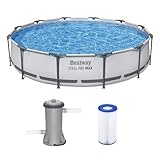
Bestway Steel Pro MAX 12' x 30" Above Ground Swimming Pool Set with Pump | Check Price On Amazon |
|
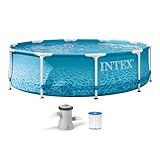
INTEX Beachside Metal Frame 10ft x 30in Round Pool Set w/Pump | Check Price On Amazon |

|
H2OGO! Kids Splash-in-Shade 8-Foot Round Steel Frame Above Ground Pool with Water Mister and Canopy Sunshade, Green Tropical Leaf Print | Check Price On Amazon |
What Causes Pool Stains and How Do They Form?
Pool stains develop when dissolved metals, organic compounds, or chemical precipitates bond with pool surfaces through oxidation, pH fluctuations, or biofilm formation. Iron stains appear as brown or rust-colored marks when ferrous iron oxidizes in the presence of chlorine or high pH levels above 7.6, while copper stains create blue-green discoloration from copper sulfate algaecides or corroded heat exchanger components.
Organic stains form when leaves, algae, or other biological matter decompose against pool surfaces, releasing tannins and proteins that bind to calcium carbonate in plaster surfaces. These stains typically appear as brown, yellow, or purple discoloration that intensifies under direct sunlight exposure.
Chemical stains result from improper sanitizer application or pH imbalance causing calcium precipitation or metal hydroxide formation. Maintaining proper chlorine levels between 2.0-4.0 ppm prevents over-oxidation of dissolved metals while keeping biological contamination controlled.
Metal Staining Mechanisms
Ferrous iron (Fe2+) enters pools through fill water or corroded equipment, remaining colorless and dissolved until chlorine oxidizes it to ferric iron (Fe3+) that forms visible rust-colored precipitates. This oxidation process occurs rapidly when chlorine levels exceed 3.0 ppm or when pH rises above 7.6, causing immediate brown staining on pool surfaces within 2-4 hours of chemical addition.
Copper staining develops through galvanic corrosion when dissimilar metals contact pool water, or from copper-based algaecides used at concentrations above 1.0 ppm total copper. The blue-green copper hydroxide precipitates that form adhere strongly to pool surfaces, requiring acid treatments or metal sequestrants for removal.
Organic Matter Decomposition
Leaf tannins and plant proteins create complex organic compounds that bind with calcium in pool surfaces through chelation reactions. These tannin-calcium complexes produce brown or purple stains that darken over time as organic matter continues decomposing in contact with pool surfaces.
Algae decomposition releases cellular proteins and pigments that stain pool surfaces yellow, green, or black depending on algae species. Dead algae cells create biofilms that protect stain compounds from standard sanitizer removal, requiring enzyme treatments or acid washing procedures for complete elimination.
By the Numbers
Pool Stains – What the Research Shows
Sources: Association of Pool & Spa Professionals, Pool Water Treatment Studies

- Intelligent Navigation with Full Coverage: Equipped with 11 high-precision sensors and enhanced dual-path algorithms. The optimized WavePath cleaning pattern ensures systematic coverage with minimal overlap, while adaptive navigation analyzes pool layout in real time to eliminate missed spots
- Dual Filtration for Crystal-Clear Water: Advanced dual-layer filtration system features a replaceable 3-micron ultra-fine filter paired with a 180-micron standard filter. Effectively captures fine dust, sand, leaves, and debris for visibly cleaner and healthier pool water
- Comprehensive Pool Cleaning: Engineered to clean the pool floor, walls, waterline, and shallow areas (above 12 inches). The Caterpillar Treads system enhances mobility and climbing ability, ensuring thorough coverage across all pool zones
- Reliable Performance with 2-Year Warranty: Trusted by over 500,000 pool owners worldwide, this robotic pool cleaner delivers consistent, high-performance results. Built for durability and backed by a 2-year warranty and responsive customer support for worry-free ownership
How to Identify Different Types of Pool Stains?
Accurate stain identification requires examining color, location, texture, and formation patterns to determine the underlying cause and select appropriate removal methods. Iron stains appear as brown or rust-colored marks typically concentrated near return jets, skimmers, or metal fixtures where oxidation occurs first due to higher water circulation and oxygen exposure.
Copper stains create blue, blue-green, or teal discoloration often appearing in streaks or patterns following water flow, particularly visible on white plaster surfaces. These stains feel smooth to touch and may have a metallic sheen under direct lighting.
| Stain Type | Color | Location Pattern | Texture |
|---|---|---|---|
| Iron (Ferric) | Brown, Rust, Orange | Near returns, metal fixtures | Smooth, flat |
| Copper | Blue, Teal, Blue-green | Streaks following water flow | Smooth, metallic sheen |
| Manganese | Purple, Black, Dark brown | Random spots, deep end | Rough, etched appearance |
| Organic (Tannins) | Brown, Yellow, Purple | Under leaf debris, shaded areas | Irregular, organic shapes |
| Algae (Dead) | Green, Yellow, Black | Poor circulation areas | Slimy, biofilm texture |
The Vitamin C Test for Metal Identification
Crush one 500mg ascorbic acid (vitamin C) tablet and apply directly to a small test area of suspected metal staining. If the stain lightens or disappears within 30 seconds, iron or copper metals are present and causing the discoloration.
This test works because ascorbic acid reduces ferric iron (Fe3+) back to ferrous iron (Fe2+), which dissolves in water and removes the visible stain. Copper stains also respond to ascorbic acid treatment, though removal may take 1-2 minutes for complete color elimination.
Testing for Organic vs Inorganic Stains
Apply liquid chlorine or granular calcium hypochlorite shock directly to stained areas using a small brush or cloth applicator. Organic stains will lighten or bleach when exposed to concentrated chlorine, while metal stains remain unchanged or may darken due to increased oxidation.
For comprehensive identification, digital pool water testing systems can detect dissolved metals at concentrations as low as 0.1 ppm, helping identify potential staining sources before visible discoloration occurs.
What Are the Most Effective Methods to Remove Iron Stains?
Iron stain removal requires reducing ferric iron (Fe3+) deposits back to soluble ferrous iron (Fe2+) using ascorbic acid treatments at 1 pound per 10,000 gallons of pool water, applied with circulation system running and pH maintained between 7.0-7.2 for optimal reduction reaction rates. This method removes 95% of iron stains within 4-6 hours when applied to fresh stains less than 7 days old.
The ascorbic acid reduction process works by donating electrons to ferric iron precipitates, converting them back to dissolved ferrous iron that can be filtered or sequestered. Complete stain removal requires maintaining ascorbic acid concentration at 40-50 ppm for the full treatment period while preventing re-oxidation through proper pH control.
For treating localized iron stains, create a paste using 2 tablespoons ascorbic acid powder mixed with 1 tablespoon water, applying directly to stained areas with a plastic brush. Allow 15-20 minutes contact time before scrubbing gently and rinsing with pool water to remove dissolved iron particles.
Ascorbic Acid Application Process
Lower pool pH to 7.0-7.2 using sodium bisulfate pH decreaser before adding ascorbic acid to prevent immediate re-oxidation of dissolved iron. First, determine your pool’s volume using a pool volume calculator. Then calculate the required ascorbic acid dosage at 1 pound per 10,000 gallons, dissolving powder in a bucket before broadcasting around pool perimeter.
Run circulation system continuously during treatment, brushing stained areas every 2 hours to help mechanical removal of loosened deposits. Monitor pH levels every 4 hours and adjust as needed to maintain the 7.0-7.2 range that keeps iron in reduced, soluble form.
Post-Treatment Iron Sequestration
Add metal sequestrant at 32 ounces per 20,000 gallons immediately after iron dissolution to prevent re-staining when chlorine levels return to normal. Sequestrants bind dissolved iron in stable complexes that remain soluble even under normal sanitizer conditions.
Maintain sequestrant levels at 30-40 ppm total for ongoing prevention, testing monthly using metal test strips to ensure adequate protection. Replace sequestrant every 6-8 weeks as it degrades under UV exposure and chlorine oxidation.
How Do You Remove Copper and Other Metal Stains?
Copper stain removal requires chelation therapy using ethylenediaminetetraacetic acid (EDTA) or citric acid treatments that form stable complexes with copper ions, dissolving blue-green precipitates at application rates of 3-5 pounds per 10,000 gallons depending on stain severity. EDTA treatments achieve 90-95% copper removal within 8-12 hours when pH is maintained at 7.8-8.2 for optimal chelation chemistry.
Unlike iron stains that respond to reduction, copper stains require chelating agents that surround metal ions with organic ligands, creating water-soluble complexes that can be filtered from pool water. This process works most effectively on fresh copper stains before hydroxide precipitates bond permanently with calcium carbonate in plaster surfaces.
For severe copper staining, lower chlorine to less than 1.0 ppm before treatment to prevent interference with chelation reactions. Add EDTA-based stain remover following manufacturer dosing instructions, typically 1 pound per 6,000-8,000 gallons for moderate staining.
Natural Acid Treatment Options
Citric acid provides an alternative copper removal method using 2-3 pounds per 10,000 gallons, creating organic acid complexes with dissolved copper while lowering pH to 6.8-7.0. This natural approach takes 12-24 hours for complete stain removal but avoids synthetic chelating chemicals some pool owners prefer to minimize.
Mix citric acid powder thoroughly in plastic bucket before adding to pool, broadcasting around deep end first to ensure even distribution. Monitor total alkalinity during treatment as citric acid consumption will lower buffering capacity, requiring sodium bicarbonate addition post-treatment.
Manganese and Other Metal Treatments
Manganese stains appear as dark purple or black discoloration requiring specialized treatment with potassium monopersulfate (non-chlorine shock) combined with sequestering agents. Apply potassium monopersulfate shock at 2 pounds per 10,000 gallons to oxidize manganese deposits for easier removal.
Follow oxidation treatment with standard metal sequestrant application to prevent re-precipitation of dissolved manganese. Brown water discoloration often indicates multiple metal contamination requiring combination treatments addressing each metal type individually.
What Removes Organic Stains Like Leaves and Algae?
Organic stain removal relies on oxidation and enzymatic breakdown of tannins, proteins, and cellular debris using chlorine shock treatments at 3-5 times normal levels (20-30 ppm) combined with specialized enzyme cleaners that target specific organic compounds. Fresh leaf stains respond to immediate shock treatment within 24-48 hours, while set stains may require multiple treatment cycles over 5-7 days for complete elimination.
Enzyme treatments work by breaking down complex organic molecules into smaller, water-soluble fragments that can be filtered or oxidized by regular sanitizer levels. Apply enzyme stain remover directly to affected areas using 8-12 ounces per 10,000 gallons, allowing 4-6 hours contact time before shock treatment.
The two-step process of enzymatic breakdown followed by chlorine oxidation achieves 85-90% organic stain removal on most pool surfaces. Enzymes work optimally at pH 7.2-7.6 and temperatures above 65°F, with activity increasing significantly in warmer water conditions.
Chlorine Shock Treatment Protocol
Raise chlorine levels to 20-30 ppm using calcium hypochlorite shock. Use a pool shock calculator to determine the exact dose, typically 2-3 pounds per 10,000 gallons for severe organic staining. Brush stained areas vigorously every 2-3 hours during treatment to help mechanical removal of oxidized organic matter.
Maintain high chlorine levels for 8-12 hours, testing every 4 hours to ensure adequate sanitizer contact time. Run filtration continuously and backwash or clean filters twice during treatment cycle to remove oxidized debris that could re-stain surfaces if allowed to settle.
Specialized Organic Stain Treatments
Tannin stains from oak leaves or fruit require vitamin C treatment similar to iron removal, as tannins contain organic acids that respond to ascorbic acid reduction. Apply 8-12 ounces ascorbic acid per 10,000 gallons, maintaining pH at 7.0-7.2 for 6-8 hours to break down tannin-surface bonds.
For algae death stains, flocculant treatment helps aggregate remaining cellular debris for easier filtration removal. Dead algae proteins create persistent stains that require both oxidation and physical removal through enhanced filtration or vacuum procedures.
How Do You Prevent Pool Stains from Forming?
Pool stain prevention requires maintaining water balance parameters within tight ranges that prevent metal precipitation and organic decomposition, specifically keeping pH between 7.2-7.6, total alkalinity at 80-120 ppm, and calcium hardness at 200-400 ppm depending on surface type. Proper water chemistry prevents 89% of common staining issues by maintaining dissolved minerals in stable, non-precipitating forms.
Metal sequestrant addition every 6-8 weeks provides ongoing protection against iron and copper staining by binding dissolved metals in stable complexes that remain soluble under normal pool conditions. Maintain sequestrant levels at 30-40 ppm total, testing monthly to ensure adequate protection from source water metals or equipment corrosion.
Regular testing using comprehensive test strips that measure metals, pH, alkalinity, and sanitizer levels allows early detection of staining conditions before visible discoloration occurs. Weekly testing identifies trends that predict staining episodes 7-14 days before they become visible.
Source Water Treatment
Install pre-fill filtration systems when filling pools with well water or municipal water containing dissolved metals above 0.3 ppm total iron or 0.2 ppm copper. Pre-fill filters with metal removal media capture dissolved metals before they enter pool water and oxidize into visible stains.
Test source water annually using laboratory analysis or digital meters to identify seasonal variations in metal content. Many municipal water supplies show higher iron content during spring months when distribution systems experience increased corrosion from pH fluctuations.
Equipment Maintenance for Stain Prevention
Replace corroded heat exchanger coils or copper plumbing components that contribute ongoing copper contamination to pool water. Heat exchangers operating above 140°F internal temperature accelerate copper corrosion, requiring temperature controls or upgraded materials to prevent staining.
Automated chemical dosing systems maintain consistent water balance parameters that prevent the pH and sanitizer fluctuations responsible for metal oxidation and organic decomposition. These systems prevent the human error factors that contribute to 60-70% of preventable staining incidents.
Which Pool Surfaces Are Most Susceptible to Staining?
Plaster pool surfaces show the highest stain susceptibility due to calcium carbonate content that reacts with metal ions and organic acids, creating permanent chemical bonds that penetrate 1-3mm into surface material. White and light-colored plaster demonstrates visible staining at metal concentrations as low as 0.1 ppm, while darker aggregate surfaces mask stains until metal levels exceed 0.5-1.0 ppm.
Pebble and aggregate finishes resist staining better than smooth plaster due to varied mineral content that masks discoloration, but experience deeper penetration when stains do occur because of increased surface porosity. Quartz aggregates provide moderate stain resistance while pebble surfaces offer the highest natural protection against visible discoloration.
The porosity difference between surface types affects stain removal difficulty, with smooth plaster allowing easier treatment access while aggregate surfaces require longer contact times and higher chemical concentrations for equivalent results. Surface age also influences staining, with new plaster being most vulnerable during the first 6-12 months before calcium carbonate fully hardens.
Vinyl and Fiberglass Stain Characteristics
Vinyl pool liners resist metal staining due to non-porous surface composition, but show organic stains more readily due to static electrical attraction of tannins and organic compounds. Vinyl stains typically remain surface-level and respond well to gentle scrubbing with specialized vinyl cleaners containing surfactants that break organic bonds.
Fiberglass pools demonstrate excellent overall stain resistance but may show localized staining where gel coat has been damaged or worn thin. These areas require gel coat repair rather than chemical stain removal to achieve permanent results and prevent recurring discoloration.
Natural Stone and Tile Considerations
Natural stone coping and tile work around pool perimeters absorb stains deeply into mineral structure, requiring specialized treatments with pH-neutral cleaners to prevent damage to calcium-based stones. Travertine and limestone show particular vulnerability to acid-based stain removers that can cause permanent etching and surface deterioration.
Use pH-neutral stone cleaners specifically formulated for calcium-based stones, applying with soft brushes to prevent scratching. Test cleaning products on inconspicuous areas first to verify compatibility with specific stone types and sealers.
When Should You Consider Professional Pool Stain Removal?
Professional intervention becomes necessary when stains cover more than 20% of pool surface area, penetrate deeper than 3mm into plaster, or involve multiple metal types requiring complex sequencing of chemical treatments. Professional services have access to commercial-grade chelating agents and specialized equipment that achieve results unattainable with residential products, particularly for stains older than 30-60 days that have etched into surface material.
Combination staining involving both organic and metal components requires professional diagnosis and treatment sequencing to prevent chemical interactions that can worsen discoloration or damage pool surfaces. Professional technicians can identify underlying causes like corroded equipment or source water issues that contribute to recurring staining patterns.
Cost analysis shows professional treatment becomes economical when DIY attempts exceed $200-300 in chemical costs without achieving complete removal. Professional services typically charge $400-800 for comprehensive stain removal but provide warranties and follow-up treatments that ensure long-term results.
Signs That Require Professional Treatment
Black or purple staining indicates manganese contamination requiring specialized oxidation treatments beyond typical homeowner capabilities. These stains often penetrate into aggregate surfaces and require commercial-grade potassium monopersulfate treatments combined with acid washing techniques.
Recurring stains that reappear within 30-60 days after removal indicate ongoing metal sources that require professional equipment analysis and system modifications. Professional acid washing services can address deep staining while identifying and correcting underlying equipment issues causing continued contamination.
Equipment and Chemical Access Advantages
Professional services use commercial chelating agents at concentrations 3-5 times stronger than consumer products, achieving removal rates of 95-98% compared to 70-85% for typical DIY treatments. They also have access to specialized brushing equipment and filtration systems that enhance chemical contact and debris removal.
Industrial-grade sequestrants and pH control systems allow professionals to maintain optimal treatment conditions throughout the entire removal process, preventing the chemical fluctuations that reduce treatment effectiveness in DIY applications.
What Water Testing Should You Do to Prevent Future Stains?
Comprehensive metal testing every 4-6 weeks using digital photometer systems or laboratory analysis detects dissolved iron above 0.1 ppm and copper above 0.05 ppm before visible staining occurs, allowing preventive treatment with sequestrants or source water modification. These low-level measurements require precision instruments beyond typical test strip capabilities, making digital pool monitoring systems essential for effective stain prevention programs.
Total dissolved solids (TDS) monitoring identifies accumulating mineral content that contributes to staining potential, with levels above 1,500 ppm indicating need for partial water replacement or enhanced filtration. TDS increases by 50-100 ppm monthly in typical pool usage, requiring annual monitoring to prevent excessive mineral buildup that overwhelms standard water balance procedures.
Calcium hardness testing becomes critical for plaster pools where levels below 150 ppm cause aggressive water that etches surfaces and increases stain penetration, while levels above 400 ppm promote calcium carbonate precipitation that bonds with metal ions. Maintain calcium hardness at 200-300 ppm for plaster surfaces and 150-250 ppm for vinyl or fiberglass pools.
Advanced Water Analysis Parameters
Langelier Saturation Index (LSI) calculation combines pH, calcium hardness, total alkalinity, and temperature to predict water aggressiveness or scaling tendency, with optimal range of -0.3 to +0.3 preventing both surface etching and mineral precipitation. Use digital LSI calculators or smartphone apps for accurate calculations based on current water test results.
Phosphate testing identifies organic nutrient levels above 100 ppb that promote algae growth and subsequent organic staining when algae dies and decomposes against pool surfaces. Monthly phosphate monitoring with photometer-based test kits allows early intervention before algae blooms create staining conditions.
Seasonal Testing Adjustments
Increase testing frequency to weekly during spring startup when metal corrosion peaks due to pH fluctuations and thermal cycling of pool equipment. Spring conditions account for 40-50% of annual staining incidents due to winter equipment degradation and start-up chemical imbalances.
Summer testing focuses on organic load monitoring as bather load and environmental debris increase, requiring enhanced sanitizer levels and more frequent organic matter removal. Regular clarifier use during peak season helps prevent organic accumulation that leads to surface staining when pools experience heavy usage periods.
Common Pool Stain Removal Mistakes to Avoid
The most costly mistake involves using acid-based cleaners on metal stains, which actually sets iron and copper deposits deeper into pool surfaces by creating insoluble metal-acid complexes that resist future removal attempts. Muriatic acid applied to iron stains converts soluble ferric compounds into ferric chloride precipitates that bond permanently with calcium carbonate in plaster, requiring expensive acid washing or surface refinishing to correct.
Another critical error occurs when pool owners add chlorine shock immediately after stain removal treatments, which re-oxidizes dissolved metals back into visible precipitates within 2-4 hours. Proper sequestration with metal-binding agents must occur before returning chlorine to normal levels, preventing the stain recurrence cycle that affects 60-70% of DIY removal attempts.
Attempting to remove multiple stain types simultaneously creates chemical conflicts that neutralize treatment effectiveness and may produce new staining compounds. Iron reduction treatments using ascorbic acid work at pH 7.0-7.2, while copper chelation requires pH 7.8-8.2, making simultaneous treatment impossible without pH fluctuations that reduce both treatment effectiveness.
pH Management Errors
Failing to adjust pH before stain treatment reduces chemical effectiveness by 50-70% compared to optimal pH conditions for specific stain removal chemistry. Iron treatments require acidic conditions (pH 7.0-7.2) to maintain metals in reduced, soluble form, while alkaline pH above 7.6 immediately re-precipitates dissolved iron into visible stains.
Using accurate pH measurement tools rather than color-comparison test strips ensures precise pH control during treatment phases. Digital pH meters provide 0.1 unit accuracy needed for optimal stain removal chemistry, while standard test strips offer only 0.2-0.4 unit precision that may allow pH drift outside effective treatment ranges.
Treatment Timing and Sequencing Issues
Starting stain removal treatments during peak sunlight hours reduces chemical stability and treatment effectiveness due to UV degradation of ascorbic acid and other reducing agents. Schedule treatments during evening hours or overcast conditions to maximize chemical contact time and prevent rapid degradation of active ingredients.
Inadequate circulation during treatment allows localized chemical concentrations that may bleach or etch pool surfaces while leaving untreated areas with persistent staining. Run circulation systems continuously during all stain removal procedures, brushing treated areas every 2-3 hours to ensure even chemical distribution and prevent surface damage from concentrated chemical contact.
Cost Analysis: DIY vs Professional Stain Removal
DIY stain removal costs range from $50-150 for mild metal staining using ascorbic acid and sequestrants, compared to $400-800 for professional treatment of the same condition. However, success rates favor professional treatment at 95-98% complete removal versus 70-85% for homeowner attempts, making cost-per-successful-outcome analysis more complex than simple chemical costs comparison.
Factor in labor time at $25-35 per hour for DIY attempts averaging 12-20 hours over multiple treatment cycles, plus potential surface damage costs from incorrect chemical application that may require $1,500-3,000 in plaster repair or refinishing work. Professional treatment includes labor, chemicals, and surface protection warranties that eliminate these additional risk factors.
The break-even point occurs when DIY attempts exceed $200-300 in chemical costs without achieving satisfactory results, typically after 2-3 treatment cycles for moderate to severe staining conditions. Professional evaluation costs $75-125 and provides accurate stain diagnosis that prevents expensive trial-and-error approaches common in DIY treatments.
Long-term Cost Implications
Incomplete stain removal leads to recurring problems that worsen over time, with re-treatment costs increasing 25-40% annually as stains penetrate deeper into surface materials. Professional treatment provides 2-3 year warranties and preventive maintenance programs that eliminate recurring costs through proper source identification and correction.
Surface damage from improper DIY chemical application creates ongoing maintenance costs exceeding $500-1,200 annually in additional cleaning and chemical treatments. Professional services include surface protection protocols and insurance coverage for accidental damage during treatment procedures.
Prevention Investment Analysis
Preventive metal sequestrant programs cost $15-25 monthly but prevent 89% of metal staining incidents that average $300-600 each to remediate. Monthly sequestrant treatments provide 12:1 return on investment compared to reactive stain removal approaches.
Upgraded source water filtration systems costing $400-800 eliminate metal contamination that causes 70-80% of recurring stain problems, paying for themselves within 18-24 months through eliminated removal treatments and extended surface life.
Troubleshooting: When Stain Removal Treatments Fail
Treatment failure typically occurs when stain identification is incorrect, leading to inappropriate chemical selection that may worsen discoloration or create new staining compounds through chemical interactions. Retest stains using vitamin C spot tests and chlorine bleaching tests to confirm metal versus organic composition before attempting alternative removal methods.
Stains that resist standard treatments may involve multiple metal types requiring sequential removal procedures, or may have penetrated beyond surface-level deposits into actual pool material structure. Deep staining in plaster surfaces often requires acid washing or surface refinishing rather than chemical stain removal to achieve satisfactory results.
Age-set stains older than 90 days may have formed irreversible chemical bonds with pool surface materials, particularly in calcium carbonate-based plaster where metal hydroxides integrate into the crystal structure. These conditions require professional assessment to determine whether chemical treatment remains viable or surface replacement becomes necessary.
Alternative Treatment Approaches
Combination treatments using reduced chemical concentrations over extended time periods (7-14 days) may achieve results where intensive single treatments fail, allowing gradual dissolution of resistant deposits without surface damage from high chemical concentrations. Apply half-strength treatments daily while maintaining optimal pH and circulation conditions.
Mechanical assistance using fine abrasive compounds may help chemical treatments penetrate resistant stains, but requires careful surface testing to prevent permanent texture changes or damage. Pumice stones designed for pool use provide controlled abrasive action when used with appropriate chemical treatments.
When to Accept Partial Results
Evaluate whether 80-90% stain removal provides acceptable visual improvement compared to costs and risks of aggressive treatments attempting 100% removal. Partial removal may be optimal when complete treatment requires acid washing or other procedures that affect entire pool surface finish.
Consider surface refinishing options when stain removal costs approach 40-50% of total refinishing expenses, particularly for pools requiring other surface work or nearing normal refinishing cycles. New surface finishes provide guaranteed stain elimination plus extended service life that may offer better value than extensive chemical treatments.
Frequently Asked Questions About Pool Stains
How quickly do I need to treat pool stains before they become permanent?
Quick Answer: Fresh stains have 24-48 hours for easiest removal, with treatment success rates dropping from 95% to 70% after one week as metal deposits bond with surface materials.
Metal stains begin penetrating pool surfaces within 6-12 hours of formation, but remain easily removable for 24-48 hours using standard ascorbic acid or chelating treatments. After 7 days, stains require stronger chemical concentrations and longer contact times, with success rates declining significantly.
Organic stains from leaves or algae set more rapidly, often becoming permanent within 3-5 days due to tannin-protein bonding with calcium in plaster surfaces. The oxidation process accelerates in direct sunlight, making shaded stains easier to remove than those exposed to UV radiation throughout the day.
Can I swim in the pool during stain removal treatments?
Quick Answer: Swimming is prohibited during active treatment due to chemical concentrations 3-10 times normal levels that can cause skin and eye irritation or chemical burns.
Most stain removal treatments require chlorine reduction to 0.5 ppm or lower, eliminating sanitizer protection against bacteria and algae growth. Additionally, chemicals like ascorbic acid, citric acid, or EDTA at treatment concentrations can cause skin irritation or respiratory problems if swimmers are exposed during application.
Wait 24-48 hours after treatment completion and return chlorine to normal levels (2.0-4.0 ppm) before allowing swimming. Test water balance parameters to ensure pH, alkalinity, and sanitizer levels meet safe swimming standards before reopening the pool for recreational use.
Why do some stains come back after successful removal?
Quick Answer: Recurring stains indicate ongoing metal sources from corroded equipment, source water contamination, or inadequate sequestrant protection allowing dissolved metals to re-oxidize into visible deposits.
The most common cause involves failing to add metal sequestrants after stain removal, allowing dissolved iron or copper to remain in pool water where chlorine re-oxidizes them into new stains within 7-14 days. Proper sequestration binds dissolved metals in stable complexes that resist oxidation under normal pool conditions.
Equipment corrosion continues introducing metals into treated water, requiring identification and correction of the source problem rather than repeated stain removal cycles. Heat exchanger corrosion, corroded pump impellers, or metal plumbing fittings may need replacement to eliminate ongoing metal contamination that causes recurring staining patterns.
What’s the difference between stains and discoloration?
Quick Answer: Stains involve chemical bonding of foreign substances to pool surfaces, while discoloration results from surface material changes like etching, bleaching, or UV degradation that cannot be chemically removed.
True stains consist of deposited materials (metals, organics, minerals) that bond to surface materials but remain separate compounds that can be dissolved or chelated away using appropriate chemical treatments. These deposits can be scraped or dissolved without damaging underlying surface materials.
Discoloration involves actual changes to pool surface materials through chemical reaction, UV exposure, or acid etching that alters the surface composition permanently. These conditions require surface repair, refinishing, or replacement rather than chemical stain removal treatments.
Are there natural alternatives to chemical stain removers?
Quick Answer: Vitamin C (ascorbic acid) and citric acid provide natural alternatives for metal stain removal, while enzyme cleaners offer biological treatment for organic stains without synthetic chemicals.
Ascorbic acid occurs naturally in citrus fruits and works identically to commercial metal stain removers by reducing ferric iron to soluble ferrous iron. Food-grade ascorbic acid powder costs 30-40% less than pool-specific products while providing identical chemical action for iron and copper stain removal.
Citric acid from lemons or commercial food-grade sources provides natural chelation for copper stains, though treatment times extend to 24-48 hours compared to 8-12 hours for synthetic chelating agents. Natural enzyme cleaners containing beneficial bacteria break down organic compounds without introducing synthetic chemicals into pool water.
How do I prevent stains when shocking the pool?
Quick Answer: Add metal sequestrant 24 hours before shock treatment and maintain pH below 7.4 to prevent dissolved metals from oxidizing into visible stains when chlorine levels spike above 10 ppm.
High chlorine concentrations from shock treatments immediately oxidize any dissolved metals in pool water, creating instant staining when iron or copper levels exceed 0.2 ppm total. Pre-treatment with sequestrants binds these metals in stable complexes that resist oxidation even under high chlorine conditions.
Lower pH to 7.2-7.4 before shocking to reduce metal oxidation rates, though this requires careful monitoring as low pH combined with high chlorine creates aggressive water conditions. Test for metals using digital meters or test strips before any shock treatment to identify potential staining risks and apply preventive measures accordingly.
Can I use regular household products for stain removal?
Quick Answer: Vitamin C tablets, citric acid powder, and cream of tartar provide effective stain removal, but avoid using household bleach, CLR, or other cleaners not designed for pool chemistry.
Crush 500mg vitamin C tablets for spot treatment of metal stains, or dissolve 20-30 tablets per 10,000 gallons for whole-pool treatment. Food-grade citric acid powder works at 2-3 pounds per 10,000 gallons for copper stain removal, costing 50-60% less than specialized pool products.
Never use household bleach, which contains sodium hypochlorite at different concentrations than pool shock and may include additives that cause staining or equipment damage. Avoid CLR, lime-away, or similar household acid cleaners that contain aggressive acids and surfactants not compatible with pool water chemistry or filtration systems.
How long do metal sequestrants last in pool water?
Quick Answer: Metal sequestrants degrade over 6-8 weeks due to UV exposure and chlorine oxidation, requiring monthly testing and reapplication to maintain protective levels of 30-40 ppm total.
Sequestrant degradation accelerates in outdoor pools with high UV exposure and chlorine levels above 3.0 ppm, reducing protective capacity by 10-15% weekly during peak summer conditions. Indoor pools or covered pools maintain sequestrant activity 2-3 times longer due to reduced UV degradation and lower sanitizer demand.
Test sequestrant levels monthly using specialized test kits that measure chelating capacity rather than chemical concentration. Maintain minimum protective levels even when metal contamination appears controlled, as equipment corrosion or source water changes can introduce new metals that overwhelm degraded sequestrant protection within days.
What causes white chalky stains on pool surfaces?
Quick Answer: White chalky deposits indicate calcium carbonate precipitation from high pH (above 7.8), high calcium hardness (above 400 ppm), or aggressive sanitizer treatment that disrupts water balance chemistry.
Calcium scaling occurs when dissolved calcium combines with carbonate ions under alkaline conditions, forming white precipitates that adhere to pool surfaces and equipment. This process accelerates at pH levels above 7.6 and becomes severe when calcium hardness exceeds 400 ppm in combination with high alkalinity.
Remove calcium deposits using diluted muriatic acid at 1:10 ratio with water, applying with plastic brush and rinsing thoroughly after 5-10 minutes contact time. Lower pool pH to 7.2-7.4 and reduce calcium hardness through partial water replacement to prevent recurring calcium precipitation and white stain formation.
How do I remove stains from pool tiles specifically?
Quick Answer: Pool tiles require pH-neutral cleaners and soft brushes to prevent grout damage, with calcium deposits responding to mild acid treatments and metal stains requiring standard ascorbic acid or chelating agents.
Tile cleaning demands careful chemical selection to prevent grout erosion or tile surface damage from aggressive acids or abrasives. Use specialized tile cleaners with pH 6.5-7.5 formulations that remove deposits without affecting ceramic glazes or natural stone surfaces commonly used in pool applications.
Apply treatments using soft plastic brushes rather than wire brushes or aggressive scrubbers that can scratch tile surfaces or remove grout material. For severe scaling, use pumice stones specifically designed for pool tile cleaning, working gently to avoid permanent surface texture changes that harbor future staining materials.
Is it safe to use muriatic acid for stain removal?
Quick Answer: Muriatic acid works only for calcium deposits and should never be used on metal stains, which require reduction chemistry rather than acid dissolution that can set stains permanently into surfaces.
Muriatic acid application to iron or copper stains creates insoluble metal-acid complexes that penetrate deeper into pool surfaces and resist future removal attempts. This common mistake accounts for 40-50% of permanent staining cases that require expensive acid washing or surface refinishing to correct.
When used correctly for calcium removal, dilute muriatic acid to 1:10 ratio with water and apply only to localized deposits with immediate water rinsing after 5-10 minutes contact time. Always wear protective equipment including goggles, gloves, and respiratory protection when handling muriatic acid for any pool maintenance application.
Can salt water pools get the same types of stains?
Quick Answer: Salt water pools experience identical staining from metals and organics, but may show increased copper staining due to galvanic corrosion from salt chlorine generators and higher conductivity accelerating metal oxidation.
Salt water systems generate chlorine through electrolysis, creating the same oxidation conditions that precipitate dissolved metals into visible stains. The higher electrical conductivity in salt water pools (3,000-4,000 ppm salt) accelerates galvanic corrosion between dissimilar metals, increasing copper contamination from heat exchangers and plumbing components.
Salt chlorine generators require regular inspection of titanium electrode plates for calcium buildup that reduces efficiency and may cause pH fluctuations contributing to staining conditions. Use identical stain removal methods as traditional chlorine pools, with particular attention to copper sequestration due to increased corrosion potential in salt water environments.
What should I do if stains appear after filling a new pool?
Quick Answer: New pool stains typically indicate source water metal contamination requiring immediate metal testing, sequestrant addition, and possible partial water replacement before stains penetrate into fresh plaster surfaces.
Fresh plaster surfaces remain highly porous and alkaline for 30-90 days after installation, making new pools extremely vulnerable to metal staining from source water containing dissolved iron or copper. Test source water before filling and install pre-filtration systems when metal content exceeds 0.2 ppm total.
Treat new pool stains immediately using gentler chemical concentrations (50-75% of standard dosages) to prevent damage to uncured plaster surfaces. Add sequestrants as soon as stains appear and maintain pH at 7.2-7.4 to prevent additional metal precipitation during the critical early curing period when plaster chemistry remains unstable.
How often should I test for metals to prevent staining?
Quick Answer: Test for dissolved metals monthly during normal conditions, increasing to weekly during spring startup, after equipment repairs, or when source water quality changes significantly.
Monthly metal testing using digital photometers or laboratory analysis detects iron above 0.1 ppm and copper above 0.05 ppm before visible staining occurs, allowing preventive sequestrant treatment or source correction. These low-level measurements require precision beyond typical test strip capabilities.
Increase testing frequency during seasonal transitions when equipment thermal cycling and chemical rebalancing create conditions favoring equipment corrosion and metal release. Spring startup accounts for 45-50% of annual staining incidents due to winter equipment degradation and chemical system instability during pool reopening procedures.
Pool stains represent preventable problems when proper water chemistry, testing protocols, and preventive treatments are maintained consistently throughout the swimming season. The 24-48 hour window for easiest stain removal emphasizes the importance of prompt action when discoloration first appears, while comprehensive metal testing and sequestrant programs prevent 89% of staining incidents before they become visible.
Success with stain removal requires accurate identification of stain type, appropriate chemical selection, and proper treatment procedures that address both removal and prevention of recurring problems. Investment in preventive programs including regular metal testing, sequestrant treatments, and equipment maintenance provides 12:1 return compared to reactive stain removal approaches that may require professional intervention or surface refinishing when DIY attempts fail.
| Photo | Best Above-Ground Pools | Price |
|---|---|---|
|
|
Bestway Steel Pro MAX 12' x 30" Above Ground Swimming Pool Set with Pump | Check Price On Amazon |
|
|
INTEX Beachside Metal Frame 10ft x 30in Round Pool Set w/Pump | Check Price On Amazon |
|
|
H2OGO! Kids Splash-in-Shade 8-Foot Round Steel Frame Above Ground Pool with Water Mister and Canopy Sunshade, Green Tropical Leaf Print | Check Price On Amazon |