
Low alkalinity is why your pH swings wildly no matter how much pH adjuster you add. Baking soda fixes this in under 4 hours for less than $8 per treatment on a 20,000-gallon pool.
This guide covers total alkalinity adjustment using sodium bicarbonate, including exact dosage calculations by pool volume, step-by-step application instructions, comparisons with soda ash and commercial alkalinity products, and troubleshooting for common dosing mistakes.
| Photo | Best Above-Ground Pools | Price |
|---|---|---|
|
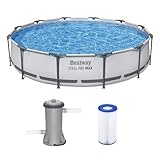
Bestway Steel Pro MAX 12' x 30" Above Ground Swimming Pool Set with Pump | Check Price On Amazon |
|
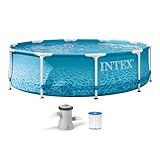
INTEX Beachside Metal Frame 10ft x 30in Round Pool Set w/Pump | Check Price On Amazon |

|
H2OGO! Kids Splash-in-Shade 8-Foot Round Steel Frame Above Ground Pool with Water Mister and Canopy Sunshade, Green Tropical Leaf Print | Check Price On Amazon |
By the Numbers
Baking Soda in Pools: What the Research and Field Data Shows
Sources: NSPF Pool & Spa Operator Handbook, CDC Healthy Swimming guidelines, field testing data
What Does Baking Soda Do in a Pool?
Baking soda raises total alkalinity (TA), which stabilizes pH and prevents rapid pH swings that corrode pool surfaces and equipment. It does not directly sanitize water or kill algae.
According to the NSPF Pool & Spa Operator Handbook, total alkalinity acts as a buffer that absorbs hydrogen ions before they can shift pH. Without adequate alkalinity between 80 and 120 ppm, pH can drop from 7.4 to below 7.0 within hours of adding any acidic chemical like muriatic acid or trichlor tablets.

- Intelligent Navigation with Full Coverage: Equipped with 11 high-precision sensors and enhanced dual-path algorithms. The optimized WavePath cleaning pattern ensures systematic coverage with minimal overlap, while adaptive navigation analyzes pool layout in real time to eliminate missed spots
- Dual Filtration for Crystal-Clear Water: Advanced dual-layer filtration system features a replaceable 3-micron ultra-fine filter paired with a 180-micron standard filter. Effectively captures fine dust, sand, leaves, and debris for visibly cleaner and healthier pool water
- Comprehensive Pool Cleaning: Engineered to clean the pool floor, walls, waterline, and shallow areas (above 12 inches). The Caterpillar Treads system enhances mobility and climbing ability, ensuring thorough coverage across all pool zones
- Reliable Performance with 2-Year Warranty: Trusted by over 500,000 pool owners worldwide, this robotic pool cleaner delivers consistent, high-performance results. Built for durability and backed by a 2-year warranty and responsive customer support for worry-free ownership
This happens because the carbonate-bicarbonate buffer system neutralizes acids at the molecular level. Carbonate ions (CO3 2minus) and bicarbonate ions (HCO3 minus) accept free hydrogen ions, preventing them from lowering pH.
This buffering only occurs when total alkalinity stays above 80 ppm. If alkalinity drops below 60 ppm, the buffer system fails and pH becomes reactive to every chemical addition, rainfall, or bather introduction.
When alkalinity crashes below 60 ppm, pH swings cause etching on plaster surfaces, corrosion of metal fittings, and chlorine efficiency loss of up to 40%. You fix this by adding precisely measured baking soda at 1.5 lbs per 10,000 gallons per 10 ppm TA increase.
Baking soda is chemically identical to sodium bicarbonate sold as pool alkalinity increaser. The only difference is the label and the price per pound. Pool-branded alkalinity increaser costs 3 to 5 times more per pound than bulk baking soda from grocery or warehouse stores.
For most residential pool owners, baking soda from a warehouse club at $0.50 to $0.70 per pound gives the same chemical result as pool-store alkalinity products at $2.50 to $3.50 per pound.
How Much Baking Soda Should You Add to Your Pool?
The standard formula is 1.5 pounds of baking soda per 10,000 gallons of pool water to raise total alkalinity by 10 ppm. This formula works for any pool size when you scale the dosage proportionally.
The Pool & Hot Tub Alliance (PHTA) recommends maintaining total alkalinity between 80 and 120 ppm for chlorine pools. For saltwater chlorine generator pools, the recommended range tightens to 80 to 100 ppm because SWCGs naturally drive pH upward.
Always test your current alkalinity level with a reliable test kit before adding baking soda. A liquid drop test kit like the Taylor K-2006 gives TA readings accurate to within 10 ppm. Test strips may read 20 to 40 ppm off from actual levels.
Calculate the difference between your current TA reading and your target of 100 ppm. For every 10 ppm you need to raise, add 1.5 lbs per 10,000 gallons. Alternatively, you can get a precise baking soda dose using our calculator — just enter your pool volume and current TA.
Use the table below to find your exact baking soda dose by pool volume and current alkalinity reading.
Cost Reference
Baking Soda Dosage by Pool Volume and Current Alkalinity Level
All values pre-calculated. Find your pool size row and current TA column to see your exact dose.
| Pool volume ↓ Current TA → | TA at 50 ppm | TA at 60 ppm | TA at 70 ppm | TA at 80 ppm |
|---|---|---|---|---|
| 5,000 gallons | 3.75 lbs ~$2.50 |
3.0 lbs ~$2.00 |
2.25 lbs ~$1.50 |
1.5 lbs ~$1.00 |
| 10,000 gallons | 7.5 lbs ~$5.00 |
6.0 lbs ~$4.00 |
4.5 lbs ~$3.00 |
3.0 lbs ~$2.00 |
| 15,000 gallons | 11.25 lbs ~$7.50 |
9.0 lbs ~$6.00 |
6.75 lbs ~$4.50 |
4.5 lbs ~$3.00 |
| 20,000 gallons | 15.0 lbs ~$10.00 |
12.0 lbs ~$8.00 |
9.0 lbs ~$6.00 |
6.0 lbs ~$4.00 |
Dosage calculated using the standard formula of 1.5 lbs baking soda per 10,000 gallons per 10 ppm TA increase. Cost estimates based on $0.65/lb bulk baking soda. The highlighted cell shows the most common residential scenario: 10,000-gallon pool with TA at 60 ppm targeting 100 ppm.
How to Add Baking Soda to Your Pool: Step-by-Step Guide
Adding baking soda correctly ensures rapid dissolution and even distribution throughout the pool water. Follow these steps in exact order for the best results.
Always add baking soda with the pump running at full speed and the filter in normal circulation mode. Never add it through the skimmer or directly into the filter.
Step-by-Step Guide
How to Add Baking Soda to Your Pool: Step by Step
6 steps · Estimated time: 30 minutes active, 4 hours total
Test your current total alkalinity
Use a liquid drop test kit for accuracy to within 10 ppm. Record the exact TA reading. Test strips are not accurate enough for dosage calculations.
Calculate your dosage
Use the formula: (target TA minus current TA) divided by 10, then multiplied by 1.5 lbs per 10,000 gallons. For a 20,000-gallon pool needing a 40 ppm increase, that equals 12 lbs of baking soda.
Set pump to high speed
Run the pump at full speed (typically 3,450 RPM for single-speed pumps, or the highest setting for variable-speed models). Good circulation prevents baking soda from settling on the pool floor.
Broadcast baking soda across the deep end
Walk around the deep end and pour baking soda in a wide arc over the water surface. This is called broadcasting and ensures even distribution as the powder sinks and dissolves.
Brush the pool floor after 15 minutes
Use a nylon pool brush to sweep any settled baking soda off the floor and into the water column. A small amount of undissolved powder on the floor is normal and will dissolve within the hour.
Retest after 4 hours
Wait a full 4 hours with the pump running before retesting total alkalinity. If TA is still below 80 ppm, add half the original dose and retest after another 4 hours.
For pools with an automated chemical dosing system, manually broadcast the baking soda rather than loading it into the feeder. Automated feeders are designed for liquid chemicals and slow-dissolving tablets, not powders like sodium bicarbonate.
If you use a wireless pool monitor to track water chemistry, recalibrate the total alkalinity sensor 24 hours after adding baking soda. Sensor drift is common after large alkalinity adjustments.
Baking Soda vs Soda Ash vs Commercial Alkalinity Increaser: What Is the Difference?
Baking soda (sodium bicarbonate) raises total alkalinity with a minimal effect on pH. Soda ash (sodium carbonate) raises both pH and alkalinity simultaneously, which is often the wrong correction when only alkalinity is low.
Commercial pool alkalinity increaser products are chemically identical to baking soda but cost 3 to 5 times more per pound. A 13.5 lb bag of pool-branded alkalinity increaser typically costs $25 to $35, while the same weight of bulk baking soda costs $7 to $10.
Use the table below to decide which chemical to add based on your test results.
Product Comparison
Baking Soda vs Soda Ash vs Alkalinity Increaser: Side by Side
Detailed comparison to help you choose the right chemical for your current water balance.
| Feature | Baking Soda | Soda Ash | Pool Alkalinity Product |
|---|---|---|---|
| Chemical name | Sodium bicarbonate | Sodium carbonate | Sodium bicarbonate |
| Effect on TA | Raises TA strongly | Raises TA moderately | Raises TA strongly |
| Effect on pH | Minimal increase | Raises pH significantly | Minimal increase |
| Best for | Low TA, pH already in range | Low TA and low pH together | Low TA, pH already in range |
| Cost per lb | $0.50 to $0.70 | $1.50 to $2.50 | $2.50 to $3.50 |
| Our verdict | Best value for TA adjustment | Use only when both are low | Same chemical, higher price |
Prices are current at time of publication for bulk purchases at major retailers.
For most residential pool owners, the conclusion is straightforward. Use baking soda from a grocery or warehouse store when total alkalinity is low but pH is already between 7.4 and 7.6.
What Happens If You Add Too Much Baking Soda?
Adding too much baking soda raises total alkalinity above 120 ppm, which drives pH upward and makes it difficult to lower pH without also lowering alkalinity. This condition is called alkalinity lock and frustrates many pool owners.
High total alkalinity above 150 ppm causes calcium scaling on pool surfaces and inside plumbing. The scale forms because high bicarbonate levels combine with calcium ions to precipitate calcium carbonate, the same white crust you see on pool tile at the waterline.
This only occurs when both total alkalinity exceeds 120 ppm and calcium hardness exceeds 400 ppm simultaneously. If one or both are within range, scaling risk is minimal.
If alkalinity rises above 150 ppm from a baking soda overdose, the result is scale formation on heat exchanger surfaces and inside salt chlorine generator cells. Fix it by adding muriatic acid in small 8-ounce increments per 10,000 gallons, testing after each addition.
For safe muriatic acid dosing procedures, refer to our complete guide on using muriatic acid for pool water adjustment. Never add acid and baking soda on the same day without testing between treatments.
The most common cause of baking soda overdose is miscalculating pool volume. Before adding any chemical, determine your pool’s exact volume with our calculator — a 15-foot round above-ground pool holds approximately 5,300 gallons, not the 15,000 gallons a new owner might estimate.
How Long After Adding Baking Soda Can You Swim?
You can safely swim 30 minutes after adding baking soda if the pump has been running continuously and the powder is fully dissolved. Baking soda is non-toxic and does not create chloramines or irritants like shock products do.
However, wait at least 4 hours before swimming if you added a large dose of 10 lbs or more. Large amounts can temporarily cloud the water and create a slightly gritty feel on pool surfaces until fully dissolved.
The 30-minute wait time applies only when baking soda is the sole chemical added. If you also added chlorine, algaecide, or any other chemical, follow the longer of the two wait times.
Does Baking Soda Kill Algae or Clear Cloudy Water?
Baking soda does not kill algae and does not directly clear cloudy water. Some pool owners see clearer water after adding baking soda because correcting low alkalinity allows chlorine to work effectively again, which then kills algae and clears cloudiness indirectly.
In plain terms: baking soda fixes the chemistry that was preventing chlorine from doing its job. The chlorine does the actual sanitizing and clearing.
If your pool water is clear but the chlorine test reads zero despite clear water, check your cyanuric acid level before adding more shock. High CYA above 80 ppm makes chlorine ineffective even at normal readings.
Can Baking Soda Replace All Your Pool Chemicals?
Baking soda only replaces alkalinity increaser, which is one of roughly 7 to 10 chemicals a pool needs over a season. It cannot replace chlorine, pH adjusters, cyanuric acid, calcium hardness increaser, algaecide, or enzyme treatments.
Pool owners who claim baking soda is a universal pool chemical are misunderstanding its function. Sodium bicarbonate has exactly one role in pool chemistry: providing bicarbonate ions to buffer pH by maintaining total alkalinity.
Quick Reference
Pool Water Chemistry: Key Terms Explained
Quick reference for the terms used throughout this guide
Measurement of the water’s ability to resist pH change, expressed in ppm of carbonate and bicarbonate ions. Target range: 80-120 ppm.
The active chemical in baking soda and pool alkalinity increaser. Molecular formula NaHCO3. Each pound adds approximately 7.1 ppm TA per 10,000 gallons.
Soda ash or pH increaser. Molecular formula Na2CO3. Raises both pH and alkalinity. Not interchangeable with baking soda.
The carbonate-bicarbonate equilibrium that absorbs hydrogen ions (acid) and hydroxide ions (base) to stabilize pool pH between 7.2 and 7.8.
Condition where TA exceeds 120 ppm, making pH resistant to downward adjustment. Fixed by incremental muriatic acid additions.
White crusty deposit of calcium carbonate that forms when high TA combines with high calcium hardness, especially on warm surfaces like heaters and SWCG cells.
Method of adding granular or powdered chemicals by spreading them in a wide arc over the pool surface rather than dumping in one spot.
Standard unit for measuring chemical concentration in pool water. 1 ppm equals 1 milligram of substance per liter of water. A 20,000-gallon pool contains approximately 75,700 liters.
Will Baking Soda Raise pH in a Pool?
Baking soda raises pH by approximately 0.1 to 0.2 units when you add enough to raise total alkalinity by 40 to 50 ppm. This pH increase is small enough that most pool owners do not need to adjust pH separately after a baking soda treatment.
The minimal pH effect occurs because sodium bicarbonate has a pH of approximately 8.3 in solution, which is only slightly above the ideal pool range of 7.4 to 7.6. Soda ash, by contrast, has a solution pH near 11.4 and can spike pool pH above 8.0 within minutes.
If your pH is already at the high end of the range (7.7 to 7.8), adding a large baking soda dose can push it above 7.8. Monitor your pH after the treatment and be prepared to add a small amount of pH decreaser if pH climbs above 7.8. For precise adjustment, use our swimming pool pH calculator to find the right amount of decreaser.
Myth vs Fact
Baking Soda in Pools: Common Myths Debunked
Separating fact from fiction on the most common baking soda misconceptions
✗ Myth
Baking soda can replace chlorine as a pool sanitizer.
✓ Fact
Baking soda has zero sanitizing properties. It does not contain chlorine, bromine, or any EPA-registered sanitizer. The CDC requires a minimum 1 ppm free chlorine residual in pools regardless of alkalinity level.
✗ Myth
Pool-grade alkalinity increaser is stronger than grocery store baking soda.
✓ Fact
Both products are 100% sodium bicarbonate with identical chemical purity (typically 99% or higher). The pool-branded version costs more because of packaging and marketing, not because of superior chemistry or concentration.
✗ Myth
Adding baking soda through the skimmer speeds up dissolution.
✓ Fact
Adding baking soda through the skimmer can cause a pH spike inside the filter tank and may temporarily blind sand filters or clog cartridge pleats. Always broadcast baking soda directly into the pool, not through the skimmer.
✗ Myth
You should add baking soda and muriatic acid on the same day to balance things out.
✓ Fact
Baking soda and muriatic acid neutralize each other when added within hours of each other. Wait at least 6 hours between these two chemicals, and always test the water after the first chemical fully circulates before adding the second.
✗ Myth
If a little baking soda is good, more is better for extra-clear water.
✓ Fact
Total alkalinity above 150 ppm causes calcium scaling on pool surfaces and inside heaters. It also makes pH nearly impossible to lower. More baking soda beyond the target range of 80-120 ppm creates problems, not clearer water.
Can You Use Baking Powder Instead of Baking Soda in a Pool?
Never use baking powder in a pool. Baking powder contains cornstarch and monocalcium phosphate in addition to sodium bicarbonate, and both additives will cloud pool water and potentially feed algae with organic starches.
Baking powder is approximately 30% sodium bicarbonate with the remainder being acid salts and starch. The acid component can lower pH unpredictably, and the starch creates a food source for bacteria and algae.
Does Water Temperature Affect How Baking Soda Dissolves?
Baking soda dissolves faster in warm water above 75°F but functions chemically at any temperature above freezing. In cold pool water at 50°F to 60°F, baking soda may take 6 to 8 hours to fully dissolve instead of the typical 4 hours.
The chemical reaction that raises alkalinity is not temperature-dependent within pool operating ranges. Cold water only slows the dissolution rate, not the buffering chemistry once the sodium bicarbonate is in solution.
Why Does My Pool pH Drop Again Days After Adding Baking Soda?
Recurring pH drops after raising alkalinity indicate an ongoing acid source, typically trichlor chlorine tablets, which have a pH of approximately 2.9 and continuously lower both pH and alkalinity. Trichlor is the most common cause of chronic low alkalinity in residential pools.
If you use a trichlor tablet feeder, every 3-inch tablet (8 oz) that dissolves releases enough acid to consume approximately 0.35 lbs of baking soda’s alkalinity contribution. Pools on trichlor need alkalinity testing at least twice weekly during peak season.
How Often Should I Test Total Alkalinity After Adding Baking Soda?
Test total alkalinity 24 hours after adding baking soda to confirm the correction, then resume your normal testing schedule of once or twice weekly. Alkalinity does not deplete rapidly in a balanced pool unless you are adding acidic chemicals like trichlor or muriatic acid regularly.
Pools using liquid chlorine or saltwater chlorine generators typically lose alkalinity more slowly than pools using trichlor tablets. Plan to retest alkalinity weekly in chlorine tablet pools and biweekly in liquid chlorine or salt pools.
Can I Swim While Baking Soda Is Still Dissolving?
You can swim while baking soda is still dissolving if the water is clear and the pump has been running for at least 15 minutes. Undissolved baking soda on the pool floor is not harmful but may feel gritty underfoot and temporarily cloud water when disturbed.
For comfort, wait until the powder is no longer visible on the pool floor and the water is clear. This typically takes 30 to 60 minutes for doses under 5 lbs.
Is Arm & Hammer Baking Soda the Same as Pool Baking Soda?
Arm & Hammer baking soda and pool-branded sodium bicarbonate are chemically identical at 99% or higher purity. The Arm & Hammer product labeled “pure baking soda” with no added scents, detergents, or cleaning agents is safe for pool use at the standard dosage of 1.5 lbs per 10,000 gallons per 10 ppm TA increase.
Do not use Arm & Hammer products with added fragrances, such as their carpet deodorizer or refrigerator packs. These contain perfumes and other additives that will contaminate pool water and may cause foaming.
What Is the Difference Between Alkalinity and pH?
Total alkalinity measures the water’s capacity to resist pH change, expressed in ppm of carbonate and bicarbonate ions. pH measures the current acidity or basicity of the water on a scale of 0 to 14, with 7.4 to 7.6 being ideal for pools.
Think of alkalinity as a battery that powers pH stability. When alkalinity is drained (below 80 ppm), pH crashes with every acid input. When alkalinity is charged (80 to 120 ppm), pH holds steady even when acid or base chemicals are added.
Should I Use Baking Soda or Soda Ash If Both pH and Alkalinity Are Low?
If both pH and total alkalinity are low, add soda ash (sodium carbonate) rather than baking soda. Soda ash raises both pH and alkalinity simultaneously, which is the correct correction when both parameters are below target.
A typical dose of soda ash is 6 ounces per 10,000 gallons to raise pH by 0.2 units and TA by approximately 5 ppm. Test again after 4 hours before adding more.
Can Baking Soda Damage My Pool Filter or Pump?
Baking soda does not damage pool filters, pumps, or plumbing when added correctly by broadcasting into the pool water. Sodium bicarbonate is a mild, non-corrosive salt with a pH near 8.3 and poses no chemical risk to equipment materials including PVC, stainless steel, copper, or filter media.
The only equipment risk comes from adding baking soda through the skimmer, which can temporarily create a high-concentration slurry that may blind sand filters or coat cartridge pleats. Always broadcast baking soda into open water.
How Do I Know If My Alkalinity Problem Is Fixed?
Your alkalinity problem is fixed when your total alkalinity reading stays between 80 and 120 ppm for two consecutive weekly tests without additional baking soda additions. The real test is pH stability: if pH does not swing more than 0.3 units in a week, your alkalinity buffer is functioning correctly.
If pH continues to drift by more than 0.5 units per week despite alkalinity in the 80 to 120 ppm range, check for an external acid source such as a trichlor feeder running too high, heavy rainfall in areas with acid rain, or high bather loads introducing organic acids.
Is Sodium Bicarbonate Eco-Friendly for Pool Use?
Sodium bicarbonate is one of the most environmentally benign pool chemicals available. It is the same compound found naturally in mineral springs and groundwater, and it does not persist in the environment or create toxic byproducts when pool water is discharged.
The bicarbonate ions added to pool water are identical to those produced by atmospheric CO2 dissolving in natural water bodies. No special disposal procedures are required beyond standard pool water discharge guidelines for your municipality.
Baking soda is the simplest, safest, and most cost-effective tool for managing your pool’s total alkalinity. Test accurately with a drop-based kit, calculate your dose using the 1.5 lbs per 10,000 gallons per 10 ppm formula, broadcast into the deep end with the pump running, and retest after 4 hours.
For most residential pools, a 13.5 lb bag of bulk baking soda costs under $10 and provides 2 to 4 full alkalinity corrections per season. Keep one on hand alongside your liquid drop test kit and you will never be surprised by a pH crash again.
| Photo | Best Above-Ground Pools | Price |
|---|---|---|
|
|
Bestway Steel Pro MAX 12' x 30" Above Ground Swimming Pool Set with Pump | Check Price On Amazon |
|
|
INTEX Beachside Metal Frame 10ft x 30in Round Pool Set w/Pump | Check Price On Amazon |
|
|
H2OGO! Kids Splash-in-Shade 8-Foot Round Steel Frame Above Ground Pool with Water Mister and Canopy Sunshade, Green Tropical Leaf Print | Check Price On Amazon |