
Drowning is the leading cause of accidental death in children ages 1 to 4 in the United States, according to the Centers for Disease Control and Prevention (CDC), and the majority of these tragedies happen in residential swimming pools. A pool in your backyard is a source of joy, exercise, and lasting family memories, but it demands a level of safety discipline that goes well beyond a simple fence.
This guide covers every layer of protection, from pool barriers and drain safety to supervision protocols and emergency response, so your family can swim with confidence.
| Photo | Best Above-Ground Pools | Price |
|---|---|---|
|
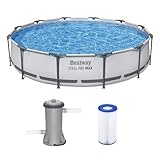
Bestway Steel Pro MAX 12' x 30" Above Ground Pool, Round Metal Frame Outdoor Swimming Pool Set with Filter Pump & Type III A/C Cartridge, Gray | Check Price On Amazon |
|
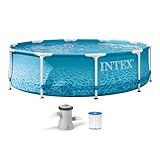
INTEX 28207EH Beachside Metal Frame Above Ground Swimming Pool Set: 10ft x 30in – Includes 330 GPH Cartridge Filter Pump – Puncture-Resistant Material – Rust Resistant – 1185 Gallon Capacity | Check Price On Amazon |

|
H2OGO! Kids Splash-in-Shade 8-Foot Round Steel Frame Above Ground Pool with Water Mister and Canopy Sunshade, Green Tropical Leaf Print | Check Price On Amazon |
Why Young Children Face Unique Drowning Risk in Residential Pools
Children under age 5 drown silently and within seconds, unlike the dramatic splashing most adults expect to see. Their large head-to-body ratio makes self-recovery from a face-down position nearly impossible, and they lack the muscle coordination to tread water reliably even after swimming lessons.
Residential swimming pools, including inground pools, above-ground pools, and inflatable pools (also called kiddie pools or splash pools), account for the majority of pediatric drowning deaths each year according to the U.S. Consumer Product Safety Commission (CPSC). Hot tubs and spas present additional hazards because of their deep, steep walls and elevated water temperatures that can cause rapid exhaustion.
A child who has fallen into water will not look like a drowning victim in most cases. Instinctive drowning response, a term coined by former United States Coast Guard Search and Rescue Instructor Francesco Pia, causes the body to press the arms laterally to stay afloat rather than waving for help. The child’s mouth sits at or just below the water line, leaving no air for calling out.
Understanding this physiology is the foundation of effective pool safety. Every barrier, alarm, and supervision rule in this guide is calibrated to the speed at which a child can reach water and the speed at which drowning occurs.
By the Numbers
Pool Drowning Risk for Young Children – What the Research Shows
Sources: CDC, American Red Cross, PHTA, U.S. Consumer Product Safety Commission
What Is the Four-Layer Pool Safety Model and Why Does It Matter?
The four-layer pool safety model, endorsed by the CDC, the American Academy of Pediatrics (AAP), and the Pool and Hot Tub Alliance (PHTA), uses multiple independent barriers so that if any single layer fails, another layer stops a child from reaching the water unsupervised. No single safety measure is sufficient on its own.
According to the CDC’s guidelines on residential pool safety, the four layers are: physical barriers that prevent pool access (fencing, covers, alarms), supervision protocols (designated adult water watcher), swimming ability development (formal swim lessons for children), and emergency preparedness (CPR training, rescue equipment, emergency planning). Each layer is described in detail throughout this guide.
The Pool and Hot Tub Alliance (PHTA), formerly the Association of Pool and Spa Professionals (APSP), publishes residential pool safety standards that many state and municipal codes adopt directly. Checking your local jurisdiction’s requirements before installing any barrier is essential because minimum legal standards vary significantly by state.

- Intelligent Navigation with Full Coverage: Equipped with 11 high-precision sensors and enhanced dual-path algorithms. The optimized WavePath cleaning pattern ensures systematic coverage with minimal overlap, while adaptive navigation analyzes pool layout in real time to eliminate missed spots
- Dual Filtration for Crystal-Clear Water: Advanced dual-layer filtration system features a replaceable 3-micron ultra-fine filter paired with a 180-micron standard filter. Effectively captures fine dust, sand, leaves, and debris for visibly cleaner and healthier pool water
- Comprehensive Pool Cleaning: Engineered to clean the pool floor, walls, waterline, and shallow areas (above 12 inches). The Caterpillar Treads system enhances mobility and climbing ability, ensuring thorough coverage across all pool zones
- Reliable Performance with 2-Year Warranty: Trusted by over 500,000 pool owners worldwide, this robotic pool cleaner delivers consistent, high-performance results. Built for durability and backed by a 2-year warranty and responsive customer support for worry-free ownership
Pool Fencing and Barriers: The First and Most Critical Layer of Protection
Four-sided pool fencing (also called perimeter fencing or pool isolation fencing) that completely isolates the pool from the house and yard reduces drowning risk in children under 5 by approximately 83 percent compared to three-sided fencing that uses the house wall as one side, according to research published in the journal Injury Prevention. This is the single most impactful safety measure a pool owner can install.
Minimum Fence Height and Climb Resistance Requirements
The CPSC recommends a minimum fence height of 48 inches (4 feet), and many states require 60 inches (5 feet) for new pool installations. Height alone is not sufficient if the fence provides footholds or horizontal rails that a child can use to climb over it.
Chain-link fencing is generally a poor choice for pool barriers because its mesh pattern creates a natural climbing surface for young children. Vertical-bar metal fencing with bar spacing no greater than 4 inches prevents a child from squeezing through, while offering no horizontal climbing holds. Solid wood privacy fences eliminate climbing risk but require careful attention to the self-closing, self-latching gate hardware.
Pool safety fencing materials that meet ASTM International Standard F2286 (the standard specification for permanent pool fencing) include aluminum, wrought iron, tempered glass panels, and vinyl. Each material has different maintenance requirements, cost ranges, and aesthetic profiles to consider alongside safety performance.
Self-Closing, Self-Latching Gate Requirements
Every gate in a pool barrier must be self-closing and self-latching, meaning the gate closes and latches automatically from any open position without manual action from the user. The CPSC specifies that the latch must be located on the pool side of the gate (the inside face), positioned at least 54 inches from the ground, or enclosed in a protective housing that prevents a child from reaching through the fence to release it.
A self-latching pool gate lock should be tested monthly to confirm it closes fully from every position along its arc. Gate hinges weaken over time due to weather exposure and the repeated weight of the gate, and a gate that hangs 2 inches low may no longer latch reliably. Inspect hinges and latch springs as part of your regular pool maintenance routine.
Removable Mesh Pool Fencing as a Flexible Barrier Option
Removable mesh pool fencing (also called portable pool fencing or temporary pool barriers) consists of interlocking mesh panels supported by steel poles driven into the pool deck. These systems are designed specifically for families who want to remove the barrier during adult pool parties and reinstall it quickly when young children are present.
ASTM International Standard F2286 applies to removable mesh pool fencing when it is marketed as a safety barrier. Look for certification labeling on the product that confirms compliance. Systems that meet this standard resist a 45-pound force applied horizontally without deflecting more than 4 inches.
Removable mesh pool fencing is available in heights from 48 inches to 60 inches. A standard 12-foot by 51-inch panel kit for a medium-sized inground pool typically costs between $1,200 and $2,500 installed, depending on pool perimeter and local labor rates.
Above-Ground Pool Barrier Requirements
Above-ground pools present a different barrier challenge because the pool wall itself is elevated above the deck. The CPSC recommends removing the pool ladder or steps and storing them out of reach when the pool is not in use. If an above-ground pool is permanent (not easily moved), local codes may require a surrounding fence at grade level in addition to a secured ladder.
Inflatable pools and splash pools less than 12 inches deep may not be subject to local fencing ordinances, but even 2 inches of water can be lethal to a child under 2 years old. Draining and deflating inflatable pools after each use is the safest approach when young children are present in the household.
Pool Covers and Their Role in Child Safety
Pool covers serve multiple functions, including heat retention, debris management, and chemical reduction, but safety-rated covers specifically engineered to support the weight of a child are a distinct and critical subcategory. Not all pool covers provide any meaningful safety protection.
Solar covers (also called solar blankets or bubble covers) and winter covers are not safety covers. They are designed for thermal and debris management only and can actually increase drowning risk by trapping a child beneath them when they slide off the pool edge onto the cover surface. For a detailed comparison of which cover type is right for your pool, see this breakdown of solar covers vs safety covers vs winter covers.
ASTM F1346 Safety Covers: The Only Cover Standard That Protects Children
ASTM International Standard F1346 is the standard performance specification for safety covers for swimming pools, spas, and hot tubs. A cover that meets ASTM F1346 must support a minimum dead weight of 485 pounds per 5 square feet without allowing a child or adult to pass through or become submerged beneath it. Verify the ASTM F1346 certification label before purchasing any cover marketed as a safety cover.
ASTM F1346-certified covers include two primary types: solid safety covers and mesh safety covers. Solid safety covers prevent all water and debris from entering the pool but require a pool cover pump to remove rainwater that accumulates on the surface. Mesh safety covers allow rainwater to drain through but block debris and, critically, support the weight of a child who steps or falls onto the cover.
For families with young children, an ASTM F1346-certified mesh safety cover anchored to the pool deck with tamper-resistant pool cover anchors provides a passive safety barrier that activates automatically whenever the cover is deployed. Brass anchors are recommended over aluminum in chlorinated environments because they resist corrosion significantly longer. For full guidance on proper cover installation, review this pool cover installation guide.
Automatic safety covers (also called motorized safety covers or automatic pool covers) retract and deploy at the press of a button, which dramatically improves the likelihood that the cover will be deployed whenever the pool is unattended. These systems cost between $10,000 and $25,000 installed for a standard inground pool. Manual safety covers cost between $1,200 and $3,500 depending on pool size and cover material.
If you currently use a solar pool cover for heat retention, always remove and store it completely before children enter the pool area. The best solar pool covers for energy efficiency are detailed separately at this resource on top-rated solar pool covers, which can help you choose the right thermal cover for off-swim periods while your safety cover handles child protection.
Pool Safety Guide
Pool Cover Safety Comparison – Which Cover Protects Young Children
Safety ratings based on ASTM International standards. Source: ASTM F1346, CPSC pool safety guidelines.
| Cover Type | Child Safety Rating | ASTM F1346 | Weight Supported | Primary Function |
|---|---|---|---|---|
| Mesh Safety Cover | Excellent | Yes (required) | 485+ lbs / 5 sq ft | Safety barrier, debris |
| Solid Safety Cover (automatic) | Excellent | Yes (required) | 485+ lbs / 5 sq ft | Safety, heat retention |
| Solar Cover (bubble cover) | None – Hazard | No | 0 (entrapment risk) | Heat retention only |
| Winter Cover (tarp style) | None – Hazard | No | 0 (entrapment risk) | Debris, winter closure |
| Inflatable Pool Cover | Minimal | No | Not rated | Debris only |
Only ASTM F1346-certified covers may be used as a primary child safety barrier. All other cover types must be paired with four-sided fencing and additional layers of protection.
Pool Alarms: Adding an Active Warning Layer
Pool alarms detect unauthorized pool access and sound an audible alert to notify adults inside the home. The CPSC recommends pool alarms as a supplemental layer of protection, not a substitute for fencing or adult supervision, because all current alarm technologies have detection limitations and false alarm rates that can cause families to ignore activations over time.
Surface Wave Alarms
Surface wave pool alarms (also called subsurface disturbance alarms or water surface alarms) mount on the pool wall at the waterline and detect disturbances in the water surface using a float or wave sensor. Models certified under ASTM F2208, the standard specification for pool alarms, must trigger within 20 seconds of a child weighing 15 pounds or more entering the water and must distinguish between legitimate pool disturbances and environmental triggers like wind or rain.
A pool surface wave alarm that meets ASTM F2208 includes a remote receiver that sounds inside the home, typically at 85 decibels or higher, so that adults in distant rooms can hear the alert. Test the alarm monthly by simulating a pool entry with the system armed.
Subsurface Pool Alarms
Subsurface pool alarms detect pressure changes below the water surface caused by a submerged object, making them less susceptible to false alarms from wind or rain than surface wave sensors. These units mount on the pool wall below the waterline and use sonar or pressure transducers to detect disturbances in the water column.
Wearable Pool Alarms for Children
Wearable pool alarms are devices worn on a child’s wrist that trigger an alarm when submerged in water. Products in this category, such as the Safety Turtle 2.0 system, use a base station and a wristband unit. When the wristband detects water contact, the base station sounds an alarm within approximately 5 seconds.
Wearable alarms are particularly useful in environments where surface wave or subsurface alarms are impractical, such as lake properties, vacation rentals, or multi-pool environments. A wearable child pool alarm wristband should never substitute for fencing or direct adult supervision but adds a personal alert layer directly connected to the child.
Door and Gate Alarms
Door alarms that alert adults when a door or gate with pool access is opened are a practical first-alert mechanism. The CPSC recommends alarms on all doors of the home that provide direct access to the pool area. These units sound at 85 decibels or higher and include a temporary disable feature for up to 30 seconds to allow supervised pool access without triggering the alarm.
A pool gate door alarm is the lowest-cost active alert system available, typically priced between $15 and $40 per door. Install one on every door and gate that opens toward the pool, including garage doors, sliding glass doors, and French doors.
Drain Safety and Entrapment Prevention: The Hidden Hazard
Drain entrapment (also called suction entrapment, drain entrapment, or suction outlet entrapment) occurs when the powerful suction generated by a pool pump holds a child’s body, limb, hair, or clothing against or into a pool drain. Drain entrapment deaths prompted the Virginia Graeme Baker Pool and Spa Safety Act (the VGB Act), signed into federal law in 2007, which established mandatory safety standards for all public pools and spas in the United States.
The Virginia Graeme Baker Pool and Spa Safety Act (VGB Act) requires anti-entrapment drain covers certified to ANSI/APSP/ICC-16 (formerly ANSI/ASME A112.19.8) standards on all public pools and public spas. Many states have extended these requirements to residential pools as well. Check with your local health department or pool contractor to confirm whether your jurisdiction applies VGB Act standards to private residential pools.
VGB-Compliant Drain Covers for Residential Pools
VGB-compliant anti-entrapment drain covers are designed with an open area large enough to reduce suction velocity below the entrapment threshold at the rated flow rate of the pool pump. The cover must be matched to the specific pump and plumbing configuration of the pool, as installing a cover rated for a 50 GPM pump on a 100 GPM pump system provides no meaningful protection.
A VGB-compliant pool drain cover should be inspected at pool opening each season and immediately replaced if any cracking, warping, or missing screws are detected. Drain covers in residential pools should be replaced every 5 years or per the manufacturer’s specified service life, whichever comes first.
Dual Main Drain Systems
Dual main drain systems (also called dual-port or split-drain configurations) use two separate drain openings separated by at least 3 feet to reduce the suction force at any single drain point. If one drain is blocked, the pump flow diverts to the second drain rather than increasing suction at the blocked point. The VGB Act mandates dual drains or an equivalent system (safety vacuum release system, suction-limiting vent system, or gravity drainage system) for all covered pools and spas.
If your residential pool has a single main drain, consult a licensed pool contractor about retrofitting a dual-drain system or installing a Safety Vacuum Release System (SVRS). An SVRS detects abnormal suction conditions and automatically shuts off the pump or reverses flow within 1 to 2 seconds of entrapment. SVRS units cost between $300 and $800 for the device, plus installation labor.
Hair Entrapment Prevention
Hair entrapment occurs when long hair is pulled into a drain opening and becomes tangled in the drain cover or suction fitting before the child can free themselves. The CDC recommends that children with long hair wear a swim cap or keep hair secured in a tight braid or bun when swimming. Parents should teach children to stay away from all drains, suction fittings, and skimmer openings while in the pool.
Inspect all suction fittings at the pool opening each season, including skimmer suction ports, main drain covers, and vacuum fittings. Any suction fitting with a broken or missing cover must be repaired before the pool is used, regardless of whether young children will be present.
Adult Supervision Protocols: The Most Powerful Safety Layer
Active adult supervision, defined as a designated adult whose sole responsibility during pool time is watching the swimmers in the water, is the most direct preventive measure against pool drowning. Research consistently shows that in the majority of pediatric pool drowning incidents, an adult was present but not actively watching the pool at the moment the child entered the water or submerged.
The Designated Water Watcher System
The American Red Cross and the YMCA recommend the designated water watcher system, in which one adult is assigned exclusive supervisory responsibility for the pool during any swim session. The water watcher does not use a phone, engage in conversations, consume food, or leave the pool area for any reason during their watch period.
Water watcher rotation intervals of 15 to 20 minutes prevent fatigue-related lapses in attention. Passing a physical object such as a water watcher lanyard card during rotation makes the handoff explicit and prevents both adults from assuming the other is watching. This system is especially important during social gatherings where pool supervision can easily become nobody’s specific responsibility.
The rule applies equally to pools with professional lifeguards present at a community pool. A lifeguard’s responsibility covers all swimmers in the facility and cannot substitute for a parent’s direct supervision of a young child under age 5. The AAP recommends that parents remain within arm’s reach (a technique called “touch supervision”) of non-swimming toddlers at all times in or near pool water.
Touch Supervision for Toddlers and Non-Swimmers
Touch supervision means staying close enough to immediately reach and lift a child without taking a single step. For toddlers under age 3 and children who cannot swim independently, touch supervision is the minimum standard whenever they are within 5 feet of any pool edge, spa, or body of water. The parent or guardian should be in the water with the child, not seated on the pool deck watching from above.
Even with touch supervision in place, all other safety layers (fencing, drain covers, pool alarms) must remain active. Touch supervision fails the moment an adult becomes distracted by another child, a phone notification, or a conversation. The purpose of structural barriers is to give a momentarily distracted parent a second chance before a child reaches the water.
Defining Pool Rules and Communicating Them to Children
Children over age 3 can understand and follow simple pool rules when those rules are consistently enforced. The following rules, adapted from American Red Cross Swim guidelines, should be posted visibly at the pool and reviewed before every swim session.
- Never enter the pool without a grown-up who can see you in the water at all times.
- Walk, do not run, on pool decks and wet surfaces.
- No diving in shallow water or in above-ground pools where depth is under 5 feet.
- Stay away from all drains, outlets, and skimmer openings at the bottom and sides of the pool.
- Never push or hold another swimmer underwater.
- Get out of the pool immediately if you hear thunder, regardless of whether you see lightning.
- Always swim with a buddy. Never swim alone.
Posting a pool safety rules sign at the pool entrance reinforces these expectations visually for children and visiting adults. Choose a sign that uses both text and illustrated symbols for pre-literate children.
Pool Electrical Safety: Understanding Bonding, Grounding, and Electric Shock Drowning
Electric shock drowning (ESD) is a poorly understood but life-threatening hazard in which AC voltage leaking into pool water causes muscular paralysis in a swimmer, leading to drowning without any visible external injury. ESD is caused by improper or absent bonding and grounding of pool electrical equipment, including pool pumps, pool lights, pool heaters, and pool automation systems.
The National Electrical Code (NEC), Article 680, governs all electrical installations at permanently installed pools, storable pools, spas, hot tubs, and fountains. Compliance with NEC Article 680 requires both equipment grounding (connecting all metal parts to a grounding conductor) and equipotential bonding (connecting all metal components together to prevent voltage differences in the pool water). A full explanation of these requirements and how they protect your family is covered in this guide on pool bonding and grounding.
Signs that a pool may have an electrical problem include a tingling or stinging sensation in the water, a swimmer who suddenly becomes rigid or unable to move, unexplained lights flickering near the pool equipment, or a circuit breaker that trips repeatedly on pool equipment circuits. If any of these signs are observed, all swimmers must exit the pool immediately and a licensed electrician with pool electrical experience must inspect the system before the pool is used again.
Ground Fault Circuit Interrupter (GFCI) protection is required by NEC Article 680 on all 15-amp and 20-amp, 125-volt receptacles within 20 feet of the pool edge, on all pool pump circuits, and on all pool lighting circuits operating at 120 volts or higher. Test GFCI outlets and circuit breakers monthly using the built-in test button. A GFCI that does not trip when the test button is pressed must be replaced immediately.
Swimming Lessons and Water Competency: Building Skills That Save Lives
Formal swimming lessons reduce the risk of drowning in children ages 1 to 4 by approximately 88 percent, according to research published in the Archives of Pediatrics and Adolescent Medicine (now JAMA Pediatrics) by Dr. Ruth Brenner and colleagues. This finding reversed earlier AAP guidance that had discouraged swim lessons for children under age 4, and the AAP now supports swim lessons for children ages 1 and older based on individual developmental readiness.
When to Start Swim Lessons
The AAP recommends that most children are developmentally ready for formal swimming lessons beginning at age 1, though individual readiness varies. Children who are not yet walking independently or who show significant fear of water may benefit from a 6-month delay. Aquatic readiness programs for infants as young as 6 months focus on water acclimation and parent-child bonding rather than independent swimming skills.
Infant self-rescue programs, such as Infant Swimming Resource (ISR) Self-Rescue, teach children ages 6 months to 6 years to roll onto their back and float if they fall into water unexpectedly. ISR lessons typically involve 10-minute daily sessions over 4 to 6 weeks and cost between $60 and $90 per week for the full program. These skills are not a replacement for adult supervision or physical barriers but provide an additional layer of protection for children who may unexpectedly enter the water.
What “Water Competency” Means Beyond Basic Swimming
The CDC defines water competency as a combination of three skills: the ability to enter water over one’s head and return to the surface, the ability to turn and orient toward an exit, and the ability to exit the water safely without assistance. Passing a beginners swim class does not guarantee water competency, particularly in open water or unexpected fall-in scenarios.
The American Red Cross categorizes swimming ability across six levels in its Learn to Swim program, from Introduction to Water Skills (Level 1) through Advanced Swimmer (Level 6). Children who can independently complete a 300-yard continuous swim are generally considered to have foundational water competency in pool environments. Parents should discuss skill assessment with a certified swim instructor to understand where their child’s current abilities fall.
Life Jackets vs Water Wings: Understanding the Difference
U.S. Coast Guard-approved personal flotation devices (PFDs), commonly called life jackets, are the only flotation aids that meet federal safety standards for buoyancy and self-righting capability. Puddle jumpers (the combined arm-and-chest flotation device) are Coast Guard-approved for children weighing 30 to 50 pounds and provide reliable buoyancy when the child is face-down in the water.
Water wings (also called arm bands, swimmies, or floaties) and inflatable swim rings are not Coast Guard-approved and should not be used as safety devices for children who cannot swim. These products deflate without warning, slip off easily, and provide no self-righting capability. A Coast Guard-approved child life jacket is the correct choice for non-swimmers, open water, and boat environments.
Life jackets worn in the pool do not replace adult supervision or teach swimming skills. Children who rely on flotation aids develop a false sense of water security that can increase risk in unguarded moments. The goal of flotation aid use should always be to supplement supervision and lessons, not to substitute for either.
Pool Chemical Safety: Protecting Children from Chemical Hazards
Pool chemicals, including chlorine tablets (trichlor), pool shock (calcium hypochlorite), muriatic acid (hydrochloric acid used to lower pool pH), and pool algaecide, are acutely toxic if ingested, inhaled, or contacted with skin in concentrated form. The CPSC reports that pool chemicals send approximately 4,500 people to emergency rooms each year in the United States, with children under age 5 representing a disproportionate share of ingestion incidents.
Safe Storage of Pool Chemicals
Pool chemicals must be stored in a locked, ventilated storage cabinet that is inaccessible to children and pets. Calcium hypochlorite (pool shock) is an oxidizer that reacts violently with organic materials, other chlorine compounds, and acids. Never store calcium hypochlorite and muriatic acid in the same cabinet, as vapor contact can cause a chlorine gas reaction.
A lockable pool chemical storage cabinet prevents accidental access and reduces vapor accumulation. Store pool chemicals in their original labeled containers at all times. Never transfer pool chemicals to unlabeled containers or to containers previously used for food or beverages.
Personal protective equipment (PPE) for handling pool chemicals includes chemical-resistant gloves and safety goggles rated for chemical splash protection. When opening calcium hypochlorite or adding acid to pool water, perform the task outdoors or in a well-ventilated area with all children and pets removed from the immediate vicinity.
Re-Entry Intervals After Adding Pool Chemicals
The following minimum re-entry intervals should be observed after adding chemicals to the pool. These intervals reflect manufacturer and CDC recommendations for residential pools and assume normal circulation and filtration are running continuously during the wait period.
- Chlorine tablets (trichlor) added to a chemical feeder: 30 minutes after balanced free chlorine level confirmed between 1 and 3 ppm.
- Pool shock (calcium hypochlorite) added to raise free chlorine above 10 ppm: wait until free chlorine drops to 3 ppm or below before re-entry, typically 8 to 24 hours depending on dose and pump run time.
- Muriatic acid or sodium bisulfate (pH decreaser): 30 minutes with pump running to disperse.
- Sodium carbonate or sodium bicarbonate (pH or alkalinity increaser): 30 minutes with pump running.
- Pool algaecide (copper-based or quat-based): 15 to 30 minutes with pump running, per product label.
Always test pool water with a liquid drop pool test kit or pool test strips before allowing children to enter the water after any chemical addition. Target free chlorine between 1 and 3 ppm and pH between 7.2 and 7.6 for safe swimming conditions.
Pool Safety During the Off-Season: Managing Risks When the Pool Is Closed
Off-season pool hazards are underestimated by many families. A closed pool with a standing water cover, a partially drained pool, or a pool in the process of winterization all pose significant drowning risks for young children who do not understand that the pool is “out of service.” Drowning incidents occur year-round in residential pool environments, including during the winter months when a pool holds residual water beneath a non-safety-rated winter cover.
Maintaining a properly installed, ASTM-rated safety cover throughout the off-season is the most effective measure for eliminating this risk. For guidance on managing your pool cover as the swimming season ends and begins, review this detailed walkthrough on how to remove a pool cover in spring, which covers proper inspection and water management before the first swim of the season.
Fencing must remain in place and gates must remain latched throughout the off-season. Many families make the mistake of propping gates open during fall maintenance or winterization tasks and leaving them open for days at a time. A child can access the pool area in seconds during these open intervals.
CPR Training and Emergency Preparedness: The Final Safety Layer
Cardiopulmonary resuscitation (CPR) administered immediately after a drowning victim is removed from the water significantly increases survival and neurological recovery rates. According to the American Heart Association (AHA), bystander CPR provided within the first few minutes of cardiac arrest can double or triple survival rates in cardiac emergency scenarios. For drowning victims, who experience hypoxic cardiac arrest due to oxygen deprivation, the AHA’s Hands-Only CPR guidance recommends a two-rescue-breath approach because the hypoxic nature of drowning distinguishes it from standard cardiac arrest.
Who in Your Household Should Be CPR Certified
Every adult in a household with a swimming pool should hold a current CPR certification that includes rescue breathing. The American Red Cross and the AHA both offer in-person and blended-learning CPR and First Aid courses specifically designed for lay rescuers. Certification courses typically run 3 to 4 hours and cost between $50 and $80 per person for in-person instruction.
CPR certification must be renewed every 2 years to remain current with updated guidelines. The AHA updates its Basic Life Support (BLS) guidelines on a 5-year cycle, most recently in 2020 with its Guidelines for CPR and Emergency Cardiovascular Care publication. Pool owners should confirm their certification reflects current protocols at renewal.
Rescue Equipment That Must Be Poolside at All Times
The following rescue equipment should be mounted and accessible within arm’s reach of the pool area at all times when the pool is in use. Storing rescue equipment in a garage or storage shed defeats its purpose because every additional second of delay during a drowning emergency reduces survival probability.
- A pool shepherd’s hook (reaching pole with hook) at least 12 feet long, mounted on a dedicated bracket at poolside.
- A Coast Guard-approved throw bag or ring buoy with at least 50 feet of polypropylene throw line, mounted in a weatherproof bracket visible from the pool deck.
- A weatherproof pool first aid kit that includes barrier masks for CPR, bandages, and emergency contact information.
- A charged mobile phone or poolside landline phone accessible without entering the house, pre-programmed to call 911 and post the full home address visibly near the device.
What to Do in a Pool Drowning Emergency
The following protocol is based on American Red Cross Emergency Response guidelines and is specifically adapted for residential pool environments with young children.
Step-by-Step Guide
Pool Drowning Emergency Response Protocol
7 steps based on American Red Cross Emergency Response guidelines for residential pool emergencies
Shout for help immediately
Call out loudly for other adults to assist and activate the emergency response chain. Do not assume others have heard or noticed the emergency.
Call 911 before entering the water
Dial 911 or direct another person to call immediately. State the address, the age of the victim, and that a child has submerged in a residential pool. Do not hang up.
Reach or throw before entering the water
Use the shepherd’s hook or throw ring to reach the victim from the pool deck if possible. Entering the water to rescue a panicking drowning victim puts the rescuer at serious risk without proper lifeguard training.
Remove the child from the water
Lift the child from the water supporting the head and neck. Do not attempt spinal precautions unless a diving or fall injury is suspected, as delaying resuscitation to stabilize the spine in a non-trauma drowning causes additional harm.
Check for breathing and begin CPR if needed
If the child is unresponsive and not breathing normally, begin CPR immediately. For children: provide 30 chest compressions at a depth of 2 inches, then 2 rescue breaths. Continue until EMS arrives or the child shows clear signs of recovery.
Do not leave the child alone while waiting for EMS
Assign one person to meet emergency responders at the street address and guide them directly to the pool. Continue CPR without interruption until EMS takes over.
Seek hospital evaluation even if the child appears to recover
Secondary drowning and dry drowning are terms used to describe pulmonary edema or laryngospasm that can develop hours after a submersion incident in a child who initially appeared fine. All submersion incidents in children require immediate emergency department evaluation, regardless of apparent recovery.
Pool Safety Myths and Facts Every Parent Needs to Know
Several persistent myths about pool safety cause parents to underestimate specific risks or over-rely on measures that provide false confidence. The following myth-and-fact pairs address the most dangerous misconceptions circulating in parent communities and pool owner forums.
Myth vs Fact
Pool Safety for Young Children – Common Myths Debunked
Based on CDC, American Red Cross, and AAP guidance on pediatric pool safety
X Myth
If a child knows how to swim, they are safe in the pool without close supervision.
Checkmark Fact
Swimming ability reduces but does not eliminate drowning risk. Even strong swimmers drown in residential pools due to cramps, exhaustion, head injury from falls, entrapment, or being alone when a health event occurs. The AAP recommends active adult supervision for all children under age 12 whenever they are in or near pool water.
X Myth
You will hear a child drowning because they will scream or splash.
Checkmark Fact
Instinctive drowning response causes the body to press arms laterally and positions the mouth at or just below the waterline, making screaming or sustained splashing physiologically impossible. A drowning child looks like they are treading water quietly or resting before submerging. Silence is a warning sign, not reassurance.
X Myth
Water wings and inflatable arm bands keep young children safe in the pool.
Checkmark Fact
Water wings are not approved by the U.S. Coast Guard, do not prevent drowning, and can deflate or slide off a child’s arm without warning. Only Coast Guard-approved Type III or Type II personal flotation devices (PFDs), including approved puddle jumpers for children 30 to 50 pounds, provide reliable flotation protection.
X Myth
A three-sided fence using the house wall as one barrier is adequate pool protection.
Checkmark Fact
Research published in Injury Prevention found that four-sided pool isolation fencing reduces drowning risk by 83 percent compared to three-sided fencing. The house wall provides zero barrier if a child exits through a door without the parent noticing. Four-sided fencing with a self-latching gate is the only configuration that fully isolates the pool from unauthorized child access.
X Myth
A pool alarm eliminates the need for a fence if you can hear it from inside the house.
Checkmark Fact
Pool alarms certified under ASTM F2208 must detect a child within 20 seconds of entry, but even a 20-second response window can be too late for a toddler who submerges immediately. Alarms are a supplemental layer only, never a substitute for a physical barrier. The CPSC explicitly states that alarms should be used in addition to, not instead of, pool fencing.
X Myth
Winter and solar covers act as a safety barrier when the pool is closed.
Checkmark Fact
Standard winter covers and solar covers are not rated to support any weight and can trap a child beneath them if the child falls onto the cover surface and slides into the water. Only covers certified to ASTM F1346 provide meaningful child safety protection. ASTM F1346 covers must support a minimum dead weight load of 485 pounds per 5 square feet.
Pool Safety Checklist for Families: What to Verify Before Every Swim
A consistent pre-swim safety check takes less than 2 minutes and catches most of the preventable hazards that contribute to residential pool incidents. Use this checklist before every swim session, including during neighborhood gatherings when additional children are present.
Buying Guide
Pre-Swim Pool Safety Checklist for Families with Young Children
Check off each point before any swim session begins. Add as a habit before opening the pool gate.
Hot Tub and Spa Safety for Young Children: Additional Considerations
Hot tubs and spas (also called whirlpool spas, Jacuzzis, or hydrotherapy pools) present hazards beyond those of swimming pools because of their combination of high water temperatures, powerful suction jets, and steep walls that make self-rescue difficult for young children. The CPSC recommends that children under age 5 not use hot tubs or spas due to the risk of hyperthermia (overheating), drain entrapment, and drowning.
Spa water temperatures should not exceed 104 degrees Fahrenheit (40 degrees Celsius), the maximum level established by the CPSC for residential spas. Children’s smaller bodies heat up significantly faster than adults in warm water, and core body temperature elevation to 104 degrees Fahrenheit or above constitutes a medical emergency. At typical spa temperatures of 100 to 104 degrees Fahrenheit, a child can develop heat-related illness within 10 to 15 minutes.
All suction outlets in spas must comply with the same VGB Act requirements as swimming pool drains, including VGB-compliant anti-entrapment drain covers and dual drain or SVRS installation. Spa entrapment incidents disproportionately involve the buttock or limb being held against a single powerful spa suction jet. A VGB-compliant spa drain cover must be installed on every suction outlet in any residential spa, including portable inflatable hot tubs.
Hot tub and spa covers must be locked when the spa is not in use. Most residential spa covers include locking strap mechanisms that prevent a child from lifting the cover independently. Test the cover lock mechanism monthly and replace any strap that has stretched, cracked, or released its buckle.
Frequently Asked Questions About Pool Safety for Families with Young Children
At what age can a child swim in a pool without a life jacket?
Quick Answer: No specific age guarantees safe unsupervised pool swimming. The AAP recommends active adult supervision for all children under age 12 near pools, regardless of swimming ability. Children who can independently complete a 300-yard continuous swim and demonstrate water competency skills may swim in residential pools with nearby adult supervision rather than touch supervision, but never fully unsupervised.
The decision to allow a child to swim without a Coast Guard-approved PFD depends on demonstrated water competency, not age or swim lesson completion. A child who has passed beginner swim lessons but cannot self-rescue from a fall-in scenario is not water competent. Work with a certified American Red Cross or YMCA swim instructor to assess your child’s specific readiness through structured skills testing.
How tall does a pool fence need to be for toddler safety?
Quick Answer: The CPSC recommends a minimum of 48 inches (4 feet) for residential pool fencing, and many state codes require 60 inches (5 feet) for new construction. Four-sided isolation fencing with self-latching gates meeting the CPSC height and latch placement requirements reduces drowning risk in children under 5 by approximately 83 percent.
Height alone is insufficient without attention to the fence design. Vertical-bar metal or tempered glass fencing with no horizontal rails and bar spacing no greater than 4 inches prevents both climbing and squeezing through the barrier. Check your local municipal code for the specific requirements in your jurisdiction before purchasing or installing any fencing, as minimums vary significantly by state and county.
Can a pool alarm replace a pool fence for child safety?
Quick Answer: No. The CPSC and CDC both explicitly state that pool alarms are a supplemental layer of protection and must not substitute for pool fencing. The best ASTM F2208-certified pool alarm detects entry within 20 seconds, which is insufficient time to prevent drowning in a toddler who submerges immediately upon entering the water.
Pool alarms are most valuable when used alongside four-sided fencing, self-latching gates, ASTM F1346 safety covers, and active adult supervision. An alarm adds a warning notification layer when all other barriers have been breached, but provides no physical impediment to pool access. Families who cannot immediately install permanent fencing should prioritize removable mesh pool fencing (ASTM F2286-rated) as an interim measure over relying on alarms alone.
What is the safest type of pool cover for families with young children?
Quick Answer: Motorized solid safety covers and manually installed mesh safety covers certified to ASTM F1346 are the only cover types that provide meaningful child safety protection. These covers must support a minimum of 485 pounds per 5 square feet and must be anchored to the pool deck using tamper-resistant anchors spaced per the manufacturer’s specifications.
Between motorized and manual options, motorized automatic safety covers are the superior safety choice because families are significantly more likely to deploy a cover that opens and closes at the press of a button. Manual safety covers, while highly effective when installed, are often left off during brief pool breaks because of the installation effort involved. Budget $10,000 to $25,000 for a motorized automatic safety cover system on a standard inground pool, or $1,200 to $3,500 for a manually installed ASTM F1346 mesh or solid cover.
Is it safe for toddlers to use a hot tub or spa?
Quick Answer: The CPSC recommends that children under age 5 not use hot tubs or spas at all. Standard spa water temperatures of 100 to 104 degrees Fahrenheit cause children’s core body temperatures to rise to dangerous levels within 10 to 15 minutes due to their higher body surface area to volume ratio. Children ages 5 to 12 may use a spa for limited durations of no more than 5 minutes if water temperature is reduced to 95 degrees Fahrenheit or below.
If older children use a spa, the suction jets must be covered with VGB-compliant anti-entrapment covers, the spa cover must lock when not in use, and an adult must be present in or immediately adjacent to the spa at all times. Spa entrapment is particularly dangerous because the localized suction of a single spa jet is significantly higher than the distributed suction of a pool main drain system.
What pool chemicals are most dangerous to young children if accessed?
Quick Answer: Calcium hypochlorite (pool shock granules) and muriatic acid (liquid pH decreaser) are the most acutely hazardous pool chemicals for children due to the risk of severe chemical burns, respiratory damage, and toxic gas formation if they are mixed or improperly handled. Both must be stored in separate locked locations away from children and in original labeled containers.
Ingestion of calcium hypochlorite or muriatic acid by a child requires immediate contact with Poison Control (call 1-800-222-1222 in the United States) and emergency medical evaluation. Do not induce vomiting for acid or oxidizer ingestion. If eye or skin contact occurs with concentrated pool chemicals, flush with large amounts of clean water for a minimum of 15 to 20 minutes and seek emergency care. Pool chemical storage must be in a locked, ventilated location completely inaccessible to children at all times.
How often should pool drain covers be replaced for safety?
Quick Answer: The CPSC recommends replacing pool and spa drain covers every 5 years or per the manufacturer’s specified service life, whichever comes first. Drain covers must be inspected at pool opening each season and replaced immediately if cracking, warping, discoloration, or missing fasteners are observed, regardless of the 5-year schedule.
The drain cover replacement cost for a standard residential pool is typically between $15 and $80 per cover depending on size and material, plus labor if a professional is hired to install and verify proper fit. Drain covers must be matched to the pool’s specific pump flow rate in gallons per minute (GPM) to maintain the anti-entrapment safety rating. Installing a cover rated for 30 GPM on a pool with a 75 GPM pump provides no meaningful entrapment protection. Always consult the pool’s hydraulic specifications or a licensed pool contractor when selecting replacement covers.
Do swimming lessons guarantee a child’s safety in a pool?
Quick Answer: No. Research published in JAMA Pediatrics found that formal swimming lessons reduce drowning risk in children ages 1 to 4 by approximately 88 percent, which is significant but not absolute. Swimming lessons reduce risk as one layer of protection and do not justify reducing supervision levels or removing physical barriers.
Children who have completed beginner swim lessons may still drown due to unexpected falls, cold water shock, medical events, entrapment, exhaustion, or panic. The four-layer safety model endorsed by the CDC treats swimming ability as a single contributing layer alongside barriers, supervision, and emergency preparedness. Completing swim lessons should increase a family’s safety confidence in a measured way while all other protective layers remain in place.
What should I do if a child complains of a tingling sensation in the pool?
Quick Answer: Remove all swimmers from the pool immediately. A tingling or stinging sensation in pool water is a warning sign of electric shock drowning (ESD), caused by stray AC voltage leaking into the water from improperly grounded or bonded pool equipment. Do not re-enter the pool until a licensed electrician with pool electrical experience has inspected and cleared the entire electrical system.
Turn off the pool pump and all pool equipment at the main breaker before allowing anyone to exit the pool if current flow makes movement difficult. ESD can cause muscular paralysis that prevents swimmers from exiting the pool voluntarily. If a swimmer appears to be paralyzed in the water, use a non-conductive rescue device such as a fiberglass shepherd’s hook to pull the victim to the pool edge. Call 911 immediately and do not attempt a direct physical rescue that involves skin contact with pool water until power has been confirmed as off at the main breaker. For a complete understanding of pool electrical safety, review this detailed guide on pool bonding and grounding requirements.
What is secondary drowning and how does it present in children?
Quick Answer: Secondary drowning (more accurately called submersion-induced pulmonary edema) develops when inhaled water triggers an inflammatory response in the lungs in the hours following a pool submersion incident. A child who was pulled from the water and appeared to recover can develop progressive respiratory distress, coughing, labored breathing, extreme fatigue, or behavioral changes 1 to 24 hours after the event.
Any child who has experienced a submersion incident, including one who was briefly held underwater, swallowed water while choking, or was rescued after going under, requires emergency department evaluation regardless of their apparent condition. Submersion-induced pulmonary edema is rare but can be fatal without medical intervention. Physicians may observe the child for several hours and perform chest X-rays and oxygen saturation monitoring to confirm lung safety before discharge.
How do I secure an above-ground pool for toddler safety?
Quick Answer: Remove or lock the pool ladder when the above-ground pool is not in use, eliminating the primary access point. For pools installed permanently, many jurisdictions require surrounding grade-level fencing in addition to a secured ladder. Inflatable pools less than 12 inches deep should be drained and deflated after each use.
A removable lock device for above-ground pool ladders prevents young children from climbing into the pool when the ladder is in the stowed-up position. Some above-ground pool ladder models include integrated locking mechanisms; for those that do not, a padlock threaded through the ladder rungs or a dedicated above-ground pool ladder lock provides a physical barrier to access. Drain the pool fully between uses if a locking ladder is not available.
When should I call a pool professional versus doing pool safety maintenance myself?
Quick Answer: Electrical inspections, VGB drain cover verification and sizing, safety cover installation, and any work involving plumbing modifications should be performed by a licensed pool contractor. Annual inspection of the pool’s bonding and grounding system by a licensed electrician is particularly important for families with young children. DIY-appropriate tasks include monthly gate latch testing, chemical testing, rescue equipment inspection, and alarm testing.
The National Swimming Pool Foundation (NSPF) and the PHTA both publish directories of Certified Pool Operators (CPOs) and licensed pool contractors by state. When hiring for safety-related work, ask contractors specifically about VGB Act compliance experience and request documentation of completed inspections. Many pool-related child safety hazards, including improper drain cover sizing and missing bonding connections, are invisible without professional assessment of the pool’s hydraulic and electrical systems.
What pool safety certifications or standards should I look for when buying safety equipment?
Quick Answer: Pool fencing must meet ASTM F2286 (removable mesh) or local building code for permanent installations. Safety covers must be certified to ASTM F1346. Pool alarms must meet ASTM F2208. Pool drain covers must comply with ANSI/APSP/ICC-16 (VGB Act standards). Personal flotation devices for children must carry U.S. Coast Guard Type II or Type III approval.
Always verify certification labeling directly on the product packaging and confirm the certification was issued by an accredited testing laboratory, not self-certified by the manufacturer. ASTM International (the American Society for Testing and Materials) publishes its standards through its official website and publishes a list of certified products for select standards. The CPSC maintains a searchable recall database at cpsc.gov where pool safety products can be verified as not subject to active recalls before purchase.
Understanding the specific standards that apply to each category of pool safety equipment is the most reliable way to avoid purchasing products that offer the appearance of safety without substantive protection.
Putting It All Together: Building a Layered Pool Safety System That Works
The data is unambiguous. Four-sided isolation fencing reduces toddler drowning risk by 83 percent on its own, swim lessons reduce it by approximately 88 percent, and the combination of all four protective layers, barriers, supervision, water competency, and emergency preparedness, addresses virtually every failure mode that leads to a residential pool fatality.
Start with the physical barriers. Install or verify four-sided fencing with a self-latching gate and an ASTM F1346 safety cover on the pool. Add ASTM F2208-certified pool alarms on all pool access doors and the pool surface. Enroll children in formal swimming lessons with a Red Cross or YMCA-certified instructor and assess their water competency honestly. Certify every adult in the household in CPR that includes rescue breathing. Mount a shepherd’s hook, a throw ring, and a first aid kit permanently at poolside and never move them to storage.
Review these layers at the start of every pool season, confirm that all hardware is functional, that all certifications are current, and that all visiting adults understand the water watcher system before anyone enters the pool. A safe pool is not an accidental outcome. It is the result of deliberate, consistent, layered preparation.
| Photo | Best Above-Ground Pools | Price |
|---|---|---|
|
|
Bestway Steel Pro MAX 12' x 30" Above Ground Pool, Round Metal Frame Outdoor Swimming Pool Set with Filter Pump & Type III A/C Cartridge, Gray | Check Price On Amazon |
|
|
INTEX 28207EH Beachside Metal Frame Above Ground Swimming Pool Set: 10ft x 30in – Includes 330 GPH Cartridge Filter Pump – Puncture-Resistant Material – Rust Resistant – 1185 Gallon Capacity | Check Price On Amazon |
|
|
H2OGO! Kids Splash-in-Shade 8-Foot Round Steel Frame Above Ground Pool with Water Mister and Canopy Sunshade, Green Tropical Leaf Print | Check Price On Amazon |
