
Most pool owners know they need some kind of barrier around their pool. The real question is whether a pool safety cover and a pool fence serve the same purpose, or whether each one protects against a completely different type of drowning risk.
They do not overlap the way most people assume. This guide breaks down exactly what each barrier does, where each one falls short on its own, and which combination makes sense for your specific pool, yard, and family.
| Photo | Best Above-Ground Pools | Price |
|---|---|---|
|
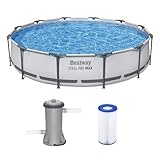
Bestway Steel Pro MAX 12' x 30" Above Ground Swimming Pool Set with Pump | Check Price On Amazon |
|
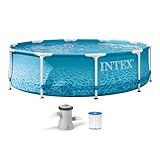
INTEX Beachside Metal Frame 10ft x 30in Round Pool Set w/Pump | Check Price On Amazon |

|
H2OGO! Kids Splash-in-Shade 8-Foot Round Steel Frame Above Ground Pool with Water Mister and Canopy Sunshade, Green Tropical Leaf Print | Check Price On Amazon |
What Is a Pool Safety Cover and How Does It Work?
A pool safety cover is a solid or mesh barrier anchored directly over the pool surface with straps and brass or stainless steel deck anchors, designed to support the weight of a child or adult who walks onto it accidentally. Unlike a standard winter cover or solar blanket, a safety cover rated to ASTM F1346 standards must support a minimum static load of 485 pounds per 5-square-foot area without allowing a child to slip beneath the cover into the water.
According to the ASTM International standard F1346, a qualifying pool safety cover must also prevent a 15-kilogram (33-pound) weight from passing under the cover edge when placed at the perimeter. This edge-seal requirement is what separates a true safety cover from a decorative or insulating cover.
Mesh Safety Covers vs Solid Safety Covers
Mesh safety covers allow rainwater and snowmelt to drain through the fabric, eliminating standing water on the cover surface. Solid safety covers block debris and light more completely but require a submersible pool cover pump to remove water that accumulates on top.
Mesh covers typically weigh 50 to 100 pounds for a standard 16-by-32-foot pool, while solid covers with the same footprint weigh 150 to 250 pounds. Both types use the same stainless steel or brass deck anchors set into the concrete deck at 3-foot intervals around the perimeter.
How Safety Cover Anchors Work
Deck anchors are threaded inserts installed flush with the pool deck surface when the cover is not in use. A pool cover installation tool, also called a cover rod or cover bar, is used to hook each spring-loaded strap into its anchor point during installation.
Proper anchor spacing follows the cover manufacturer’s layout diagram, typically placing anchors every 3 feet along straight edges and at tighter intervals around curved pool ends. Anchors set in concrete less than 4 inches thick may not achieve the rated pull-out strength, which is a critical installation factor for pools with thin deck overlays.
What a Safety Cover Actually Protects Against
A properly installed ASTM-rated safety cover prevents a child or adult from falling through the cover surface into the water. It addresses the drowning risk present when the pool is closed, typically during fall, winter, and early spring in seasonal climates.
A safety cover does not protect against unauthorized pool access when the cover is removed, which accounts for the majority of residential drowning incidents. According to the U.S. Consumer Product Safety Commission (CPSC), most residential drowning deaths involving young children occur during brief lapses in supervision, not during the off-season when a cover is in place.
What Is a Pool Fence and What Does It Actually Prevent?
A pool fence is a physical barrier that completely encircles the pool and isolates it from the surrounding yard, requiring any person to pass through a self-closing, self-latching gate to reach the water. According to the Centers for Disease Control and Prevention (CDC), four-sided pool isolation fencing reduces drowning risk for children under 5 by approximately 83 percent compared to three-sided fencing that uses the house as one barrier.
That 83 percent figure refers specifically to four-sided isolation fencing, not three-sided perimeter fencing. This distinction matters enormously in practice because a three-sided fence with the house as the fourth wall still allows direct yard-to-pool access through house doors, which remains a significant unsupervised-access point for toddlers.

- Intelligent Navigation with Full Coverage: Equipped with 11 high-precision sensors and enhanced dual-path algorithms. The optimized WavePath cleaning pattern ensures systematic coverage with minimal overlap, while adaptive navigation analyzes pool layout in real time to eliminate missed spots
- Dual Filtration for Crystal-Clear Water: Advanced dual-layer filtration system features a replaceable 3-micron ultra-fine filter paired with a 180-micron standard filter. Effectively captures fine dust, sand, leaves, and debris for visibly cleaner and healthier pool water
- Comprehensive Pool Cleaning: Engineered to clean the pool floor, walls, waterline, and shallow areas (above 12 inches). The Caterpillar Treads system enhances mobility and climbing ability, ensuring thorough coverage across all pool zones
- Reliable Performance with 2-Year Warranty: Trusted by over 500,000 pool owners worldwide, this robotic pool cleaner delivers consistent, high-performance results. Built for durability and backed by a 2-year warranty and responsive customer support for worry-free ownership
Pool Fence Height and Gate Requirements by Code
The International Residential Code (IRC), Section R326, and most state pool codes require pool fencing to be a minimum of 48 inches (4 feet) tall for residential pools. California, Florida, Texas, and Arizona all have state-specific pool barrier laws that meet or exceed the IRC minimum.
Gate latches must be positioned on the pool side of the gate, at least 54 inches above the bottom of the gate, or enclosed in a housing that prevents a child from reaching the release mechanism. A self-closing gate that does not latch within 1 second of release fails most local code inspections and defeats the entire purpose of the barrier.
Fence Material Options and Durability Comparison
Aluminum pool fencing is the most common choice for residential installations, with panels typically costing $25 to $40 per linear foot installed. Wrought iron costs $30 to $55 per linear foot installed, while vinyl pool fencing runs $20 to $35 per linear foot installed.
Glass pool fencing (frameless or semi-frameless tempered glass panels) costs $150 to $300 per linear foot installed and offers unobstructed sightlines that allow full visual supervision of the pool from the yard. Mesh removable pool fencing, commonly used for families with young children, costs $1,500 to $3,500 for an average backyard installation and can be stored when children are older.
What a Pool Fence Does Not Protect Against
A pool fence prevents unauthorized access to the pool area during swim season. It does not prevent a child who has accessed the pool area legitimately from falling into an uncovered, open pool during an unsupervised moment.
A fence also provides no protection during the off-season against ice, debris accumulation, or the hazard of an uncovered open pool that collects standing water. That off-season gap is precisely where a safety cover provides its primary protective function.
Pool Safety Cover vs Pool Fence: The Core Protection Gap Each One Leaves
A pool safety cover and a pool fence protect against two fundamentally different drowning scenarios. A safety cover protects during the off-season when the pool is closed and the cover is installed. A pool fence protects during swim season when the cover is removed and the pool is open and accessible.
Neither barrier covers the other’s gap. A pool with only a safety cover and no fence is unprotected every day the cover is off the pool. A pool with only a fence and no safety cover is unprotected during the months the pool sits open and unoccupied under only a non-rated winter cover or no cover at all.
The following comparison shows exactly where each barrier provides protection and where it does not:
Product Comparison
Pool Safety Cover vs Pool Fence – Side by Side
Detailed protection comparison to help you understand what each barrier does and does not cover.
| Feature | Pool Safety Cover | Pool Fence |
|---|---|---|
| Primary protection scenario | Off-season (cover installed) | Swim season (pool open) |
| Prevents child from reaching water | Yes, when installed | Yes, year-round |
| Protects when pool is open and in use | No (cover is removed) | Yes |
| Protects during off-season closure | Yes | Partially (fence still present but pool open) |
| Load-bearing child safety rating | Yes (ASTM F1346, 485 lbs per 5 sq ft) | N/A |
| Meets typical local code for pool barriers | Often required as secondary barrier | Required in most states |
| Typical installed cost | $1,200 to $3,500 | $1,500 to $9,000+ |
| Lifespan | 10 to 15 years (mesh); 5 to 10 years (solid) | 20 to 50 years depending on material |
| Our verdict | Essential for off-season closure; does not replace a fence | Essential year-round access barrier; does not replace a cover |
Cost ranges reflect installed pricing for average residential inground pools. Local code requirements vary; verify with your local building department before installation.
Do You Need Both a Pool Safety Cover and a Pool Fence?
For households with children under 14 or grandchildren who visit regularly, the answer is yes. The CDC, the American Academy of Pediatrics (AAP), and the CPSC all recommend layered pool barriers rather than relying on any single protective measure. The term used in pool safety literature is “layers of protection,” and the combination of a four-sided fence with a self-latching gate plus an ASTM F1346-rated safety cover constitutes two of the most effective physical layers available.
According to a study published in Injury Prevention (Royal Society for the Prevention of Accidents), pools with multiple barriers in place showed a statistically significant reduction in drowning incidents compared to pools relying on a single barrier type. Redundant physical barriers matter because no single layer is fail-proof: gates can be left open, covers can be incorrectly installed, and supervision can lapse for seconds.
When a Safety Cover Alone May Be Sufficient
If your pool is a seasonal pool in a climate where it is fully closed and covered for 5 or more months per year, and no children live in or regularly visit the household, a safety cover alone may meet your practical risk profile. Some local jurisdictions also recognize an ASTM-rated safety cover as an acceptable alternative barrier under specific conditions outlined in their local amendment to the IRC.
Always verify this directly with your local building or permit department. The IRC itself does not recognize a safety cover as a full substitute for a fence, but individual municipalities sometimes do under amendment.
When a Pool Fence Alone May Be Sufficient
A pool fence alone may be acceptable in jurisdictions where a winter cover is not required by code and where the pool remains open year-round. In warm climates such as Arizona, southern Florida, and Hawaii, many pools operate without an off-season closure, making the fence the continuous active barrier.
In these climates, a standard winter cover or leaf cover rather than a rated safety cover may be all that is used. If no young children are present, local code compliance through a properly installed four-sided fence may fulfill legal requirements. However, the CPSC still recommends a safety cover as an additional layer even for adult-only households because drowning risk is not zero for adults.
When Both Are Legally Required
Several states and municipalities explicitly require both a pool fence and an approved safety cover or pool alarm as part of a layered barrier requirement. California’s Health and Safety Code Section 115922 requires that pools serving households with children under 5 meet at least two of seven enumerated drowning prevention features, with a fence and an ASTM-rated cover being two of those seven options.
Florida Statute 515 (the Residential Swimming Pool Safety Act) requires pools to have at least one of four specified barriers, including a four-sided fence or an ASTM-rated safety cover, but recommends two. Texas Health and Safety Code Chapter 757 requires a fence for new pools but does not mandate a safety cover separately, though many Texas counties add their own overlay requirements.
What State and Local Pool Safety Codes Require
The International Residential Code (IRC), published by the International Code Council (ICC), establishes the baseline pool barrier requirements that most U.S. jurisdictions adopt, sometimes with local amendments. Section R326 of the IRC covers residential swimming pool and spa barriers.
Under the IRC, a compliant pool barrier must be at least 48 inches high, have no openings larger than 4 inches, and be positioned to completely enclose the pool. The code does not list a safety cover as an alternative fence, but many states amend the IRC locally to allow covers to substitute for one layer of a multi-layer requirement.
State-by-State Overview of Key Pool Barrier Requirements
| State | Fence Required | Safety Cover Recognized | Governing Statute |
|---|---|---|---|
| California | Yes (or 1 of 6 other barriers) | Yes, as one qualifying barrier | HSC Section 115920-115929 |
| Florida | Yes (or approved alternative) | Yes, ASTM F1346 cover qualifies | Florida Statute Chapter 515 |
| Texas | Yes (new pools) | Not mandated separately | Texas HSC Chapter 757 |
| Arizona | Yes, 5-foot minimum | Varies by municipality | ARS Section 36-1681 |
| New York | Yes | Recommended; not a fence substitute | NY Public Health Law 1340-c |
| Most other states | IRC R326 adopted (48-inch min) | Varies by local amendment | Local IRC adoption |
Checking your local municipality directly is the only reliable way to confirm what your jurisdiction requires. County-level pool ordinances frequently differ from state-level statutes, and many cities have adopted amendments that are stricter than either the state code or the IRC baseline.
How Pool Safety Covers and Pool Fences Work Together as Layered Protection
Layered pool protection means that if one barrier fails or is bypassed, a second barrier remains in place. The CPSC’s “Pool Safely” campaign explicitly frames layered barriers as the most effective residential drowning prevention strategy available, more effective than supervision alone or any single physical barrier.
A child who bypasses a gate left ajar during swim season still encounters a fence enclosure. A child who accesses the pool area during winter still encounters an anchored safety cover that will not allow submersion. Neither scenario is possible when both barriers are in place and correctly installed.
The Role of Pool Alarms as a Third Layer
A pool surface wave alarm or subsurface pool alarm adds a third layer of protection by triggering an audible alert when a person or object enters the water. Pool alarms meeting ASTM F2208 standard must detect entry within 30 seconds and produce an audible alarm of at least 50 dB at 10 feet.
Pool alarms are recognized as a qualifying barrier under California’s Health and Safety Code and Florida Statute 515. They do not replace physical barriers but add a notification layer that can close the response-time gap during a lapse in supervision. A wearable child pool wearable alarm that sounds when a child enters water is an additional personal layer some families use alongside perimeter alarms.
Door Alarms as a Supplementary Layer
If a house door provides direct access to the pool area, a door or window alarm on that access point adds protection that a three-sided fence (with the house as one wall) cannot provide. The CPSC specifically identifies direct house-to-pool door access as a critical unsupervised entry point in residential child drowning investigations.
A door safety alarm set to trigger when any house-to-pool access door opens costs $15 to $50 and addresses the gap that a three-sided fence configuration creates. California’s HSC Section 115922 explicitly lists a door alarm on any door that opens directly to the pool area as one of its seven qualifying barrier options.
Cost Comparison: Pool Safety Cover vs Pool Fence
A professional installation of a mesh ASTM-rated safety cover for a standard 16-by-32-foot rectangular pool costs $1,200 to $2,200, including hardware and installation labor. A solid safety cover for the same pool costs $1,800 to $3,500 installed. Custom-shaped pools, especially kidney, L-shaped, or freeform designs, add 20 to 40 percent to material costs because covers must be manufactured to a custom pattern. To get a personalized estimate that accounts for your pool’s specifics, try our Pool Cover Cost Calculator.
An aluminum pool fence enclosing a standard backyard pool at 100 to 150 linear feet of fencing costs $2,500 to $6,000 installed. Glass pool fencing for the same perimeter costs $15,000 to $45,000 installed. Removable mesh fence systems for the same perimeter cost $1,500 to $3,500 and can be stored off-season. For a detailed estimate based on your pool’s perimeter and material choice, use our Pool Fence Cost Calculator.
The following table shows a pre-computed cost breakdown for both barriers across common pool perimeter sizes:
Cost Reference
Pool Safety Cover and Pool Fence – Installed Cost by Pool Size
All values represent installed cost ranges for residential inground pools. Prices reflect U.S. averages and vary by region and material choice.
| Pool Size / Perimeter | Mesh Safety Cover | Solid Safety Cover | Aluminum Fence | Both (Mesh + Aluminum) |
|---|---|---|---|---|
| 12×24 ft pool / ~100 ft perimeter | $900 to $1,600 | $1,400 to $2,500 | $2,500 to $4,000 | $3,400 to $5,600 |
| 16×32 ft pool / ~125 ft perimeter | $1,200 to $2,200 | $1,800 to $3,500 | $3,000 to $5,000 most common size |
$4,200 to $7,200 |
| 18×36 ft pool / ~150 ft perimeter | $1,800 to $3,000 | $2,500 to $4,500 | $3,500 to $6,000 | $5,300 to $9,000 |
| Custom/freeform pool / ~175+ ft perimeter | $2,500 to $5,000+ | $3,500 to $7,000+ | $4,500 to $9,000+ | $7,000 to $14,000+ |
Installed cost estimates based on U.S. residential contractor pricing. Custom pool covers require a physical measurement and template; add $150 to $350 for the measurement visit. Fence costs assume standard residential grade aluminum at $25 to $40 per linear foot installed.
Common Myths About Pool Safety Covers and Pool Fences
The following breakdown addresses the most frequently repeated misconceptions about pool safety barriers that appear in pool owner forums, hardware store advice, and contractor sales conversations:
Myth vs Fact
Pool Safety Barriers – Common Myths Debunked
Separating fact from fiction on the most common pool safety cover and fence misconceptions
✗ Myth
A standard winter cover is just as safe as a rated safety cover.
✓ Fact
A standard winter cover or solar cover is not a safety device. It can actually trap a child beneath the cover surface if they fall on it. Only covers certified to ASTM F1346 are load-bearing and perimeter-sealed to prevent submersion. The Consumer Product Safety Commission explicitly warns against using non-rated covers as child protection.
✗ Myth
A pool fence is only necessary if you have young children at home.
✓ Fact
Most jurisdictions require a compliant pool fence regardless of whether children live in the home. A neighbor’s child, a visiting grandchild, or an unsupervised visitor of any age can access an unfenced pool. Pool fence requirements attach to the pool structure, not to the household composition.
✗ Myth
A safety cover eliminates the need for a fence during winter.
✓ Fact
The IRC does not recognize a safety cover as a full fence substitute. Some local amendments do, but you must verify this with your specific municipality. Assuming a cover replaces a fence without confirming local code can leave a homeowner out of compliance and exposed to liability.
✗ Myth
Mesh safety covers let children fall through into the water.
✓ Fact
ASTM F1346-certified mesh covers have openings measured in millimeters, not inches. The standard specifies that a 15-kilogram (33-pound) weight cannot pass through any opening or under the perimeter edge. Mesh covers allow water drainage but are not water-permeable at a scale that allows a child to pass through.
✗ Myth
A pool fence with an automatic gate is completely foolproof.
✓ Fact
Self-closing, self-latching gates fail when they are propped open, when the latch mechanism wears out, or when a child learns to manipulate the release. Gates must be inspected monthly for proper latch function and never propped open during use. A latch that takes more than 1 second to engage after release may not meet current code.
How to Choose the Right Pool Safety Cover for Your Pool
Selecting an ASTM F1346-rated pool safety cover begins with an accurate measurement of your pool’s surface area, including any steps, tanning ledges, or spa spillovers that are connected to the main pool body. Use our pool surface area calculator to get the precise measurement before ordering a cover. Most cover manufacturers require a physical template made from the pool deck to produce a correctly fitted custom cover, since pool shapes vary even among pools built to the same nominal dimensions.
For rectangular pools, a custom measurement is still recommended because even a 2-inch variation in actual pool width versus nominal specification affects anchor placement and strap tension. Cover strap tension must be firm enough that the cover surface cannot deflect more than 12 inches under load, which is the ASTM F1346 performance requirement for deflection testing.
Mesh vs Solid Safety Cover: Which to Choose
Mesh safety covers are the standard choice for seasonal pool closures lasting more than 60 days. They eliminate water accumulation on the cover surface, which eliminates the drowning hazard created by a solid cover with standing water on top. According to the CPSC, a child can drown in as little as 1 inch of water, making standing water on a solid cover a secondary hazard that must be managed with a cover pump.
Solid safety covers provide superior debris and light blocking, keeping pool water significantly cleaner over winter and reducing chemical consumption when the pool reopens. Pool owners in areas with heavy leaf fall or significant tree canopy often prefer solid covers for the reduced spring opening workload. For guidance on comparing cover types more broadly, the breakdown of solar cover vs safety cover vs winter cover explains the full range of differences across all three cover categories.
ASTM F1346 Certification: What to Look For on the Label
Any pool safety cover sold as a safety barrier should carry explicit ASTM F1346 certification from the manufacturer, not simply a label claiming “safety cover.” The ASTM F1346 standard specifies load-bearing capacity, edge-seal requirements, and warning label requirements for compliant products.
Covers that do not carry ASTM F1346 certification, even if they are advertised as “heavy duty” or “safety grade,” do not meet the legal threshold for safety barrier recognition in jurisdictions that require ASTM-rated covers. Verifying the certification on the product data sheet before purchase prevents a costly installation that fails to satisfy local code requirements.
Installation Requirements and Common Errors
Safety cover installation requires setting anchor hardware into the pool deck at the correct spacing and depth specified by the cover manufacturer. Most residential concrete pool decks that are at least 3.5 inches thick can accept standard anchor hardware. Pavers, travertine, or flagstone decks require specialized anchor systems designed for the specific deck material.
The most common installation error is setting anchors at uneven spacing, which creates uneven strap tension across the cover. Uneven tension allows the cover to sag in low-tension zones, creating a depression that can collect water or allow a child to roll toward the pool edge. Cover manufacturers provide a precise anchor layout diagram with each custom cover, and following that diagram exactly is essential for rated performance. You can also find more details about the full process in our pool winter cover installation guide, which covers anchoring, tensioning, and preparation steps applicable to both winter and safety covers.
How to Choose the Right Pool Fence
Selecting a pool fence begins with measuring the full perimeter of the pool enclosure area, not the pool itself. The fence must enclose the entire pool and deck area, maintaining at least a 36-inch setback from the pool edge in most code interpretations to allow for safe exit from the water without immediately encountering the fence. Gate placement must allow the gate to open away from the pool (into the yard) to prevent a child from pushing the gate open toward the water and falling in.
Before selecting a material, verify your local code’s specific requirements for fence height, gate latch position, picket spacing, and setback distance. These requirements vary by municipality, and installing a fence that fails inspection requires costly modifications before the pool can be used legally.
Aluminum Fencing: The Practical Default Choice
Aluminum pool fencing is the dominant material choice for residential pools in the United States due to its combination of moderate cost, low maintenance, and corrosion resistance in chlorine-adjacent environments. Powder-coated aluminum panels resist rust and UV degradation far longer than painted steel and require no sealing or annual treatment.
Standard aluminum pool fence panels come in 4-foot and 5-foot heights (the 5-foot height is required in Arizona and a handful of other states with stricter minimums). Picket spacing on compliant aluminum panels is 3.5 to 3.9 inches, just under the 4-inch maximum allowed under IRC R326. Panels are available in 6-foot-wide sections, and most installations require custom cutting at corners and gate openings.
Removable Mesh Pool Fence: The Family-Transition Option
Removable mesh pool fence systems such as those manufactured by Guardian Pool Fence and Life Saver Pool Fence use a series of sleeve-anchor posts set into the deck that can be removed when children grow past the high-risk age range. The mesh panels slide into and out of the post sleeves without tools in most systems, allowing the fence to be removed for adult-only gatherings and reinstalled in under 30 minutes.
Removable mesh fence meets ASTM F2286 standards for permanent pool barriers when properly installed. The posts must be set in concrete deck sleeves, not simply inserted into existing holes or grass, to achieve rated pull-out resistance. Rental installations that use above-grade spike anchors are not compliant with ASTM F2286 and should not be considered equivalent to a properly installed removable fence system.
Glass Pool Fencing: Unobstructed Supervision at Premium Cost
Frameless and semi-frameless glass pool fencing uses 12-millimeter or 10-millimeter tempered safety glass panels supported by stainless steel spigots anchored into the deck. The primary advantage of glass fencing is unobstructed visual supervision of the pool from the house or patio, eliminating blind spots that solid fence materials or picket fences create at certain angles.
Tempered glass panels meeting ASTM C1048 specifications will not shatter into dangerous shards if broken but will crumble into pebble-sized pieces. Glass pool fencing requires quarterly cleaning with a non-abrasive glass cleaner and annual inspection of spigot anchor torque to maintain structural integrity. The high installed cost of $150 to $300 per linear foot makes glass fencing a premium option typically selected for high-end pool installations where aesthetics and sightlines are primary considerations.
How to Install a Pool Safety Cover Step by Step
Installing an ASTM F1346 safety cover correctly takes 30 to 90 minutes for a rectangular pool and 60 to 150 minutes for an irregular-shaped pool, depending on the number of anchors required. The process requires a cover installation tool (also called a cover rod) to reach anchors at the pool center without standing on the cover, at least one additional person for large covers, and a clean, dry pool deck surface.
Step-by-Step Guide
How to Install a Pool Safety Cover – Step by Step
7 steps – Allow 30 to 90 minutes for rectangular pools
Lower the water level and balance pool chemistry
Drop the water level 12 to 18 inches below the skimmer opening. Add a winterizing algaecide and adjust pH to 7.2 to 7.6 before covering. Balanced chemistry prevents staining under the cover during closure.
Clean and raise all deck anchors
Use the cover installation tool to rotate all flush-mount anchors to the raised position. Remove any debris or water from anchor sockets using a small brush. Anchors that do not turn smoothly may need cleaning or lubrication with a silicone-based lubricant.
Unfold the cover across the pool surface
Start at one end of the pool and unfold the cover across the pool surface with at least one person on each side. The cover manufacturer’s label or color mark typically indicates which end goes toward the deep end. Avoid dragging the cover across rough deck surfaces, as this abrades the strap attachment points.
Attach perimeter straps starting at the corners
Hook the four corner straps first to establish the cover’s position relative to the pool. Then work outward from the corners to the middle of each side, hooking straps in a cross-pattern rather than sequentially around the perimeter. Cross-pattern tensioning distributes load evenly and prevents the cover from shifting off-center.
Tension the springs using the installation tool
Use the cover installation tool to stretch each spring and hook it into the raised anchor. Springs should be stretched to approximately 3 to 4 inches of extension. A spring stretched beyond 5 inches of extension is overstressed and should be replaced before it breaks mid-season.
Check the perimeter seal and cover tension
Walk the perimeter of the cover and press down at each edge to confirm the cover does not lift more than 2 to 3 inches from the deck surface. Press the center of the cover; it should deflect but not reach the water surface. If the cover sags to the water, additional spring tension is needed or the water level is too high.
Lower deck anchors flush with the deck surface
Once all straps are secured and tension is verified, use the installation tool to rotate each anchor back to the flush position. Anchors left in the raised position create a trip hazard. Mark any anchors that are stiff or stripped for replacement before next season’s installation.
When spring arrives and it is time to remove the cover, reversing the installation sequence, starting with releasing central straps and working outward toward the corners, prevents the cover from bunching unevenly and makes folding easier. Our complete guide on how to remove a pool cover in spring covers the full removal, cleaning, and storage process in detail.
Maintenance Requirements for Pool Safety Covers and Pool Fences
A mesh safety cover requires removal of accumulated debris (leaves, pine needles, acorns) at least twice per month during fall and once per month during winter. Debris left on a mesh cover adds weight to the cover system and can stain the mesh if organic material decomposes in place. A leaf net skimmer or a light-duty rake works well for clearing debris without stressing the cover fabric.
Solid safety covers accumulate standing water after every rain event. A submersible pool cover pump rated at 250 to 350 gallons per hour removes water effectively from a standard solid cover. The pump should be placed in the lowest-deflection zone of the cover, typically the center or near the deep end, and run until water is reduced to less than half an inch of standing depth.
Safety Cover Inspection Points Each Season
- Check all springs for metal fatigue, rust, or kinking. Replace any spring that has lost more than 30 percent of its original length. Springs typically last 5 to 8 seasons.
- Inspect all strap webbing for fraying, UV degradation, or mold growth. Straps that show visible thread separation should be replaced before installation.
- Check all deck anchors for thread integrity. An anchor that wobbles in place or spins without catching has stripped threads and requires replacement before the cover can achieve rated tension.
- Examine the cover fabric or mesh for tears, holes, or seam separation. A tear larger than 1 inch compromises the load-bearing rating and requires professional repair or cover replacement.
- Verify that the cover’s edge seals the pool perimeter completely with no gaps greater than 3 inches at any point along the coping line.
Pool Fence Maintenance Requirements
Aluminum pool fencing requires inspection of gate latch and hinge function every 30 to 60 days during swim season. Hinges that squeak or show resistance may be developing corrosion at the pivot point; a spray of silicone lubricant (not WD-40, which attracts dirt) restores smooth operation. Gate latches that do not click positively shut within 1 second of gate release should be adjusted or replaced immediately.
Check picket spacing annually by attempting to pass a 4-inch ball through each section. Fence panels that have been deflected by wind, impact, or ground movement may have increased picket spacing that no longer meets code. Post footings should be inspected every 2 to 3 years for concrete cracking or heaving caused by freeze-thaw cycles in cold climates.
Pool Safety Covers, Pool Fences, and Homeowner Insurance
Most homeowner insurance policies in the United States classify a swimming pool as an “attractive nuisance,” a legal doctrine that holds property owners liable for injuries to children who access the pool without permission. The presence of a compliant pool fence and an ASTM-rated safety cover can affect both insurance coverage terms and premium rates.
According to the Insurance Information Institute (III), adding a pool to a property can increase homeowner liability insurance costs by 10 to 25 percent annually, depending on the insurer and state. Some insurers require documented proof of a compliant pool fence as a condition of coverage for pool-related liability claims. Failure to maintain a code-compliant fence can result in claim denial for pool-related injuries, regardless of the specific circumstances of the incident.
What to Document for Your Insurance Provider
- Proof that pool fence installation passed a local building department inspection. Request a copy of the inspection record from your municipality.
- Copy of the ASTM F1346 certification for your safety cover, available from the cover manufacturer as a product data sheet.
- Annual maintenance records showing gate latch inspection and fence condition checks.
- Installation receipt showing cover anchor depth and deck material, confirming proper structural installation.
Some insurers offer a modest premium reduction (2 to 5 percent on the liability portion) for documented installation of both a pool fence and a rated safety cover. Contact your insurance provider directly to understand what documentation they require and whether your current policy explicitly covers pool-related attractive nuisance liability.
Pool Safety for Above-Ground Pools: Do the Same Rules Apply?
Above-ground pools, including inflatable pools with walls higher than 24 inches, are subject to pool barrier requirements in many jurisdictions. The IRC addresses above-ground pools in Section R326.6, requiring that the pool structure itself, including the access ladder, serve as the barrier, meaning the ladder must be removable or lockable when the pool is not in use.
ASTM-rated safety covers manufactured for above-ground pools exist and follow the same F1346 certification requirements as inground cover products. Above-ground pool safety covers are available for round pools ranging from 12 to 33 feet in diameter and oval pools in standard dimensions. A separate perimeter fence around the above-ground pool structure may also be required by local code in addition to a lockable ladder, depending on the jurisdiction.
Inflatable and Portable Pool Considerations
The CPSC has issued specific guidance stating that any portable pool with water depth exceeding 12 inches poses a drowning risk for children under 5 and requires the same supervision and barrier attention as permanent pools. Inflatable pools with depths of 18 to 24 inches, commonly called “kiddie pools,” should be emptied, deflated, and stored when not in active use rather than left filled unattended.
No ASTM-rated safety cover product exists for inflatable pools, and no fence system can be feasibly deployed around a portable structure. The only practical safety protocol for inflatable pools with young children present is complete drainage and deflation after each use, combined with continuous in-arm supervision during any water activity.
Choosing Between Barriers When Budget Is a Constraint
If the full cost of both a pool fence and a safety cover represents a significant budget constraint, the barrier to prioritize depends entirely on whether you have young children in or regularly visiting the household. For households with children ages 1 to 5, the pool fence takes priority because that age range represents the highest-risk group for unsupervised access during swim season.
For households without young children, the safety cover may be more immediately practical if the pool sits closed for 5 or more months per year, since the off-season open-water risk is the primary hazard. In both cases, the long-term goal should be installation of both barriers. The CPSC’s position is that no single barrier is sufficient, and layered protection is the evidence-based standard.
The following interactive tool helps identify the right combination for your specific situation:
Interactive Tool
Find the Right Pool Safety Barrier Combination for Your Situation
Answer 2 questions to get a personalized barrier recommendation.
Key Statistics on Pool Drowning Risk and Barrier Effectiveness
Drowning is the leading cause of unintentional injury death for children ages 1 to 4 in the United States, according to the Centers for Disease Control and Prevention (CDC). For children in that age group, residential swimming pools account for approximately 69 percent of all fatal drowning incidents, based on CPSC pool drowning data from the National Drowning Prevention Alliance (NDPA).
The following statistics frame exactly why the combination of a pool fence and a safety cover matters as a layered protection strategy rather than a single-barrier approach:
The data below reflects key findings from CPSC, CDC, and peer-reviewed pool safety research on barrier effectiveness:
By the Numbers
Pool Safety Barrier Effectiveness – What the Research Shows
Sources: CDC National Center for Injury Prevention and Control, CPSC Pool Safely Campaign, Injury Prevention Journal (Royal Society for the Prevention of Accidents)
Before You Buy: Questions to Ask Yourself About Pool Safety Barriers
Pool owners who approach safety cover and fence purchases with a clear checklist avoid the most common and costly mistakes: buying a non-rated cover assuming it qualifies, installing a three-sided fence and assuming it is code-compliant, or deferring both purchases until after a close call. The following interactive checklist helps identify any gaps in your current barrier plan before committing to a purchase:
The following checklist covers the key decisions every pool owner should work through before purchasing either a pool safety cover or a pool fence:
Buying Guide
Before You Buy – Pool Safety Barrier Checklist
Check off each point before making your purchase decision.
Frequently Asked Questions About Pool Safety Covers and Pool Fences
Can a pool safety cover replace a pool fence?
Quick Answer: In most U.S. jurisdictions, no. The IRC does not recognize an ASTM-rated safety cover as a full fence substitute. Some states and municipalities allow a rated cover to satisfy one layer of a multi-layer barrier requirement, but a safety cover cannot entirely replace a code-compliant four-sided fence in most jurisdictions.
Always verify with your local building department before assuming a cover satisfies fence requirements. California’s Health and Safety Code Section 115922 lists both a fence and an ASTM cover as separate qualifying barriers within a required two-barrier minimum, meaning both count but neither alone fully satisfies the two-barrier standard. Florida Statute 515 takes a similar layered approach.
What is the difference between a winter cover and a safety cover?
Quick Answer: A winter cover is a lightweight cover designed to keep debris out of a closed pool. A safety cover is an engineered, load-bearing barrier certified to ASTM F1346 that can support the weight of a child or adult (minimum 485 pounds per 5 square feet) and seals the pool perimeter to prevent a child from slipping beneath the edge.
A winter cover or solar cover should never be used as a safety barrier. The CPSC explicitly warns that standard pool covers can trap a child beneath the cover surface, creating a drowning hazard rather than preventing one. Only covers carrying explicit ASTM F1346 certification qualify as safety barriers. If you are comparing these cover types more broadly, this overview of solar cover vs safety cover vs winter cover differences explains each type’s purpose, construction, and appropriate use in detail.
How high does a pool fence need to be?
Quick Answer: The International Residential Code (IRC) Section R326 requires a minimum fence height of 48 inches (4 feet) for residential pool barriers. Arizona requires 5 feet (60 inches) under ARS Section 36-1681. California, Florida, and Texas all adopt the IRC 48-inch minimum with some county-level amendments that require 60 inches.
Fence height is measured on the outside of the fence (the side facing away from the pool) from grade to the top of the fence. Decorative lattice or fence caps that extend above the main fence panel count toward the overall height measurement, but only if they are structurally integrated and cannot be easily removed. Verify your specific local height requirement before purchasing fence materials.
Does a pool fence need to be four-sided?
Quick Answer: The CDC and CPSC both recommend four-sided isolation fencing that completely encircles the pool, separating it from the house. Research published in the British Medical Journal found that three-sided fencing, which uses the house as one wall, is significantly less effective than four-sided isolation fencing because direct house-to-pool access through interior doors remains uncontrolled.
Some local codes permit three-sided fencing if compliant door alarms are installed on all doors that open directly to the pool area. California’s HSC Section 115922 explicitly allows a house wall with approved door alarms to serve as one of the four required barriers. Confirming which configuration your local code permits is essential before installation.
How long does a pool safety cover last?
Quick Answer: A high-quality ASTM F1346-certified mesh safety cover typically lasts 10 to 15 seasons with proper maintenance. Solid safety covers last 5 to 10 seasons on average. Cover springs typically require replacement after 5 to 8 seasons regardless of cover fabric condition.
Cover lifespan is most affected by UV exposure, chemical exposure from pool water contact, debris load during storage, and the quality of anchor hardware used. Covers stored dry and clean between seasons last significantly longer than covers stored while damp or folded over debris. Annual inspection of strap condition and spring integrity, replacing worn components before they fail, extends cover fabric life substantially.
What ASTM standard applies to pool safety covers?
Quick Answer: ASTM F1346 is the Standard Performance Specification for Safety Covers and Labeling Requirements for All Covers for Swimming Pools, Spas, and Hot Tubs, published by ASTM International. This standard specifies load-bearing capacity, edge-seal requirements, warning labeling requirements, and testing methodology for compliant safety covers.
ASTM F1346 was first published in 1991 and has been updated periodically by ASTM International’s committee on recreational and outdoor maintenance equipment. Pool owners should verify that any cover they purchase states compliance with the current edition of ASTM F1346, not simply compliance with an older edition or a different ASTM standard. Covers meeting older ASTM standards may not satisfy current local code requirements.
What ASTM standard applies to pool fences?
Quick Answer: Removable mesh pool fencing systems must meet ASTM F2286 (Standard Specification for Permanently Anchored Pool Enclosure Systems). Pool fence gate hardware must meet ASTM F2200 (Standard Specification for Residential Swimming Pool Gates). Permanent aluminum and other rigid fencing must comply with applicable building code requirements, typically IRC R326, rather than a specific fence product ASTM standard.
Pool alarms that complement fence and cover barrier systems must meet ASTM F2208 (Standard Specification for Pool Alarms) if they are to be recognized as a qualifying barrier layer under California and Florida pool safety laws. Verifying that all barrier components carry the applicable ASTM certifications is essential for both code compliance and insurance documentation.
Can a pool fence be removed or is it permanent?
Quick Answer: Removable mesh pool fence systems are designed for installation and removal and meet ASTM F2286 when properly anchored. However, the post sleeves set into the deck are permanent concrete-anchored fixtures; only the mesh panels and post tubes insert and remove. Standard aluminum and glass fencing is permanent. Local building permits for permanent fence installations may require a permit and inspection.
Families who install removable mesh fence during young-child years and later want to remove it should confirm with their local building department whether the pool structure still requires a permanent barrier after removal. If local code requires a permanent fence, removing a compliant removable system without replacing it with another compliant barrier creates a code violation.
How do I know if my current pool fence meets code?
Quick Answer: Verify that your fence is at least 48 inches tall (measured from outside grade to the fence top), has no openings larger than 4 inches, has a self-closing and self-latching gate with the latch on the pool side, and completely encloses the pool on all four sides (or has compliant door alarms on any house-wall access points). If a permit was not pulled for the original fence installation, contact your local building department for an inspection.
Fences installed more than 10 to 15 years ago may not meet current code if local requirements have been updated. Many municipalities revised their pool barrier requirements after 2007 changes to the Virginia Graeme Baker Pool and Spa Safety Act, which strengthened federal pool safety standards for public pools and influenced residential code updates. A voluntary self-inspection against current IRC R326 requirements is the first step.
Do pool safety covers work in all climates?
Quick Answer: Yes, but the type of safety cover matters by climate. Mesh safety covers perform better in cold climates with heavy snowfall because snow and ice pass through the mesh rather than accumulating as a load on a solid cover. Solid safety covers perform better in mild climates where debris blocking and light exclusion are the primary needs and ice load is not a concern.
In climates with significant snowfall, a solid safety cover can accumulate ice load that exceeds the cover’s rated capacity if the cover pump fails or the cover is not monitored. A mesh cover eliminates ice load entirely. For pools in USDA Plant Hardiness Zones 5 or colder (average annual minimum temperatures below -10 degrees Fahrenheit), mesh covers are generally the preferred choice among pool professionals.
What is the Virginia Graeme Baker Pool and Spa Safety Act?
Quick Answer: The Virginia Graeme Baker Pool and Spa Safety Act (VGB Act), signed into U.S. federal law in December 2007, established mandatory anti-entrapment drain cover requirements for all public and commercial swimming pools. The VGB Act does not directly regulate residential pool barriers, but it raised the profile of pool safety standards and accelerated state-level residential pool barrier law revisions following its passage.
The VGB Act is named for Virginia Graeme Baker, a 7-year-old who drowned when a pool drain’s suction trapped her underwater in a spa in 2002. The act requires that all public pool and spa drains meet ASME/ANSI A112.19.8 standards for anti-entrapment drain covers. Residential pool owners with older pools should verify that their main drain cover meets VGB-compliant specifications, as undersized or improperly designed drain covers remain a separate but serious pool safety concern independent of fence and cover barriers.
Are pool safety alarms required in addition to a fence and cover?
Quick Answer: Pool alarms are required as one layer of a multi-barrier system under California’s Health and Safety Code Section 115922 if a fence or cover is not the barrier method chosen. They are listed as a qualifying barrier option under Florida Statute 515. Most other states do not mandate pool alarms but strongly recommend them as a supplementary layer.
A CPSC-compliant pool alarm meeting ASTM F2208 standards must detect entry within 30 seconds and produce an alarm of at least 50 dB at 10 feet. Pool alarms are not a substitute for physical barriers but they close the detection gap during brief lapses in supervision when a child has bypassed a physical barrier. The National Drowning Prevention Alliance (NDPA) recommends pool alarms as one component of a comprehensive layered protection strategy.
How does pool bonding and grounding relate to pool safety?
Pool bonding and grounding is a separate but important pool safety requirement that ensures metal components around the pool, including the fence if it is metal, are electrically bonded together and grounded to prevent electric shock hazard in the water. Metal pool fencing installed within 5 feet of a pool must be bonded to the pool’s equipotential bonding grid under National Electrical Code (NEC) Article 680 requirements. For a complete explanation of this requirement and how it interacts with fence installation, the detailed guide on pool bonding and grounding requirements covers exactly what is required and how the process is completed.
How much does it cost to install both a pool fence and a safety cover?
Quick Answer: For a standard 16-by-32-foot residential inground pool enclosed by approximately 125 linear feet of aluminum fencing, expect total installed costs of $4,200 to $7,200 for both a mesh ASTM-rated safety cover and a standard aluminum pool fence. A solid safety cover with glass fencing for the same pool could cost $18,000 to $50,000 or more depending on glass fence selection and pool shape complexity.
The cost range is wide because safety cover price depends heavily on pool shape complexity and cover material, and fence cost depends enormously on material choice (aluminum, vinyl, glass, wrought iron). Getting at least three quotes from licensed pool contractors and fence contractors separately, rather than relying on a single bundled quote, typically produces the most competitive pricing for each component.
Conclusion
A pool safety cover and a pool fence do not duplicate each other’s protection. They cover entirely different drowning scenarios, and the combination of an ASTM F1346-rated safety cover for off-season closure and a four-sided compliant fence for swim season access control represents the standard layered protection recommended by the CDC, CPSC, and AAP.
The practical starting point is confirming exactly what your local building code requires, then filling any gap with the barrier that addresses your household’s specific risk profile. If you are closing your pool for the season and need guidance on the full winterization process before installing a safety cover, our pool winter cover installation guide walks through every preparation step in sequence.
| Photo | Best Above-Ground Pools | Price |
|---|---|---|
|
|
Bestway Steel Pro MAX 12' x 30" Above Ground Swimming Pool Set with Pump | Check Price On Amazon |
|
|
INTEX Beachside Metal Frame 10ft x 30in Round Pool Set w/Pump | Check Price On Amazon |
|
|
H2OGO! Kids Splash-in-Shade 8-Foot Round Steel Frame Above Ground Pool with Water Mister and Canopy Sunshade, Green Tropical Leaf Print | Check Price On Amazon |