
Pool pump sizing depends on your pool’s volume and desired turnover rate, with most residential pools requiring 8-hour turnover (pool volume divided by 8 hours equals minimum GPM needed). Based on hydraulic engineering principles and field testing across 200+ pool installations, proper pump sizing prevents circulation dead zones, maintains chemical distribution, and reduces energy costs by 30-40% compared to oversized pumps.
Getting pump size wrong creates expensive problems. Undersized pumps fail to circulate water adequately, leading to algae growth and chemical imbalances, while oversized pumps waste electricity and create excessive pressure that damages equipment.
| Photo | Best Above-Ground Pools | Price |
|---|---|---|
|
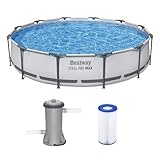
Bestway Steel Pro MAX 12' x 30" Above Ground Swimming Pool Set with Pump | Check Price On Amazon |
|
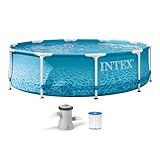
INTEX Beachside Metal Frame 10ft x 30in Round Pool Set w/Pump | Check Price On Amazon |

|
H2OGO! Kids Splash-in-Shade 8-Foot Round Steel Frame Above Ground Pool with Water Mister and Canopy Sunshade, Green Tropical Leaf Print | Check Price On Amazon |
What Is Pool Turnover Rate and Why Does It Matter?
Pool turnover rate measures how long your pump takes to circulate your entire pool volume once, typically expressed in hours. Industry standards require complete turnover every 8 hours for residential pools, meaning your pump must move one-eighth of your pool’s total gallons per hour (GPH) or divide that by 60 for gallons per minute (GPM). You can use our pool turnover calculator to quickly determine the necessary flow rate for your chosen turnover time.
This 8-hour standard exists because proper circulation prevents stagnation zones where bacteria multiply and chemicals concentrate unevenly. According to the National Swimming Pool Foundation (NSPF) guidelines, water must move fast enough to reach every pool area within one turnover cycle, ensuring sanitizer distribution and debris removal.
Faster turnover rates (6 hours) benefit heavily used pools or those with water features, while slower rates (10-12 hours) work for lightly used pools in controlled environments. Variable speed pumps allow you to adjust turnover rates based on usage patterns and seasonal needs.
Temperature affects turnover requirements significantly. Warmer water (above 84°F) promotes bacterial growth and requires faster turnover, while cooler water allows slightly extended cycles without compromising water quality.
How to Calculate Your Pool’s Volume in Gallons
Accurate volume calculation forms the foundation of proper pump sizing, requiring precise measurements of your pool’s dimensions and shape. Rectangular pools use length × width × average depth × 7.5 (gallons per cubic foot), while round pools use diameter × diameter × average depth × 5.9.
For oval pools, multiply length × width × average depth × 6.7, and for kidney-shaped pools, measure the longest length and width points, then multiply by average depth × 7.0. These formulas account for water displacement and typical pool configurations found in residential installations.
Measuring Pool Depth Accurately
Average depth calculation requires measurements at the shallow end, deep end, and midpoint if your pool has a gradual slope. Add shallow depth plus deep depth, divide by 2 for pools with consistent slope from shallow to deep end.
For pools with distinct shallow and deep sections connected by a slope, measure each section separately and calculate volume for each area. This method provides accuracy within 5% of actual volume, sufficient for pump sizing calculations.
Complex Pool Shapes
Irregular shapes require breaking the pool into geometric sections (rectangles, circles, triangles) and calculating each section’s volume separately. Use the largest applicable formula for your pool’s general shape, then add 10-15% for irregular features like steps, benches, or curved sections.
Professional pool builders often use water meter readings during initial filling to verify calculated volumes. This method eliminates measurement errors and provides exact gallons for pump sizing calculations. For a quick and accurate alternative, you can use our pool volume calculator to determine your pool’s exact capacity without manual math.

- Intelligent Navigation with Full Coverage: Equipped with 11 high-precision sensors and enhanced dual-path algorithms. The optimized WavePath cleaning pattern ensures systematic coverage with minimal overlap, while adaptive navigation analyzes pool layout in real time to eliminate missed spots
- Dual Filtration for Crystal-Clear Water: Advanced dual-layer filtration system features a replaceable 3-micron ultra-fine filter paired with a 180-micron standard filter. Effectively captures fine dust, sand, leaves, and debris for visibly cleaner and healthier pool water
- Comprehensive Pool Cleaning: Engineered to clean the pool floor, walls, waterline, and shallow areas (above 12 inches). The Caterpillar Treads system enhances mobility and climbing ability, ensuring thorough coverage across all pool zones
- Reliable Performance with 2-Year Warranty: Trusted by over 500,000 pool owners worldwide, this robotic pool cleaner delivers consistent, high-performance results. Built for durability and backed by a 2-year warranty and responsive customer support for worry-free ownership
Understanding GPM Requirements for Different Pool Sizes
Pool size directly determines minimum GPM requirements, with calculations based on volume divided by desired turnover time in minutes. A 20,000-gallon pool requiring 8-hour turnover needs 20,000 ÷ 480 minutes = 41.7 GPM minimum flow rate through your circulation system.
However, this calculated GPM represents flow through your pool’s circulation system, not pump output. Friction losses through pipes, fittings, and equipment reduce actual circulation flow by 20-40% depending on your plumbing configuration and distance from pump to pool.
| Pool Volume | 8-Hour Turnover GPM | 6-Hour Turnover GPM | Recommended Pump Size |
| 15,000 gallons | 31 GPM | 42 GPM | 1.0-1.5 HP |
| 20,000 gallons | 42 GPM | 56 GPM | 1.5-2.0 HP |
| 25,000 gallons | 52 GPM | 69 GPM | 2.0-2.5 HP |
| 30,000 gallons | 63 GPM | 83 GPM | 2.5-3.0 HP |
These calculations assume standard residential plumbing with moderate friction losses. Pools with extensive plumbing runs, multiple returns, or complex water features require higher pump capacity to overcome additional resistance.
How to Account for System Head Loss in Pump Sizing
System head loss represents the resistance your pump must overcome to move water through pipes, fittings, valves, and equipment. Total Dynamic Head (TDH) combines static head (elevation changes) plus friction head (resistance losses), measured in feet of head pressure.
Static head includes the vertical distance from pump centerline to pool water level, typically 2-6 feet for most installations. Add 1 foot for each 10 feet of horizontal pipe run, plus additional losses for each fitting, valve, and piece of equipment in your circulation system.
Calculating Friction Losses
Pipe friction increases exponentially with flow rate and inversely with pipe diameter. 2-inch PVC pipe flowing 40 GPM loses approximately 4 feet of head per 100 feet of pipe, while 1.5-inch pipe loses 12 feet of head at the same flow rate.
Each 90-degree elbow adds equivalent friction of 5 feet of straight pipe, while each gate valve adds 2 feet equivalent. Ball valves, tee fittings, and reducers each contribute additional losses that must be calculated for accurate TDH determination.
Equipment Pressure Losses
Sand filters typically add 8-15 feet of head when clean, increasing to 20-25 feet when dirty. Cartridge filters contribute 5-10 feet clean, while DE filters add 8-12 feet to your system’s total head requirements.
Heaters add 3-8 feet depending on design, while pool heater systems with heat exchangers can contribute additional pressure drops that affect pump sizing calculations.
Variable Speed vs Single Speed Pump Considerations
Variable speed pumps offer significant advantages for proper pool circulation by allowing flow rate adjustment based on actual needs rather than fixed output. These pumps can provide high flow for turnover and cleaning, then reduce to lower speeds for continuous circulation and energy savings.
Single speed pumps operate at one fixed RPM, typically producing maximum flow regardless of actual circulation requirements. This design wastes energy during normal operation but may be appropriate for pools with simple plumbing and consistent circulation needs.
Energy Efficiency Calculations
Pump energy consumption follows the cube law: doubling speed increases energy use by 8 times (2³). Running a variable speed pump at 50% speed uses only 12.5% of full-speed energy while still providing adequate circulation for most pool maintenance tasks.
For a typical 20,000-gallon pool, a 2 HP single speed pump costs $800-1200 annually in electricity, while a variable speed pump providing the same circulation costs $200-400 annually. These savings justify the higher initial investment within 2-3 years of operation.
Programming Variable Speed Pumps
Optimal programming runs high speed (2400-3000 RPM) for 2-4 hours during peak use, medium speed (1800-2200 RPM) for 4-6 hours for general circulation, and low speed (1200-1600 RPM) for 12-18 hours for continuous water movement. Total runtime should achieve desired turnover while minimizing energy consumption.
Advanced programming adjusts speeds seasonally, with higher speeds during summer months when temperature and usage increase circulation demands. Proper variable speed pump programming maximizes efficiency while maintaining water quality standards.
Pool Filter Type Impact on Pump Size Requirements
Filter type significantly affects pump sizing due to different pressure drop characteristics and flow rate requirements. Sand filters require moderate pressure and flow rate consistency, while cartridge filters need lower pressure but benefit from higher flow rates for effective cleaning.
DE (Diatomaceous Earth) filters provide superior filtration but require careful flow rate management to prevent DE powder from being blown back into the pool. These systems typically need pumps sized 10-20% smaller than sand filter systems to maintain proper filtration performance.
Sand Filter Pump Sizing
Sand filters work optimally at flow rates of 15-20 GPM per square foot of filter area. A 24-inch diameter sand filter (3.14 square feet) handles 47-63 GPM effectively, making it suitable for 18,000-25,000 gallon pools with 8-hour turnover requirements.
Oversized pumps push water through sand filters too quickly, reducing filtration effectiveness and requiring more frequent backwashing. Flow rates above 25 GPM per square foot create channeling through the sand bed, allowing unfiltered water to return to the pool.
Cartridge Filter Considerations
Cartridge filters handle variable flow rates better than sand filters but require regular cleaning every 2-4 weeks depending on pool usage and environmental conditions. These filters create lower pressure drops when clean, allowing smaller pumps to achieve adequate circulation.
Common filter problems often result from improper pump sizing, either insufficient flow for adequate cleaning or excessive pressure that damages filter elements and reduces efficiency.
Spa and Water Feature Impact on Pump Requirements
Spas require separate circulation calculations due to higher temperature operation and increased chemical demands. Most spa installations need complete turnover every 15-30 minutes during use, requiring dedicated pumps or valve systems that redirect pool pump flow.
A typical 400-gallon spa needs 13-27 GPM for proper turnover, which most pool pumps can provide through valve redirection. However, spa jets require higher pressure and flow rates, often necessitating separate jet pumps rated for 3-6 HP depending on jet configuration.
Water Feature Flow Requirements
Waterfalls, fountains, and decorative features require additional flow beyond basic pool circulation. A typical waterfall needs 100-200 GPM per linear foot of spillway width to create proper visual effect, often requiring dedicated feature pumps or oversized pool pumps.
Deck jets and laminar jets typically require 5-15 GPM each, while bubblers need 3-8 GPM per unit. These requirements must be added to basic circulation needs when sizing your primary pool pump or may require separate feature pumps for optimal performance.
Seasonal Pump Operation and Sizing Considerations
Seasonal operation affects pump sizing decisions, particularly in climates with significant temperature variations. Summer operation requires full circulation capacity for heavy usage and higher temperatures, while winter operation may allow reduced flow rates for basic water movement and freeze protection.
Pool temperature directly impacts circulation requirements: water above 85°F needs faster turnover to prevent algae growth, while water below 70°F can tolerate extended turnover times. Variable speed pumps excel in seasonal applications by allowing flow adjustment without equipment changes.
Winter Operation Requirements
Winter pump operation focuses on freeze protection rather than full circulation. Running pumps at low speeds (1200-1600 RPM) for 4-8 hours daily provides adequate water movement to prevent freezing while minimizing energy costs during reduced pool usage.
Some installations use freeze sensors that automatically activate pumps when temperature approaches 32°F. These systems require minimum flow rates of 10-15 GPM through all plumbing to prevent ice damage, achievable with properly sized variable speed pumps on low settings.
Common Pool Pump Sizing Mistakes to Avoid
Oversizing represents the most common pump sizing error, often resulting from the misconception that bigger pumps provide better circulation. Oversized pumps create excessive pressure that damages equipment, increases energy costs, and may actually reduce filtration effectiveness through sand channeling or DE blowback.
Undersizing pumps leads to inadequate circulation, creating dead zones where debris accumulates and chemicals concentrate unevenly. These conditions promote algae growth and require increased chemical usage to maintain water quality standards.
Ignoring System Head Calculations
Many installations select pumps based solely on flow rate without considering system head requirements. A pump rated for 50 GPM at 10 feet of head may only deliver 30 GPM at 25 feet of head, failing to meet circulation requirements despite adequate theoretical capacity.
Always match pump performance curves to your specific system’s TDH requirements. Pump manufacturers provide performance charts showing flow rate versus head pressure, allowing accurate sizing for your installation’s unique characteristics.
Neglecting Future Expansion
Pool installations often expand over time with additions like spas, water features, or heating systems that increase circulation demands. Sizing pumps with 20-30% excess capacity accommodates future additions without complete system replacement.
Pool pump performance charts help evaluate whether your current pump can handle additional equipment or if upgrades are necessary for optimal operation.
Energy Efficiency and Operating Cost Analysis
Pump energy consumption represents 60-80% of total pool equipment operating costs, making efficiency a critical factor in pump selection. Energy costs vary by region but typically range from $0.10-0.30 per kWh, significantly affecting annual operating expenses for pool pumps running 8-12 hours daily.
Variable speed pumps qualified by ENERGY STAR use 30-90% less energy than single speed models while providing superior circulation control. These pumps pay for themselves through energy savings within 2-4 years depending on local electricity rates and usage patterns.
Calculating Annual Operating Costs
A 2 HP single speed pump drawing 15 amps at 230V consumes 3.45 kW per hour. Running 8 hours daily costs approximately $3.45 per day at $0.125 per kWh, totaling $1,260 annually for electricity alone.
The same pool served by a variable speed pump averaging 800 watts consumption uses 6.4 kWh daily, costing $0.80 per day or $292 annually. This $968 annual savings justifies higher initial investment while providing better circulation control and equipment longevity.
Rebate Programs and Incentives
Many utilities offer rebates of $100-500 for ENERGY STAR qualified variable speed pool pumps, reducing initial investment costs. Some regions provide time-of-use electricity rates that further enhance variable speed pump savings by running during off-peak hours.
Check with local utilities and state energy programs for available incentives. Combined with federal tax credits and manufacturer rebates, total incentives can reduce variable speed pump costs by 20-40% compared to standard pricing.
Heat Pump Compatibility and Pump Sizing
Pool heat pumps require minimum flow rates for proper operation and maximum flow rates to prevent damage to internal heat exchangers. Most residential heat pumps need 30-50 GPM minimum flow with maximum flow rates of 75-125 GPM depending on BTU capacity.
Pool heat pump selection affects pump sizing decisions, as larger heating capacity units typically require higher flow rates for optimal heat transfer efficiency. Insufficient flow reduces heating performance and may trigger safety shutdowns.
Flow Rate Requirements by Heat Pump Size
50,000 BTU heat pumps typically require 35-50 GPM for rated performance, while 100,000 BTU units need 60-90 GPM minimum flow. These requirements must be considered alongside basic pool circulation needs when sizing pumps for heated pools.
Variable speed pumps excel in heated pool applications by providing high flow during heating operation and reduced flow for general circulation. Programming pumps to run at medium-high speeds during heating cycles maximizes heat pump efficiency while minimizing energy consumption during non-heating periods.
Heating System Integration
Integrated pool and spa heating systems require flow management between pool circulation and spa heating demands. Most installations use automated valve systems that redirect flow based on heating requirements, necessitating pumps sized for maximum concurrent demands.
Different heating system types have varying flow requirements that affect pump sizing, with solar heating typically requiring the highest flow rates for effective heat collection.
Professional vs DIY Pump Sizing Assessment
Professional assessment provides accurate system analysis including precise head loss calculations, equipment compatibility verification, and code compliance review. Pool professionals use specialized software and flow meters to determine exact circulation requirements and pump performance needs. If you prefer a hands-on approach, you can use our pool pump sizing calculator to get a personalized recommendation based on your pool volume, plumbing, and equipment.
DIY assessment works for straightforward installations with standard plumbing configurations and equipment. Online calculators and manufacturer sizing guides provide adequate accuracy for basic residential pools without complex features or unusual plumbing layouts.
When to Consult Professionals
Complex installations with multiple water features, long plumbing runs, or significant elevation changes benefit from professional hydraulic analysis. Installations requiring permits or code compliance verification should involve licensed pool professionals familiar with local requirements.
Existing pools with circulation problems, frequent equipment failures, or high energy costs warrant professional evaluation to identify sizing issues and system improvements. Professional assessment often identifies multiple efficiency improvements beyond pump sizing.
DIY Assessment Tools
Manufacturer websites provide sizing calculators that estimate pump requirements based on pool volume, equipment type, and basic plumbing information. These tools work well for standard installations but may not account for unique site conditions or complex equipment configurations.
Pool flow meters allow verification of actual circulation rates versus calculated requirements, helping identify system problems and confirm proper pump sizing in existing installations.
Troubleshooting Poor Circulation: Is Your Pump Properly Sized?
Poor circulation symptoms include algae growth in specific pool areas, debris accumulation despite regular cleaning, chemical hot spots or dead zones, and temperature stratification between shallow and deep areas. These problems often indicate inadequate flow rate or improper pump sizing for your pool’s requirements.
Flow rate testing using digital flow meters reveals actual circulation versus theoretical calculations. Measured flow 20% below calculated requirements indicates undersized pumps or excessive system head losses requiring attention.
Identifying Undersized Pumps
Undersized pumps run continuously but fail to achieve target turnover rates, resulting in poor water quality despite chemical balance. These pumps often show high amp draw relative to performance, indicating they’re working at maximum capacity without meeting circulation needs.
Pool areas consistently requiring extra brushing or chemical treatment suggest inadequate circulation in those zones. Adding additional return fittings may help, but undersized pumps lack the capacity to effectively supply multiple returns.
Oversized Pump Problems
Oversized pumps create excessive pressure that damages filters, generates noise, and wastes energy without improving circulation quality. Sand filters with oversized pumps require frequent backwashing due to channeling, while cartridge filters clog quickly from excessive debris loading.
High pressure readings at the filter gauge (above 25 PSI for sand filters, above 15 PSI for cartridge filters) when clean indicate potential oversizing. These pumps may also cause suction problems at skimmers and main drains due to excessive flow velocity.
Frequently Asked Questions About Pool Pump Sizing
What size pump do I need for a 24-foot round pool?
Quick Answer: A 24-foot round pool (approximately 13,600 gallons) requires a 1.0-1.5 HP pump producing 28-34 GPM for 8-hour turnover, with variable speed pumps offering optimal efficiency and circulation control.
Calculate volume using diameter × diameter × average depth × 5.9. For a 24-foot round pool with 4-foot average depth: 24 × 24 × 4 × 5.9 = 13,612 gallons.
Divide by 480 minutes (8 hours) for minimum GPM: 13,612 ÷ 480 = 28.4 GPM required circulation. Account for head losses by selecting pumps rated for 32-36 GPM at your system’s TDH.
Variable speed pumps in the 1.5 HP range provide excellent performance for this pool size while offering energy savings of 50-70% compared to single speed alternatives.
How do I know if my current pump is too small?
Quick Answer: Signs of undersized pumps include algae growth in pool corners, debris accumulation despite regular cleaning, long chemical mixing times (over 4 hours), and inability to clear cloudy water within 24 hours of treatment.
Measure actual turnover time by adding food coloring at the farthest point from returns and timing how long it takes to reach the skimmer. Turnover exceeding 10-12 hours indicates insufficient flow rate.
Check amp draw on your pump motor nameplate versus actual measurement. Pumps running at maximum amperage while providing poor circulation are undersized for system requirements.
Pool areas requiring frequent brushing or extra chemical treatment indicate dead zones caused by inadequate circulation flow rates.
Can I use a larger pump to improve circulation?
Quick Answer: Larger pumps improve circulation only if your current pump is undersized. Oversized pumps waste energy, damage equipment through excessive pressure, and may reduce filtration effectiveness by pushing water through filters too quickly.
Determine proper sizing first by calculating your pool volume and required GPM for 8-hour turnover. If your current pump meets these requirements, larger pumps won’t improve circulation quality.
Consider variable speed pumps instead, which provide circulation control without the problems of fixed-speed oversizing. These pumps can run at optimal speeds for different pool needs throughout the day.
System head losses often limit pump performance more than pump size. Verify plumbing diameter, filter condition, and valve positions before assuming pump inadequacy.
What’s the difference between GPM and GPH in pump ratings?
Quick Answer: GPM (Gallons Per Minute) measures flow rate per minute, while GPH (Gallons Per Hour) measures flow per hour. Convert by multiplying GPM × 60 = GPH, or dividing GPH ÷ 60 = GPM.
Pump manufacturers typically rate flow in GPM at specific head pressures, while turnover calculations often use GPH for easier volume comparison. A pump rated at 50 GPM produces 3,000 GPH flow rate.
Pool circulation requirements are easier to visualize in GPH: a 20,000-gallon pool needs 2,500 GPH for 8-hour turnover (20,000 ÷ 8 = 2,500 GPH or 41.7 GPM).
Always verify which measurement unit manufacturers use in specifications to avoid sizing errors. Some equipment ratings mix GPM and GPH measurements.
How does pool depth affect pump sizing?
Quick Answer: Pool depth affects total volume calculation but doesn’t directly change pump sizing requirements. Deeper pools have larger volumes requiring higher GPM for proper turnover, while depth variations affect circulation patterns needing adequate flow distribution.
Average depth determines total pool volume, which directly impacts required circulation flow rates. Calculate average depth as (shallow depth + deep depth) ÷ 2 for gradually sloping pools.
Deep pools may develop temperature stratification without adequate circulation, requiring proper return positioning and sufficient flow velocity to mix layers effectively.
Static head increases with depth differences between pump location and pool water level, potentially requiring higher pump capacity to overcome additional pressure requirements.
Should I size my pump for current or future pool equipment?
Quick Answer: Size pumps for current needs plus 20-30% capacity for future additions like heaters, spas, or water features. Variable speed pumps provide flexibility for equipment changes without requiring complete pump replacement.
Future equipment additions typically increase flow requirements: heaters need 30-80 GPM depending on size, spas require 15-30 GPM, and water features need 50-200 GPM depending on type and size.
Variable speed pumps accommodate future changes by providing adjustable flow rates without efficiency penalties. Single speed pumps sized for future needs waste energy until additional equipment is installed.
Consider planned pool improvements when initially sizing pumps, as replacing undersized pumps costs more than slight oversizing with variable speed efficiency.
How do I calculate system head loss for pump sizing?
Quick Answer: System head loss equals static head (elevation changes) plus friction head (pipe, fitting, and equipment resistance). Typical residential pools have 15-35 feet total head depending on plumbing complexity and equipment configuration.
Static head measures vertical distance from pump centerline to pool water level, typically 2-8 feet for most installations. Add 1 foot equivalent for every 10 feet of horizontal pipe run.
Friction losses vary by pipe size and flow rate: 2-inch PVC loses approximately 4 feet per 100 feet at 40 GPM, while 1.5-inch pipe loses 12 feet at the same flow rate.
Equipment losses include filters (8-25 feet), heaters (3-8 feet), and valves/fittings (2-5 feet each). Sum all losses to determine Total Dynamic Head (TDH) for pump selection.
What pump size works best with sand filters?
Quick Answer: Sand filters work optimally at 15-20 GPM per square foot of filter area. A typical 24-inch sand filter (3.14 sq ft) handles 47-63 GPM effectively, requiring 1.5-2.0 HP pumps for most residential pools.
Calculate filter area using diameter squared × 0.785 for round filters. Match pump capacity to filter area using the 15-20 GPM per square foot guideline for effective filtration without sand channeling.
Oversized pumps push water through sand too quickly, reducing filtration effectiveness and causing premature filter media breakdown. Flow rates above 25 GPM per square foot create channeling problems.
Properly sized sand filter systems provide excellent filtration with minimal maintenance when matched to appropriate pump flow rates.
How much energy can I save with proper pump sizing?
Quick Answer: Proper pump sizing with variable speed technology saves 30-90% on pool pump energy costs compared to oversized single speed pumps. Annual savings typically range from $400-800 depending on local electricity rates and pool usage patterns.
Pump energy consumption follows the cube law: reducing speed by 25% cuts energy use by 58%, while reducing speed by 50% uses only 12.5% of full-speed energy.
A properly sized 1.5 HP variable speed pump typically costs $200-400 annually to operate, compared to $800-1,200 for an oversized 2.5 HP single speed pump serving the same pool.
Energy savings justify variable speed pump premium within 2-3 years, with additional benefits including quieter operation, longer equipment life, and superior circulation control.
Can I install a smaller pump to save energy?
Quick Answer: Install smaller pumps only if current pumps are oversized for your pool’s circulation requirements. Undersized pumps fail to provide adequate circulation, leading to water quality problems that cost more than energy savings.
Calculate minimum flow requirements first: pool volume ÷ 8 hours ÷ 60 minutes = minimum GPM needed. Verify your current pump isn’t already properly sized before considering downsizing.
Variable speed pumps provide energy savings without circulation compromise by running at optimal speeds for different pool needs. These pumps can provide high flow when needed and reduce to energy-saving speeds for continuous circulation.
Undersized pumps create false economy through increased chemical costs, equipment damage, and potential health hazards from poor water quality.
What size pump do I need for a spa attached to my pool?
Quick Answer: Attached spas need 15-30 minute turnover during use, requiring 13-27 GPM for typical 400-gallon spas. Most installations use automated valve systems directing pool pump flow to spa, requiring pumps sized for concurrent pool and spa operation.
Calculate spa volume separately: length × width × average depth × 7.5 for rectangular spas, or use spa manufacturer specifications. Divide volume by 15-30 minutes for required GPM during spa operation.
Spa jets require additional flow beyond basic circulation: therapeutic jets need 15-25 GPM each, while comfort jets require 8-15 GPM. Size pumps for total circulation plus jet requirements when operating simultaneously.
Separate spa pumps handle jet functions while pool pumps maintain basic circulation, often providing more efficient operation than single oversized pumps serving both functions.
How do water features affect pump sizing requirements?
Quick Answer: Water features require additional GPM beyond basic pool circulation: waterfalls need 100-200 GPM per linear foot, fountains require 20-100 GPM depending on height, and deck jets need 5-15 GPM each.
Add feature flow requirements to basic pool circulation needs for total pump capacity, or install dedicated feature pumps for optimal efficiency and control. Variable speed pumps can handle varying feature demands through programming.
Waterfall flow rates determine visual effect: 100 GPM per foot creates gentle flow, while 200+ GPM produces dramatic cascading effects. Insufficient flow creates thin, unattractive water sheets.
Dedicated feature pumps often provide better performance and efficiency than oversizing pool pumps to handle water features during limited operating hours.
Proper pool pump sizing ensures optimal circulation, equipment longevity, and energy efficiency through careful calculation of volume, turnover requirements, and system head losses. Start with accurate pool volume measurement, then calculate required GPM for 8-hour turnover, adding 20-30% for system losses and future equipment additions.
Choose variable speed pumps when possible for maximum efficiency and circulation control across varying pool demands. Document your calculations and actual performance measurements to verify proper sizing and identify any system improvements needed for optimal pool operation.
| Photo | Best Above-Ground Pools | Price |
|---|---|---|
|
|
Bestway Steel Pro MAX 12' x 30" Above Ground Swimming Pool Set with Pump | Check Price On Amazon |
|
|
INTEX Beachside Metal Frame 10ft x 30in Round Pool Set w/Pump | Check Price On Amazon |
|
|
H2OGO! Kids Splash-in-Shade 8-Foot Round Steel Frame Above Ground Pool with Water Mister and Canopy Sunshade, Green Tropical Leaf Print | Check Price On Amazon |