Bromine works at water temperatures above 75°F with the same sanitizing power as chlorine, but it stays active longer in warm water and causes far less eye and skin irritation. That single fact explains why bromine dominates in hot tubs, indoor pools, and heated spas, while chlorine remains the default choice for outdoor swimming pools exposed to direct sunlight.
This guide covers every situation where bromine outperforms chlorine, how to use it correctly, and the specific water chemistry targets you need to maintain a safe, clear bromine pool or spa.
| Photo | Best Above-Ground Pools | Price |
|---|---|---|
|
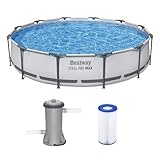
Bestway Steel Pro MAX 12' x 30" Above Ground Swimming Pool Set with Pump | Check Price On Amazon |
|
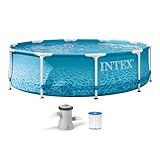
INTEX Beachside Metal Frame 10ft x 30in Round Pool Set w/Pump | Check Price On Amazon |

|
H2OGO! Kids Splash-in-Shade 8-Foot Round Steel Frame Above Ground Pool with Water Mister and Canopy Sunshade, Green Tropical Leaf Print | Check Price On Amazon |
By the Numbers
Bromine vs Chlorine – What the Research Shows
Sources: CDC Healthy Swimming Program, Water Quality and Health Council, PHTA Technical Standards
What Is Bromine and How Does It Work in Pool Water?
Bromine (chemical symbol Br) is a halogen element, placing it in the same chemical family as chlorine, fluorine, and iodine. In pool and spa water, bromine functions as a sanitizer by oxidizing the cell walls of bacteria, viruses, and algae, destroying them at the molecular level.
Bromine is classified as a Tier 1 pool sanitizer by the Pool and Hot Tub Alliance (PHTA), meaning it meets the organization’s full disinfection standards for residential and commercial applications. It is available in solid tablet form (sodium bromide combined with DMDMH, a slow-release oxidizer) or as a two-part system using a sodium bromide bank plus a non-chlorine or chlorine oxidizer to activate it.

- Intelligent Navigation with Full Coverage: Equipped with 11 high-precision sensors and enhanced dual-path algorithms. The optimized WavePath cleaning pattern ensures systematic coverage with minimal overlap, while adaptive navigation analyzes pool layout in real time to eliminate missed spots
- Dual Filtration for Crystal-Clear Water: Advanced dual-layer filtration system features a replaceable 3-micron ultra-fine filter paired with a 180-micron standard filter. Effectively captures fine dust, sand, leaves, and debris for visibly cleaner and healthier pool water
- Comprehensive Pool Cleaning: Engineered to clean the pool floor, walls, waterline, and shallow areas (above 12 inches). The Caterpillar Treads system enhances mobility and climbing ability, ensuring thorough coverage across all pool zones
- Reliable Performance with 2-Year Warranty: Trusted by over 500,000 pool owners worldwide, this robotic pool cleaner delivers consistent, high-performance results. Built for durability and backed by a 2-year warranty and responsive customer support for worry-free ownership
The critical chemistry difference from chlorine is what happens after bromine reacts with ammonia and nitrogen compounds in water. Chlorine reacts with those compounds to form chloramines, which are largely inactive and cause the familiar eye irritation and chlorine smell.
Bromine reacts with the same compounds to form bromamines, which retain approximately 83% of their original sanitizing power. This means used bromine in a spa or pool continues to sanitize, which is why total bromine (not free bromine alone) is the measurement that matters.
Bromine vs Chlorine: The Core Chemistry Differences
Understanding when to choose bromine requires understanding exactly where the two sanitizers diverge in chemistry and performance.
The comparison below covers the six dimensions that actually determine which sanitizer works better in a given situation.
Product Comparison
Bromine vs Chlorine – Side by Side
Detailed feature comparison to help you choose the right sanitizer for your pool or spa.
| Feature | Bromine | Chlorine (Trichlor) |
|---|---|---|
| Active pH range | 7.2 to 7.8 (stable) | 7.2 to 7.6 (sensitive) |
| Performance in warm water (above 84°F) | Strong – minimal degradation | Degrades rapidly above 84°F |
| UV sunlight stability | Burns off rapidly – not UV stable | Stabilized by cyanuric acid (CYA) |
| Odor at proper levels | Mild – nearly odorless | Stronger smell from chloramines |
| Cost per treatment | $1.50 to $2.50 per lb | $0.70 to $1.20 per lb |
| pH impact on water | Slightly raises pH | Trichlor strongly lowers pH |
| Best application | Hot tubs, indoor pools, spas | Outdoor pools in direct sunlight |
Cost ranges based on retail pricing for 1-lb tablet forms. Trichlor includes cyanuric acid; bromine tablets do not require CYA. Sources: PHTA, Water Quality and Health Council.
The single biggest advantage bromine holds over chlorine is its performance at high pH. At pH 7.8, only about 30% of chlorine remains in its active hypochlorous acid form.
At that same pH level, bromine remains approximately 94% active as hypobromous acid. That gap explains everything about why bromine is preferred in hot tubs, where pH drift upward is constant and rapid.
When Should You Use Bromine Instead of Chlorine?
Bromine is the better sanitizer in four specific situations: heated water environments above 84°F, indoor pools without UV sunlight exposure, applications where bathers report consistent skin or eye irritation from chlorine, and pools or spas where maintaining a stable pH below 7.6 is difficult.
Each situation maps to a specific chemical reason bromine outperforms chlorine, not just a preference.
Hot Tubs and Heated Spas
Hot tubs operating between 98°F and 104°F are the single most common application for bromine. Chlorine dissipates rapidly in water above 84°F, requiring frequent additions to maintain even a 1-2 ppm free chlorine reading.
Bromine remains stable at those temperatures and continues sanitizing at levels that would already be depleted if chlorine were used. The CDC Healthy Swimming guidelines recommend a minimum 3-5 ppm total bromine in hot tubs, specifically because of this thermal stability advantage.
Hot tub water also has a much higher bather-to-water-volume ratio than a swimming pool. A 400-gallon hot tub used by four people has roughly 50 times the contaminant load per gallon compared to a 20,000-gallon pool used by the same four people.
Bromine’s ability to form sanitizing bromamines (rather than inactive chloramines) becomes critical in this environment, because the recycled sanitizing power helps manage that heavy contaminant load between additions.
Indoor Swimming Pools
Indoor pools are the second-strongest use case for bromine. The reason is straightforward: chlorine requires cyanuric acid (CYA) as a stabilizer to protect it from UV degradation by sunlight.
An indoor pool has no sunlight exposure, which means CYA provides no benefit and adds unnecessary chemical load to the water. Without CYA, chlorine does not degrade from UV, but bromine still offers two advantages in this setting: lower odor accumulation in an enclosed space, and better performance at the higher pH levels that indoor pools often develop due to CO2 off-gassing from the water surface.
Indoor pool operators who switch from chlorine to bromine consistently report reduced chloramine odor complaints, which is a direct result of bromine’s ability to form sanitizing rather than odor-causing byproducts.
Swimmers With Chlorine Sensitivity
Some pool owners report persistent eye redness, skin rashes, or respiratory irritation that they attribute to chlorine. In most cases, the true cause is chloramines (combined chlorine) rather than free chlorine itself, which means a simple shock treatment with calcium hypochlorite or a non-chlorine shock such as potassium monopersulfate can resolve the problem without switching sanitizers.
However, a small subset of swimmers has a genuine sensitivity to chlorine compounds that is not resolved by removing chloramines. For those individuals, bromine is a legitimate alternative because it produces different byproducts (bromamines) that cause less irritation.
If you or a family member experiences consistent irritation even in well-maintained chlorine pools, test free chlorine and combined chlorine levels first using a liquid drop test kit like the Taylor K-2006. Combined chlorine above 0.5 ppm is the likely culprit, not free chlorine itself.
Pools Where pH Control Is Difficult
Pools with high bather loads, heavy aeration from waterfalls or jets, or naturally alkaline fill water often experience rapid pH rise. Keeping chlorine effective in those conditions requires constant pH adjustment to stay below 7.6.
Bromine’s wider effective pH range of 7.2 to 7.8 provides meaningful relief in those pools, reducing the frequency of pH decreaser additions and helping you dial in the right dose. This is not a reason to ignore pH management entirely, since calcium hardness, total alkalinity, and the Langelier Saturation Index (LSI) still require proper balancing at any pH.
When You Should Not Use Bromine
Bromine is not the right choice for outdoor swimming pools in direct sunlight. Bromine has no effective stabilizer equivalent to cyanuric acid for chlorine. UV radiation from the sun destroys bromine within hours, making it nearly impossible to maintain adequate sanitizer levels in an outdoor pool.
Some bromine tablet formulations include a UV-blocking agent, but no commercially available product prevents UV degradation of bromine to the degree that CYA protects chlorine. This is the fundamental, non-negotiable reason bromine is impractical as a primary sanitizer in most residential outdoor pools.
Bromine also costs roughly twice as much per pound as trichlor chlorine tablets. A 20,000-gallon outdoor pool that burns through 3-4 lbs of chlorine per week in summer would require 6-8 lbs of bromine to achieve comparable sanitization, making the annual chemical cost difference significant.
Finally, bromine cannot be stabilized with salt chlorine generators (also called saltwater chlorine generators, or SWCGs). A salt system electrolyzes sodium chloride to produce hypochlorous acid, which is chlorine. There is no equivalent salt-based bromine generation system available for residential pools.
How to Set Up a Bromine Pool or Spa: Step-by-Step
Setting up bromine sanitization correctly from the start prevents the most common problems: inadequate sanitizer levels, pH instability, and buildup of total dissolved solids (TDS) from improperly dosed chemicals.
The step-by-step guide below walks through the full setup process for a new bromine system in a hot tub or pool.
Step-by-Step Guide
How to Start a Bromine Pool or Spa System – Step by Step
7 steps for hot tubs and indoor pools. Estimated setup time: 24 to 48 hours before swimming.
Balance total alkalinity first
Adjust total alkalinity to 80-120 ppm using an alkalinity increaser (sodium bicarbonate) or muriatic acid before adjusting anything else. Total alkalinity acts as a pH buffer, and getting it right first makes all subsequent pH adjustments stable and predictable.
Adjust pH to 7.4 to 7.6
Use pH increaser (soda ash) or pH decreaser (dry acid or muriatic acid) to bring pH into the 7.4-7.6 range. Bromine works across a wider pH range than chlorine, but starting at 7.4-7.6 provides the best initial sanitizing efficiency and bather comfort.
Establish a sodium bromide bank (two-part systems only)
If using a two-part bromine system, add sodium bromide at 30 ppm per 1,000 gallons to create the bromide reserve in the water. This bromide bank is what gets activated into active hypobromous acid every time you add an oxidizer.
Load the bromine tablet feeder or floater
Fill a bromine tablet feeder or floating dispenser with 1-inch bromine tablets. Set the feeder flow rate to its lowest setting initially to avoid overshooting your target level, then adjust upward based on test results.
Activate with an initial oxidizer dose (shock)
Add a non-chlorine oxidizer (potassium monopersulfate, commonly sold as MPS or non-chlorine shock) at the manufacturer’s recommended dose to activate the bromide reserve and bring total bromine to 3-5 ppm. Circulate for 30 minutes before testing.
Test total bromine, pH, alkalinity, and calcium hardness
Use a bromine-specific test kit to verify total bromine is in the 3-5 ppm range for hot tubs or 2-4 ppm for cooler indoor pools. Confirm pH is 7.2-7.8, total alkalinity is 80-120 ppm, and calcium hardness is 150-250 ppm for spas (200-400 ppm for pools).
Wait for levels to stabilize before swimming
Allow 4-8 hours for all chemicals to fully mix before entering the water. Total bromine above 10 ppm can cause skin irritation, so confirm levels are in range with a second test before use. Run circulation during this entire period.
Bromine Water Chemistry Targets: Exact Numbers
Maintaining correct bromine chemistry requires testing at least three times per week for hot tubs and twice per week for indoor pools. The parameters below are the specific targets recommended by the PHTA and the CDC Healthy Swimming Program.
Every measurement below uses parts per million (ppm) as the unit, which is the universal standard for pool and spa water chemistry reporting.
- Total bromine (hot tub or spa): 3-5 ppm minimum; no established maximum for safety, but keep below 10 ppm to avoid skin irritation
- Total bromine (indoor pool): 2-4 ppm, matching the CDC free chlorine recommendation for public pools
- pH: 7.2 to 7.8 (bromine works reliably across this range; below 7.2 causes equipment corrosion and eye irritation; above 7.8 accelerates calcium scaling)
- Total alkalinity: 80-120 ppm for pools; 80-100 ppm for hot tubs (lower end reduces pH drift in spas)
- Calcium hardness: 150-250 ppm for hot tubs; 200-400 ppm for pools (below 150 ppm causes corrosive water that attacks equipment and surfaces)
- Total dissolved solids (TDS): Below 1,500 ppm above the source water TDS; hot tub water should be drained and replaced when TDS exceeds this threshold
- Cyanuric acid (CYA/stabilizer): Not used with bromine systems; CYA has no stabilizing effect on bromine and adds unnecessary TDS load
Bromine test kits measure total bromine, not free bromine and combined bromine separately. This is an important distinction from chlorine testing, where measuring free chlorine and combined chlorine separately tells you how much active sanitizer is present versus how much has already reacted.
With bromine, the total bromine reading captures both hypobromous acid and bromamines, and since bromamines retain significant sanitizing activity, the combined measurement is the correct management target.
The Bromine Bank: Why This Concept Matters for Spa Owners
The bromine bank is the reserve of bromide ions dissolved in your spa or pool water. These ions are not yet active sanitizers; they are the raw material waiting to be converted into active hypobromous acid when an oxidizer is added. Understanding this concept is what separates effective bromine management from constant guesswork.
When you first fill a hot tub with fresh water and add bromine tablets, you are building this bank from zero. Early results are often disappointing because the bank is depleted before it is fully established.
Once the bank is established, routine oxidizer additions (non-chlorine shock or a small dose of chlorine shock) reactivate the stored bromide. This is why bromine systems use less chemical over time than a brand-new setup suggests, because the recycled bromamines get converted back to active sanitizer with each shock treatment.
According to the PHTA’s spa chemistry guidelines, sodium bromide should be added at 30 ppm per 1,000 gallons of water volume when starting fresh. A 400-gallon hot tub needs approximately 12 ppm in total sodium bromide addition (about 0.4 oz) to establish an initial bank. Before you begin dosing, using a pool volume calculator to confirm your exact water capacity in gallons ensures you add the right amount from the start, which is especially critical for irregularly shaped spas.
How to Shock a Bromine Pool or Spa
Shocking a bromine system serves the same purpose as shocking a chlorine pool: it oxidizes accumulated organic contaminants, breaks down combined sanitizer byproducts, and restores the water’s clarity and sanitizing capacity. The specific process differs in one important way: you have a choice of shock type, and that choice matters.
Non-Chlorine Shock (Potassium Monopersulfate)
Non-chlorine shock (potassium monopersulfate, or MPS) is the preferred shocking agent for bromine systems. MPS oxidizes organic contaminants and reactivates the bromide bank without adding chlorine to the water.
Dose at 1 oz per 100 gallons for routine shocking after heavy use. Wait 15-30 minutes before re-entering a hot tub after adding MPS.
Chlorine Shock (Calcium Hypochlorite or Sodium Dichloro)
Chlorine shock can also be used in a bromine system. When chlorine is added to bromine-treated water, it reacts with the bromide bank and is immediately converted to hypobromous acid, the active bromine sanitizer. The practical effect is that you are shocking with chlorine but the end product is a boosted bromine level, not a chlorinated pool.
Use calcium hypochlorite shock at 1 lb per 10,000 gallons for a standard shock dose. Avoid sodium dichloro (dichlor) shock in hot tubs when possible, because dichlor contains cyanuric acid, which accumulates in water and has no useful function in a bromine system.
After any shock treatment, wait until total bromine returns to 3-5 ppm before using a hot tub or spa, typically 30-60 minutes with circulation running. For guidance on how long to wait after shocking in general pool situations, the same principles of testing before re-entry apply, which is covered in detail on our post about how long you need to wait after shocking before swimming.
Bromine Tablets vs Bromine Granules vs the Two-Part System
Three distinct product formats deliver bromine to pool and spa water. Each format suits a different application and maintenance preference.
The comparison below identifies the right format for each situation based on water volume, maintenance frequency, and user preference.
Product Comparison
Bromine Product Formats – Which One Is Right for Your Setup
Compare bromine tablet, granule, and two-part system options by application and maintenance need.
| Feature | Bromine Tablets (1-inch) | Bromine Granules | Two-Part System (NaBr + Oxidizer) |
|---|---|---|---|
| How it works | Slow-dissolve in feeder or floater | Pre-dissolve in water before adding | Bromide bank activated by separate oxidizer |
| Best for | Hot tubs, small spas up to 800 gal | Quick corrections, startup boost | Indoor pools above 5,000 gal |
| Ease of use | Easiest – load and set feeder rate | Moderate – requires pre-dissolving | Most control; steeper learning curve |
| Cost control | Moderate | Higher per dose | Most economical at scale |
| Recommended product format | 1-inch bromine tablets | Bromine granules | Sodium bromide + MPS shock |
Bromine Pool Maintenance Schedule: Weekly and Monthly Tasks
Bromine systems require consistent maintenance to prevent TDS buildup, pH drift, and sanitizer depletion. Hot tubs are especially demanding because their small water volume amplifies the impact of every chemical addition and every bather.
Daily and After-Use Tasks
Check total bromine and pH after heavy use or before the first use of the day. In a hot tub used multiple times daily, bromine can drop below 3 ppm within hours of heavy use due to oxidizer demand.
Add a maintenance dose of non-chlorine shock (0.5 oz per 100 gallons) after every heavy use session to reactivate the bromide bank and prevent bromamine buildup.
Weekly Tasks
Test total bromine, pH, total alkalinity, and calcium hardness at least three times per week using a bromine test kit or test strips rated for spas. Adjust chemical levels before they drift significantly outside target range.
Clean the filter cartridge by rinsing with a garden hose at low pressure every 7-14 days for a hot tub in regular use. A dirty filter reduces circulation efficiency, which accelerates chemical depletion and creates dead zones where bacteria can survive.
Monthly Tasks
Perform a deep filter clean by soaking the cartridge in a filter cleaning solution for 8-12 hours, then rinse thoroughly and allow to dry before reinstalling. This removes oils and calcium deposits that a water rinse alone cannot clear.
Test calcium hardness and TDS monthly. When TDS exceeds 1,500 ppm above the source water TDS, or when calcium hardness drops below 150 ppm or rises above 250 ppm in a spa, a partial or full drain and refill is required. Attempting to manage severely imbalanced water with additional chemicals creates a compounding chemistry problem that cannot be chemically corrected. A pool dilution and refill calculator can help you determine exactly how much water to replace to bring TDS back into the acceptable range without starting from scratch.
Every 3 to 4 Months (Hot Tub Drain and Refill)
Hot tubs should be completely drained, cleaned with a surface cleaner appropriate for spa shells (acrylic, fiberglass, or vinyl), and refilled every 3-4 months under normal use. This resets TDS and prevents the accumulation of phosphates, body oils, and other organic compounds that overwhelm the sanitizer system.
Before refilling, use a hot tub line flush product to purge biofilm from the plumbing lines. Biofilm (a bacterial colony embedded in a protective polysaccharide matrix) can survive in spa plumbing and re-contaminate fresh water within days of a refill if the lines are not flushed.
Bromine Cost Analysis: What You Will Actually Spend
Bromine costs more per pound than chlorine, but the total annual cost depends on water volume, temperature, bather load, and which product format you use. The analysis below reflects real-world chemical costs for a standard 400-gallon hot tub and a 15,000-gallon indoor pool.
The table below shows pre-calculated annual bromine costs across different usage scenarios so you can match your situation directly to a real cost figure.
Cost Reference
Bromine Annual Chemical Cost by Water Volume and Usage Frequency
All values pre-calculated based on maintaining 3-5 ppm total bromine at standard usage rates. Find your row and column to see your real annual cost.
| Pool/Spa volume and type | Light use (1-2x/week) | Moderate use (3-4x/week) | Heavy use (daily) |
|---|---|---|---|
| Small hot tub – 250 to 400 gal | $90-$140/yr approx 40-60 lbs tablets |
$160-$220/yr approx 70-95 lbs tablets – most common |
$280-$350/yr approx 120-150 lbs tablets |
| Large spa or small pool – 1,000 to 3,000 gal | $180-$280/yr approx 80-120 lbs tablets |
$320-$460/yr approx 140-200 lbs tablets |
$550-$750/yr approx 240-320 lbs tablets |
| Indoor pool – 10,000 to 20,000 gal | $600-$900/yr two-part system most economical |
$900-$1,400/yr two-part system recommended |
$1,400-$2,200/yr two-part system with MPS shock |
Annual cost estimates based on maintaining 3-5 ppm total bromine using 1-inch tablets at approximately $2.00/lb retail pricing. Two-part system costs reflect sodium bromide plus potassium monopersulfate. Costs do not include pH adjustment chemicals. Heavy use assumes 4 or more bathers per session.
For comparison, a 20,000-gallon outdoor pool sanitized with trichlor chlorine tablets costs approximately $300-$500 per year in chlorine alone, not including cyanuric acid, pH chemicals, or shock. The cost difference between bromine and chlorine is real but is largely offset by the fact that outdoor pools represent the majority of residential installations, where bromine is not a practical choice anyway.
Common Bromine Problems and How to Fix Them
Bromine chemistry problems follow predictable patterns. Each issue below has a specific root cause and a targeted fix, rather than the generic “test and adjust” advice that fails to help in the moment.
Total Bromine Reads Zero Despite Adding Tablets
The most common cause is an exhausted or nonexistent bromide bank. If the water has never been treated with bromine before, or if the hot tub was recently drained and refilled, there is no bromide reserve for the tablets to activate.
Add sodium bromide at 30 ppm per 1,000 gallons, then follow with a non-chlorine shock dose to activate it. Test after 30 minutes of circulation.
Total Bromine Is High But Water Is Cloudy
High bromine (above 10 ppm) combined with cloudy water typically indicates a heavy organic load that has consumed the oxidizing capacity of the sanitizer. The sanitizer level appears high, but most of it may be combined as bromamines reacting with organic compounds rather than killing pathogens.
Shock with a full dose of non-chlorine MPS (1 oz per 100 gallons), run circulation for 2 hours, and check turbidity and sanitizer levels again after that cycle. If water remains cloudy, check filter pressure and clean or replace the filter cartridge.
Strong Chemical Odor From a Bromine Spa
A strong smell from a properly maintained bromine spa usually indicates high combined bromine (bromamine buildup), high TDS, or both. Bromine odor is less common than chloramine odor from chlorine pools, but it does occur when organic load overwhelms the system.
Shock with a full oxidizer dose and allow 30-60 minutes of circulation with the cover off to allow gas off-gassing. If TDS is above 2,000 ppm, a partial drain and refill of 30-50% of the water volume is the most effective long-term fix.
pH Keeps Rising Despite Corrections
Constant pH rise in a hot tub is caused by aeration from jets, which drives dissolved CO2 out of the water and raises pH. This is a structural problem, not a chemistry problem, and adding pH decreaser repeatedly treats only the symptom.
Lower total alkalinity to 80-90 ppm (the low end of the acceptable range) to reduce the pH buffering effect and slow the rate of pH rise. Using a CO2 injection system is another option for commercial or high-volume spas, but this is rarely practical in residential settings.
Calcium Scaling on Spa Shell and Equipment
White calcium deposits on the waterline, jets, and heater surfaces indicate water with high calcium hardness combined with high pH. At pH above 7.8 and calcium hardness above 300 ppm, the Langelier Saturation Index (LSI) moves into positive territory, meaning the water is saturated with calcium carbonate and will deposit scale.
Lower pH to 7.2, then apply a scale remover or metal sequestrant at the manufacturer’s dose. If calcium hardness exceeds 400 ppm in a hot tub, a partial drain and refill with lower-hardness water is the only permanent solution, since there is no chemical that removes calcium from water without also removing it from the spa.
Bromine and Saltwater Pools: What You Need to Know
Saltwater chlorine generators (SWCGs) produce hypochlorous acid (chlorine) by electrolyzing sodium chloride. There is no analogous system that produces bromine from a salt solution. This means a saltwater pool is a chlorine pool by definition, not a bromine pool.
Some pool owners ask whether bromine tablets can be added to a saltwater pool to supplement the SWCG output. Adding bromine to a saltwater pool is technically possible, but it creates an unmanageable chemistry situation because the SWCG continues producing chlorine while bromine is also present. The two sanitizers interfere with each other’s testing and dosing, making it impossible to accurately measure or control either one.
If you are considering switching your pool from a chlorine-based system to an alternative, including a saltwater chlorinator, the detailed comparison of what that actually involves can help clarify the decision. Our guide covering the honest performance and cost differences between saltwater and chlorine pools walks through every factor that determines which system makes sense for your specific pool.
Bromine Safety and Handling
Bromine compounds used in pool and spa applications are classified as oxidizing agents and corrosive irritants by the Occupational Safety and Health Administration (OSHA). Direct contact with bromine tablets or granules can cause skin and eye burns.
The following safety protocols apply to all bromine products:
- Never mix bromine tablets with chlorine tablets, shock, or any other pool chemical in the same container. Mixing can cause a chemical fire or release toxic bromine gas.
- Store bromine tablets in a sealed, clearly labeled container away from direct sunlight, heat, and moisture. Store in a location with adequate ventilation, separated from other pool chemicals.
- Wear chemical-resistant gloves and eye protection when handling bromine products. Do not inhale tablet dust or granule powder.
- Never add bromine tablets directly to a pool or spa skimmer if the pump is off. Concentrated bromine solution can damage equipment, PVC plumbing, and heater components.
- Keep bromine products away from children and pets. Store in a locked cabinet where required by local regulations.
- In case of skin contact, flush with water for 15-20 minutes. In case of eye contact, flush with water for 20 minutes and seek medical attention.
The NSF International certifies pool and spa chemicals under NSF/ANSI Standard 50, which includes bromine-based sanitizers. Purchasing NSF-certified bromine products ensures the chemical meets established purity and performance standards for potable and recreational water applications.
Myths About Bromine Pools: Separating Fact From Fiction
The following comparison addresses the five most persistent misconceptions about bromine that appear regularly in pool forums, hot tub communities, and even some retail product descriptions.
Myth vs Fact
Bromine Pool and Spa – Common Myths Debunked
Separating fact from fiction on the most common bromine misconceptions
Myth
Bromine is safer than chlorine for all swimmers.
Fact
Bromine causes less irritation than improperly maintained chlorine water, but properly maintained free chlorine at 2-4 ppm causes equally low irritation. The advantage of bromine is that it stays effective at higher pH levels where chlorine becomes irritating, not that it is inherently gentler as a chemical.
Myth
You can use cyanuric acid to stabilize bromine in an outdoor pool, just like chlorine.
Fact
Cyanuric acid (CYA) does not bond with bromine and provides no UV protection for bromine in sunlight. No commercially available stabilizer protects bromine from UV degradation to a degree that makes outdoor bromine pools practical. This is the primary reason outdoor pools use chlorine, not bromine.
Myth
Once you switch from chlorine to bromine, you can never switch back.
Fact
You can switch from bromine back to chlorine, but the bromide ions remain dissolved in the water. When chlorine is added to bromine-treated water, it reacts with the bromide bank and converts primarily to bromine sanitizer for several weeks until the bromide is depleted. The most practical approach is to drain and refill, then start fresh with chlorine. For hot tubs, a complete drain is the standard transition method.
Myth
Bromine does not need to be shocked because bromamines keep sanitizing.
Fact
Bromamines do retain sanitizing power, but organic contaminants accumulate regardless. Shocking a bromine spa with non-chlorine MPS oxidizes accumulated body oils, lotions, and other organic material that the bromamines cannot break down. Bromine systems that are never shocked develop water clarity problems, odor, and eventually foam from accumulated organic compounds.
Myth
Bromine turns skin and swimsuits yellow over time.
Fact
Yellow or orange discoloration in a bromine spa is caused by metals in the water (typically iron or manganese) reacting with the oxidizer, not bromine itself. A metal sequestrant added to the water before raising sanitizer levels prevents this reaction. Source water with high iron content requires sequestrant at every fill.
Switching From Chlorine to Bromine: What to Expect
Switching an existing pool or hot tub from chlorine to bromine requires clearing the chlorine residual first, then establishing the bromide bank, then transitioning to bromine-based maintenance. The switch works most cleanly in hot tubs due to their small volume and easy drain-and-refill capability.
For a hot tub, the recommended process is a complete drain and refill. Attempting to switch chemicals in existing water is possible but complicates water chemistry tracking for several weeks while the bromide bank establishes. Draining removes all existing chemical residuals and gives you a clean starting point.
For an indoor pool, a full drain is rarely practical. Instead, stop adding chlorine and allow the existing free chlorine to drop to 0 ppm over 3-7 days (longer if cyanuric acid is present, since CYA slows chlorine degradation). Once free chlorine reads 0 ppm, establish the bromide bank and begin the bromine startup procedure described earlier in this guide.
If your indoor pool currently has a saltwater chlorine generator installed, understand that removing the SWCG system is required before transitioning to bromine, since the generator will continue producing chlorine and converting any added bromine back to chlorine chemistry. For anyone who has considered the reverse transition from chlorine to saltwater, the practical process of converting an existing pool to a saltwater chlorinator system follows a similarly structured approach.
Testing Bromine Levels: What Equipment to Use
Standard DPD chlorine test kits measure total bromine using the same reagents but require a bromine-specific reading on the color chart. Most liquid drop test kits designed for pools, including the Taylor K-2006, measure total bromine on their DPD color scale when you apply the bromine multiplier factor (typically multiply the chlorine reading by 2.25 to get the equivalent bromine reading).
Bromine-specific test kits that eliminate the conversion factor are also available and are the cleaner option for dedicated bromine systems. Bromine test strips rated specifically for hot tub and spa use are the fastest option for routine daily checks, though they provide readings accurate only within approximately 0.5-1.0 ppm.
For precision management in a commercial or frequently used residential hot tub, a digital photometer that measures bromine directly gives readings accurate to within 0.1 ppm. This level of precision matters most when trying to confirm whether a sanitizer addition has brought levels into the correct range before allowing bathers to enter.
Test at least 3 times per week for hot tubs in regular use. A bromine spa that goes untested for more than 3 days during active use frequently shows levels outside the 3-5 ppm range in one direction or the other.
Bromine for Commercial Pools and Spas
Commercial indoor pools and hotel spas represent the largest application segment for bromine outside of residential hot tubs. The rationale at commercial scale mirrors the residential case: enclosed spaces, warm water, and heavy bather loads all favor bromine’s chemistry over chlorine.
The CDC’s Model Aquatic Health Code (MAHC) permits bromine as a primary disinfectant for all pool types and lists minimum total bromine levels at 3 ppm for hot tubs and 1 ppm for swimming pools at a pH range of 7.2-7.8. State and local health codes govern specific commercial requirements, and some jurisdictions require supplemental UV or ozone treatment alongside bromine in commercial spa applications.
Commercial operators using bromine must maintain log records of sanitizer and pH test results, typically with a minimum testing frequency of every 2 hours during operating hours for commercial spas. Automatic chemical dosing systems that monitor ORP (oxidation-reduction potential) and pH continuously are standard in commercial bromine applications, reducing the risk of sanitizer depletion between manual testing intervals.
Frequently Asked Questions About Bromine Pools and Spas
Can you use bromine in an outdoor pool?
Quick Answer: Bromine is not practical as a primary sanitizer in outdoor pools because UV radiation from sunlight destroys it rapidly. There is no stabilizer equivalent to cyanuric acid that protects bromine from UV degradation, making it nearly impossible to maintain adequate levels in direct sunlight.
In an outdoor pool without shade, bromine levels can drop from 3 ppm to near zero within 2-4 hours of direct sunlight exposure, requiring constant and expensive chemical additions. Chlorine stabilized with 30-50 ppm cyanuric acid degrades at a fraction of that rate.
If you have a covered outdoor pool or a pool in a very shaded environment, bromine becomes somewhat more practical, but it remains a poor choice compared to chlorine for any setting with meaningful sun exposure.
Is bromine safe for children and pregnant women?
Quick Answer: Bromine at proper pool and spa levels (3-5 ppm total bromine) is considered safe for healthy swimmers according to CDC guidelines. Pregnant women should consult their physician about hot tub use in general, since the elevated water temperature (above 101°F) is the primary concern, not the type of sanitizer used.
The American College of Obstetricians and Gynecologists (ACOG) advises pregnant women to limit hot tub use to 10-minute sessions and keep water temperature below 101°F due to the risk of overheating, regardless of whether the sanitizer is bromine or chlorine. The sanitizer itself at properly maintained levels is not the reason for this caution.
How often should I drain and refill a bromine hot tub?
Quick Answer: A standard residential hot tub used by 2-4 people several times per week should be drained and refilled every 3-4 months. Hot tubs with higher bather loads or smaller water volumes (below 300 gallons) may need draining every 6-8 weeks.
The threshold that indicates a drain is needed is TDS exceeding 1,500 ppm above source water TDS, or calcium hardness outside the 150-250 ppm range that cannot be corrected chemically. Chemical costs also increase significantly as TDS builds up, since the water becomes harder to balance and sanitize, making timely draining economically sensible in addition to being necessary for water quality.
Why does my bromine spa smell even though the levels are correct?
Quick Answer: A bromine odor in a properly dosed spa usually indicates accumulated bromamines reacting with a high organic load, or elevated TDS from long-term chemical buildup. Shocking with non-chlorine MPS and increasing ventilation typically resolves the issue within 30-60 minutes.
If the odor persists after shocking, test TDS and consider a 30-50% partial drain and refill. Persistent odor despite correct bromine levels is a reliable sign that the water is chemically exhausted and needs dilution, not more chemical additions.
Can bromine cause hair discoloration like chlorine does?
Quick Answer: Bromine at proper levels (3-5 ppm total bromine) does not typically cause hair discoloration. The green hair sometimes associated with pools is caused by copper from algaecides or copper-based pipes reacting with oxidizers, not chlorine or bromine directly. Hair damage from pool chemicals is primarily oxidative, which any sanitizer (including bromine) can cause at elevated levels.
Rinsing hair before and immediately after swimming removes most residual sanitizer and is the most effective prevention regardless of whether the pool uses bromine or chlorine. Leave-in swimmer’s conditioner provides additional protection against oxidative damage from any halogen-based sanitizer.
What is the difference between bromine and biguanide (PHMB)?
Quick Answer: Biguanide (marketed as Baquacil or SoftSwim) is a polymer-based sanitizer that works by disrupting bacterial cell membranes rather than oxidation. It is not a halogen and cannot be used with chlorine or bromine, which destroy biguanide. Biguanide pools require their own dedicated line of shock and algaecide products.
Bromine is a halogen sanitizer that works through oxidation, making it compatible with chlorine-based shock products and most standard pool chemistry. Biguanide suits swimmers with extreme chlorine sensitivity but costs significantly more per year and has limitations including poor performance against algae without its dedicated algaecide. Bromine is the better-performing alternative to chlorine for most hot tub and indoor pool applications, while biguanide suits a more limited set of use cases.
Will chlorine shock ruin my bromine spa?
Quick Answer: No. Chlorine shock (calcium hypochlorite or potassium dichloro) added to a bromine spa reacts with the bromide bank and converts rapidly to hypobromous acid, the active bromine sanitizer. The practical result is a boost in bromine level, not a contaminated bromine system.
The one product to avoid is sodium dichloro (dichlor) shock, because dichlor contains cyanuric acid (CYA). CYA has no useful function in a bromine system and accumulates in water with each dichlor addition. Over time, CYA buildup increases TDS and contributes to water chemistry instability. Use non-chlorine MPS shock as the first choice, and calcium hypochlorite as the second choice, for shocking bromine spas.
Can I add bromine to a pool that already has chlorine in it?
Quick Answer: You can add bromine to a pool containing residual chlorine, but the result is a hybrid chemistry situation that is difficult to test and manage accurately. The chlorine will react with any bromide present and convert to bromine, creating a mixed sanitizer environment where standard test kits cannot distinguish free chlorine from bromine accurately.
The recommended approach is to allow existing free chlorine to deplete to 0 ppm before establishing a bromine system. In a pool with high cyanuric acid (above 50 ppm), chlorine depletion takes considerably longer than in unstabilized water, sometimes 1-3 weeks depending on sun exposure and pool volume. This situation with elevated chlorine levels, and how to manage it, is covered in detail in our guide on when high pool chlorine becomes a problem and how to bring it down safely.
Does bromine kill algae?
Quick Answer: Yes, bromine kills algae at sufficient concentrations, but it is less effective as an algae treatment compared to chlorine at equivalent doses. Chlorine’s more aggressive oxidizing action at typical pool pH levels makes it faster at killing algae blooms, while bromine’s comparative gentleness is both its advantage (for skin comfort) and its limitation (for algae control).
In a bromine indoor pool where algae growth is possible due to lighting or poor circulation, raising total bromine to 10-15 ppm temporarily and brushing surfaces vigorously is the first step. If algae persists, a polyquat algaecide compatible with bromine systems can be added without disrupting bromine chemistry, unlike copper-based algaecides which can cause staining at higher sanitizer levels.
Conclusion
Bromine is the right sanitizer when warm water, enclosed spaces, or high-pH conditions make chlorine less effective. The core decision is straightforward: hot tubs and heated indoor spas above 84°F, indoor pools without UV exposure, and any application where pH consistently drifts above 7.6 are the situations where bromine’s chemistry delivers a genuine advantage.
Start with total alkalinity at 80-120 ppm, establish the bromide bank at 30 ppm per 1,000 gallons, maintain total bromine at 3-5 ppm in spas and 2-4 ppm in pools, and test at least three times per week. If you are managing seasonal pool operations alongside a bromine spa, the timing and chemistry of opening and closing your pool properly each season remains equally important regardless of which sanitizer system you use.
| Photo | Best Above-Ground Pools | Price |
|---|---|---|
|
|
Bestway Steel Pro MAX 12' x 30" Above Ground Swimming Pool Set with Pump | Check Price On Amazon |
|
|
INTEX Beachside Metal Frame 10ft x 30in Round Pool Set w/Pump | Check Price On Amazon |
|
|
H2OGO! Kids Splash-in-Shade 8-Foot Round Steel Frame Above Ground Pool with Water Mister and Canopy Sunshade, Green Tropical Leaf Print | Check Price On Amazon |