
By the Numbers
Saltwater Pool Opening and Closing: What the Data Shows
| Photo | Best Above-Ground Pools | Price |
|---|---|---|
|
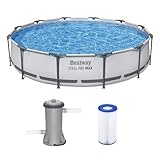
Bestway Steel Pro MAX 12' x 30" Above Ground Swimming Pool Set with Pump | Check Price On Amazon |
|
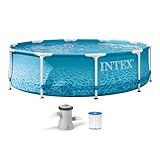
INTEX Beachside Metal Frame 10ft x 30in Round Pool Set w/Pump | Check Price On Amazon |

|
H2OGO! Kids Splash-in-Shade 8-Foot Round Steel Frame Above Ground Pool with Water Mister and Canopy Sunshade, Green Tropical Leaf Print | Check Price On Amazon |
Sources: PHTA industry data, manufacturer technical specifications, pool service professional surveys
What Makes Saltwater Pool Opening and Closing Different from Traditional Pools
A saltwater pool still uses chlorine to sanitize the water. The difference is how that chlorine gets there. A salt chlorine generator (SWCG) uses electrolysis to convert dissolved salt (sodium chloride) into chlorine gas, which immediately dissolves to form hypochlorous acid: the same active sanitizer produced by adding chlorine tablets or liquid bleach.
This happens because an electric current passes between titanium plates coated with ruthenium or iridium oxide inside the salt cell. The current splits salt molecules into chlorine gas at the anode and sodium hydroxide at the cathode. This only occurs when water temperature is above 60°F and salt concentration falls between 2700 and 3400 ppm for most residential units. If salt levels drop below 2500 ppm or water temperature falls below 55°F, chlorine production stops completely. The result is zero chlorine entering the pool: algae can bloom within 48 hours in warm water.
The salt cell is the component that changes every seasonal procedure. It is a $400 to $800 electrochemical device with a finite lifespan. Calcium scale buildup on the cell plates reduces chlorine output by up to 40% before the system shows any error code. Letting the cell sit dry and unsecured through winter invites internal corrosion from residual moisture and temperature swings. Traditional pool opening and closing ignores this component entirely. Saltwater pool care centers on protecting it.
For a deeper look at how salt chlorine generation works at the engineering level, see our guide on salt chlorine generator operation and maintenance. For a full comparison with traditional systems, read our saltwater versus chlorine pool comparison.

- Intelligent Navigation with Full Coverage: Equipped with 11 high-precision sensors and enhanced dual-path algorithms. The optimized WavePath cleaning pattern ensures systematic coverage with minimal overlap, while adaptive navigation analyzes pool layout in real time to eliminate missed spots
- Dual Filtration for Crystal-Clear Water: Advanced dual-layer filtration system features a replaceable 3-micron ultra-fine filter paired with a 180-micron standard filter. Effectively captures fine dust, sand, leaves, and debris for visibly cleaner and healthier pool water
- Comprehensive Pool Cleaning: Engineered to clean the pool floor, walls, waterline, and shallow areas (above 12 inches). The Caterpillar Treads system enhances mobility and climbing ability, ensuring thorough coverage across all pool zones
- Reliable Performance with 2-Year Warranty: Trusted by over 500,000 pool owners worldwide, this robotic pool cleaner delivers consistent, high-performance results. Built for durability and backed by a 2-year warranty and responsive customer support for worry-free ownership
When Should You Open Your Saltwater Pool Each Spring
Open your saltwater pool when water temperature consistently reaches 60°F. This is not a calendar date: it is a water temperature measurement. Opening before 60°F means the salt cell cannot produce chlorine even after the system powers on. You will pour liquid chlorine or shock into the pool for weeks while the cell sits idle.
Waiting until water hits 65°F is even better. Algae growth accelerates above 65°F, so opening before this threshold lets you establish chlorine levels before algae gets a foothold. In most of the United States, the 60°F to 65°F window falls between mid-March and late April depending on your climate zone. Southern states may reach this by early March. Northern states and Canada often wait until May.
Seasonal Guide
Saltwater Pool: Month-by-Month Seasonal Action Guide
Opening, operating, and closing windows for most US climate zones
Closed / Peak operation
Timing is approximate for USDA zones 5 through 9. Adjust 2-4 weeks earlier for zones 10+ and 2-4 weeks later for zones 4 and below.
How to Open Your Saltwater Pool: Complete Step-by-Step Process
Opening a saltwater pool follows the same initial steps as any pool opening with four critical salt-specific additions at the end. The standard steps come first because they protect the salt cell from damage during startup.
For the complete general opening procedure that applies to all pool types, see our comprehensive pool opening guide with detailed steps. Below are the saltwater-specific differences and additions.
Step 1: Remove the Cover and Clean Debris
Pump any standing water off the cover using a submersible cover pump. Standing water on a winter cover weighs 8.34 pounds per gallon. A 20-foot by 40-foot cover can hold 500 gallons after a wet winter. That is over 4,000 pounds of water weight that can tear cover anchors and pull the cover into the pool.
Remove the cover carefully without letting debris fall into the water. Clean and dry the cover before storing it. A wet cover folded and stored develops mildew that destroys the fabric within one off-season.
Step 2: Reinstall Equipment and Inspect the Salt Cell
Reconnect your pump, filter, heater, and the salt chlorine generator to the plumbing. The salt cell should be the last piece of equipment before water returns to the pool. This ensures filtered, debris-free water passes through the cell plates.
Remove the salt cell from its housing and inspect the titanium plates visually. White crusty deposits on the plates indicate calcium scale buildup. Light scale is normal after winter. Heavy scale that bridges between plates requires cleaning before the cell powers on. Running a heavily scaled cell forces the system to increase voltage to maintain chlorine output. This overheats the power supply and can burn out the control board: a $300 to $500 repair.
Step 3: Prime the Pump and Check for Leaks
Fill the pump strainer basket with water and start the pump on the lowest speed if you have a variable speed pump. Check every plumbing connection, the salt cell unions, and the filter band clamp for leaks. A small drip at the salt cell union loses 2 to 5 gallons per hour. Over a season that is thousands of gallons of saltwater that will kill grass and plants near the equipment pad.
Step 4: Clean the Salt Cell if Needed
If you see white scale deposits on the cell plates, clean the cell before starting chlorine production. Mix a solution of 4 parts water to 1 part muriatic acid (31.45% hydrochloric acid) in a cleaning stand or a bucket designed for salt cell cleaning. Never use pure acid. Never soak the cell for more than 15 minutes. Acid dissolves calcium scale but also etches the precious metal coating on the plates. Each cleaning removes a microscopic layer of ruthenium oxide. Clean only when scale is visible, not as a routine procedure.
Submerge the cell plates in the solution. You will see foaming as the acid reacts with the calcium carbonate. After foaming stops, typically in 5 to 10 minutes, remove the cell and rinse thoroughly with a garden hose. Reinstall the cell and hand-tighten the unions. Over-tightening cracks the plastic housing.
Step 5: Add Salt to Reach Target Level
Test the salt concentration before adding any salt. Winter rains and snow dilute pool water. A pool that was at 3200 ppm in October may be at 1800 ppm in April after off-season precipitation and water removal from the cover. Use a liquid drop salt test kit or digital salt meter. Test strips are accurate only to within 400 ppm. That margin of error is the difference between a cell that produces chlorine and one that shows a low salt alarm.
Add pool-grade salt (sodium chloride, minimum 99% pure) to reach the manufacturer’s target. Most residential systems target 3000 to 3500 ppm. One 40-pound bag of pool salt raises salt concentration by approximately 480 ppm in a 10,000-gallon pool. Calculate your needs precisely. The formula is: (target ppm minus current ppm) multiplied by pool volume in gallons, divided by 120,000. This gives you the pounds of salt needed. Divide by 40 to get the number of bags. For an easy way to determine exact amounts, use our pool salt calculator.
Broadcast the salt evenly across the pool surface with the pump running. Brush the pool floor to help salt dissolve. Do not add salt through the skimmer. Concentrated salt solution passing directly through the cell before it dissolves triggers a high salt alarm and can overload the power supply. Run the pump continuously for 24 hours after adding salt to ensure complete mixing before turning on the chlorine generator.
Step 6: Balance Water Chemistry Before Powering the Salt Cell
Balance pH, total alkalinity, calcium hardness, and cyanuric acid before turning on the salt chlorine generator. The cell produces chlorine most efficiently and lasts longest when water is balanced first. Target these levels:
pH: 7.4 to 7.6. Salt cells naturally drive pH upward during operation. Starting at 7.4 gives you room before pH rises above 7.8, where chlorine effectiveness drops sharply and scale formation accelerates on the cell plates. Use pH decreaser (dry acid or muriatic acid) to lower pH if needed.
Total Alkalinity: 80 to 120 ppm for most pools. Pools with salt chlorine generators benefit from alkalinity at the lower end of this range: 80 to 100 ppm. This helps buffer against the pH rise the cell naturally causes. Use alkalinity increaser (sodium bicarbonate) if levels are below 80 ppm.
Calcium Hardness: 200 to 400 ppm. Vinyl and fiberglass pools should target 200 to 250 ppm. Plaster and concrete pools need 300 to 400 ppm to prevent the water from leaching calcium out of the pool surface. Low calcium water is aggressive and corrodes heat exchanger copper and salt cell plate coatings. Use calcium hardness increaser if below the target range.
Cyanuric Acid (CYA): 30 to 50 ppm for saltwater pools. This is lower than the 30 to 50 ppm often recommended for traditional chlorine pools because the salt cell continuously produces chlorine at a steady rate. Outdoor saltwater pools without enough CYA lose chlorine to UV degradation faster than the cell can replace it. Indoor pools do not need CYA. Add cyanuric acid (stabilizer) if the level is below 30 ppm.
Step 7: Power On the Salt System and Set Output
Turn on the salt chlorine generator once water is balanced and salt has circulated for 24 hours. Start at 50% output and test free chlorine daily for the first week. Adjust output percentage upward or downward based on free chlorine readings. The target is 2 to 4 ppm free chlorine. If free chlorine is at 5 ppm after 24 hours at 50% output, reduce to 30%. If it is at 1 ppm, increase to 70%.
Most salt cells need 8 to 12 hours of pump runtime per day during summer to maintain chlorine levels. A 20,000-gallon pool with a 1.5-pound-per-day cell at 100% output produces approximately 1.5 pounds of chlorine gas every 24 hours of runtime. At 50% output and 10 hours of runtime, that is roughly 0.3 pounds of chlorine per day: adequate for an average bather load but insufficient for a pool party.
Step-by-Step Guide
Saltwater Pool Spring Opening: 7 Steps with Time Estimates
7 steps · Total active time: 2 to 4 hours plus 24-hour circulation wait
Remove cover and clean debris (30-60 min)
Pump standing water off cover, remove carefully, clean and dry before storage.
Reinstall equipment and inspect salt cell (20-30 min)
Reconnect pump, filter, heater, and salt cell. Remove cell, inspect plates for scale.
Prime pump and check for leaks (15-20 min)
Fill pump basket, start on low speed, check all connections including salt cell unions.
Clean salt cell if scaled (15-20 min if needed)
4:1 water to muriatic acid solution, soak 5-10 minutes until foaming stops, rinse thoroughly.
Add salt to reach 3000-3500 ppm (15-30 min plus 24-hour wait)
Test first, calculate pounds needed, broadcast evenly, run pump 24 hours before next step.
Balance water chemistry (30-45 min)
Adjust pH to 7.4-7.6, TA to 80-120, CH to 200-400, CYA to 30-50 before powering cell.
Power on salt system and dial in output (ongoing 5-7 days)
Start at 50% output, test FC daily, adjust until stable at 2-4 ppm free chlorine.
Salt Cell Inspection and Spring Cleaning After Winter
The salt cell inspection is the most skipped step in saltwater pool openings. Most pool owners reconnect the plumbing, start the pump, and power on the system without looking at the cell plates. A cell that enters spring with heavy calcium scale operates at 60% efficiency or less without showing an error code until the scale is severe enough to trigger overcurrent protection.
Remove the cell from the plumbing by unscrewing the threaded unions at each end. Look through the cell from one end toward a light source. You should see clear gaps between each titanium plate. If the plates appear fuzzy or white deposits bridge across two or more plates, the cell needs cleaning. If the plates are dark gray or black with no visible white deposits, the cell is clean. Reinstall it and proceed.
For cells with visible scale, use a salt cell cleaning stand that holds the cell vertically and allows you to fill only the interior chamber. Mix muriatic acid with water at a 1:4 ratio: one part acid to four parts water. Always add acid to water, never water to acid. Pouring water into concentrated acid causes a violent exothermic reaction that can splash acid onto skin and eyes.
Fill the cell chamber with the acid solution and let it sit. The foaming action is the acid dissolving calcium carbonate. When foaming stops, typically in 5 to 10 minutes, the calcium is dissolved. Empty the solution and rinse the cell thoroughly with a garden hose for 30 seconds. Reinstall and hand-tighten the unions. Do not soak a salt cell in acid for more than 15 minutes. The acid continues to etch the ruthenium coating after the calcium is gone.
How to Balance Saltwater Pool Chemicals After Opening
Chemical balancing order matters in saltwater pools. Adding chemicals in the wrong order creates interactions that make balancing take twice as long. Follow this sequence exactly:
First, adjust total alkalinity. Alkalinity is the pH buffer. If alkalinity is below 80 ppm, pH swings wildly with every chemical addition. If above 120 ppm, pH locks in place and resists adjustment. Target 80 to 100 ppm for saltwater pools to counteract the slow pH rise the cell generates. Add alkalinity increaser according to package dosing, wait 6 hours with the pump running, and retest before moving to pH.
Second, adjust pH. After alkalinity is in range, pH will respond predictably to adjustment chemicals. Target 7.4 to 7.6. Add muriatic acid or dry acid to lower pH, or soda ash to raise it. Wait 4 hours and retest. pH below 7.2 corrodes heat exchangers and irritates eyes. pH above 7.8 causes calcium to precipitate onto the salt cell plates and pool surfaces even if calcium hardness is within range.
Third, adjust calcium hardness. Low calcium water is aggressive. It strips calcium from plaster surfaces and leaches copper from heat exchangers. High calcium water forms scale. Target 200 to 400 ppm depending on pool surface type. Vinyl and fiberglass pools do well at 200 to 250 ppm. Plaster and concrete pools need 300 to 400 ppm.
Fourth, add cyanuric acid. CYA protects chlorine from UV degradation. Without CYA, the salt cell produces chlorine that sunlight destroys in under 2 hours. With CYA at 30 to 50 ppm, chlorine persists for 8 to 12 hours. This means the cell can maintain levels without running the pump 24 hours per day. Add CYA through the skimmer in a sock or use a granular stabilizer. Do not add CYA and then backwash the filter for 48 hours. Backwashing immediately after adding CYA sends the stabilizer straight to waste.
Fifth, add salt and wait 24 hours. Salt must fully dissolve and distribute before the salt cell reads the concentration accurately. Adding salt and immediately powering on the cell can trigger a high salt alarm if concentrated saltwater passes through the cell. Run the pump for a full 24 hours after adding salt, then turn on the cell.
When Should You Close Your Saltwater Pool for Winter
Close your saltwater pool when water temperature drops below 60°F and stays there. This is the same 60°F threshold that governs opening. Below 60°F, the salt cell cannot produce chlorine reliably. Below 50°F, most cells shut down automatically with a cold water alarm. Running the cell below its minimum operating temperature does not produce usable chlorine and applies unnecessary wear to the electrode coating.
Closing before leaves begin falling in autumn prevents a massive organic load from decomposing in the water over winter. Organic debris consumes whatever chlorine remains and creates ideal conditions for algae to establish before the water gets cold enough to inhibit growth. In transitional climates where water temperatures hover between 55°F and 65°F through October, close by mid-October even if the water is still borderline warm. The risk of a leaf-filled pool outweighs an extra two weeks of swim season.
For detailed winterization steps applicable to every pool type including equipment protection and plumbing procedures, see our complete pool winterization guide for all pool types.
How to Close Your Saltwater Pool: Complete Step-by-Step Process
Closing a saltwater pool requires one critical step that traditional pool closing does not: removing, cleaning, and properly storing the salt cell. This single step prevents $400 to $800 in spring replacement costs. The remaining steps follow standard winterization practice with a few salt-specific chemical adjustments.
Step 1: Balance Water Chemistry One Week Before Closing
Adjust pH to 7.2 to 7.4. This is slightly lower than the in-season target of 7.4 to 7.6. Lower pH reduces the tendency for calcium to precipitate onto surfaces as water temperature drops. Add pH decreaser if needed.
Raise chlorine levels to 3 to 5 ppm and hold for 48 hours before closing. Use calcium hypochlorite pool shock or liquid chlorine to boost levels. Use our pool shock calculator to determine the correct dosage for your pool. The salt cell may already be struggling at cooler temperatures, so supplement with manual chlorine addition to ensure the pool enters winter with a strong sanitizer residual.
Add a winter algaecide 48 hours before closing. Choose a long-chain polymer algaecide, not a copper-based product. Copper algaecides stain pool surfaces and can plate onto the salt cell plates permanently, destroying the ruthenium coating. Follow the dosage on the bottle for your pool volume.
Step 2: Clean the Pool Thoroughly
Vacuum the pool floor, brush the walls and steps, and skim the surface. Remove every leaf and debris particle. Organic material decomposing over winter consumes the chlorine residual and leaves the pool vulnerable to algae blooms in March, weeks before you plan to open.
Clean the skimmer baskets and pump strainer basket. Backwash sand or DE filters, or clean cartridge filters. The filter should enter winter clean so spring startup does not begin with a dirty filter reducing flow through the salt cell.
Step 3: Remove, Clean, and Store the Salt Cell
This is the most important saltwater-specific closing step. Unplug the salt cell from the control box. Unscrew the threaded unions and remove the cell from the plumbing. Inspect the plates for scale buildup and clean with the 4:1 water-to-acid solution if needed, following the same procedure used for spring cleaning.
After cleaning, rinse the cell thoroughly and let it dry completely. Store the cell indoors in a climate-controlled space: a basement, utility room, or heated garage. Do not leave the cell outside or in an unheated shed. Freezing temperatures mixed with residual moisture inside the cell housing can crack the plastic and short the electrode plates. Do not wrap the cell in plastic. Trapped condensation accelerates corrosion of the electrical contacts.
Many salt system manufacturers sell a dummy bypass pipe that replaces the salt cell in the plumbing for winter. This is a piece of PVC the exact length of the salt cell with the same union connections. Installing the dummy pipe lets you winterize the plumbing system normally without worrying about the expensive cell sitting in a potentially freezing equipment pad. If you do not have a dummy pipe, cap the open unions to keep debris and pests out of the plumbing.
Step 4: Lower the Water Level
Lower the water level 4 to 6 inches below the skimmer opening for mesh covers, or just below the tile line for solid covers. This prevents freeze damage to the skimmer and return lines. Use a submersible pump to drain water quickly.
Saltwater pools have a slightly lower freezing point than freshwater pools: approximately 28.4°F for a 3000 ppm salt solution versus 32°F for freshwater. This is a negligible difference for winter protection. Do not count on salt to prevent freeze damage in your plumbing. Blow out the lines and add antifreeze just as you would for any pool.
Step 5: Blow Out Plumbing Lines and Add Antifreeze
Use an air compressor or shop vac on blower mode to clear water from all return lines, skimmer lines, and main drain lines. Water expands by approximately 9% when it freezes. This expansion generates enough force to split Schedule 40 PVC pipe. Clear every line completely.
Add non-toxic pool antifreeze (propylene glycol, not automotive antifreeze) to the lines after blowing them out. Use approximately 1 gallon per 10 feet of pipe. Pool antifreeze is safe for the salt cell and all pool equipment. Automotive antifreeze (ethylene glycol) is toxic and will contaminate the pool permanently.
Install winter plugs in all returns and skimmers. Use rubber expandable winter plugs that tighten with a wing nut. Threaded plugs can crack plastic fittings if overtightened.
Step 6: Install the Winter Cover
Install a solid winter cover or a safety cover rated for your pool size. A safety cover is the better investment for saltwater pools. Saltwater is more aggressive than freshwater and can corrode the metal springs and hardware on lower-quality covers. Look for covers with stainless steel springs and brass anchors specifically rated for saltwater pool use.
Place an air pillow under the cover for above-ground pools. The pillow absorbs ice expansion pressure and protects the pool wall. Center the pillow and inflate it to approximately 80% capacity. Full inflation causes the pillow to burst when ice forms around it and compresses the trapped air.
Step 7: Store the Control Box and Power Supply
Unplug the salt system control box from the electrical outlet. If the control box is mounted outdoors and cannot be removed, cover it with a waterproof equipment cover. Moisture entering the control box through winter rain and snow corrodes the circuit board contacts. A corroded board may power on in spring but fail within weeks as the corrosion spreads across the traces.
Store any removable components including the flow switch if your system uses a separate one. Check the flow switch for debris and calcium buildup. A stuck flow switch prevents the cell from powering on in spring even though the water is flowing normally.
Salt Cell Winter Storage and Off-Season Protection
Salt cell storage is the step that most saltwater pool owners skip. They leave the cell installed in the plumbing through winter, assuming it is protected because the equipment pad is winterized. This assumption is expensive. Water trapped in the cell housing freezes and expands, cracking the plastic. Condensation from temperature swings corrodes the electrode connections. Calcium residue left on the plates hardens over winter and becomes nearly impossible to remove in spring without aggressive acid cleaning that shortens cell life.
Store the salt cell indoors where temperatures stay above freezing and below 100°F. A basement shelf, utility room cabinet, or heated garage workbench is ideal. Place the cell in a cardboard box or cloth bag. Do not seal it in plastic. Any residual moisture inside the cell needs to evaporate over the winter months. Trapping moisture against the electrodes for months accelerates oxidation of the base titanium layer beneath the ruthenium coating.
If you must store the cell in an unheated space because you have no indoor option, wrap it in an old towel and place it inside an insulated cooler. This buffers against the fastest temperature drops that cause condensation and freezing. Add a small desiccant pack to absorb moisture. The cooler method is not as good as indoor storage but prevents the worst freeze damage.
Many pool owners ask whether they can leave the salt cell installed and simply drain the plumbing. You can, but should not. Even with the plumbing drained, water remains in the cell housing unless it is removed and shaken out. This water freezes at 32°F and cracks the cell body. A cracked cell body is not repairable. The entire cell must be replaced.
Common Saltwater Pool Opening and Closing Mistakes
Saltwater pool systems are reliable when maintained correctly. Most failures trace back to one of five mistakes repeated season after season. Avoiding these mistakes adds years to salt cell life and prevents the most common opening-day frustrations.
Mistake 1: Powering on the salt cell before adding salt. The salt cell relies on salt dissolved in the water passing through it to conduct electricity. Running the cell with low or zero salt concentration forces the power supply to increase voltage trying to maintain current. This overheats the control board and can destroy the power supply within hours. Always add salt, circulate for 24 hours, and test the concentration before turning on the cell.
Mistake 2: Cleaning the salt cell with pure muriatic acid. Pure acid etches the ruthenium coating off the titanium plates in seconds. A 30-second dip in undiluted acid can destroy a cell that would have lasted five more years. Always dilute acid to 4 parts water to 1 part acid. Clean only when scale is visible, not as a scheduled maintenance task.
Mistake 3: Closing the pool without removing the salt cell. A cell left in the plumbing through freezing temperatures is a gamble. The cell contains small passages where water pools even after blowing out the lines. When this water freezes, it cracks the housing. The crack may be invisible to the eye but leaks saltwater onto the equipment pad on spring startup.
Mistake 4: Adding salt through the skimmer. Concentrated salt solution passing directly through the cell before it dissolves creates a localized high-salt condition. The cell reads this as an over-salt error and shuts down. The concentrated solution also accelerates corrosion of any metal components in the plumbing path. Always broadcast salt across the pool surface.
Mistake 5: Opening the pool and running the salt cell at 100% output immediately. The pool water needs chlorine on opening day, but the salt cell is not a shock treatment device. Running at 100% output to try to clear green water overheats the cell and shortens its life. Use granular shock or liquid chlorine to establish initial chlorine levels quickly. Then let the salt cell maintain those levels at a moderate 40% to 60% output.
Myth vs Fact
Saltwater Pool Seasonal Care: Common Myths Debunked
Separating fact from fiction on the most common saltwater pool opening and closing misconceptions
Myth
Saltwater pools do not need to be winterized because salt prevents freezing.
Fact
Salt at normal pool concentration (3000-3500 ppm) lowers the freezing point by only 3.6°F: from 32°F to about 28.4°F. This offers zero meaningful freeze protection for plumbing. Ocean water at 35,000 ppm freezes at 28.4°F. Pool water at one-tenth that salinity freezes at virtually the same temperature as freshwater. Complete winterization with line blowing and antifreeze is still mandatory.
Myth
You should clean the salt cell with acid every spring as routine maintenance.
Fact
Acid cleaning is corrective maintenance, not preventive maintenance. Each acid soak dissolves not only calcium scale but also a microscopic layer of the ruthenium and iridium oxide catalyst coating on the titanium plates. Cleaning a cell that is not scaled accelerates electrode wear by up to 30% over the cell lifespan. Inspect the cell each spring. Clean only if visible white scale bridges between plates. Cells in balanced water chemistry conditions often go 2 to 3 years between cleanings.
Myth
Salt cells produce enough chlorine to shock the pool at spring opening.
Fact
Salt chlorine generators are designed for maintenance chlorination, not shock treatment. A typical residential cell produces 1.0 to 2.0 pounds of chlorine gas per 24 hours at 100% output. That is equivalent to about 2 to 4 gallons of 12.5% liquid chlorine per day: adequate for routine operation but far below the 7 to 10 gallons needed to reach breakpoint chlorination in a 20,000-gallon pool with 2 ppm combined chlorine. Use granular shock or liquid chlorine for initial cleanup. Let the cell take over for maintenance afterward.
Myth
You can leave the salt cell installed if you drain the plumbing for winter.
Fact
The salt cell housing contains internal chambers that trap water even after the plumbing is blown out. This trapped water freezes, expands by 9%, and cracks the cell body. The crack may be hairline and invisible until spring startup when saltwater begins dripping from the housing. Replacement cost for a generic cell is $400 to $600. OEM cells from major brands like Hayward and Pentair cost $600 to $900. Removing the cell and storing it indoors is 10 minutes of work that protects a significant investment.
Myth
Saltwater pools close the same way as chlorine pools with no extra steps.
Fact
The closing process shares most steps with traditional pools but has one critical difference: the salt cell must be removed, cleaned, dried, and stored indoors. Additionally, chemical balancing before closing should target lower pH (7.2 to 7.4) to protect the cell coating from scale precipitation as water temperature drops. Skipping these steps results in cell damage or heavy spring scale that requires aggressive acid cleaning to remove. For the complete routine, see our comprehensive pool maintenance guide covering all seasons.
Opening and Closing Supply Checklist for Saltwater Pools
Having the right supplies on hand before you start saves multiple trips to the pool store and prevents the temptation to skip steps. Use the checklist below to confirm you have everything needed for a complete saltwater pool opening or closing.
Buying Guide
Saltwater Pool Seasonal Supply Checklist
Check off each item before starting your opening or closing procedure.
What Happens If I Open My Saltwater Pool and the Salt Cell Is Not Producing Chlorine
A salt cell that powers on but produces no chlorine usually has one of three problems. First, check that water temperature is above 60°F. All residential salt systems include a cold water cutoff that disables chlorine production below this threshold to protect the cell. Second, verify the salt concentration is between 2700 and 3400 ppm using a liquid drop test kit. Test strips can read 500 ppm higher or lower than actual levels. A reading of 3000 ppm on a strip could mean actual salt is 2500 ppm: below the minimum threshold for most cells. Third, inspect the cell plates for heavy scale that blocks electrical contact between the water and the electrodes. Clean the cell with a 4:1 water to muriatic acid solution if scale is visible.
Can I Use My Saltwater Pool During the Opening Process Before the Salt Cell Is Running
Yes, but only if you manually add and maintain chlorine levels. The salt cell takes 24 to 72 hours after adding salt before it can reliably produce chlorine. During this window, add liquid chlorine or granular shock to establish and maintain 2 to 4 ppm free chlorine. Test and adjust daily. Swimming in a saltwater pool without active chlorine production is swimming in water with no sanitizer. Bather waste, including sweat, urine, and skin particles, introduces ammonia and organic compounds that consume whatever residual chlorine exists. Within hours of the first swim, the water can drop to zero free chlorine and become a breeding environment for bacteria.
Why Does My Salt Cell Show a Low Salt Warning After I Just Added Salt
This happens because newly added salt has not fully dissolved and circulated. Concentrated salt settles on the pool floor and takes 12 to 24 hours to fully dissolve with the pump running. If you test immediately after adding salt or power on the cell too soon, the sensor sees either concentrated saltwater (triggering a high salt alarm) or water that has not mixed (triggering a low salt alarm). Wait a full 24 hours with the pump running before testing or powering on the cell. Brush the pool floor twice during this circulation period to help salt dissolve faster.
Is It Safe to Store Muriatic Acid and Pool Salt Together in the Same Shed
No. Muriatic acid (31.45% hydrochloric acid) must be stored separately from pool salt and all other pool chemicals. Acid fumes escaping from the bottle cap, even when tightly sealed, react with sodium chloride and chlorine products to produce chlorine gas. This reaction is slow but continuous in a closed shed. The gas accumulates, corrodes metal tools and equipment, and creates a breathing hazard when you open the shed door. Store muriatic acid in a separate, well-ventilated area away from all other pool chemicals. The acid bottle should sit on the floor, not on a shelf where a fall could spill acid onto chlorine products stored below. For more on chemical safety and sanitization alternatives, see our comparison of pool sanitization methods including safety considerations.
Do I Need to Add Cyanuric Acid to an Indoor Saltwater Pool
No. Cyanuric acid protects chlorine from UV degradation by sunlight. Indoor pools receive no direct sunlight, so chlorine loss from UV exposure is zero. Adding CYA to an indoor saltwater pool provides no benefit and gradually accumulates because CYA does not degrade or evaporate. High CYA levels (above 100 ppm) reduce chlorine effectiveness just as they do in outdoor pools. The only practical way to lower CYA is draining and diluting the water, which is expensive and wasteful. Skip CYA entirely for indoor saltwater pools.
What Is the Difference Between Pool Salt and Water Softener Salt
Pool salt and water softener salt are chemically the same substance: sodium chloride. The difference is purity and additive content. Pool salt is typically 99% to 99.9% pure sodium chloride with no additives. Water softener salt comes in three forms: solar salt (evaporated, 99.5% pure, acceptable for pools), pellet salt (compressed with binding agents that leave residue in the pool), and rock salt (mined, contains insoluble minerals that cloud water and stain surfaces). Only use salt labeled for pool use or solar salt labeled 99.5% pure. Pellet and rock salt introduce contaminants that foul the salt cell and cloud the water. One 40-pound bag of pool salt costs $6 to $12 at most pool supply retailers.
Why Did My Salt Cell Fail After Only Two Seasons Despite Following the Instructions
The most common cause of early salt cell failure is improper water chemistry, specifically persistent low pH or high calcium hardness. If pH regularly drifts below 7.2, the acidic water attacks the ruthenium coating on the cell plates directly. This coating is the catalyst that enables chlorine production. Once the coating is eroded, the cell produces progressively less chlorine until it fails entirely. High calcium hardness combined with high pH causes scale that insulates the plates and forces the cell to run at higher voltage to maintain output. The higher voltage generates more heat, which accelerates coating degradation. Test pH weekly and calcium hardness monthly. For a complete saltwater system overview including chemistry management, see our complete saltwater pool guide covering equipment and water chemistry.
Can I Close My Saltwater Pool Without a Winter Cover If I Live in a Warm Climate
Yes, but only in climates where freezing temperatures never occur. In regions like South Florida, South Texas, and Southern California where the pool operates year-round, you skip the full winterization process. The salt cell stays installed and continues producing chlorine through the cooler months. However, you must still reduce pump runtime and chlorine output as water temperature drops and chlorine demand decreases. Bather load and sunlight UV intensity both drop in winter, so the cell needs less output. Reduce the output percentage by 20% to 40% from summer settings. Monitor free chlorine weekly and adjust as needed. If water temperature drops below 60°F, the salt cell stops producing and you must manually add chlorine if you want to maintain sanitation.
How Much Salt Does a Saltwater Pool Lose Over Winter
A covered saltwater pool loses minimal salt over winter: typically less than 200 ppm. Salt does not evaporate, degrade, or get consumed by the chlorine generation process. The only ways salt leaves the pool are splash-out, backwashing, draining to lower the water level, and overflow from heavy rain. Winter covers eliminate splash-out and typically have a mesh section or a cover pump that removes standing rainwater, which prevents overflow dilution. Expect to add zero to one bag of salt at spring opening to correct for minor dilution. If your salt reading dropped by 1000 ppm or more, you have a leak. Saltwater leaks are detectable because salt does not evaporate. A drop from 3200 ppm to 2200 ppm represents roughly 30% of the pool volume lost and replaced with fresh water. Find and fix the leak before adding more salt.
Should I Run My Salt Cell at a Higher Output Before Closing the Pool
No. Running the salt cell at high output before closing is unnecessary and potentially damaging. The goal before closing is to establish a chlorine residual of 3 to 5 ppm, which you achieve more effectively with granular shock or liquid chlorine. The salt cell at 100% output takes 24 to 48 hours to raise chlorine from maintenance level to closing level. Shock products achieve this in under 4 hours. Use the cell for what it is designed to do: maintain chlorine levels, not boost them. Supplement with manual chlorine additions for closing preparation and spring startup.
Can I Use Bleach Instead of Pool Shock to Boost Chlorine Before Closing My Saltwater Pool
Yes. Unscented household liquid chlorine bleach (6% to 8.25% sodium hypochlorite) is chemically identical to liquid pool chlorine at a lower concentration. One gallon of 8.25% bleach raises free chlorine by approximately 8 ppm in a 10,000-gallon pool. The closing target of 5 ppm requires roughly 0.6 gallons per 10,000 gallons of pool volume. Use plain, unscented bleach with no thickeners, fragrances, or splash-less additives. Thickened bleach contains polymers that foam when circulated through the salt cell. Scented bleach adds oils that cloud the water and consume chlorine as they oxidize. Pool-grade liquid chlorine at 10% to 12.5% is more cost-effective per ounce of active chlorine but less convenient to source in some areas.
What Happens If I Forget to Remove the Salt Cell and It Freezes Over Winter
A frozen salt cell is almost certainly destroyed. Water trapped inside the cell housing expands by 9% when it freezes. This expansion force cracks the plastic cell body or separates the electrode plates from their mounting points. When you power on the system in spring, the cell either leaks water from the crack or shows an internal short circuit error because the plates are no longer properly spaced. The cell cannot be repaired. Replacement cost ranges from $400 for a generic aftermarket cell to $900 for an OEM cell from Hayward, Pentair, or Jandy. The cost of storing the cell indoors for winter: zero dollars and ten minutes of work.
Saltwater pool seasonal care rewards diligence and punishes shortcuts. The salt chlorine generator is a precision electrochemical device that runs flawlessly for years when the water is balanced and the cell is protected during the off-season. Let pH drift, skip the cell inspection, leave the cell installed through freezing temperatures, and the same system fails in two seasons instead of seven.
Test your water accurately with a liquid drop kit. Clean the salt cell only when scale is visible. Remove and store the cell indoors for winter. These three habits protect the most expensive component in your saltwater system and ensure clear, safe water on opening day every spring.
| Photo | Best Above-Ground Pools | Price |
|---|---|---|
|
|
Bestway Steel Pro MAX 12' x 30" Above Ground Swimming Pool Set with Pump | Check Price On Amazon |
|
|
INTEX Beachside Metal Frame 10ft x 30in Round Pool Set w/Pump | Check Price On Amazon |
|
|
H2OGO! Kids Splash-in-Shade 8-Foot Round Steel Frame Above Ground Pool with Water Mister and Canopy Sunshade, Green Tropical Leaf Print | Check Price On Amazon |