
A waterfall costs $900 to start. A sheer descent waterfall with LED lighting and automation runs $15,000 or more. The price gap is enormous, but so is the difference in what you get. This guide covers every water feature type from simple scuppers to complex grottos, what each one costs installed, and how to add one to an existing pool without draining your savings or compromising your pool shell.
Water features do three things for a pool: they add sound that masks neighborhood noise, they create the visual focal point that turns a basic rectangle into a backyard destination, and they cool the water through evaporation, dropping pool temperature 3 to 7 degrees in hot climates.
| Photo | Best Above-Ground Pools | Price |
|---|---|---|
|
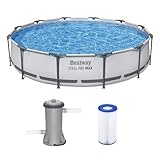
Bestway Steel Pro MAX 12' x 30" Above Ground Swimming Pool Set with Pump | Check Price On Amazon |
|
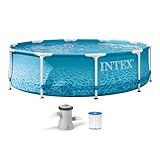
INTEX Beachside Metal Frame 10ft x 30in Round Pool Set w/Pump | Check Price On Amazon |

|
H2OGO! Kids Splash-in-Shade 8-Foot Round Steel Frame Above Ground Pool with Water Mister and Canopy Sunshade, Green Tropical Leaf Print | Check Price On Amazon |
By the Numbers
Pool Water Features — What the Research Shows
Sources: Pool & Hot Tub Alliance, HomeAdvisor, Fixr, industry installer surveys
What Are Pool Water Features and Why Do They Matter?
A pool water feature is any structure that moves water for visual or auditory effect beyond standard circulation. This includes waterfalls, fountains, scuppers, deck jets, bubblers, rain curtains, and grottos. The primary water feature pump or the main circulation pump pushes water through the feature, and gravity returns it to the pool.
Water features matter because they solve three practical problems. They mask traffic and neighbor noise with 40 to 60 decibels of falling water. They cool pool water 3 to 7 degrees Fahrenheit through evaporation without running a chiller. They turn a basic rectangular pool into a custom backyard centerpiece that real estate appraisers value at 5 to 30 percent above comparable homes without features.

- Intelligent Navigation with Full Coverage: Equipped with 11 high-precision sensors and enhanced dual-path algorithms. The optimized WavePath cleaning pattern ensures systematic coverage with minimal overlap, while adaptive navigation analyzes pool layout in real time to eliminate missed spots
- Dual Filtration for Crystal-Clear Water: Advanced dual-layer filtration system features a replaceable 3-micron ultra-fine filter paired with a 180-micron standard filter. Effectively captures fine dust, sand, leaves, and debris for visibly cleaner and healthier pool water
- Comprehensive Pool Cleaning: Engineered to clean the pool floor, walls, waterline, and shallow areas (above 12 inches). The Caterpillar Treads system enhances mobility and climbing ability, ensuring thorough coverage across all pool zones
- Reliable Performance with 2-Year Warranty: Trusted by over 500,000 pool owners worldwide, this robotic pool cleaner delivers consistent, high-performance results. Built for durability and backed by a 2-year warranty and responsive customer support for worry-free ownership
Types of Pool Water Features: A Complete Breakdown
Pool water features fall into six major categories. Each has different costs, installation requirements, and visual effects. Understanding these categories before talking to a contractor prevents you from paying for a feature that does not match your pool’s existing plumbing or your long-term maintenance tolerance.
Sheer Descent Waterfalls: The Clean Modern Wall of Water
A sheer descent waterfall produces a clear, uninterrupted sheet of water that drops vertically from a slot cut into a raised wall. The effect is a glass-like curtain of water, not a splashing cascade. Sheer descents require a dedicated pump delivering 12 to 18 gallons per minute per linear foot of width.
Key Specifications: Width: 12-48 inches standard. Flow requirement: 12-18 GPM per foot. Pump size: 3/4 to 2 HP dedicated pump. Installation cost: $1,500-5,000 for single 3-foot unit including pump and plumbing, depending on wall construction. Best for: modern geometric pools with a clean architectural look.
Sheer descents use laminar flow physics. Water passes through a thin, precisely machined slot that eliminates turbulence. This creates a smooth sheet that holds its shape until it hits the pool surface. The mechanism only works when the pump delivers a consistent flow rate within 12 to 18 GPM per foot. If flow drops below 12 GPM, the sheet breaks apart. If flow exceeds 18 GPM, the water arcs outward and loses the glass-sheet effect. Fix low flow by cleaning the filter and checking for pump impeller wear before adjusting the valve.
Natural Rock Waterfalls: The Organic Cascading Look
Natural rock waterfalls use real or faux boulders stacked to create multiple cascading tiers. Water tumbles from pool to pool, splashing over rock edges. This is the most common backyard waterfall because it works with any pool shape and hides the plumbing behind the rock structure. A high-flow pond waterfall pump rated for 2,000 to 5,000 GPH drives the water up to the top spill point.
Rock waterfalls use gravity and surface tension physics. Water clings to each rock surface and cascades down in sheets and rivulets. The sound level depends on drop height and flow rate: higher drops at higher flow produce more noise. This happens because water accelerates to terminal velocity over drops exceeding 18 inches, creating impact noise at the pool surface. If the flow rate drops too low, water drips instead of flows, producing an erratic trickle rather than a steady sound. Fix low flow by backwashing the dedicated pump filter and clearing debris from the intake screen.
How Much Do Pool Water Features Cost? A Complete Price Breakdown
Pool water feature costs range from $900 for a simple scupper installed during new construction to $15,000 or more for a custom grotto with integrated seating and lighting. The single largest cost variable is whether you are building new or retrofitting an existing pool. Retrofitting adds 30 to 50 percent to the total because crews must cut into existing decking and run new plumbing lines.
Price Comparison
Pool Water Feature Costs — Installed Price by Type
Price range includes materials, labor, and basic plumbing. Prices verified at time of publication.
$900-2,500
$1,200-3,000
$1,500-5,000
$3,000-8,000
$3,500-9,000
$8,000-15,000+
New construction costs shown. Add 30-50% for retrofit installations. Source: Fixr, HomeAdvisor, and installer-reported pricing.
How to Add a Water Feature to an Existing Pool
Adding a water feature to an existing pool falls into two paths: tapping into the existing return line or installing a dedicated pump. Tapping the return line costs less but limits flow. A dedicated pump costs $500 to $1,500 more but gives you independent control over the waterfall without affecting pool filtration.
Step-by-Step Guide
How to Add a Waterfall to an Existing Pool — Step by Step
7 steps · 2-4 weeks from planning to completion
Check your pump and filter capacity
Your existing pump must deliver at least 12 GPM per linear foot of waterfall width after accounting for the filter and return loop. A 1 HP pump at 40 feet of head typically delivers 40 to 60 GPM. If your pool already uses 35 GPM for filtration, you have 5 to 25 GPM left for the feature. For features needing more flow, install a dedicated secondary pump.
Choose your water feature type and location
Placement determines plumbing complexity. Features on the pool edge closest to the equipment pad add $200 to $500 in plumbing. Features on the far side of a 40-foot pool add $800 to $1,500 in extra PVC, trenching, and labor. Consider prevailing wind direction: place the waterfall upwind so mist and spray drift away from seating areas.
Cut the deck and trench for plumbing
Contractors cut a 6-inch-wide trench from the equipment pad to the feature location. For concrete decks, this requires a concrete saw and costs $15 to $25 per linear foot. For paver decks, stones are lifted and replaced after plumbing is run. PVC pipe (2-inch Schedule 40 minimum) is laid at 18 to 24 inches deep. This step takes 1 to 2 days.
Install the feature structure
For rock waterfalls, a steel-reinforced concrete footing 6 to 8 inches thick supports the boulder weight. Faux rocks weigh 50 to 200 pounds each, real boulders can weigh 500 to 2,000 pounds. The structure must be level and pitched slightly toward the pool to direct all water into the basin. For sheer descents, the wall slot must be level within 1/8 inch across its width or the sheet will be uneven.
Connect plumbing and install a dedicated pump
For a dedicated pump, a 1.5 HP variable speed pump costs $800 to $1,400 and connects to a dedicated suction line from the pool or an overflow basin. Install a Jandy or Hayward three-way valve to split flow between the feature and pool returns. For sheer descents and laminar features, install a cartridge filter on the feature line to prevent debris from clogging the narrow slot. This step takes 1 day.
Test and balance flow
Open the valve gradually while watching the waterfall. For sheer descents, adjust until the sheet is smooth with no breaks. For rock waterfalls, adjust until the sound level is pleasant at your seating distance. Mark the valve position for future reference. Measure flow rate with a 5-gallon bucket and stopwatch: fill the bucket from the waterfall output, divide 300 by the fill time in seconds to get GPM. For example, 10 seconds to fill 5 gallons equals 30 GPM.
Seal and finish
Backfill the trench with gravel and compact. Repair deck with matching material. Apply a penetrating concrete sealer to any new concrete work. Run the feature for 24 hours and check for leaks at all connections before final backfill. This step takes 1 to 2 days.
For most residential pools in moderate climates with a 15,000 to 20,000 gallon pool (use our pool volume calculator to calculate yours) and average bather load, a dedicated pump setup with a 1.5 HP variable speed pump running at 2,500 RPM provides enough flow for a 3-foot sheer descent waterfall without overloading the system.
Types of Pool Fountains: Bubblers, Deck Jets, and Scuppers
Deck Jets and Laminar Jets: Arcing Streams of Water
Deck jets shoot water from the deck or coping in an arcing stream that lands in the pool 5 to 15 feet away. Laminar jets produce a smooth, glass-like rod of water rather than a splashing spray. They use the same laminar flow principle as sheer descents but applied to a cylindrical stream. Standard deck jets cost $200 to $600 per jet plus a deck jet plumbing kit at $150 each.
Key Specifications: Throw distance: 5-15 feet. Flow requirement: 5-12 GPM per jet. Pump: dedicated 3/4 HP minimum for 2 jets. Installation cost: $1,200-3,000 for a pair including pump, plumbing, and deck penetration. Best for: creating an interactive play area and adding sound without a large visual structure.
Bubblers: Small Fountains in Shallow Water
Bubblers are small fountains installed in sun shelves, beach entries, or shallow tanning ledges in 6 to 18 inches of water. They produce a gentle bubbling effect that is safe for children to play with and visually appealing from above. A LED pool bubbler with color-changing light costs $300 to $800 per unit.
Key Specifications: Depth requirement: 6-18 inches of water. Flow: 5-10 GPM per bubbler. Pump: dedicated 1/2 HP for up to 3 bubblers. Installation cost: $800-2,000 per bubbler during new construction, $1,500-3,000 for retrofit. Best for: sun shelf play areas and shallow water visual interest.
Scuppers: Wall-Mounted Water Spouts
Scuppers are rectangular or shaped openings cut into a raised wall that pour water into the pool below. They are the simplest water feature and the least expensive to install. Brass and stainless steel scuppers cost $100 to $500 for the fixture. A brass pool scupper develops a natural patina over time that many homeowners prefer to the polished look.
Key Specifications: Width: 4-24 inches. Flow: 5-15 GPM per scupper. Pump: can often use existing return line pressure. Installation cost: $900-2,500 per scupper including plumbing and wall modification. Best for: raised bond beam walls, spa spillovers, and adding visual interest on a budget.
Value Analysis
When Premium Water Features Win — and When They Do Not
Performance gap between premium and budget water feature options by type
Custom grotto wins big
Laminar usually wins
Depends on pool style
Gap is small
See pool grotto design visualizer for grotto options.
Editorial assessment based on material quality, visual impact, sound quality, and long-term durability. Not a sponsored ranking.
Pool Water Feature Pump Sizing: What Size Pump Do You Need?
Water feature pump sizing depends on three variables: the type of feature, the total flow required in gallons per minute, and the total dynamic head the pump must overcome. Total dynamic head is the sum of vertical lift height plus friction loss from pipe length and fittings. For every 10 feet of vertical lift, add 4.3 PSI of head pressure. For every 100 feet of 2-inch PVC, add approximately 3 PSI of friction loss.
This matters because undersizing the pump produces weak flow that drips instead of sheets. Oversizing the pump wastes $300 to $600 per year in electricity and can cause splash-out that erodes surrounding landscaping. The correct pump size for most residential water features is 3/4 HP for single bubblers and scuppers, 1.5 HP for 3-foot sheer descents and 2-3 deck jets, and 2 HP for rock waterfalls with 4 feet or more of vertical lift. For a tailored pump size calculation, use our swimming pool pump sizing calculator.
Product Comparison
Water Feature Pumps — At-a-Glance Comparison
Key specs compared across top pump options for water features
| Pump Model | HP | Max Flow (GPM) | Annual Cost (12¢/kWh) | Price | Best For |
|---|---|---|---|---|---|
| Pentair SuperFlo VS | 1.5 | 85 | $180-350 | $800-1,100 | Sheer descents, 2-3 deck jets |
| Hayward TriStar VS | 1.85 | 90 | $200-400 | $900-1,300 | Rock waterfalls, grottos |
| Jandy FloPro VS | 1.5 | 80 | $170-340 | $850-1,200 | Mid-sized features, bubblers |
| Black & Decker 1.5 HP VS | 1.5 | 75 | $150-300 | $500-750 | Budget scuppers, single features |
Use the table above to match your water feature type and flow requirement to the right pump. For the most common residential scenario of a 3-foot sheer descent waterfall on a 20,000 gallon pool, the Pentair SuperFlo VS at 1.5 HP running at 2,800 RPM delivers the 36 to 54 GPM needed without exceeding the pump’s efficiency curve.
How to Choose the Right Water Feature for Your Pool
Choosing the right water feature comes down to four factors: your pool type, your existing equipment, your budget, and your tolerance for maintenance. A natural rock waterfall on a vinyl liner pool creates installation challenges because boulders can puncture the liner if not seated correctly. A sheer descent waterfall on a freeform pool looks out of place stylistically. Match the feature to the pool architecture first, then to your budget second.
Buying Guide
Before You Buy — Pool Water Feature Checklist
Check off each point before making your decision.
LED Lighting for Pool Water Features: Colors, Costs, and Automation
LED lighting transforms a water feature from daytime focal point to nighttime showpiece. A color-changing LED waterfall light costs $150 to $600 per fixture. White LED waterfall lights cost $80 to $250. For a 3-foot sheer descent waterfall, budget $300 to $800 for lighting including a transformer and junction box. For a rock waterfall with multiple tiers, budget $600 to $1,500 for 3 to 5 lights.
Integrating water feature lighting with your pool automation system lets you program the waterfall and lights to activate together. A single button press on your phone starts the feature pump and sets the lights to your preferred color. For more on how pool automation controls every connected device, see our complete guide to how pool automation works for beginners and check the time and money savings that automation delivers.
Water Feature Maintenance: What Changes When You Add Moving Water
Adding a water feature increases your pool’s maintenance load in three specific ways. Evaporation increases 20 to 40 percent, requiring more frequent topping off and chemical adjustment. Aeration from falling water raises pH, requiring more frequent muriatic acid additions. And the feature plumbing creates dead spots where algae can grow if flow is inadequate.
CYA levels drop faster with aeration because the feature increases water loss through evaporation and splash-out. Test CYA monthly instead of quarterly and add cyanuric acid pool stabilizer as needed to maintain 30 to 50 ppm. pH drifts up 0.2 to 0.5 units per week with a feature running 6 hours daily. Add 12 to 16 ounces of muriatic acid per 10,000 gallons weekly to offset this drift. For winterization of water feature plumbing, blow out the lines with compressed air at 20 PSI and cap them to prevent freeze damage in climates where temperatures drop below 32 degrees Fahrenheit.
Water Features and Pool Automation: Control From Your Phone
Water features pair perfectly with pool automation systems. A Pentair IntelliCenter automation panel controls up to 4 water feature valves, letting you schedule the waterfall to run during evening hours when you are home to enjoy it. Automation reduces pump electricity costs by allowing precise scheduling. Run the feature pump only 4 to 6 hours in the evening instead of all day, saving $200 to $400 per year.
For a full breakdown of what automation can control and whether it is worth the investment, see our complete pool automation guide covering what it is and whether it is worth it. If you are considering installing the system yourself, read our comparison of DIY versus professional automation installation before making that decision.
Common Mistakes to Avoid When Adding a Water Feature
Five mistakes sink most water feature projects before they deliver value. First, underestimating the pump size. A pump that is too small produces a dribble instead of a sheet, destroying the visual effect. Always calculate total dynamic head including vertical lift and friction loss before selecting a pump. Second, skipping the dedicated filter. Sheer descents and laminar jets clog without a cartridge filter on the feature line. Debris in the narrow slot breaks the laminar sheet. Install a 50-square-foot cartridge filter for $150 to $300.
Third, ignoring prevailing wind. Place the feature upwind of seating areas. Mist and spray from a 4-foot waterfall can travel 15 to 20 feet in a 10 MPH breeze, soaking furniture and guests. Fourth, forgetting about winterization. Water feature plumbing must be blown out and capped before freezing temperatures arrive. Frozen water in a 2-inch PVC pipe can split the pipe and require a $500 to $1,500 repair. Fifth, choosing style over substance. A natural rock waterfall on a modern geometric pool looks forced and reduces rather than enhances visual appeal.
Does a Pool Waterfall Increase Home Value?
A well-designed pool water feature increases home value by 5 to 15 percent in markets where pools are expected amenities, according to the National Association of Realtors. In Florida, Arizona, and California, a custom pool with a waterfall commands a premium over a basic pool. In the Midwest and Northeast, the premium is smaller because pools are seasonal. The key is design quality. A poorly executed waterfall with uneven rock placement and weak flow reduces curb appeal and can subtract value.
For maximum return on investment, choose a feature that matches the home’s architecture and the neighborhood standard. A $3,000 rock waterfall on a $40,000 pool in a neighborhood where every other home has a basic pool returns 50 to 100 percent of its cost at resale. A $15,000 grotto on a $30,000 pool in a neighborhood of $200,000 homes returns 20 to 30 percent because the feature is disproportionate to the home value.
Quick Reference
Pool Water Features — Key Terms Explained
Quick reference for the terms used throughout this guide
— The flow rate measurement for water features. Sheer descents need 12-18 GPM per foot of width.
— The total resistance a pump must overcome, measured in feet. Equals vertical lift height plus friction loss from pipes and fittings.
— Smooth, non-turbulent water flow that produces a clear glass-like sheet or rod. Required for sheer descents and laminar deck jets.
— A rectangular opening in a raised wall that pours water into the pool. The simplest and least expensive water feature type.
— A waterfall that produces a smooth, uninterrupted sheet of water from a horizontal slot. Requires precise flow control to maintain the sheet effect.
— A small fountain installed in shallow water (6-18 inches) that produces a bubbling effect, commonly placed on sun shelves and tanning ledges.
— A separate pump that runs only the water feature, independent of the main pool filtration pump. Required for features needing more than 20 GPM of spare flow.
— The process by which moving water loses heat to the air. Waterfalls cool pool water 3-7 degrees Fahrenheit through evaporation.
Are Pool Water Features Worth the Investment?
Pool water features are worth the investment if you value one or more of these three outcomes. You want sound masking from traffic or neighbors. You want visual differentiation from every other basic rectangular pool in your neighborhood. Or you want evaporative cooling without the $3,000 to $5,000 cost of a dedicated pool chiller. A $3,000 rock waterfall delivers all three benefits for a fraction of the cost of a chiller.
Water features are not worth it if you prioritize low maintenance above all else. The additional chemical adjustments, evaporation management, and pump maintenance add 15 to 30 minutes per week to your pool care routine. If you already find pool maintenance burdensome, a water feature will only increase your frustration. Consider upgrading to automated chemical monitoring through a pool automation system first. For guidance on LED lighting that pairs with your new water feature, see our complete guide to pool LED lighting types, colors, and the best options available.
What Is the Cheapest Way to Add a Water Feature to an Existing Pool?
The cheapest way to add a water feature is a single brass scupper installed on an existing raised bond beam or wall, running off the main return line with a diverter valve. Total cost ranges from $900 to $1,500 including the scupper fixture, valve, plumbing, and labor. This option requires no additional pump, no electrical work, and minimal deck modification. A basic scupper produces a pleasant arcing sheet of water with 5 to 15 GPM of flow. The trade-off is limited visual impact compared to a full waterfall or sheer descent.
Can I Add a Waterfall If I Have a Vinyl Liner Pool?
Yes, you can add a waterfall to a vinyl liner pool. The installation requires a free-standing structure behind the pool wall rather than attaching to the pool shell itself. Build a concrete or steel-framed wall 12 to 24 inches behind the liner, then face it with faux rock or a sheer descent housing. This prevents boulder weight and vibration from stressing the liner. Budget $500 to $1,000 extra for the structural wall foundation. The weight can tear the liner at the coping track, causing a liner replacement that typically runs $3,000 to $5,000. For a personalized cost estimate, check our pool liner cost calculator.
Does a Waterfall Increase Pool Water Evaporation?
A waterfall increases pool evaporation by 20 to 40 percent compared to a still pool surface. A 20,000-gallon pool normally loses 1/4 to 1/2 inch of water per day. With a waterfall running 6 hours daily, expect 3/8 to 3/4 inch of water loss per day. This translates to 200 to 400 gallons per week. To get a precise evaporation estimate for your pool, try our swimming pool evaporation rate calculator. At $3 to $5 per 1,000 gallons on municipal water, the waterfall adds $3 to $8 per month to your water bill. Combat excess evaporation by using a solar pool cover on a reel when the feature is not in use and checking your auto-fill float valve monthly for proper operation.
What Size Pump Do I Need for a 4-Foot Wide Sheer Descent Waterfall?
A 4-foot wide sheer descent requires 48 to 72 GPM of flow at the waterfall slot. This requires a 1.5 to 2 HP dedicated pump depending on total dynamic head. For a waterfall with 6 feet of vertical lift and 50 feet of 2-inch PVC pipe from the pump to the feature, a 1.5 HP variable speed pump running at 3,000 RPM delivers approximately 60 GPM at 25 feet of head, which is sufficient for a strong sheet without splashing. At 12 cents per kWh, running this pump 6 hours daily costs $25 to $40 per month.
Can I Use My Main Pool Pump to Run a Waterfall?
You can use your main pool pump to run a waterfall only if the pump has at least 12 GPM of spare capacity per foot of waterfall width after meeting the pool’s filtration and circulation needs. For a 3-foot sheer descent requiring 36 GPM, your pump needs to deliver that 36 GPM above what the filter and returns require. Most residential pool pumps are sized for filtration only with 10 to 20 GPM of spare capacity. If your pump cannot supply enough flow, install a dedicated pump. Tapping the main return line saves $500 to $1,000 in equipment costs but may reduce skimming and circulation performance.
How Long Should I Run My Pool Waterfall Each Day?
Run your pool waterfall 4 to 6 hours per day during the season when you use the pool. Running longer increases evaporation and chemical consumption without proportional benefit. In hot climates above 85 degrees Fahrenheit, run the waterfall during the hottest 4 hours of the day to maximize evaporative cooling. Run it in the evening when you are home to enjoy the sound and visual effect. Avoid running the waterfall overnight when you cannot hear or see it. That wastes electricity and water for no benefit.
Why Does My Waterfall Splash and Spray Outside the Pool?
Excessive splash and spray from a waterfall is caused by one of three problems. The flow rate is too high for the feature design, causing water to arc outward instead of dropping vertically. The waterfall is positioned too high above the pool surface, creating impact velocity that throws water outward. Or the waterfall edge is uneven, directing water at an angle instead of straight down. Reduce the flow rate using the control valve until splash is contained. For rock waterfalls more than 3 feet above the pool surface, add a splash guard or extend the catch basin outward by stacking flat stones at the base.
Can Salt Water Pools Have Water Features?
Salt water pools work with water features, but the salt concentration of 3,000 to 4,000 ppm accelerates corrosion on metal components. Use 316 marine-grade stainless steel or solid brass for scuppers, plumbing fittings, and fasteners. Standard 304 stainless steel will pit and rust within 2 to 3 years in salt water. For sheer descent housings, choose PVC or powder-coated aluminum rather than uncoated steel. Budget 50 to 100 percent more for salt-compatible materials. A brass scupper for a salt pool costs $150 to $400 versus $80 to $200 for stainless in a chlorine pool.
Do I Need a Building Permit for a Pool Waterfall?
Building permits for pool waterfalls are required in most municipalities if the structure exceeds 18 to 30 inches in height or involves electrical work for a dedicated pump. Check local codes before starting construction. Permit costs range from $50 to $500. Structures over 30 inches may require an engineering stamp and a setback variance from property lines. Failure to permit a waterfall that requires one can result in fines of $500 to $2,000 and an order to remove the structure if a neighbor complains.
How Do I Winterize a Pool Waterfall?
Winterize a pool waterfall by draining all water from the plumbing and the pump housing. Use a shop vac or air compressor to blow out the lines at 20 to 30 PSI until no water exits the feature opening. Cap the pipe ends to prevent water re-entry. Pour 1 gallon of RV antifreeze into the pump and plumbing for insurance against residual water. Remove the pump drain plugs and store them in the pump basket so they are not lost. For rock waterfalls, cover the structure with a waterproof tarp to prevent freeze-thaw cycles from cracking the rock and mortar joints.
Will a Waterfall Lower My Pool Temperature?
A waterfall lowers pool temperature 3 to 7 degrees Fahrenheit through evaporative cooling. The effect is strongest in dry climates with low humidity. In Phoenix, Arizona, with 10 percent humidity, a waterfall running 6 hours daily can drop a 90-degree pool to 83 to 85 degrees. In humid climates like Florida with 70 percent humidity, the cooling effect is only 2 to 4 degrees. The science behind this is evaporative heat transfer. When water molecules vaporize, they absorb 2,260 kilojoules of heat per kilogram of water evaporated. A 20,000-gallon pool losing 300 gallons per week to waterfall evaporation sheds approximately 2.6 million BTUs of heat, equivalent to 8 hours of a 300,000 BTU pool heater running in reverse.
For most pool owners in dry, hot climates seeking a 3 to 5 degree temperature drop without the $3,000 to $5,000 cost of a dedicated chiller, a waterfall is a practical and cost-effective cooling solution.
| Photo | Best Above-Ground Pools | Price |
|---|---|---|
|
|
Bestway Steel Pro MAX 12' x 30" Above Ground Swimming Pool Set with Pump | Check Price On Amazon |
|
|
INTEX Beachside Metal Frame 10ft x 30in Round Pool Set w/Pump | Check Price On Amazon |
|
|
H2OGO! Kids Splash-in-Shade 8-Foot Round Steel Frame Above Ground Pool with Water Mister and Canopy Sunshade, Green Tropical Leaf Print | Check Price On Amazon |