
Most homeowners assume their property rights include building whatever pool they want. That assumption ends the moment an HOA covenant hits the closing documents. HOA pool rules govern everything from pool size and fence height to the color of your pool cover and the hours your pump can run. Violating them can trigger daily fines of $50 to $250 until the violation is corrected.
This guide covers the full spectrum of HOA pool restrictions: fencing and barrier requirements, size and placement limitations, approved equipment rules, noise and hours of operation, water feature restrictions, chemical storage mandates, and the architectural review process. Each section includes specific code references, real fine ranges, and the steps to get your pool approved the first time.
| Photo | Best Above-Ground Pools | Price |
|---|---|---|
|
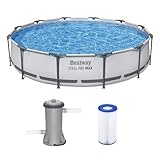
Bestway Steel Pro MAX 12' x 30" Above Ground Pool, Round Metal Frame Outdoor Swimming Pool Set with Filter Pump & Type III A/C Cartridge, Gray | Check Price On Amazon |
|
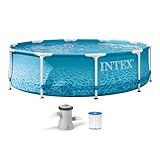
INTEX 28207EH Beachside Metal Frame Above Ground Swimming Pool Set: 10ft x 30in – Includes 330 GPH Cartridge Filter Pump – Puncture-Resistant Material – Rust Resistant – 1185 Gallon Capacity | Check Price On Amazon |

|
H2OGO! Kids Splash-in-Shade 8-Foot Round Steel Frame Above Ground Pool with Water Mister and Canopy Sunshade, Green Tropical Leaf Print | Check Price On Amazon |
By the Numbers
HOA Pool Rules — What the Research Shows
Sources: Community Associations Institute, CDC, International Residential Code, industry surveys
What Are HOA Pool Rules and Why Do They Exist?
HOA pool rules are legally enforceable restrictions written into the community’s Covenants, Conditions, and Restrictions (CC&Rs). They exist to maintain uniform property values, reduce liability for the association, and prevent one homeowner’s pool from becoming a nuisance to neighbors. These rules carry the force of a private contract you signed at closing.
The Community Associations Institute reports that over 74 million Americans live in HOA-governed communities. In many newer subdivisions, every lot is subject to CC&Rs recorded with the county. This happens because the Federal Housing Administration and major mortgage lenders require enforceable community standards as a condition of loan underwriting in planned unit developments. You cannot opt out later.

- Intelligent Navigation with Full Coverage: Equipped with 11 high-precision sensors and enhanced dual-path algorithms. The optimized WavePath cleaning pattern ensures systematic coverage with minimal overlap, while adaptive navigation analyzes pool layout in real time to eliminate missed spots
- Dual Filtration for Crystal-Clear Water: Advanced dual-layer filtration system features a replaceable 3-micron ultra-fine filter paired with a 180-micron standard filter. Effectively captures fine dust, sand, leaves, and debris for visibly cleaner and healthier pool water
- Comprehensive Pool Cleaning: Engineered to clean the pool floor, walls, waterline, and shallow areas (above 12 inches). The Caterpillar Treads system enhances mobility and climbing ability, ensuring thorough coverage across all pool zones
- Reliable Performance with 2-Year Warranty: Trusted by over 500,000 pool owners worldwide, this robotic pool cleaner delivers consistent, high-performance results. Built for durability and backed by a 2-year warranty and responsive customer support for worry-free ownership
CC&Rs address pools under multiple categories: accessory structures, nuisance provisions, architectural standards, and safety requirements. A pool is simultaneously all four. The same document that restricts your shed size also restricts your pool depth. The nuisance clause that limits noise also limits your pump runtime hours and heater noise.
Fencing and Barrier Requirements: The Non-Negotiable Rules
HOA pool fencing rules are the single most enforced restriction. Nearly every HOA incorporates the International Residential Code (IRC) Appendix G pool barrier requirements into its CC&Rs. The IRC requires a minimum 48-inch barrier with no openings larger than 4 inches, self-closing and self-latching gates that open outward away from the pool, and specific clearance between horizontal rails to prevent climbing.
Many HOAs exceed the IRC minimums. Some require 60-inch fencing. Others mandate specific materials: black aluminum pickets, wrought-iron style, or cedar privacy fencing. A few ban chain-link entirely because the CC&Rs classify it as a visual nuisance. Check your specific HOA’s architectural guidelines before purchasing a single fence post.
The gate latch must sit at least 54 inches above grade on the pool side. It must be key-lockable. Some HOAs require a second latch at the top of the gate for additional child resistance. Gate alarms that sound when the gate opens are mandatory under many HOA codes, even when local building codes do not require them. Expect to spend $800 to $2,500 on compliant fencing and gate hardware for a standard residential pool perimeter.
For homes where the house wall forms part of the pool barrier, door alarms on all doors leading to the pool area become mandatory. These battery-powered alarms cost $15 to $40 each at retail. A pool door alarm must sound for 30 seconds minimum at 85 decibels when the door opens. Some HOAs require these alarms even when a full perimeter fence exists.
Pool Size and Placement: Setback and Lot Coverage Rules
HOA setback requirements typically demand 5 to 15 feet of clearance between the pool edge and any property line or easement. This goes beyond local building code minimums. A pool placed inside a utility easement can be ordered removed at your expense. Pools over drainage easements create liability for the HOA when flooding backs up into neighboring yards.
Lot coverage limits cap the total impervious surface on your property. Your pool, decking, pool house, and equipment pad all count toward this percentage. A common cap is 30% to 40% total impervious coverage including the main house footprint. A 2,500-square-foot inground pool with a 1,200-square-foot concrete deck adds 3,700 square feet to your lot coverage calculation. On a quarter-acre lot (10,890 square feet), that single pool can push you over the limit in minutes.
Height restrictions apply to pool features and equipment. Above-ground pools face stricter height limits than inground pools. A 52-inch above-ground pool wall may need HOA approval when visible from the street. Pool slides, diving boards, and elevated water features often require separate architectural review because they extend above the fence line. Pool equipment pads and pool equipment enclosures may need to match house exterior colors or be screened from view.
Quick Reference
HOA Pool Rules — Key Terms Explained
Quick reference for the terms used throughout this guide
Covenants, Conditions, and Restrictions — the recorded legal document that governs all property use in an HOA community, including pool rules
The HOA committee that reviews and approves or denies all exterior modifications including pools, decks, and equipment pads
The minimum distance a structure must be placed from property lines, easements, or other structures — pools typically need 5 to 15 feet
Any surface that prevents water absorption into soil — pools, concrete decks, and equipment pads all count toward lot coverage limits
The Virginia Graeme Baker Pool and Spa Safety Act — federal law requiring anti-entrapment drain covers on all pools, enforced by HOAs through safety requirements
A CC&R provision prohibiting activities that disturb neighbors — applied to pool pump noise, lighting, late-night swimming, and chemical odors
A legal right for utilities or the HOA to access a portion of your property — pools built on easements can be forcibly removed at owner expense
The percentage of total lot area covered by buildings and impervious surfaces — pools and decks count, and exceeding the limit triggers fines
Additional liability coverage the HOA may require on your homeowner’s policy — typically $300,000 to $500,000 in pool-specific liability protection
A provision allowing existing pools that predate current CC&Rs to remain — but any modification or renovation triggers full compliance with current rules
How to Get HOA Pool Approval: Step-by-Step Process
HOA pool approval is a front-loaded paperwork process. Submitting incomplete plans is the number one reason applications get rejected on the first round. Builders who skip the architectural review entirely can face stop-work orders, daily fines, and court orders to remove the pool at their own expense.
This process assumes your CC&Rs permit pools at all. Some older communities with grandfathered restrictions still prohibit all private swimming pools. You cannot get approval where pools are banned. Read the CC&Rs before spending money on design work.
Step-by-Step Guide
How to Get HOA Pool Approval — Step by Step
7 steps · Typical timeline: 60-90 days from application to approval
Obtain the full CC&R document and architectural guidelines
Request the current version from your HOA management company. Do not rely on the copy you received at closing — rules get amended. Look specifically for pool sections, fence requirements, setback minimums, and lot coverage limits.
Hire a pool builder who has worked in HOA communities before
Ask builders specifically whether they have completed HOA-approved pools in your county. A builder who has never dealt with an ARC submission will miss requirements and cost you months of delays.
Prepare a complete site plan with survey, elevations, and materials list
Your submission must include a plat of survey showing pool placement with setbacks marked, elevation drawings, fence and gate specifications, equipment pad location with screening plan, deck material samples, and a drainage plan showing where backwash and rainwater go.
Submit to the Architectural Review Committee with the application fee
ARC application fees range from $50 to $500 depending on the community. Submit at least 4 copies of everything. Include a cover letter that addresses every pool-related CC&R provision point by point.
Attend the ARC meeting if permitted
Some HOAs allow applicants to present their plans in person. If yours does, attend with your builder. Answer questions directly. Bring photos of similar completed pools in other HOA communities as visual references.
Receive approval with conditions or a denial with stated reasons
ARC decisions typically arrive within 30 to 60 days. An approval may come with written conditions: specific hours for construction, required fence staining color, or mandatory landscaping after completion. A denial must state the specific CC&R provision violated so you can revise and resubmit.
File for county permits and begin construction
HOA approval is separate from county building permits. You need both. Submit your HOA approval letter with your permit application. Schedule HOA compliance inspections at the same time as county inspections when possible. Keep the ARC approval letter onsite during all construction.
Above-Ground Pool vs Inground Pool: Different HOA Rules for Each
Above-ground pools face far stricter HOA scrutiny than inground pools. Many HOAs ban above-ground pools outright. Those that permit them typically require full perimeter fencing identical to inground pool standards, screened placement invisible from the street, and decking that matches house trim colors. The visual impact concern drives nearly all above-ground pool restrictions.
Inground pools receive more favorable treatment in most CC&Rs because they sit at grade and do not alter sightlines from neighboring properties. But inground pool installation involves excavation, drainage, and permanent structural changes that trigger every ARC review criterion at once. The approval bar is lower for inground pools, but the paperwork burden is higher because more site elements require review.
For above-ground pool options that might meet HOA standards, some above-ground models with integrated decking and privacy screening pass architectural review more easily than bare metal-walled pools. Semi-inground pools, which sit partially excavated, sometimes qualify for inground classification under HOA rules — but confirm this with the ARC before purchasing.
Tabbed Guide
HOA Rules by Pool Type
Select your pool type for specific HOA rule considerations.
Inground Pool HOA Considerations
Most HOAs treat inground pools as permanent site improvements requiring full ARC review. You need a site survey, drainage plan, fence specifications, deck materials approval, and equipment screening plan. Expect the highest approval rate of any pool type but the longest review timeline. Budget 60 to 90 days for the full approval cycle. Some HOAs require a $1,000 to $5,000 bond held until landscaping restoration is complete. Permits run $500 to $2,000 depending on your county.
Equipment and Noise Restrictions: Pump, Heater, and Lighting Rules
Pool pump noise is the most common neighbor complaint that escalates to HOA violation notices. A single-speed pump running at 3,450 RPM produces 65 to 75 decibels. This is comparable to a vacuum cleaner running continuously for 8 to 12 hours daily. Many HOA nuisance clauses set a maximum daytime decibel limit of 55 to 60 dB at the property line, measured from the nearest neighbor’s exterior wall.
Variable-speed pumps running at 1,500 RPM produce 40 to 50 decibels. This is quieter than a refrigerator. Some HOAs now explicitly require variable-speed or low-noise pumps in new pool installations. A variable speed pool pump solves both the noise problem and the energy efficiency requirements some progressive HOAs have begun adding to their green building guidelines. The electricity savings often pay for the pump upgrade within 18 months.
Pool heaters face separate noise restrictions. Gas heaters produce 55 to 65 decibels during operation and may be restricted to daytime hours only. Heat pump pool heaters run quieter at 45 to 55 decibels but cycle on and off more frequently. Some HOAs ban pool heaters entirely within certain distances of bedroom windows. Pool lighting restrictions are equally common: lights must be shielded to prevent direct beam onto neighboring properties, timers must limit lighting past 10 PM or 11 PM, and some HOAs specify maximum bulb wattage or require warm-white LED color temperatures to reduce light pollution.
Water Features and Accessories: What HOAs Typically Restrict
Waterfalls, fountains, bubblers, and deck jets are the most frequently restricted pool features under HOA nuisance provisions. The sound of running water travels across property lines with surprising clarity at night. A waterfall producing 55 decibels at the pool edge may register 45 decibels at a neighbor’s bedroom window at 11 PM — above the 35 to 40 dB nighttime limit in many community noise ordinances.
Diving boards and slides face near-universal restrictions. Nearly every HOA that permits pools at all either bans diving boards entirely or requires them to meet ANSI/APSP/ICC-5 standards with deck space, depth, and headroom clearances that most residential pools cannot achieve. The liability insurance implications drive these restrictions. A diving board increases the pool-related liability premium on your homeowner’s policy by 15% to 30% according to insurance industry data. Many HOAs simply prohibit them to reduce collective liability.
Automatic pool covers earn favorable treatment from many HOAs. A pool safety cover that meets ASTM F1346 standards can sometimes substitute for certain fence requirements or reduce the fence height requirement. But the cover mechanism housing must still be screened from view. Solar covers left floating on the pool surface when not in use are frequently cited as visual nuisances — store them on a reel when the pool is open.
Chemical Storage and Safety Compliance Rules
HOA chemical storage rules are driven by fire code and insurance requirements. Chlorine tablets (trichlor) and granular shock (calcium hypochlorite) are oxidizers. Muriatic acid is corrosive. Storing these in the same enclosed space creates a risk of chemical reaction producing chlorine gas. Many HOAs now require a separate, ventilated, lockable chemical storage container or dedicated pool chemical cabinet located at least 10 feet from gas appliances and electrical equipment.
The Virginia Graeme Baker Pool and Spa Safety Act (VGB Act) requires anti-entrapment drain covers on all pools. HOAs enforce this through their safety inspection provisions. A pool with non-compliant drain covers can be red-tagged and ordered drained. VGB-compliant pool drain covers must be installed by a licensed professional and the installation documented. Keep this documentation in your HOA compliance file.
Pool water chemistry rules appear in some CC&Rs where stormwater runoff from backwash or pool drainage could affect community retention ponds or wetlands. These rules may specify acceptable chlorine levels in discharged water, require dechlorination before draining, or mandate that pool drainage be directed to the sanitary sewer rather than storm drains. A liquid drop test kit provides the precise free chlorine and pH readings needed to document compliance if your HOA ever questions your water chemistry management.
Insurance and Liability Requirements Mandated by HOAs
HOAs protect themselves from pool-related liability by shifting it to the homeowner through mandatory insurance requirements. Most HOAs require a minimum $300,000 to $500,000 in personal liability coverage with the pool specifically listed on the policy. Some require the HOA itself to be named as an additional insured on your policy. This means your insurance company notifies the HOA if your coverage lapses.
Umbrella policies providing $1 million or more in additional coverage are becoming standard HOA requirements for pool owners. These cost $200 to $400 per year in added premium. The alternative is a formal indemnification agreement where you personally assume all liability for pool-related incidents and agree to cover the HOA’s legal costs if the association is sued over your pool. Never sign an indemnification agreement without your own attorney’s review.
Proof of insurance must be filed with the HOA annually. Letting your pool coverage lapse triggers a violation notice. Some HOAs reserve the right to purchase insurance on your behalf and bill you — at their chosen rate — if you fail to maintain required coverage. This is written into the CC&Rs and is fully enforceable in most states.
Buying Guide
Before You Build — HOA Pool Compliance Checklist
Check off each point before submitting your HOA pool application.
What Happens When You Violate HOA Pool Rules?
HOA enforcement follows a legally prescribed escalation path written into the CC&Rs. The first notice is typically a courtesy letter or email identifying the specific violation and giving 10 to 30 days to correct it. Ignoring this letter moves you to formal violation status. Formal violations trigger daily fines of $50 to $250 per day until the violation is corrected.
A pool built without ARC approval is the most serious violation. The HOA can obtain a court order to remove the pool at your expense. This is not hypothetical — court records across multiple states show HOAs prevailing in these cases when the CC&Rs clearly required architectural review and the homeowner willfully bypassed it. Removal costs for an inground pool run $10,000 to $25,000. The homeowner pays.
Unpaid fines become a lien on your property. In many states, HOA liens are superior to mortgage liens. This means the HOA can foreclose on your home over unpaid pool violation fines. While foreclosure over pool rules is rare, lien placement is common. A lien prevents refinancing or selling the property until it is satisfied. Some HOAs also suspend pool privileges or community amenity access for repeat violators.
How Much Does HOA Pool Compliance Actually Cost?
Full HOA pool compliance adds $3,000 to $8,000 to a standard pool installation budget. The fencing alone accounts for $2,000 to $5,000 when HOA specifications exceed local code minimums. A removable mesh pool fence meeting ASTM F2286 standards costs $1,500 to $3,500 installed. Permanent aluminum or wrought-iron fencing meeting stricter HOA aesthetic requirements runs $3,000 to $8,000 for a standard pool perimeter.
Equipment screening adds $500 to $1,500. This covers PVC or cedar lattice enclosures, evergreen shrubbery planted around the equipment pad, or prefabricated equipment covers painted to match house trim. Some HOAs require a landscape architect’s planting plan for equipment screening. That plan costs $300 to $800 by itself.
For a complete breakdown of all pool installation costs including HOA compliance line items, swimming pool cost guides that itemize every expense from excavation to final landscaping help you build an accurate budget before the ARC review. Unexpected HOA compliance costs are the most common source of mid-project budget overruns on pool installations.
DIY pool installations face additional scrutiny. DIY inground pool kits may save money on labor but rarely satisfy HOA documentation requirements without professional site plans and engineering stamps. The ARC review process for owner-built pools typically requires the same documentation as professional installations. The money saved on labor can disappear into engineering fees and resubmission costs if the initial application is incomplete.
Myth vs Fact
HOA Pool Rules — Common Myths Debunked
Separating fact from fiction on the most common HOA pool misconceptions
Myth
Local building permits supersede HOA rules — if the county approves it, the HOA cannot stop you.
Fact
HOA CC&Rs are a private contract separate from public building codes. A county permit does not override CC&Rs. The HOA can fine you and sue for removal of a county-permitted pool that violates HOA rules. You need both approvals — they are independent legal requirements.
Myth
A fence is optional if you have no children and your HOA does not specifically mention fences.
Fact
The IRC pool barrier requirement is incorporated by reference into nearly all municipal codes and HOA CC&Rs. A 48-inch barrier with self-closing, self-latching gates is mandatory regardless of whether children live in your home. This is a safety code requirement, not a parenting choice. Your homeowner’s insurance also requires it.
Myth
If your pool was built before the current CC&Rs, you are automatically exempt from new rules.
Fact
Grandfather clauses protect existing pools only until you modify or renovate them. Replacing a pool liner, resurfacing a pool shell, or upgrading equipment can trigger full compliance with current CC&Rs. Read your grandfather clause carefully — some require the pool to remain in continuous, documented compliance since installation to maintain exempt status.
Myth
The HOA cannot enter your property to inspect your pool.
Fact
Most CC&Rs include a right-of-access provision allowing HOA representatives to enter your property for inspection with 24 to 48 hours written notice. Refusing a legitimate inspection is itself a violation. The HOA can photograph your pool from neighboring properties or common areas without notice. Drone photography by HOAs for violation documentation is a growing practice and is generally legal in most states.
Myth
You can sue the HOA for denying your pool application if you think the denial was unreasonable.
Fact
HOA ARC decisions receive substantial judicial deference under the business judgment rule in most states. Courts rarely overturn HOA architectural decisions unless you can prove the decision was arbitrary, capricious, or discriminatory. A simple disagreement over aesthetics will not win in court. Legal fees for challenging an HOA denial typically run $5,000 to $15,000 with no guarantee of success.
Myth
An indoor pool bypasses HOA outdoor pool rules.
Fact
Indoor pools are treated as room additions under most CC&Rs. They trigger the same architectural review, setback, and lot coverage rules as any other structure. Some HOAs impose additional ventilation and humidity control requirements to prevent moisture damage to adjacent structures. Indoor pools also face more stringent electrical and bonding code requirements due to the enclosed space.
Can an HOA ban above-ground pools while allowing inground pools?
Yes, an HOA can lawfully ban above-ground pools while permitting inground pools. The legal basis is the CC&R aesthetic standards provision, which allows the HOA to restrict structures based on visual impact. Above-ground pools alter sightlines, are visible from the street and neighboring properties, and are classified as temporary or semi-permanent structures in many zoning codes. Courts have consistently upheld these distinctions when challenged.
If you want an above-ground pool but your HOA bans them, request a copy of the specific CC&R language and the architectural guidelines defining the prohibition. Some HOAs will approve semi-inground pools or above-ground pools with permanent decking and landscaping screening that makes them visually equivalent to inground installations. The key is presenting a plan that addresses the specific visual concerns the restriction was written to prevent.
What documentation does the HOA architectural review committee actually require?
The ARC submission packet for a pool typically requires a plat of survey showing the pool location with all setbacks and easements marked, a site plan with grading and drainage details, elevation drawings from all four sides, fence and gate specifications with manufacturer cut sheets, equipment pad location and screening plan, deck material samples and color specifications, a landscape plan for disturbed areas, proof of insurance with required liability limits, and the application fee.
Missing any one of these items is the most common reason for application rejection on the first review. Some HOAs also require a copy of the pool builder’s license and insurance certificate, a construction timeline with start and completion dates, and a signed agreement to restore any common area damage caused during construction. Three to four complete copies of everything plus a digital PDF set is the standard submission format.
What should I do if my neighbor’s pool violates HOA rules and the HOA does nothing?
Selective enforcement is the most common successful defense against HOA pool violation actions. If your HOA fines you for a pool fence violation but ignores the same violation at three other homes, you have a selective enforcement claim. Document every instance with dated photographs, written complaints to the HOA, and the HOA’s responses or lack of response. Build a paper trail before you need it.
If the HOA refuses to enforce a clear rule against your neighbor’s pool, send a formal written demand citing the specific CC&R provision and requesting equal enforcement. Copy the HOA’s legal counsel if known. The HOA board has a fiduciary duty to enforce rules uniformly. A letter from your attorney on this point often produces results when informal complaints have failed. If the violation creates a safety hazard, report it to the local code enforcement office as well.
How do I find out if a property’s HOA allows pools before I buy the house?
Request the full CC&R document and current architectural guidelines from the seller or the HOA management company before closing. Read every section that mentions pools, accessory structures, fences, water features, or nuisance provisions. Do not rely on the seller’s verbal assurance that pools are allowed. Sellers are frequently wrong about HOA rules. Your real estate agent can request these documents as part of the due diligence period.
Search the HOA meeting minutes from the past two years for any mentions of pool applications, denials, or rule changes. Meeting minutes often reveal the ARC’s actual enforcement patterns. Call the HOA management company directly and ask whether any pools exist in the community and when the last pool application was approved. If no pools exist and no applications have been approved in years, you are facing either a de facto ban or a very difficult approval process.
Can I negotiate with the HOA for an exception to pool rules?
Most HOAs have a formal variance or exception request process written into the architectural guidelines. A variance request must demonstrate that strict application of the rule creates an unreasonable hardship unique to your property and that granting the exception will not harm neighboring property values or set a precedent that undermines the rule. Written support from adjacent neighbors significantly improves your chances of variance approval.
HOA boards can grant variances for specific rules but cannot waive safety requirements incorporated from building codes or insurance mandates. You cannot get a variance from the 48-inch fence requirement or the VGB drain cover mandate. You might get a variance for fence material type, equipment pad placement, or deck color if you can demonstrate that the exception is reasonable and neighbors support it. Submit the variance request before or alongside the full pool application to avoid two separate review cycles.
Are there any federal laws that override HOA pool restrictions?
The Fair Housing Act overrides HOA rules that discriminate against protected classes. An HOA cannot deny a pool application because the homeowner has a disability and the pool is part of a medically prescribed therapy regimen. Reasonable accommodation requests under the FHA require the HOA to modify its rules to allow the pool if doing so does not create an undue financial or administrative burden. A doctor’s letter documenting medical necessity strengthens this claim.
The VGB Pool and Spa Safety Act is federal law and applies to all pools regardless of HOA rules. An HOA cannot approve a pool that lacks VGB-compliant drain covers. The Telecommunications Act protects your right to install certain equipment but has limited application to pools. Beyond these specific federal statutes, state law and the CC&Rs govern. No federal law broadly preempts HOA pool restrictions.
What pool features are most likely to get an HOA application rejected?
Diving boards and slides are the single most rejected pool feature due to liability concerns and the dimensional requirements few residential pools meet. Above-ground pools without integrated decking and screening rank second. Water features audible from property lines rank third, especially in communities with strict noise ordinances. Pool houses that exceed accessory structure size limits rank fourth. Dark-colored pool finishes (black, dark gray) are rejected in some communities under heat-island effect or aesthetic uniformity provisions.
To maximize approval odds, submit plans for a standard inground pool with a light to medium finish, compliant fencing, screened equipment, and no diving board or slide. Get that approved first. Then submit a separate application for additional features. The ARC is more likely to approve features for an already-approved pool than to approve a complex project all at once.
Does homeowners insurance satisfy HOA pool liability requirements?
Standard homeowners policies typically include $100,000 to $300,000 in personal liability coverage. Many HOAs require $500,000 for pool owners. The gap between your standard policy limit and the HOA requirement must be filled with an umbrella policy or an increased liability endorsement. An pool safety equipment kit with a life ring, reaching pole, and first aid supplies is often required by insurers as a condition of pool coverage.
Contact your insurance agent before submitting your HOA application. Request a quote for the required coverage level and obtain a binder letter or certificate of insurance showing the pool-specific coverage. Submit this with your ARC application. If the HOA requires being named as an additional insured, your agent can add this endorsement for a small fee. It is far easier to get the insurance right before the application than to scramble for coverage after a conditional approval demands it.
What is the difference between HOA pool rules and local building codes for pools?
Local building codes establish the minimum legal standard for pool construction and safety. The International Swimming Pool and Spa Code (ISPSC) adopted by most jurisdictions governs structural design, electrical bonding, plumbing, barriers, and suction entrapment prevention. Building inspectors enforce these codes through the permit and inspection process. A pool that meets code is legally buildable.
HOA rules add a second layer of restrictions on top of building codes. The HOA cannot override building codes to make a pool less safe. But the HOA can impose stricter requirements: taller fences, specific materials, approved color palettes, equipment screening, and placement restrictions beyond code minimums. A pool that meets code but violates CC&Rs cannot be built. A pool that meets CC&Rs but not code also cannot be built. Both approvals are required, and they are independent processes.
Every HOA pool rule exists for a reason: property values, neighbor relations, liability protection, or aesthetic uniformity. Understanding the reason behind each restriction helps you craft a compliance strategy that satisfies the ARC while still building the pool you want. The homeowners who spend time on the front end with CC&R research and complete application packages are the ones swimming by summer. The ones who skip this step spend their summer in compliance hearings.
| Photo | Best Above-Ground Pools | Price |
|---|---|---|
|
|
Bestway Steel Pro MAX 12' x 30" Above Ground Pool, Round Metal Frame Outdoor Swimming Pool Set with Filter Pump & Type III A/C Cartridge, Gray | Check Price On Amazon |
|
|
INTEX 28207EH Beachside Metal Frame Above Ground Swimming Pool Set: 10ft x 30in – Includes 330 GPH Cartridge Filter Pump – Puncture-Resistant Material – Rust Resistant – 1185 Gallon Capacity | Check Price On Amazon |
|
|
H2OGO! Kids Splash-in-Shade 8-Foot Round Steel Frame Above Ground Pool with Water Mister and Canopy Sunshade, Green Tropical Leaf Print | Check Price On Amazon |
