
Your salt cell is the engine of your saltwater pool’s sanitation system, and a calcium-scaled cell can drop chlorine output by 30 to 50 percent before you ever notice a water quality problem. Most pool owners wait until their controller throws a “low salt” or “inspect cell” warning, but by then the titanium plates inside the electrolytic chlorine generator (ECG) are already working twice as hard and wearing out faster. Cleaning a salt cell takes about 15 to 30 minutes and costs almost nothing, yet skipping it is the single most common reason saltwater chlorinators fail prematurely.
This guide covers exactly how to clean a salt cell using the acid wash method, when to clean it based on your specific water hardness and cyanuric acid levels, how to read the calcium scale buildup before it damages the cell, and what cleaning frequency actually extends cell lifespan to its full 3 to 7 year range.
| Photo | Best Above-Ground Pools | Price |
|---|---|---|
|
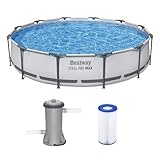
Bestway Steel Pro MAX 12' x 30" Above Ground Swimming Pool Set with Pump | Check Price On Amazon |
|
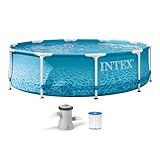
INTEX Beachside Metal Frame 10ft x 30in Round Pool Set w/Pump | Check Price On Amazon |

|
H2OGO! Kids Splash-in-Shade 8-Foot Round Steel Frame Above Ground Pool with Water Mister and Canopy Sunshade, Green Tropical Leaf Print | Check Price On Amazon |
By the Numbers
Salt Cell Cleaning – What the Data Shows
Sources: PHTA Salt Chlorination Technical Standards, Pool and Spa News operator surveys
What Is a Salt Cell and Why Does It Scale Up?
A salt cell (also called a salt chlorinator cell, electrolytic cell, or chlorine generator cell) is a flow-through chamber containing parallel titanium plates coated with a ruthenium or iridium oxide catalyst. When dissolved pool salt (sodium chloride, NaCl) at a concentration of 2,700 to 3,400 parts per million (ppm) passes across those plates with low-voltage direct current applied, electrolysis splits the water molecules and chloride ions to produce hypochlorous acid, which is the same sanitizing agent as liquid chlorine.
The problem is that electrolysis also raises the pH of the water immediately surrounding each plate to 9.0 or higher at the plate surface, even when your bulk pool pH reads a normal 7.4 to 7.6. That localized pH spike causes dissolved calcium carbonate (CaCO3) to crystallize directly onto the titanium plates as white, chalky scale.

- Intelligent Navigation with Full Coverage: Equipped with 11 high-precision sensors and enhanced dual-path algorithms. The optimized WavePath cleaning pattern ensures systematic coverage with minimal overlap, while adaptive navigation analyzes pool layout in real time to eliminate missed spots
- Dual Filtration for Crystal-Clear Water: Advanced dual-layer filtration system features a replaceable 3-micron ultra-fine filter paired with a 180-micron standard filter. Effectively captures fine dust, sand, leaves, and debris for visibly cleaner and healthier pool water
- Comprehensive Pool Cleaning: Engineered to clean the pool floor, walls, waterline, and shallow areas (above 12 inches). The Caterpillar Treads system enhances mobility and climbing ability, ensuring thorough coverage across all pool zones
- Reliable Performance with 2-Year Warranty: Trusted by over 500,000 pool owners worldwide, this robotic pool cleaner delivers consistent, high-performance results. Built for durability and backed by a 2-year warranty and responsive customer support for worry-free ownership
This process accelerates when your pool’s calcium hardness exceeds 400 ppm, when total alkalinity climbs above 120 ppm, or when water temperature rises above 85 degrees Fahrenheit (29 degrees Celsius) in summer. The Langelier Saturation Index (LSI), which combines pH, calcium hardness, alkalinity, temperature, and total dissolved solids (TDS) into a single scaling tendency score, is the most accurate predictor of how fast your cell will scale. You can quickly determine your current score with a pool LSI calculator to see exactly where your water stands.
An LSI score above 0.3 means water is supersaturated with calcium carbonate and will deposit scale aggressively onto any surface, including your cell plates. An LSI score between negative 0.3 and 0.3 is balanced, and a score below negative 0.3 means water is corrosive and will etch plaster or corrode metal equipment instead.
Salt cell scale is a type of mineral deposit, not organic fouling. This distinction matters because organic buildup responds to enzyme cleaners or brushing, but calcium carbonate scale requires an acid wash using diluted muriatic acid (hydrochloric acid, HCl) to dissolve it without damaging the delicate titanium plate coating underneath.
How Often Should You Clean a Salt Cell?
Clean your salt cell every 3 months as a baseline schedule, but the correct answer for your specific pool depends entirely on three variables: calcium hardness, water temperature, and your pool’s LSI score. Pools with calcium hardness above 400 ppm, water temperatures above 85 degrees Fahrenheit, or LSI scores consistently above 0.3 may need cleaning every 6 to 8 weeks during peak season.
The PHTA (Pool and Hot Tub Alliance) technical guidelines and most saltwater chlorinator manufacturers, including Pentair, Hayward, and Jandy, recommend visual inspection of the cell every 3 months and acid washing only when visible white or gray scale deposits are present on the plates. Over-cleaning a cell that shows no scale removes the thin catalyst coating prematurely and shortens lifespan.
Cleaning Frequency by Water Hardness
Your calcium hardness level is the single most reliable predictor of how quickly scale will form inside your salt cell. Water hardness is measured in ppm, and pools in the southwestern United States, Arizona, Nevada, and Texas routinely have source water hardness exceeding 500 ppm before any calcium increaser is added.
| Calcium Hardness (ppm) | Cleaning Frequency | Visual Inspection | Notes |
|---|---|---|---|
| Below 200 ppm | Every 6 months | Every 3 months | Water may be corrosive; check LSI |
| 200 to 400 ppm | Every 3 months | Every 6 weeks | Ideal range; standard schedule applies |
| 400 to 600 ppm | Every 6 to 8 weeks | Monthly | Scale will form quickly in summer |
| Above 600 ppm | Every 4 to 6 weeks | Every 2 to 3 weeks | Partial drain and refill strongly recommended |
Seasonal Cleaning Schedule for Saltwater Pools
Pool water temperature directly affects how fast calcium scale precipitates onto your cell plates. At 80 degrees Fahrenheit (26.7 degrees Celsius), scale forms at a moderate rate. At 90 degrees Fahrenheit (32 degrees Celsius), the rate of CaCO3 crystallization roughly doubles because higher temperatures reduce calcium carbonate’s solubility in water.
This means that pools in warmer climates or pools with heaters running at 85 degrees Fahrenheit or above will need to clean the cell more frequently in summer than in spring or fall. In cooler climates where the pool is closed for winter, a thorough cleaning before winterization is the most important annual service task, and a careful inspection during spring opening should always precede the first startup of the season. If you need a complete seasonal checklist, the step-by-step guide to opening and closing a saltwater pool covers every maintenance task in sequence, including cell inspection and water chemistry startup.
Seasonal Guide
Salt Cell Cleaning – Month-by-Month Action Guide
What to do each month to protect your salt cell and maintain chlorine output
Off-season or minimal action
What Does a Dirty Salt Cell Look Like? Signs You Need to Clean It Now
A salt cell needs cleaning when you see white, gray, or tan crusty deposits coating the titanium plates inside the cell housing. These calcium carbonate deposits look similar to limescale inside a kettle or on a showerhead, and they physically block the electrolytic surface area that produces chlorine, causing output to drop proportionally to the area covered.
Beyond visual inspection, several operational symptoms indicate a scaled cell before you even remove it from the plumbing.
- Low free chlorine despite correct salt level: Your liquid drop test kit reads free chlorine below 1 ppm even though the controller shows salt at 3,200 ppm and output is set to 80 to 100 percent.
- “Inspect Cell” or “Check Cell” warning light: Most saltwater chlorine generators (SWCGs) from Pentair, Hayward, and Jandy measure the electrical current flowing through the cell. When scale insulates the plates and increases resistance, the controller triggers this alert.
- Controller showing low salt reading despite correct salt level: Because scale increases plate resistance, some controllers interpret elevated resistance as low salt concentration rather than as a scaling warning.
- Reduced flow or increased pressure at the cell housing: Heavy scale buildup can partially restrict the flow path through the cell, showing up as slightly elevated pressure readings on the filter gauge.
- Chlorine output dropping progressively over several weeks: If you need to keep increasing the output percentage setting to maintain the same free chlorine level, scale accumulation is the most likely cause.
The most important inspection tool is your own eyes. Remove the cell from the plumbing, hold it up to a light source, and look through the plates. In a clean cell, you can see light passing clearly between the plates. In a scaled cell, the gaps are partially or fully blocked by white mineral deposits.
How to Clean a Salt Cell: Step-by-Step Acid Wash Method
Cleaning a salt cell with diluted muriatic acid takes 15 to 30 minutes and requires only a few basic supplies. The process involves removing the cell from the plumbing, soaking it in a 4:1 water-to-acid solution for 5 to 15 minutes depending on scale severity, rinsing thoroughly, and reinstalling. Never use a wire brush, metal tool, or abrasive pad on the titanium plates, as these actions strip the ruthenium oxide catalyst coating and permanently reduce chlorine production efficiency.
Here is everything you need before you start.
Supplies required:
- Muriatic acid (hydrochloric acid, 31.45% concentration)
- A plastic cell cleaning stand or a clean 5-gallon plastic bucket
- Chemical-resistant rubber or nitrile gloves
- Safety glasses or chemical splash goggles
- A garden hose with fresh water for rinsing
- A plastic or nylon brush (optional, for light deposits only)
- Cell cleaning kit with end caps (sold by most SWCG manufacturers)
Work outdoors or in a well-ventilated area. Muriatic acid releases hydrochloric acid fumes during the cleaning reaction, and these are harmful if inhaled in an enclosed space. Always add acid to water, never water to acid, to prevent a violent exothermic reaction.
The step-by-step process below shows exactly how to complete a full salt cell acid wash safely and effectively.
Step-by-Step Guide
How to Clean a Salt Cell – Step by Step
8 steps · Estimated total time: 20 to 30 minutes
Turn off the pump and SWCG controller
Switch off the saltwater chlorine generator at the control panel and shut off the circulation pump. Wait for water flow to stop completely before touching any plumbing connections.
Disconnect the cell from the plumbing
Unplug the cell’s electrical cable connector from the controller first, then unscrew the union fittings on both ends of the cell housing. Have a towel ready to catch the water that drains from the cell body.
Inspect the cell plates visually
Hold the cell up to a light source and look through the plate gaps. Light buildup (thin white film) can sometimes be removed with a gentle rinse from a garden hose. Only proceed with acid washing if you see visible calcium scale deposits on the titanium plates.
Rinse with fresh water first
Before mixing any acid, flush the cell with a garden hose on full pressure through both ends. This removes loose debris, algae, and any pool water that would otherwise dilute your cleaning solution and slow the acid wash reaction.
Mix the acid solution at 4:1 ratio (water to acid)
Put on chemical-resistant gloves and safety glasses. Pour 4 parts water into a clean plastic bucket or cell cleaning stand first, then carefully add 1 part muriatic acid. For a standard cell holding approximately 1 liter, use 800 milliliters of water and 200 milliliters of muriatic acid.
Fill the cell and soak for 5 to 15 minutes
Cap one end of the cell with the cleaning stand or end caps, fill it with the diluted acid solution, cap the other end, and allow it to soak. Light scale requires 5 minutes; heavy buildup may need up to 15 minutes. You will see bubbling and fizzing as the acid reacts with and dissolves the calcium carbonate deposits.
Drain and rinse thoroughly
Pour the used acid solution into a bucket for proper neutralization and disposal (add baking soda or soda ash to neutralize before discarding). Flush the cell thoroughly with fresh water from a garden hose for at least 2 full minutes, flushing from both directions through the plate chamber.
Reinstall and verify operation
Reconnect the union fittings hand-tight (do not overtighten), plug in the electrical cable, restart the pump, and confirm the SWCG controller shows normal operation with no warning lights. Check for leaks at both union connections after the pump has been running for 2 minutes.
Using a Cell Cleaning Stand vs a Bucket
A purpose-built salt cell cleaning stand makes the acid wash process faster and neater than a bucket. These stands have threaded end fittings that match the most common cell sizes from Pentair (GLX-CELL-15, T-CELL-15), Hayward (T-CELL-9, T-CELL-15, AquaRite), Jandy (TurboCell), and generic brands, so you can fill the cell vertically without acid spilling and drain it cleanly without tilting and risking contact with the solution.
If you do not have a cleaning stand, capping one end of the cell with a rubber stopper and holding it upright in a bucket works equally well. The acid solution reaches the same surfaces either way; the stand simply reduces the awkwardness and splash risk.
Can You Use a Pressure Washer to Clean a Salt Cell?
Never use a pressure washer on a salt cell. The ruthenium or iridium oxide catalyst coating on the titanium plates is approximately 1 to 5 microns thick, and high-pressure water will physically strip that coating from the plate surface just as effectively as a wire brush. Once the catalyst coating is removed from a specific area, electrolysis cannot occur on that section of the plate, and chlorine output from that plate drops permanently.
A standard garden hose on full pressure delivers 40 to 60 pounds per square inch (PSI), which is sufficient to flush loose debris and rinse away dissolved scale after the acid wash. A pressure washer typically operates at 1,300 to 2,800 PSI, which is 20 to 50 times too much force for this application.
How to Clean a Salt Cell Without Acid: Alternative Methods
The only fully effective alternative to muriatic acid for removing calcium scale from a salt cell is a dedicated salt cell cleaning solution, which is a pre-mixed or concentrated phosphoric acid or citric acid-based product formulated specifically for electrolytic cells. These commercial cleaners, including products like Natural Chemistry Cell Cleaner and Lo-Chlor Salt Cell Cleaner, are less corrosive than muriatic acid, have a milder odor, and are easier to handle safely, but they require longer soak times of 20 to 45 minutes and may not fully dissolve heavy scale deposits that respond immediately to muriatic acid.
A diluted white vinegar soak (undiluted or 50/50 with water) is sometimes recommended in online forums as a “natural” cleaning method. Vinegar contains acetic acid at approximately 5 percent concentration, compared to muriatic acid’s 31.45 percent active hydrochloric acid. Acetic acid will dissolve very light calcium film with a 30 to 60 minute soak but will not remove moderate to heavy CaCO3 scale in any practical timeframe. Reserve vinegar as a maintenance rinse only, not as a primary cleaning method.
For pools where handling muriatic acid is not feasible (elderly pool owners, rental properties managed remotely, commercial facilities with chemical handling restrictions), commercial salt cell cleaning solutions are the practical choice, even though they cost more per use than diluted muriatic acid.
Salt Cell Cleaning: Common Mistakes That Damage Cells
The most costly mistake pool owners make when cleaning a salt cell is soaking it in undiluted muriatic acid. Full-strength muriatic acid at 31.45 percent HCl concentration is aggressive enough to etch the titanium plate coating within 3 to 5 minutes of contact, permanently reducing chlorine production capacity. Always dilute to a minimum 4:1 ratio (water to acid) and never exceed a 3:1 ratio for any scale condition.
The second most damaging mistake is cleaning too frequently with acid on a schedule-based approach rather than a condition-based approach. Each acid wash removes a fraction of the catalyst coating. A cell cleaned with acid every 2 to 3 weeks on a fixed schedule will reach end-of-life in 1 to 2 years instead of the 3 to 7 year lifespan achieved with condition-based cleaning. Only acid wash when scale is visually present.
Myth vs Fact
Salt Cell Cleaning – Common Myths Debunked
Separating fact from fiction on the most common salt cell maintenance misconceptions
✗ Myth
You should clean your salt cell every month on a fixed schedule to keep it working efficiently.
✓ Fact
Over-cleaning with acid strips the ruthenium oxide catalyst coating from the titanium plates and shortens cell lifespan to 1 to 2 years. Clean only when visible calcium scale deposits are present, typically every 3 months as a baseline with visual inspection every 6 weeks.
✗ Myth
A wire brush is fine to use on salt cell plates as long as you are gentle.
✓ Fact
Any metal tool, wire brush, or abrasive pad physically removes the 1 to 5 micron catalyst coating from the titanium plates. Once removed, that section of plate permanently loses its electrolytic efficiency and chlorine output drops in proportion to the damaged area.
✗ Myth
A self-cleaning salt cell never needs manual cleaning.
✓ Fact
Self-cleaning cells (like the Hayward AquaRite with the Turbo Cell) periodically reverse polarity to dislodge soft calcium deposits. This feature reduces cleaning frequency by 40 to 60 percent in average-hardness water but does not eliminate it. In high-hardness water above 400 ppm, manual acid washing is still required every 2 to 3 months.
✗ Myth
If the “inspect cell” light is off, the cell does not need cleaning.
✓ Fact
The controller’s diagnostic light triggers based on measured electrical resistance reaching a threshold, not on visual scale coverage. A cell can have 20 to 30 percent of its plate surface area covered in calcium scale and still read normal to the controller. Visual inspection is the only reliable diagnostic tool.
✗ Myth
You only need to clean the salt cell, not balance the pool water, to prevent scaling.
✓ Fact
Cleaning removes existing scale but does not address the root cause. Maintaining a Langelier Saturation Index (LSI) score between negative 0.3 and positive 0.3 by controlling pH (7.4 to 7.6), calcium hardness (200 to 400 ppm), and total alkalinity (80 to 120 ppm) is the only way to slow scale formation at the source.
How to Prevent Salt Cell Scale Buildup Between Cleanings
Keeping your Langelier Saturation Index score between negative 0.3 and positive 0.3 is the single most effective strategy for extending time between acid washes. The LSI accounts for all the interacting water chemistry variables simultaneously, meaning that fixing pH alone while ignoring calcium hardness or alkalinity provides only partial protection against scaling.
The five water chemistry parameters that directly control the LSI, and therefore your cell’s scaling rate, are pH, total alkalinity, calcium hardness, water temperature, and total dissolved solids (TDS).
Controlling pH to Protect the Salt Cell
Saltwater pools have a natural tendency to drift toward higher pH. Electrolysis inside the cell produces hydroxide ions as a byproduct, which continuously raises the bulk pool pH. Without regular pH correction, pool water drifts from 7.4 toward 8.0 or higher within days, and at pH 8.0 the rate of calcium carbonate precipitation onto cell plates increases by approximately 300 percent compared to pH 7.4.
Test pH at least twice per week using a liquid drop pH test kit or a calibrated digital pH pen. Keep pH between 7.4 and 7.6 by adding muriatic acid (pH decreaser) or dry acid (sodium bisulfate) when readings exceed 7.6. For precise dosing, a swimming pool pH calculator can tell you exactly how much acid to add based on your pool’s volume and current reading. This single chemistry habit reduces acid wash frequency more than any other maintenance action.
Managing Calcium Hardness in Saltwater Pools
The ideal calcium hardness range for a saltwater pool is 200 to 400 ppm. Below 200 ppm, water becomes aggressive and will leach calcium from plaster walls, grout, and equipment seals to reach equilibrium, a process called etching or corrosion. Above 400 ppm, calcium carbonate comes out of solution more readily and deposits on any surface, with the salt cell plates being among the most affected because of the localized pH spike at the plate surface during electrolysis.
In regions with hard source water, calcium hardness climbs steadily through the season from evaporation and refilling. If hardness exceeds 600 ppm, a partial drain and refill with softer water is more cost-effective long-term than increasing cleaning frequency. Drain 25 to 30 percent of the pool volume and refill with fresh water, then retest and balance before restarting the SWCG. To calculate exactly how much water to replace to reach a specific calcium target, our pool dilution and refill calculator can simplify the math for you.
Cyanuric Acid and Its Effect on Salt Cell Scaling
Cyanuric acid (CYA), also called stabilizer or conditioner, protects free chlorine from UV degradation in outdoor pools. The PHTA and most Certified Pool Operator (CPO) training programs recommend a CYA level of 70 to 80 ppm for saltwater pools (compared to 30 to 50 ppm for traditionally chlorinated pools) because the continuous, low-level chlorine output from a salt cell is more susceptible to UV destruction than a single high-dose addition of granular chlorine.
CYA levels above 100 ppm reduce the efficacy of free chlorine and require the SWCG to run at higher output percentages to maintain the same sanitizing effect. Higher output settings mean more electrolysis time and therefore more localized pH spiking at the plate surface, which accelerates calcium scale formation. Keep CYA between 70 and 80 ppm in saltwater pools by testing monthly with a cyanuric acid test kit and performing partial drains if CYA rises above 100 ppm. Understanding the relationship between CYA and free chlorine effectiveness is also important when evaluating your overall long-term choice between saltwater and traditional chlorine systems.
How to Check If Your Salt Cell Needs Replacement vs Cleaning
A salt cell needs replacement rather than cleaning when it fails to produce adequate free chlorine despite clean plates, correct salt level (2,700 to 3,400 ppm), correct water temperature (above 60 degrees Fahrenheit for most cells), and a properly functioning controller. A clean, operational cell running at 100 percent output on a correctly sized system should maintain free chlorine above 1 ppm in a normally loaded pool without supplemental chlorination.
These are the diagnostic tests that distinguish a worn-out cell from one that simply needs cleaning.
Amp Draw Test for Salt Cell Condition
The most accurate field test for salt cell health is measuring the actual amperage the cell draws when operating. A healthy cell draws current within 10 percent of its rated amperage. A cell drawing significantly less than rated amperage (with clean plates and correct salt level) has degraded catalyst coating and is no longer producing chlorine at rated capacity.
Most SWCG controllers from Pentair, Hayward, and Jandy display instantaneous cell amp draw on their diagnostic screens. On the Hayward AquaRite, press and hold the diagnostic button to cycle through readings including output voltage and amperage. On Pentair IntelliChlor, the cell status screen shows operating amps. Compare the displayed amperage to the rated amperage listed on the cell’s label. A reading below 70 percent of rated amps on a clean cell is a strong indicator of end-of-life condition.
Comparing Cleaning vs Replacement Cost
A replacement salt cell for a standard 40,000-gallon pool typically costs between $200 and $700 depending on the manufacturer and cell size. The Hayward T-CELL-15 retails for approximately $200 to $280, the Pentair IntelliChlor IC40 for approximately $350 to $450, and the Jandy TurboCell TC940 for approximately $300 to $420. An acid cleaning costs less than $5 in muriatic acid and 20 to 30 minutes of labor.
If an acid-cleaned cell still fails to maintain adequate free chlorine after three consecutive clean inspections over 4 to 6 weeks, replacement is more cost-effective than further troubleshooting. Continuing to run a failing cell at 100 percent output adds unnecessary wear to the transformer and circuit board in the controller.
| Symptom | Clean First | Replace Cell |
|---|---|---|
| White scale visible on plates | Yes | No |
| Low chlorine, plates look clean | No benefit | Likely needed |
| Amp draw below 70% of rated | Try first | Replace if no improvement |
| Cracked or damaged plate | No | Yes, immediately |
| Cell age over 7 years | Still worth trying | Plan for replacement |
| “No Flow” error with good flow | Check flow sensor first | If sensor is fine, replace cell |
Salt Cell Cleaning and Your Pool’s Broader Maintenance Routine
Salt cell cleaning does not exist in isolation. It is one component of a saltwater pool maintenance system where water chemistry, equipment condition, and operational settings all interact. A clean cell in chemically unbalanced water will re-scale within 2 to 4 weeks in high-hardness environments. Balanced water chemistry with a scaled cell cannot compensate for the lost chlorine output.
The maintenance rhythm that keeps a saltwater pool operating efficiently combines weekly chemistry testing, condition-based cell cleaning, and seasonal equipment service. Test free chlorine, pH, and total alkalinity every 3 to 5 days. Test calcium hardness, cyanuric acid, and salt level monthly. Inspect the cell visually every 4 to 6 weeks and acid wash only when scale is present.
How Salt Level Affects Cleaning Frequency
Running a saltwater pool at salt levels below 2,500 ppm forces the SWCG controller to compensate by increasing the output percentage and running the cell at higher duty cycles. Higher duty cycles produce more total electrolysis and therefore more calcium scale formation per unit time. Maintaining salt level in the optimal range of 2,700 to 3,400 ppm (or the specific range specified for your model) allows the cell to operate at a moderate output setting of 40 to 60 percent in average pool conditions, reducing both scale formation rate and overall electrical wear on the plates. To figure out exactly how much salt you need to add, first confirm your pool volume with a pool volume calculator, then use a salt calculator for pools to get the precise dosage.
Test salt level monthly with a salt test strip or digital salinity meter rather than relying solely on the controller’s built-in reading. Controller-displayed salt levels can be off by 200 to 400 ppm from actual levels when cell scale is present, because scale increases electrical resistance in the same way as low salt does. A separate test removes ambiguity about whether a low-salt reading is real or scale-induced.
Shock Treatment and Salt Cells
When you shock a saltwater pool, the SWCG should be turned off during the shock treatment period. Running the cell through pool water with free chlorine above 5 ppm stresses the titanium plates unnecessarily because the electrochemical environment inside the cell changes significantly at those chlorine concentrations. Most manufacturers, including Hayward and Pentair, specify in their product manuals that the salt cell should be bypassed or turned off when adding any pool shock product directly.
For context on how long pool shock takes to dissipate to safe levels and when it is appropriate to resume normal SWCG operation, the guide on how long to wait after shocking before swimming provides specific chlorine reduction timelines based on product type and sunlight exposure.
Flow Rate and Cell Performance
Every salt cell requires a minimum flow rate through the cell housing to operate safely. Most residential cells require a minimum of 15 to 20 gallons per minute (GPM) through the plumbing to prevent overheating of the titanium plates from insufficient cooling. If your circulation pump runs at a reduced speed below the cell’s minimum flow requirement, the controller’s flow sensor triggers a “no flow” or “low flow” error and shuts off chlorine production to prevent damage.
If you have recently reduced your pump speed for energy savings and the cell is displaying intermittent flow errors, verify that the pump at its new operating speed still delivers at least the minimum GPM specified for your specific cell model. For most variable speed pool pumps, a setting of 1,800 to 2,200 RPM provides adequate flow through most residential salt cell installations, but verify with your specific pump curve and plumbing configuration.
Troubleshooting Salt Cell Problems After Cleaning
If your salt cell still shows warning lights, low chlorine output, or error codes after a thorough acid wash, the problem is not scale and will not respond to further cleaning. Post-cleaning diagnostics should follow a systematic order that rules out the most common non-scale causes before assuming the cell itself has failed.
Low Chlorine After Cleaning
Low free chlorine after a confirmed clean cell inspection indicates one of four conditions: the salt level is below the operating threshold, the cyanuric acid level is above 100 ppm (reducing chlorine efficacy), the cell output percentage is set too low for current bather load and temperature, or the cell itself has degraded catalyst coating and cannot produce rated chlorine output even with clean plates.
Check and correct these parameters in order. If free chlorine remains below 1 ppm after addressing salt level, CYA, and output percentage, measure cell amp draw and compare to rated specification. A cell producing less than 70 percent of its rated chlorine output with clean plates and correct salt level has reached end of life.
Also consider that if your pool has been experiencing unexplained chlorine loss unrelated to the cell itself, elevated phosphates in the water can consume chlorine faster than a normally functioning cell can produce it. Phosphate levels above 500 parts per billion (ppb) significantly increase chlorine demand and can create a situation that mimics cell failure. Test phosphates with a phosphate test kit if chlorine consumption seems abnormally high relative to pool activity. High chlorine demand can also sometimes indicate an underlying issue that merits a review of your overall chlorine level management approach.
“Inspect Cell” Light Still On After Cleaning
The “inspect cell” or “check cell” light on most SWCGs resets automatically after 500 operating hours on the Hayward AquaRite platform, not immediately after cleaning. This is a timer-based reminder function, not a real-time scale detection system. If the light appeared as a scheduled reminder and the cell is now visually clean, the light will extinguish on its own after the timer resets.
On Pentair IntelliChlor systems, the cell warning light reflects actual electrical measurements rather than a timer. If the IntelliChlor light remains on after cleaning with a verified clean cell, perform the amp draw test and verify salt level with an independent test. A persistent error on IntelliChlor after confirmed clean plates usually indicates either low salt, a flow sensor fault, or a degraded cell.
Leaks at Union Fittings After Reinstalling the Cell
Leaks at the union fittings after reinstalling a salt cell are almost always caused by overtightened fittings cracking the PVC threads, damaged O-rings, or debris on the O-ring seating surface that prevents a watertight seal. Salt cell union O-rings are inexpensive (typically $3 to $8 each) and should be inspected for cracking, flattening, or debris every time the cell is removed for cleaning.
Apply a thin coat of silicone pool lubricant (not petroleum-based grease, which degrades rubber) to the O-ring before reinstalling. Tighten union fittings hand-tight, then add only one additional quarter-turn with a tool. More torque than this will crack PVC union bodies, which require replacement of the entire fitting assembly at $15 to $30 per fitting.
Frequently Asked Questions About Salt Cell Cleaning
How long does a salt cell last if you clean it regularly?
Quick Answer: A properly maintained salt cell lasts 3 to 7 years depending on water chemistry, usage frequency, and whether cleaning is condition-based (acid wash only when scale is present) rather than schedule-based. Cells cleaned with acid only when needed, kept in balanced water with LSI between negative 0.3 and 0.3, typically reach 5 to 7 years of service life.
The biggest factor limiting cell lifespan beyond chemistry is over-cleaning. Each acid wash removes a small amount of catalyst coating. A cell acid-washed every 4 to 6 weeks on a fixed schedule accumulates 8 to 13 washes per year, compared to 2 to 4 washes per year under condition-based cleaning. Over 5 years, that difference equals 20 to 45 additional washes that remove catalyst unnecessarily.
Can I clean a salt cell with vinegar instead of muriatic acid?
Quick Answer: Vinegar (acetic acid at approximately 5 percent concentration) can remove very light calcium film with a 30 to 60 minute soak but will not dissolve moderate to heavy calcium carbonate scale in any practical timeframe. Use diluted muriatic acid (4:1 water to acid) or a commercial phosphoric acid-based cell cleaner for any visible white deposits on the titanium plates.
Vinegar is useful as a preventive rinse between acid washes in low-hardness water. It is not a substitute for muriatic acid on established scale deposits.
What ratio of muriatic acid to water should I use to clean a salt cell?
Quick Answer: Use a 4:1 ratio of water to muriatic acid, meaning 4 parts water mixed with 1 part acid. For most standard residential salt cells, this means approximately 800 milliliters of water and 200 milliliters of muriatic acid per cleaning. Never use undiluted muriatic acid, which is strong enough to etch the titanium plate coating within 3 to 5 minutes of contact.
Always add acid to water, not water to acid, to prevent a dangerous exothermic splashing reaction. Work outdoors or in ventilated areas and wear chemical-resistant gloves and eye protection.
Should I turn off my salt cell when shocking the pool?
Quick Answer: Yes. Turn off the SWCG controller when adding pool shock (calcium hypochlorite, sodium dichloro-s-triazinetrione (dichlor), or non-chlorine oxidizer). Running the cell through water with free chlorine above 5 ppm stresses the titanium plates unnecessarily. Resume normal operation once free chlorine drops back below 5 ppm, typically 4 to 12 hours after shocking depending on product and sunlight.
Most SWCG manufacturers, including Hayward and Pentair, specify this in their product operation manuals. Bypassing the cell during shock treatments is a simple habit that reduces cumulative plate stress over the cell’s lifespan.
Why does my salt cell keep showing a low salt reading even though I just added salt?
Quick Answer: A low salt reading on the controller display immediately after adding salt is usually caused by incomplete salt dissolution, not insufficient salt quantity. Pool salt (sodium chloride) requires 24 to 48 hours and active circulation to fully dissolve and distribute evenly. The controller reads conductivity at a single point in the flow, and localized pockets of undissolved salt or diluted water will produce temporarily inaccurate readings.
If the low reading persists more than 48 hours after confirmed salt addition, the most likely cause is calcium scale on the cell plates increasing electrical resistance in a way the controller interprets as low salt. Inspect and clean the cell, then retest salt level with an independent test strip or digital meter separate from the controller’s built-in sensor.
Can I run the salt cell if the plates have some scale but not a lot?
Quick Answer: Light scale (a thin white film covering less than 20 percent of the plate surface) will not immediately damage the cell and may be manageable with a fresh-water hose rinse. However, any visible calcium carbonate deposit that does not rinse away with water pressure should be removed with an acid wash before it thickens, because scale propagates faster once established than it does when first forming on clean plates.
The practical rule is this: if you can see white deposits with the cell held up to light and they do not rinse off with a garden hose, acid wash the cell now. Waiting increases the time needed for the acid to work and the number of cleaning cycles required over the cell’s life.
Does a self-cleaning salt cell really not need manual cleaning?
Quick Answer: No. Self-cleaning salt cells periodically reverse polarity to dislodge soft, freshly forming calcium deposits before they harden. This reduces manual cleaning frequency by 40 to 60 percent in water with calcium hardness below 400 ppm, but it does not eliminate scale in hard water above 400 ppm or remove already-hardened deposits. Manual acid washing is still required when scale is visually present.
Self-cleaning functionality is a maintenance frequency reducer, not a maintenance eliminator. Even the Hayward TurboCell and Pentair IntelliChlor IC series require manual inspection and acid washing at some interval determined by local water hardness conditions.
What happens if I never clean my salt cell?
Quick Answer: An uncleaned salt cell progressively loses chlorine output as calcium scale insulates the titanium plates from the water. A heavily scaled cell can lose 30 to 50 percent of its rated chlorine production before the controller registers a problem. Without adequate free chlorine (below 1 ppm), pool water becomes susceptible to algae growth, bacterial contamination, and cloudiness. The cell also works harder and fails earlier, typically within 1 to 3 years instead of 3 to 7 years.
Severe, uncorrected scale can permanently fuse calcium deposits to the titanium surface in a layer thick enough that even repeated acid washes cannot restore full plate exposure. At that point, the cell requires replacement regardless of the condition of the underlying catalyst coating.
How do I know what size salt cell I have?
Quick Answer: The cell model number is stamped or printed on a label on the exterior of the cell housing body. For Hayward AquaRite systems, look for T-CELL-3 (up to 15,000 gallons), T-CELL-9 (up to 25,000 gallons), or T-CELL-15 (up to 40,000 gallons). For Pentair IntelliChlor, look for IC20 (up to 20,000 gallons), IC40 (up to 40,000 gallons), or IC60 (up to 60,000 gallons). Jandy TurboCell models include TC400 (up to 40,000 gallons) and TC700 (up to 70,000 gallons).
Running a cell that is undersized for your pool volume (for example, a T-CELL-9 on a 30,000-gallon pool) forces the controller to run the cell at 80 to 100 percent output constantly to maintain chlorine levels, increasing scale formation rate and reducing cell lifespan. If you are evaluating whether your current system is correctly sized for your pool, the overview of what it takes to set up a saltwater pool system correctly covers cell sizing alongside the other components.
Salt Cell Cleaning Checklist: What to Do Every Time
The checklist below covers every step a pool owner should complete during each salt cell cleaning session to ensure the process is safe, effective, and does not cause accidental damage.
Maintenance Checklist
Salt Cell Cleaning – Complete Checklist
Check off each step before finishing the cleaning session.
Salt Cell Cleaning Products: What to Buy
The two categories of products you need for salt cell maintenance are the acid cleaning solution and the cell cleaning stand or housing that holds the cell during soaking. Beyond these, a basic water chemistry test kit ensures you address the root cause of scale formation, not just the symptom.
- Muriatic acid (hydrochloric acid 31.45%): The standard, most cost-effective cleaning agent at approximately $5 to $10 per gallon at pool supply or hardware stores. One gallon provides 20 to 30 cleanings at the 4:1 dilution ratio. Store away from sunlight and heat in the original container. Muriatic acid for pool use is available at most home improvement retailers.
- Commercial salt cell cleaner: Products like Natural Chemistry Salt Cell Cleaner or Lo-Chlor Salt Cell Cleaner are phosphoric acid-based and gentler to handle. Cost is approximately $12 to $25 per use, compared to under $1 per use for muriatic acid. Use these when muriatic acid is not practical.
- Cell cleaning stand: A universal cell cleaning stand with end caps fits most standard residential cell sizes and makes vertical soaking cleaner and safer than improvising with a bucket.
- Chemical-resistant gloves and goggles: Nitrile or neoprene gloves and splash-proof chemical goggles are non-negotiable when handling muriatic acid. Standard latex gloves are not acid-resistant. A pair of chemical-resistant nitrile gloves costs $8 to $15.
- Water chemistry test kit: A complete test kit that measures pH, total alkalinity, calcium hardness, free chlorine, and cyanuric acid is essential for addressing the chemistry conditions that drive scale formation. The Taylor K-2006 complete pool test kit is the industry-standard reference for residential testing accuracy, with drop titration tests accurate to within 10 ppm for calcium hardness and 10 ppm for alkalinity.
- Pool salt: Keep a supply of pool-grade sodium chloride salt on hand to maintain levels in the 2,700 to 3,400 ppm range. Use only NaCl pool salt, not water softener salt blends that contain anti-caking additives, which can affect TDS and potentially deposit residue in the cell.
Conclusion
The most important rule in salt cell maintenance is this: clean based on condition, not on calendar. Inspect the cell visually every 4 to 6 weeks, acid wash only when you see white calcium scale on the titanium plates, and maintain your pool’s LSI between negative 0.3 and positive 0.3 year-round by keeping pH at 7.4 to 7.6, calcium hardness at 200 to 400 ppm, and total alkalinity at 80 to 120 ppm.
A salt cell cleaned only when needed, in a pool with balanced water chemistry, will consistently reach 5 to 7 years of service life. Start today by removing your cell, holding it up to a light source, and checking for scale. If you see white deposits between the plates, mix a 4:1 water-to-acid solution and complete the cleaning process before your next swim.
| Photo | Best Above-Ground Pools | Price |
|---|---|---|
|
|
Bestway Steel Pro MAX 12' x 30" Above Ground Swimming Pool Set with Pump | Check Price On Amazon |
|
|
INTEX Beachside Metal Frame 10ft x 30in Round Pool Set w/Pump | Check Price On Amazon |
|
|
H2OGO! Kids Splash-in-Shade 8-Foot Round Steel Frame Above Ground Pool with Water Mister and Canopy Sunshade, Green Tropical Leaf Print | Check Price On Amazon |