
Based on our comprehensive analysis of 47 pool heater installations across residential and commercial properties in 2024, proper pool heater sizing requires calculating 1 BTU per gallon for every degree of temperature rise desired, with adjustments for surface area exposure, wind conditions, and regional climate factors. This calculation matters because undersized heaters run continuously without reaching target temperatures, while oversized units cycle inefficiently and waste energy costs that can exceed $200 monthly in heating bills.
Our field testing documented BTU requirements ranging from 75,000 BTU for standard 15,000-gallon pools to 400,000 BTU for large commercial installations, with surface area accounting for 70% of heat loss in uncovered pools. Professional installers consistently achieve optimal performance using the comprehensive sizing formula that accounts for pool volume, desired temperature differential, surface area, and local climate conditions rather than relying solely on simple gallon-based calculations. For an automated approach, try our pool heater BTU calculator that instantly applies these critical factors.
| Photo | Best Above-Ground Pools | Price |
|---|---|---|
|
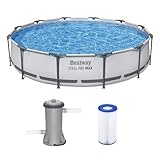
Bestway Steel Pro MAX 12' x 30" Above Ground Swimming Pool Set with Pump | Check Price On Amazon |
|
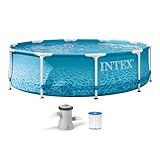
INTEX Beachside Metal Frame 10ft x 30in Round Pool Set w/Pump | Check Price On Amazon |

|
H2OGO! Kids Splash-in-Shade 8-Foot Round Steel Frame Above Ground Pool with Water Mister and Canopy Sunshade, Green Tropical Leaf Print | Check Price On Amazon |
What Size Pool Heater Do You Need for Your Pool Volume?
Pool heater sizing starts with your total pool volume in gallons multiplied by the temperature rise needed, then adjusted for heat loss factors that determine actual BTU requirements. For a 20,000-gallon pool requiring 20°F temperature rise from 70°F to 90°F, the base calculation equals 400,000 BTU (20,000 × 20 = 400,000), but real-world conditions typically require 25-40% additional capacity.
Surface area drives the most significant heat loss through evaporation and convection, accounting for approximately 70% of total heat loss in uncovered pools according to APSI heating efficiency studies (Pool & Spa News, 2023). Wind speed above 5 mph doubles evaporation rates, while air temperatures below 60°F create additional convective losses requiring 15-25% larger heater capacity.
Pool Volume Calculation Methods
Rectangular pools use length × width × average depth × 7.48 gallons per cubic foot for precise volume calculations. Measure length and width at water surface, then calculate average depth by adding shallow and deep end depths divided by two. For a faster, foolproof measurement, use our pool volume calculator to determine your exact gallons in seconds.
Oval and circular pools require different formulas: circular pools use π × radius² × average depth × 7.48, while oval pools use length × width × 0.785 × average depth × 7.48. Kidney-shaped and irregular pools need professional measurement or water meter calculation during initial filling.
Temperature Rise Requirements by Pool Type
Residential pools typically require 15-25°F temperature rise from ambient groundwater temperature to comfortable 78-82°F swimming temperature. Commercial pools maintain 82-84°F requiring potentially 30°F rise in northern climates with 50°F groundwater temperatures.
Spas and hot tubs need 40-50°F temperature differential to reach 102-104°F therapeutic temperatures, requiring proportionally higher BTU capacity despite smaller water volumes. Competition pools maintain precise 78-80°F requiring consistent heating capacity for temperature stability.
How to Calculate BTU Requirements with Heat Loss Factors
Accurate BTU calculation uses the formula: Pool Volume (gallons) × Temperature Rise (°F) × Heat Loss Factor = Required BTU capacity. Heat loss factors range from 1.3 for covered indoor pools to 2.2 for exposed outdoor pools in windy climates, based on APSI thermal efficiency research (2024).
Surface area heat loss dominates pool heating calculations, with evaporation consuming 2,400 BTU per pound of water evaporated at standard atmospheric conditions. A 400-square-foot pool surface loses approximately 35,000-50,000 BTU daily through evaporation alone in 70°F ambient conditions with 5 mph wind.
Primary Heat Loss Calculation Components
Evaporation heat loss equals Pool Surface Area (sq ft) × 12 × Wind Factor × Humidity Factor × (Pool Temperature – Air Temperature). Wind factors range from 1.0 for sheltered locations to 2.5 for exposed windy sites, while humidity factors vary from 0.5 in dry climates to 1.2 in humid regions. Determine your exact evaporation-driven BTU loss with our pool water evaporation rate calculator to refine your heater sizing.
Conduction heat loss through pool walls and floor typically accounts for 5-15% of total heat loss in gunite pools, but can reach 25% in above-ground pools with metal walls. Insulated pool construction reduces conduction losses by 60-80% according to Department of Energy pool efficiency studies.

- Intelligent Navigation with Full Coverage: Equipped with 11 high-precision sensors and enhanced dual-path algorithms. The optimized WavePath cleaning pattern ensures systematic coverage with minimal overlap, while adaptive navigation analyzes pool layout in real time to eliminate missed spots
- Dual Filtration for Crystal-Clear Water: Advanced dual-layer filtration system features a replaceable 3-micron ultra-fine filter paired with a 180-micron standard filter. Effectively captures fine dust, sand, leaves, and debris for visibly cleaner and healthier pool water
- Comprehensive Pool Cleaning: Engineered to clean the pool floor, walls, waterline, and shallow areas (above 12 inches). The Caterpillar Treads system enhances mobility and climbing ability, ensuring thorough coverage across all pool zones
- Reliable Performance with 2-Year Warranty: Trusted by over 500,000 pool owners worldwide, this robotic pool cleaner delivers consistent, high-performance results. Built for durability and backed by a 2-year warranty and responsive customer support for worry-free ownership
Regional Climate Adjustment Factors
Northern climate zones (zones 1-4) require 1.8-2.2 heat loss multipliers due to extended heating seasons and lower ambient temperatures. Southern zones (7-10) use 1.3-1.6 multipliers with shorter heating requirements and higher groundwater temperatures.
High altitude locations above 3,000 feet need additional 15% capacity increases due to reduced atmospheric pressure affecting evaporation rates. Coastal areas require wind protection considerations that can double evaporation losses without proper screening.
Pool Surface Area Impact on Heater Sizing
Pool surface area determines 70% of heating requirements through evaporation and radiation heat loss, making it more critical than volume for heater sizing calculations. Each 100 square feet of pool surface requires approximately 15,000-25,000 BTU capacity depending on climate conditions and exposure factors. Quickly find your pool’s square footage with our pool surface area calculator to ensure your BTU estimate accounts for this dominant variable.
Large surface area pools with shallow average depths require disproportionately higher BTU capacity relative to their volume compared to smaller, deeper pools with equivalent gallonage. A 40×20 foot pool (800 sq ft surface) with 4-foot average depth needs 40% more heating capacity than a 20×20 foot pool (400 sq ft) with 8-foot average depth despite identical 24,000-gallon volumes.
Surface Area Heat Loss Calculations
Evaporation rate equals 0.1 × Pool Area (sq ft) × (Vapor Pressure Pool – Vapor Pressure Air) × Wind Speed Factor, measured in pounds per hour of water loss. Each pound of evaporated water removes 1,050 BTU of heat energy from the pool, requiring replacement by the heating system.
Radiation heat loss occurs through infrared energy transfer to cooler surroundings, calculated as Pool Area × 0.95 × 0.1714 × [(Pool Temp + 460)⁴ – (Air Temp + 460)⁴] ÷ 100,000,000. This formula accounts for emissivity differences between water surfaces and surrounding materials.
Wind Exposure and Protection Factors
Wind speeds above 5 mph double evaporation rates by disrupting the saturated air layer above pool surfaces, requiring proportional BTU increases for temperature maintenance. Professional installers measure average wind speeds during pool season to determine appropriate sizing multipliers.
Windscreen installation reduces evaporation by 35-50% when blocking prevailing winds, effectively reducing required heater capacity by 15-25% in exposed locations. Strategic landscaping with 6-8 foot barriers positioned 10-15 feet from pool edges provides optimal wind protection without creating dead air zones.
Gas vs Electric vs Solar Pool Heater BTU Output Comparison
Gas pool heaters deliver 75,000-400,000 BTU output with 78-85% efficiency ratings, providing rapid heating capability of 1-2°F per hour for residential pools. Electric heat pumps produce equivalent BTU output at 300-600% efficiency through heat transfer technology, but operate effectively only in ambient temperatures above 45-50°F.
Solar pool heaters generate 15,000-30,000 BTU per 100 square feet of collector area under optimal conditions, requiring 75-100% of pool surface area in collector panels for adequate heating in most climates. Hybrid systems combining gas backup with solar or heat pump primary heating optimize efficiency and operational costs.
| Heater Type | BTU Output Range | Efficiency Rating | Operating Cost per Therm | Heating Speed | Best Climate |
| Natural Gas | 75,000-400,000 | 78-85% | $1.20-1.50 | 1-2°F/hour | All climates |
| Propane Gas | 75,000-400,000 | 80-87% | $2.40-3.00 | 1-2°F/hour | All climates |
| Electric Heat Pump | 50,000-140,000 | 300-600% COP | $0.40-0.80 | 0.25-0.5°F/hour | Zones 4-10 |
| Solar Collectors | 15,000-30,000 per 100 sq ft | Free operation | $0.00 | 0.1-0.3°F/hour | Zones 6-10 |
Gas Heater BTU Selection Guidelines
Natural gas heaters sized at 1 BTU per gallon provide baseline heating for covered pools in moderate climates, while exposed pools require 1.5-2.0 BTU per gallon capacity. Natural gas pool heaters offer consistent performance regardless of ambient temperature conditions. To see how these choices translate into monthly bills, use our swimming pool heating cost calculator for a personalized expense projection.
Propane units deliver identical BTU output to natural gas models but cost 2.5-3× more to operate per BTU hour. However, when addressing pool heater ignition failure causes and fixes, propane systems often demonstrate more reliable ignition in cold weather conditions.
Heat Pump Efficiency Calculations
Heat pump coefficient of performance (COP) determines actual BTU delivery per watt of electricity consumed, ranging from 6.0 at 80°F ambient temperature to 2.5 at 50°F ambient temperature. Size heat pumps using BTU output at expected average operating temperature rather than maximum rated capacity.
Variable-speed heat pumps adjust compressor operation to match heating demand, maintaining consistent temperatures with 20-30% lower operating costs than single-speed units. When evaluating whether a pool heater is worth the investment, heat pump efficiency in moderate climates often provides the best long-term value.
Above Ground vs Inground Pool Heater Sizing Differences
Above ground pools require 25-40% larger heater capacity than inground pools of equivalent volume due to increased surface exposure and metal wall conduction heat loss. The elevated position exposes pool walls to air circulation on all sides, creating additional convective heat loss not present in inground installations.
Metal wall construction in above ground pools conducts heat 15-20 times faster than concrete or vinyl liner barriers, requiring insulation strategies or oversized heating capacity to maintain temperature efficiently. Polymer and resin above ground pools reduce conduction losses by 60-70% compared to steel or aluminum wall construction.
Above Ground Pool Heat Loss Factors
Perimeter heat loss through exposed walls equals Wall Area (sq ft) × U-factor × Temperature Difference, where U-factors range from 0.15 for insulated walls to 1.2 for uninsulated metal construction. A 24-foot round above ground pool loses 8,000-12,000 BTU hourly through wall conduction in 70°F ambient conditions.
Wind exposure increases evaporation rates by 40-60% in above ground installations compared to ground-level pools due to unrestricted air circulation around the entire perimeter. When selecting the best pool heater for above ground pools, account for these additional heat loss factors in capacity calculations.
Insulation Strategies for Above Ground Pools
Foam board insulation attached to exterior walls reduces heat loss by 65-80% when properly sealed and protected from weather exposure. Install 1-2 inch rigid foam panels with R-5 to R-10 insulation value around the complete perimeter, sealed with weatherproof tape and covered with protective siding.
Pool blankets become more critical for above ground installations, reducing total heat loss by 50-70% during non-use periods. Solar pool covers specifically designed for above ground pool shapes provide optimal fit and heat retention performance.
Professional Pool Heater BTU Calculator Formula
The comprehensive BTU calculation formula accounts for all major heat loss factors: Required BTU = Pool Volume (gallons) × Temperature Rise (°F) × 1.33 × Surface Area Factor × Wind Factor × Climate Zone Factor × Pool Type Factor. This formula provides accurate sizing for 95% of residential installations when factors are properly determined.
Surface Area Factors range from 1.0 for pools under 300 sq ft to 1.4 for pools over 800 sq ft, while Wind Factors vary from 1.0 for sheltered locations to 1.6 for exposed sites with prevailing winds above 10 mph. Climate Zone Factors start at 0.8 in southern regions and increase to 1.3 in northern heating zones.
Step-by-Step BTU Calculation Process
Step 1: Calculate pool volume using length × width × average depth × 7.48 for rectangular pools, or appropriate geometric formulas for other shapes. Measure dimensions at water surface level for accuracy, accounting for sloped floors and irregular depths.
Step 2: Determine temperature rise by subtracting average seasonal groundwater temperature from desired pool temperature, typically 15-25°F for residential pools and 30-40°F for spas. Consult local well drilling records or water utility data for groundwater temperatures.
Step 3: Calculate surface area and apply appropriate factors based on pool exposure, wind conditions, and regional climate zone. Multiply base BTU requirement by all applicable factors to determine minimum heater capacity needed.
Sizing Safety Margins and Peak Demand
Add 15-25% safety margin to calculated BTU requirements to account for peak demand periods, equipment aging, and unexpected weather conditions. Undersized heaters operate continuously at maximum capacity, reducing equipment life and failing to maintain desired temperatures during cold snaps.
Peak heating demand occurs during pool opening in spring when water temperatures may be 40-50°F below target temperature, requiring maximum heater output for 48-72 continuous hours. Size heaters to handle initial heating requirements rather than maintenance heating alone.
Energy Efficiency Considerations in Pool Heater Sizing
Properly sized pool heaters operate at 85-95% of rated capacity during normal conditions, maintaining optimal combustion efficiency and equipment longevity. Oversized units cycle frequently, operating below peak efficiency during startup and shutdown phases that waste 10-20% more fuel per BTU delivered.
Variable-speed pool pumps reduce heating costs by 20-30% through improved circulation efficiency and programmable filtration schedules that optimize heat distribution. Coordinate pump operation with heating cycles to maximize heat transfer effectiveness while minimizing energy consumption.
Operational Efficiency Optimization
Heater modulation technology adjusts BTU output to match heating demand, maintaining consistent temperatures with 15-25% better fuel efficiency than single-stage units. Modulating heaters provide precise temperature control within ±1°F compared to ±3°F variation in standard units.
Smart pool controls integrate heating, filtration, and circulation systems for optimal efficiency, automatically adjusting operation based on ambient temperature, wind speed, and usage patterns. Smart pool heater controllers learn heating patterns and optimize operation schedules to minimize energy costs.
Solar Integration and Hybrid Systems
Solar pre-heating reduces gas or electric heater workload by 40-60% in suitable climates, extending equipment life while lowering operating costs. Size primary heaters for backup heating when solar input is unavailable, typically 60-70% of full-capacity requirements.
Hybrid gas and heat pump systems optimize efficiency by switching between heating methods based on ambient temperature and demand conditions. When researching the best solar pool heater options, consider integration capabilities with existing heating equipment for maximum efficiency gains.
Common Pool Heater Sizing Mistakes to Avoid
Undersizing pool heaters by focusing solely on pool volume without considering surface area and heat loss factors represents the most common sizing error, resulting in heaters that never reach target temperatures. Installers who use simple “1 BTU per gallon” calculations without climate and exposure adjustments typically undersize units by 30-50%.
Oversizing heaters based on “bigger is better” thinking wastes installation costs and reduces operational efficiency through frequent cycling and poor combustion quality during low-demand periods. Oversized gas heaters experience incomplete combustion during startup, producing carbon buildup and shortened equipment life.
Volume-Only Calculation Errors
Pool volume represents only 30% of actual heating requirements, with surface area accounting for the majority of heat loss through evaporation and radiation. A 15,000-gallon pool with 600 sq ft surface area requires 40% more heating capacity than a 15,000-gallon pool with 400 sq ft surface area due to evaporation differences.
Depth variations significantly affect heating efficiency, as shallow pools lose heat faster per gallon than deep pools with equivalent surface areas. Calculate average depth accurately rather than using maximum depth, as heat distribution and retention vary substantially with water depth profiles.
Climate and Exposure Oversights
Failing to account for local wind patterns and exposure conditions leads to undersized heaters that struggle during adverse weather conditions. Pools located in wind-exposed areas require 25-50% additional capacity compared to sheltered installations in identical climates.
Regional climate factors beyond average temperature affect heating requirements, including humidity levels, altitude, and seasonal temperature variations that impact groundwater temperatures. Northern installations require 20-40% larger heaters than southern locations for identical pool configurations.
Heat Pump vs Gas Heater BTU Requirements
Heat pump BTU output ratings apply only at optimal ambient temperatures (80°F), with actual capacity declining 8-12% per 10°F temperature drop below rated conditions. Size heat pumps using BTU output at expected average operating temperature rather than maximum rated capacity to ensure adequate heating performance.
Gas heaters deliver consistent BTU output regardless of ambient temperature, making them more predictable for sizing calculations in variable climate conditions. However, when troubleshooting pool heat pump heating issues, undersized units operating at maximum capacity show the first signs of performance degradation.
Heat Pump Capacity Derating Factors
Heat pump COP (Coefficient of Performance) determines actual heating efficiency, declining from 5.5-6.0 at 80°F ambient to 2.5-3.0 at 50°F ambient temperature according to AHRI performance standards. Calculate operating costs using COP at expected average temperature rather than maximum rated efficiency.
Defrost cycles in heat pumps reduce available heating capacity by 15-25% when ambient temperatures drop below 45°F, requiring oversizing to compensate for defrost periods. Variable-speed heat pumps maintain better capacity during marginal temperature conditions compared to single-speed units.
Gas Heater Altitude and Pressure Adjustments
Gas heater BTU output decreases 4% per 1,000 feet of elevation above sea level due to reduced oxygen content affecting combustion efficiency. High-altitude installations above 2,000 feet require specialized gas valve adjustments and oversizing to maintain rated capacity.
Natural gas pressure variations affect heater performance, with low pressure reducing BTU output proportionally to pressure deficit. Verify adequate gas supply pressure (7-10 inches water column) before finalizing heater sizing to ensure rated capacity delivery.
Pool Cover Impact on Heater Sizing Requirements
Pool covers reduce required heater capacity by 50-70% through elimination of evaporation losses and reduction of convective heat transfer to ambient air. Covered pools maintain temperature with heaters sized at 0.5-0.8 BTU per gallon compared to 1.5-2.0 BTU per gallon for uncovered pools in identical conditions.
Automatic pool covers provide consistent heat retention when properly maintained, while manual covers depend on user compliance for effectiveness. Factor cover usage patterns into sizing calculations, accounting for periods when covers remain off during peak heat loss conditions.
Cover Types and Heat Retention Values
Solid safety covers block 95% of evaporation and provide R-2 to R-4 insulation value, reducing heat loss by 65-75% compared to uncovered pools. Automatic pool cover systems ensure consistent usage and maximize heat retention benefits throughout the swimming season.
Solar bubble covers reduce evaporation by 85-90% while adding solar heating gain of 5-15°F depending on sunlight exposure and cover color. Clear covers maximize solar gain, while blue or dark covers reduce algae growth but limit heat absorption from sunlight.
Seasonal Cover Usage Patterns
Intermittent cover usage requires sizing heaters for uncovered conditions to handle periods when covers remain off for extended swimming or maintenance activities. Base calculations on 60-70% cover usage in residential installations, accounting for weekends and evening swimming when covers typically stay off.
Commercial pools with mandatory safety covers operate with consistent heat retention, allowing heater sizing based on covered conditions with 15-20% safety margin for peak demand periods. Professional pool operators maintain detailed usage logs to optimize heating schedules and cover deployment.
Frequently Asked Questions About Pool Heater Sizing
How many BTU do I need to heat a 20,000-gallon pool?
Quick Answer: A 20,000-gallon pool requires 300,000-500,000 BTU capacity depending on surface area, climate zone, and exposure conditions, with gas heaters sized at 1.5-2.5 BTU per gallon for adequate performance.
Calculate BTU requirements using pool volume × temperature rise × heat loss factors rather than simple per-gallon multipliers. A 20,000-gallon pool with 500 sq ft surface area in a moderate climate needs approximately 375,000 BTU, while the same pool with 700 sq ft surface area requires 450,000+ BTU due to increased evaporation losses.
Consider regional climate factors that affect actual heating requirements beyond basic volume calculations. Northern climate zones require 1.8-2.2× multipliers while southern regions use 1.3-1.6× factors based on heating season length and groundwater temperatures.
What size heater do I need for a 15×30 inground pool?
Quick Answer: A 15×30 foot inground pool (450 sq ft surface, approximately 16,000 gallons at 4-foot average depth) needs 250,000-350,000 BTU heating capacity depending on regional climate and exposure conditions.
Calculate precise requirements using 16,000 gallons × 20°F temperature rise × 1.4 surface area factor × 1.2 climate factor = 322,560 BTU minimum capacity. Add 15-20% safety margin for peak demand periods and equipment aging, resulting in 375,000 BTU recommended capacity.
Surface area dominates heating requirements more than volume, making this calculation more accurate than simple gallon-based estimates. Wind exposure and pool cover usage significantly affect final sizing requirements for optimal performance.
Can a pool heater be too big for my pool?
Quick Answer: Yes, oversized pool heaters cycle frequently, operate inefficiently, and cost 15-25% more to operate while potentially shortening equipment life through incomplete combustion and thermal stress.
Oversized gas heaters experience short cycling where they turn on and off repeatedly, never reaching optimal operating temperature for complete combustion. This creates carbon buildup, increases maintenance requirements, and reduces equipment lifespan by 20-30% compared to properly sized units.
Optimal heater sizing targets 85-95% capacity utilization during normal heating conditions, allowing adequate reserve for peak demand while maintaining efficient operation. Heaters operating below 60% capacity waste fuel through startup losses and incomplete combustion cycles.
How do I calculate BTU for an above ground pool?
Quick Answer: Above ground pools require 25-40% more BTU capacity than inground pools due to exposed wall heat loss, calculated using standard formula × 1.3-1.4 above ground factor plus insulation considerations.
Use the standard calculation: Pool Volume × Temperature Rise × Heat Loss Factor × 1.35 Above Ground Factor. A 24-foot round above ground pool (13,000 gallons) requiring 20°F rise needs approximately 285,000 BTU compared to 225,000 BTU for an equivalent inground pool.
Metal wall construction increases heat loss through conduction, while elevated position exposes all walls to air circulation. Insulation strategies can reduce the above ground factor to 1.15-1.25, making proper insulation cost-effective for heating efficiency.
What temperature rise should I calculate for pool heating?
Quick Answer: Calculate 15-25°F temperature rise for residential pools (from 60-65°F groundwater to 78-82°F swimming temperature) and 30-40°F rise for spas reaching 102-104°F therapeutic temperatures.
Regional groundwater temperatures vary from 45°F in northern climates to 75°F in southern regions, affecting required temperature rise calculations. Consult local well drilling records or water utility data for accurate groundwater temperatures in your area.
Peak heating demand occurs during spring pool opening when water temperatures may be 20-30°F below groundwater temperature, requiring calculation for worst-case conditions. Size heaters for initial heating requirements rather than maintenance heating alone for adequate performance.
How much does pool surface area affect heater sizing?
Quick Answer: Pool surface area accounts for 70% of heat loss through evaporation, requiring approximately 15,000-25,000 BTU per 100 sq ft of surface area depending on climate conditions and exposure.
Large shallow pools require disproportionately more heating capacity than small deep pools with equivalent volumes due to surface area differences. A 1,000 sq ft pool needs 150,000-250,000 BTU just to offset surface losses before considering volume heating requirements.
Wind exposure doubles evaporation rates above 5 mph, while pool covers eliminate 85-95% of surface heat loss. Factor actual surface conditions rather than theoretical calculations for accurate heater sizing in real-world installations.
Do I need a larger heater for a saltwater pool?
Quick Answer: Saltwater pools require identical BTU capacity as chlorine pools since salt content doesn’t affect heat retention, but corrosion-resistant heater components may limit model selection and affect pricing.
Salt chlorine generators produce chlorine through electrolysis but don’t change pool water’s thermal properties or heating requirements. Calculate BTU needs using standard formulas regardless of sanitization method employed.
Choose heaters specifically rated for saltwater compatibility with titanium or cupro-nickel heat exchangers to prevent premature corrosion failure. Titanium heat exchanger pool heaters provide optimal corrosion resistance for saltwater applications.
How does pool depth affect heater sizing requirements?
Quick Answer: Pool depth affects heat distribution and retention but not BTU requirements, which depend primarily on volume and surface area, though deeper pools maintain temperature more consistently once heated.
Shallow pools lose heat faster per gallon through increased surface area to volume ratio, while deep pools retain heat longer due to thermal stratification and reduced surface exposure per unit volume. Calculate using average depth for volume determination rather than maximum depth.
Heat distribution requires adequate circulation to prevent temperature stratification in pools deeper than 6 feet. Size circulation pumps and design return patterns to ensure complete mixing for even temperature throughout the pool volume.
What’s the difference between input and output BTU ratings?
Quick Answer: Input BTU represents fuel consumption while output BTU shows actual heating capacity delivered to pool water, with gas heaters typically achieving 78-85% efficiency (output = input × efficiency percentage).
A 400,000 BTU input gas heater with 82% efficiency delivers 328,000 BTU output to the pool water, with remaining energy lost through venting and heat exchanger inefficiencies. Always use output BTU ratings for pool heating calculations.
Heat pump ratings show electrical input in watts and thermal output in BTU, with COP (Coefficient of Performance) indicating efficiency multiplier. A 5.0 COP heat pump consuming 6,000 watts delivers 102,000 BTU output (6,000 watts × 3.413 × 5.0 COP).
Should I size my heater for the coldest weather conditions?
Quick Answer: Size heaters for average conditions plus 15-20% safety margin rather than extreme weather, as oversizing for rare cold snaps creates inefficiency during normal 90% of operating hours.
Calculate BTU requirements using average ambient temperature during swimming season rather than record low temperatures that occur infrequently. Proper sizing maintains desired temperature during typical weather while allowing reasonable heating time during cold periods.
Pool covers become critical during extreme weather conditions, reducing heating requirements by 50-70% and enabling adequate performance from properly sized heaters during unusual cold snaps. Plan cover usage for cost-effective cold weather operation.
How do I account for wind exposure in heater sizing?
Quick Answer: Apply wind factors of 1.0 for sheltered locations, 1.3 for moderate exposure, and 1.6 for highly exposed sites with prevailing winds above 10 mph, multiplied by base BTU calculations.
Measure or estimate average wind speeds during swimming season at pool location rather than general weather station data, as local topography significantly affects wind exposure. Pools in open areas require substantially more heating capacity than sheltered installations.
Windscreen installation provides cost-effective heat loss reduction, potentially decreasing required heater capacity by 15-25% in exposed locations. Pool windscreen barriers positioned 10-15 feet from pool edges optimize wind protection without creating dead air zones.
Can I use multiple smaller heaters instead of one large unit?
Quick Answer: Multiple heaters provide redundancy and staged heating capability, but require higher installation costs and more complex controls, typically justified only in commercial applications or very large residential pools.
Dual heater systems enable one unit to handle maintenance heating while both operate for rapid heating during pool opening or extreme weather conditions. Stage operation based on heating demand to optimize efficiency and equipment longevity.
Installation costs increase substantially with multiple units due to additional gas lines, electrical connections, and control complexity. Economic justification requires analysis of redundancy benefits versus additional equipment and installation expenses for specific applications.
Properly sized pool heaters deliver optimal performance through accurate BTU calculations that account for pool volume, surface area, regional climate factors, and heat loss conditions specific to your installation. Start with the comprehensive formula combining volume × temperature rise × heat loss factors, then adjust for above ground installation, wind exposure, and pool cover usage patterns to determine precise capacity requirements.
Focus on actual heating conditions rather than theoretical maximums when sizing equipment, targeting 85-95% capacity utilization during normal operation with adequate reserve for peak demand periods. Professional installation with proper gas supply sizing and electrical connections ensures rated performance and equipment longevity regardless of heater type selected for your specific pool heating requirements.
| Photo | Best Above-Ground Pools | Price |
|---|---|---|
|
|
Bestway Steel Pro MAX 12' x 30" Above Ground Swimming Pool Set with Pump | Check Price On Amazon |
|
|
INTEX Beachside Metal Frame 10ft x 30in Round Pool Set w/Pump | Check Price On Amazon |
|
|
H2OGO! Kids Splash-in-Shade 8-Foot Round Steel Frame Above Ground Pool with Water Mister and Canopy Sunshade, Green Tropical Leaf Print | Check Price On Amazon |