A saltwater pool is not a chlorine-free pool. The salt chlorine generator (SWCG) splits dissolved salt (sodium chloride) into chlorine gas through electrolysis, producing the same sanitizer used in traditional chlorine pools. The difference is delivery method, not chemistry. When that generator malfunctions, when the water balance drifts out of range, or when salt levels fall outside the narrow 2,700 to 3,400 ppm window, problems cascade fast.
This guide covers every common saltwater pool problem: salt cell scaling and failure, water chemistry imbalances unique to SWCG systems, metal staining and corrosion, equipment damage from low or high salt, and the seasonal maintenance mistakes that turn a low-maintenance system into a money pit. Each problem includes the specific cause, the ppm or PSI measurement that confirms it, and the exact fix with product names and dosing.
| Photo | Best Above-Ground Pools | Price |
|---|---|---|
|
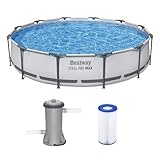
Bestway Steel Pro MAX 12' x 30" Above Ground Swimming Pool Set with Pump | Check Price On Amazon |
|
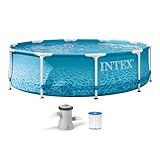
INTEX Beachside Metal Frame 10ft x 30in Round Pool Set w/Pump | Check Price On Amazon |

|
H2OGO! Kids Splash-in-Shade 8-Foot Round Steel Frame Above Ground Pool with Water Mister and Canopy Sunshade, Green Tropical Leaf Print | Check Price On Amazon |
By the Numbers
Saltwater Pool Problems — What the Research Shows
Sources: PHTA Technical Manual, manufacturer warranty data, industry service call surveys
What Makes Saltwater Pools Different and Where Problems Start
A saltwater pool still uses chlorine to sanitize water. The salt cell contains coated titanium plates that receive a low-voltage DC current. That current splits dissolved sodium chloride molecules, releasing chlorine gas that dissolves instantly into hypochlorous acid: the same active sanitizer produced by adding granular chlorine or tablets.
This electrolysis happens continuously while the pump runs and the cell is powered. The chlorine produced is fresh, unstabilized, and has no cyanuric acid bound to it. That is both an advantage and the source of several unique problems.

- Intelligent Navigation with Full Coverage: Equipped with 11 high-precision sensors and enhanced dual-path algorithms. The optimized WavePath cleaning pattern ensures systematic coverage with minimal overlap, while adaptive navigation analyzes pool layout in real time to eliminate missed spots
- Dual Filtration for Crystal-Clear Water: Advanced dual-layer filtration system features a replaceable 3-micron ultra-fine filter paired with a 180-micron standard filter. Effectively captures fine dust, sand, leaves, and debris for visibly cleaner and healthier pool water
- Comprehensive Pool Cleaning: Engineered to clean the pool floor, walls, waterline, and shallow areas (above 12 inches). The Caterpillar Treads system enhances mobility and climbing ability, ensuring thorough coverage across all pool zones
- Reliable Performance with 2-Year Warranty: Trusted by over 500,000 pool owners worldwide, this robotic pool cleaner delivers consistent, high-performance results. Built for durability and backed by a 2-year warranty and responsive customer support for worry-free ownership
Traditional chlorine pools add stabilized chlorine (trichlor or dichlor) that brings cyanuric acid with every dose. Saltwater pools produce pure chlorine gas. That means CYA must be added separately and monitored independently. If CYA drops too low, the sun burns off chlorine in hours. If CYA climbs too high from occasional stabilized shock use, the free chlorine becomes chemically locked and ineffective against algae.
The continuous chlorine production also means pH trends upward relentlessly. The electrolysis process generates sodium hydroxide as a byproduct, which raises pH steadily. A saltwater pool owner who ignores pH for two weeks can find the reading at 8.0 or higher. At that pH, 50% of the free chlorine converts to the less active hypochlorite ion, cutting sanitizing power in half without changing the chlorine ppm reading at all.
The Most Common Saltwater Pool Problems by Frequency
Service call data from pool companies across Florida, Texas, Arizona, and California reveals a consistent pattern. Salt cell scaling is the number one problem, accounting for roughly 40% of saltwater-specific service calls. Low free chlorine despite normal salt levels comes second at about 25%. Metal staining and corrosion complaints make up 15%. The remaining 20% splits across control board failures, flow sensor errors, and incorrect salt readings.
Each problem has a specific chemical or mechanical cause. None are random. Understanding the mechanism behind each failure lets you prevent it rather than just reacting after damage occurs.
Salt Cell Scaling: The Number One Saltwater Pool Problem
Calcium carbonate scale forms on salt cell plates when water chemistry drifts outside the Langelier Saturation Index target range. The electrolysis process creates a high-pH micro-environment directly between the titanium plates. If the pool water already carries high calcium hardness and elevated pH, calcium carbonate precipitates directly onto the plate surfaces.
This happens because the localized pH at the cathode plate surface can exceed 10 during electrolysis, even when bulk pool water measures 7.5. Calcium ions that remain dissolved in the main body of water crash out of solution in this high-pH zone. The scale builds layer by layer, narrowing the gap between plates, reducing chlorine output, and eventually causing the cell to overheat and fail.
The condition required for scaling is specific: calcium hardness above 400 ppm combined with pH consistently above 7.8 and total alkalinity above 120 ppm. If all three conditions are present, scale forms rapidly. Remove even one condition and the cells stay clean.
Key Specifications for Scale Prevention:
- Calcium hardness: 200 to 400 ppm (ideal 250 to 350 for saltwater)
- pH: 7.4 to 7.6 maximum (do not allow drift above 7.8)
- Total alkalinity: 80 to 100 ppm (lower than the traditional 80 to 120 recommended for non-salt pools)
- LSI target: -0.3 to 0.0 for saltwater pools with SWCG
If your salt cell develops white, crusty deposits between the plates, the fix is a mild acid cleaning with a 4:1 water to muriatic acid solution. Soak the cell for 5 to 10 minutes until the bubbling stops. Rinse thoroughly with fresh water. But acid cleaning degrades the catalyst coating on the titanium plates. Each cleaning shortens the cell’s remaining life by several months. Prevention through water balance is always cheaper than repeated acid cleaning.
Use a liquid drop test kit with salt testing capability to monitor calcium hardness weekly during swim season. Digital salt meters give fast readings but calibrate them against a drop test monthly.
Low Free Chlorine Despite Normal Salt Levels
A salt cell producing adequate chlorine but the pool showing zero or very low free chlorine is the most confusing problem for new saltwater pool owners. The salt level reads 3,200 ppm. The cell display shows it is generating. Yet the free chlorine test reads zero and the water is starting to cloud. This has three primary causes, and they are testable in ten minutes.
Cause one: cyanuric acid has dropped below 30 ppm. Without CYA protection, the intense midday sun destroys freshly generated chlorine faster than the cell can produce it. The cell works perfectly. There is simply no chlorine staying in the water long enough to register. Test CYA with a turbidity test. Target 60 to 80 ppm for saltwater pools in full sun. Add granular cyanuric acid through the skimmer at a rate of 1 lb per 10,000 gallons to raise CYA by 12 ppm.
Cause two: the cell output percentage is set too low for the bather load and water temperature. Most SWCG systems default to 50% output. In summer with water above 85°F and heavy pool use, that setting may only maintain 1 ppm free chlorine. Increase output in 10% increments every 24 hours until free chlorine holds steady at 3 to 5 ppm with CYA at 60 to 80 ppm.
Cause three: phosphates above 200 ppb feed an invisible algae demand that consumes chlorine as fast as the cell produces it. Test phosphates with a colorimeter or a phosphate test kit. If phosphates exceed 200 ppb, treat with a lanthanum-based phosphate remover dosed per the label instructions. Run the filter continuously for 48 hours after treatment and clean or backwash the filter afterward.
Metal Staining and Corrosion: The Hidden Salt Problem
Salt is sodium chloride. The chloride ion is corrosive to metals. A saltwater pool at 3,200 ppm salt has roughly the same chloride concentration as human tears. That is one-tenth the salinity of seawater. Yet even at this low concentration, chloride ions attack unprotected metals through a process called crevice corrosion, where chloride concentrates in small gaps and pits metal surfaces.
Pool heaters with copper heat exchangers are especially vulnerable. The combination of warm water, chloride ions, and low pH accelerates copper corrosion dramatically. Within two to three seasons, a copper heat exchanger in a saltwater pool with pH below 7.2 can develop pinhole leaks. The same corrosion releases copper ions into the water, which then stain pool surfaces and turn blond hair green.
The fix for existing metal stains begins with identifying the metal. Ascorbic acid (vitamin C) removes iron stains. Citric acid or oxalic acid removes copper stains. Place a few vitamin C tablets directly on a stain. If it lifts in 30 seconds, the stain is iron. If it does not lift with vitamin C but does with a citric acid paste, it is copper.
A metal sequestrant based on HEDP or phosphonic acid binds dissolved metals and prevents them from depositing on surfaces. For pools with known metal content in fill water, maintain a maintenance dose of sequestrant weekly. The alternative is a sacrificial zinc anode installed in the plumbing, which attracts corrosive galvanic current to itself instead of to the heater and other metal components.
Myth vs Fact
Saltwater Pools — Common Myths Debunked
Separating fact from fiction on the most common saltwater pool misconceptions
✗ Myth
Saltwater pools are chlorine-free and maintenance-free.
✓ Fact
Saltwater pools produce chlorine through electrolysis. The chlorine produced is identical to traditional chlorine. Saltwater pools still require weekly pH testing, CYA monitoring, calcium hardness management, and periodic shock treatments. Salt cells also require cleaning and eventual replacement at $400 to $900.
✗ Myth
If the salt cell is working, free chlorine should always be perfect.
✓ Fact
A functioning cell can still produce zero measurable chlorine in the pool if CYA is below 30 ppm (UV destruction outpaces production), phosphates exceed 200 ppb (algae consumes it instantly), or the pump run time is too short to produce enough chlorine for the bather load.
✗ Myth
Acid washing a scaled salt cell is harmless routine maintenance.
✓ Fact
Muriatic acid dissolves both calcium scale and the ruthenium-iridium catalyst coating on the titanium plates. Each acid cleaning strips nanometers of catalyst, reducing cell efficiency permanently. A cell cleaned 3 times per season instead of being protected by balanced water may last only 3 years instead of 5 to 7.
✗ Myth
Saltwater pools do not need shock treatments.
✓ Fact
The SWCG handles daily sanitization but cannot oxidize accumulated bather waste fast enough after heavy use. Combined chlorine (chloramines) still forms and requires shock oxidation to destroy. Use non-chlorine shock (potassium monopersulfate) or boost the cell to super-chlorinate mode for 24 hours after heavy bather loads.
✗ Myth
Any pool salt works fine in a salt chlorine generator.
✓ Fact
Pool salt must be at minimum 99% pure sodium chloride (NaCl) with no iodine, anti-caking agents, or iron. Water softener salt may contain iron that stains surfaces. Rock salt contains calcium sulfate and silica that foul cells. Only use salt labeled specifically for swimming pool salt chlorine generators.
Salt Cell Problems: Scaling, Cleaning, and Replacement
The salt cell is the most expensive consumable component in a saltwater pool system. Replacement cells cost $400 to $900 depending on brand and capacity. Every day the cell operates outside ideal water chemistry, its lifespan shortens. Understanding the exact failure mechanisms protects that investment.
The cell plates are titanium coated with a thin layer of ruthenium and iridium oxides. This catalyst coating makes the electrolysis reaction efficient at low voltage. When scale covers the plates, the coating is physically blocked from contacting water. The control board detects reduced conductivity and increases voltage to compensate. Higher voltage accelerates coating degradation even as it temporarily restores chlorine output.
The condition for this destructive cycle is specific: LSI above +0.3 combined with calcium hardness above 400 ppm. The cycle breaks when calcium hardness drops below 400 ppm or pH stays consistently between 7.4 and 7.6. If LSI cannot be brought into range by adjusting pH and alkalinity, partial drain and refill to reduce calcium hardness is the only permanent fix.
If the cell is already scaled, use a salt cell cleaning stand to hold the cell vertically during acid cleaning. Pour the 4:1 water to muriatic acid solution into the cell and watch for bubbling. When bubbling stops, the scale is dissolved. Empty immediately. Do not leave acid in the cell beyond when bubbling stops, as it then attacks the catalyst coating directly.
Flow Sensor and Control Board Errors
Modern SWCG systems include a flow sensor that prevents the cell from energizing when the pump is off. A failed flow sensor causes either a no-flow error (cell not producing when it should) or fails to detect low flow (cell operates dry and overheats). Flow sensors fail from debris accumulation on the sensor paddle, corrosion of the sensor wire connections, or failure of the reed switch inside the sensor housing.
Before replacing a flow sensor, remove it and clean the paddle and housing with a soft brush. Check the wire connections at both the sensor and the control board for corrosion. A digital multimeter can test continuity across the flow sensor terminals. If the switch does not close when the paddle is manually moved, the sensor is faulty and requires replacement.
Control board failures often trace to power surges, loose connections, or a failing cell that draws excessive current. The most common symptom is a blank display or an error code that persists after resetting power. Check the internal fuse on the control board first before assuming board failure. A blown fuse costs $2 to replace. A new control board costs $300 to $600.
How to Fix Water Chemistry Problems in Saltwater Pools
Saltwater pool chemistry differs from traditional pool chemistry in three critical ways. The pH rises continuously due to sodium hydroxide production at the cathode. Cyanuric acid must be managed independently since the cell produces unstabilized chlorine. And total alkalinity should be maintained slightly lower, around 80 to 100 ppm, to buffer pH without accelerating the upward pH drift that high alkalinity causes.
The most effective strategy for saltwater pool chemistry is simple: test pH twice weekly, adjust with muriatic acid to hold 7.4 to 7.6, test CYA monthly and maintain 60 to 80 ppm, and test calcium hardness monthly keeping it between 200 and 400 ppm. Salt level testing is monthly during swim season using either a digital salt meter or salt test strips calibrated to the cell’s own reading. Accurate chemical dosing depends on knowing your pool’s exact volume; if you’re unsure, use a pool volume calculator to confirm your gallons before adjusting.
When salt levels drift too low or too high, the cell either underproduces chlorine or shuts down entirely. Low salt below 2,700 ppm causes the cell to work harder, generates excess heat, and shortens plate life. High salt above 3,400 ppm triggers the high-salt alarm on most controllers and may damage the power supply. Add salt in 40-lb increments, broadcast across the deep end, and brush to dissolve. Wait 24 hours with the pump running before retesting. To determine exactly how much salt you need based on your pool size and current reading, use a pool salt calculator.
Results
What Changes When You Fix Saltwater Pool Chemistry
Before and after comparison of a saltwater pool with correct water balance versus neglected chemistry
Before
- ✗Salt cell caked with white calcium scale every 4 to 6 weeks
- ✗pH at 8.0+ requiring constant acid addition
- ✗Free chlorine at 0.5 ppm despite cell at 100% output
- ✗Eye irritation and strong chlorine smell from chloramines
- ✗Copper staining on steps and around returns
After
- ✓Salt cell plates remain clean for entire season with zero acid washes
- ✓pH stable at 7.5 with only minor weekly acid adjustments
- ✓Free chlorine steady at 4 ppm with cell at 40 to 50% output
- ✓Crystal clear water with no odor or eye irritation
- ✓Metal surfaces protected by balanced LSI and zinc anode
The difference is entirely in weekly testing and maintaining LSI between -0.3 and 0.0, not in expensive equipment changes.
Saltwater Pool Equipment Failures and How to Prevent Them
The salt cell is not the only equipment vulnerable in a saltwater pool. Pumps, heaters, and even stainless steel components face accelerated degradation when water chemistry is neglected. The chloride ion at 3,200 ppm is aggressive toward metals, and the continuous upward pH drift creates conditions that damage equipment through scaling and corrosion simultaneously.
Pool heaters with copper heat exchangers are the most expensive equipment casualty. A replacement heat exchanger costs $800 to $1,500 installed. The mechanism is straightforward: chloride ions in warm, acidic water strip the protective oxide layer from copper tubing. Pitting begins at grain boundaries in the copper. Within one to two seasons, pinhole leaks develop. The heater then leaks water into the combustion chamber, destroying the burner assembly.
Prevention requires three steps. First, maintain pH between 7.4 and 7.6 at all times. Second, install a sacrificial zinc anode in the plumbing bonded to the bonding wire. The zinc corrodes instead of the copper. Third, check the anode every six months and replace it when 50% consumed. An anode costs $30 to $50. A heat exchanger costs 20 times that.
Stainless steel pool ladders, handrails, and light rings also suffer in saltwater pools. The grade of stainless steel matters here. 304 stainless steel, common in pool accessories, is vulnerable to chloride stress corrosion cracking. 316 stainless steel, which contains molybdenum, resists chloride attack much better. When replacing rusted pool hardware in a saltwater pool, specify 316 stainless steel or marine-grade components.
Step-by-Step Troubleshooting Guide for Saltwater Pools
Step-by-Step Guide
How to Troubleshoot a Saltwater Pool That Is Not Producing Chlorine — Step by Step
8 steps · About 30 minutes to complete diagnosis
Test salt level with a calibrated meter
The cell needs 2,700 to 3,400 ppm salt. Below 2,700 ppm, chlorine output drops sharply. Above 3,400 ppm, most controllers shut down. Compare your meter reading against the cell’s onboard salt reading if available.
Inspect the cell for scale buildup
Remove the cell and look between the plates with a flashlight. White crusty deposits indicate calcium scaling. Thin white film is normal. Thick, flaky deposits that bridge between plates indicate the cell needs cleaning.
Check CYA level
CYA below 30 ppm means UV destroys chlorine faster than the cell produces it. Test CYA using the turbidity test method. Target 60 to 80 ppm. Add granular CYA through the skimmer at 1 lb per 10,000 gallons to raise CYA by 12 ppm.
Test phosphates
Phosphates above 200 ppb feed algae that consumes chlorine continuously. Use a phosphate test kit or take a sample to a pool store. Treat with lanthanum-based phosphate remover if reading exceeds 200 ppb.
Verify pump run time is sufficient
The cell only produces chlorine when the pump runs. For a 20,000-gallon pool with a typical SWCG, 8 to 10 hours of pump runtime at adequate flow is needed in summer. Increase run time in 2-hour increments if chlorine is low.
Check for combined chlorine buildup
Test total chlorine and free chlorine. If total exceeds free by more than 0.5 ppm, combined chlorine has accumulated. Shock the pool with non-chlorine oxidizer or use the super-chlorinate boost mode to burn off chloramines.
Inspect the flow sensor
Remove the flow sensor and clean debris from the paddle. Test continuity with a multimeter. If the switch does not close when the paddle moves, replace the sensor. A failed flow sensor prevents the cell from energizing.
Check cell voltage and amperage on the control board display
Most control boards display cell voltage and current. Typical operating values are 22 to 28 volts DC at 4 to 8 amps depending on salt level and water temperature. Low amperage with normal voltage indicates a failing cell nearing end of life.
If all eight steps check out and the cell still produces inadequate chlorine, the cell itself has likely reached end of life. Cell plates thin over time as the catalyst coating erodes. A cell that once needed 50% output to maintain 4 ppm chlorine and now requires 100% output for 1 ppm is failing. Order a replacement salt cell compatible with your SWCG brand before it fails completely, which typically happens mid-summer when demand is highest.
Seasonal Saltwater Pool Maintenance to Prevent Problems
Saltwater pools follow a different seasonal rhythm than traditional pools. Opening procedures must account for cold water chemistry, which suppresses the conductivity salt cells need. Closing procedures must protect the expensive cell from freezing damage. Getting either wrong means equipment damage and a green opening.
Opening and closing a saltwater pool correctly prevents most of the problems that appear in the first weeks of swim season. Cold water below 60°F reduces the cell’s chlorine output dramatically. Most SWCG systems shut down automatically below 50 to 55°F to protect the cell. Until water temperature rises above 60°F, use granular chlorine or liquid chlorine to maintain sanitation.
At opening, test salt level before turning on the cell. Winter dilution from rain and snow melt can drop salt 500 to 1,000 ppm below the fall reading. Add salt to reach the manufacturer’s target before running the cell. Test and adjust CYA, which also drops over winter from dilution. Target 60 ppm minimum before relying on the cell for daily chlorine production.
At closing, remove the salt cell and store it indoors where it cannot freeze. Water trapped inside a cell that freezes will crack the plastic housing and destroy the titanium plates. Install a dummy bypass pipe in the cell’s place if the plumbing requires it for winter circulation. A salt cell bypass pipe costs $30 to $60 and protects a $600 cell.
When to Call a Professional vs DIY Saltwater Pool Repair
Most saltwater pool chemistry problems are solvable by an owner with a good test kit and patience. Water balance adjustments, salt additions, CYA correction, phosphate treatment, and cell cleaning are all DIY tasks. The limiting factor is not skill but having accurate test results and following dosing instructions precisely.
Electrical problems with the control board, persistent error codes after resetting, and cell replacement where the new cell requires programming are situations where a professional pool technician saves money in the long run. A misdiagnosed control board replaced unnecessarily costs $400 to $600. A technician with diagnostic equipment can test the board output and confirm the cell is receiving correct voltage before condemning either component.
For converting an existing chlorine pool to saltwater, the equipment selection and plumbing modifications benefit from professional installation. The cell must be sized correctly for the pool volume, the power center needs a dedicated electrical circuit, and the cell housing must be plumbed after the heater but before any chemical feeders. A cell that is undersized by 25% will never keep up in summer and will fail early from running at 100% output continuously.
When a saltwater pool develops a strong chlorine smell, the cause is not excess chlorine but combined chlorine from bather waste that the cell cannot oxidize fast enough. This is a chemistry problem, not an equipment problem. The fix is shock oxidation, either with the super-chlorinate boost mode or with a non-chlorine shock product, not turning down the cell output.
Frequently Asked Questions About Saltwater Pool Problems
Why does my saltwater pool keep turning green even though the salt cell shows it is working?
Quick Answer: A working salt cell with green water indicates either CYA below 30 ppm (chlorine destroyed by UV before sanitizing), phosphates above 200 ppb (algae consuming chlorine as fast as produced), or the cell output percentage too low for current water temperature and bather load. Test CYA, phosphates, and free chlorine at dawn before sun hits the water to isolate the cause.
Green water in a saltwater pool with a functioning cell almost always traces to insufficient active chlorine reaching the algae. The cell may produce chlorine, but UV destruction or algae consumption depletes it before it can kill. Increase pump run time to 12 hours, boost cell output by 20%, and shock with a non-chlorine oxidizer. If green persists, test phosphates and treat if above 200 ppb.
Can I use regular pool shock in a saltwater pool?
Quick Answer: Yes, but avoid calcium hypochlorite (cal-hypo) shock if calcium hardness is already above 400 ppm, as it adds calcium and worsens scaling. Use sodium hypochlorite (liquid chlorine) or potassium monopersulfate (non-chlorine shock) instead. Trichlor shock adds CYA and should be limited to situations where CYA is below target.
Non-chlorine shock based on potassium monopersulfate is the preferred choice for saltwater pools because it oxidizes bather waste without adding calcium, CYA, or excess salt. It also activates at lower concentrations and does not produce the chloramine odor that chlorine shock generates. Dose at 1 lb per 10,000 gallons for routine oxidation after heavy swim loads. Use a pool shock calculator to determine the exact amount needed for your pool volume and the type of shock you’re using.
How often should I clean my salt cell?
Quick Answer: Only when visible scale deposits are present, not on a fixed schedule. With balanced water (LSI -0.3 to 0.0, calcium 200 to 400 ppm, pH 7.4 to 7.6), a salt cell may go an entire season without cleaning. Inspect every 3 months during swim season. Clean only when white crust is visible between plates.
Over-cleaning with acid is the most common cause of premature cell failure. Each acid wash removes catalyst coating. A cell cleaned four times per season when only one cleaning was needed may lose two years of its expected lifespan. If your cell needs cleaning more than twice per season, your water chemistry needs adjustment, not more frequent cleaning.
What is the difference between a saltwater pool and a chlorine pool in terms of problems?
Quick Answer: Saltwater pools eliminate the need to buy, store, and handle chlorine chemicals, but introduce salt cell scaling, pH drift from sodium hydroxide production, and metal corrosion risk from chloride ions. Traditional pools avoid these three problems but require regular chemical purchases and have their own issues with cyanuric acid buildup from stabilized chlorine use.
Saltwater pool problems tend to be equipment-focused (cell, flow sensor, control board) while traditional pool problems tend to be chemistry-focused (CYA creep, pH bounce from different chlorine products, algae from inconsistent chlorination). A saltwater pool owner checks a cell display. A traditional pool owner checks a test kit. Both approaches succeed with consistent attention.
Why does my salt cell say low salt when I just added salt?
Quick Answer: Freshly added salt requires 24 hours with the pump running to fully dissolve and distribute. Testing immediately after adding salt gives falsely low readings. Cold water below 60°F also causes low salt readings because conductivity decreases with temperature. Wait 24 hours, brush any visible salt piles, then retest.
If the low salt warning persists after 24 hours with adequate circulation, the cell’s salt sensor may need calibration. Compare a handheld digital salt meter reading against the cell’s display. If they disagree by more than 300 ppm, consult the manufacturer’s calibration procedure. Some systems allow manual calibration. Others require replacing the flow sensor assembly, which contains the salt sensing thermistor.
Can I drain my saltwater pool onto my lawn or into the street?
Quick Answer: No. Saltwater at 3,200 ppm kills grass, ornamental plants, and aquatic life in storm drains. Most municipalities prohibit saltwater discharge into storm sewers. Drain saltwater pools into the sanitary sewer cleanout on your property, or use a submersible pump to distribute water slowly across a gravel area far from plants and water bodies.
Salt accumulation in soil prevents plants from absorbing water through osmosis. Even after the water evaporates, salt crystals remain in the soil. One 20,000-gallon saltwater pool contains roughly 530 lbs of dissolved salt. Discharging that volume onto a lawn applies the equivalent of salting a driveway for ice control across a 50 by 50 foot area.
How do I know if my salt cell needs replacement?
Quick Answer: Three signs indicate end of life: the cell requires 100% output to maintain chlorine that previously needed 50%, the control board displays low amperage at normal voltage, or the cell fails to produce any chlorine despite clean plates, correct salt, and adequate flow. Most cells last 5 to 7 years with proper water chemistry.
Test the cell by running it at 100% output for 24 hours and measuring free chlorine before and after. If the increase is less than 1 ppm in a pool with CYA at 60 to 80 ppm and no algae demand, the cell output is critically low. The control board display showing amperage below 3 amps with salt at 3,200 ppm and water at 75°F confirms the plates are worn out.
Does a saltwater pool need algaecide?
Quick Answer: A properly maintained saltwater pool with free chlorine at 3 to 5 ppm and CYA at 60 to 80 ppm should not need routine algaecide. However, a weekly maintenance dose of a polyquat-based algaecide provides insurance during periods of heavy use, extreme heat, or when the cell output is temporarily limited by cold water.
Algaecide adds cost but prevents the much larger cost of clearing a green pool: multiple shock treatments, phosphate remover, clarifier, filter cleaning, and lost swim days. A quart of 60% polyquat algaecide costs about $20 and provides 4 to 6 weekly doses for a 20,000-gallon pool. Reserve copper-based algaecides for severe outbreaks only, as copper accumulates and eventually stains surfaces.
Why is my saltwater pool pH always high?
Quick Answer: The electrolysis process in the salt cell produces sodium hydroxide at the cathode, which raises pH continuously. This is an inherent feature of salt chlorine generation, not a defect. Counter it by testing pH twice weekly and adding muriatic acid as needed. Maintaining total alkalinity at 80 to 100 ppm reduces the rate of pH rise.
Sodium hydroxide is a strong base. Every chlorine molecule produced leaves behind one sodium hydroxide molecule in solution. Over a week of operation, this adds enough hydroxide to push pH from 7.5 to 8.0 in a typical 20,000-gallon pool. Adding 16 to 20 ounces of 31.45% muriatic acid per week for a 20,000-gallon pool is normal and expected. For more precise dosing based on your pool’s pH level, use a swimming pool pH calculator. If pH rise exceeds this rate, total alkalinity is likely too high.
Can I switch back from a saltwater pool to a traditional chlorine pool?
Quick Answer: Yes. Remove the salt cell and install a bypass pipe. Stop adding salt. The existing salt level of 2,700 to 3,400 ppm will slowly dilute through splash-out and backwashing over one to two seasons. The salt concentration does not interfere with traditional chlorine chemicals. You can use any chlorine product immediately.
The only equipment consideration is the heater. If you installed a cupronickel or titanium heat exchanger specifically for saltwater use, it works equally well with traditional chlorine. If you have a standard copper heat exchanger that has been exposed to saltwater for several seasons, have it inspected for pitting before switching back. The damage, if any, has already occurred and switching does not reverse it.
What causes cloudy water in a saltwater pool even with good chlorine readings?
Quick Answer: Cloudy water with adequate free chlorine indicates either high pH (above 7.8 causing calcium to precipitate as fine particles), high total alkalinity (above 120 ppm), or dead algae debris that chlorine killed but the filter has not yet removed. Test pH and alkalinity first, then check filter pressure and clean or backwash if 25% above clean baseline PSI.
If pH and alkalinity are in range and the filter is clean, the cloudiness is likely micro-particulate matter that sand filters struggle to capture. Add a pool clarifier to coagulate fine particles into larger clumps the filter can trap. Run the pump continuously for 48 hours after adding clarifier. For severe cloudiness, a small dose of pool flocculant followed by vacuuming to waste clears water in 24 hours.
How does water temperature affect my salt chlorine generator?
Quick Answer: Salt cells produce less chlorine in cold water because conductivity decreases as temperature drops. Most cells shut down automatically below 50 to 55°F. Chlorine demand also drops in cold water, so this self-limiting feature rarely causes problems. In spring and fall when water is 60 to 70°F, increase pump run time or supplement with liquid chlorine if the cell cannot maintain target levels.
The cell’s onboard temperature sensor protects the plates from operating in cold water where gas production efficiency is poor and voltage requirements are higher. Forcing a cell to operate below its temperature cutoff risks plate damage. During early spring opening, use granular dichlor shock for the first week to build CYA and provide sanitation until water warms above 60°F.
Do I need a special filter for a saltwater pool?
Quick Answer: No. Standard sand, cartridge, and DE filters all work correctly with saltwater pools. The salt concentration of 3,200 ppm is not corrosive to filter tanks, internal components, or filter media. The filter’s function is mechanical removal of particles, which is unaffected by dissolved salt.
Some manufacturers market saltwater-specific filters with corrosion-resistant internals, but this is primarily a marketing distinction for pools with salt levels above 4,000 ppm, which exceeds normal SWCG operating range. Standard pool-grade filters from Hayward, Pentair, and Jandy are rated for salt concentrations up to 5,000 ppm. Replace filter media at standard intervals: sand every 5 to 7 years, cartridges every 1 to 2 years, DE grids every 5 to 8 years.
Conclusion
A saltwater pool rewards consistent, small adjustments with years of soft-feeling water and reduced chemical handling. The problems that do arise are specific, testable, and fixable. Salt cell scaling, low chlorine from CYA or phosphate issues, and pH drift are the three most common failures, and all three are preventable with weekly testing of four parameters: free chlorine, pH, salt level, and CYA.
When the cell plates stay clean, the CYA holds at 60 to 80 ppm, and the pH stays between 7.4 and 7.6, a salt cell delivers 5 to 7 years of trouble-free chlorine production. Keep a complete drop test kit with salt and CYA capabilities on hand, test weekly, and address small chemistry shifts before they become expensive equipment failures.
| Photo | Best Above-Ground Pools | Price |
|---|---|---|
|
|
Bestway Steel Pro MAX 12' x 30" Above Ground Swimming Pool Set with Pump | Check Price On Amazon |
|
|
INTEX Beachside Metal Frame 10ft x 30in Round Pool Set w/Pump | Check Price On Amazon |
|
|
H2OGO! Kids Splash-in-Shade 8-Foot Round Steel Frame Above Ground Pool with Water Mister and Canopy Sunshade, Green Tropical Leaf Print | Check Price On Amazon |