
Standing water on a pool cover is one of the most common and damaging problems pool owners face during the off-season. Just 2 inches of water across a standard 16×32-foot pool cover weighs over 1,000 pounds, enough to stress cover anchors, collapse a winter cover, and introduce serious safety risks. A pool cover pump removes that standing water automatically or manually, protecting your cover investment and keeping debris out of the pool below.
This guide explains exactly what a pool cover pump does, whether your specific setup needs one, how to choose the right model, and how to use it correctly from installation through storage.
| Photo | Best Above-Ground Pools | Price |
|---|---|---|
|
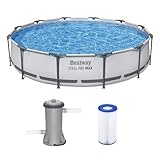
Bestway Steel Pro MAX 12' x 30" Above Ground Swimming Pool Set with Pump | Check Price On Amazon |
|
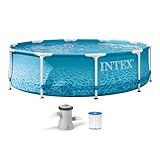
INTEX Beachside Metal Frame 10ft x 30in Round Pool Set w/Pump | Check Price On Amazon |

|
H2OGO! Kids Splash-in-Shade 8-Foot Round Steel Frame Above Ground Pool with Water Mister and Canopy Sunshade, Green Tropical Leaf Print | Check Price On Amazon |
What Is a Pool Cover Pump and How Does It Work?
A pool cover pump (also called a cover drain pump or submersible sump pump for pool covers) is a low-profile electric pump designed to sit directly on top of a pool cover and remove accumulated water. It draws standing water through an intake and discharges it away from the pool through an attached discharge hose, typically 25 to 50 feet long.
Pool cover pumps operate in two main modes. Manual pumps require you to turn them on and off yourself. Automatic pumps use a float switch or sensor that activates the motor when water depth reaches approximately 2 inches and shuts off when the surface is dry.
A automatic pool cover pump typically moves between 250 and 1,800 gallons per hour (GPH), depending on the motor wattage and pump design. Most residential pool cover pumps run on standard 120-volt household current and draw 60 to 150 watts. The pump body sits flat on the cover surface, and the float switch hangs from the side to detect water level without tangling in the cover material.
The discharge hose connects to a threaded outlet on the pump and directs water to a nearby garden bed, storm drain, or lawn area. The pool cover pump is a type of submersible pump, meaning it operates while fully submerged in water rather than above the surface.
Do You Need a Pool Cover Pump?
Whether you need a pool cover pump depends on your cover type, your climate, and how much rain or snowmelt your region receives during the pool’s closed season. Not every pool owner requires one, but the situations that make a pump necessary are very common.
The following comparison identifies which setups benefit most from a dedicated cover pump and which can manage without one.
Product Comparison
Pool Cover Types – Do You Need a Pump?
Cover type versus pump necessity across key factors
| Factor | Solid Winter Cover | Mesh Safety Cover |
|---|---|---|
| Water accumulation | Collects heavily on surface | Drains through mesh slowly |
| Pump necessity | Essential | Not required in most cases |
| Anchor stress risk | High without pump | Low (mesh allows drainage) |
| Snow and ice risk | Cover collapse possible | Structural frame handles load |
| Debris entering pool | Minimal if pump used | Some fine debris passes through |
| Recommended pump type | Automatic submersible | Optional manual pump |
You Need a Pool Cover Pump If You Have a Solid Winter Cover
Solid winter covers (also called tarp-style winter covers or above-ground winter covers) do not allow water to pass through. Every rainstorm, snowmelt, and dew cycle deposits water directly onto the cover surface, and that water has nowhere to go without a pump.

- Intelligent Navigation with Full Coverage: Equipped with 11 high-precision sensors and enhanced dual-path algorithms. The optimized WavePath cleaning pattern ensures systematic coverage with minimal overlap, while adaptive navigation analyzes pool layout in real time to eliminate missed spots
- Dual Filtration for Crystal-Clear Water: Advanced dual-layer filtration system features a replaceable 3-micron ultra-fine filter paired with a 180-micron standard filter. Effectively captures fine dust, sand, leaves, and debris for visibly cleaner and healthier pool water
- Comprehensive Pool Cleaning: Engineered to clean the pool floor, walls, waterline, and shallow areas (above 12 inches). The Caterpillar Treads system enhances mobility and climbing ability, ensuring thorough coverage across all pool zones
- Reliable Performance with 2-Year Warranty: Trusted by over 500,000 pool owners worldwide, this robotic pool cleaner delivers consistent, high-performance results. Built for durability and backed by a 2-year warranty and responsive customer support for worry-free ownership
A solid 16×32-foot cover holding just 3 inches of water supports roughly 1,500 pounds of load. Without a submersible pool cover pump, that weight can tear the cover material, pull anchors out of the deck, or in severe cases cause a cover to collapse into the pool. Water also creates a stagnant breeding environment for mosquito larvae within 72 hours of accumulation at temperatures above 50 degrees Fahrenheit.
Mesh Safety Covers and When a Pump Still Helps
Mesh safety covers (rated to ASTM F1346 standards for child and pet safety) are designed with small perforations that allow rainwater and snowmelt to drain through slowly into the pool. This built-in drainage means most mesh cover owners do not need a dedicated cover pump running all winter.
However, a pump is still useful with mesh covers in two situations. First, if debris accumulates on the mesh and blocks the drainage pores, surface water will pool up. Second, if your pool deck has poor drainage and water flows back onto the cover from surrounding surfaces, a pump prevents those secondary accumulations from damaging the cover material. Owners of a high-quality pool safety cover with quality mesh will find a pump is rarely needed but worth keeping on hand for unusually wet winters.
Automatic vs Solid Covers for In-Ground Pools
Automatic pool covers (motorized covers that roll across the water surface) present a unique pumping challenge. These covers are essentially solid vinyl panels that collect water aggressively. Most automatic cover manufacturers either include a drain kit in the cover system or explicitly recommend a dedicated automatic electric cover pump rated for at least 1,000 GPH.
Running an automatic pool cover without water management damages the cover’s drive mechanism and can exceed the structural limits of the reel assembly. A dedicated automatic cover pump with float switch is standard equipment for any automatic cover installation.
What Are the Key Specifications to Look for in a Pool Cover Pump?
Pool cover pumps vary significantly in flow rate, construction material, cord length, and float switch design. Choosing the wrong pump for your pool size or climate costs money twice: once on the initial purchase and again when you replace a cover damaged by inadequate pumping.
The Pool and Hot Tub Alliance (PHTA) recommends selecting a cover pump capable of removing a full accumulation of water within 8 hours for pools under 20,000 gallons and within 12 hours for larger pools. For most residential applications, this means selecting a pump rated between 800 and 1,800 GPH.
Flow Rate (GPH) and Your Pool Cover Size
Flow rate in gallons per hour (GPH) is the single most important specification for a cover pump. A pump that moves too little water falls behind heavy rain events and allows dangerous weight to accumulate. A pump that is oversized for a small cover will drain the cover dry and run the motor without water, a condition called dry running that burns out pump seals in under 30 minutes.
Use this calculation to match flow rate to your cover size. Multiply your cover’s square footage by 0.623 to find the gallons per inch of water depth. For a 20×40-foot cover (800 square feet), 1 inch of water equals approximately 498 gallons. Three inches of water equals approximately 1,494 gallons. A 750 GPH pump would need 2 hours to clear that load, which is acceptable. A 1,500 GPH pump handles the same load in 1 hour, providing a meaningful safety margin during heavy rain events.
Float Switch Type and Activation Depth
Float switches activate the pump motor when water depth exceeds a preset threshold. Most automatic pool cover pumps activate at approximately 1.5 to 2 inches of standing water and shut off when water depth drops below 0.5 inches. The float switch design determines reliability, and this is where many budget pumps fail.
Vertical float switches hang from the pump body on a tether and bob up with rising water. These are simple and reliable but can tangle on cover debris. Integrated electronic float switches use a sealed sensor inside the pump body and activate based on water resistance detection. These are more expensive but offer better reliability in leaf-covered or debris-heavy conditions. Always choose a pool cover pump with a float switch rather than a manual pump unless you plan to check the cover daily.
Cord Length and Outlet Placement
Pool cover pumps require access to a GFCI-protected outdoor electrical outlet (ground fault circuit interrupter), which is required by the National Electrical Code (NEC) Article 680 for any outlet within 20 feet of a pool water surface. Most pool cover pumps include a 25-foot power cord, but pools surrounded by decking may require a 40-foot extension cord rated for outdoor wet-location use.
Never use a standard indoor extension cord with a pool cover pump. The cord must carry a “W” suffix in its rating (indicating outdoor wet-location approval) and be rated for the pump’s amperage draw. A 120-watt pump drawing 1 ampere requires a minimum 16-gauge outdoor extension cord for runs up to 50 feet.
Discharge Hose Length and Direction
The discharge hose connects to the pump’s output port (typically 3/4 inch or 1-1/4 inch fitting) and carries water away from the pool area. Most pumps include a 25-foot discharge hose. Discharge water must flow away from the pool cover, away from pool equipment, and away from areas where it will drain back toward the cover.
Directing discharge water into a storm drain, garden bed, or lawn area more than 10 feet from the pool edge prevents re-accumulation. Avoid directing discharge toward pool equipment pads, as repeated wetting of electrical components around pumps, heaters, and automation systems accelerates corrosion. A replacement discharge hose for pool cover pumps typically costs $8 to $20 and is worth purchasing as a spare before the season begins.
The following chart shows how pump flow rate needs scale with common residential pool cover sizes, giving you a clear reference before purchasing.
Quick Reference
Pool Cover Size vs Recommended Pump Flow Rate
Minimum GPH to clear 3 inches of standing water within 8 hours. Source: PHTA residential pool guidelines and pump manufacturer sizing charts.
How to Set Up and Use a Pool Cover Pump
Setting up a pool cover pump correctly takes less than 10 minutes, but skipping any step leads to either a pump that runs dry or one that fails to remove water fast enough to protect the cover. The following process applies to automatic submersible cover pumps, which are the type most pool owners should use.
The step-by-step process below walks you through setup, positioning, discharge routing, and seasonal storage so your pump works correctly every time.
Step-by-Step Guide
How to Set Up and Use a Pool Cover Pump
8 steps · Estimated setup time: 10 minutes
Attach the discharge hose to the pump outlet
Thread the hose fitting onto the pump’s 3/4-inch or 1-1/4-inch outlet port and hand-tighten. Do not use plumber’s tape on submersible pump fittings unless specified by the manufacturer, as over-sealing can restrict flow at the fitting junction.
Route the discharge hose away from the pool
Lay the discharge hose across the deck and direct it toward a lawn, garden bed, or storm drain at least 10 feet from the pool edge. Secure the hose end with a hose stake or weighted object to prevent it from moving during operation and redirecting water back toward the pool.
Place the pump in the lowest area of the cover
Water always pools at the lowest point of the cover. Set the pump flat in that depression so the float switch hangs freely on the side without resting on the cover surface. If the lowest point is not obvious, place the pump at the center of the cover and observe where water migrates after the next rain.
Connect the power cord to a GFCI-protected outlet
Plug the pump’s 25-foot power cord into an outdoor GFCI outlet as required by NEC Article 680. If the nearest outlet is more than 25 feet away, use an outdoor-rated, wet-location extension cord marked with a “W” suffix and rated for the pump’s amperage draw. Never use an indoor-rated extension cord near pool water.
Test the float switch before relying on it for the season
With the pump in place and plugged in, manually lift the float switch upward to simulate a rising water level. The pump motor should activate within 2 to 3 seconds. Release the float and confirm the motor shuts off when the float drops. If it does not respond, check that the power cord is fully seated and the GFCI outlet has not tripped.
Verify water is discharging from the hose end
During the first rain event after installation, check that water flows actively from the discharge hose end and not from any fitting connection along the hose. A leaking hose fitting will direct water back onto the cover or pool deck rather than away from the pool, defeating the pump’s purpose entirely.
Check the pump position monthly during the closed season
Cover sag, wind, and debris accumulation can shift a pump from its optimal position over the winter months. A monthly check takes 5 minutes and confirms the float switch is still hanging freely, the discharge hose is still directed away from the pool, and no debris has wedged under the pump body and elevated it above the water surface.
Remove, rinse, and store the pump at pool opening
When the cover comes off in spring, unplug the pump, detach the discharge hose, and rinse both with fresh water to remove algae, mineral deposits, and debris. Allow both to dry completely before storing in a dry location. Storing a wet pump in a sealed bag or closed box causes internal corrosion that shortens motor life significantly.
How to Choose the Right Pool Cover Pump for Your Setup
The best pool cover pump for your pool depends on four variables: your cover type, your pool’s surface area, your local rainfall intensity during the closed season, and whether you will be present to monitor the pump or need fully automatic operation. Budget-tier pumps rated at 250 to 500 GPH work for small above-ground pools in mild climates. Automatic pumps rated at 1,000 to 1,800 GPH are the correct choice for any inground pool over 400 square feet of cover area in a climate that receives more than 30 inches of annual precipitation.
Use the interactive tool below to find the right pump recommendation for your specific pool and climate combination.
Interactive Tool
Find the Right Pool Cover Pump for Your Pool
Answer 2 questions to get a personalized pump recommendation.
Above-Ground Pool Cover Pumps
Above-ground pools (typically 12 to 24 feet in diameter for round pools, or 12×24 to 18×36 feet for oval pools) use solid winter covers secured with a cable and winch system or water bags around the perimeter. These covers sag significantly under water accumulation because they lack the structural anchor system of inground solid covers.
A above-ground pool cover pump rated at 350 to 750 GPH is typically adequate for pools under 18 feet in diameter. The pump body height matters for above-ground applications: a pump taller than 2 inches may tip on a sagging cover and allow the float switch to activate incorrectly. Choose a low-profile pump design with a base diameter larger than the pump body height for above-ground installations.
Inground Pool Cover Pumps
Inground pool covers, both solid winter covers and ASTM-rated mesh safety covers, cover larger surface areas and are typically installed under more tension using deck anchors and springs. Solid inground covers accumulate the same water volumes as above-ground covers but have more structural margin before failure because the anchoring system is embedded in the concrete deck.
For inground pools, the best pool cover pump options are reviewed in detail at this guide covering the best pool cover pumps for inground applications, including flow rate comparisons and float switch reliability ratings. Inground pools over 16×32 feet typically require a pump rated at 1,000 GPH minimum to manage post-storm water volumes within a safe timeframe.
Common Pool Cover Pump Problems and How to Fix Them
Pool cover pumps fail in predictable ways. Understanding the causes of the four most common failure modes lets you fix problems in minutes rather than losing a cover to water damage while troubleshooting.
Myth vs Fact
Pool Cover Pumps – Common Misconceptions Debunked
Separating fact from fiction on the most common pool cover pump mistakes and misunderstandings
Myth
Leaving the pump running after the cover is dry does not damage anything.
Fact
Running a submersible pump dry for more than 20 to 30 minutes destroys the mechanical seal around the impeller shaft. Most pump manufacturers explicitly void warranties for dry-run damage. Automatic float switches prevent this, which is why they are strongly recommended over manual pumps.
Myth
Any outdoor extension cord works with a pool cover pump.
Fact
NEC Article 680 requires GFCI protection for all outlets within 20 feet of pool water. The extension cord must also be rated for outdoor wet-location use (marked with a “W” suffix) and sized appropriately for the pump’s amperage draw. An undersized extension cord creates voltage drop that reduces pump performance and generates heat in the cord.
Myth
Mesh safety covers never need a pump because the mesh drains everything.
Fact
Mesh covers drain passively under normal conditions, but leaf accumulation blocks the drainage pores and causes surface water to pool. In climates with heavy leaf fall and rainfall, mesh covers can hold 2 to 4 inches of standing water that a pump needs to remove. Monthly visual inspection is still necessary.
Myth
A higher GPH pump is always better, regardless of pool size.
Fact
An oversized pump on a small cover drains the surface dry quickly and may cycle on and off repeatedly as the float switch responds to tiny amounts of accumulated water. Frequent short cycles shorten motor life. Match GPH to cover size and expected water accumulation volume for the longest pump service life.
Myth
You can use your regular pool circulation pump to remove cover water.
Fact
Your pool circulation pump (the main inground pool pump or above-ground pool pump) is connected to the pool’s plumbing and filtration system, not to the cover surface. It cannot physically reach standing water on top of a closed cover. A dedicated submersible cover pump is the only practical solution for cover water removal.
Pump Runs But No Water Comes Out
When a cover pump motor runs but the discharge hose produces no water, the most common cause is a clogged intake screen. Pool cover pumps draw water through a screen on the pump base, and leaves, algae, or debris can block this screen completely within a single storm season. Unplug the pump, lift it from the cover, and rinse the intake screen under running water until clear.
The second cause is a kinked or blocked discharge hose. A hose that has been stepped on, folded, or frozen can block flow completely even though the motor runs freely. Run your hand along the full hose length to feel for kinks and straighten them. Frozen discharge hose sections in below-freezing temperatures can block flow permanently if the hose material cracks, requiring hose replacement.
Float Switch Activates but Pump Does Not Start
If the float switch lifts and nothing happens, check the GFCI outlet first. GFCI outlets trip automatically when they detect a ground fault, which can occur simply from moisture in the outlet housing during wet weather. Press the “reset” button on the GFCI outlet face and retry. If the outlet trips immediately again, discontinue use and have a licensed electrician inspect the outlet and circuit before reconnecting the pump.
If the GFCI outlet resets and holds, the problem is likely a failed float switch or a burned motor from a previous dry-run event. Float switch assemblies on most pumps are replaceable for $10 to $25. Motor failures require complete pump replacement. A replacement float switch kit is worth keeping as a spare for automatic pumps that are more than two seasons old.
Pump Cycles On and Off Repeatedly Without Draining
Rapid cycling occurs when the pump activates, drains a small amount of water, shuts off, and then the water redistributes back across the cover to where the pump is sitting and re-activates the float. This is a positioning problem, not a mechanical failure. Move the pump to the absolute lowest point on the cover where water naturally accumulates, and confirm that the pump base is resting flat and not elevated on any debris that keeps the float switch artificially triggered.
Rapid cycling also occurs when the discharge hose outlet is too close to the pool edge and water flows back toward the cover. Extend the hose further from the pool to a true drainage point. Rapid cycling shortens motor life significantly, so correct positioning at installation prevents this problem entirely.
Pump Pushes Water Onto Pool Deck Instead of Away
This happens when the discharge hose works free from its secured position and curls back toward the pool or the pump outlet fitting leaks at the connection point. Re-route and re-stake the hose, and check the fitting connection. If the fitting leaks at the threaded joint, unscrew the hose, wrap the threads with two wraps of PTFE thread seal tape, and reattach. A hose repair kit addresses any splits or cracks in the discharge hose body itself.
Pool Cover Pump Safety Requirements
Electrical safety around pool cover pumps follows the same governing framework as all pool electrical equipment. The National Electrical Code (NEC), specifically Article 680, governs all electrical installations within and around swimming pools. Pool cover pump installations must comply with these requirements regardless of whether the pump is a seasonal or permanent installation.
Key safety requirements include: all outlets used for cover pumps must be GFCI-protected and rated for outdoor wet-location use; extension cords must carry outdoor wet-location ratings; no pump cord or hose should cross a path where a person might trip while the cover is loaded with water; and the pump should be unplugged and removed from the cover before anyone walks on or near the cover to inspect it.
Pool electrical safety also involves the broader topic of pool bonding and grounding, which protects swimmers from stray electrical currents in the water. If you are curious about how your pool’s electrical system connects all equipment from pumps to lights, the detailed explanation of pool bonding and grounding requirements covers what NEC Article 680 requires and why it protects everyone who uses the pool.
How Long Does a Pool Cover Pump Last?
A pool cover pump operated correctly, meaning it never runs dry, is stored properly between seasons, and is used with GFCI protection, typically lasts 3 to 5 years. Budget-tier pumps priced under $40 often fail within 1 to 2 seasons due to lower-quality motor seals and float switch assemblies. Mid-range pumps priced between $50 and $90 provide the best balance of reliability and cost for most residential applications. Premium pumps priced above $90 offer higher-quality motor windings, corrosion-resistant housings, and better float switch designs that extend service life to 5 to 8 years under normal conditions.
The single factor that shortens pump life most is dry running. A pump that operates without water for 30 or more minutes burns out the mechanical seal and begins pulling water back through the seal into the motor housing. Once this happens, motor failure follows within days. Automatic float switches prevent dry running by design, which is why they extend pump service life compared to manual operation where the operator may forget to turn the pump off.
Pool Cover Pump vs Manual Water Removal Methods
Some pool owners attempt to remove cover water using a siphon hose, a hand pump, or by carefully tilting the cover to one side. These methods are physically demanding, slow, and ineffective for large accumulations. A manual siphon moves approximately 60 to 120 GPH compared to 750 to 1,800 GPH for an electric submersible pump. Clearing 1,500 gallons from a 16×32 solid cover using a manual siphon takes 12 to 25 hours. The same job takes 1 to 2 hours with an appropriately sized electric pump.
Tilting a loaded cover to drain water over the edge introduces the risk of the cover sliding partially into the pool, dragging debris and accumulated contaminants into the pool water. It also places extreme stress on cover anchors during the tilting process. A dedicated submersible pool cover pump priced at $50 to $90 pays for itself in the first season by preventing even one instance of cover damage from water weight.
When to Replace Your Pool Cover Pump
Replace your pool cover pump when any of the following conditions occur: the motor runs but produces significantly less water volume than in previous seasons (indicating impeller wear or seal degradation); the pump requires manual GFCI resets more than once per season (indicating electrical insulation breakdown); the float switch fails to activate consistently at 2 inches of water depth after replacement of the float switch assembly; or visible corrosion appears on the motor housing or electrical fitting.
Do not attempt to repair the motor internals of a submersible cover pump. The cost of motor repair parts typically exceeds the cost of a new pump at the mid-range price tier. For pumps that are still functional but showing age, the practical approach is to purchase a replacement pump at the beginning of a new closed season rather than waiting for a complete failure during a winter storm event when the cover is fully loaded.
Integrating Your Pool Cover Pump with Your Pool’s Main Pump System
Your pool cover pump and your pool’s main circulation pump are entirely separate systems with no shared plumbing or electrical connections. The main inground pool pump (or above-ground pool pump) handles filtration and circulation during the swimming season. The cover pump handles water management during the closed season.
During the closed season, your main pool pump should be completely shut down, winterized, and in most climates removed from the equipment pad or drained per the manufacturer’s winterization guidelines. The cover pump operates independently from a separate GFCI outlet. If you are evaluating your main pool circulation pump for replacement or upgrade and want to understand how to size it correctly for your pool volume and filtration requirements, the guide covering the best inground pool pumps covers flow rate sizing, variable speed options, and energy efficiency ratings in detail.
For above-ground pool owners, the same separation applies. Your above-ground pool pump handles filtration during the swim season and is disconnected at closing. If your above-ground pump is due for replacement, comparing options before the next season opens is worth the time. The review of the best pool pumps for above-ground pools covers sizing, horsepower ratings, and compatibility with common above-ground pool filter setups.
To budget for winterization services and supplies, try our Swimming Pool Winterization Cost Calculator.
Variable Speed Pool Pumps and Cover Pump Compatibility
If your pool uses a variable speed pump (VSP) for main circulation, this does not affect your cover pump selection or operation in any way. The cover pump is a separate submersible unit that operates on standard 120-volt current. Your variable speed circulation pump operates on 230-volt power through the pool’s main electrical panel and is completely disconnected during the closed season.
Variable speed pumps offer significant energy savings during the swim season by running at lower RPM for filtration cycles and higher RPM only when needed for backwashing or water features. If you have a variable speed pump and want to optimize its programming for maximum energy efficiency during the swim season, the step-by-step walkthrough on how to program a variable speed pump covers speed settings, timer configuration, and schedule optimization for different pool sizes and climates.
Frequently Asked Questions About Pool Cover Pumps
How much water can a pool cover hold before it becomes dangerous?
Quick Answer: A standard solid winter cover begins experiencing dangerous stress when water accumulates to 4 to 6 inches deep across the cover surface, creating loads of 2,000 to 3,000 pounds on a 16×32-foot cover. Most cover anchors and water bag systems are rated for a maximum load of 1,500 to 2,000 pounds before failure risk increases significantly.
The practical threshold for pumping is 2 inches of standing water, not because structural failure is imminent at that depth, but because pumping at 2 inches keeps accumulation well within safe limits and prevents the weight from stressing anchor hardware over repeated cycles. An automatic pump that activates at 2 inches maintains the cover in a safe range year-round without requiring owner intervention.
Can I leave my pool cover pump outside all winter?
Quick Answer: Yes, pool cover pumps are designed for outdoor winter use while actively installed on a pool cover. However, if you remove the pump during a dry period or for inspection, store it indoors rather than leaving it on a cold deck, because freeze-thaw cycles cause cracking in pump housings and hose fittings not protected by water.
Most submersible cover pumps operate in water temperatures down to 32 degrees Fahrenheit, but frozen discharge hose sections can block flow and force the motor to work against backpressure. In climates where temperatures drop below 20 degrees Fahrenheit for extended periods, adding a hose insulation sleeve to the first 3 feet of discharge hose near the pump prevents freeze-blockage at the fitting.
How often should I check my pool cover pump during the winter?
Quick Answer: Monthly visual inspection is the minimum for any pool cover pump installation. After any storm event that delivers more than 2 inches of rain or any significant snowmelt event, check within 24 to 48 hours to confirm the pump activated and the discharge hose is still directed correctly.
Monthly checks take 5 minutes: confirm the power cord is still plugged into the GFCI outlet, the float switch is hanging freely, the discharge hose is still routed away from the pool, and no visible debris has accumulated under or around the pump body. If the cover has significant leaf accumulation on top, clear the debris from around the pump to ensure the float switch operates without obstruction.
Can a pool cover pump damage the cover material?
Quick Answer: No, a properly installed pool cover pump does not damage the cover material. The pump body rests flat on the cover surface without sharp edges, and the intake draws water from directly below the pump rather than suctioning the cover material. Damage occurs only if the pump is an incorrect size and too heavy for the cover material, or if the intake screen creates suction against a thin cover membrane.
Choose a pump whose base dimensions and weight are appropriate for your cover material thickness. Budget-tier solid covers with thinner vinyl material (6 to 10 mil) benefit from a pump with a wider base to distribute weight. Premium solid covers with 16 to 20 mil material handle standard pump weights without concern. If you’re thinking about upgrading your cover, our Pool Cover Cost Calculator can help you estimate the investment.
What happens if my pool cover pump fails during a heavy rain event?
Quick Answer: If the pump fails during active rain accumulation, remove as much water as possible using a manual siphon hose or wet-dry shop vacuum while you source a replacement pump. Do not attempt to drain the cover by tilting it over the pool edge, as this introduces contaminants and risks pulling the cover partially into the pool.
A replacement pump can typically be sourced from a local pool supply retailer, a home improvement store, or through overnight shipping from an online retailer for $40 to $90. Keep the model number of your current pump noted somewhere accessible so you can order an exact replacement quickly when needed. Alternatively, a submersible utility pump rated for outdoor use works as a temporary replacement in emergency situations even if it is not specifically designed for pool covers.
Does a pool cover pump work on frozen water or ice?
Quick Answer: No. Pool cover pumps cannot move frozen water or pump through ice layers. The pump intake requires liquid water to function. If water on your cover freezes into a solid layer, do not operate the pump until the ice melts. Running the pump motor against a frozen intake screen or through ice-blocked plumbing causes immediate motor damage.
If ice forms on your cover, wait for temperatures to rise above 32 degrees Fahrenheit and allow natural thawing. Do not pour hot water on the ice to accelerate thawing, as sudden temperature changes can crack cover material. A thin layer of ice on a well-secured cover is not structurally dangerous during freezing temperatures because the water is not adding liquid weight to the load. The danger arises when ice melts and becomes liquid again, which is when the pump must activate promptly.
Is a pool cover pump the same as a sump pump?
Quick Answer: A pool cover pump is a type of submersible sump pump, but the two are not interchangeable in practice. Standard residential sump pumps designed for basement use are typically too large, too heavy, and too powerful for pool cover applications. They sit on hard surfaces and draw water from a pit, while pool cover pumps are specifically designed to rest on flexible vinyl or mesh surfaces and respond to shallow water depths of 1 to 3 inches.
Pool cover pumps are optimized for low water depth activation (as shallow as 1 inch), low profile construction, and lightweight design that does not stress flexible cover material. A standard sump pump typically requires 4 to 6 inches of water depth before the float activates, which exceeds safe cover load limits for most residential installations.
How do I winterize and store a pool cover pump at pool opening?
Quick Answer: Unplug the pump, remove it from the cover, and detach the discharge hose. Rinse the pump body and intake screen with fresh water to remove algae and mineral scale. Rinse the hose completely and hold one end up to drain all water from the hose interior. Allow both the pump and hose to dry for 24 to 48 hours before storage in a dry location.
Store the pump and hose in a mesh bag or open container that allows any residual moisture to continue evaporating. Sealed bags trap moisture and accelerate internal corrosion. Before storing, inspect the power cord for any cracking or damage from UV exposure or cold temperatures during the winter. Replace the cord or pump if damage is visible rather than storing a compromised unit and discovering the problem at the start of the next closed season.
Can I use my pool cover pump to drain the pool itself?
Quick Answer: Technically, a submersible pool cover pump can move water out of a pool, but it is not designed for this use. At 750 to 1,800 GPH, draining a 20,000-gallon pool would take 11 to 27 hours of continuous operation, which exceeds the duty cycle most cover pumps are built for. Additionally, pool water contains chemicals including chlorine, cyanuric acid, and calcium hardness levels that degrade pump seals faster than clean cover water. If you need to determine your pool’s exact gallonage, you can use our Pool Volume Calculator to find out exactly how many gallons your pool holds.
Use a dedicated submersible sump pump or a trash pump for pool draining. These units are built for continuous high-volume operation and handle chemically treated water without accelerated seal degradation. Pool draining also requires directing discharge to an appropriate municipal waste system connection rather than a lawn or garden, as highly chlorinated discharge water damages plant material and can violate local discharge regulations.
What is the difference between a 120-volt and 240-volt pool cover pump?
Quick Answer: Almost all residential pool cover pumps operate on standard 120-volt (North American household current) and do not require dedicated electrical circuits or special outlets beyond GFCI protection. There are no common residential pool cover pumps that require 240-volt power. If you encounter a 240-volt pump marketed for pool covers, this is almost certainly a commercial or industrial unit not appropriate for residential cover applications.
The 240-volt distinction matters most for your pool’s main circulation pump and heat pump heater, both of which typically require dedicated 240-volt circuits. Your cover pump plugs into a standard 120-volt outdoor GFCI outlet with no additional electrical infrastructure required.
Will a pool cover pump remove all the water or leave a residue?
Quick Answer: Most automatic pool cover pumps remove water down to approximately 1/4 inch depth before the float switch deactivates. This thin residual moisture layer typically evaporates within 24 to 48 hours in most climates. The pump cannot physically remove the last fraction of an inch of water because the float switch shuts the motor off before the pump runs dry.
This residual moisture is not a structural concern for the cover. The functional goal of a cover pump is to remove the bulk of standing water quickly enough to keep total load below dangerous thresholds, not to achieve a completely dry cover surface at all times.
Can I put a pool cover pump on a timer instead of using a float switch?
Quick Answer: Using a mechanical outlet timer instead of an automatic float switch is not recommended because precipitation patterns are unpredictable. A timer set to run the pump at fixed intervals may activate when there is no water on the cover (causing dry running and motor damage) or may not activate during an off-schedule storm event (allowing dangerous accumulation).
If you prefer not to use a float switch, the correct alternative is a smart outlet device that you can activate remotely via smartphone when you observe rain in your area. This approach avoids dry running while maintaining remote manual control. However, an automatic float switch remains the simplest, most reliable, and most cost-effective solution for unattended winter water management.
How do I prevent algae growth in standing water on my pool cover?
Quick Answer: The most effective prevention is removing standing water before it sits long enough for algae to establish, which requires 72 or more hours at temperatures above 50 degrees Fahrenheit. An automatic pump that activates at 2 inches of water prevents the long stagnant periods that algae require.
If your cover develops green algae growth in persistent water pockets, adding a small amount of pool algaecide (quaternary ammonium algaecide, commonly called quat algaecide) to the standing water before pumping reduces algae in the water before it contacts your pool at opening. Use 4 ounces of pool algaecide per 100 gallons of standing cover water. Pump after treatment rather than before to reduce algae transfer into the pool during cover removal.
Does where I place the pump matter that much?
Quick Answer: Yes, placement is critical. A pump placed at any point other than the absolute lowest depression of the cover will allow water to accumulate in the low spot while the pump sits in a drier area, possibly never activating. On a new cover installation, wait for the first rain and observe exactly where water migrates before finalizing pump placement.
On covers with multiple low points (common on large inground pools where the cover develops multiple sag points under water weight), position the pump at the deepest depression. If water accumulates simultaneously at two separate locations that are more than 10 feet apart, a second pump may be necessary. Dual-pump setups are common on pools larger than 20×40 feet with significant cover sag.
Pool Cover Pump Buying Checklist
Use the checklist below to confirm you have evaluated every critical factor before purchasing a pool cover pump for your pool.
Buying Guide
Before You Buy – Pool Cover Pump Checklist
Check off each point before making your purchase decision.
Final Thoughts on Pool Cover Pumps
A pool cover pump is essential equipment for any pool owner using a solid winter cover, and optional but useful for mesh cover owners in wet climates. The right pump, positioned correctly and connected to a GFCI-protected outlet, removes standing water automatically without any ongoing effort on your part.
Choose an automatic submersible pump rated for your cover size. A 1,000 GPH pump handles most residential inground pools with solid covers adequately, and a 750 GPH model covers most above-ground pools. Spend 10 minutes positioning it correctly at installation, test the float switch before relying on it, and plan for monthly winter inspections.
For specific product recommendations across budget, mid-range, and premium categories, the detailed review of the best pool cover pumps covers tested options with real flow rate data and float switch reliability comparisons to help you find the right model for your pool.
| Photo | Best Above-Ground Pools | Price |
|---|---|---|
|
|
Bestway Steel Pro MAX 12' x 30" Above Ground Swimming Pool Set with Pump | Check Price On Amazon |
|
|
INTEX Beachside Metal Frame 10ft x 30in Round Pool Set w/Pump | Check Price On Amazon |
|
|
H2OGO! Kids Splash-in-Shade 8-Foot Round Steel Frame Above Ground Pool with Water Mister and Canopy Sunshade, Green Tropical Leaf Print | Check Price On Amazon |