
Mineral pool systems use silver and copper ions to sanitize water through a process called oligodynamic action, where metal ions at concentrations between 0.2 and 0.4 parts per million (ppm) for copper and 0.02 to 0.05 ppm for silver disrupt microbial cell walls and halt reproduction. These systems do not eliminate the need for chlorine entirely, but they do allow pool owners to maintain free chlorine at 0.5 ppm rather than the 1 to 3 ppm required in a standard chlorine pool.
The result is significantly lower chemical demand, less eye and skin irritation, and reduced chloramine formation. This guide covers exactly how mineral sanitization works, which systems perform best, how to set correct ion levels, and what problems to watch for.
| Photo | Best Above-Ground Pools | Price |
|---|---|---|
|
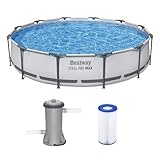
Bestway Steel Pro MAX 12' x 30" Above Ground Swimming Pool Set with Pump | Check Price On Amazon |
|
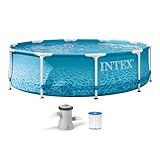
INTEX Beachside Metal Frame 10ft x 30in Round Pool Set w/Pump | Check Price On Amazon |

|
H2OGO! Kids Splash-in-Shade 8-Foot Round Steel Frame Above Ground Pool with Water Mister and Canopy Sunshade, Green Tropical Leaf Print | Check Price On Amazon |
BY THE NUMBERS
Mineral Pool Sanitization – What the Research Shows
Sources: PHTA Operator Manual, CDC Healthy Swimming Program, NSF/ANSI 50, Pool and Spa News
What Is a Mineral Pool System and How Does It Work?
A mineral pool system is a water sanitization method that releases copper and silver ions into pool water using an electrolytic or sacrificial anode process, reducing reliance on traditional chlorine by 50 to 80 percent depending on the system and pool conditions. The system works by passing pool water over or through a mineral cartridge or electrode, where low-voltage electricity oxidizes a copper-silver alloy or blended mineral media to release ions at a controlled rate.
Copper ions are the primary algaecide in these systems, effective at concentrations of 0.2 to 0.4 ppm. Silver ions provide bactericidal action at 0.02 to 0.05 ppm by binding to bacterial DNA and preventing cellular replication.

- Intelligent Navigation with Full Coverage: Equipped with 11 high-precision sensors and enhanced dual-path algorithms. The optimized WavePath cleaning pattern ensures systematic coverage with minimal overlap, while adaptive navigation analyzes pool layout in real time to eliminate missed spots
- Dual Filtration for Crystal-Clear Water: Advanced dual-layer filtration system features a replaceable 3-micron ultra-fine filter paired with a 180-micron standard filter. Effectively captures fine dust, sand, leaves, and debris for visibly cleaner and healthier pool water
- Comprehensive Pool Cleaning: Engineered to clean the pool floor, walls, waterline, and shallow areas (above 12 inches). The Caterpillar Treads system enhances mobility and climbing ability, ensuring thorough coverage across all pool zones
- Reliable Performance with 2-Year Warranty: Trusted by over 500,000 pool owners worldwide, this robotic pool cleaner delivers consistent, high-performance results. Built for durability and backed by a 2-year warranty and responsive customer support for worry-free ownership
Ionization is a type of supplemental sanitization. It works with a residual halogen (chlorine or bromine) rather than replacing it entirely, which is a point many product descriptions understate.
The oligodynamic effect, the antimicrobial property of heavy metal ions, was documented as early as the late 19th century by Swiss botanist Karl Wilhelm von Nägeli. Modern pool mineral systems apply this principle using certified electrode assemblies that meet NSF/ANSI 50 standards for pool and spa equipment.
Two delivery mechanisms exist for residential pools. The first is an in-line ionizer, which installs directly into the pool’s return plumbing and uses a controller to regulate ion output based on flow rate and pool volume. The second is a floating mineral cartridge or purifier, such as the Nature2 or Frog system, which releases minerals passively as water passes through.
Silver and Copper Ions: What Each One Does in Pool Water
Copper ions (Cu2+) at 0.2 to 0.4 ppm act as a broad-spectrum algaecide by binding to the phospholipid membranes of algae cells, disrupting enzyme activity and causing cell death. Silver ions (Ag+) at 0.02 to 0.05 ppm are the bactericidal component, effective against a wide range of pathogens including Pseudomonas aeruginosa, Staphylococcus aureus, and certain strains of E. coli, according to EPA-registered antimicrobial data for silver-based systems.
Copper is not effective against bacteria at pool-safe concentrations, and silver is not effective against algae at those same levels. The two ions work together as a dual-action sanitization pair, which is why mineral systems always deliver both elements in combination.
Neither ion addresses organic waste, swimmer contamination, or combined chlorine (chloramines) on its own. This is the reason a residual halogen between 0.5 and 1.0 ppm remains mandatory even in a fully optimized mineral pool.
According to the CDC Healthy Swimming Program, no alternative sanitization technology including ionization, UV, or ozone is currently approved as a standalone replacement for halogen-based disinfection in recreational water. Chlorine or bromine must remain present at measurable levels to meet public health standards.
The table below summarizes the functional role of each ion and its target concentration range for a residential pool.
| Ion | Target Range (ppm) | Primary Function | Maximum Safe Limit (ppm) |
|---|---|---|---|
| Copper (Cu2+) | 0.2 to 0.4 | Algaecide | 1.0 (EPA drinking water limit) |
| Silver (Ag+) | 0.02 to 0.05 | Bactericide | 0.1 (EPA drinking water limit) |
| Chlorine (residual) | 0.5 to 1.0 | Oxidizer and primary disinfectant | 4.0 (CDC recommended max) |
Types of Mineral Pool Systems: In-Line Ionizers, Cartridges, and Combination Units
Mineral pool systems fall into three categories: electrolytic in-line ionizers, passive mineral cartridge systems, and combination units that pair mineral delivery with a salt chlorine generator or UV sanitizer. Each type differs in how ions are generated, how output is controlled, and what maintenance the system requires.
Electrolytic In-Line Ionizers
An electrolytic in-line ionizer installs into the pool’s return plumbing after the filter and uses a low-voltage DC current, typically 24 volts, to oxidize a copper-silver alloy electrode and release ions into the water stream. The controller adjusts output based on a timer or flow sensor, and most residential units are rated for pools between 10,000 and 40,000 gallons.
Popular in-line ionizer models include the Remington Solar Pool Ionizer and comparable units from Floatron and AquaPure. These systems require periodic electrode replacement, typically every 2 to 3 years depending on pool volume and output settings.
In-line ionizers offer the most precise ion control because output can be set to a specific percentage and adjusted seasonally. They are better suited to pools above 20,000 gallons where passive cartridge delivery rates may be insufficient to maintain target ppm levels consistently.
Passive Mineral Cartridge Systems
Passive mineral cartridges, such as the Nature2 Express or the King Technology FROG Mineral System, install inside the filter housing or skimmer basket and release copper and silver ions as water flows through without requiring any electrical connection or controller. These systems are significantly easier to install than in-line ionizers and are the most common choice for above-ground pools and entry-level mineral conversions.
The Nature2 cartridge is rated for pools up to 25,000 gallons and requires replacement every 4 to 6 months, or at the start of each swim season. Ion output in passive cartridge systems is determined entirely by water flow rate and cannot be adjusted independently.
Combination Mineral and Salt Systems
Combination units integrate a mineral cartridge or electrode with a salt chlorine generator (SWCG) in a single housing, delivering both ion-based sanitization and electrolytically generated chlorine. The FROG @ease system for above-ground pools and the Zodiac Nature2 Fusion in-line unit for inground pools are examples of this format.
Combination systems are the most complete mineral pool solution because they address all three sanitization requirements: algae control via copper ions, bacterial control via silver ions, and oxidation via generated chlorine. Pools using combination systems typically maintain free chlorine between 0.5 and 1.0 ppm rather than the 1 to 3 ppm required in a standard chlorine pool.
The table below compares all three system types across the factors that matter most for residential pool owners.
| System Type | Typical Cost | Pool Size Range | Ion Output Control | Cartridge/Electrode Life | Chlorine Still Needed? |
|---|---|---|---|---|---|
| Electrolytic In-Line | $200 to $500 | 10,000 to 40,000 gal | Adjustable via controller | 2 to 3 years | Yes, 0.5 to 1.0 ppm |
| Passive Cartridge | $30 to $80 per cartridge | Up to 25,000 gal | Flow-dependent, fixed | 4 to 6 months | Yes, 0.5 to 1.0 ppm |
| Combination Mineral/Salt | $150 to $900 | Up to 35,000 gal | Adjustable (SWCG + ions) | Per cartridge: 4 months | Generated internally |
Water Chemistry Requirements for a Mineral Pool System
A mineral pool system requires tighter water chemistry management than a standard chlorine pool because both copper and silver ions are highly sensitive to pH, total alkalinity, and calcium hardness levels. Copper ions precipitate out of solution and deposit as green or blue-green stains on pool surfaces when pH rises above 7.8, and silver ions become ineffective below pH 7.0.
The optimal pH range for a mineral pool is 7.2 to 7.6, which is narrower than the 7.2 to 7.8 range acceptable in a standard chlorine pool. Maintaining pH in this tighter window prevents staining, maximizes ion bioavailability, and keeps the residual chlorine functioning at its peak bactericidal efficiency.
Test free chlorine, pH, and total alkalinity with a liquid drop test kit like the Taylor K-2006 at least twice per week in an active mineral pool. Standard test strips do not measure copper or silver ion levels and are insufficient as the sole testing method for mineral pool management.
The following chemistry targets apply specifically to mineral pool systems and differ in several key ways from standard chlorine pool targets.
| Parameter | Standard Chlorine Pool | Mineral Pool Target | Why It Differs |
|---|---|---|---|
| Free Chlorine | 1.0 to 3.0 ppm | 0.5 to 1.0 ppm | Ions handle algae and bacteria load |
| pH | 7.2 to 7.8 | 7.2 to 7.6 | pH above 7.6 precipitates copper ions |
| Total Alkalinity | 80 to 120 ppm | 80 to 100 ppm | Lower TA reduces pH drift toward 7.8+ |
| Calcium Hardness | 200 to 400 ppm | 200 to 300 ppm | High calcium combines with copper at scale |
| Cyanuric Acid | 30 to 50 ppm | 30 to 50 ppm | No change; protects low chlorine residual |
| Copper Level | Not applicable | 0.2 to 0.4 ppm | Above 0.4 ppm increases staining risk |
Cyanuric acid (CYA) at 30 to 50 ppm is especially important in a mineral pool because the low chlorine residual of 0.5 ppm is fully consumed by UV degradation within hours without adequate stabilizer protection. Without CYA, a mineral pool running 0.5 ppm free chlorine will register zero chlorine within 4 to 6 hours of direct sunlight, leaving the water protected only by ions that cannot oxidize organic waste.
How to Set Up and Install a Mineral Pool System
Installing a mineral pool system requires five steps: calculating pool volume, selecting the correct system size, preparing water chemistry before startup, installing the unit in the return line or skimmer, and setting the controller output for your pool size and bather load. Completing these steps in order prevents the two most common startup failures: insufficient ion levels from an undersized system and immediate copper staining from imbalanced water chemistry at startup.
Before this process, measure your pool accurately. Pool volume in gallons determines everything from system sizing to chemical dosing. Calculate volume using the formula: length (feet) x width (feet) x average depth (feet) x 7.48 for rectangular pools, or multiply the result by 0.85 for oval pools.
The step-by-step widget below outlines the full installation and startup process.
Step-by-Step Guide
How to Install and Start Up a Mineral Pool System – Step by Step
8 steps – Allow 2 to 4 hours for full setup and initial chemistry balance
Calculate your pool volume in gallons
Use our pool volume calculator or the formula for your pool shape to get an accurate gallon count. Round to the nearest 1,000 gallons. Every system is rated to a maximum pool volume; exceeding that rating by more than 10% will produce ion levels below the effective threshold of 0.2 ppm copper.
Balance water chemistry before installing the system
Adjust pH to 7.2 to 7.4, total alkalinity to 80 to 100 ppm, and calcium hardness to 200 to 300 ppm before any ions enter the water. Copper ions introduced into unbalanced water with pH above 7.6 will precipitate immediately and stain pool surfaces green within 24 to 48 hours.
Apply a metal sequestrant before first ion introduction
Add a phosphate-free metal sequestrant at the dose recommended on the label for your pool volume. This chelates any existing metals in the water and prevents staining during the ion ramp-up period when copper concentrations are rising from zero to target level.
Install the mineral system in the return plumbing or skimmer
For in-line ionizers, install after the filter and heater on the return line so that ionized water is the last treatment before entering the pool. For cartridge systems, place inside the filter housing or skimmer basket per the manufacturer instructions. Verify water flow passes through the unit, not around it.
Set the controller output to 50 percent for the first 2 weeks
Starting at 50 percent output allows copper levels to build gradually toward the 0.2 to 0.4 ppm target without overshooting. Rapid ion accumulation above 0.5 ppm copper within the first 72 hours is one of the most common causes of initial staining in new mineral pool installations.
Test copper levels after 7 days with a copper-specific test kit
Use a copper-specific pool test kit to verify the level is between 0.2 and 0.4 ppm. Standard chlorine test kits do not measure copper. Adjust controller output up or down by 10 percent increments and retest every 5 to 7 days until the target range is achieved.
Establish a low chlorine residual of 0.5 to 1.0 ppm
Add enough trichlor tablets or liquid chlorine to bring free chlorine to 0.5 to 1.0 ppm. Do not exceed 1.0 ppm on a regular basis in a mineral pool because higher chlorine levels accelerate electrode erosion and shorten cartridge life by up to 30 percent.
Test and log all chemistry parameters twice per week for the first month
A log of pH, free chlorine, copper, and alkalinity readings over the first 30 days gives you the baseline data to understand your specific pool’s ion consumption rate, which varies by bather load, sunlight exposure, and source water mineral content.
Mineral Pool vs Saltwater Pool vs Standard Chlorine Pool: Key Differences
A mineral pool uses copper and silver ions as the primary sanitization support system, reducing chlorine demand to 0.5 to 1.0 ppm while a saltwater pool uses a salt chlorine generator (SWCG) to electrolyze sodium chloride into hypochlorous acid, maintaining free chlorine at 2 to 4 ppm from an internal source, and a standard chlorine pool requires manual addition of chlorine products to maintain 1 to 3 ppm free chlorine without any ion supplementation. These three systems are not competing categories, they exist on a spectrum of chemical reduction from highest to lowest chlorine reliance.
The most important distinction between mineral and saltwater systems is what is being reduced. Salt systems reduce the cost and effort of adding chlorine manually but do not reduce the actual chlorine concentration in the water. Mineral systems reduce the actual chlorine concentration needed by supplementing disinfection with ion activity.
Some pool owners combine a mineral cartridge with a saltwater chlorinator, which is the format used by the Zodiac Nature2 Fusion system. This approach layers three sanitization mechanisms: salt-generated chlorine at low output settings, copper ions for algae control, and silver ions for bacterial suppression. Pools running this combination typically operate at 0.5 ppm free chlorine with salt levels of 2,400 to 3,200 ppm, which is lower than the 3,000 to 4,000 ppm required by most standalone SWCG systems.
If you are already running a saltwater pool and are considering adding mineral sanitization, the guide on how saltwater pools and chlorine pools actually compare in real operating conditions explains the chemistry differences that affect how ions behave in each environment.
| Factor | Mineral Pool | Saltwater Pool | Standard Chlorine Pool |
|---|---|---|---|
| Free Chlorine Maintained | 0.5 to 1.0 ppm | 2.0 to 4.0 ppm | 1.0 to 3.0 ppm |
| Algae Control Primary Agent | Copper ions (0.2 to 0.4 ppm) | Chlorine | Chlorine + algaecide |
| Skin and Eye Irritation | Low (low chloramine formation) | Low to moderate | Moderate to high |
| Staining Risk | Moderate (copper if pH drifts) | Low | Low to moderate (metals) |
| Annual Chemical Cost (typical) | $200 to $400 | $100 to $300 | $400 to $800 |
| Equipment Maintenance | Cartridge every 4 to 6 months | Salt cell every 3 to 5 years | No dedicated equipment |
Common Problems with Mineral Pool Systems and How to Fix Them
The five most common problems with mineral pool systems are copper staining, green water despite active ions, low copper levels below 0.2 ppm, algae growth persisting in the presence of adequate copper, and premature electrode or cartridge depletion. Each has a specific root cause and a measurable resolution threshold.
Green or Blue-Green Pool Water
Green water in a mineral pool with a functioning ionizer is almost always caused by one of two conditions: pH above 7.6 causing copper ions to precipitate out of solution, or free chlorine below 0.3 ppm leaving the pool without an active oxidizer. Copper ions alone cannot clear a pool that is already green because they are algaestatic (they prevent growth) rather than algaecidal at the concentrations used in pool systems.
To clear an active algae bloom in a mineral pool, raise free chlorine to 10 ppm using calcium hypochlorite shock, brush all pool surfaces, run the filter continuously for 24 hours, then drop back to a 0.5 ppm maintenance level once the water clears. Copper ions will prevent re-infestation at that point, but they cannot kill an established bloom at 0.2 to 0.4 ppm.
Copper Staining on Pool Surfaces and Hair
Copper staining appears as green, blue-green, or teal discoloration on pool plaster, vinyl liner, and blonde or light-colored hair when copper ions exceed 0.5 ppm or when pH drops below 7.0 causing already-dissolved copper to become more reactive and deposit on surfaces. Hair staining from copper is a particularly common complaint from mineral pool users and is one of the most-searched troubleshooting queries in this category.
To remove copper staining from pool surfaces, lower pH to 7.0 to 7.2 and apply a vitamin C (ascorbic acid) stain remover directly to the affected area. Ascorbic acid dissolves copper deposits within 30 to 60 minutes without bleaching vinyl liners or damaging plaster. To prevent recurrence, add a copper sequestrant weekly at 8 to 16 ounces per 10,000 gallons and maintain pH strictly between 7.2 and 7.6.
Low Copper Levels Despite Running the Ionizer
Copper readings below 0.2 ppm in an operating mineral pool indicate one of four conditions: the system is undersized for the pool volume, the electrode or cartridge is depleted and due for replacement, flow rate past the electrode is too high for adequate ion extraction, or phosphate levels above 200 ppb are binding copper ions and removing them from bioavailable form. Test phosphate levels with a pool phosphate test kit if copper levels remain below target despite correct system settings.
Phosphate levels above 500 ppb significantly impair both copper ion bioavailability and overall sanitizer efficiency, and this interaction is poorly documented in most mineral pool system manuals. Apply a phosphate remover rated for your pool volume and retest copper levels 48 hours after treatment.
Algae Growth Despite Adequate Copper Levels
Persistent algae growth in a pool registering 0.2 to 0.4 ppm copper and 0.5 ppm free chlorine is almost always caused by one of two factors: cyanuric acid above 80 ppm making chlorine so stabilized that it can no longer oxidize effectively (the “CYA lock” effect), or mustard algae (Phaeophyta) rather than green algae, which requires free chlorine above 15 ppm shock treatment to eradicate regardless of ion levels. Mustard algae is often misidentified as sand or dirt on pool walls and is significantly more chlorine-resistant than common green algae (Chlorophyta).
Test CYA with a dedicated cyanuric acid test kit. If CYA exceeds 80 ppm, partial drain and refill is the only reliable correction method, as no chemical degrades CYA once it is in solution.
Premature Cartridge or Electrode Depletion
Mineral cartridges lasting fewer than 3 months when rated for 6 months are almost always being operated in a pool with free chlorine consistently above 1.5 ppm, which accelerates electrode oxidation by 40 to 60 percent compared to the rated 0.5 to 1.0 ppm operating range. High bather load above 10 swimmers per day also accelerates ion consumption by increasing the demand on the sanitization system.
Keep a log of cartridge installation dates and copper readings to identify the depletion rate in your specific pool. A pool that depletes a 6-month cartridge in 3 months is running at approximately double the manufacturer’s assumed bather load or chlorine level, which requires either a larger system or a shorter replacement schedule to maintain ion levels above 0.2 ppm consistently.
Mineral Pool Systems and Pool Surface Compatibility
Copper ions are compatible with all common pool surface materials, including gunite (concrete), fiberglass, and vinyl liner, at concentrations of 0.2 to 0.4 ppm, but the risk profile for staining differs substantially between surface types. Unpainted concrete and exposed plaster are most vulnerable to permanent copper staining because the porous surface allows ions to penetrate and bond with calcium compounds in the plaster matrix, producing stains that require acid washing to remove fully.
Fiberglass pools with gel coat surfaces are less susceptible to permanent copper bonding than plaster, but they can develop a blue-green tint on the gel coat surface when copper is consistently above 0.5 ppm. Vinyl liners are the most stain-resistant surface for mineral pool use because copper cannot penetrate the non-porous vinyl surface, and surface deposits wipe off with a diluted ascorbic acid solution.
Natural stone coping, travertine, and sandstone around the pool perimeter are highly susceptible to copper staining from splash and overflow. Apply a penetrating stone sealer to natural stone surfaces before starting a mineral system, and reapply annually to prevent ion absorption into porous stone.
Mineral Pool Systems and Swimmer Health: What the Research Shows
Swimmer health outcomes in mineral pools benefit primarily from the reduced chloramine formation that results from maintaining free chlorine at 0.5 to 1.0 ppm rather than 1 to 3 ppm. Chloramines (combined chlorine) form when free chlorine reacts with ammonia and nitrogen compounds from sweat, urine, and body oils, and they are the primary cause of pool-related eye irritation, skin redness, and respiratory symptoms in frequent swimmers, according to the CDC Healthy Swimming Program.
Lower free chlorine in mineral pools means less raw material for chloramine formation, which is the mechanism behind the commonly reported reduction in eye and skin irritation. This is not an effect of the ions themselves on swimmer comfort, it is a downstream effect of running lower chlorine levels.
The question of whether copper and silver ions at pool concentrations pose any health risk to swimmers is addressed by EPA drinking water standards, which set maximum contaminant levels at 1.0 ppm for copper and 0.1 ppm for silver. Pool mineral systems operate well below both limits, with copper at 0.2 to 0.4 ppm and silver at 0.02 to 0.05 ppm. Casual ingestion of pool water at these ion concentrations does not present a health risk for most individuals.
Pool owners with copper pipes or copper-based plumbing should be aware that source water entering the pool may already contain dissolved copper, which adds to the ion load from the mineral system. Test source water copper levels before installation and factor that baseline reading into system output settings.
Mineral Pool Maintenance Schedule: What to Do and When
A mineral pool requires a structured weekly, monthly, and seasonal maintenance schedule that differs from a standard chlorine pool primarily in the addition of copper and silver testing and cartridge monitoring. The lower chlorine residual in a mineral pool makes pH control more critical than in a standard pool, because pH drift toward 7.8 or above can disable the copper ion sanitization mechanism entirely within 24 to 48 hours.
Below is the complete maintenance schedule organized by frequency.
The seasonal timing widget below shows the full year activity cycle for mineral pool maintenance, including when to install, test, and replace components.
Seasonal Guide
Mineral Pool System – Month-by-Month Maintenance Calendar
What to do each month to keep copper and silver ion levels on target and surfaces stain-free
Peak season – increased testing frequency
Weekly tasks: Test free chlorine, pH, and total alkalinity with a liquid drop test kit. Adjust pH to 7.2 to 7.6 as needed using pH increaser (soda ash) or pH decreaser (dry acid). Test copper levels with a copper-specific kit. Add chlorine to maintain 0.5 to 1.0 ppm free chlorine.
Monthly tasks: Test cyanuric acid, calcium hardness, and phosphate levels. Add a metal sequestrant at 4 to 8 ounces per 10,000 gallons to prevent copper precipitation. Inspect electrode condition on in-line ionizers for scaling or visible depletion.
Seasonal tasks: Replace cartridge at the start of each swim season regardless of apparent condition. Inspect and clean the electrode housing on in-line systems. At pool opening, balance all chemistry parameters before restarting the mineral system. At pool closing, test copper one final time and record the value for spring startup reference.
For a complete seasonal pool opening and closing process that incorporates mineral system startup and shutdown, the full protocol for safely opening and closing a low-chlorine pool at the start and end of the season applies directly to mineral pool systems.
Mineral Pool Systems and Shocking: What Products to Use
Shocking a mineral pool requires using a non-chlorine shock (potassium monopersulfate, also called MPS or non-chlorine oxidizer) for routine oxidation, and reserving calcium hypochlorite shock at 1 pound per 10,000 gallons only for active algae blooms or following heavy bather events. Using chlorine shock routinely in a mineral pool raises free chlorine to 5 to 10 ppm temporarily, which accelerates electrode depletion and can drive pH swings that cause copper precipitation.
Non-chlorine shock (MPS) oxidizes organic waste, eliminates chloramines, and restores water clarity without raising free chlorine above the existing residual level. It is the correct weekly oxidizer for mineral pools because it does not interact with copper or silver ions and does not alter pH significantly when dosed at 1 pound per 10,000 gallons.
A potassium monopersulfate non-chlorine shock product applied every 1 to 2 weeks keeps combined chlorine (chloramines) below 0.2 ppm without disrupting the ion levels that the mineral system works to maintain.
When chlorine shock is necessary, use calcium hypochlorite shock at 68 percent rather than trichlor-based shock products. Trichlor contributes cyanuric acid with every dose, which accumulates over time and can lock chlorine activity at the low concentrations a mineral pool uses. Calcium hypochlorite shock adds no CYA. To calculate the exact amount of calcium hypochlorite shock your pool needs, use our pool shock calculator. After a chlorine shock event in a mineral pool, wait until free chlorine drops back to 1.0 ppm or below before re-entering the water. For guidance on post-shock re-entry timing, the detailed breakdown of how long to wait after pool shock before swimming safely covers the specific threshold measurements to use.
Myth vs Fact: Common Misconceptions About Mineral Pool Systems
Mineral pool systems are surrounded by a significant amount of marketing language that obscures what these systems actually do and what they cannot do. The misconceptions below are among the most widely repeated in pool owner forums, product descriptions, and retailer advice.
Myth vs Fact
Mineral Pool Systems – Common Myths Debunked
Separating fact from fiction on the most repeated mineral pool misconceptions
Myth
Mineral pools are chlorine-free pools.
Fact
Mineral pools require a chlorine residual of 0.5 to 1.0 ppm at all times. The CDC does not approve any alternative technology as a standalone replacement for halogen disinfection. Copper and silver ions supplement chlorine but do not replace it.
Myth
Copper ions will kill algae even without chlorine present.
Fact
Copper ions at 0.2 to 0.4 ppm are algaestatic, meaning they inhibit algae growth, not algaecidal at pool-safe concentrations. Without an oxidizer to destroy established cell matter, a pool with zero free chlorine will develop an algae bloom within 72 to 96 hours regardless of copper level.
Myth
Mineral pool systems work the same as natural swimming pools or “bio pools.”
Fact
Natural swimming pools (NSPs) use biological filtration through planted regeneration zones with no chemical sanitizers. Mineral pool ionization systems still rely on chemical sanitization with chlorine and introduce heavy metal ions that are incompatible with the biological ecosystems that natural pools depend on.
Myth
Higher copper levels provide better protection, so running 0.8 to 1.0 ppm copper is safer than 0.3 ppm.
Fact
Copper above 0.5 ppm provides no additional algae control benefit but substantially increases staining risk on all pool surfaces and hair. The effective algaecidal threshold for copper is 0.2 ppm. Running 0.8 ppm delivers staining risk without any proportional protection increase.
Myth
Mineral pool systems eliminate the need for weekly chemical testing.
Fact
Mineral pool systems require more frequent testing than standard chlorine pools in certain areas, specifically copper levels and pH. pH drift above 7.6 deactivates the copper ion system within hours, making twice-weekly pH testing mandatory rather than optional for any pool running a mineral sanitization system.
Cost Analysis: What a Mineral Pool System Actually Costs to Own and Operate
The total annual cost to own and operate a mineral pool system for a 20,000-gallon residential pool ranges from $280 to $600 per year in consumables (cartridges plus reduced chemical spend), compared to $400 to $800 per year in chemicals alone for a standard chlorine pool of the same size. The upfront equipment cost of $30 to $500 depending on system type means most mineral pool owners recover the initial investment within 1 to 2 swim seasons through reduced chlorine purchases.
The cost breakdown below reflects real-world operating costs across system types for a 20,000-gallon inground pool in a climate with a 5 to 6 month swim season.
Cost Reference
Mineral Pool System – Annual Operating Cost by Pool Size and System Type
All values include cartridge or electrode replacement plus chemical costs. Standard chlorine pool costs shown for comparison. Based on 5 to 6 month swim season.
| Pool Size and System Type | Upfront Cost | Annual Chemical Cost | Annual Cartridge/Electrode Cost | Total Annual Operating Cost |
|---|---|---|---|---|
| 10,000 gal – Passive Cartridge | $30 to $60 | $100 to $180 | $30 to $60 | $130 to $240 |
| 20,000 gal – Passive Cartridge | $50 to $80 | $150 to $280 | $60 to $80 | $210 to $360 Most common setup |
| 20,000 gal – In-Line Ionizer | $200 to $500 | $150 to $280 | $50 to $100 (amortized) | $200 to $380 |
| 20,000 gal – Combination Mineral/Salt | $400 to $900 | $80 to $150 | $120 to $200 | $200 to $350 |
| 20,000 gal – Standard Chlorine (no mineral) | $0 | $400 to $800 | Not applicable | $400 to $800 |
Chemical costs assume standard market pricing for trichlor tablets, shock, pH adjustment chemicals, and sequestrant. Cartridge costs reflect one to two replacements per swim season. Highlighted row is the most common residential installation scenario.
Mineral pool systems do not deliver large upfront savings, but the compounding reduction in chemical spend over 3 to 5 years makes them cost-neutral to net positive compared to a high-chlorine maintenance approach. The combination mineral and salt system carries the highest upfront investment but produces the lowest annual chemical cost of any residential pool sanitization method.
For a full picture of ongoing pool expenses including utilities, repairs, and equipment depreciation, use our pool ownership cost calculator to budget accurately.
Choosing the Right Mineral Pool System for Your Pool
Selecting the right mineral pool system depends on four factors: pool volume in gallons, existing equipment (particularly whether you already have a saltwater chlorinator), surface type, and bather load. A passive cartridge system suits above-ground pools under 20,000 gallons with low to moderate bather load. An in-line ionizer suits inground pools between 15,000 and 40,000 gallons where output control matters. A combination system suits any pool owner who wants the most complete low-chlorine solution and is willing to invest in higher upfront equipment cost.
The interactive finder below helps match pool conditions to the most appropriate system type.
Interactive Tool
Find the Right Mineral Pool System for Your Pool
Answer 2 questions to get a personalized system recommendation.
Pool owners who are also considering converting fully to a saltwater system as an alternative to adding mineral ionization should compare the long-term operating costs and commitment levels before choosing. The detailed breakdown of what pool conversion to a salt chlorinator actually requires in equipment, water preparation, and first-year chemical costs is the right starting point for that decision.
Frequently Asked Questions About Mineral Pool Systems
Do mineral pools still need chlorine?
Quick Answer: Yes. All mineral pool systems, including in-line ionizers, passive cartridges, and combination units, require a minimum free chlorine residual of 0.5 to 1.0 ppm at all times. The CDC does not recognize any supplemental technology as a complete replacement for halogen-based disinfection in recreational water.
Copper and silver ions cannot oxidize organic waste or kill all pathogens in the same way chlorine does. The ions reduce the amount of chlorine required, not the requirement itself. A mineral pool with zero free chlorine will develop a microbial and algae problem within 72 to 96 hours regardless of ion levels.
How long does a mineral pool cartridge last?
Quick Answer: A standard mineral cartridge such as the Nature2 Express lasts 4 to 6 months in a pool up to 25,000 gallons at average bather load. Cartridges deplete faster (in as little as 3 months) when free chlorine is consistently above 1.5 ppm or bather load exceeds 10 swimmers per day.
The best indicator of depletion is a copper test reading below 0.15 ppm despite the system running at the correct output setting. A cartridge that tests below this threshold for 2 consecutive weekly readings should be replaced regardless of calendar date.
What causes green stains in a mineral pool?
Quick Answer: Green staining in a mineral pool is almost always caused by copper ions precipitating out of solution when pH rises above 7.6 or when copper levels exceed 0.5 ppm. The dissolved copper bonds with calcium and carbonates in the water and deposits as a blue-green or teal residue on plaster, vinyl, and fiberglass surfaces.
To remove existing copper stains, apply vitamin C (ascorbic acid) directly to the stained area after lowering pH to 7.0 to 7.2. To prevent recurrence, hold pH strictly between 7.2 and 7.6 and apply a copper sequestrant at 8 ounces per 10,000 gallons every 2 weeks throughout the swim season.
Can I add a mineral system to an existing saltwater pool?
Quick Answer: Yes. A mineral cartridge or in-line ionizer can be added to an existing saltwater pool without removing or replacing the salt chlorine generator. In this configuration, reduce the SWCG output to 30 to 40 percent and allow the mineral ions to handle algae prevention while the salt-generated chlorine handles oxidation at 0.5 to 1.0 ppm.
The Zodiac Nature2 Fusion system is designed specifically for this integration and installs in-line between the SWCG and the pool return. Other in-line ionizers install upstream of the SWCG in the plumbing sequence.
Does a mineral pool require a special test kit?
Quick Answer: Yes. Standard chlorine test kits (including most 5-in-1 test strips) do not measure copper or silver ion levels. A copper-specific test kit or photometer capable of measuring copper in the 0 to 1.0 ppm range is required to manage a mineral pool properly.
The Taylor K-2006 liquid drop kit covers chlorine, pH, alkalinity, calcium hardness, and CYA but does not include copper testing. A separate copper test kit rated for pool water is needed for weekly copper monitoring. Some digital photometers include copper as a measured parameter and cover both copper and standard pool chemistry in one device.
Are mineral pools safe for swimmers with sensitive skin?
Quick Answer: Most swimmers with chlorine-sensitive skin report better comfort in mineral pools because the chlorine level (0.5 to 1.0 ppm) is significantly lower than in standard pools (1 to 3 ppm), reducing chloramine formation, which is the primary cause of pool-related skin and eye irritation. Copper and silver ions at target pool concentrations have not been shown to cause skin irritation in published dermatological literature.
Individuals with a documented copper allergy (a rare condition affecting fewer than 1 percent of the population) should consult a physician before swimming regularly in a copper-ionized pool. For the vast majority of swimmers, mineral pool water at correctly maintained ion levels is gentler on skin and eyes than standard chlorine pool water.
What happens if copper levels exceed 0.5 ppm in a mineral pool?
Quick Answer: Copper levels above 0.5 ppm significantly increase the risk of blue-green staining on all pool surfaces and discoloration of light-colored or bleached hair within 1 to 2 swimming sessions. There is no additional antimicrobial benefit from copper above 0.4 ppm in pool water.
If copper tests above 0.5 ppm, reduce controller output to minimum or remove the cartridge for 7 to 10 days and allow the pool’s natural ion reduction (through filter media, swimmer dilution, and backwashing) to bring the level below 0.4 ppm before resuming normal operation. Add a sequestrant immediately to prevent precipitation of the excess copper onto surfaces.
Can mineral pools cause hair to turn green?
Quick Answer: Yes, copper ions can cause blonde, bleached, or chemically treated hair to turn green when copper levels exceed 0.5 ppm, when pH drops below 7.0, or when hair is exposed to pool water without pre-wetting with fresh water. The copper bonds to the protein keratin in hair, creating an oxidized copper deposit that appears green.
The fix for copper-stained hair is a targeted shampoo containing chelating agents (EDTA or citric acid) or a vitamin C (ascorbic acid) treatment applied directly to wet hair before shampooing. Maintaining pool copper at 0.2 to 0.4 ppm and pH at 7.2 to 7.6 prevents the problem entirely for most swimmers. Wearing a swim cap eliminates the risk.
Do I need to shock a mineral pool differently than a standard pool?
Quick Answer: Yes. Routine oxidation in a mineral pool should use non-chlorine shock (potassium monopersulfate) at 1 pound per 10,000 gallons every 1 to 2 weeks rather than chlorine-based shock. Chlorine shock is reserved for active algae blooms or heavy bather events. Using chlorine shock weekly in a mineral pool raises free chlorine above the 1.0 ppm threshold that accelerates electrode and cartridge depletion.
When chlorine shock is needed, use calcium hypochlorite (not trichlor) because trichlor adds cyanuric acid with every dose, which accumulates and eventually locks chlorine activity at the low concentrations mineral pools maintain. After any chlorine shock event, wait until free chlorine drops to 1.0 ppm or below before swimming. The exact re-entry timeline depends on the amount of shock used and the pool’s cyanuric acid level, and understanding when pool water is safe to swim in after a shock treatment will help you avoid re-entry too early.
Is it possible to have too much chlorine in a mineral pool even when running low levels?
Quick Answer: Yes. In a mineral pool with cyanuric acid at 30 to 50 ppm, chlorine above 2.0 ppm is excessive and counterproductive. High free chlorine in this context accelerates mineral electrode erosion, drives pH swings, and provides no additional sanitization benefit beyond what the 0.5 to 1.0 ppm residual and ion combination already delivers.
Pool owners managing chlorine levels for the first time in a mineral pool sometimes add too much stabilized trichlor, believing higher is safer. In a mineral pool, understanding the specific risks of excess chlorine concentration and the correct steps to bring it down is particularly relevant because the low target range of 0.5 to 1.0 ppm leaves a narrow margin before chemical damage to the mineral system occurs.
Conclusion
Mineral pool systems using copper and silver ionization are a proven, cost-effective way to reduce chlorine demand by 50 percent or more while providing effective algae and bacterial suppression, but they work only when water chemistry stays tightly controlled: pH between 7.2 and 7.6, copper between 0.2 and 0.4 ppm, and a free chlorine residual of 0.5 to 1.0 ppm at all times.
The single most important action you can take today is to test your current pH and copper levels with a copper-specific test kit, verify both are within target range, and add a metal sequestrant at 8 ounces per 10,000 gallons as a preventive measure against staining, which is the leading failure point in otherwise well-run mineral pool systems. Get those two parameters right first, and everything else in mineral pool management follows from that foundation.
| Photo | Best Above-Ground Pools | Price |
|---|---|---|
|
|
Bestway Steel Pro MAX 12' x 30" Above Ground Swimming Pool Set with Pump | Check Price On Amazon |
|
|
INTEX Beachside Metal Frame 10ft x 30in Round Pool Set w/Pump | Check Price On Amazon |
|
|
H2OGO! Kids Splash-in-Shade 8-Foot Round Steel Frame Above Ground Pool with Water Mister and Canopy Sunshade, Green Tropical Leaf Print | Check Price On Amazon |