Chlorine smell after shocking does not mean your pool is safe. It means chloramines are present. Chloramines form when free chlorine reacts with ammonia from sweat and urine. A properly balanced pool has almost no chlorine odor at all.
| Photo | Best Above-Ground Pools | Price |
|---|---|---|
|
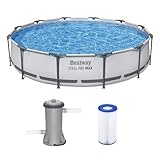
Bestway Steel Pro MAX 12' x 30" Above Ground Swimming Pool Set with Pump | Check Price On Amazon |
|
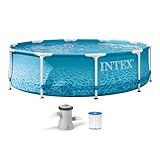
INTEX Beachside Metal Frame 10ft x 30in Round Pool Set w/Pump | Check Price On Amazon |

|
H2OGO! Kids Splash-in-Shade 8-Foot Round Steel Frame Above Ground Pool with Water Mister and Canopy Sunshade, Green Tropical Leaf Print | Check Price On Amazon |
Knowing exactly how long to wait before swimming after shocking prevents skin burns, eye damage, and respiratory irritation. The wait time depends entirely on which shock product you used. This guide covers calcium hypochlorite, non-chlorine shock, dichlor, and liquid chlorine: specific wait times, testing methods, and the factors that change them for your pool.
By the Numbers
Pool Shock Wait Times — What the Data Shows
Sources: CDC Healthy Swimming guidelines, pool chemical manufacturer safety data sheets
What Is Pool Shock and What Does It Do to Your Water?
Pool shock is a concentrated oxidizer that breaks apart chloramines and kills bacteria, algae, and organic contaminants in pool water. The term “shock” refers to raising free chlorine to a level 10 times higher than the combined chlorine reading. This is called breakpoint chlorination.

- Intelligent Navigation with Full Coverage: Equipped with 11 high-precision sensors and enhanced dual-path algorithms. The optimized WavePath cleaning pattern ensures systematic coverage with minimal overlap, while adaptive navigation analyzes pool layout in real time to eliminate missed spots
- Dual Filtration for Crystal-Clear Water: Advanced dual-layer filtration system features a replaceable 3-micron ultra-fine filter paired with a 180-micron standard filter. Effectively captures fine dust, sand, leaves, and debris for visibly cleaner and healthier pool water
- Comprehensive Pool Cleaning: Engineered to clean the pool floor, walls, waterline, and shallow areas (above 12 inches). The Caterpillar Treads system enhances mobility and climbing ability, ensuring thorough coverage across all pool zones
- Reliable Performance with 2-Year Warranty: Trusted by over 500,000 pool owners worldwide, this robotic pool cleaner delivers consistent, high-performance results. Built for durability and backed by a 2-year warranty and responsive customer support for worry-free ownership
Shocking adds a large dose of chlorine or non-chlorine oxidizer all at once. This happens because the oxidizer rips electrons from organic molecules including bacteria cell walls, algae proteins, and ammonia compounds from sweat and urine. The chemical reaction destroys these contaminants at the molecular level.
There are four main types of pool shock. Calcium hypochlorite (cal-hypo) is the most common and contains 65-73% available chlorine. Non-chlorine shock uses potassium monoperoxysulfate (MPS) and contains zero chlorine. Dichlor shock is stabilized granular chlorine with 56-62% available chlorine and added cyanuric acid.
Liquid chlorine (sodium hypochlorite) is a 10-12.5% solution used primarily in larger pools. Each type has a different wait time before swimming is safe. The mechanism is the same for all chlorine-based shocks: they raise free chlorine to 10-30 ppm temporarily. Non-chlorine shock works differently by adding oxygen radicals instead.
How Long After Shocking With Calcium Hypochlorite Can You Swim?
Wait at least 8 hours after adding calcium hypochlorite shock before swimming. Test the water first. Free chlorine must drop to 2-4 ppm before anyone enters the pool. This is the standard safety threshold published by the CDC in their Healthy Swimming guidelines.
Cal-hypo shock raises free chlorine to 10-30 ppm immediately after application. At these levels, chlorine causes skin burns, eye irritation, and respiratory problems. The 8-hour wait allows chlorine to oxidize contaminants and dissipate naturally.
This only occurs when the pool circulation system runs continuously during the 8-hour wait period. The pump must move water through the filter and return jets. This distributes the shock evenly and prevents chlorine from settling in pockets. Run the pump at full speed for the entire waiting period.
If the pump is not running, the result is uneven chlorine distribution. Some areas stay at 15-30 ppm while others drop to near zero. Swimmers entering a high-chlorine pocket risk chemical burns. Fix this by running the pump continuously from the moment you add shock until testing confirms safe levels.
Sunlight accelerates chlorine dissipation. Outdoor pools lose 2-4 ppm of free chlorine per day from UV exposure. An 8-hour wait on a sunny day may bring levels from 20 ppm down to 10-14 ppm. That is still not safe. Always test before swimming regardless of how sunny it is.
Keep a quality calcium hypochlorite pool shock on hand. Cal-hypo adds calcium to your water along with chlorine. Pool owners with already high calcium hardness above 400 ppm should use non-chlorine shock or liquid chlorine instead to avoid scaling.
How Long After Using Non-Chlorine Shock Can You Swim?
You can swim as soon as 15-20 minutes after using non-chlorine shock (MPS or potassium monoperoxysulfate). The product label on most MPS shock brands states a 15-minute minimum wait. This is dramatically shorter than chlorine-based shocks.
Non-chlorine shock works through oxidation, not chlorination. MPS releases oxygen radicals that burn up organic contaminants without leaving a chlorine residual. Because there is no free chlorine spike, there is no extended wait for levels to drop to safe swimming range.
This only applies when MPS is used alone, not in combination with chlorine shock. MPS does not kill algae. It oxidizes chloramines and clarifies water. If you have visible algae, non-chlorine shock will not fix the problem and you need a chlorine-based shock instead.
If you use MPS and the water remains cloudy after 20 minutes, the result is incomplete oxidation. This means the MPS dose was too low for the contaminant load. Run the pump and retest. You may need a second dose or a switch to cal-hypo shock for heavy contamination.
Pool owners with indoor pools benefit most from non-chlorine shock. Indoor pools have zero UV exposure so chlorine dissipates slowly. Shocking with cal-hypo indoors can mean 24-48 hour waits. MPS eliminates that problem entirely.
You should still test the water after MPS application. Some non-chlorine shock products can temporarily interfere with combined chlorine test readings. Use a DPD test kit rather than test strips for accurate results after MPS.
How Long After Using Dichlor Shock Can You Swim?
Wait at least 8 hours after using dichlor shock, the same as calcium hypochlorite. Test to confirm free chlorine is 2-4 ppm before swimming. Dichlor contains 56-62% available chlorine and dissolves faster than cal-hypo but the sanitizer levels remain elevated for the same duration.
Dichlor is unique because it adds cyanuric acid (CYA) to your pool with every dose. Each pound of dichlor shock added to 10,000 gallons raises CYA by approximately 7 ppm. This happens because dichlor molecules are roughly 50% cyanuric acid by weight after the chlorine dissociates in water.
This only matters for pools that already have CYA levels near 50 ppm. If CYA climbs above 80 ppm, chlorine becomes so stabilized that it cannot oxidize contaminants effectively. The result is persistent combined chlorine, frequent algae blooms, and a pool that stays cloudy even after shocking. Fix high CYA by partially draining and refilling the pool.
Pool owners using trichlor tablets for daily chlorination add CYA continuously. For these pools, cal-hypo or liquid chlorine shock is a better choice than dichlor because they add no CYA. Understanding how free chlorine differs from combined and total chlorine helps you choose the right shock product for your pool’s CYA level.
What Factors Affect How Long You Must Wait After Shocking?
Four main factors determine your actual wait time after shocking: shock type, pool water temperature, sunlight exposure, and circulation rate. Each factor changes how fast chlorine dissipates or oxidizes contaminants.
Water temperature above 85°F accelerates chlorine reactions. Warmer water speeds up the oxidation of organic contaminants. The wait time after cal-hypo shock in 90°F water may drop to 6 hours instead of 8. Cold water below 65°F slows reactions and may extend wait time to 12 hours or more.
Direct sunlight breaks down free chlorine through UV photolysis. A pool in full sun loses 2-4 ppm of free chlorine per day. A shaded pool may lose only 1-2 ppm. This means a sunny pool recovers faster from shocking but also needs more frequent chlorination overall.
Circulation speed matters. A pump running at 50 GPM on a 20,000-gallon pool achieves one full water turnover every 6.7 hours. Faster turnover distributes shock evenly and filters out dead contaminants faster. Slow circulation leaves dead spots where chlorine remains concentrated. Check your pool’s exact turnover rate using a pool turnover calculator to ensure adequate circulation.
Bather load before shocking also changes the equation. A pool that hosted a party with 20 swimmers contains far more organic contaminants than one used by two people. The shock oxidizes more material which consumes more free chlorine. This can actually shorten wait time because chlorine binds to contaminants and converts to combined chlorine faster.
If you have high CYA above 50 ppm, chlorine becomes chemically stabilized and less reactive. This extends the oxidation time. A pool with 80 ppm CYA may need 12-16 hours after shocking to fully oxidize chloramines compared to 8 hours at 30 ppm CYA. This is one reason chlorine lock becomes a frustrating problem for pool owners who keep adding shock without results.
Comparison Chart
Wait Times by Shock Type — Side by Side
Minimum wait time, typical free chlorine peak, and best use case for each shock type
| Shock Type | Min Wait Time | Peak FC (ppm) | Adds CYA? | Best For |
|---|---|---|---|---|
| Calcium Hypochlorite | 8+ hours | 10-30 | No | Algae, heavy contamination |
| Non-Chlorine (MPS) | 15-20 min | 0 (no chlorine) | No | Indoor pools, quick swim |
| Dichlor | 8+ hours | 10-25 | Yes (~7 ppm/lb per 10K gal) | Low CYA pools needing CYA boost |
| Liquid Chlorine | 8+ hours | 10-20 | No | Large pools, high CYA pools |
Peak FC is typical after standard dose. Always test before swimming regardless of wait time elapsed.
How to Test If Your Pool Is Safe to Swim In After Shocking
Use a DPD liquid drop test kit to measure free chlorine and combined chlorine separately. The water is safe when free chlorine reads 2-4 ppm and combined chlorine is below 0.5 ppm. Test strips are not accurate enough for post-shock testing.
A liquid drop test kit like the Taylor K-2006 measures free chlorine to within 0.2 ppm accuracy. Test strips measure in 0.5-1.0 ppm increments which is too coarse for determining swimming safety after shocking. The difference between 4 ppm (safe) and 6 ppm (unsafe) matters.
Test the water at two locations: near a return jet where circulation is strongest, and at the far end of the pool where circulation is weakest. Both readings must be in the 2-4 ppm range. If the far end reads higher than the return jet area, circulation is inadequate and you need to reposition return jets or increase pump speed.
pH must also be in range for chlorine to work. Test pH and confirm it reads 7.2-7.6 before swimming. Chlorine at pH 8.0 loses 80% of its sanitizing power. A pool that reads 3 ppm free chlorine at pH 8.0 is effectively only providing 0.6 ppm of active sanitizer.
If your water is clear but the chlorine test reads zero even after shocking, you likely have a high chlorine demand from residual organics. This requires additional shock treatment to reach breakpoint chlorination before the pool is safe.
Step-by-Step Guide
How to Test Pool Water After Shocking — Step by Step
5 steps · Takes about 5 minutes · Use a DPD or FAS-DPD test kit
Collect water sample from elbow depth
Take the sample 18 inches below the surface at the deep end. Do not sample from the surface where chlorine dissipates fastest or from directly in front of a return jet.
Test free chlorine first
Add DPD powder or drops to the water sample. If using a FAS-DPD kit, add the R-0870 powder then titrate with R-0871 drops. Count drops to determine ppm. Target reading: 2-4 ppm free chlorine.
Test combined chlorine
After free chlorine reading, add R-0003 reagent to the same sample. If the solution turns pink, combined chlorine is present. Titrate to determine the ppm. Target reading: below 0.5 ppm combined chlorine.
Test and adjust pH
Use the pH indicator (phenol red) to test pH. Target reading: 7.2-7.6. Cal-hypo shock raises pH temporarily. If pH is above 7.8, add muriatic acid or dry acid to bring it down. Wait 30 minutes and retest.
Confirm at two locations before swimming
Repeat the free chlorine test at the shallow end or opposite end from the first sample. Both readings must be 2-4 ppm. If they differ by more than 1 ppm, improve circulation and test again in 30 minutes.
What Happens If You Swim Too Soon After Shocking?
Swimming in water above 4 ppm free chlorine causes immediate eye irritation, skin rashes, and respiratory discomfort. At 10 ppm, skin burns develop within minutes. At 20 ppm, breathing chlorine gas off the water surface can trigger asthma attacks and lung damage.
The mechanism is direct chemical oxidation of living tissue. Free chlorine at shock levels reacts with proteins in your skin, eyes, and respiratory lining the same way it oxidizes bacteria. The symptoms are not allergies. They are chemical burns from an oxidizing agent too concentrated for human contact.
Children and people with asthma face higher risk from chlorinated water exposure. A child’s skin is thinner and absorbs chlorine faster. Their lung capacity is smaller so the same concentration of airborne chlorine causes more damage. If a child swallows pool water at shock levels, seek medical attention immediately.
Swimsuits and pool equipment also degrade faster in high-chlorine water. Elastic fibers break down. Goggle seals crack. Metal components on pool cleaners corrode. The financial cost of replacing damaged equipment adds up quickly.
The most common sign that someone swam too soon is a strong chemical smell on skin and swimwear hours after leaving the pool. This is not chlorine. This is chloramines that formed when free chlorine reacted with ammonia from the swimmer’s sweat and urine on contact. A pool that smells strongly of chlorine is actually a pool full of chloramines and needs more shock treatment, not less.
Myth vs Fact
Pool Shocking — Common Myths Debunked
Separating fact from fiction on the most common pool shocking misconceptions
✗ Myth
If the water looks clear, it is safe to swim.
✓ Fact
Free chlorine is invisible. Water can be crystal clear and still read 15 ppm, which will burn skin. Only a chemical test confirms safety.
✗ Myth
Shocking at night means you can swim in the morning.
✓ Fact
Night shocking helps because UV light is absent. But chlorine oxidation consumes the shock over hours, not minutes. Test in the morning. Free chlorine may still be 6-10 ppm and unsafe for swimming.
✗ Myth
Non-chlorine shock means zero wait time. You can swim immediately.
✓ Fact
MPS shock requires a 15-minute minimum wait per manufacturer instructions. The oxidizer must fully dissolve and disperse. Swimming immediately after pouring MPS granules into the water risks skin contact with undissolved chemical.
✗ Myth
Adding extra shock speeds up the process so you can swim sooner.
✓ Fact
Doubling the shock dose raises free chlorine from 20 ppm to 40 ppm. The wait time doubles, not halves. Always follow the dosage on the product label based on your pool volume in gallons. Use a pool volume calculator if you’re unsure of your exact gallonage.
✗ Myth
You can swim once the chlorine smell goes away.
✓ Fact
The strong chlorine odor is from chloramines, not free chlorine. As shocking oxidizes chloramines, the smell fades. But free chlorine may still be 8-10 ppm when the odor disappears. Only a test kit confirms safety.
Can You Swim After Shocking If You Use a Saltwater Pool?
Saltwater pools use the same wait times as traditional chlorine pools after shocking. A salt chlorine generator produces chlorine from salt through electrolysis. The chlorine it produces is chemically identical to chlorine from cal-hypo or liquid chlorine. Wait times do not change.
The only difference is that saltwater pools typically maintain lower day-to-day chlorine levels (1-3 ppm) and may need less frequent shocking. When shocking is required, cal-hypo or liquid chlorine are the preferred shock types because dichlor adds CYA that the salt cell cannot remove.
If you recently converted your pool from chlorine to saltwater, the shocking procedure remains the same. Test free chlorine, apply shock, wait 8 hours minimum, test again, and confirm 2-4 ppm before swimming.
Does the Type of Pool Filter Change How Long You Wait After Shocking?
The filter type does not change the wait time but does change how effectively dead contaminants are removed after oxidation. A DE filter capturing particles as small as 2-5 microns removes oxidized organic debris faster than a sand filter capturing 20-40 micron particles. Water clears faster with DE but free chlorine dissipates at the same rate.
After shocking, run any filter continuously for the full 8-hour wait period. If you have a cartridge filter, check the pressure gauge at the 4-hour mark. Dead algae and oxidized organics load the filter quickly after shocking. If pressure rises 8-10 PSI above clean baseline, clean the filter to maintain flow.
How Soon Can Kids Swim After Shocking a Pool?
Wait 8 hours minimum for chlorine-based shocks before allowing children in the pool. Test and confirm free chlorine reads 2-4 ppm. Children absorb chlorine through their skin faster than adults. Their eyes are more sensitive to chloramine irritation. Their smaller body mass means the same ppm exposure causes proportionally more damage.
For infants and toddlers under age 3, wait for free chlorine to reach 2 ppm exactly before allowing any pool time. Their skin barrier is thinner and they swallow more water during swimming. Use a FAS-DPD test kit for precise measurement. Test strips are too imprecise for infant safety decisions.
What If It Rains After You Shock the Pool?
Rain does not make it safe to swim sooner. Rainwater dilutes pool water slightly but the free chlorine concentration after shocking is high enough that dilution from rain is negligible. An inch of rain on a 20,000-gallon pool adds roughly 500 gallons of water. This is a 2.5% dilution. Free chlorine drops from 15 ppm to 14.6 ppm which is still unsafe.
Rain also introduces organic contaminants including dust, pollen, and airborne bacteria. These consume free chlorine through oxidation reactions. This may actually extend the wait time because chlorine that would have dissipated now binds to new contaminants as combined chlorine.
Can You Use a Pool Cover to Speed Up the Wait Time After Shocking?
Never cover a pool immediately after shocking with chlorine-based products. Chlorine off-gasses from the water surface after shocking. A cover traps chlorine gas between the water and cover material. This concentrated gas degrades the cover material and creates a hazardous chemical pocket.
Wait until free chlorine drops below 5 ppm before replacing a solar cover or safety cover. The trapped gas can also condense and drip concentrated chlorine solution back into the pool, creating localized high-chlorine zones that damage pool surfaces.
Why Does My Pool Still Smell Like Chlorine 24 Hours After Shocking?
A persistent chlorine smell 24 hours after shocking means combined chlorine (chloramines) is still present. The shock dose was insufficient to reach breakpoint chlorination. You need to shock again at a higher dose calculated as 10 times the combined chlorine reading. Use a pool shock calculator to figure out precisely how much shock to add to reach breakpoint.
Test combined chlorine specifically using a DPD or FAS-DPD kit. If combined chlorine reads 2 ppm, you need to add enough shock to reach 20 ppm free chlorine to achieve breakpoint. A SLAM calculator can help you determine the exact amount of shock required to maintain the correct level until oxidation is complete. This is why a strong chlorine smell signals a problem, not cleanliness.
How Often Should You Shock a Pool in Summer vs Winter?
Shock a pool every 1-2 weeks during summer months when water temperature exceeds 80°F and bather load is high. In winter, shock monthly or after heavy rain. Summer heat accelerates bacteria and algae growth. Each swimmer adds ammonia from sweat and urine that forms chloramines within minutes.
Shock after pool parties regardless of the last shock date. Twenty swimmers in a 20,000-gallon pool can consume 2-4 ppm of free chlorine in a few hours through contaminant load alone. Shock the evening after the party. Test in the morning. The pool will be safe by midday.
Is It Safe to Shock a Pool During the Day While Swimmers Are Present?
Never add shock chemicals to a pool while anyone is swimming. Undissolved shock granules sink and can contact skin directly causing chemical burns. Even liquid chlorine poured into a pool with swimmers creates a concentrated chlorine cloud before the pump disperses it.
Always add shock when the pool is empty and will remain empty for the full wait period. Pour shock into the deep end near a return jet. Brush any undissolved granules off the pool floor. Run the pump continuously. Post a sign or lock the gate to prevent anyone from entering during the wait period.
What Is the Best Time of Day to Shock a Pool?
Shock in the evening after sunset. UV radiation from sunlight degrades free chlorine rapidly. Shocking at night gives the chlorine 8-10 hours of darkness to oxidize contaminants without UV interference. This maximizes the effectiveness of each shock dose.
If evening shocking is not possible, shock on a cloudy day. Direct midday sun can destroy 50% of the free chlorine in a shock dose within 2 hours. This wastes chemicals and may prevent reaching breakpoint chlorination entirely.
Can You Use Bleach Instead of Pool Shock?
Household bleach and liquid pool chlorine are chemically identical (sodium hypochlorite). The difference is concentration. Household bleach is 5-6% sodium hypochlorite. Liquid pool chlorine is 10-12.5%. You need roughly twice as much household bleach to achieve the same free chlorine rise.
Only use plain, unscented bleach with no additives, thickeners, or fragrances. Additives cause foaming and leave chemical residues that irritate skin. Bleach also degrades faster in storage. A gallon of 6% bleach stored for 6 months in a hot garage may have degraded to 3% strength and requires double the calculated dose.
How Long After Shocking Can You Add Algaecide?
Wait until free chlorine drops below 5 ppm before adding algaecide. High chlorine levels oxidize and destroy algaecide compounds on contact. Adding algaecide at 20 ppm free chlorine wastes the algaecide entirely. The chlorine literally burns up the algaecide before it can work.
If you are treating an active algae bloom, shock first to kill the algae. Wait 24 hours. Test free chlorine. When it drops below 5 ppm, add the appropriate algaecide dose. Use our algaecide calculator to determine the right amount based on your pool size. Then run the pump continuously for 24-48 hours while the filter removes dead algae.
Does Shocking Raise or Lower pH?
Calcium hypochlorite shock raises pH temporarily to 7.8-8.2 before settling back down as chlorine dissipates. Non-chlorine MPS shock lowers pH slightly. Dichlor shock is pH-neutral. Liquid chlorine has a high pH of 12-13 when concentrated but the net effect on pool pH is negligible after the chlorine reacts.
Always test and adjust pH before shocking, not after. Chlorine is most effective at pH 7.2-7.6. Shocking at pH 8.0 wastes chlorine because 80% of it exists as inactive hypochlorite ion instead of active hypochlorous acid. Adjust pH to 7.2-7.4 before adding shock for maximum effectiveness.
What Happens If You Accidentally Swim Right After Shocking?
Exit the pool immediately. Rinse your entire body with fresh water for 5-10 minutes. Remove and rinse swimwear separately. Do not rub your eyes. Flush eyes with cool water for 15 minutes. If you swallowed pool water, drink plain water to dilute. Do not induce vomiting.
Watch for symptoms over the next 2 hours: persistent skin redness or burning, blurred vision, coughing, wheezing, or difficulty breathing. If any of these develop, seek medical attention. Tell the doctor the pool had just been shocked and estimate the free chlorine level if you know the product and dose used.
Quick Reference
Pool Shocking — Key Terms Explained
Quick reference for the terms used throughout this guide
— Active chlorine available to sanitize water, measured in ppm. Safe swimming range is 2-4 ppm.
— Chlorine that has already reacted with ammonia or organic matter, forming chloramines. Causes chlorine odor and eye irritation. Should be below 0.5 ppm.
— Adding enough free chlorine to reach 10 times the combined chlorine level. At this point, chloramines are fully oxidized and destroyed.
— Granular chlorine shock with 65-73% available chlorine. Raises calcium hardness. 8-hour minimum wait before swimming.
— Non-chlorine shock oxidizer. Adds no chlorine to water. 15-20 minute wait before swimming. Does not kill algae.
— Stabilizer that protects chlorine from UV degradation. Ideal range 30-50 ppm. Above 80 ppm causes chlorine lock.
— Titration-based chlorine test accurate to 0.2 ppm. Uses powder reagent and count-drop method. More accurate than test strips for post-shock testing.
— Time required to circulate the entire pool volume through the filter once. A 20,000-gallon pool with a 50 GPM pump achieves one turnover in 6.7 hours.
How Long After Shocking a Pool With Liquid Chlorine Can You Swim?
Wait 8 hours after adding liquid chlorine shock, the same as cal-hypo and dichlor. Liquid chlorine (10-12.5% sodium hypochlorite) raises free chlorine to 10-20 ppm after a standard shock dose. Test and confirm 2-4 ppm before swimming.
Liquid chlorine disperses faster than granular shock because it is already dissolved. This means the 8-hour wait is typically sufficient even on cool or cloudy days. Liquid chlorine also adds no calcium or CYA, making it the preferred shock for pools with already high calcium hardness or CYA levels.
Store liquid chlorine in a cool, dark place. It degrades rapidly in heat and sunlight. A gallon stored at 90°F loses 30% of its strength in 30 days. Always check the manufacture date on the bottle and use within 3 months of purchase for full strength.
Do UV or Ozone Pool Sanitizers Reduce Wait Time After Shocking?
UV and ozone sanitizers do not reduce the mandatory wait time after shocking with chlorine. These systems destroy chloramines and oxidize contaminants in the circulation loop but they do not neutralize free chlorine faster in the pool body. The 8-hour wait is still required.
UV systems can reduce how often you need to shock by continuously breaking down chloramines as water passes through the UV chamber. Pools with UV often shock every 3-4 weeks instead of every 1-2 weeks. But when you do shock, the wait time does not change. UV sanitizers supplement chlorine but do not replace it for primary sanitation.
What Is the Fastest Way to Lower Chlorine After Shocking?
The fastest safe method to lower free chlorine after shocking is UV exposure. Remove the pool cover. Run the pump on high speed. Direct sunlight at midday can drop free chlorine from 10 ppm to 5 ppm in 2-3 hours in an uncovered pool in summer conditions.
Chemical chlorine neutralizers (sodium thiosulfate or chlorine neutralizer products) work in 15-30 minutes but risk overcorrection. Adding too much drops free chlorine to zero and requires re-chlorination. If you use a neutralizer, calculate the dose carefully based on your pool volume and current free chlorine reading. Add half the calculated dose, test after 30 minutes, and add more only if needed.
For most pool owners, waiting is safer and simpler than chemical neutralization. The 8-hour overnight wait resolves naturally without risk of overcorrection. Use neutralizers only in emergencies when swimming is urgent and free chlorine reads 5-7 ppm (slightly above safe range).
Test your pool water with a chlorine neutralizer product standing by for emergencies. But rely on time and sunlight as your primary method for bringing chlorine down after shocking.
The most important rule after shocking a pool is simple and universal: never guess. Always test. Free chlorine at 2-4 ppm and combined chlorine below 0.5 ppm are the only conditions under which swimming is safe. No amount of waiting replaces a chemical test. Keep a quality test kit accessible and use it every time you shock.
For more detailed guidance on chlorine chemistry, including how to identify and fix chlorine lock or maintaining your salt chlorine generator, visit the linked guides. Each covers a specific aspect of pool water management that works together with proper shocking to keep your pool safe and swimmable all season.
| Photo | Best Above-Ground Pools | Price |
|---|---|---|
|
|
Bestway Steel Pro MAX 12' x 30" Above Ground Swimming Pool Set with Pump | Check Price On Amazon |
|
|
INTEX Beachside Metal Frame 10ft x 30in Round Pool Set w/Pump | Check Price On Amazon |
|
|
H2OGO! Kids Splash-in-Shade 8-Foot Round Steel Frame Above Ground Pool with Water Mister and Canopy Sunshade, Green Tropical Leaf Print | Check Price On Amazon |