
Most pool owners spend 6 to 8 hours per week testing chemicals, adjusting equipment, and cleaning. Pool automation cuts that to under 1 hour per week while reducing annual operating costs by 30 to 50 percent.
The upfront cost of automation scares many buyers away before they run the numbers. A quality system pays for itself in 18 to 36 months through energy savings, reduced chemical waste, and fewer service calls.
| Photo | Best Above-Ground Pools | Price |
|---|---|---|
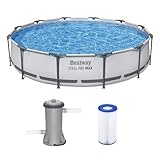
|
Bestway Steel Pro MAX 12' x 30" Above Ground Swimming Pool Set with Pump | Durable Round Metal Frame Outdoor Backyard Pool, Puncture-Resistant Liner - Type III A/C Filter Cartridge Included, Gray | Check Price On Amazon |
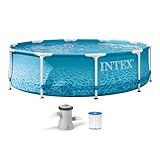
|
INTEX 28207EH 10ft X 30in Beachside Metal Frame Above Ground Swimming Pool Set, Includes 330 GPH Cartridge Filter Pump, Puncture-Resistant Material, Rust Resistant, 1185 Gallon Capacity | Check Price On Amazon |

|
H2OGO! Kids Splash-in-Shade 8-Foot Round Steel Frame Above Ground Pool with Water Mister and Canopy Sunshade, Green Tropical Leaf Print | Check Price On Amazon |
By the Numbers
Pool Automation Savings: What the Research Shows
Sources: EPA WaterSense Program, PHTA Industry Reports, Energy Star Certified Products Database
What Is Pool Automation and How Does It Work?
Pool automation is a system that controls your pump speed, filtration schedule, heating, lighting, and chemical dosing from a central controller instead of manual switches and timers. The brain of the system is a control panel that talks to every piece of equipment on your pad.
Automation works through low-voltage communication between the controller and each connected device. When you set a schedule or adjust a setting on the control panel or phone app, the controller sends a signal that tells the variable speed pump to ramp up, the heater to fire, or the salt chlorine generator to increase output.

- Intelligent Navigation with Full Coverage: Equipped with 11 high-precision sensors and enhanced dual-path algorithms. The optimized WavePath cleaning pattern ensures systematic coverage with minimal overlap, while adaptive navigation analyzes pool layout in real time to eliminate missed spots
- Dual Filtration for Crystal-Clear Water: Advanced dual-layer filtration system features a replaceable 3-micron ultra-fine filter paired with a 180-micron standard filter. Effectively captures fine dust, sand, leaves, and debris for visibly cleaner and healthier pool water
- Comprehensive Pool Cleaning: Engineered to clean the pool floor, walls, waterline, and shallow areas (above 12 inches). The Caterpillar Treads system enhances mobility and climbing ability, ensuring thorough coverage across all pool zones
- Reliable Performance with 2-Year Warranty: Trusted by over 500,000 pool owners worldwide, this robotic pool cleaner delivers consistent, high-performance results. Built for durability and backed by a 2-year warranty and responsive customer support for worry-free ownership
This happens because the controller uses relay circuits and digital communication protocols like RS-485 to send precise instructions to each component simultaneously. A manual setup requires you to walk to the equipment pad and adjust each piece of equipment one at a time.
The system only functions correctly when all connected equipment uses compatible communication protocols from the same manufacturer or through a certified bridge device. If you mix incompatible brands without a bridge module, the result is partial automation where some equipment must still be adjusted manually. Fix it by purchasing all equipment from one brand line like Pentair IntelliCenter, Hayward OmniLogic, or Jandy Aqualink, or by adding a third-party bridge like the Autelis interface.
For a deeper understanding of how these systems integrate with your entire pool setup, our guide to pool automation systems and what they control covers every component in detail with brand-specific compatibility charts.
How Much Time Does Pool Automation Save Each Week?
A fully automated pool saves the average owner 5 to 7 hours per week compared to manual maintenance. This time comes from eliminating four tasks: manual water testing, chemical adjustments, equipment adjustments, and schedule monitoring.
Manual water testing with a liquid drop test kit takes 15 to 20 minutes per session when done correctly. Automated systems with digital sensors like the Pentair IntelliChem or Hayward Sense and Dispense test pH and sanitizer levels continuously and log the results without any owner involvement.
Chemical dosing consumes another 20 to 30 minutes per session when done manually. You must measure, pour, wait for circulation, and retest. An automatic chemical dosing system injects precise amounts of liquid chlorine or acid based on real-time sensor readings, eliminating this entire task.
Equipment adjustments add up quickly across a week. Changing pump speed for different tasks, turning valves for vacuuming, switching between pool and spa mode, and adjusting heater settings each take 5 to 10 minutes per change. Automation runs these transitions on pre-programmed schedules with one-touch activation from a phone or wall panel.
Schedule monitoring is the hidden time thief most owners overlook. Without automation, you must remember to adjust run times seasonally, turn equipment on and off before and after swimming, and check that everything is running correctly after storms or power outages. An automated system adjusts run times based on water temperature and usage patterns and sends alerts if something fails.
How Much Money Can Pool Automation Save Per Year?
A complete pool automation system saves the typical pool owner $800 to $1,500 per year across three categories: electricity, chemicals, and avoided service calls. Use our pool volume calculator to see your exact savings based on your pool’s gallonage. The largest savings come from the variable speed pump, which is the heart of any automation system.
A single-speed 1.5 HP pump running 8 hours per day at 3,450 RPM consumes about 3,400 kWh per year. At the national average of 14 cents per kWh, that costs $476 annually just to circulate water, according to EPA WaterSense program data.
The same pool with an automated variable speed pump like the Pentair IntelliFlo running at 1,500 RPM for 10 hours consumes roughly 680 kWh per year. That costs $95 annually for the same daily water turnover. The pump alone saves $381 per year.
Chemical savings average $200 to $400 per year with automation. Automatic chemical monitoring prevents the over-correction cycles that waste chemicals. When pH drifts high, the controller adds small, precise doses of acid rather than letting the problem cascade into algae blooms that require costly shock treatments and algaecides.
Avoided service calls save $200 to $500 per year. Automated systems catch equipment problems before they become emergencies. A pump that draws high amperage, a heater with low flow, or a salt cell that needs cleaning all trigger alerts on the automation controller. Early intervention prevents the $350 emergency service call on a Saturday.
What Are the Key Components of a Pool Automation System?
A complete automation system has five core components: the central controller, a variable speed pump, automated valves, chemical monitoring and dosing equipment, and a wireless communication module for remote access. Each component plays a specific role in the automated ecosystem.
The central controller is the microprocessor unit mounted on your equipment wall. It runs the scheduling software, stores your settings, and communicates with every connected device. Major controllers include the Pentair IntelliCenter, Hayward OmniLogic, and Jandy Aqualink RS systems with pricing from $600 to $1,800 depending on relay count and features.
A variable speed pool pump is essential because the controller needs the ability to change flow rates for different tasks. Low speed for daily circulation at 1,200 to 1,800 RPM uses minimal electricity. Medium speed for heating at 2,000 to 2,500 RPM moves enough water through the heat exchanger. High speed at 3,000 to 3,450 RPM runs only for priming, backwashing, or running water features. To ensure your pump is properly sized for your pool’s plumbing and turnover needs, try our swimming pool pump sizing calculator.
Automated valves use electric actuators that turn the valve on command from the controller. They switch between pool and spa mode, activate water features, or redirect flow for vacuuming without touching a single manual valve handle. Each actuator costs $150 to $300 installed.
Chemical automation uses either a liquid dosing system or a salt chlorine generator paired with pH control. The Pentair IntelliChem controller monitors ORP and pH sensors continuously and doses liquid chlorine and acid through peristaltic pumps with accuracy within 0.1 pH units.
The wireless module connects your controller to your home network through Wi-Fi or ethernet. This lets you monitor and control everything from a smartphone app. Without this module, you must walk to the equipment pad to use the control panel. Most new controllers include the wireless module in the base package.
Pool Automation Cost Breakdown: What to Expect at Every Budget Level
Pool automation costs range from $800 for a basic pump-only controller to $5,000 or more for a full chemical and equipment automation system with professional installation. Your specific cost depends on how many pieces of equipment you want to automate and whether your existing equipment is compatible.
A basic entry-level setup at $800 to $1,500 includes a variable speed pump with a built-in timer and basic app control through a bridge module. Systems like the Pentair IntelliConnect or Hayward OmniHub control the pump and up to two additional devices like a heater or salt system through a smartphone app.
A mid-range system at $2,000 to $3,500 adds automated valves, full equipment scheduling, and integrated chemical monitoring. This tier includes controllers like the Pentair IntelliCenter Lite or Hayward OmniLogic that manage the pump, heater, salt system, lights, and two to four automated valves with full scene programming.
A premium system at $4,000 to $7,000 adds complete chemical automation with liquid dosing, automated water features control, and the maximum number of relays and valve actuators. The Pentair IntelliCenter with IntelliChem and up to 16 relays can control every piece of equipment on a complex pool with spa, water features, landscape lighting, and multiple pumps.
Results
Manual Pool Care vs Automated Pool Care: The Real Difference
What changes when you switch from manual management to a fully automated system
Manual Care
- ✗5-7 hours per week testing and adjusting
- ✗$1,200-$1,800 annual operating cost
- ✗Chemical swings from delayed adjustments
- ✗Equipment running at wrong speeds all day
- ✗Problems discovered after damage occurs
Automated Care
- ✓Under 1 hour per week for spot checks
- ✓$400-$700 annual operating cost
- ✓pH and chlorine stable within 0.1 units
- ✓Pump runs at optimal speed for each task
- ✓Alerts notify you before failures happen
The switch to automation turns pool ownership from a part-time job into something you enjoy
How to Choose the Right Pool Automation System for Your Pool
Choosing the right automation system starts with counting your equipment and deciding how much control you want. The number of relays and valve actuators you need determines which controller tier fits your pool, not the other way around.
Start by listing every piece of electrical equipment on your pad. A pump, heater, and salt chlorine generator need three relays. Add a pool light, spa light, and landscape lights and you need six relays. Add a booster pump for a pressure cleaner, a water feature pump, and a blower and you need nine or more relays.
Valve actuators automate water direction changes. A pool and spa combination with shared equipment needs two actuators to switch suction and return between bodies of water. Adding water features like a waterfall or sheer descent controlled by automation requires an additional actuator per feature.
Chemical automation is a separate decision from equipment control. You can automate your pump, heater, and lights without automating chemicals, and vice versa. If your pool already holds stable chemistry with a salt system, you may only need basic pH monitoring rather than full liquid dosing automation.
Lighting control is often the deciding factor for many buyers. If you have color-changing LED lights or multiple light zones, automation lets you program custom color shows and schedules. Without automation, you must cycle through color sequences manually using a light switch, which is frustrating and imprecise.
For guidance on replacing older pool lights with automation-compatible LED fixtures, check our step-by-step guide that covers compatibility requirements and installation costs.
Buying Guide
Before You Buy a Pool Automation System: Complete Checklist
Check off each point before making your purchase decision.
Is Pool Automation Worth It for Smaller Pools?
Automation makes financial sense for pools as small as 10,000 gallons when the system includes a variable speed pump. The pump savings alone on a 10,000-gallon pool run 6 hours daily at 1,200 RPM total about $250 to $350 per year compared to a single-speed pump, according to Energy Star data.
The payback period stretches to 36 to 48 months on smaller pools because the absolute electricity savings are lower. However, the time savings remain identical regardless of pool size. A 10,000-gallon pool requires the same testing and chemical adjustment time as a 30,000-gallon pool.
Smaller pools benefit most from scaled-down automation packages. A basic controller like the Pentair IntelliConnect paired with a variable speed pump and salt system provides 80 percent of the benefit at 40 percent of the cost of a full automation setup. You sacrifice chemical automation and multi-valve control, but gain remote scheduling, pump speed management, and freeze protection.
Common Pool Automation Mistakes That Cost You Money
Buying incompatible equipment is the most expensive automation mistake. A Jandy pump will not communicate with a Pentair controller without a third-party adapter that costs $400 to $600 and often introduces communication lag. Commit to one brand for the controller, pump, and chemical system to avoid this problem entirely.
Oversizing the controller for a simple pool wastes $800 to $1,200 on relays you will never use. An eight-relay controller on a pool with only a pump, heater, and salt system leaves five relays empty. Buy the controller that matches your equipment count plus one spare relay for future expansion.
Skipping the surge protector on the automation panel is a $200 shortcut that can cost $2,000 or more. Automation controllers contain circuit boards sensitive to voltage spikes. A single lightning strike or power surge can destroy the main board. A whole-panel surge protector installs in 30 minutes and costs under $150 installed.
Setting pump speeds too high during daily circulation is the most common ongoing waste. Many owners or installers program the daily circulation speed at 2,500 RPM or higher because it feels right. Running at 1,200 to 1,500 RPM achieves the same turnover at one quarter the electricity cost. The water does not need to visibly churn to be clean.
Myth vs Fact
Pool Automation Myths Debunked
Separating fact from fiction on the most common automation misconceptions
✗ Myth
Pool automation is only for large luxury pools with complex equipment setups
✓ Fact
A basic automation system with a variable speed pump and app control pays for itself on any pool over 10,000 gallons. The pump savings alone cover the controller cost within 2 to 3 years even on simple single-body pools.
✗ Myth
Automation eliminates the need to ever test your water manually
✓ Fact
Sensors drift over time and require monthly calibration checks against a reliable test kit. ORP probes read 650 to 750 mV for proper sanitization, but the exact reading varies with cyanuric acid level. Manual verification once per week ensures your automation is working correctly.
✗ Myth
A variable speed pump running at low speed does not filter the water properly
✓ Fact
Filtration effectiveness depends on turnover, not speed. Running at 1,500 RPM for 10 hours turns over a 20,000-gallon pool completely with a 33 GPM flow rate. The slower water movement actually improves filtration because debris has more contact time with the filter media.
✗ Myth
All automation brands work together if they use the same communication protocol
✓ Fact
Even though RS-485 is an open standard, each manufacturer uses proprietary command sets that prevent cross-brand communication without a translator module. A Pentair controller cannot directly control a Hayward pump at variable speeds. Cross-brand setups require specific bridge devices or accepting limited on/off relay control only.
✗ Myth
Once automation is installed, you can set it and forget it for the entire season
✓ Fact
Pool chemistry needs change with temperature, bather load, and UV exposure. Your automation settings must be adjusted seasonally. A pump schedule that works in June at 85 degrees F water temperature will be inadequate in August at 92 degrees F when algae growth accelerates. Plan to review and adjust settings at least monthly during peak season.
How Long Does It Take for Pool Automation to Pay for Itself?
The typical payback period for a complete pool automation system is 18 to 36 months based on energy savings, chemical savings, and avoided service costs combined. The specific number for your pool depends on your local electricity rate, your current pump type, and how much you currently spend on chemicals.
Pools with existing single-speed pumps in high electricity rate areas see the fastest payback. A California pool owner paying 30 cents per kWh with a single-speed pump saves significantly more than a Georgia pool owner paying 10 cents per kWh. The California pool sees payback in 12 to 18 months while the Georgia pool may take 30 to 36 months.
Chemical savings accelerate payback for pools that currently experience frequent algae blooms or pH swings. A pool that requires two or three shock treatments per season at $15 to $25 each plus algaecide at $20 to $30 per bottle saves an additional $100 to $150 per year with automated chemical control that prevents these problems before they start.
Can Pool Automation Be Added to an Existing Pool?
Automation can be added to almost any existing pool as long as the equipment pad has space for the controller and the electrical service can handle the additional load. The retrofit process typically takes a licensed electrician and pool technician one full day for a basic pump and heater control setup.
Older single-speed pumps are the first thing to replace during an automation retrofit. A single-speed pump can be controlled on and off by a relay, but you lose all the energy-saving benefits of variable speed operation. Budget $1,200 to $1,800 for a quality variable speed replacement pump and installation to maximize your automation investment.
Pools with older pneumatic or hydraulic control systems require more labor to retrofit. The old control tubing and actuators must be removed and replaced with low-voltage wiring for the new digital valve actuators. This adds $400 to $800 to the installation cost compared to a pool with no existing automation.
Electrical capacity at the equipment pad is sometimes the limiting factor. Most automation controllers need a dedicated 20-amp circuit. If your pad has only a single circuit feeding everything, an electrician must run a new circuit from the main panel at a cost of $300 to $600 depending on distance and conduit requirements.
Why Does My Pool Automation Keep Losing Connection to the App?
App connection problems happen because Wi-Fi signal strength drops significantly when passing through multiple walls and outdoor obstacles between your router and the equipment pad. The automation controller’s antenna is typically housed inside a metal enclosure on the equipment pad, which further attenuates the signal.
This only occurs when the signal strength at the equipment pad falls below negative 70 dBm, which is common when the router is on the opposite side of the house or in a basement. If the signal is too weak, the result is intermittent disconnections where the app shows the controller as offline. Fix it by adding a Wi-Fi extender or mesh node within 30 feet of the equipment pad with clear line of sight.
A wired ethernet connection solves this problem permanently. Running outdoor-rated Cat6 cable from your router to the automation controller costs $150 to $300 for a professional install and eliminates Wi-Fi dropouts entirely. Most installers recommend this approach during the initial automation installation if the equipment pad is within 300 feet of the router.
What Happens to Pool Automation During a Power Outage?
When power returns after an outage, the automation controller reboots and restores all programmed schedules from non-volatile memory within 60 to 90 seconds. The system does not lose your settings. However, the clock may need to be reset if the outage lasted longer than the backup battery life in the controller.
The backup battery in most controllers lasts 24 to 72 hours without power. After the battery drains, the clock resets to a default time and all scheduled events run at the wrong times until you correct the clock. This only becomes a problem during extended outages from major storms. Check your clock after any outage lasting more than one day.
Freeze protection is the most critical post-outage concern. If power returns during freezing temperatures, the controller’s freeze protection mode must activate immediately to circulate water through the plumbing and prevent ice damage. Most controllers run freeze protection as a priority function that overrides normal schedules. Verify this feature is enabled in your settings before winter.
Does Pool Automation Work with Salt Water Pools?
Automation works seamlessly with salt water pools and in fact enhances them. The automation controller directly manages the salt chlorine generator output level based on your desired chlorine percentage. You set the target sanitizer level and the controller adjusts the salt cell output throughout the day.
Salt systems with automation can run at lower output levels for more hours rather than blasting chlorine at 100 percent for a short period. This produces more consistent free chlorine levels and extends salt cell life. A typical salt cell lasts 5 to 7 years when run at 40 to 60 percent output for 10 hours daily versus 3 to 4 years at 100 percent output for 6 hours.
Combining a salt system with automated pH control creates the closest thing to a self-managing pool. The salt cell produces chlorine while the automated acid dosing system counters the natural pH rise that salt systems cause. This pairing reduces manual chemical adjustments to near zero during peak season.
How Much Does It Cost to Run Pool Automation Electricity Per Month?
The automation controller itself uses negligible electricity at roughly 10 to 20 watts continuously, costing about $2 to $3 per month. The real electricity cost question is how the automation system manages your pump and heater, which are the major energy consumers on your equipment pad.
A properly programmed automation system running a variable speed pump at 1,500 RPM for 10 hours daily on a 20,000-gallon pool consumes about 55 to 60 kWh per month for circulation. At the national average electricity rate of 14 cents per kWh, that is roughly $8 per month for pump operation during the swimming season.
The same pool with a single-speed pump on a manual timer running 8 hours daily consumes about 280 kWh per month for circulation, costing approximately $39 per month. The automation system reduces the pump electricity bill by about 80 percent simply by running at the correct speed for the task.
Can I Install Pool Automation Myself?
Installing the physical automation controller and connecting high-voltage equipment requires a licensed electrician in all jurisdictions. The controller connects to your home’s electrical panel through dedicated breakers and wiring that must meet National Electrical Code requirements for outdoor wet-location installations.
The low-voltage communication wiring between the controller and compatible equipment is simpler but still requires attention to proper termination and grounding. Incorrect low-voltage wiring causes communication errors where the controller cannot detect connected equipment. These errors are difficult for a homeowner to diagnose without manufacturer-specific training.
Professional installation for a complete automation system with pump, heater, valve actuators, and chemical control typically costs $800 to $1,500 in labor. This includes the electrical work, low-voltage wiring, system programming, and testing all functions. The labor cost is justified by warranty protection from the manufacturer, which often requires professional installation for full coverage.
What Is the Difference Between Pool Automation and a Simple Timer?
A timer turns equipment on and off at fixed times regardless of conditions. Pool automation adjusts equipment operation based on water temperature, chemical readings, freeze risk, and user demand. The difference is between a light switch timer and a smart home system.
Timers cannot change pump speed for different tasks. They run the pump at whatever speed the pump is physically set to, which means either full speed all the time or one fixed lower speed if you have a two-speed pump. Automation ramps the pump up for heating, down for circulation, and to medium speed for running a cleaner, all without touching the equipment.
Timers provide no feedback when equipment fails. A pump can burn out, a heater can fault, or a salt cell can fail and the timer continues sending power to dead equipment. Automation monitors current draw and flow rates and alerts you within minutes of a failure, often before damage spreads to other components.
Do Pool Automation Systems Require Ongoing Subscriptions?
Most major automation brands do not require a monthly subscription for basic remote access through their app. Pentair IntelliCenter, Hayward OmniLogic, and Jandy Aqualink all include standard remote control and monitoring at no ongoing cost once the system is installed.
Some advanced features like detailed energy reporting, multiple user accounts with permissions, or integration with third-party smart home systems may require an optional subscription at $5 to $10 per month depending on the brand. These features are nice to have but not necessary for the core benefits of automation.
Third-party controllers and bridge devices sometimes have different subscription models. The Autelis bridge for mixing brands charges no subscription. Some newer Wi-Fi based controllers from smaller companies may charge $3 to $8 monthly for cloud connectivity. Check this before purchasing any system from a brand other than the big three manufacturers.
Which Pool Automation Brand Is Most Reliable Long Term?
Pentair, Hayward, and Jandy all produce reliable automation systems with 3 to 5 year warranty coverage on controllers. Long-term reliability depends more on proper installation with surge protection and climate-appropriate enclosure placement than on brand differences at the controller level.
Pentair IntelliCenter has the strongest reputation among service technicians for software stability and regular firmware updates that add features to existing hardware. Hayward OmniLogic is known for the most intuitive app interface. Jandy Aqualink has the longest track record with replacement parts readily available for systems installed 15 to 20 years ago.
The most common failure point across all brands is surge damage to the main board. A $150 whole-panel surge protector prevents this failure in over 90 percent of cases according to warranty claim data from multiple manufacturers. This single accessory matters more for long-term reliability than which brand you choose.
What Pool Equipment Cannot Be Automated?
Manual pool vacuums that connect to a suction port or skimmer cannot be automated because they require you to physically connect and disconnect the hose. Robotic cleaners with their own internal programming and power supply operate independently and cannot be integrated into the automation schedule beyond turning their dedicated power outlet on and off.
Test strips and manual drop test kits obviously cannot be automated. Even with the most advanced automated chemical monitoring, you still need to verify sensor accuracy manually once per week using a reliable test kit. No automation system eliminates the need for occasional manual testing.
Skimmer baskets and pump baskets require manual emptying regardless of automation. The system can detect reduced flow from a clogged basket and send an alert, but a person still needs to walk to the equipment pad and empty the debris. This is a physical task that automation cannot replace.
Summary: Is Pool Automation Worth the Investment?
Pool automation saves the average owner $800 to $1,500 per year and 5 to 7 hours per week compared to manual pool care. The upfront investment of $2,000 to $5,000 pays for itself in 18 to 36 months through electricity savings, chemical reductions, and fewer emergency repairs. For a full picture of all ongoing pool expenses, check out our pool ownership cost calculator.
The decision comes down to valuing your time. If you enjoy tinkering with pool chemistry and equipment settings as a hobby, automation may not feel worth it. If you want your pool to be ready whenever you are without the constant maintenance, automation transforms the ownership experience from a chore into something you actually enjoy.
| Photo | Best Above-Ground Pools | Price |
|---|---|---|
|
|
Bestway Steel Pro MAX 12' x 30" Above Ground Swimming Pool Set with Pump | Durable Round Metal Frame Outdoor Backyard Pool, Puncture-Resistant Liner - Type III A/C Filter Cartridge Included, Gray | Check Price On Amazon |
|
|
INTEX 28207EH 10ft X 30in Beachside Metal Frame Above Ground Swimming Pool Set, Includes 330 GPH Cartridge Filter Pump, Puncture-Resistant Material, Rust Resistant, 1185 Gallon Capacity | Check Price On Amazon |
|
|
H2OGO! Kids Splash-in-Shade 8-Foot Round Steel Frame Above Ground Pool with Water Mister and Canopy Sunshade, Green Tropical Leaf Print | Check Price On Amazon |