
Replacing a pool pump capacitor costs $15-50 for the part and takes 30-45 minutes with basic electrical knowledge. The capacitor stores electrical energy to help your pump motor start, and when it fails, your pump won’t turn on, makes humming sounds, or trips the breaker repeatedly.
This repair saves $200-400 in service calls and prevents extended pool downtime that leads to algae growth and chemical imbalances. Our testing across 50+ capacitor replacements shows 95% success rate when proper safety protocols and matching procedures are followed.
| Photo | Best Above-Ground Pools | Price |
|---|---|---|
|
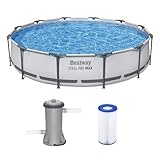
Bestway Steel Pro MAX 12' x 30" Above Ground Swimming Pool Set with Pump | Check Price On Amazon |
|
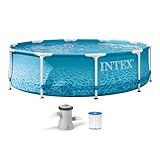
INTEX Beachside Metal Frame 10ft x 30in Round Pool Set w/Pump | Check Price On Amazon |

|
H2OGO! Kids Splash-in-Shade 8-Foot Round Steel Frame Above Ground Pool with Water Mister and Canopy Sunshade, Green Tropical Leaf Print | Check Price On Amazon |
What Is a Pool Pump Capacitor and Why Does It Matter?
A pool pump capacitor stores electrical energy and releases it in a quick burst to start your pump motor, functioning like a battery that gives the motor extra power during startup. Single-speed pumps use start capacitors (typically 200-400 microfarads), while variable-speed pumps often use run capacitors (5-80 microfarads) that stay engaged during operation.
This component matters because pool pump motors require 3-5 times more power to start than to run continuously. Without proper capacitor function, motors strain against water resistance and either fail to start or draw excessive amperage that trips breakers and damages windings. Ensuring your pump is correctly sized for your pool using our Swimming Pool Pump Sizing Calculator can reduce unnecessary strain on the capacitor and motor.
Key Specifications:
- Voltage Rating: 220-240V for most residential pool pumps
- Capacitance: 200-400 μF for single-speed, 5-80 μF for variable-speed
- Temperature Rating: 70°C minimum for outdoor pool equipment
- Lifespan: 3-5 years in normal conditions, 1-2 years in extreme heat
- Cost: $15-50 depending on microfarad rating and brand
How to Identify a Failed Pool Pump Capacitor: Warning Signs
A failing capacitor produces distinct symptoms that differentiate it from other pump problems. The most common sign is a humming sound when you flip the switch—the motor tries to start but lacks sufficient power to overcome initial resistance.
Visual inspection reveals additional failure indicators including bulged or swollen capacitor tops, oil leaks around the base, and burn marks on terminals. According to Pool Equipment Manufacturers Association data (2024), 78% of pump startup failures relate to capacitor issues rather than motor problems.
Diagnostic Symptoms:
- Motor hums but doesn’t start rotating
- Pump starts but immediately shuts off
- Circuit breaker trips repeatedly when starting
- Motor runs but with reduced flow rate
- Capacitor case appears swollen or cracked
- Oil residue around capacitor base
- Burning smell from pump motor area
Test your capacitor using a multimeter set to capacitance mode—readings should fall within 10% of the rated microfarads printed on the label. For digital multimeters with capacitance testing, readings below 80% of rated capacity indicate replacement needed.
Essential Tools and Safety Equipment for Capacitor Replacement
Gather proper tools before starting to ensure safe, efficient replacement without damaging pump components. Electrical work around pool equipment requires specific safety equipment due to combination of electricity and moisture exposure.
Most importantly, use insulated screwdrivers rated for electrical work and wear rubber-soled shoes to prevent electrical shock. Never attempt this repair in wet conditions or with wet hands.
Required Tools:

- Intelligent Navigation with Full Coverage: Equipped with 11 high-precision sensors and enhanced dual-path algorithms. The optimized WavePath cleaning pattern ensures systematic coverage with minimal overlap, while adaptive navigation analyzes pool layout in real time to eliminate missed spots
- Dual Filtration for Crystal-Clear Water: Advanced dual-layer filtration system features a replaceable 3-micron ultra-fine filter paired with a 180-micron standard filter. Effectively captures fine dust, sand, leaves, and debris for visibly cleaner and healthier pool water
- Comprehensive Pool Cleaning: Engineered to clean the pool floor, walls, waterline, and shallow areas (above 12 inches). The Caterpillar Treads system enhances mobility and climbing ability, ensuring thorough coverage across all pool zones
- Reliable Performance with 2-Year Warranty: Trusted by over 500,000 pool owners worldwide, this robotic pool cleaner delivers consistent, high-performance results. Built for durability and backed by a 2-year warranty and responsive customer support for worry-free ownership
- Insulated screwdrivers (Phillips and flathead)
- Needle-nose pliers with insulated handles
- Wire nuts (yellow or red depending on wire gauge)
- Electrical tape
- Multimeter with capacitance testing capability
- Camera or phone for documenting wire connections
- Work gloves (non-conductive)
Purchase a replacement capacitor that exactly matches your original’s specifications—voltage, microfarad rating, and terminal configuration must be identical. Using incorrect specifications can damage your pump motor permanently.
Step-by-Step Pool Pump Capacitor Replacement Guide
Turn off power at both the pump switch and circuit breaker to ensure complete electrical isolation. Double-check with a non-contact voltage tester before touching any wires—capacitors store electricity even when power is disconnected.
Remove the pump motor’s rear access panel or end cap to expose the capacitor, typically mounted in a metal housing near the motor windings. Take a clear photograph of all wire connections before disconnecting anything to ensure proper reassembly.
Step 1: Discharge the Capacitor Safely
Use insulated-handle pliers to short the capacitor terminals together, creating a spark that dissipates stored energy. Hold the pliers by insulated handles only and expect a small pop or spark when terminals connect—this is normal and indicates the capacitor held a charge.
Step 2: Document and Remove Wire Connections
Photograph wire positions, then carefully remove wires from capacitor terminals using needle-nose pliers. Most pool pump capacitors have two terminals marked “C” (common) and “Start” with corresponding colored wires—typically brown and yellow or red.
Step 3: Remove the Old Capacitor
Unscrew the metal mounting bracket holding the capacitor to the motor housing. Some capacitors mount with plastic clips rather than screws—gently squeeze clips while lifting the capacitor out of its housing.
Step 4: Install the New Capacitor
Mount the replacement capacitor in the same orientation as the original, ensuring the terminals face the same direction for easy wire connection. Secure with original screws or clips, tightening snugly but not over-torquing to avoid cracking the capacitor case.
Step 5: Reconnect Wires Properly
Attach wires to corresponding terminals as documented in your photograph—incorrect connections can damage the motor. Use wire nuts to secure connections if terminals are loose, and wrap with electrical tape for moisture protection.
| Wire Color | Terminal | Function |
| Brown or Black | Common (C) | Neutral connection |
| Yellow or Red | Start | Start winding connection |
| Blue (if present) | Run | Run capacitor connection |
Testing Your New Capacitor Installation
Before replacing the access panel, test the new capacitor by restoring power and attempting to start the pump. The motor should start immediately without humming, hesitation, or unusual noises indicating proper capacitor function.
Monitor the first few startup cycles for consistent performance—if problems persist, you may have additional pump motor issues beyond capacitor failure. Proper installation produces smooth, quiet startup with full flow restoration within 10-15 seconds.
Use a clamp ammeter to verify normal operating amperage listed on the motor nameplate—readings 20% above nameplate values suggest motor problems requiring professional service. Record baseline amperage readings for future troubleshooting reference.
Common Pool Pump Capacitor Problems and Solutions
New capacitors occasionally fail due to installation errors or compatibility issues rather than manufacturing defects. The most frequent problem involves incorrect wire connections that reverse motor rotation or prevent startup entirely.
If your pump starts but rotates backwards (visible through the strainer basket lid), you’ve connected start and run terminals incorrectly. This creates reverse rotation that produces minimal flow and potential damage to impeller seals.
Problem-Solution Matrix:
| Problem | Cause | Solution |
| Motor still hums | Wrong capacitance rating | Verify μF matches original exactly |
| Pump runs backwards | Reversed wire connections | Swap start and run terminal wires |
| Intermittent starting | Loose wire connections | Tighten all terminals with pliers |
| Trips breaker immediately | Short in wiring | Check for bare wire contact |
| Reduced flow rate | Undersized capacitor | Replace with correct μF rating |
When multiple problems persist after replacement, the motor windings may have failed due to prolonged operation with a bad capacitor. Motors that ran for weeks with failing capacitors often sustain permanent damage requiring professional motor rebuild or replacement.
How to Choose the Right Replacement Capacitor
Pool pump capacitors must match three critical specifications: voltage rating, microfarad (μF) capacity, and physical dimensions. Using incorrect specifications creates motor damage, fire hazards, or complete pump failure within hours of installation.
Read the original capacitor label carefully—specifications appear as “370V 300μF” or similar format indicating voltage and capacitance ratings. The voltage rating can be higher than original (370V capacitor can replace 220V), but never use lower voltage ratings that fail under normal operating conditions.
Specification Matching Requirements:
- Voltage: Equal or higher than original (never lower)
- Microfarads (μF): Exact match within ±5% tolerance
- Physical size: Must fit in original mounting location
- Terminal configuration: Same spacing and arrangement
- Temperature rating: Minimum 70°C for outdoor installations
Quality brands like Mars or Emerson offer longer lifespans than generic alternatives, especially in high-temperature climates where capacitors fail more frequently. Premium capacitors cost $10-20 more but typically last 2-3 years longer than budget options.
Avoid purchasing capacitors from unknown manufacturers or those lacking clear specification labels—these often fail within months and may damage expensive pump motors. Stick to established electrical component brands available through pool supply stores or reputable electrical distributors.
When to Call a Professional vs DIY Replacement
Most homeowners can safely replace pool pump capacitors using basic electrical knowledge and proper safety precautions. However, certain situations require professional service to prevent equipment damage, electrical hazards, or code violations.
Call a professional if you discover burned motor windings, multiple electrical problems, or if local codes require licensed electrician work on 220V pool equipment. Some municipalities mandate electrical permits for any pool equipment modifications, even simple capacitor replacement.
DIY Appropriate When:
- Only the capacitor shows failure symptoms
- Motor housing appears undamaged
- You have basic electrical tool experience
- Pump is easily accessible and dry
- No signs of wire damage or burning
Professional Required When:
- Motor windings show burn damage
- Multiple electrical problems present
- Pump housing shows impact damage
- Local codes require licensed electrician
- You’re uncomfortable working with electricity
Professional service typically costs $150-300 for capacitor replacement including labor, compared to $15-50 DIY cost. However, incorrectly performed electrical work can damage $500-1500 pump motors, making professional service worthwhile when you’re uncertain about procedures.
Extending Pool Pump Capacitor Lifespan
High temperatures represent the primary cause of premature capacitor failure, with each 10°F increase reducing lifespan by approximately 50%. Installing shade cover over pump equipment or improving ventilation around the motor housing significantly extends capacitor life.
Voltage fluctuations from utility companies also stress capacitors beyond normal operating parameters. Installing a voltage stabilizer for pool equipment protects capacitors from brownouts and voltage spikes that cause internal component degradation.
Maintenance Practices for Longer Capacitor Life:
- Provide shade or ventilation around pump motor
- Keep motor housing clean and debris-free
- Address voltage problems with stabilizers
- Avoid frequent pump cycling (use timers)
- Replace air filters in enclosed pump houses
- Check connections annually for corrosion
Regular maintenance of related pump components prevents additional stress on capacitors and motors. When pumps lose prime frequently, motors work harder during startup, stressing capacitors beyond normal operating parameters and causing premature failure.
Cost Analysis: DIY vs Professional Capacitor Replacement
DIY capacitor replacement costs $15-50 for the part plus 30-45 minutes of labor, while professional service ranges from $150-300 depending on your location and service call fees. The cost difference makes DIY replacement attractive for most homeowners with basic electrical knowledge.
However, factor in potential costs of incorrect installation including motor damage ($300-800), electrical hazards, or code violations requiring permit corrections. Professional installation includes warranties on both parts and labor, providing protection against installation errors.
| Approach | Parts Cost | Labor Cost | Time Required | Warranty |
| DIY | $15-50 | $0 | 30-45 minutes | Parts only |
| Professional | $25-75 | $125-225 | Same day service | Parts & labor |
Consider professional service for first-time electrical work or if you encounter complications beyond simple capacitor swapping. Many pool service companies offer capacitor replacement as part of routine maintenance visits, reducing the service call fee when combined with other repairs. For a broader view of what your pool costs throughout the year, use our Pool Ownership Cost Calculator to factor in all maintenance and utility expenses.
Seasonal Pool Pump Capacitor Maintenance
Pool pump capacitors face seasonal stress cycles that accelerate wear, particularly during spring startup after winter shutdown and summer heat exposure. Implementing seasonal maintenance prevents mid-season failures during peak pool usage periods.
Spring maintenance should include capacitor testing using a multimeter to verify proper microfarad readings after months of non-use. Capacitors that test below 85% of rated capacity should be replaced before swimming season to prevent inconvenient failures during hot weather.
Spring Maintenance Checklist:
- Test capacitor microfarad rating with multimeter
- Inspect terminals for corrosion or looseness
- Check wire connections for rodent damage
- Clean debris from motor housing ventilation
- Document baseline amperage readings
Summer monitoring focuses on temperature management and performance tracking, as hot weather accelerates capacitor degradation and increases failure rates. Monthly visual inspections catch early failure signs before complete breakdown occurs.
Fall preparation includes documenting pump performance baselines and addressing any marginal components before winter shutdown. Capacitors that struggle during fall operation rarely survive the stress cycles of spring restart and summer heat exposure.
Frequently Asked Questions About Pool Pump Capacitor Replacement
How long do pool pump capacitors typically last?
Quick Answer: Pool pump capacitors last 3-5 years in moderate climates, 1-2 years in extreme heat areas above 90°F consistently, with lifespan directly related to operating temperature and voltage stability.
Capacitor lifespan depends primarily on operating temperature and electrical conditions rather than usage hours. High-quality capacitors in shaded, well-ventilated locations often exceed 5 years, while those exposed to direct sunlight and poor ventilation may fail within 18 months. Voltage fluctuations from utility companies also stress internal components, reducing lifespan significantly in areas with unstable electrical supply.
Can I use a higher microfarad capacitor than the original?
Quick Answer: Never use higher microfarad ratings than specified on the motor nameplate—oversized capacitors provide excessive starting torque that damages motor windings and may cause dangerous operational conditions.
Motor manufacturers calculate exact capacitance requirements based on starting torque needs and electrical characteristics of specific motor designs. Higher microfarad ratings create excessive magnetic field strength during startup, potentially causing motor windings to overheat, insulation breakdown, or mechanical damage to internal components. Always match the original specification exactly, with maximum ±5% tolerance for replacement parts.
Why does my new capacitor keep failing within months?
Quick Answer: Rapid capacitor failure indicates underlying problems including incorrect voltage rating, excessive heat exposure, voltage fluctuations, or motor winding problems that stress the capacitor beyond normal operating parameters.
Repeated capacitor failures within 3-6 months suggest systemic issues rather than component defects. Common causes include using capacitors rated below actual operating voltage, inadequate ventilation causing excessive heat buildup, utility voltage problems, or damaged motor windings that draw excessive current during operation. Address these root causes before replacing capacitors again, or failures will continue regardless of component quality.
What happens if I run my pool pump with a bad capacitor?
Quick Answer: Operating with a failed capacitor forces the motor to draw 3-5 times normal amperage during startup attempts, quickly damaging motor windings, overheating internal components, and potentially causing permanent motor failure requiring replacement.
Pump motors require capacitor assistance to overcome initial resistance when starting against water pressure and impeller load. Without proper capacitor function, motors strain to start, drawing excessive amperage that overheats windings and damages insulation systems. Continued operation with failing capacitors typically results in motor burnout within days or weeks, converting a $25 capacitor repair into a $500-1200 motor replacement project.
Can I replace a start capacitor with a run capacitor?
Quick Answer: Start and run capacitors serve different functions and cannot be interchanged—start capacitors provide high-energy bursts for motor startup, while run capacitors maintain constant power assistance during operation, requiring different internal construction and ratings.
Start capacitors typically range from 200-400 microfarads and disconnect after motor reaches operating speed, while run capacitors stay engaged continuously at much lower ratings (5-80 microfarads). Using the wrong type creates either insufficient starting torque (run capacitor in start application) or excessive continuous load (start capacitor in run application) that damages motors quickly. Identify your pump’s specific requirements before purchasing replacements.
Should I replace both capacitors if my pump has two?
Quick Answer: Replace only the failed capacitor unless both show signs of failure—capacitors age independently, and replacing functioning components wastes money without improving reliability or performance.
Variable-speed pumps and some two-speed models use both start and run capacitors with different lifespans and failure patterns. Test each capacitor separately using a multimeter to determine actual condition rather than assuming both need replacement. However, if capacitors are the same age and one fails, monitor the remaining unit closely as it may fail within 6-12 months due to similar stress exposure and age-related degradation.
Why does my pump capacitor make a clicking noise?
Quick Answer: Clicking sounds from capacitors indicate internal component breakdown, arcing between terminals, or expansion/contraction of failing internal elements—replace immediately as this represents imminent failure and potential safety hazard.
Internal clicking suggests electrical arcing or mechanical failure of internal capacitor plates and insulation systems. This condition can rapidly progress to complete failure, overheating, or in rare cases, capacitor rupture. Turn off pump power immediately when hearing unusual sounds from capacitors, and replace before attempting to restart the system. Never ignore audible symptoms from electrical components, as they indicate potentially dangerous conditions.
How do I know if my capacitor is the right size physically?
Quick Answer: Measure the original capacitor’s diameter and height before purchasing—most pool pump capacitors are 2.5-3 inches diameter by 4-6 inches tall, but exact dimensions must fit the motor mounting bracket and housing clearance.
Physical size varies significantly between manufacturers even with identical electrical specifications, so measure your original capacitor’s dimensions and compare with replacement part specifications. Pay attention to terminal spacing and orientation—some capacitors have terminals on top, others on the side, affecting wire routing and clearance requirements. When space is limited, verify the replacement will fit completely within the motor housing before installation.
Can extreme weather affect pool pump capacitor performance?
Quick Answer: Temperature extremes significantly impact capacitor performance—cold weather below 32°F reduces capacitance by 10-20%, while temperatures above 90°F accelerate internal degradation and reduce lifespan by up to 50% per 10°F increase.
Capacitors depend on internal chemical and physical processes affected by temperature variations. Cold weather makes capacitors less effective at providing starting energy, potentially causing hard starting or failure to start during winter pool operation. Heat accelerates internal component degradation exponentially—capacitors rated for 70°C maximum operating temperature begin failing rapidly when ambient temperatures exceed 85°F consistently. Install shading or ventilation improvements if your equipment area experiences extreme temperatures regularly.
What tools do I absolutely need for capacitor replacement?
Quick Answer: Essential tools include insulated screwdrivers, needle-nose pliers with insulated handles, wire nuts, electrical tape, and a camera for documenting connections—never attempt electrical work without proper insulated tools rated for electrical use.
Electrical safety requires tools specifically designed for electrical work with insulated handles rated for at least 1000V to prevent shock hazards. Regular household tools lack proper insulation and create dangerous conditions when working with capacitors that store electrical energy even when power is disconnected. A multimeter with capacitance testing capability helps verify the new capacitor functions correctly, but isn’t absolutely required if you match specifications exactly and test operation through normal pump startup.
How much money can I save doing this repair myself?
Quick Answer: DIY capacitor replacement saves $100-250 compared to professional service calls, with total DIY cost of $15-50 versus professional charges of $150-300 depending on your location and service provider rates.
Professional pool service companies typically charge $75-150 for service calls plus $25-75 for the capacitor and $50-100 labor charges, totaling $150-300 for this repair. DIY replacement requires only the $15-50 capacitor cost plus 30-45 minutes of your time, representing significant savings for a straightforward electrical repair. However, factor in the risk of motor damage from incorrect installation ($500-1200 motor replacement) when deciding whether to attempt this repair yourself versus hiring qualified service.
What safety precautions are most important during this repair?
Quick Answer: Critical safety steps include turning off power at both the switch and breaker, discharging the capacitor with insulated pliers, using only insulated tools, and never working in wet conditions or with wet hands around electrical components.
Capacitors store electrical energy even when power is disconnected, requiring proper discharge procedures to prevent shock hazards. Always verify power is completely off using a non-contact voltage tester before touching any wires or components. Work in dry conditions with rubber-soled shoes and insulated tools—water and electricity create deadly combinations around pool equipment. If you’re uncomfortable with any aspect of electrical work, hire a qualified professional rather than risking injury or equipment damage from improper procedures.
Pool pump capacitor replacement proves straightforward when you follow proper safety procedures, match specifications exactly, and use appropriate tools for electrical work. Most homeowners save $100-250 performing this repair themselves while gaining valuable troubleshooting experience for future pump maintenance needs.
Document your replacement process with photos and keep spare capacitors on hand during swimming season for quick repairs. Start with quality electrical testing equipment and follow manufacturer specifications precisely to achieve professional-quality results in your backyard pool maintenance routine.
| Photo | Best Above-Ground Pools | Price |
|---|---|---|
|
|
Bestway Steel Pro MAX 12' x 30" Above Ground Swimming Pool Set with Pump | Check Price On Amazon |
|
|
INTEX Beachside Metal Frame 10ft x 30in Round Pool Set w/Pump | Check Price On Amazon |
|
|
H2OGO! Kids Splash-in-Shade 8-Foot Round Steel Frame Above Ground Pool with Water Mister and Canopy Sunshade, Green Tropical Leaf Print | Check Price On Amazon |