
Most pool deck problems are not structural failures. They are drainage failures. Water pools on the surface, runs toward the house, freezes in winter cracks, and carries dissolved salts into porous stone. Fix the slope first. Everything else is decoration.
This guide covers poured concrete, stamped concrete, pavers, travertine, wood decking, and composite decking for pool surrounds. It includes cost per square foot for each material, slope requirements for drainage, joint spacing to prevent cracking, and the installation sequence that determines whether your deck lasts 5 years or 30 years.
| Photo | Best Above-Ground Pools | Price |
|---|---|---|
|
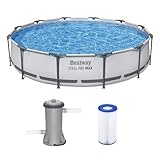
Bestway Steel Pro MAX 12' x 30" Above Ground Swimming Pool Set with Pump | Durable Round Metal Frame Outdoor Backyard Pool, Puncture-Resistant Liner - Type III A/C Filter Cartridge Included, Gray | Check Price On Amazon |
|
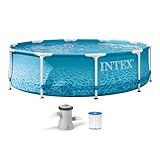
INTEX 28207EH 10ft X 30in Beachside Metal Frame Above Ground Swimming Pool Set, Includes 330 GPH Cartridge Filter Pump, Puncture-Resistant Material, Rust Resistant, 1185 Gallon Capacity | Check Price On Amazon |

|
H2OGO! Kids Splash-in-Shade 8-Foot Round Steel Frame Above Ground Pool with Water Mister and Canopy Sunshade, Green Tropical Leaf Print | Check Price On Amazon |
If you are still in the pool construction phase, understanding deck requirements before the dig begins prevents expensive regrading later. For the full timeline and permitting requirements on new pool builds, our complete pool installation guide covers every phase from excavation to startup.
By the Numbers
Pool Deck Installation — What the Numbers Show
Sources: HomeGuide contractor survey data, Fixr cost database, ASTM C1580 drainage standard
What Makes a Pool Deck Different from a Standard Patio?
A pool deck must solve three engineering problems a standard patio never faces. It must drain water away from the pool shell to prevent soil saturation behind the walls. It must stay walkable when wet without the traction treatments that make a driveway safe. It must handle chlorine splash-out and saltwater mist that accelerate surface degradation.

- Intelligent Navigation with Full Coverage: Equipped with 11 high-precision sensors and enhanced dual-path algorithms. The optimized WavePath cleaning pattern ensures systematic coverage with minimal overlap, while adaptive navigation analyzes pool layout in real time to eliminate missed spots
- Dual Filtration for Crystal-Clear Water: Advanced dual-layer filtration system features a replaceable 3-micron ultra-fine filter paired with a 180-micron standard filter. Effectively captures fine dust, sand, leaves, and debris for visibly cleaner and healthier pool water
- Comprehensive Pool Cleaning: Engineered to clean the pool floor, walls, waterline, and shallow areas (above 12 inches). The Caterpillar Treads system enhances mobility and climbing ability, ensuring thorough coverage across all pool zones
- Reliable Performance with 2-Year Warranty: Trusted by over 500,000 pool owners worldwide, this robotic pool cleaner delivers consistent, high-performance results. Built for durability and backed by a 2-year warranty and responsive customer support for worry-free ownership
Conventional patios slope toward the yard. Pool decks slope away from the pool. The International Residential Code and ASTM C1580 standard specify a minimum quarter-inch drop per foot of deck surface for the first 4 feet from the pool coping. This happens because saturated soil expanding behind a pool wall applies hydrostatic pressure that can crack fiberglass shells, pop vinyl liners out of their tracks, and bow concrete walls inward.
Pool decks fail when the slope is too shallow or runs the wrong direction. A deck that drains toward the pool carries dissolved calcium, salt, and organic debris into the water every time it rains. The pool becomes harder to balance chemically. Algae blooms start earlier in the season. The deck surface spalls and pits from freeze-thaw cycles because water sits instead of draining.
The material choice also matters more than on a patio. Dark stamped concrete around a pool in Phoenix hits 140 degrees Fahrenheit at 2 PM in July. Bare feet cannot tolerate surfaces above 115 degrees Fahrenheit for more than a few seconds. Travertine and light-colored concrete both stay 30 to 40 degrees Fahrenheit cooler because they reflect more solar radiation. The surface temperature difference is not a comfort preference. It determines whether children and older adults can use the deck safely.
The joint spacing on a pool deck must also be tighter than on a standard patio. The National Precast Concrete Association recommends control joints every 8 to 10 feet maximum for 4-inch thick slabs exposed to daily wet-dry cycling. Standard patios can go 12 feet between joints. The extra joints prevent the cracking that starts at the sawcut and spreads across the slab over two or three seasons.
The surface texture requirements are the last difference. A broom finish with a coarse bristle brush provides the minimum slip resistance for wet feet. Colorado State University research on pedestrian surface friction found that a coefficient of friction above 0.6 prevents slips on wet surfaces. Smooth troweled concrete without a broom finish typically measures 0.35 to 0.45 when wet and is not considered safe for pool use.
For most residential pools, a broom-finished concrete deck with 4-inch minimum slope in the first 4 feet and control joints every 8 feet gives the best combination of safety, drainage, and cost. Budget $15 to $22 per square foot for new pour and finish work. If you want to get a more precise estimate tailored to your specific project, our swimming pool deck cost calculator factors in your material choice and regional labor rates.
Complete Pool Deck Material Comparison: Cost, Lifespan, and Traction
Every pool deck material is a trade-off between installation cost, annual maintenance hours, and years of service before replacement. The table below shows all six major material categories with the numbers that matter most for a residential pool owner making a 20-year decision. Prices include excavation, base preparation, and finishing for a typical 800-square-foot deck.
Use the table below to match your budget and climate to the deck material that will perform best over a full ownership cycle.
Material Comparison
Pool Deck Materials — Cost, Lifespan, and Surface Temperature
Prices are installed cost per square foot for 800 sq ft deck. Source: Fixr and HomeGuide contractor surveys.
| Material | Installed Cost/sq ft | Lifespan (years) | Surface Temp in Sun | Wet Traction | Annual Maintenance |
|---|---|---|---|---|---|
| Broom-Finished Concrete | $15-22 | 25-30 | 120-140°F (dark) | Good | Seal every 3 yrs |
| Stamped Concrete | $20-35 | 20-25 | 130-150°F (dark) | Fair | Seal every 2 yrs |
| Concrete Pavers | $18-28 | 30-50 | 110-130°F | Good | Refill joints every 5 yrs |
| Travertine Pavers | $25-50 | 50+ | 70-80°F | Excellent | Seal every 5 yrs |
| Wood Decking (IPE/Cedar) | $30-60 | 15-25 (cedar) / 40+ (IPE) | 90-110°F | Good | Oil/stain every 2 yrs |
| Composite Decking | $25-45 | 25-30 | 100-120°F (dark) | Good | Wash annually |
Surface temperatures measured at 2 PM, 90°F ambient air temperature, full sun exposure. Traction ratings based on coefficient of friction testing on wet surfaces.
The surface temperature column matters most for families with children and hot-climate pools. Travertine stays cool enough to walk on barefoot even when air temperature exceeds 100 degrees Fahrenheit. Dark stamped concrete requires a spray-down or shade structure to be usable at midday in the Sun Belt. The cost difference over 20 years between these two materials shrinks significantly when you account for the shade sails, misters, and foot-washing stations that dark concrete needs.
If you are working with a tighter overall pool budget, comparing deck material costs alongside the full construction estimate helps you allocate dollars where they matter most. Our swimming pool cost breakdown covers every line item from excavation to plaster so you can see where the deck fits into the total project.
What Is the Best Pool Deck Material for Full Sun and Bare Feet?
Travertine pavers are the best pool deck material for full-sun locations with barefoot traffic. They stay 70 to 80 degrees Fahrenheit on a 90-degree day because travertine is a natural limestone with high solar reflectance and low thermal conductivity. Dark broom-finished concrete in the same conditions reaches 120 to 140 degrees Fahrenheit. The surface temperature gap is consistent and well-documented across Arizona State University solar reflectance studies.
This happens because travertine’s crystalline calcite structure reflects 50 to 60 percent of incoming solar radiation. Standard gray concrete reflects only 30 to 40 percent. The color matters more than the material family. Light-colored concrete pavers with high solar reflectance index ratings above 29 meet LEED cool pavement standards and perform within 10 degrees Fahrenheit of travertine. If you cannot afford travertine at $25 to $50 per square foot installed, use light-colored concrete pavers with a solar reflectance index above 29.
If you choose dark stamped concrete, the surface becomes a burn hazard when air temperature exceeds 85 degrees Fahrenheit. The National Safety Council identifies surface temperatures above 115 degrees Fahrenheit as capable of causing first-degree burns within one second on thin skin like the soles of children’s feet. You can mitigate this with a light-colored concrete sealer, a shade sail over the primary walking path, or a separate foot-washing station with a hose bib near the pool entry.
Wood and composite decking both stay below 110 degrees Fahrenheit even in dark colors. The air gaps between deck boards prevent heat buildup by allowing convective cooling from below. This is the same principle that makes a boardwalk cooler than an asphalt sidewalk. The trade-off is splinters with wood, and expansion squeaks with composite in direct sun. Wood pool decks also require an annual oil treatment to prevent the chlorine splash zone from bleaching and drying the surface fibers.
For a full-sun pool deck, choose travertine pavers if the budget allows $30 per square foot or more. Choose light-colored concrete pavers with a solar reflectance index above 29 if the budget is under $25 per square foot. Avoid dark stamped concrete unless a shade structure is part of the project plan from day one. The cost of adding shade after the deck is poured equals the cost difference of upgrading to travertine in the first place.
If your pool uses saltwater, travertine has another advantage beyond heat management. Saltwater pools create a mild saline mist that accelerates corrosion on some materials, and travertine handles that exposure better than standard concrete.
How to Pour a Concrete Pool Deck That Will Not Crack: Step-by-Step Installation
A concrete pool deck cracks for one reason. The sub-base settles or shifts after the slab is poured. The concrete itself is strong in compression. It is weak in tension when the ground beneath it moves. Control the sub-base and you control the cracking. Every step below addresses that single goal. Skip a step and the deck fails within three years.
Step-by-Step Guide
How to Install a Concrete Pool Deck — Step by Step
7 steps · Timeline: 7-10 days for new construction including cure time
Excavate to 8 inches below finished grade
Remove all topsoil and organic material from the deck footprint. Organic material decomposes over time and creates voids under the slab. A 4-inch concrete slab on 4 inches of compacted aggregate base needs 8 inches total excavation depth from the finished surface elevation.
Set the slope with string lines from the pool coping edge
Run string lines from the pool coping outward at a quarter-inch drop per foot for the first 4 feet, then flatten to an eighth-inch per foot beyond. This is the ASTM C1580 standard profile. Measure at multiple points around the pool perimeter to confirm the slope is consistent.
Compact crushed stone base in 2-inch lifts to 95% density
Place 4 inches of 3/4-inch minus crushed stone in two 2-inch lifts. Compact each lift with a vibratory plate compactor until the surface does not deflect under foot pressure. This happens because each lift locks the angular stone particles together.
Install isolation joint at the pool coping interface
Place a half-inch thick compressible expansion joint material between the pool coping and the new concrete. This prevents the deck slab from bonding to the pool shell. The deck and pool must move independently during freeze-thaw cycles.
Place 4-inch concrete slab with welded wire reinforcement at mid-depth
Order 4,000 PSI concrete with 4 to 6 percent air entrainment for freeze-thaw resistance. Place welded wire reinforcement on 2-inch chairs so it sits at the middle of the slab thickness. Use a concrete vibrator screed to consolidate the mix and remove air pockets around the wire.
Broom finish and cut control joints within 24 hours
After bull-floating and troweling to a smooth surface, pull a coarse bristle concrete finishing broom across the slab in one direction. Cut control joints at 8-foot intervals using a concrete saw within 12 to 24 hours of the pour. Joint depth must be one-quarter of slab thickness: 1 inch deep for a 4-inch slab.
Cure for 7 days under wet burlap or curing compound
Keep the concrete continuously moist for 7 days. Concrete gains strength through a chemical reaction called hydration that requires water. If the surface dries out, hydration stops and the top layer stays weak and flakes off within the first season. Apply a liquid membrane curing compound or keep wet burlap on the surface.
The 4,000 PSI concrete with air entrainment spec matters most in freeze-thaw climates. The air bubbles in the concrete matrix provide expansion space for water that freezes inside the slab. Without air entrainment, the water freezes, expands 9 percent, and spalls the surface in a single winter. The American Concrete Institute specifies 4 to 6 percent air content for exterior flatwork in climates with more than 30 freeze-thaw cycles per year.
The control joint depth rule is also not optional. A joint that is too shallow cannot direct the crack downward. The slab cracks randomly instead of at the joint. A joint cut to one-quarter of slab thickness creates a weakened plane that the slab follows when it shrinks during curing and expands during summer heat. Joint filler keeps dirt and water out of the crack and should be applied after the slab has cured for 30 days.
What Is the Cheapest Pool Deck Option That Still Looks Good?
Broom-finished concrete is the cheapest pool deck material that meets safety and durability standards. At $15 to $22 per square foot installed for a standard gray pour, an 800-square-foot deck costs $12,000 to $17,600 total. Stamped concrete overlay on an existing sound slab is even cheaper at $5 to $15 per square foot if you are refinishing rather than building new.
The key to making broom-finished concrete look good is the color. Integral color mixed into the concrete at the batch plant adds $2 to $4 per square foot and eliminates the blotchy gray appearance of raw concrete. A light buff or tan integral color with a medium broom finish looks intentional and clean. It will not look like a driveway. It will not look like a budget compromise. It will look like a light-colored deck that stays cooler and hides stains.
Stained concrete after curing adds another design layer. A reactive acid stain applied after the 28-day cure produces a variegated, mottled finish that mimics natural stone for an additional $3 to $7 per square foot. The stain chemically reacts with the lime in the concrete to create permanent color that will not peel or flake. Combined with a matte sealer, acid-stained broom-finished concrete holds its own visually against pavers that cost twice as much.
Exposed aggregate is the final budget upgrade path. After the concrete is placed and bull-floated, the top layer of paste is washed off with a pressure washer and retarder to expose the small stones in the mix. This creates a pebbled, non-slip surface with a texture that hides dirt and stains better than broom finish alone. Exposed aggregate adds $3 to $5 per square foot over the base concrete cost and requires resealing every 3 to 5 years with a penetrating concrete sealer designed for aggregate surfaces.
If you are weighing whether an above-ground pool with a deck might fit your budget better than an inground build, our guide to the best above-ground pools compares deck requirements and total installed costs for semi-inground and on-ground installations.
Price Comparison
Budget Pool Deck Options — Cost per Square Foot Installed
Sorted lowest to highest installed cost for an 800 sq ft deck. Prices verified at time of publication.
$5-15/sq ft
$15-22/sq ft
$18-26/sq ft
$20-30/sq ft
$20-27/sq ft
$18-28/sq ft
$25-50/sq ft
Prices include excavation, base prep, concrete or paver materials, and finishing labor for 800 sq ft deck. Overlay assumes structurally sound existing slab.
Pavers vs Poured Concrete for Pool Decks: Which Installation Lasts Longer?
Concrete pavers outlast poured concrete slabs by 10 to 25 years on average. A properly installed paver deck on a compacted aggregate base lasts 30 to 50 years with joint sand replacement every 5 years. A poured concrete slab typically lasts 25 to 30 years before extensive cracking or spalling requires replacement. The difference comes down to how each system handles ground movement and freeze-thaw cycling.
This happens because pavers are an articulated system. Each paver moves independently as the ground beneath it shifts. The sand-filled joints between pavers act as micro-relief joints that absorb small movements without cracking the paver units themselves. A poured concrete slab is monolithic. When the ground shifts differentially due to frost heave or soil settlement, the slab cracks because it cannot flex. The control joints direct where it cracks, but they do not prevent the cracking.
Pavers also have a maintenance advantage. A cracked or stained paver is replaced individually in 10 minutes with a pry bar and a new unit. Keep a dozen extra pavers from the original lot stored under the deck or behind the fence. A cracked concrete slab requires saw-cutting, demolition, rebar tying, and a cold joint that will never match the original finish texture or color. The repair is permanent visible patchwork.
The cost premium for pavers is real but narrow over a 30-year ownership period. At $18 to $28 per square foot, an 800-square-foot paver deck costs $14,400 to $22,400. A poured concrete deck at $15 to $22 per square foot costs $12,000 to $17,600. The paver deck costs 20 to 30 percent more upfront but typically lasts 40 to 60 percent longer before major intervention. If you plan to own the pool for more than 15 years, pavers are the better financial decision.
The exception is stamped concrete. Stamped concrete has the shortest lifespan of all deck options at 20 to 25 years because the stamping process creates thinner sections in the pattern recesses where water pools and freezes. The textured surface also wears smooth over time, reducing traction. A sealer applied every 2 years slows the wear, but any stamped concrete deck older than 15 years will show significant pattern degradation.
For homeowners in regions with freeze-thaw cycles and clay soils that expand and contract with moisture, the paver advantage is even larger. Clay soils can heave 2 to 4 inches between wet and dry seasons. A monolithic slab bridges that movement and cracks. Pavers ride on top of it and settle back into position when the soil dries. The sand base acts as a leveling layer that absorbs vertical movement without transferring stress to the surface.
How Much Slope Does a Pool Deck Need to Drain Properly?
A pool deck needs a minimum slope of one-quarter inch per foot away from the pool for the first 4 feet measured from the coping edge. After the first 4 feet, the slope can reduce to one-eighth inch per foot if site conditions require it. This is the ASTM C1580 standard for exterior concrete flatwork adjacent to structures. On an 800-square-foot deck with the pool at the center, the outer edge sits 1 to 2 inches lower than the coping elevation depending on deck depth.
This happens because water needs enough gradient to overcome surface tension and begin sheet flow across the concrete. A slope shallower than one-eighth inch per foot allows water to bead and sit on the surface. Standing water on concrete dissolves the calcium hydroxide in the cement paste over time. This is called leaching. It etches the surface and creates a rough, pitted texture that holds more water in the next cycle.
Pool decks near the house foundation need an additional consideration. The deck must also slope away from the house foundation at the same one-quarter inch per foot minimum for at least 10 feet per International Residential Code requirements. A pool deck that slopes toward the house directs thousands of gallons of splash-out and rainwater toward the foundation wall each year. Foundation settlement from saturated soil is one of the most expensive repairs in residential construction.
Measuring the slope after installation is straightforward. Wait for dry deck conditions. Place a 4-foot level on the surface with one end touching the pool coping. Lift the outer end until the bubble centers. Measure the gap under the lifted end. It must be at least 1 inch for a 4-foot level. Less than 1 inch means the slope is too shallow and water will not drain properly.
If the slope is incorrect, the fix depends on severity. A deck that is flat or back-pitched toward the pool needs a mud-jacking or overlay correction. Mud-jacking pumps a slurry under the slab to lift the outer edge. An overlay of polymer-modified concrete can be placed at the correct slope on top of the existing slab if the total thickness stays under 2 inches. Both fixes cost $8 to $15 per square foot and are cheaper than demolition and replacement in most cases.
Pool Deck Drainage Solutions That Prevent Standing Water and Ice Hazards
The slope carries water to the deck edge. What happens at the edge determines whether the water actually leaves. A deck that drains to a lawn with heavy clay soil creates a mud strip 2 feet wide around the entire pool perimeter. A deck that drains onto a sidewalk creates an ice sheet in freezing weather. Channel drains and gravel strips solve both problems.
The most effective drainage system for a pool deck is a continuous channel drain installed at the outer edge of the deck where the slope terminates. A 4-inch wide polymer channel drain with galvanized steel grate captures all sheet flow and carries it to a pop-up emitter or dry well in the yard. The channel drain must be set flush with the deck surface and pitched at one-eighth inch per foot toward the discharge point.
This happens because water flowing off the deck edge at even a shallow slope has enough velocity to erode soil and carry debris into the yard. The channel drain intercepts the flow before it hits soil. It directs the water into a 4-inch corrugated pipe that daylights at least 10 feet from the pool. The outlet must be above grade or into a pop-up emitter that opens under water pressure. A buried outlet that terminates underground creates a saturated zone that can migrate back toward the pool.
In freezing climates, the channel drain must include a heating cable if the pool is used year-round. Standing water in the channel freezes and blocks the entire drainage system. A self-regulating heat trace cable rated for wet locations installed inside the channel drain keeps water flowing at temperatures down to minus 20 degrees Fahrenheit. The cable draws 5 to 8 watts per foot and costs $50 to $100 per season to operate in cold climates.
A gravel strip is the alternative for decks in warm climates where freezing is not a concern. A 12-inch wide strip of 3/4-inch washed gravel at the deck edge allows water to percolate into the soil slowly without creating mud. The gravel strip must be 6 inches deep with landscape fabric underneath to prevent soil migration. Replace the top 2 inches of gravel every 3 years as it fills with dust and organic debris.
Pool deck drains that terminate in a yard with heavy clay soil should discharge into a 50-gallon dry well basin buried 3 feet deep and surrounded by 12 inches of washed stone. The dry well holds the water until it percolates into the surrounding soil slowly. Size the dry well at 1 gallon of storage per square foot of deck for a 1-inch rain event. An 800-square-foot deck needs 800 gallons of storage for a 1-inch storm. That requires two 50-gallon basins connected in series or a single 200-gallon basin if space allows.
How to Resurface an Old Pool Deck Without Demolition
A structurally sound concrete slab with surface spalling, staining, or outdated color is a candidate for resurfacing rather than replacement. The resurfacing process places a half-inch to 2-inch layer of polymer-modified concrete overlay on the existing slab. The overlay bonds to the old concrete and takes a new texture and color. The total cost runs $8 to $15 per square foot compared to $15 to $22 per square foot for demolition and new pour.
This happens because polymer-modified overlays contain acrylic or epoxy modifiers that create a chemical bond with the existing concrete surface. Standard wet concrete placed on old concrete creates only a mechanical bond from surface roughness. The polymer modifiers penetrate the old concrete’s pore structure and form a bond strength above 400 PSI when tested per ASTM C1583. This is strong enough to resist delamination from freeze-thaw cycling and foot traffic.
The existing slab must pass three tests before resurfacing is viable. The slab must not have active cracks wider than one-eighth inch that are still moving. The slab must have positive drainage or be correctable with the overlay thickness. The slab must sound solid when tapped with a hammer — no hollow spots indicating delamination at the sub-base. If the slab fails any of these tests, resurfacing will fail within 2 years and demolition is the correct choice. For a full breakdown of resurfacing expenses versus replacement, you can use our pool renovation cost calculator to estimate resurfacing and refinishing costs for your specific deck.
Surface preparation is the step most DIY resurfacing attempts get wrong. The existing slab must be pressure-washed at 3,500 PSI minimum to remove all dirt, oil, and loose material. Any oil stains must be treated with a concrete degreaser with enzymatic action because oil prevents the polymer overlay from bonding. Cracks wider than one-sixteenth inch must be chased with an angle grinder and filled with an epoxy crack repair compound prior to overlay application.
The overlay material itself is a bagged polymer-modified resurfacer mixed with water and applied with a squeegee or trowel at the specified thickness. A 50-pound bag of polymer-modified concrete resurfacer covers approximately 40 to 50 square feet at one-eighth inch thickness. For an 800-square-foot deck, budget 16 to 20 bags. The material sets in 30 to 45 minutes at 70 degrees Fahrenheit, so work in small sections with a helper mixing while you apply.
The overlay can be broom-finished, stamped, or troweled smooth depending on the desired final look. A stamped overlay must be at least three-eighths inch thick to accommodate the stamp depth without exposing the old concrete. A broom finish can be as thin as one-eighth inch. Both finishes require a solvent-based acrylic sealer applied after 24 hours of cure time to protect the surface and deepen the color.
Wood and Composite Pool Decking: Installation Requirements Most Builders Skip
Wood pool decks fail at the fasteners. Chlorinated splash-out corrodes standard deck screws within 3 years. Saltwater pools accelerate the corrosion to 1 to 2 years. The wood itself handles moisture if the species is right. The fasteners and joist connections are where poolside wood decks rot, loosen, and become unsafe.
Every fastener on a wood pool deck within 6 feet of the water must be 316-grade stainless steel. Hot-dipped galvanized fasteners corrode in pool environments because the zinc coating reacts with chlorine compounds to form zinc chloride, which is water-soluble and washes away. The National Association of Home Builders corrosion testing found that 316 stainless steel fasteners lost less than 1 percent of their tensile strength after 5 years of poolside exposure. Galvanized fasteners lost 15 to 25 percent in the same period.
Joist spacing on pool decks must also be tighter than standard deck construction. The International Residential Code allows 2×6 joists at 24 inches on center for standard decks. Pool decks require 16 inches on center maximum to reduce deflection under wet, barefoot traffic loads. A deck board that flexes underfoot collects water in the depression. The standing water accelerates rot and creates a slip hazard on the downhill side of the deflection.
The wood species choice determines whether the deck lasts 15 years or 40 years. Pressure-treated southern yellow pine is the cheapest option at $30 to $40 per square foot installed, but it requires annual staining and will show surface checking within 5 years. Cedar at $40 to $55 per square foot installed resists rot naturally but is soft and dents under furniture legs. IPE hardwood at $50 to $60 per square foot installed is the long-term solution. IPE has a Janka hardness rating above 3,500 and natural oils that resist both rot and insect damage for 40-plus years without chemical treatment.
Composite decking solves the rot, splinter, and staining problems at the cost of higher surface temperatures in direct sun. The best composite pool deck products like PVC-capped composite boards resist chlorine and saltwater staining better than first-generation wood-plastic composites. The PVC cap is impervious to pool chemicals. The composite core provides rigidity. The combination works well poolside but still requires the same 316 stainless steel fastener spec as natural wood.
All wood and composite pool decks also require a ventilation gap between the decking and any enclosed space below. A deck built over a concrete patio slab or enclosed storage area traps moisture. The moisture accelerates rot in wood and mold growth on composite. A minimum of 18 inches of open air space below the deck joists provides enough ventilation to dry the underside after splash events. Enclosed under-deck areas need powered ventilation or vapor barriers to prevent moisture damage to the structure.
For those considering a DIY approach to save on pool construction costs, building a deck is one area where material quality cannot be compromised. Our analysis of DIY inground pool kits covers what jobs are realistic for a homeowner and which require licensed contractors to avoid structural failures.
Pool Deck Design Ideas That Add Usable Space and Property Value
A pool deck that is nothing but flat concrete around a rectangle of water wastes the most valuable square footage on the property. The space within 20 feet of the pool edge is where people gather, eat, supervise children, and dry off. Adding distinct zones, shade elements, and vertical interest transforms the deck from a concrete apron into an outdoor living room. Before breaking ground, you can explore layout options and material combinations with our pool deck design visualizer to see how different materials, patterns, and layouts will look in your space.
Zone separation is the design principle that makes the difference. A pool deck needs at minimum three zones: the wet zone within 4 feet of the coping for entry and exit, the lounge zone 4 to 12 feet out for chairs and sunbathing, and the dry zone beyond 12 feet for dining and conversation areas that stay free of splash. Each zone uses a different deck material, color, or texture to signal the transition without building walls.
The wet zone benefits from a change in paver pattern or a darker color band that creates a visual frame around the pool. A 2-foot wide soldier course of contrasting pavers at the pool edge defines the wet zone and provides a visual safety cue for children who are told not to cross that line without an adult. The paver course also handles the concentrated water load from swimmers exiting the pool. Standard broom-finished concrete in this zone develops a polished, slippery surface within three seasons of heavy exit traffic.
The dry zone gains the most from a shade structure. A 10-by-12 foot aluminum pergola placed 15 feet from the pool edge defines the dining area and provides filtered shade without trapping heat the way a solid roof does. Climbing vines on the pergola columns add shade that increases as the afternoon sun moves lower. The pergola footings must be poured as part of the deck pour, not bolted to the surface afterward, because wind uplift on a pergola can exceed 1,000 pounds in a thunderstorm.
Vertical elements at the deck perimeter serve two purposes. They provide privacy from neighbors and they define the deck as a room rather than a platform. A low planter wall 18 to 24 inches high built from matching stone or concrete block creates a seating ledge and contains planting beds that soften the hardscape. The wall also provides a safety barrier for the deck edge drop-off. The International Residential Code requires a guardrail for any deck surface more than 30 inches above grade, and a planter wall with dense shrubs behind it satisfies the intent if not always the letter of the code.
Lighting integrated into the deck surface is the final element that turns a daytime pool deck into an evening gathering space. LED paver-mounted LED lights set flush into the deck surface along the pool perimeter provide ambient light without the glare of overhead fixtures. A 12-volt low-voltage system with a transformer and photocell timer adds $2,000 to $3,500 to the deck project for 20 to 30 lights. The lights must be IP68 rated for submersion because they will be underwater when the deck floods from heavy rain or cannonball splash.
Pool Deck Sealing and Maintenance: What Each Material Needs Annually
Every pool deck surface degrades from UV exposure and chlorine splash-out regardless of material. The degradation is slow enough that most owners do not notice it until year 4 or 5 when the surface suddenly looks chalky, stained, or rough. A sealing schedule matched to the material prevents the damage from starting and extends the deck’s cosmetic life by 5 to 10 years.
Concrete pool decks need a penetrating silane or siloxane sealer applied every 3 years. The sealer penetrates the concrete pores and chemically bonds to the silica in the cement paste. It repels water while allowing water vapor to escape. This is critical because a film-forming sealer that traps moisture in the concrete causes spalling during freeze-thaw cycles. A 5-gallon pail of silane-siloxane penetrating sealer covers 400 to 500 square feet and costs $150 to $250. Apply with a pump sprayer on a dry deck after pressure washing.
Stamped concrete requires more frequent sealing because the pattern recesses collect water and the texture wears smooth without a protective film. A solvent-based acrylic sealer with a matte or wet-look finish applied every 2 years maintains the color depth and provides UV protection. The sealer must include a non-slip additive if the stamped finish is already smooth. Mix aluminum oxide grit additive into the sealer at 1 pound per 5 gallons to bring the wet coefficient of friction above 0.6.
Paver decks do not need sealing for structural reasons but benefit from it for color retention and joint stabilization. A polymeric sand joint stabilizer swept into the paver joints hardens after water activation and prevents weeds, ants, and washout. Reapply polymeric sand every 5 years. A penetrating paver sealer applied at the same interval enhances color and makes the surface easier to clean. Never use a film-forming sealer on pavers because it traps water in the sand joints and causes efflorescence, which is white calcium deposits that bloom on the paver surface.
Travertine pavers need the least maintenance of any pool deck material. A penetrating sealer applied every 5 years prevents staining from leaf tannins and sunscreen oils. The surface does not need anti-slip additives because travertine’s natural porosity provides grip even when wet. Clean travertine annually with a pressure washer at 1,500 PSI maximum and a wide fan tip. Higher pressure etches the soft stone surface. For stubborn organic stains, a pH-neutral stone cleaner with a soft bristle brush removes the stain without etching.
Wood decks demand the most maintenance. Clean the surface with a wood deck cleaner and brightener annually. Apply a penetrating oil-based stain every 2 years. The stain must be reapplied before the wood surface turns gray, because once the wood fibers have UV-damaged, the stain cannot restore the original color. Pressure-treated pine needs the stain applied within 6 months of installation and then every year. Cedar can go 2 years between applications. IPE hardwood can go 3 years with a high-quality penetrating hardwood deck oil.
How Much Does Pool Deck Installation Cost by Material and Region?
Pool deck costs vary by material, region, site access difficulty, and whether the installation is part of new pool construction or a standalone project. The table below shows installed cost ranges by material for a standard 800-square-foot rectangular deck with good site access and minimal grading. Add 15 to 25 percent for sites with steep slopes, poor access for concrete trucks, or extensive demolition of an existing deck.
Cost Reference
Pool Deck Cost — Total Project Estimate by Material (800 sq ft)
Values are total installed cost including excavation, base prep, materials, and finish labor. Regional data from Fixr contractor survey.
| Material | Northeast | Southeast | Midwest | Southwest/West |
|---|---|---|---|---|
| Broom Concrete | $14,400-17,600 | $12,000-14,400 | $12,800-16,000 | $13,600-17,600 |
| Stamped Concrete | $18,400-28,000 | $16,000-24,000 | $16,800-25,600 ★ most common | $17,600-28,000 |
| Concrete Pavers | $16,000-22,400 | $14,400-19,200 | $15,200-20,800 | $14,400-22,400 |
| Travertine Pavers | $24,000-40,000 | $20,000-32,000 | $22,400-36,000 | $20,000-40,000 |
| Wood/Composite | $28,000-48,000 | $24,000-40,000 | $25,600-44,000 | $28,000-48,000 |
Region definitions: Northeast (NY, NJ, CT, MA, etc.), Southeast (FL, GA, NC, SC, AL), Midwest (IL, OH, MI, IN, WI, MN), Southwest/West (CA, AZ, NV, TX, NM). ★ highlights the most common material choice nationally for mid-range pool construction.
Stamped concrete is the most common pool deck material for mid-range residential pool construction nationally because it hits the price-versus-appearance sweet spot. At $16,000 to $28,000 for an 800-square-foot deck, it gives the look of stone or pavers at a concrete price. The higher maintenance requirement of resealing every 2 years is the trade-off. Broom-finished concrete is the most common choice for entry-level construction where the budget is the primary constraint.
Site access costs can add $2,000 to $5,000 to any deck project. If a concrete truck cannot reach the pour location, the concrete must be pumped through a line pump at $200 to $400 per hour or buggied by wheelbarrow at $50 to $75 per cubic yard of material. A bobcat for excavation that must be walked through a 36-inch gate instead of driven through a double gate adds half a day of labor. These costs are invisible in per-square-foot estimates but real on the final invoice.
Quick Reference
Pool Deck Terms Explained
Quick reference for the technical terms used in this guide
The angle of the deck surface measured as vertical drop per horizontal foot. Minimum one-quarter inch per foot away from pool per ASTM C1580
| Photo | Best Above-Ground Pools | Price |
|---|---|---|
|
|
Bestway Steel Pro MAX 12' x 30" Above Ground Swimming Pool Set with Pump | Durable Round Metal Frame Outdoor Backyard Pool, Puncture-Resistant Liner - Type III A/C Filter Cartridge Included, Gray | Check Price On Amazon |
|
|
INTEX 28207EH 10ft X 30in Beachside Metal Frame Above Ground Swimming Pool Set, Includes 330 GPH Cartridge Filter Pump, Puncture-Resistant Material, Rust Resistant, 1185 Gallon Capacity | Check Price On Amazon |
|
|
H2OGO! Kids Splash-in-Shade 8-Foot Round Steel Frame Above Ground Pool with Water Mister and Canopy Sunshade, Green Tropical Leaf Print | Check Price On Amazon |