Installing an above ground pool yourself can save between $1,500 and $3,500 in professional labor costs. That savings evaporates instantly if the ground is not level within one inch across the entire pool footprint, because a round 24-foot pool filled with water exerts over 15 tons of outward pressure on its walls. Uneven ground concentrates that pressure on the low side. The wall buckles. The water exits. The savings are gone.
This guide walks you through exactly what a DIY above ground pool installation involves. You will learn which parts most homeowners can handle, which parts demand professional help, and how to decide before you spend a single dollar.
| Photo | Best Above-Ground Pools | Price |
|---|---|---|
|
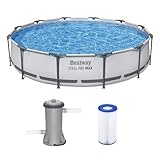
Bestway Steel Pro MAX 12' x 30" Above Ground Pool, Round Metal Frame Outdoor Swimming Pool Set with Filter Pump & Type III A/C Cartridge, Gray | Check Price On Amazon |
|
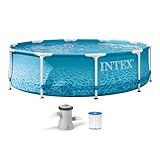
INTEX 28207EH Beachside Metal Frame Above Ground Swimming Pool Set: 10ft x 30in – Includes 330 GPH Cartridge Filter Pump – Puncture-Resistant Material – Rust Resistant – 1185 Gallon Capacity | Check Price On Amazon |

|
H2OGO! Kids Splash-in-Shade 8-Foot Round Steel Frame Above Ground Pool with Water Mister and Canopy Sunshade, Green Tropical Leaf Print | Check Price On Amazon |
By the Numbers
DIY Above Ground Pool Installation — What the Research Shows
Sources: Pool & Hot Tub Alliance, manufacturer installation guides, contractor surveys
What Does DIY Above Ground Pool Installation Actually Involve?
DIY above ground pool installation involves site preparation, ground leveling, base assembly, wall assembly, liner installation, plumbing connections, electrical work, and water filling. The leveling step alone takes 60 percent of the total installation time and is the step where most DIY failures occur. A typical 24-foot round pool installation requires removing and redistributing up to 2 cubic yards of soil to achieve the required flat surface.
Ground leveling for an above ground pool is not landscaping. It is structural preparation. The pool wall sits directly on the ground and carries the full hydraulic load of the water. Any point where the ground is lower than the rest receives disproportionately more pressure. This happens because water always seeks level, and the wall at the low point must hold back more water weight than the wall at the high point.

- Intelligent Navigation with Full Coverage: Equipped with 11 high-precision sensors and enhanced dual-path algorithms. The optimized WavePath cleaning pattern ensures systematic coverage with minimal overlap, while adaptive navigation analyzes pool layout in real time to eliminate missed spots
- Dual Filtration for Crystal-Clear Water: Advanced dual-layer filtration system features a replaceable 3-micron ultra-fine filter paired with a 180-micron standard filter. Effectively captures fine dust, sand, leaves, and debris for visibly cleaner and healthier pool water
- Comprehensive Pool Cleaning: Engineered to clean the pool floor, walls, waterline, and shallow areas (above 12 inches). The Caterpillar Treads system enhances mobility and climbing ability, ensuring thorough coverage across all pool zones
- Reliable Performance with 2-Year Warranty: Trusted by over 500,000 pool owners worldwide, this robotic pool cleaner delivers consistent, high-performance results. Built for durability and backed by a 2-year warranty and responsive customer support for worry-free ownership
According to the Pool & Hot Tub Alliance technical manual, above ground pool walls are engineered to distribute load evenly around the circumference. When the ground deviates more than 1 inch from level, the load distribution fails. The wall can kink, buckle, or blow out entirely. A blowout releases all the water in under 60 seconds and destroys the pool structure.
For a complete breakdown of which pool models hold up best under real conditions, see our guide on top-rated above ground pool models and what to look for before buying.
DIY vs Professional Installation: Cost and Risk Comparison
Professional above ground pool installation costs between $1,500 and $3,500 depending on pool size, site conditions, and regional labor rates. DIY installation eliminates that labor cost but introduces the risk of costly mistakes. A failed liner installation wastes a $200 to $600 liner. A collapsed wall during filling destroys a $1,000 to $3,000 pool kit. The risk-reward calculation depends entirely on your site conditions and skill level.
Use the table below to compare DIY and professional installation across the factors that matter most for a successful outcome.
Product Comparison
DIY Installation vs Professional Installation — Side by Side
Detailed comparison to help you decide which route is best for your situation.
| Factor | DIY Installation | Professional Installation |
|---|---|---|
| Labor Cost | $0 (your time only) | $1,500-$3,500 |
| Time to Complete | 2-5 days (with 2-3 helpers) | 1-2 days |
| Warranty Coverage | May be voided if not pro-installed | Full warranty typically honored |
| Mistake Risk | High — errors cost $200-$3,000 | Low — installer bears liability |
| Best For | Flat sites, experienced DIYers | Sloped sites, first-time pool owners |
| Our Verdict | Worth it only if site is flat within 1 inch | Recommended for most homeowners |
Cost ranges based on national averages for a 24-foot round above ground pool. Regional rates may vary.
Can You Install an Above Ground Pool on a Slope?
Installing an above ground pool on a sloped yard is possible but shifts the project from advanced DIY to professional territory. Slopes greater than 1 inch across the pool diameter require either excavation into the high side or building up the low side with compacted fill. Excavation is the only structurally sound approach because fill material, even when compacted, can settle over time under 15 tons of water pressure and create the uneven loading condition that causes wall failure.
If your yard has any visible slope, stop planning the DIY route until you have measured the grade with a laser level or transit. Our detailed guide on installing an above ground pool on a sloped site and what it requires covers the excavation depths, retaining wall options, and when professional grading becomes non-negotiable.
How to Level Ground for an Above Ground Pool: The Make-or-Break Step
Leveling the ground correctly is the single most important step in above ground pool installation. This step alone determines whether the pool survives its first season or collapses during filling. The process requires removing all vegetation and topsoil from the pool area, identifying the lowest point, and cutting down the high side to match that low point. You never build up the low side with loose fill because uncompacted or partially compacted soil compresses under load and recreates the uneven condition.
The tools required include a rotary laser level or transit level, a flat shovel, a heavy steel rake, a hand tamper or gas-powered plate compactor, and a 6-foot carpenter’s level. A string level and line level are not accurate enough for this job. The laser level provides the 1-inch tolerance reference across the full pool diameter and is the tool that separates successful DIY installs from failures.
After cutting the high side down to the level of the low side, the entire pool area must be compacted with a plate compactor. Then a 2-inch layer of masonry sand or pool base sand is spread evenly and leveled again. This sand base provides a smooth surface for the liner and protects it from rocks and roots. For the complete step-by-step leveling process with specific depth calculations, refer to our guide on how to level ground for an above ground pool with professional-grade precision.
Step-by-Step Guide
How to Install an Above Ground Pool — High-Level Process Overview
8 major steps · 2 to 5 days with 2-3 helpers · Not a substitute for manufacturer instructions
Verify Permits and HOA Requirements
Check local building codes for pool setback requirements, electrical permits, and fence mandates before buying anything.
Mark and Clear the Pool Site
Mark a circle 1 foot larger than the pool diameter. Remove all sod, rocks, and roots to a depth of 4 inches.
Level the Ground Within 1 Inch
Use a laser level to find the low point. Cut the high side down to match it. Compact thoroughly with a plate compactor.
Install Sand Base and Cove
Spread 2 inches of masonry sand evenly. Form a 4-6 inch cove of sand or foam around the inside perimeter to protect the liner.
Assemble Wall and Frame
Follow the manufacturer sequence exactly. Wall track goes down first, then wall panels, then top rails and vertical supports.
Install the Liner
Spread the liner evenly across the pool. Clip it over the wall with coping strips. Work wrinkles out from the center outward.
Connect Pump, Filter, and Plumbing
Install the skimmer, return fitting, pump, and filter according to manufacturer specs. All electrical work requires a licensed electrician.
Fill the Pool Slowly
Fill with 1-2 inches of water, stop and smooth all wrinkles, then continue filling. Wrinkles left past the 2-inch water mark become permanent.
What Tools and Equipment Do You Need for a DIY Pool Installation?
A complete DIY above ground pool installation requires approximately $300 to $600 in tools and equipment beyond standard homeowner toolkits. The essential tools include a rotary laser level with receiver for accurate grading, a gas-powered plate compactor which can be rented for $50 to $80 per day, a heavy-duty screed board or straight 2×4 for leveling sand, and a shop vacuum for removing air pockets under the liner during filling.
You also need a liner installation kit with coping strips and a liner bead receiver tool, a sharp utility knife, a heavy-duty extension cord for the pump, and a complete pump and filter system rated for your pool volume. A submersible pump is critical if you ever need to drain the pool quickly for liner replacement or repairs.
Key Specifications for common above ground pool equipment:
- Pump flow rate: Match to achieve 1 turnover per 8 hours (divide pool gallons by 480 for minimum GPM)
- Filter size: Minimum 1.5 sq ft of filter area per 10,000 gallons for sand; 100 sq ft cartridge per 10,000 gallons
- Laser level accuracy: Plus or minus 1/8 inch at 100 feet for construction-grade rotary models
- Plate compactor: Minimum 3,000 lbs of centrifugal force for adequate soil compaction
To find the ideal pump and filter for your specific pool dimensions, use our pool pump sizing calculator.
Common DIY Above Ground Pool Installation Mistakes and How to Avoid Them
The five most expensive DIY above ground pool installation mistakes are failing to level the ground within the 1-inch tolerance, installing the liner with wrinkles that become permanent under water weight, connecting electrical components without a licensed electrician, building up the low side with fill instead of cutting down the high side, and skipping the permit and inspection process. Each of these mistakes can cost more than the professional installation labor you tried to save.
Wrinkled liners are not cosmetic. A wrinkle in the liner creates a stress concentration point where the vinyl stretches unevenly. Over time that stretched area thins and becomes the failure point. Once the pool has more than 2 inches of water, the weight makes it physically impossible to pull wrinkles out by hand. The fix is draining the pool, repositioning the liner, and refilling. That wastes water and costs a full day of labor.
For step-by-step liner installation techniques that prevent wrinkles, see our guide on how to replace an above ground pool liner the right way. The same wrinkle-prevention principles apply to new installations.
Electrical and Permitting Requirements You Cannot Skip
The electrical work for an above ground pool pump, including the dedicated GFCI-protected circuit and bonding grid, must be performed by a licensed electrician in nearly every municipality in the United States. This is not optional and is not a cost you can avoid with DIY. The National Electrical Code Article 680 requires all pool pumps, underwater lights, and any metallic components within 5 feet of the pool to be bonded with a solid copper conductor of at least 8 AWG.
In plain terms: bonding connects all metal parts together so that if any stray electrical current enters the pool area, you do not become the path to ground. Improper bonding has killed swimmers. This is not a task to learn from a YouTube video. Budget $500 to $1,200 for a licensed electrician to install the dedicated circuit, GFCI protection, and bonding grid.
Permit requirements vary by municipality, but most require a building permit for any pool over 24 inches deep. Some require an electrical permit, a fence permit, and an inspection before filling. Homeowners associations often have additional restrictions on pool type, placement, and fencing. Before buying your pool, check common HOA pool restrictions and how to navigate the approval process to avoid installing a pool you will be forced to remove.
Cost Reference
DIY Pool Installation — Total Project Cost by Pool Size and Quality Tier
All values include pool kit, tools, sand, electrical, and permits. Find your row and column to estimate your real cost.
| Pool Size ↓ Quality Tier → | Budget (Steel Frame) | Mid-Range (Resin/Steel) | Premium (All-Resin) | Semi-Inground |
|---|---|---|---|---|
| 15 ft Round | $1,800-$2,400 | $2,800-$3,600 | $4,200-$5,500 | $6,000-$8,000 |
| 24 ft Round | $2,400-$3,200 | $3,800-$5,000 ★ most common | $5,800-$7,500 | $8,000-$11,000 |
| 12×24 ft Oval | $3,200-$4,000 | $4,800-$6,200 | $7,000-$9,000 | $10,000-$13,000 |
| 18×33 ft Oval | $4,000-$5,200 | $5,800-$7,500 | $8,500-$11,000 | $12,000-$16,000 |
Estimated total project costs include pool kit, delivery, sand base, tools, electrical work, permits, and water fill. Does not include deck or fence. ★ highlights the most common first-time buyer scenario.
For a customized cost breakdown based on your location and pool specifications, try our above-ground pool installation cost calculator.
When Should You Absolutely Hire a Professional Instead?
You should hire a professional installer without hesitation if your yard slopes more than 3 inches across the pool footprint, if you have never used a laser level or transit for grading work, if local code requires a licensed installer for warranty validity, or if you are installing an oval pool which requires buttress supports and more complex structural assembly. Oval pools have straight sides that require additional anchoring and bracing that round pools do not. The buttress system must be installed perfectly or the straight walls bow outward under load.
You should also hire a professional if the pool will be partially buried as a semi-inground installation, if your soil contains large rocks or heavy clay that makes excavation difficult, or if the pool site is within 10 feet of a structure foundation where improper grading could cause drainage problems. The cost of fixing a foundation water damage problem far exceeds the $1,500 to $3,500 you might save on DIY installation.
If you are still deciding between pool types, our comparison of inground versus above ground pool options and how to choose the right one will help you confirm that an above ground pool is the right choice before you commit to installation.
What Pool Maintenance Begins Immediately After Installation?
Pool water chemistry starts the moment the pool is filled. The fill water from your garden hose has a specific pH, alkalinity, and mineral content that determines what chemicals you need to add before the pool is safe to swim in. Testing and balancing must be completed within 24 hours of filling to prevent algae from establishing. A single day of untreated water in summer temperatures above 85 degrees Fahrenheit is enough for algae spores to begin colonizing.
You need a liquid drop test kit capable of measuring free chlorine, combined chlorine, pH, total alkalinity, calcium hardness, and cyanuric acid to track each parameter accurately. Test strips are not reliable enough for initial balancing because they lack the precision needed to calculate chemical doses correctly. The Taylor K-2006 kit uses FAS-DPD titration for chlorine which reads free chlorine from 0.2 ppm to over 20 ppm with accuracy test strips cannot match.
Initial chemical additions for a freshly filled 15,000-gallon above ground pool typically include 1.5 to 3 lbs of cyanuric acid stabilizer to protect chlorine from UV degradation, 4 to 8 lbs of alkalinity increaser or sodium bicarbonate to establish 80 to 120 ppm total alkalinity, and enough trichlor chlorine tablets in a floating dispenser or granular calcium hypochlorite shock to reach 2 to 4 ppm free chlorine.
To calculate the exact amount of chlorine needed for your pool size, use our swimming pool chlorine calculator.
Buying Guide
Ask Yourself These Questions Before You DIY Your Pool Installation
Tap each card to reveal what your answer means for your installation plan.
Frequently Asked Questions About DIY Above Ground Pool Installation
Can I install an above ground pool by myself with no helpers?
Quick Answer: No, you cannot install a standard above ground pool alone. The wall panel alone for a 24-foot round pool weighs over 100 lbs and requires at least two people to position safely. Liner installation requires a minimum of three people to prevent the liner from dragging on the ground and tearing before it is secured.
The wall assembly step is the most dangerous part of a solo attempt. A falling wall panel can cause serious injury. Most manufacturer instructions specify a minimum crew of two to three adults.
For an 18-foot or smaller pool, two people can complete the installation in about 3 days. Larger pools absolutely require three or more helpers for the wall and liner stages.
How long does a DIY above ground pool installation take from start to swim-ready?
Quick Answer: A DIY above ground pool installation by two to three people with no experience takes 3 to 5 full days from ground breaking to swim-ready water. Experienced DIYers on a flat, pre-cleared site can complete the work in 2 days. Adding electrical work, permits, and water fill extends the timeline to 5 to 7 calendar days even if the physical build takes only 2 days.
The single longest step is ground leveling, which can consume an entire day by itself on a site with moderate slope. Sand spreading and leveling takes about 2 to 3 hours. Wall assembly takes 3 to 4 hours. Liner installation and wrinkle removal takes 2 to 4 hours depending on temperature because warmer vinyl stretches more easily and produces fewer wrinkles.
Water filling from a standard garden hose at 5 to 10 GPM takes 24 to 48 hours for a 15,000-gallon pool. You cannot swim during filling because the liner needs to settle and the water chemistry must be balanced before human contact.
Can I use a truckload of sand to level my pool site instead of digging?
Quick Answer: No, building up the low side with sand or fill to achieve level is the most common cause of above ground pool wall failure. Uncompacted fill settles under the 15-ton water load and creates an uneven surface that concentrates pressure on the pool wall at the low point. You must cut down the high side to match the elevation of the lowest point.
This rule applies even if you compact the fill with a plate compactor. Native undisturbed soil has been compacted by decades of gravity and weather. Fill added in a single day, even when mechanically compacted in lifts, will settle more than native soil over the first year. The differential settlement between native soil and fill creates the same uneven loading condition that causes wall buckling.
The only exception is if the entire pool site is built up with engineered fill compacted in 6-inch lifts and tested for density by a geotechnical engineer. That process costs more than professional pool installation and defeats the purpose of DIY savings.
Do above ground pools need a concrete pad or can they sit on sand?
Quick Answer: Above ground pools sit on a compacted sand base, not a concrete pad. The sand layer, typically 2 inches thick, provides a smooth, puncture-resistant surface for the vinyl liner and allows the liner to stretch evenly as the pool fills. A concrete pad would abrade the liner from underneath and cause leaks within the first season.
The sand base must be masonry sand or specifically graded pool base sand. Play sand is too fine and washes out. Concrete sand is too coarse and contains sharp particles. Pool base sand has a grain size distribution that compacts firmly while remaining smooth enough to protect the vinyl liner.
Under the sand, the native soil must be compacted and level. Some installers add a layer of geotextile fabric between the soil and sand to prevent weeds and to stop the sand from mixing into the soil over time. A pre-cut pool pad or geotextile ground cloth costs $40 to $80 and is cheap insurance against liner punctures.
What is the difference between a resin and steel above ground pool for DIY installation?
Quick Answer: Resin pools use plastic composite components for top rails, uprights, and connectors that will never rust but are more expensive by $800 to $1,500 for the same size pool. Steel pools use galvanized steel components that are heavier and structurally strong but will eventually rust, especially in coastal or high-humidity environments. Resin pools are lighter and slightly easier for DIY assembly because the components weigh less.
From an installation perspective, resin components are more forgiving because they flex slightly during assembly. Steel components must be aligned perfectly because they do not flex and will bind at connection points if the wall track is not perfectly round. However, steel walls are standard on both types because resin walls lack the tensile strength to hold 15 tons of water.
For a coastal installation or a yard with sprinklers that will wet the pool exterior regularly, resin pays for itself by eliminating rust replacement costs over the pool's 15 to 20 year lifespan.
Can I install an above ground pool in the winter or on frozen ground?
Quick Answer: No, you cannot install an above ground pool on frozen ground. Frozen soil expands and heaves unpredictably. When it thaws, the ground settles unevenly and the pool loses its level base. The pool must be installed on thawed, dry, compacted soil with ambient temperatures above 50 degrees Fahrenheit for the vinyl liner to be flexible enough for wrinkle-free installation.
Cold vinyl below 50 degrees Fahrenheit becomes stiff and brittle. Attempting to stretch cold vinyl over the pool wall creates stress concentrations that weaken the liner and can cause tearing at the bead receiver. The ideal installation temperature range is 65 to 85 degrees Fahrenheit with direct sunlight warming the liner for at least an hour before installation.
If you buy a pool on winter clearance pricing, store the kit in a dry location and schedule installation for spring when soil conditions are suitable.
Why does my above ground pool wall look wavy after filling?
Quick Answer: A wavy above ground pool wall after filling indicates that the wall track was not installed perfectly round or that the ground underneath settled unevenly during filling. Minor waviness of less than half an inch is cosmetic. Waves of 1 inch or more indicate a structural problem and the pool should be drained immediately to prevent wall failure.
The wall track forms the foundation of the entire pool structure. If the track deviates from a perfect circle by more than half an inch, the wall panels will not seat correctly and the resulting waves concentrate stress. The fix is draining the pool, removing the liner, repositioning the wall track, and reassembling the wall correctly. This is a 2-day repair that wastes the initial fill water and sand base.
Preventing wall waviness requires measuring the track circle at 12 points around the circumference and adjusting until all radius measurements match within a quarter inch before the wall panels are attached.
Can I use bleach instead of pool chlorine tablets?
Quick Answer: You can use unscented, non-splashless household bleach as a chlorine source for an above ground pool, but you must add it daily because bleach contains no cyanuric acid stabilizer and degrades within hours under direct sunlight. Pool chlorine tablets contain built-in stabilizer and dissolve slowly over 3 to 7 days, providing consistent chlorination without daily attention.
Bleach dosing for a 15,000-gallon pool at 2 ppm free chlorine requires approximately 2 to 3 cups of 6 percent sodium hypochlorite bleach per day in summer. The cost per ppm of chlorine is similar between bleach and tablets, but the labor difference is significant. Bleach requires a daily test-and-dose routine. Tablets in a floating dispenser require checking twice per week.
Never use splashless or scented bleach. The additives in these products cause foaming and chemical reactions that are difficult to remove from pool water.
What is the difference between alkalinity and pH, and why does it matter during initial pool balancing?
Quick Answer: Total alkalinity acts as a pH buffer that prevents rapid pH swings. pH measures the acidity or basicity of the water on a 0 to 14 scale with a target of 7.4 to 7.6. Alkalinity must be adjusted to 80 to 120 ppm before pH can be stabilized because without adequate alkalinity, pH will bounce erratically with every chemical addition and every rainfall.
During initial pool balancing, test and adjust total alkalinity first using sodium bicarbonate at a rate of 1.5 lbs per 10,000 gallons to raise alkalinity by 10 ppm. Once alkalinity is in range, then adjust pH using soda ash to raise it or muriatic acid to lower it. Adjusting pH before alkalinity is futile because the unbuffered water will drift back to its original pH within hours.
This sequence is the most common water chemistry mistake new pool owners make. They chase pH numbers without addressing alkalinity first and end up over-correcting with chemicals that fight each other.
How soon after filling can I swim in my new above ground pool?
Quick Answer: You can swim 24 to 48 hours after filling, provided the water chemistry is balanced and the chlorine level has stabilized between 2 and 4 ppm free chlorine with zero combined chlorine. Swimming before the sanitizer has circulated fully risks exposure to bacteria from the fill water and from the installation process itself.
The pump and filter must run continuously for at least 24 hours after chemical additions to distribute chemicals evenly throughout the water volume. Test the water at three locations around the pool before the first swim to confirm uniform chemical levels. Uneven distribution creates hot spots where chlorine is too high and dead zones where it is too low.
Do not allow swimming if the water is cloudy. Cloudiness indicates incomplete filtration or a chemical imbalance. Cloudy water can harbor bacteria that chlorine has not yet neutralized. Wait until the water is crystal clear and the filter pressure gauge reads within the normal operating range.
Can I install a saltwater system on my new above ground pool during initial setup?
Quick Answer: Yes, you can install a saltwater chlorine generator during initial pool setup, but you must wait 30 days before adding salt to allow the pool structure and liner to settle. The salt, added at 2,700 to 3,400 ppm depending on the chlorinator model, is corrosive to fresh metal components and can accelerate rust on exposed steel if added before the pool has fully stabilized.
A saltwater chlorine generator for above ground pools costs $300 to $800 and produces chlorine from dissolved salt through electrolysis. This eliminates the need to handle chlorine tablets or liquid and provides a steady sanitizer output. However, salt systems require a resin or heavily protected steel pool because the salt aerosol from splashing accelerates rust on standard galvanized steel components.
During the first 30 days, use traditional chlorine tablets or liquid chlorine to maintain sanitation. After 30 days, add the salt, install the chlorinator cell in the return line, and switch the system on. Continue testing chlorine levels weekly because salt generators produce chlorine at a constant rate that may need seasonal adjustment.
What is the most overlooked cost in DIY above ground pool installation?
Quick Answer: The most overlooked cost in DIY above ground pool installation is water. Filling a 15,000-gallon above ground pool from a municipal water supply costs $50 to $150 depending on local water rates. Having water trucked in costs $400 to $800. Most DIY budget calculations include the pool kit, tools, sand, and electrical work but forget the water itself.
Get an accurate estimate with our pool fill cost calculator before you budget.
The second most overlooked cost is the pool fence. Many municipalities require a 4-foot minimum barrier with self-closing, self-latching gates around any pool over 24 inches deep. A DIY fence installation costs $800 to $2,000 for materials. A professionally installed fence costs $2,500 to $5,000. This cost is mandatory and cannot be skipped without violating code. Use our pool fence cost calculator to estimate your specific fencing expenses.
Chemical startup costs of $100 to $200 for the first month are also frequently forgotten. A new pool requires stabilizer, chlorine, pH adjusters, and alkalinity increaser in quantities that ongoing maintenance does not match.
DIY above ground pool installation is a real option for a homeowner with a flat yard, the right tools, reliable helpers, and the patience to complete the ground leveling step correctly. The savings of $1,500 to $3,500 are meaningful. The risks of a collapsed wall, a torn liner, or a voided warranty are equally real. Your specific site conditions, measured with a laser level before you buy the pool, determine which outcome is more likely.
If the ground is flat within 1 inch and you have the help and the tools, proceed with confidence. Read the manufacturer instructions twice before you begin. If the ground slopes more than 3 inches or the pool is an oval model, hire a professional installer and treat the labor cost as structural insurance.
| Photo | Best Above-Ground Pools | Price |
|---|---|---|
|
|
Bestway Steel Pro MAX 12' x 30" Above Ground Pool, Round Metal Frame Outdoor Swimming Pool Set with Filter Pump & Type III A/C Cartridge, Gray | Check Price On Amazon |
|
|
INTEX 28207EH Beachside Metal Frame Above Ground Swimming Pool Set: 10ft x 30in – Includes 330 GPH Cartridge Filter Pump – Puncture-Resistant Material – Rust Resistant – 1185 Gallon Capacity | Check Price On Amazon |
|
|
H2OGO! Kids Splash-in-Shade 8-Foot Round Steel Frame Above Ground Pool with Water Mister and Canopy Sunshade, Green Tropical Leaf Print | Check Price On Amazon |