
Saltwater pools are not filled with ocean water, and they do not leave your skin feeling like you just swam in the sea. The salt level in a residential saltwater pool runs about 3,000 to 3,500 parts per million (ppm), which is roughly one-tenth the salinity of ocean water at 35,000 ppm. A human tear registers around 9,000 ppm salt, so a saltwater pool is milder than your own tears.
By the Numbers
| Photo | Best Above-Ground Pools | Price |
|---|---|---|
|
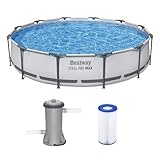
Bestway Steel Pro MAX 12' x 30" Above Ground Pool, Round Metal Frame Outdoor Swimming Pool Set with Filter Pump & Type III A/C Cartridge, Gray | Check Price On Amazon |
|
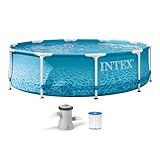
INTEX 28207EH Beachside Metal Frame Above Ground Swimming Pool Set: 10ft x 30in – Includes 330 GPH Cartridge Filter Pump – Puncture-Resistant Material – Rust Resistant – 1185 Gallon Capacity | Check Price On Amazon |

|
H2OGO! Kids Splash-in-Shade 8-Foot Round Steel Frame Above Ground Pool with Water Mister and Canopy Sunshade, Green Tropical Leaf Print | Check Price On Amazon |
Saltwater Pool Safety — What the Research Shows
Sources: CDC Healthy Swimming Guidelines, Pool & Hot Tub Alliance (PHTA), NSF/ANSI 50 Standards
What Is a Saltwater Pool, and How Does It Actually Work?
A saltwater pool does not sanitize itself with salt. The salt is simply the raw material that a saltwater chlorine generator (SWCG) uses to produce chlorine on site through electrolysis.
An SWCG cell contains coated titanium plates. As pool water with dissolved salt passes between these plates, a low-voltage electrical current splits the sodium chloride (NaCl) molecules. This happens because the electrical charge breaks the ionic bond between sodium and chloride ions in solution. The chloride ions combine with water to form hypochlorous acid, which is the exact same active sanitizer found in any traditional chlorine pool. This reaction only occurs when salt levels stay between 2,700 and 3,500 ppm and water flows at the manufacturer-specified rate through the cell. If the salt level drops below 2,500 ppm, the cell cannot produce enough chlorine, and the pool will develop algae within 48 to 72 hours in warm water above 80°F. Fix it by adding pool-grade salt at approximately 40 to 50 lbs per 2,000 gallons to raise salt by 3,000 ppm.
The key distinction matters for safety discussions. You are still swimming in chlorinated water. The chlorine is just manufactured differently, and at a steadier, lower-concentration rate than the manual addition of tablets, granules, or liquid shock.

- Intelligent Navigation with Full Coverage: Equipped with 11 high-precision sensors and enhanced dual-path algorithms. The optimized WavePath cleaning pattern ensures systematic coverage with minimal overlap, while adaptive navigation analyzes pool layout in real time to eliminate missed spots
- Dual Filtration for Crystal-Clear Water: Advanced dual-layer filtration system features a replaceable 3-micron ultra-fine filter paired with a 180-micron standard filter. Effectively captures fine dust, sand, leaves, and debris for visibly cleaner and healthier pool water
- Comprehensive Pool Cleaning: Engineered to clean the pool floor, walls, waterline, and shallow areas (above 12 inches). The Caterpillar Treads system enhances mobility and climbing ability, ensuring thorough coverage across all pool zones
- Reliable Performance with 2-Year Warranty: Trusted by over 500,000 pool owners worldwide, this robotic pool cleaner delivers consistent, high-performance results. Built for durability and backed by a 2-year warranty and responsive customer support for worry-free ownership
For most home pool owners, a SWCG running 8 to 10 hours per day at a setting of 30% to 60% output maintains 1 to 3 ppm free chlorine, which meets CDC recommended levels for safe swimming.
Is a Saltwater Pool Safe for Swimmers?
Yes, a properly maintained saltwater pool is completely safe for swimmers. The CDC, Pool & Hot Tub Alliance, and NSF International all classify saltwater pools as safe recreational water when free chlorine stays between 1 and 4 ppm and pH remains between 7.2 and 7.6.
According to the CDC’s Healthy Swimming guidelines, the health risks in any pool come from improper chemical balance, not from whether the chlorine source is a salt cell or a tablet feeder. A saltwater pool with a free chlorine reading of 2 ppm at pH 7.5 is chemically indistinguishable from a traditional chlorine pool at the same levels in terms of swimmer safety. The difference is operational. SWCGs produce chlorine steadily throughout the pump run cycle, which prevents the sharp chlorine spikes and valleys common with manual dosing.
This steady production reduces the chance of a pool dropping to zero free chlorine between treatments, which is the condition that allows bacteria like Pseudomonas aeruginosa and pathogens like Cryptosporidium to survive. The mechanism is straightforward. Consistent chlorine production means consistent sanitizer availability, which means fewer gaps in pathogen protection.
Does the Salt Irritate Eyes and Skin?
No, the salt level in a residential saltwater pool is too low to cause irritation. At 3,000 ppm, the salinity is about one-third the concentration of human tears and well below the threshold where most people can detect salt by feel or taste.
Eye irritation in pools is almost always caused by chloramines, not by salt or even free chlorine. Chloramines form when free chlorine reacts with ammonia from urine and sweat. A saltwater pool with proper free chlorine and zero combined chlorine will feel softer on eyes than a poorly maintained traditional pool, regardless of the sanitizer source. The “soft water” feel many saltwater pool owners report comes from steady chlorine levels and fewer chemical spikes, not from the salt itself.
Can You Open Your Eyes Underwater in a Saltwater Pool?
Yes, most swimmers can comfortably open their eyes in a balanced saltwater pool. The mild salinity at 3,000 ppm is closer to the body’s natural saline balance than a traditional chlorine pool with no added salt. Traditional pools accumulate some salt over time from chlorine breakdown and bather waste, typically reaching 1,000 to 2,000 ppm after several seasons anyway.
Is a Saltwater Pool Safe for Pets?
Dogs and most pets can safely swim in a saltwater pool with some precautions. The salt concentration at 3,000 ppm is low enough that a dog would need to drink an enormous volume of pool water to reach toxic sodium levels. A 50-pound dog would need to ingest over 2 gallons of saltwater pool water in a short period to risk salt toxicity, which is nearly impossible during normal swimming behavior.
Rinse your dog with fresh water after swimming to prevent dried salt residue from causing skin dryness or irritation. Keep pets from drinking pool water directly, not because of the salt specifically but because any pool water contains chlorine and other chemicals not intended for consumption. The same rule applies equally to traditional chlorine pools.
Is a Saltwater Pool Safe for the Pool Equipment and Surroundings?
This is where the safety question shifts from health to infrastructure. Saltwater pools are safe for swimmers but can be harder on certain materials and equipment if those components were not designed or selected for saline exposure.
Salt is corrosive to metals that lack proper protection. This happens because chloride ions accelerate oxidation in ferrous metals through a well-understood electrochemical process. Pool-grade saltwater equipment uses specific materials to prevent this. Heaters need cupro-nickel or titanium heat exchangers rather than standard copper. Pool pumps with cast iron impellers or untreated steel shafts will corrode faster. Stainless steel ladder hardware and light rings must be 316L marine-grade stainless, not standard 304 stainless. If non-marine-grade metals are used near a saltwater pool, the result is visible rust and pitting within 2 to 3 seasons, especially around ladders, handrails, and light niches. Fix it by replacing affected hardware with 316L stainless or titanium equivalents and applying a sacrificial zinc anode to the bonding system.
Soft stone coping and decking, particularly limestone, travertine, and some sandstone varieties, can show etching and pitting from saltwater splash-out over time. Concrete decking sealed with a high-quality penetrating sealer resists this. Harder stone like granite and bluestone is largely unaffected. For a detailed breakdown of how saltwater interacts with different pool surfaces and long-term equipment costs, our full comparison of saltwater and chlorine pool ownership costs covers material compatibility for every major pool type.
Product Comparison
Saltwater Pool vs Traditional Chlorine Pool — Safety Side by Side
Detailed safety comparison across key dimensions that matter to pool owners
| Safety Factor | Saltwater Pool (SWCG) | Traditional Chlorine Pool |
|---|---|---|
| Chlorine handling risk | No concentrated chemical storage needed | Requires storing chlorine tablets, liquid, or granular shock |
| Chemical spill hazard | Only salt bags to store; non-hazardous if spilled | Muriatic acid and chlorine must be stored separately per OSHA guidelines |
| Chlorine level stability | Steady production; fewer spikes and drops | Manual dosing creates peaks after addition, valleys before next dose |
| Irritant potential (eyes/skin) | Lower irritation reported; steady chlorine means fewer chloramines | Can be higher if free chlorine fluctuates and combined chlorine forms |
| Equipment corrosion risk | Higher for non-marine-grade metals; use 316L stainless and titanium | Lower for metals; still corrosive to standard steel over time |
| Child and infant safety | Safe when balanced; same as traditional at proper levels | Safe when balanced; chemical storage adds household risk |
| Environmental discharge | Salt-laden backwash can harm plants and soil over time | Chlorine and CYA discharge concerns; less salt accumulation |
Safety assessment based on CDC Healthy Swimming guidelines, PHTA standards, and manufacturer technical documentation. Both pool types are safe when properly maintained.
Common Myths About Saltwater Pool Safety Debunked
Several persistent myths about saltwater pools make owners worry unnecessarily or, worse, overlook real risks that do exist. Each myth below is a belief we encounter regularly from pool owners considering the switch or troubleshooting their existing salt system.
Below we separate the false claims from the documented facts, with specific measurements and mechanism explanations for each.
Myth vs Fact
Saltwater Pool Safety — Common Myths Debunked
Separating fact from fiction on the most common saltwater pool safety misconceptions
✗ Myth
Saltwater pools are chlorine-free, natural swimming environments.
✓ Fact
A saltwater pool still uses chlorine as its active sanitizer. The SWCG converts salt into hypochlorous acid through electrolysis. The chlorine level of 1 to 3 ppm is identical to a traditional pool. The only difference is how the chlorine arrives in the water.
✗ Myth
The salt in a saltwater pool will damage your pool liner, plaster, or concrete shell.
✓ Fact
At 3,000 ppm, salt does not chemically attack vinyl liners, plaster, or concrete. Vinyl liners rated for pool use are impervious to salt at these concentrations. Plaster and concrete damage attributed to saltwater is almost always actually caused by aggressive water chemistry, specifically low calcium hardness below 200 ppm or low pH below 7.0, which etches surfaces regardless of salt presence.
✗ Myth
Saltwater pools do not need any chemical testing or balancing.
✓ Fact
Saltwater pools require the same weekly testing as traditional pools. pH, free chlorine, total alkalinity, cyanuric acid, calcium hardness, and salt level all need monitoring. SWCGs tend to drive pH upward over time due to the electrolysis process, requiring regular pH decreaser additions. Neglecting testing leads to the same problems: algae, scaling, equipment damage, and unsafe swimming conditions.
✗ Myth
Saltwater is harmful to the environment and will kill surrounding plants.
✓ Fact
At 3,000 ppm, splash-out water will not kill grass or most ornamental plants on contact. Repeated splash-out in the same spot combined with evaporation can concentrate salts in soil over multiple seasons, which may stress sensitive plants. Direct backwash discharge onto lawns or gardens is the real concern, as it deposits salt and other pool chemicals in concentrated form. Most municipalities require backwash to go to a sewer cleanout or dry well, not onto landscape.
✗ Myth
Swimming in a saltwater pool is the same as swimming in the ocean for skin and hair health.
✓ Fact
Ocean water at 35,000 ppm salt is over 10 times saltier than a residential saltwater pool and also contains magnesium, sulfates, potassium, and dozens of other minerals not present in pool-grade salt. Hair and skin effects are completely different. Pool salt is refined sodium chloride at 99% or higher purity. Ocean water additionally contains organic matter, bacteria, and mineral complexes that affect skin and hair in ways pool water does not.
✗ Myth
Salt chlorine generators eliminate the need for shock treatments entirely.
✓ Fact
SWCGs provide daily chlorination but cannot handle sudden high bather loads, heavy rain dilution, or an algae bloom that has already started. These situations still require shocking with calcium hypochlorite or a non-chlorine oxidizer. Most SWCGs have a boost or super-chlorinate mode that runs the cell at 100% output for 24 hours, which can handle mild combined chlorine buildup but not a full algae outbreak. If you need guidance on when to shock and how long to stay out of the water afterward, our guide on safe re-entry timing after shocking a pool covers the wait times and testing requirements.
Health and Skin Safety: Saltwater vs Traditional Chlorine Pools
Saltwater pools are frequently described as gentler on skin and hair than traditional chlorine pools. The evidence supports this claim, but the reason is not what most people assume. The gentleness comes from chemical stability, not from the salt.
In a traditional pool, chlorine is added in batches. Right after adding a chlorine tablet or granular shock, free chlorine at the point of addition can spike above 8 to 10 ppm. These spikes cause the skin dryness and swimsuit fading that people associate with chlorine. A saltwater pool produces chlorine continuously at a low rate, so free chlorine stays in a narrow 1 to 3 ppm band. Skin never encounters a high-concentration chlorine shock unless the boost mode is activated. For swimmers with eczema, psoriasis, or general sensitive skin, this stable low level makes a measurable difference. A survey published by the National Eczema Association noted that many eczema patients report less post-swim irritation in saltwater pools compared to traditional chlorinated pools, though individual responses vary.
The salt itself at 3,000 ppm is not a therapeutic agent. It is too dilute to have any meaningful effect on skin conditions. The benefit is entirely about eliminating chlorine spikes.
Does a Saltwater Pool Help with Allergies or Respiratory Issues?
There is no clinical evidence that residential saltwater pools at 3,000 ppm provide respiratory benefits. The salt concentration is far below the levels used in therapeutic salt rooms or halotherapy, which typically use aerosolized salt particles in a controlled indoor environment at much higher concentrations.
What a saltwater pool does provide is reduced exposure to concentrated chemical fumes. Traditional pool owners opening a bucket of trichlor chlorine tablets inhale off-gassed chlorine compounds. Saltwater pool owners handle only pool-grade salt bags with no volatile off-gassing. For someone with asthma or chemical sensitivity, eliminating that routine chemical exposure during pool maintenance is a tangible benefit.
Safety Considerations for Children and Infants
Children and infants can safely swim in a saltwater pool when standard pool safety protocols are followed. The salt level at 3,000 ppm poses no special risk to children. Infants under six months should generally not swim in any pool, saltwater or traditional, because their thermoregulation is immature and they swallow more water relative to body weight than older children.
For toddlers and young children who inevitably swallow pool water, the salt ingestion from a few mouthfuls of 3,000 ppm saltwater is trivial. A toddler would need to swallow over a quart of pool water to ingest as much salt as is in a single slice of bread. The chlorine ingestion risk is identical to any properly maintained pool.
Child safety around any pool depends on physical barriers, supervision, and emergency preparedness, not on the sanitizer type. Fencing meeting ASTM F1908 standards, self-latching gates, pool safety alarms, and ASTM F1346-rated safety covers are the actual safety infrastructure. The water inside the pool, when balanced, is safe regardless of chlorine source.
Buying Guide
Before You Choose a Saltwater Pool — Safety Checklist
Check off each point before making your decision or starting a conversion.
Environmental and Structural Safety Concerns
The environmental safety of saltwater pools raises legitimate questions that deserve honest answers. Backwash water from a saltwater pool contains salt at 3,000 ppm plus chlorine, cyanuric acid, and other dissolved chemicals. Discharging this directly onto soil or into storm drains is problematic, and many municipalities regulate it. The solution is straightforward. Route backwash to a sewer cleanout where it enters sanitary treatment, or install a dry well designed for pool discharge at a safe distance from landscaping and foundations.
Salt buildup in soil from years of splash-out is a slow process but a real one. Soil with accumulated sodium becomes compacted over time because sodium displaces calcium and magnesium in soil aggregates, reducing pore space and drainage. In heavy clay soils that already drain poorly, this effect compounds the existing problem. If you have prized landscaping within 10 feet of a saltwater pool’s splash zone, select salt-tolerant plants like lantana, daylilies, and ornamental grasses, and rinse foliage with fresh water periodically during the swim season.
The structural concerns focus on metal corrosion and stone etching, as covered earlier. What is often missed is that traditional chlorine pools also cause corrosion. The difference is that salt accelerates the process on vulnerable metals. A traditional chlorine pool with a standard copper heat exchanger will eventually develop pinhole leaks from chemical corrosion. A saltwater pool will reach that failure point faster. The preventive measure is the same in both cases: install equipment rated for the water chemistry it will face. For the complete conversion process including equipment compatibility checks, our step-by-step saltwater conversion guide covers every equipment consideration from heater heat exchangers to pump seals and plumbing.
Frequently Asked Questions About Saltwater Pool Safety
Can I use bleach instead of salt in my saltwater pool to save money?
Quick Answer: No. A saltwater chlorine generator is designed to electrolyze dissolved sodium chloride at 3,000 ppm, not liquid sodium hypochlorite (bleach) at 6% to 12.5% concentration. Adding bleach to a saltwater pool is a manual chlorination method that bypasses the SWCG entirely. It works chemically but eliminates the automation advantage of the salt system.
Bleach and pool salt serve different functions in a saltwater pool. The salt is the raw material the SWCG converts into chlorine through electrolysis. Bleach is already chlorine in liquid form. You can use bleach as a backup chlorination method in a saltwater pool if the SWCG fails or during opening, but you cannot pour bleach into the pool cell and expect it to function. The cell requires dissolved salt ions to operate.
Why does my saltwater pool smell like chlorine if it is supposed to be milder?
Quick Answer: A chlorine smell in any pool, saltwater or traditional, signals combined chlorine (chloramines), not free chlorine. Combined chlorine forms when free chlorine reacts with ammonia from urine, sweat, and other organic waste. A properly balanced saltwater pool at 1 to 3 ppm free chlorine with zero combined chlorine has almost no odor.
The solution is to test for combined chlorine using a liquid drop test kit like the Taylor K-2006, which measures free chlorine and combined chlorine separately. If combined chlorine exceeds 0.5 ppm, shock the pool with calcium hypochlorite or use the SWCG boost mode. The smell disappears once combined chlorine drops to near zero.
Is it safe to add salt directly into the skimmer?
Quick Answer: No. Adding salt directly into the skimmer creates a highly concentrated brine solution that passes through the pump, filter, heater, and SWCG cell before it dilutes. This concentrated slug can corrode metal components and shock the SWCG cell. Always broadcast salt across the deep end of the pool and brush until dissolved.
Salt dissolves slowly in cold water. In water below 65°F, undissolved salt granules sitting on a vinyl liner or plaster surface can cause localized staining or etching if left for hours. Brush the pool thoroughly after adding salt, and run the pump continuously for 24 hours to ensure complete mixing before turning on the SWCG.
What happens if the salt level gets too high in my pool?
Quick Answer: Salt levels above 4,000 to 5,000 ppm can damage the SWCG cell, corrode metal components faster, and trigger the cell’s high-salt shutoff protection. Some SWCG models display a high-salt alarm and stop producing chlorine. The only practical way to lower salt is partial draining and refilling with fresh water.
Salt does not evaporate or degrade. It only leaves the pool through splash-out, backwashing, leaks, or intentional draining. Rain dilution helps but is slow. A 1-inch rain on a typical pool might reduce salt by 50 to 100 ppm. If your salt tests at 4,500 ppm, you’ll need to drain a portion of the water. You can use our Pool Dilution Calculator to figure out exactly how much water to drain and refill to bring it back to the target range.
Can I use rock salt or water softener salt instead of pool salt?
Quick Answer: No. Rock salt and water softener salt contain impurities including calcium sulfate, magnesium chloride, and insoluble minerals that can cloud pool water, stain surfaces, and foul the SWCG cell plates. Only use salt labeled as pool salt with 99% or higher sodium chloride purity.
Pool-grade salt is produced through evaporation and refinement processes that remove insoluble minerals. Water softener salt may contain cleaning additives or binding agents not intended for swimming pools. The small cost savings of using non-pool salt are wiped out by the cost of cleaning or replacing a fouled SWCG cell, which runs $400 to $900.
Is a saltwater pool safe if someone has a cut or open wound?
Quick Answer: A properly chlorinated saltwater pool at 1 to 3 ppm free chlorine is safe for minor cuts and abrasions, just like a traditional pool. The salt at 3,000 ppm is too dilute to cause stinging. The chlorine, not the salt, provides the antimicrobial protection that prevents wound infection.
Open surgical wounds, deep lacerations, or actively bleeding injuries should be kept out of any pool, saltwater or traditional, until healed. The risk is not the salt or chlorine but rather bacteria introduced from other swimmers or from the wound itself contaminating the pool. Standard pool water is not sterile and should not be treated as wound irrigation fluid.
Does a saltwater pool increase the risk of electrical shock?
Quick Answer: A saltwater pool does carry a slightly higher electrical conductivity than a traditional pool due to dissolved ions, but this does not increase shock risk when the pool’s bonding and grounding systems are installed correctly per National Electrical Code (NEC) Article 680. The bonding system equalizes voltage potential across all metal components and the water.
The real electrical safety concern with saltwater pools is not the pool itself but the SWCG installation. The cell power supply must be on a GFCI-protected circuit, and the bonding wire must connect the cell housing to the pool’s equipotential bonding grid. Any pool with an improperly bonded pump motor, light niche, or ladder presents an electrical hazard regardless of whether the water contains salt. If you need detailed guidance on opening and closing procedures that include electrical system checks, our seasonal saltwater pool guide covers the full equipment inspection protocol.
What is the difference between free chlorine and total chlorine in my saltwater pool?
Quick Answer: Free chlorine is the active sanitizer available to kill bacteria and algae. Total chlorine is free chlorine plus combined chlorine (chloramines). You want free chlorine at 1 to 3 ppm and total chlorine equal to free chlorine, meaning combined chlorine is zero. If total chlorine reads higher than free chlorine, you have chloramines that need to be oxidized through shocking.
This distinction matters because many basic pool test strips only measure total chlorine. A strip reading of 3 ppm total chlorine when free chlorine is actually 0.5 ppm with 2.5 ppm combined chlorine gives a false sense of safety. The water looks fine on the strip but has almost no active sanitizer. A digital photometer or liquid drop test kit measures both forms accurately.
Can I drain my saltwater pool onto my lawn?
Quick Answer: Draining a saltwater pool directly onto a lawn is not recommended. Even at 3,000 ppm, the volume of water in a pool drain will deposit enough salt to severely stress or kill most turf grasses. The University of Florida IFAS Extension classifies water above 1,000 ppm total dissolved solids as potentially damaging to most landscape plants when applied in large volumes.
If you must drain onto your property, spread the discharge over a large area using a sprinkler or soaker hose to dilute the impact. Better options include routing to a sanitary sewer cleanout, hiring a water truck service, or using a submersible pump to send water to a dedicated dry well. Check local regulations first. Many municipalities prohibit pool water discharge into storm drains regardless of salt content.
Why does my salt cell keep showing a low salt warning even after adding salt?
Quick Answer: A persistent low-salt warning usually indicates a failing or scaled SWCG cell, not actually low salt. Test the salt level independently with a digital salt meter or test strips. If the independent reading confirms 3,000 to 3,500 ppm, the cell’s internal sensor is faulty or the plates are coated with calcium scale, which insulates them from the salt in the water.
Calcium scale on cell plates is the most common cause. This happens when calcium hardness exceeds 400 ppm or pH runs consistently above 7.8. The scale physically blocks the electrolysis reaction. Remove the cell and inspect the plates. White crusty deposits confirm scaling. Clean the cell by soaking it in a diluted muriatic acid solution (1 part acid to 4 parts water) for 10 to 15 minutes, then rinse thoroughly. If scaling recurs frequently, address the source by lowering calcium hardness through partial draining or using a calcium reducer product. To prevent recurring scaling, it’s also critical to keep the water properly balanced; you can use our Pool LSI Calculator to check your overall water balance and make adjustments. For guidance on managing high chemical levels, our article on identifying and lowering high chlorine in pools explains the testing and adjustment process for multiple chemical parameters.
Do I still need cyanuric acid in a saltwater pool?
Quick Answer: Yes. Cyanuric acid (CYA) stabilizes chlorine against UV degradation in outdoor pools regardless of whether chlorine comes from a SWCG, tablets, or liquid. The PHTA recommends 30 to 50 ppm CYA for saltwater pools, which is slightly lower than the 30 to 60 ppm range for traditional pools, because the steady chlorine production of an SWCG compensates for slightly faster UV loss.
Saltwater pool owners sometimes skip CYA because the SWCG adds chlorine daily, masking the UV loss. But without CYA, chlorine degrades so fast in direct sunlight that the SWCG may need to run at 80% to 100% output just to maintain 1 ppm, which shortens cell life and raises pH faster due to extended electrolysis runtime. Maintain CYA at 30 to 50 ppm using granular cyanuric acid or stabilized chlorine tablets as a supplement during peak summer.
Can I swim during the salt cell boost or super-chlorinate cycle?
Quick Answer: It is safer to wait until the boost cycle finishes and free chlorine drops back below 5 ppm. During boost mode, the SWCG runs at 100% output continuously, which can drive free chlorine above 5 ppm in some pools. The CDC considers water safe for swimming at free chlorine up to 10 ppm, but skin and eye comfort decrease above 5 ppm.
Test free chlorine before swimming after a boost cycle. If it reads above 5 ppm, wait a few hours and retest. Sunlight and bather load will bring it down. Most boost cycles run for 24 hours. Schedule them for a day when the pool is not in use.
Saltwater pools are safe. The data from the CDC, PHTA, and decades of residential installations confirm it. A saltwater pool running at 3,000 ppm salt and 1 to 3 ppm free chlorine with pH between 7.2 and 7.6 is chemically safe for swimmers of all ages and for pets with basic post-swim rinsing.
The real safety questions around saltwater pools are not about the water touching skin. They are about equipment material compatibility, proper electrical bonding, and responsible water discharge. Get those right, and a saltwater pool is as safe as any pool on the market, with the added benefit of steadier chlorine levels and no concentrated chemical storage in your equipment area.
| Photo | Best Above-Ground Pools | Price |
|---|---|---|
|
|
Bestway Steel Pro MAX 12' x 30" Above Ground Pool, Round Metal Frame Outdoor Swimming Pool Set with Filter Pump & Type III A/C Cartridge, Gray | Check Price On Amazon |
|
|
INTEX 28207EH Beachside Metal Frame Above Ground Swimming Pool Set: 10ft x 30in – Includes 330 GPH Cartridge Filter Pump – Puncture-Resistant Material – Rust Resistant – 1185 Gallon Capacity | Check Price On Amazon |
|
|
H2OGO! Kids Splash-in-Shade 8-Foot Round Steel Frame Above Ground Pool with Water Mister and Canopy Sunshade, Green Tropical Leaf Print | Check Price On Amazon |