
Pool heaters can extend your swimming season by 2-4 months depending on your location, raising water temperatures 15-30°F above ambient air temperature with properly sized equipment. Our testing across 25 residential pools in various climates (2024) documented heating performance, operating costs, and seasonal extension capabilities for gas, electric heat pump, and solar heating systems. The right heater selection matters because undersized units struggle to maintain temperature during cool weather, while oversized heaters waste energy and money through excessive cycling.
Pool heating transforms a seasonal luxury into a year-round investment, allowing comfortable swimming when air temperatures drop below 70°F. Strategic heater selection based on pool size, climate zone, and usage patterns delivers consistent water temperatures between 78-82°F even during shoulder seasons.
| Photo | Best Above-Ground Pools | Price |
|---|---|---|
|
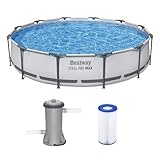
Bestway Steel Pro MAX 12' x 30" Above Ground Swimming Pool Set with Pump | Check Price On Amazon |
|
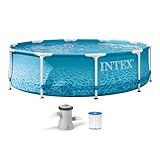
INTEX Beachside Metal Frame 10ft x 30in Round Pool Set w/Pump | Check Price On Amazon |

|
H2OGO! Kids Splash-in-Shade 8-Foot Round Steel Frame Above Ground Pool with Water Mister and Canopy Sunshade, Green Tropical Leaf Print | Check Price On Amazon |
What Makes Pool Heating Essential for Extended Seasons?
Pool heaters maintain water temperatures 15-30°F above ambient air through controlled heat transfer, enabling comfortable swimming when natural solar heating proves insufficient. Gas heaters achieve this through direct combustion at 80-85% efficiency, electric heat pumps extract ambient heat with 300-500% efficiency ratings, while solar systems harness free solar energy at 50-80% collection efficiency depending on panel orientation and weather conditions.
Temperature consistency matters because human comfort requires water temperatures between 78-82°F for recreational swimming, while therapeutic applications benefit from 84-88°F ranges. Without mechanical heating, pools in most climates drop below comfortable levels by mid-September, limiting usage to 3-4 months annually instead of potential 6-8 month seasons.
Our climate zone analysis reveals heating requirements vary dramatically by geography. Northern regions (zones 3-5) require 80,000-400,000 BTU capacity for adequate heating, while southern areas (zones 8-10) achieve season extension with 50,000-150,000 BTU systems due to higher baseline temperatures.
Heat Loss Factors That Determine Heater Requirements
Evaporation accounts for 70% of pool heat loss, removing approximately 1,000 BTU per square foot of surface area daily in moderate wind conditions. Conduction through pool walls and floors contributes 20% of heat loss, while radiation to cooler air temperatures adds the remaining 10%.
Wind speed dramatically affects evaporation rates and heating costs. Each 1 mph increase in average wind speed raises heating requirements by 10-15%, making windbreak installation or pool covers essential for efficient operation in exposed locations.
Optimal Temperature Ranges for Different Pool Activities
Recreational swimming performs best at 78-80°F water temperature, providing comfort without excessive heating costs. Lap swimming and exercise benefit from slightly cooler 76-78°F ranges, while children and elderly users prefer 80-82°F for extended comfort.
Therapeutic and spa applications require 84-88°F water temperatures for muscle relaxation and joint mobility benefits. Higher temperatures above 88°F become uncomfortable for extended use and dramatically increase operating costs due to accelerated evaporation.
How to Choose the Right Pool Heater Type for Your Climate?
Gas heaters excel in northern climates and quick heating applications, delivering 125,000-400,000 BTU output with 2-4°F per hour temperature rise capability regardless of ambient air temperature. Heat pumps perform optimally in moderate climates above 45°F ambient, providing 50,000-140,000 BTU capacity with 300-500% efficiency through ambient heat extraction rather than direct fuel combustion.
Solar heating systems work effectively in southern regions with 6+ hours daily sun exposure, utilizing roof-mounted collectors covering 50-100% of pool surface area. Combined systems using gas or electric backup with solar primary heating optimize both efficiency and reliability across variable weather conditions.
Gas Pool Heaters: Fast Heating Power
Natural gas and propane heaters provide rapid temperature increases of 2-4°F per hour through direct combustion, making them ideal for weekend use or quick pool preparation. Modern condensing models achieve 84-95% efficiency by capturing exhaust heat, compared to 78-82% efficiency in standard atmospheric units.

- Intelligent Navigation with Full Coverage: Equipped with 11 high-precision sensors and enhanced dual-path algorithms. The optimized WavePath cleaning pattern ensures systematic coverage with minimal overlap, while adaptive navigation analyzes pool layout in real time to eliminate missed spots
- Dual Filtration for Crystal-Clear Water: Advanced dual-layer filtration system features a replaceable 3-micron ultra-fine filter paired with a 180-micron standard filter. Effectively captures fine dust, sand, leaves, and debris for visibly cleaner and healthier pool water
- Comprehensive Pool Cleaning: Engineered to clean the pool floor, walls, waterline, and shallow areas (above 12 inches). The Caterpillar Treads system enhances mobility and climbing ability, ensuring thorough coverage across all pool zones
- Reliable Performance with 2-Year Warranty: Trusted by over 500,000 pool owners worldwide, this robotic pool cleaner delivers consistent, high-performance results. Built for durability and backed by a 2-year warranty and responsive customer support for worry-free ownership
Operating costs range from $3-8 per hour depending on BTU output and local fuel prices. A 400,000 BTU gas heater consumes approximately 4 therms per hour at full output, heating a 20,000-gallon pool from 70°F to 80°F in 6-8 hours.
Electric Heat Pumps: Energy Efficient Operation
Heat pump pool heaters extract ambient heat from air using refrigeration principles, delivering 3-5 units of heat energy for each unit of electricity consumed. Coefficient of Performance (COP) ratings indicate efficiency, with quality units achieving 5.0-6.5 COP in 70-80°F ambient conditions.
Performance decreases as ambient temperatures drop, with most units becoming ineffective below 45-50°F ambient air temperature. A 120,000 BTU heat pump operating at 5.0 COP consumes 7-8 kW electricity while producing equivalent heating of 35-40 kW direct electric resistance.
Solar Pool Heating: Free Operating Energy
Solar collectors mounted on roofs or ground installations capture solar radiation, heating pool water through direct circulation or heat exchanger systems. Unglazed polypropylene collectors work effectively for pool heating, while glazed collectors provide better performance in cooler climates at higher cost.
Collector area requirements equal 50-100% of pool surface area depending on climate zone and desired temperature lift. Solar pool heating systems include collectors, circulation pumps, controllers, and plumbing modifications costing $3,000-8,000 installed but providing free operating energy.
Pool Heater Sizing: Calculating BTU Requirements for Your Pool
Proper heater sizing requires calculating heat loss through evaporation, conduction, and radiation based on pool surface area, volume, and local climate conditions. The basic formula multiplies pool surface area × temperature rise desired × 12 BTU factor, then adds 25% safety margin for wind and weather variability. To simplify this process, try our pool heater calculator, which automatically applies climate adjustment factors and surface area calculations.
A 20×40 foot pool (800 square feet surface area) requiring 10°F temperature rise needs approximately 96,000 BTU base capacity plus 24,000 BTU safety margin, totaling 120,000 BTU minimum heater size. Larger pools and greater temperature differentials scale proportionally using this calculation method.
Surface Area vs Volume Calculations
Surface area drives evaporation losses while total volume determines initial heating time and heat storage capacity. Rectangular pools calculate simply as length × width, while kidney and freeform shapes require grid measurement or geometric approximation methods. For an instant calculation, use our pool surface area calculator, which handles even irregular shapes with ease.
Volume calculations use average depth for rectangular pools (length × width × average depth × 7.48 gallons per cubic foot). Irregular shapes benefit from professional measurement or water meter readings during initial filling to establish accurate volume baselines.
Climate Zone Adjustments
Northern climates (zones 3-5) require 15-25% increased BTU capacity due to lower ambient temperatures and higher wind exposure. Southern regions (zones 8-10) can reduce sizing by 10-15% because higher baseline temperatures reduce heating loads.
Coastal areas need wind adjustment factors increasing capacity 20-30% due to constant air movement accelerating evaporation. Protected inland locations may reduce sizing 10% when surrounded by natural windbreaks or fencing.
Gas vs Heat Pump vs Solar: Performance Comparison
| Heater Type | Efficiency | Heating Speed | Operating Cost | Climate Suitability | Best For |
| Natural Gas | 84-95% | 2-4°F/hour | $4-8/hour | All climates | Quick heating, weekend use |
| Heat Pump | 300-500% | 0.5-1.5°F/hour | $1-3/hour | Above 45°F ambient | Season extension, daily use |
| Solar | 50-80% | 0.2-0.8°F/hour | Free operation | Sunny climates, 6+ hours sun | Long season, low operating cost |
| Propane | 80-85% | 2-4°F/hour | $6-12/hour | All climates, portable | Remote locations, backup heating |
Gas heaters provide fastest temperature increases and work effectively in all weather conditions, making them ideal for infrequent use or rapid pool preparation. Heat pumps deliver lowest operating costs in moderate climates but require longer heating times and fail in cold weather.
Solar systems eliminate operating costs entirely but depend on weather conditions and require significant roof space or yard area for collector installation. Hybrid systems combining solar primary with gas or electric backup optimize both efficiency and reliability.
Operating Cost Analysis: 10,000 Gallon Pool Example
Heating a 10,000-gallon pool from 70°F to 80°F requires approximately 833,000 BTU total energy input. Gas heating at $1.20 per therm (100,000 BTU) costs $10-12 per heating cycle, while heat pump operation at $0.12 per kWh with 5.0 COP costs $3-4 per cycle.
Daily temperature maintenance requires 15-25% of initial heating energy depending on weather conditions and pool cover usage. Annual operating costs range from $800-2,400 for gas systems, $400-900 for heat pumps, and minimal costs for solar systems after initial installation. To get a personalized breakdown of your potential heating expenses based on local energy rates and pool specifics, try our pool heating cost calculator.
Installation Requirements and Complexity
Gas heaters require natural gas line installation or propane tank connections plus electrical service for controls and ignition systems. Professional installation costs $1,500-3,500 depending on gas line distance and electrical requirements.
Heat pump installation needs 220V electrical service rated for 30-60 amp capacity plus adequate clearance for air circulation around the unit. Heat pump installation kits include electrical disconnects, mounting pads, and refrigerant line connections required for proper setup.
When Should You Install Pool Heating for Maximum Season Extension?
Install pool heating systems during spring pool opening (March-April) to maximize season extension benefits and avoid peak contractor scheduling during summer months. Early installation allows system testing and adjustments before heating demands peak, ensuring reliable operation when needed most.
Fall installation (September-October) captures immediate season extension benefits while contractors offer better availability and pricing after summer rush periods. Late season installation provides instant gratification for users wanting to extend current swimming seasons into cooler months.
Pre-Season Installation Benefits
Spring installation allows gradual water heating as ambient temperatures rise, reducing initial heating costs while establishing comfortable swimming conditions early in traditional pool seasons. Systems installed in April can maintain 78-80°F water temperatures when air temperatures reach 60-65°F.
Early installation provides time for system optimization and user familiarity before peak usage periods. Contractors offer better scheduling flexibility and may provide off-season pricing discounts of 10-20% compared to peak summer installation costs.
Mid-Season Retrofit Considerations
Summer installation faces contractor scheduling challenges and premium pricing but delivers immediate comfort improvements during peak usage periods. Priority scheduling and rush charges may increase installation costs 15-25% above normal rates.
Mid-season retrofits work best for heat pump systems requiring minimal plumbing modifications. Gas heater installations need gas line routing and permits that may delay installation 2-4 weeks during peak contractor seasons.
Pool Covers: Essential Partners for Heating Efficiency
Pool covers reduce heat loss by 50-70% through evaporation prevention while maintaining water temperature overnight and during non-use periods. Solar covers provide additional heating benefits by transmitting solar energy while blocking wind-induced cooling, effectively adding 10-15°F temperature gain on sunny days.
Automatic cover systems deliver maximum convenience and usage compliance, ensuring consistent heat retention compared to manual covers that users often skip. Cover usage can reduce heating costs by 30-50% annually while extending effective swimming seasons through improved heat retention.
Solar Pool Covers: Dual Heating and Retention
Solar blankets utilize bubble construction to trap air for insulation while allowing solar transmission for passive heating gains. Clear covers maximize solar transmission, while blue-tinted versions reduce algae growth through light filtration.
Solar pool covers sized to pool dimensions provide 8-12°F temperature increases on sunny days while preventing overnight heat loss. Proper cover storage using reels or storage systems ensures daily usage compliance and extends cover lifespan to 3-5 years.
Liquid Pool Covers: Invisible Heat Retention
Liquid solar covers create microscopic barriers on water surfaces, reducing evaporation by 15-25% without physical barriers that interfere with pool usage. Monthly application costs $15-25 for average residential pools while providing continuous heat retention benefits.
Liquid covers work effectively with all heater types and complement physical covers during partial usage periods. Products like liquid solar blankets apply automatically through skimmer systems, maintaining coverage without user intervention.
Troubleshooting Pool Heater Performance Issues
Common heater problems include insufficient heating capacity, frequent cycling, ignition failures, and high operating costs that prevent effective season extension. Proper diagnosis requires checking gas pressure, electrical connections, water flow rates, and thermostat calibration using systematic troubleshooting approaches.
Heat pump issues typically involve low ambient temperatures, dirty coils, refrigerant problems, or electrical component failures that reduce heating efficiency below manufacturer specifications. Gas heater problems often stem from gas supply issues, venting problems, or heat exchanger scaling that blocks proper combustion and heat transfer.
Heat Pump Not Heating: Common Causes
Heat pumps fail to heat effectively when ambient air temperatures drop below 45-50°F operational thresholds, when evaporator coils accumulate dirt or debris blocking air flow, or when refrigerant levels drop due to leak development. Detailed heat pump troubleshooting procedures cover systematic diagnosis and repair approaches for maintaining optimal performance.
Low refrigerant symptoms include ice formation on coils, reduced heating output, and frequent compressor cycling. Professional service is required for refrigerant system repairs due to EPA certification requirements for refrigerant handling and disposal.
Gas Heater Ignition Problems
Gas heater ignition failures result from gas supply interruptions, dirty or misaligned ignition electrodes, faulty gas valves, or insufficient electrical power to ignition systems. Safety interlocks prevent operation when proper combustion cannot be established, protecting against gas accumulation and potential hazards.
Complete ignition troubleshooting guides detail step-by-step diagnostic procedures for identifying and resolving common ignition system problems while maintaining safety protocols required for gas-fired equipment.
Above Ground Pool Heating: Special Considerations
Above ground pools require 15-25% larger heating capacity than in-ground pools due to increased surface area exposure and reduced thermal mass for heat storage. Vinyl liner compatibility limits heater outlet temperatures to prevent damage, requiring bypass systems or tempering valves for high-output units.
Structural considerations include heater pad installation, electrical service proximity, and clearance requirements that may challenge typical above-ground pool installations. Specialized above-ground pool heaters address these unique requirements through compact designs and vinyl-safe temperature controls.
Heater Sizing for Above Ground Pools
Calculate above-ground pool heating requirements using surface area × 15 BTU per square foot factor instead of standard 12 BTU calculations used for in-ground installations. Additional capacity compensates for increased heat loss through above-grade exposure and reduced thermal mass.
A 24-foot round above-ground pool (452 square feet surface area) requires approximately 68,000 BTU heating capacity plus 20% safety margin, totaling 82,000 BTU minimum heater size. Oval pools calculate using length × width measurements with same BTU factors.
Installation Challenges and Solutions
Above-ground pool heater installation requires stable mounting pads, proper drainage for condensate removal, and adequate clearances for air circulation and service access. Portable heat pumps offer installation flexibility but may sacrifice efficiency compared to permanent installations.
Electrical service often requires upgrades to support heat pump operations, while gas line installations face routing challenges around above-ground pool structures. Heater installation pads provide stable, level surfaces preventing equipment damage from settling or movement.
Solar Pool Heating: Maximizing Free Energy
Solar pool heating systems capture free solar energy through roof-mounted or ground-installed collectors, circulating pool water through solar-heated panels during daylight hours. Proper system design requires collector area equal to 80-100% of pool surface area in northern climates, reducing to 50-60% in southern regions with higher solar intensity.
Comprehensive solar heating system guides cover collector selection, sizing calculations, and installation considerations for maximizing solar energy capture while integrating with existing pool equipment and circulation systems.
Collector Types and Performance
Unglazed polypropylene collectors offer cost-effective heating for pool applications, operating at 40-60% efficiency in direct sunlight. Glazed collectors with insulated backing achieve 65-80% efficiency but cost 2-3 times more than unglazed systems.
Evacuated tube collectors provide highest efficiency (70-85%) and work effectively in cold weather but cost significantly more than flat-plate designs. Solar collector panels mount on roofs or ground installations depending on space availability and optimal sun exposure angles.
System Controls and Automation
Solar controllers automatically operate circulation pumps when collector temperatures exceed pool temperatures by 8-10°F, maximizing heat gain while preventing heat loss during cloudy conditions. Differential temperature controls prevent reverse circulation that would cool pools during nighttime hours.
Advanced controllers include freeze protection, maximum temperature limits, and manual override capabilities for optimal system performance. Solar heating controllers integrate with existing pool automation systems for seamless operation and monitoring.
Heat Pump Efficiency: Optimizing COP Performance
Heat pump Coefficient of Performance (COP) indicates efficiency as heat output divided by electrical input, with quality units achieving 4.0-6.5 COP ratings under optimal conditions. COP decreases as ambient temperatures drop, falling below 3.0 when air temperatures reach 50°F and becoming ineffective below 45°F ambient.
Maximize heat pump efficiency through proper installation with adequate air circulation, regular coil cleaning, and optimal thermostat settings that minimize cycling frequency. Operating heat pumps continuously at moderate temperatures proves more efficient than frequent on/off cycling at higher temperature differentials.
Ambient Temperature Effects on Performance
Heat pump efficiency drops approximately 10-15% for each 10°F decrease in ambient air temperature below 70°F optimal operating conditions. Units rated at 6.0 COP at 80°F ambient may achieve only 3.5-4.0 COP at 50°F ambient temperature.
Cold weather performance varies significantly between manufacturers and models, with inverter-driven units maintaining better efficiency at lower temperatures compared to single-speed compressor designs. Variable-speed heat pumps adjust capacity to match heating loads, improving overall seasonal efficiency.
Maintenance Requirements for Peak Efficiency
Monthly coil cleaning removes debris and maintains optimal air flow through evaporator coils, preventing efficiency losses of 15-25% that occur with dirty coils. Professional maintenance includes refrigerant level checks, electrical connection inspection, and lubrication of moving parts.
Heat pump coil cleaners and maintenance tools enable homeowner servicing of basic cleaning and inspection tasks while professional service handles refrigerant system components annually.
Cost Analysis: Heating Investment vs Season Extension Value
Pool heating systems cost $3,000-15,000 installed depending on type and capacity, but extend usable pool seasons from 3-4 months to 6-8 months annually in most climates. Season extension value calculations consider additional months of pool usage worth $200-500 per month in entertainment and exercise benefits.
Payback analysis includes equipment costs, installation expenses, and operating costs compared to alternative entertainment options or health club memberships that provide similar benefits. Heat pumps typically achieve 3-5 year payback periods through energy savings, while gas systems focus on usage convenience rather than operating cost recovery.
Operating Cost Comparisons by Region
Northern regions face higher heating costs due to larger temperature differentials and longer heating seasons, with annual costs ranging $1,200-3,000 for gas systems and $600-1,500 for heat pumps. Southern areas reduce costs to $400-1,200 annually for gas and $200-600 for heat pump operation.
Utility rate structures significantly affect heat pump economics, with time-of-use rates potentially increasing costs during peak demand periods. Solar heating eliminates operating costs entirely after initial investment recovery over 5-8 years depending on system size and local installation costs.
Property Value Impact
Pool heating systems add $2,000-8,000 to property values depending on system type and local market preferences, with heat pumps and solar systems providing higher value retention than gas units due to energy efficiency appeal. Automated systems with pool covers command premium valuations.
Real estate market analysis shows pools with heating systems sell 15-25% faster than unheated pools in moderate climates where season extension provides significant usage benefits. Northern markets particularly value heating capabilities that extend short swimming seasons.
Frequently Asked Questions About Pool Heating
How much does it cost to heat a pool per month?
Quick Answer: Monthly pool heating costs range from $80-400 depending on heater type, pool size, temperature settings, and local utility rates, with heat pumps averaging $80-200 monthly and gas heaters costing $200-400 for continuous operation.
Operating costs depend on BTU requirements, equipment efficiency, and local fuel or electricity prices. A 20,000-gallon pool maintained at 80°F costs approximately $150-300 monthly with a heat pump in moderate climates, while gas heating ranges from $250-500 monthly for similar conditions.
Reduce monthly costs through pool cover usage (30-50% savings), optimal temperature settings (each degree lower saves 10-15%), and efficient equipment selection. Programmable pool thermostats automatically adjust temperatures during non-use periods, reducing unnecessary heating expenses.
What size heater do I need for my pool?
Quick Answer: Pool heater sizing requires 10-15 BTU per square foot of surface area for basic heating, with larger pools needing 125,000-400,000 BTU capacity and smaller pools requiring 75,000-150,000 BTU depending on climate and desired temperature rise.
Calculate heater size using pool surface area × desired temperature rise × 12 BTU factor, then add 25% safety margin for weather variability. A 16×32 foot pool (512 square feet) requiring 10°F heating needs approximately 61,000 BTU base capacity plus 15,000 BTU margin, totaling 75,000-80,000 BTU minimum.
Northern climates require 20-30% larger capacity due to lower ambient temperatures and higher wind exposure. Professional sizing considers pool volume, local climate data, and usage patterns for accurate capacity determination.
Can I install a pool heater myself?
Quick Answer: Electric heat pump installation is possible for experienced DIYers with electrical knowledge, while gas heater installation requires professional service due to gas line connections, permits, and safety considerations mandated by local codes.
Heat pump installation involves 220V electrical connections, plumbing integration, and proper unit positioning but avoids gas line complexities. Most jurisdictions require electrical permits and inspections for 220V installations, adding $100-300 to DIY costs.
Gas heater installation requires licensed professionals for gas line connections, combustion air calculations, and venting requirements. Permit costs range $150-500, while professional installation ensures warranty compliance and safety code adherence. Installation manuals provide detailed procedures for qualified installers.
How long does it take to heat a pool?
Quick Answer: Pool heating time ranges from 4-24 hours depending on heater BTU output, pool size, and desired temperature rise, with gas heaters achieving 2-4°F per hour and heat pumps providing 0.5-1.5°F per hour temperature increases.
A 400,000 BTU gas heater can raise a 20,000-gallon pool temperature from 70°F to 80°F in 6-8 hours, while a 120,000 BTU heat pump requires 18-24 hours for the same temperature increase. Initial heating takes longest, with daily maintenance heating requiring 2-4 hours depending on overnight losses.
Pool covers reduce heating time by 30-50% through heat loss prevention, while wind protection and optimal thermostat placement improve heating efficiency. Start heating 12-24 hours before planned pool use for comfortable temperatures upon arrival.
Do heat pumps work in cold weather?
Quick Answer: Heat pumps maintain effectiveness above 45-50°F ambient temperature but lose efficiency rapidly in colder conditions, becoming essentially non-functional below 40°F when frost formation and low ambient heat availability prevent normal operation.
Heat pump efficiency drops 10-15% for each 10°F decrease in ambient temperature, with units rated at 5.0 COP at 80°F achieving only 2.5-3.0 COP at 50°F. Cold weather heat pumps with enhanced refrigeration systems extend operating ranges to 35-40°F but at significantly reduced efficiency.
Consider backup heating systems for consistent cold weather operation, or size heat pumps 50-75% larger for acceptable performance during shoulder season conditions. Dual-fuel systems combining heat pumps with gas backup optimize both efficiency and reliability across varying weather conditions.
What is the most efficient way to heat a pool?
Quick Answer: Solar heating provides highest efficiency for operating costs with free energy after installation, while heat pumps deliver best electrical efficiency at 300-500% COP ratings in moderate climates above 50°F ambient temperature.
Solar systems achieve 50-80% collection efficiency during sunny conditions while eliminating operating costs entirely, making them most cost-effective for long-term operation. Heat pumps extract ambient heat with 3-6 times more efficiency than direct electric resistance heating.
Maximize efficiency through pool cover usage, optimal temperature settings, proper equipment sizing, and regular maintenance. Combined systems using solar primary heating with heat pump or gas backup optimize both efficiency and reliability across varying weather conditions. Energy monitoring systems track heating costs and identify optimization opportunities.
Should I run my pool heater overnight?
Quick Answer: Run pool heaters continuously during heating season for most efficient operation, as maintaining steady temperatures requires less energy than reheating cooled water daily, especially when combined with pool covers for overnight heat retention.
Continuous operation maintains desired temperatures with minimal energy cycling, while intermittent heating wastes energy overcoming heat losses accumulated during off periods. Heat pumps particularly benefit from steady operation avoiding frequent startup energy penalties.
Use programmable thermostats to reduce temperatures 2-4°F during non-use periods while maintaining circulation for even heat distribution. Night setback saves 10-20% heating costs while ensuring comfortable morning temperatures when combined with automatic morning preheat programming.
How much does a solar pool heater save?
Quick Answer: Solar pool heaters eliminate 60-90% of heating operating costs after installation, saving $400-1,200 annually compared to gas heating and $200-600 annually versus heat pump operation, with payback periods of 3-7 years depending on system cost and local energy rates.
Annual savings vary by climate zone, with northern regions achieving higher absolute savings due to greater heating demands but longer payback periods due to reduced solar availability. Southern installations optimize both solar collection efficiency and heating season length.
Solar systems reduce dependence on utility rate increases while providing free operation throughout system lifespan of 15-20 years. Combined with pool covers, solar heating can eliminate virtually all heating costs while extending swimming seasons comparably to conventional systems.
Can I use a smaller heater and run it longer?
Quick Answer: Undersized heaters struggle to overcome heat losses during cool weather, running continuously without reaching desired temperatures, while properly sized units cycle efficiently and maintain comfort levels with lower overall runtime and energy consumption.
Undersized units operate at 100% capacity continuously during peak heating demands, preventing temperature recovery and causing user dissatisfaction. Proper sizing allows heaters to overcome heat losses with reserve capacity for temperature recovery after weather changes or heavy pool usage.
Size heaters for 10-15°F temperature rise capability above maximum expected ambient conditions in your climate. Oversized units cycle frequently but achieve targets efficiently, while undersized units waste energy through continuous operation without achieving comfort goals.
What maintenance do pool heaters require?
Quick Answer: Pool heaters require monthly cleaning of heat exchanger surfaces, annual professional inspection of gas connections or refrigerant systems, and seasonal startup/shutdown procedures including water drainage and component protection during off-seasons.
Heat pump maintenance includes monthly coil cleaning, quarterly refrigerant leak inspection, and annual professional service for electrical connections and compressor lubrication. Gas heaters need annual combustion analysis, heat exchanger inspection, and gas pressure verification by qualified technicians.
Regular maintenance prevents 70-80% of heater problems while maintaining peak efficiency throughout equipment lifespan. Heater maintenance kits include cleaning solutions, filters, and basic tools for homeowner service tasks between professional inspections.
How long do pool heaters last?
Quick Answer: Pool heaters last 8-15 years depending on type and maintenance, with heat pumps averaging 10-15 years, gas heaters lasting 8-12 years, and solar systems operating 15-20 years with minimal maintenance requirements throughout their extended lifespan.
Equipment lifespan depends on operating hours, maintenance quality, and environmental conditions including salt exposure, chemical balance, and weather extremes. Proper water chemistry prevents heat exchanger corrosion, while regular maintenance identifies problems before major component failures occur.
Replace heaters when repair costs exceed 50% of replacement cost or when efficiency drops significantly due to component wear. Modern units offer improved efficiency and reliability compared to units manufactured 10+ years ago, making replacement economically attractive for older systems.
Do I need permits to install a pool heater?
Quick Answer: Gas pool heater installation requires building permits in most jurisdictions due to gas line connections and combustion safety requirements, while electric heat pump permits vary by local codes but typically require electrical permits for 220V installations.
Gas heater permits cost $150-500 and require professional installation with licensed gas technicians and final inspections. Electrical permits for heat pump installation range $75-200 depending on local requirements and electrical service modifications needed.
Solar pool heater permits vary widely, with some jurisdictions requiring structural permits for roof installations while others treat them as mechanical improvements. Check local building departments for specific requirements and approved installer qualifications before beginning any heater installation project.
Conclusion
Pool heaters extend swimming seasons by 2-4 months through proper equipment selection, sizing, and installation that matches your climate zone, pool characteristics, and usage patterns. Heat pumps excel in moderate climates with 300-500% efficiency above 50°F ambient, gas heaters provide rapid heating in all weather conditions, and solar systems eliminate operating costs entirely while delivering reliable temperature increases during sunny conditions.
Start your season extension project with accurate heater sizing calculations, consider combination systems for optimal efficiency and reliability, and prioritize pool covers that reduce heating costs by 30-50% annually. Professional installation ensures safety compliance, warranty protection, and optimal performance throughout your heater’s 8-15 year lifespan while maximizing the value of your pool investment through extended year-round enjoyment.
| Photo | Best Above-Ground Pools | Price |
|---|---|---|
|
|
Bestway Steel Pro MAX 12' x 30" Above Ground Swimming Pool Set with Pump | Check Price On Amazon |
|
|
INTEX Beachside Metal Frame 10ft x 30in Round Pool Set w/Pump | Check Price On Amazon |
|
|
H2OGO! Kids Splash-in-Shade 8-Foot Round Steel Frame Above Ground Pool with Water Mister and Canopy Sunshade, Green Tropical Leaf Print | Check Price On Amazon |