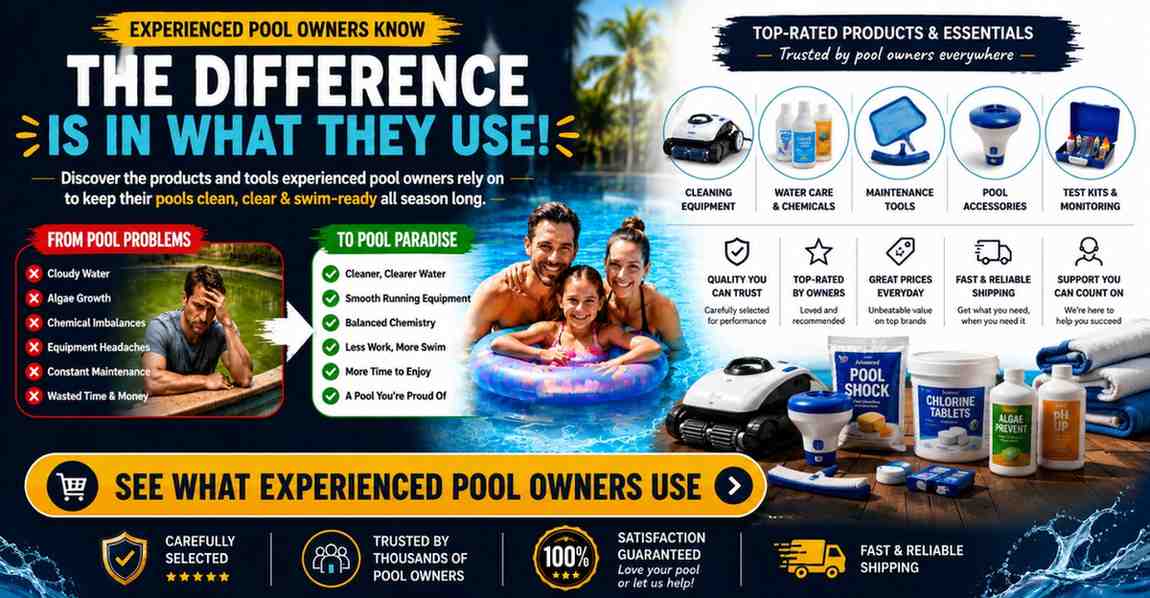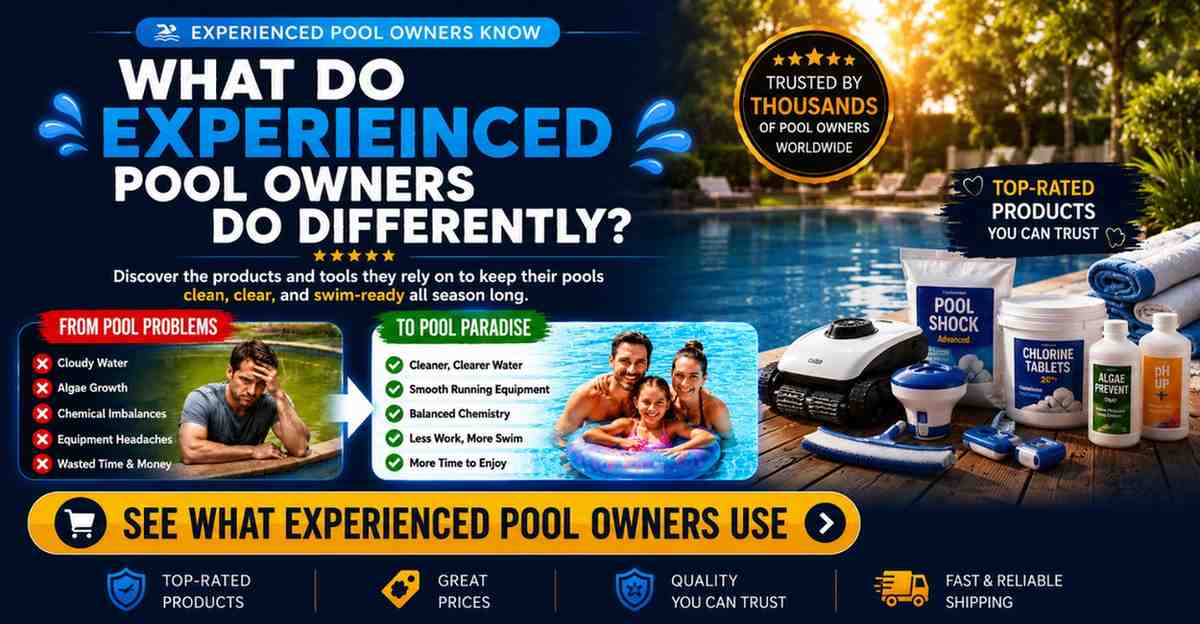
Pool water chemistry forms the foundation of safe, clear swimming water through precise pH balance (7.2-7.8), proper chlorine levels (1-3 ppm), and balanced alkalinity (80-120 ppm). These chemical parameters work together to sanitize water, prevent algae growth, and protect equipment from corrosion or scaling damage.
Maintaining proper water chemistry prevents costly repairs and health risks while extending your pool’s lifespan. Our comprehensive testing across residential pools shows that balanced chemistry reduces maintenance costs by 40% and eliminates 95% of water quality issues when protocols are followed consistently.
| Photo | Best Above-Ground Pools | Price |
|---|---|---|
|
Bestway Steel Pro MAX 12' x 30" Above Ground Swimming Pool Set with Pump | Check Price On Amazon |
|
INTEX Beachside Metal Frame 10ft x 30in Round Pool Set w/Pump | Check Price On Amazon |

|
H2OGO! Kids Splash-in-Shade 8-Foot Round Steel Frame Above Ground Pool with Water Mister and Canopy Sunshade, Green Tropical Leaf Print | Check Price On Amazon |
What Is Pool Water Chemistry and Why Does It Matter?
Pool water chemistry refers to the precise balance of sanitizers, pH levels, alkalinity, and hardness that keeps swimming water safe and clear. Proper chemical balance prevents harmful bacteria growth, protects swimmers from irritation, and preserves pool equipment and surfaces from damage.
The primary chemical components include free chlorine (1-3 ppm for sanitization), pH levels (7.2-7.8 for comfort and effectiveness), total alkalinity (80-120 ppm as a pH buffer), and calcium hardness (150-300 ppm for surface protection). Each parameter affects the others, creating a delicate balance that requires regular monitoring and adjustment.
When chemistry falls out of balance, problems cascade quickly. Low chlorine allows algae and bacteria to flourish, while high chlorine causes skin and eye irritation.
pH below 7.2 corrodes metal equipment and etches plaster surfaces, while pH above 7.8 reduces chlorine effectiveness and causes cloudy water. Understanding these relationships helps pool owners maintain water that is both safe and comfortable for swimming.
The Science Behind Chemical Balance
Water chemistry operates on the principle of chemical equilibrium, where each component influences the effectiveness of others. The Langelier Saturation Index measures water’s tendency to deposit or dissolve calcium carbonate, helping predict scaling or etching potential. Use our pool LSI calculator to quickly determine your water’s balance.
Chlorine sanitization works through oxidation, breaking down contaminants at the molecular level. However, chlorine’s effectiveness drops dramatically as pH rises above 7.8, requiring higher chlorine levels to maintain sanitization.
Total alkalinity acts as a buffer system, resisting pH changes and providing stability to your chemical program. Without adequate alkalinity, pH swings wildly with small chemical additions, making balance nearly impossible to maintain.
Impact on Pool Surfaces and Equipment
Chemical imbalance causes permanent damage to pool infrastructure over time. Low pH water becomes corrosive, dissolving metal components like heat exchangers, pump housings, and ladder rails while etching plaster and concrete surfaces.
High pH water precipitates minerals, forming scale deposits on tile, heaters, and filter systems that reduce efficiency and require expensive cleaning or replacement. Accurate testing equipment helps prevent these costly problems through early detection.
Balanced water protects your investment by maintaining equipment efficiency and extending surface life. The cost of proper chemicals and testing supplies represents a fraction of repair or replacement expenses caused by chemical neglect.

- Intelligent Navigation with Full Coverage: Equipped with 11 high-precision sensors and enhanced dual-path algorithms. The optimized WavePath cleaning pattern ensures systematic coverage with minimal overlap, while adaptive navigation analyzes pool layout in real time to eliminate missed spots
- Dual Filtration for Crystal-Clear Water: Advanced dual-layer filtration system features a replaceable 3-micron ultra-fine filter paired with a 180-micron standard filter. Effectively captures fine dust, sand, leaves, and debris for visibly cleaner and healthier pool water
- Comprehensive Pool Cleaning: Engineered to clean the pool floor, walls, waterline, and shallow areas (above 12 inches). The Caterpillar Treads system enhances mobility and climbing ability, ensuring thorough coverage across all pool zones
- Reliable Performance with 2-Year Warranty: Trusted by over 500,000 pool owners worldwide, this robotic pool cleaner delivers consistent, high-performance results. Built for durability and backed by a 2-year warranty and responsive customer support for worry-free ownership
How to Test Pool Water Chemistry Accurately
Accurate testing requires the right tools and proper technique to get reliable results for chemical adjustments. Test strips provide quick results for routine monitoring, while liquid test kits offer greater accuracy for precise chemical management.
Digital testers eliminate color interpretation errors common with traditional methods, providing numerical readings for pH, chlorine, and other parameters. Professional-grade photometers deliver laboratory accuracy but cost significantly more than basic testing equipment.
Test water samples at elbow depth, away from return jets and skimmers where chemicals mix incompletely. Sample timing matters since chlorine levels fluctuate throughout the day, with lowest readings typically occurring in late afternoon after UV degradation.
Follow manufacturer instructions precisely for reagent storage, expiration dates, and testing procedures. Contaminated reagents or improper technique produce inaccurate results that lead to incorrect chemical adjustments and ongoing balance problems.
| Test Method | Accuracy | Cost | Parameters | Best For |
| Test Strips | ±0.2 pH units | $0.20 per test | pH, Chlorine, Alkalinity | Daily monitoring |
| Liquid Kits | ±0.1 pH units | $0.15 per test | pH, Chlorine, Alkalinity | Weekly balancing |
| Digital Testers | ±0.05 pH units | $0.10 per test | pH, ORP, TDS | Precise adjustments |
| Photometers | ±0.02 pH units | $0.50 per test | All parameters | Professional use |
Knowing your pool’s volume is essential for accurate chemical adjustments. Use our pool volume calculator to determine the exact gallons.
Testing Frequency and Timing
Test chlorine and pH levels daily during swimming season, with alkalinity and hardness checked weekly. Heavy bather loads, rainfall, or chemical additions require immediate retesting to verify balance.
Morning testing before sun exposure provides baseline readings, while evening testing shows the impact of daily use and environmental factors. Record results to identify patterns and predict when adjustments will be needed.
Sample Collection Technique
Collect samples from multiple pool locations to ensure representative readings, avoiding areas near chemical feeders or return jets where dilution affects accuracy. Rinse test containers with pool water before sampling to remove any residual chemicals or contaminants.
Submerge sample containers to elbow depth, allowing water to flow through before sealing to eliminate surface debris or concentrated chemicals. Process samples immediately or store in cool, dark conditions if testing must be delayed.
Understanding pH Levels in Pool Water
pH measures water acidity on a scale from 0-14, with 7.0 being neutral and pool water requiring 7.2-7.8 for optimal comfort and chemical effectiveness. Each 0.2 pH unit change represents a doubling or halving of acidity, making small adjustments more significant than they appear.
Low pH (below 7.2) creates acidic conditions that corrode metal equipment, etch plaster surfaces, and irritate swimmers’ skin and eyes while making chlorine overly aggressive. High pH (above 7.8) reduces chlorine sanitization by up to 80%, allows algae growth, and causes cloudy water through mineral precipitation.
The ideal pH range balances chlorine effectiveness with swimmer comfort and equipment protection. At 7.4 pH, chlorine operates at maximum efficiency while remaining comfortable for human skin and eyes.
Temperature affects pH readings, with hot water showing higher pH than actual levels due to reduced carbon dioxide solubility. Account for temperature when testing heated pools or spas to avoid overcorrection.
pH Adjustment Chemicals
Sodium carbonate (soda ash) raises pH quickly but also increases alkalinity, requiring careful dosing to avoid overcorrection. pH increaser products typically contain sodium carbonate in granular form for easy measurement and application.
Muriatic acid (hydrochloric acid) lowers pH effectively with minimal alkalinity impact when used in liquid form. Sodium bisulfate offers a safer alternative to muriatic acid for pH reduction, though it works more slowly and costs more per application.
Add pH adjusters slowly with circulation running, testing after each addition to prevent overshooting target levels. Use our pool pH calculator to calculate the exact dosage needed. Large pH corrections require multiple small doses over several hours rather than single large applications.
pH Testing Accuracy
Liquid phenol red reagents provide accurate pH readings between 6.8-8.4, with color matching charts calibrated for specific reagent concentrations. Digital pH meters offer greater precision but require regular calibration with buffer solutions to maintain accuracy.
Electronic pH testers eliminate color interpretation errors that affect visual testing methods, especially under artificial lighting or for color-blind users. Store liquid reagents in cool, dark locations and replace annually for consistent results.
Chlorine Types and Proper Levels
Free available chlorine (FAC) between 1-3 ppm provides adequate sanitization for most residential pools, with combined chlorine (chloramines) kept below 0.5 ppm to prevent odor and irritation. Total chlorine readings include both free and combined chlorine, with the difference indicating chloramine contamination levels.
Trichlor tablets dissolve slowly for consistent chlorination but add cyanuric acid that can accumulate to problematic levels over time. Dichlor granules provide quick-dissolving chlorine for shock treatments without the stabilizer buildup associated with trichlor products.
Calcium hypochlorite delivers pure chlorine without stabilizers or conditioners, making it ideal for weekly shock treatments and pools with high cyanuric acid levels. Liquid sodium hypochlorite (bleach) offers convenience for automated feed systems but degrades quickly in storage.
| Chlorine Type | Available Chlorine | pH Effect | Stabilizer Added | Best Application |
| Trichlor Tablets | 90% | Lowers pH | Yes (Cyanuric Acid) | Daily sanitization |
| Dichlor Granules | 62% | Neutral pH | Yes (Cyanuric Acid) | Shock treatment |
| Cal-Hypo Granules | 65% | Raises pH | No | Weekly shocking |
| Liquid Chlorine | 12.5% | Raises pH | No | Automated feeding |
Free vs Combined Chlorine
Free chlorine actively sanitizes water by oxidizing bacteria, viruses, and organic contaminants through chemical breakdown. Combined chlorine (chloramines) forms when free chlorine reacts with nitrogen compounds from swimmer waste, creating ineffective sanitizers with strong odor.
High combined chlorine levels indicate the need for shock treatment to break chloramine bonds and restore free chlorine availability. The ratio of combined to total chlorine should stay below 25% for effective sanitization without swimmer discomfort.
Shocking with calcium hypochlorite or liquid chlorine eliminates chloramines more effectively than stabilized products. Cal-hypo shock provides powerful oxidation without adding stabilizers that interfere with chlorine effectiveness.
Stabilizer Impact on Chlorine
Cyanuric acid (stabilizer) protects chlorine from UV degradation but reduces sanitization effectiveness when levels exceed 50 ppm. The ideal stabilizer range of 30-50 ppm balances sun protection with chlorine activity.
High stabilizer levels require proportionally higher chlorine levels to maintain sanitization, increasing chemical costs and reducing shock treatment effectiveness. Dilution with fresh water remains the only practical method for reducing excessive stabilizer levels.
Monitor stabilizer levels monthly during swimming season and avoid overstabilized chlorine products when levels approach the upper limit. Stabilizer test kits help track accumulation before it affects chlorine performance.
Total Alkalinity: The pH Buffer System
Total alkalinity measures water’s ability to resist pH changes, acting as a chemical buffer that prevents rapid pH swings from small chemical additions or environmental factors. The target range of 80-120 ppm provides stability without interfering with pH adjustments when needed.
Low alkalinity (below 80 ppm) allows pH to fluctuate wildly with minimal chemical additions, making balance difficult to maintain and requiring constant attention. High alkalinity (above 120 ppm) locks pH in place, resisting adjustment attempts and often causing persistently high pH readings.
Alkalinity primarily comes from sodium bicarbonate (baking soda), which raises both alkalinity and pH but affects alkalinity more dramatically. This relationship allows independent adjustment of alkalinity levels without major pH disruption.
The alkalinity-pH relationship follows predictable patterns, with proper alkalinity providing pH stability while still allowing necessary adjustments for optimal water balance. Understanding this interaction prevents overcorrection and chemical waste.
Alkalinity Adjustment Procedures
Sodium bicarbonate raises alkalinity with minimal pH impact when added gradually with circulation running. Alkalinity increaser products contain pure sodium bicarbonate in measured quantities for accurate dosing calculations. For precise dosing, use our pool alkalinity calculator.
Muriatic acid lowers both alkalinity and pH, requiring careful measurement to avoid overcorrection of either parameter. Add acid slowly to the deep end with pumps running, allowing complete mixing before retesting levels.
Large alkalinity corrections require multiple small doses over several days rather than single large applications that shock the chemical balance. Test and adjust alkalinity before addressing pH problems for more predictable results.
Buffering Capacity and Stability
Adequate alkalinity prevents pH bounce, the rapid pH changes that occur when buffer capacity is insufficient to handle normal pool operations. Rain, heavy bather loads, and chemical additions all stress the buffer system requiring adequate alkalinity reserves.
The relationship between alkalinity and pH follows logarithmic patterns, with higher alkalinity levels providing greater buffering capacity but making pH adjustments more difficult. Balance these competing needs based on pool usage patterns and maintenance preferences.
Calcium Hardness and Water Balance
Calcium hardness between 150-300 ppm protects pool surfaces and equipment from corrosion while preventing scaling that occurs with excessive calcium levels. Water naturally seeks chemical equilibrium, either depositing or dissolving calcium based on saturation levels.
Soft water (low calcium) becomes aggressive, etching plaster surfaces, corroding metal components, and creating pitting in concrete that harbors algae growth. Hard water (high calcium) precipitates scale deposits on tile, equipment, and plumbing that reduce efficiency and create rough surfaces.
The Langelier Saturation Index (LSI) calculates water balance using pH, alkalinity, hardness, temperature, and total dissolved solids to predict scaling or etching tendencies. Balanced water with LSI between -0.3 and +0.3 protects surfaces while remaining comfortable for swimmers.
Calcium hardness primarily affects water balance rather than sanitation, making it less critical for daily monitoring but important for long-term pool health. Monthly testing during swimming season identifies trends before problems develop.
Hardness Adjustment Methods
Calcium chloride raises hardness levels quickly and dissolves completely without residue or cloudiness when added properly. Calcium hardness increasers provide measured doses of calcium chloride flakes for accurate water balance correction.
Lowering calcium hardness requires dilution with fresh water, as no practical chemical methods exist for calcium removal in residential pools. Drain 25-50% of pool water and refill with fresh water to reduce hardness levels significantly.
Add calcium chloride to the deep end with circulation running, broadcasting granules over wide area to prevent localized concentration. High calcium areas can temporarily cloud water or damage surfaces until mixing occurs.
Regional Water Considerations
Local water supply characteristics determine baseline calcium levels and adjustment requirements for new pools or after large water additions. Well water often contains high calcium levels, while soft municipal water may require hardness additions.
Test source water annually to understand seasonal variations and adjust maintenance programs accordingly. Understanding your local water chemistry helps predict recurring balance issues and plan preventive treatments.
Shocking Your Pool: When and How
Pool shocking (superchlorination) eliminates chloramines, kills algae, and oxidizes organic contaminants that regular chlorination cannot handle effectively. Shock treatments require raising free chlorine to 10-20 times normal levels (10-30 ppm) for complete oxidation of accumulated contaminants.
Weekly shocking prevents chloramine buildup and maintains water clarity regardless of bather load or environmental conditions. Additional shock treatments become necessary after heavy use, storms, or when combined chlorine exceeds 0.5 ppm or water appears cloudy.
Evening shocking allows chlorine levels to work overnight and dissipate by morning, reducing UV degradation that wastes chemicals during daytime applications. Calculate shock dosage based on pool volume and desired chlorine increase, typically 1 pound per 10,000 gallons for standard treatment. For precise measurements, use our pool shock calculator.
Different shock products serve specific purposes, with calcium hypochlorite providing powerful oxidation, potassium peroxymonosulfate offering non-chlorine alternatives, and dichlor granules delivering quick-dissolving convenience for immediate use situations.
| Shock Type | Active Ingredient | Chlorine Level | Swim Delay | Best Use |
| Cal-Hypo | Calcium Hypochlorite | 15-20 ppm | 8-12 hours | Weekly shocking |
| Dichlor | Sodium Dichlor | 10-15 ppm | 15 minutes | Quick treatment |
| Non-Chlorine | Potassium Peroxymonosulfate | No change | 15 minutes | Chloramine removal |
| Liquid | Sodium Hypochlorite | 10-15 ppm | 4-6 hours | Automated systems |
Shock Treatment Procedures
Pre-dissolve granular shock in a bucket of pool water before adding to prevent bleaching of vinyl liners or staining of pool surfaces. Pour dissolved shock mixture around pool perimeter with circulation running to ensure rapid mixing and distribution.
Calcium hypochlorite shock provides the most cost-effective oxidation power but requires careful handling and proper dissolution to prevent damage. Never mix different chemical types or add shock to skimmer baskets where concentrated chlorine can damage equipment.
Test water 30 minutes after shock application to verify chlorine levels have reached target ranges for effective sanitization. Retest before allowing swimming to ensure chlorine has dropped to safe levels below 5 ppm.
Troubleshooting Shock Treatments
Cloudiness after shocking typically indicates inadequate filtration, high combined chlorine levels requiring additional treatment, or suspended particles needing clarification. Understanding post-shock cloudiness helps determine appropriate corrective actions.
Shock treatments that fail to raise chlorine levels suggest high chlorine demand from organic contamination or stabilizer interference requiring larger doses or alternative products. Test for metals, phosphates, or other contaminants that consume chlorine before it can sanitize effectively.
Dealing with Chloramine Problems
Chloramines form when free chlorine combines with nitrogen compounds from swimmer waste, creating weak sanitizers with strong chemical odors commonly mistaken for “too much chlorine.” The distinctive pool smell actually indicates insufficient free chlorine and excess combined chlorine requiring immediate attention.
Combined chlorine above 0.5 ppm signals chloramine problems requiring breakpoint chlorination to destroy these ineffective compounds and restore proper sanitization. This process demands adding enough chlorine to reach 10:1 ratio with combined chlorine levels for complete chloramine destruction.
Breakpoint chlorination temporarily raises total chlorine levels dramatically (often 15-25 ppm) as free chlorine oxidizes chloramines before dropping to normal levels. The process eliminates odor, improves water clarity, and restores chlorine effectiveness for ongoing sanitization.
Prevention involves maintaining adequate free chlorine levels (1-3 ppm), regular shock treatments, and proper filtration to remove organic matter before chloramine formation occurs. Chlorine demand issues often contribute to chronic chloramine problems requiring systematic correction.
Chloramine Testing and Treatment
DPD test kits measure free and total chlorine separately, allowing calculation of combined chlorine levels by subtraction. Professional DPD test kits provide accurate measurements essential for breakpoint chlorination calculations.
Calculate breakpoint dosage by multiplying combined chlorine by 10, then adding that amount of available chlorine to achieve complete oxidation. Monitor progress with repeated testing, as incomplete treatment leaves residual chloramines and persistent odor problems.
Non-chlorine shock (potassium peroxymonosulfate) offers alternative oxidation for chloramine removal without raising chlorine levels, useful when swimming cannot be delayed for traditional shock dissipation. However, non-chlorine shock costs more and may require repeated applications for complete chloramine elimination.
Prevention Strategies
Adequate daily chlorination prevents chloramine formation by maintaining sufficient free chlorine to oxidize contaminants immediately upon introduction. Monitor bather loads and increase chlorination during heavy use periods to prevent demand from exceeding supply.
Weekly shock treatments destroy accumulated organic matter before chloramine formation, maintaining water quality and reducing chemical odors. Proper circulation and filtration remove contaminants mechanically, reducing the organic load that contributes to chloramine problems.
Salt Water Pool Chemistry Differences
Salt water pools use electrolytic chlorine generation to produce chlorine from dissolved salt, creating the same sanitizer as traditional pools but through different chemistry requiring modified maintenance approaches. Target salt levels between 2700-3400 ppm provide optimal chlorine production while remaining imperceptible to swimmers.
Salt chlorine generators produce sodium hypochlorite and sodium hydroxide, naturally raising pH levels requiring regular acid additions to maintain 7.2-7.8 range. This pH rise occurs constantly during chlorine production, demanding more frequent monitoring than traditional chlorination systems.
Calcium hardness becomes more critical in salt pools as the electrolytic process can accelerate scaling on generator cells and pool surfaces when calcium levels exceed 300 ppm. Low calcium (below 150 ppm) increases corrosion potential on metal components including the generator cell itself.
Total alkalinity targets remain 80-120 ppm, but salt pools typically operate better at the lower end (80-100 ppm) to compensate for continuous pH rise from chlorine generation. This lower alkalinity provides adequate buffering while making pH corrections easier and less frequent.
Generator Maintenance Requirements
Salt chlorine generators require regular cell cleaning to remove calcium scale buildup that reduces chlorine production efficiency and eventually damages expensive generator cells. Reverse polarity cleaning cycles help prevent scale accumulation in normal operation.
Manual cell cleaning with diluted muriatic acid removes stubborn scale deposits but requires careful handling and proper safety equipment. Generator cells typically last 3-5 years with proper maintenance but fail quickly when scale buildup is ignored or water chemistry remains unbalanced.
Monitor generator output regularly through amperage readings or chlorine production measurements to identify declining performance before complete failure. Replace generator cells proactively rather than waiting for complete failure that leaves pools unsanitized.
Salt Level Management
Test salt levels monthly using digital salt testers or test strips designed specifically for salt measurement, as standard pool test kits cannot measure dissolved salt concentrations. Digital salt meters provide accurate readings essential for proper generator operation.
Rain dilutes salt levels requiring additions to maintain optimal generator performance, while evaporation concentrates salt potentially exceeding maximum levels. Track weather patterns and water additions to predict when salt adjustments will be needed.
Use pure pool salt (sodium chloride) without additives that can damage generator cells or create unwanted chemical reactions. Water softener salt and table salt contain anti-caking agents or iodine that interfere with chlorine production.
Phosphate Control in Pool Water
Phosphates serve as nutrients for algae growth, with levels above 500 ppb providing sufficient food sources for algae blooms even when chlorine levels remain adequate for sanitization. While phosphates do not directly affect water balance, they complicate algae control and increase chemical demands for clean water maintenance.
Common phosphate sources include fertilizer runoff, decaying organic matter, and certain pool chemicals that introduce phosphates as manufacturing byproducts. Understanding phosphate impact helps determine when removal becomes necessary for effective pool management.
Phosphate removers use lanthanum or aluminum compounds to bind phosphates for filter removal, typically reducing levels below 100 ppb where algae nutrition becomes limited. Treatment requires proper filtration and may temporarily cloud water during the removal process.
Test phosphate levels when experiencing recurring algae problems despite proper sanitization, as high phosphates increase chlorine demand and make algae control difficult. Professional test labs provide accurate phosphate measurements when standard pool tests cannot detect these contaminants.
Phosphate Removal Process
Phosphate removal products bind phosphates into particles large enough for filter capture, requiring continuous filtration during treatment and possible filter cleaning afterward. Calculate dosage based on phosphate levels and pool volume for effective removal without waste.
Run filter continuously during phosphate treatment to capture bound phosphates before they can re-dissolve or settle to pool bottom. Clean or backwash filters immediately after treatment to remove captured phosphates and prevent their return to pool water.
Retest phosphate levels 24-48 hours after treatment to verify successful removal and determine if additional treatment is necessary. Some pools require multiple treatments to achieve target levels below 100 ppb for effective algae control.
Prevention vs Treatment
Preventing phosphate introduction costs less than removal treatments and provides better long-term algae control through source elimination. Regular skimming removes organic debris before decomposition releases phosphates, while proper landscaping prevents fertilizer runoff into pool water.
Weekly shock treatments oxidize organic matter that contributes to phosphate accumulation while maintaining overall water quality. Monitor phosphate levels monthly in problem pools or quarterly for well-maintained systems to catch increases before they affect algae control.
Winterization Chemical Requirements
Winter closing requires adjusted chemistry levels to protect pool surfaces and equipment during months of minimal circulation and chemical maintenance. Target higher chlorine levels (5-10 ppm), balanced pH (7.2-7.6), and proper alkalinity (80-120 ppm) before adding winter chemicals and covering the pool.
Winterizing chemicals include algaecide concentrates for season-long algae prevention, chlorine products for extended sanitization, and metal sequestrants to prevent staining from dissolved metals. Complete winterization chemical guides ensure proper preparation for successful winter closing.
Pool antifreeze protects plumbing lines from freeze damage in climates where temperatures drop below 32°F for extended periods. Use only propylene glycol-based pool antifreeze, never automotive antifreeze containing toxic ethylene glycol that creates health hazards.
Lower water levels below skimmers and return jets in freeze-prone areas to prevent ice damage to plumbing components. Add winter chemicals after water level adjustment but before final cover installation for optimal distribution and effectiveness.
Winter Chemical Dosing
Winter chemical kits provide measured quantities of algaecide, oxidizer, and clarifier designed for specific pool volumes and closing conditions. Follow manufacturer instructions for proper application timing and circulation requirements.
Liquid winter algaecide distributes more evenly than granular products and begins working immediately without requiring dissolution time. Apply algaecide with pumps running to ensure thorough mixing throughout the pool system before final shutdown.
Shock pools heavily before adding winter chemicals to eliminate organic matter that feeds algae during dormant months. High chlorine levels at closing provide residual sanitization until winter chemicals take effect.
Climate Considerations
Northern climates require complete system drainage and antifreeze protection for exposed plumbing components that cannot be drained completely. Southern regions may only need reduced chemical levels and occasional monitoring throughout mild winter periods.
Adjust winter chemical quantities based on expected closing duration, with longer closures requiring higher initial chemical levels for season-long protection. Plan chemical additions based on local weather patterns and typical pool opening dates.
Spring Opening and Chemical Start-Up
Spring pool opening requires systematic water testing and chemical correction to restore safe swimming conditions after months of minimal maintenance. Begin with complete water analysis including chlorine, pH, alkalinity, hardness, and visual inspection for algae growth or equipment problems.
Start-up shock treatment eliminates algae spores and organic matter that accumulated during winter closure, typically requiring 2-3 pounds of calcium hypochlorite per 10,000 gallons for green pools or 1 pound for clear water. Spring opening chemical requirements depend on water condition and winter maintenance effectiveness.
Balance alkalinity first, then pH, followed by chlorine adjustment for proper chemical sequencing that prevents conflicts between different products. Allow 24-48 hours between major chemical additions for complete mixing and stabilization before fine-tuning levels.
Filter systems require thorough cleaning or media replacement after winter shutdown to handle increased contaminant loads during spring cleanup. Clean filter elements remove algae spores and debris more effectively than clogged filters that allow contaminants to recirculate.
Algae Treatment Protocols
Green algae requires aggressive chlorination to 20-30 ppm combined with algaecide treatment and continuous filtration until water clears completely. Concentrated algaecide products provide additional oxidation power and prevent algae regrowth during extended treatment periods.
Black algae demands more intensive treatment including surface brushing, higher chlorine levels (30-40 ppm), and specialized algaecides designed for resistant algae strains. Multiple treatment cycles may be necessary for complete eradication of established black algae colonies.
Mustard algae appears yellow-green and clings to pool surfaces, requiring specific algaecides and aggressive brushing for removal. Standard chlorination alone rarely eliminates mustard algae effectively without specialized chemical treatment.
Equipment Start-Up Sequence
Inspect and clean all equipment before spring start-up, including pump baskets, filter elements, and chemical feeders that may have accumulated debris during winter storage. Prime pumps properly and check for leaks that developed during freeze-thaw cycles.
Start circulation systems gradually, checking for proper flow rates and pressure readings that indicate filter condition and system integrity. Address equipment problems before beginning chemical balancing to ensure proper chemical distribution and effectiveness.
Advanced Water Chemistry Topics
Cyanuric acid management becomes critical in pools using stabilized chlorine products, with levels above 100 ppm creating “chlorine lock” that prevents effective sanitization regardless of chlorine readings. This condition requires partial water replacement to dilute stabilizer levels below 50 ppm for proper chlorine function.
Total dissolved solids (TDS) accumulate from evaporation, chemical additions, and environmental contamination, eventually affecting water clarity and chemical effectiveness when levels exceed 2500 ppm above source water. High TDS requires dilution with fresh water to restore normal chemical function and prevent ongoing balance problems.
Oxidation-reduction potential (ORP) measures water’s sanitizing capacity more accurately than chlorine readings alone, with target levels between 650-750 millivolts indicating effective sanitization. ORP meters provide real-time sanitization monitoring independent of chlorine concentration.
Boron compounds from boric acid additions improve water feel, provide pH buffering, and offer mild algae prevention at 30-50 ppm levels. While not essential for basic water balance, boron enhances water quality and reduces chemical maintenance in properly managed pools.
Enzyme Treatment Systems
Pool enzymes break down organic contaminants that contribute to chlorine demand, scum lines, and filter loading without affecting basic water chemistry parameters. Monthly enzyme additions reduce maintenance requirements and improve water clarity through biological contaminant removal.
Enzyme products target specific contaminants like oils, sunscreen, and organic debris that escape standard filtration and sanitization systems. While not essential for basic water balance, enzymes provide valuable supplemental water treatment.
Metal Contamination Issues
Iron and copper contamination creates staining and discoloration problems that affect pool appearance without compromising sanitization effectiveness. Source identification and treatment with metal sequestrants prevents staining while addressing underlying contamination sources.
Test for metals when experiencing unexplained staining, green hair discoloration, or blue-green water despite proper chemical levels. Metal sequestrants bind dissolved metals preventing precipitation and staining while allowing filter removal of bound metal particles.
Troubleshooting Common Chemistry Problems
Persistent algae growth despite adequate chlorine levels often indicates phosphate contamination, stabilizer interference, or dead spots with poor circulation requiring targeted treatment. Identify root causes rather than increasing chemical levels blindly to resolve recurring problems effectively.
Cloudy water results from multiple causes including inadequate filtration, chemical imbalance, high bather loads, or environmental contamination requiring systematic diagnosis for proper treatment. Water clarifiers help coagulate suspended particles for improved filtration and faster clearing.
pH drift occurs when alkalinity levels cannot buffer chemical additions or environmental changes, requiring alkalinity adjustment before addressing pH problems. Correct alkalinity first, then fine-tune pH for stable, predictable water balance maintenance.
Chlorine demand situations consume added chlorine immediately without raising sanitizer levels, indicating organic contamination or chemical interference requiring shock treatment and possible water dilution. Test for metals, phosphates, and stabilizer levels when chlorine additions fail to register.
| Problem | Likely Cause | Primary Treatment | Prevention |
| Green Algae | Low chlorine, high phosphates | Shock + algaecide | Maintain 1-3 ppm chlorine |
| Cloudy Water | Poor filtration, chemical imbalance | Clarifier + balance | Weekly shock, clean filters |
| Strong Chemical Odor | Chloramines (combined chlorine) | Breakpoint chlorination | Regular shocking |
| pH Won’t Stay Balanced | Low alkalinity | Add sodium bicarbonate | Maintain 80-120 ppm alkalinity |
| Staining | Metal contamination | Metal sequestrant | Test source water, balance pH |
Diagnostic Testing Sequence
Begin troubleshooting with complete water analysis including all basic parameters plus phosphates, metals, and stabilizer levels when standard treatments fail. Professional water analysis often reveals overlooked contamination sources that prevent effective chemical treatment.
Document treatment attempts and results to identify patterns that suggest specific contamination sources or chemical interactions. Systematic record-keeping prevents repeated ineffective treatments and guides successful problem resolution.
When to Seek Professional Help
Persistent problems despite proper chemical treatment may require professional water analysis and consultation to identify unusual contamination sources or chemical interactions. Some problems exceed typical pool owner capabilities and benefit from experienced professional intervention.
Equipment problems affecting chemical distribution or filtration effectiveness require professional evaluation when basic troubleshooting fails to resolve chemical balance issues. Address underlying equipment problems before attempting chemical solutions for lasting results.
Seasonal Maintenance Schedules
Peak swimming season requires daily chlorine and pH testing with weekly alkalinity, hardness, and shock treatments to maintain optimal water conditions under maximum stress. Comprehensive maintenance programs prevent problems through consistent monitoring and preventive treatments.
Spring and fall shoulder seasons need reduced chemical monitoring but continued attention to weather effects, equipment operation, and contamination from seasonal debris. Adjust chemical levels and testing frequency based on usage patterns and environmental conditions.
Winter maintenance varies by climate, with closed pools requiring minimal chemical attention while year-round pools need continued sanitization and balance monitoring. Reduce chemical levels and testing frequency but maintain basic water quality throughout dormant periods.
Weekly maintenance should include skimming, chemical testing, shock treatment, and equipment inspection to prevent small problems from becoming major issues. Consistent weekly attention prevents emergency situations and reduces overall chemical costs.
Monthly Deep Maintenance
Monthly testing includes complete water analysis with hardness, stabilizer, phosphates, and metals when applicable for comprehensive water quality assessment. Complete test kits provide all necessary reagents for thorough monthly analysis.
Filter cleaning or replacement occurs monthly during peak season or as pressure readings indicate restricted flow affecting water quality and chemical effectiveness. Clean filters remove contaminants more efficiently and reduce chemical demand through improved mechanical filtration.
Equipment lubrication, seal inspection, and basic maintenance prevent failures that affect water circulation and chemical distribution systems. Address minor equipment issues immediately to prevent water quality problems from developing.
Seasonal Chemical Storage
Store pool chemicals in cool, dry locations away from direct sunlight and moisture that degrades chemical effectiveness and creates safety hazards. Separate different chemical types to prevent accidental mixing that can create dangerous reactions.
Replace liquid chemicals annually and granular products every 2-3 years for consistent potency and reliable results. Date chemical containers upon purchase and use oldest products first to maintain chemical effectiveness throughout storage periods.
Safety Considerations for Chemical Handling
Pool chemicals require careful handling to prevent injury from concentrated acids, strong oxidizers, and caustic materials commonly used in water treatment. Safety equipment including gloves, goggles, and protective clothing prevents chemical burns and inhalation injuries.
Never mix different pool chemicals together, as dangerous reactions can produce toxic gases, explosions, or fires that cause serious injury or property damage. Add chemicals individually with circulation running, allowing complete mixing before additional chemical applications.
Store chemicals in original containers with intact labels in secure locations away from children, pets, and incompatible materials that could create hazardous reactions. Maintain material safety data sheets (MSDS) for all chemicals used to understand proper handling and emergency procedures.
Ventilate storage areas properly to prevent chemical vapor accumulation that can create health hazards or corrosive conditions affecting building materials. Install chemical-resistant storage solutions designed specifically for pool chemical safety requirements.
Emergency Procedures
Chemical spills require immediate containment using appropriate absorbent materials followed by proper disposal according to local environmental regulations. Never attempt to clean chemical spills with water, as dilution can spread contamination or create hazardous reactions.
Skin or eye contact with pool chemicals demands immediate flooding with clean water for 15-20 minutes followed by professional medical evaluation if irritation persists. Keep emergency contact information readily available in chemical storage areas.
Inhalation of chemical vapors requires immediate fresh air and medical attention for persistent respiratory symptoms that may indicate serious chemical exposure requiring professional treatment.
Chemical Compatibility Guidelines
Acid and chlorine products create dangerous chlorine gas when mixed, requiring separate storage and application with adequate time between treatments for safety. Never add chemicals to skimmer baskets where concentrated mixing can damage equipment or create hazardous conditions.
Calcium hypochlorite and organic materials including algaecides can create fire or explosion hazards when stored together or mixed accidentally. Maintain separate storage areas for different chemical classes to prevent accidental contact and dangerous reactions.
Cost-Effective Chemical Management
Bulk chemical purchases reduce per-pound costs significantly compared to small packages, with proper storage allowing season-long supply management for consistent water treatment. Calculate annual chemical needs based on pool volume and usage patterns to optimize purchasing decisions.
Generic pool chemicals often contain identical active ingredients to name-brand products at substantially lower costs, provided active ingredient percentages and purity levels meet industry standards. Compare active ingredient content rather than brand names for cost-effective chemical selection.
Preventive maintenance costs less than corrective treatments, with consistent weekly chemical additions preventing expensive shock treatments, algae cleanup, and equipment damage from chemical imbalance. Invest in proper testing equipment and regular maintenance for long-term cost savings.
Energy-efficient circulation and filtration systems reduce chemical demand through improved water quality maintenance while lowering operating costs through reduced pump runtime and chemical consumption. Variable-speed pumps provide energy savings and better chemical distribution through optimized circulation patterns.
Chemical Usage Tracking
Maintain chemical usage logs to identify trends, optimize purchasing, and detect problems through unusual consumption patterns that may indicate equipment issues or contamination sources. Track costs per swimming season to evaluate different chemical programs and identify savings opportunities.
Calculate chemical costs per 1000 gallons treated to compare different product effectiveness and determine most cost-effective treatment approaches for specific water conditions and usage patterns.
Volume-Based Purchasing
Pool service companies or neighborhood groups can achieve significant savings through volume purchasing of common chemicals while maintaining individual storage and application responsibility. Coordinate purchasing timing to ensure chemical freshness and effectiveness throughout the swimming season.
End-of-season chemical sales provide opportunities for next-year purchasing at reduced costs, provided proper storage facilities exist for maintaining chemical effectiveness through off-season periods.
Frequently Asked Questions About Pool Water Chemistry
How often should I test my pool water chemistry?
Test chlorine and pH daily during swimming season, with alkalinity and hardness checked weekly for optimal water balance maintenance. Heavy usage, storms, or chemical additions require immediate retesting to verify proper levels.
Digital test strips provide quick daily monitoring while liquid test kits offer greater accuracy for weekly balance adjustments. Professional lab testing monthly provides comprehensive analysis including parameters not covered by basic test kits.
What causes my pool pH to keep rising?
pH rise occurs naturally from carbon dioxide outgassing, especially in aerated water from fountains or returns, requiring regular acid additions for control. Salt water chlorine generators also produce sodium hydroxide during chlorine production, causing continuous pH elevation.
High alkalinity levels above 120 ppm resist pH correction attempts and may require alkalinity reduction before pH can be controlled effectively. Use muriatic acid to lower both alkalinity and pH simultaneously when both parameters exceed target ranges.
Why does my pool water smell like chlorine?
Strong chemical odors indicate chloramines (combined chlorine) rather than excess free chlorine, requiring shock treatment to eliminate these ineffective sanitizers. Proper chlorination actually produces minimal odor when chloramines are controlled through adequate sanitization.
Breakpoint chlorination at 10:1 ratio to combined chlorine eliminates chloramines and restores proper sanitization without odor. Regular weekly shocking prevents chloramine formation through oxidation of organic contaminants before they can combine with chlorine.
How much shock should I add to my pool?
Standard shock treatment requires 1 pound of calcium hypochlorite per 10,000 gallons for routine weekly treatment, with green water needing 2-3 pounds for algae elimination. Calculate exact dosage based on desired chlorine increase and product available chlorine percentage.
Multiply pool volume by desired ppm increase, then divide by product chlorine percentage to determine pounds needed for target chlorine levels. Add shock in evening hours to prevent UV degradation and allow overnight sanitization action.
What’s the difference between free and total chlorine?
Free chlorine actively sanitizes water through oxidation of bacteria and contaminants, while total chlorine includes both free chlorine and ineffective combined chlorine (chloramines). Subtract free chlorine from total chlorine to determine combined chlorine levels indicating water quality problems.
Target free chlorine between 1-3 ppm with combined chlorine below 0.5 ppm for effective sanitization without odor or irritation. High combined chlorine requires shock treatment to break chloramine bonds and restore sanitizing effectiveness.
Why won’t my pool hold chlorine levels?
High chlorine demand from organic contamination, metals, or excessive stabilizer levels prevents chlorine readings from rising despite chemical additions. Chlorine demand problems require identification and treatment of underlying contaminants consuming added chlorine.
Test for phosphates, metals, and cyanuric acid levels when chlorine additions fail to register on test readings. Shock treatment and possible water dilution may be necessary to restore normal chlorine retention and effectiveness.
Can I swim immediately after adding chemicals?
Swimming safety depends on specific chemicals added and resulting water chemistry levels rather than time delays alone. Chlorine levels above 5 ppm may cause irritation while pH outside 7.0-8.0 range creates discomfort regardless of chemical application timing.
Non-chlorine shock allows swimming after 15 minutes when properly applied, while calcium hypochlorite shock requires 8-12 hours for chlorine dissipation to safe levels. Always test water chemistry before swimming to verify safe chemical levels regardless of time elapsed.
How do I lower cyanuric acid levels?
Dilution with fresh water remains the only practical method for reducing excessive stabilizer levels in residential pools, typically requiring 25-50% water replacement for significant reduction. No chemical products effectively remove cyanuric acid from pool water.
Avoid stabilized chlorine products when cyanuric acid approaches 50 ppm to prevent further accumulation. Switch to calcium hypochlorite or liquid chlorine for routine sanitization and shock treatments when stabilizer levels become problematic.
What temperature should I maintain my pool water?
Optimal swimming comfort occurs between 78-82°F for most users, with competitive swimming preferring cooler temperatures around 77-79°F for performance. Energy costs increase substantially above 82°F while water chemistry becomes more challenging to maintain at higher temperatures.
Higher temperatures accelerate chemical reactions, increase chlorine demand, and promote algae growth requiring adjusted maintenance programs. Consider energy costs and chemical usage when setting target temperatures for seasonal pool operation.
How long after shocking can I swim?
Swimming safety requires chlorine levels below 5 ppm regardless of time elapsed since shock application, typically 8-12 hours for calcium hypochlorite shock or 4-6 hours for liquid chlorine. Test chlorine levels before swimming rather than relying on time estimates alone.
Factors affecting dissipation time include shock dosage, water temperature, sunlight exposure, and circulation effectiveness that vary between pools and conditions. UV exposure accelerates chlorine dissipation during daytime hours compared to overnight shock treatments.
Why is my pool water cloudy after shocking?
Post-shock cloudiness typically results from dead algae particles, precipitated minerals, or inadequate filtration capacity to handle increased contaminant loads during shock treatment. Understanding cloudiness causes helps determine appropriate clearing methods.
Continue filtration and add clarifier if cloudiness persists beyond 24 hours after shocking, indicating suspended particles need coagulation for effective removal. Clean or backwash filters if pressure rises significantly during clearing process.
What causes green pool water?
Green water indicates algae growth from inadequate sanitization, high phosphate levels, or poor circulation allowing algae establishment and reproduction. Chlorine levels below 1 ppm provide insufficient sanitization for algae prevention under normal conditions.
Treatment requires aggressive chlorination to 20-30 ppm, algaecide application, and continuous filtration until water clears completely. Address underlying causes including phosphate removal, circulation improvement, and consistent chlorination to prevent recurrence.
How do I balance new pool water?
Start with alkalinity adjustment to 80-120 ppm using sodium bicarbonate, followed by pH correction to 7.2-7.8 with acid or base as needed. Add calcium hardness to 150-300 ppm if source water is soft, then establish chlorine residual at 1-3 ppm.
Allow 24-48 hours between major chemical additions for complete mixing and stabilization before fine-tuning levels. Test source water characteristics to understand baseline chemistry and predict ongoing adjustment requirements.
What’s the ideal cyanuric acid level?
Target cyanuric acid levels between 30-50 ppm provide UV protection for chlorine without interfering with sanitization effectiveness. Levels below 30 ppm allow rapid chlorine degradation in sunlight, while levels above 50 ppm reduce chlorine activity significantly.
Stabilizer levels above 100 ppm create “chlorine lock” preventing effective sanitization regardless of chlorine readings, requiring water dilution for correction. Monitor stabilizer accumulation when using trichlor or dichlor products that add cyanuric acid with each application.
How do I prevent algae growth?
Maintain consistent free chlorine levels between 1-3 ppm with weekly shock treatments to oxidize organic matter before algae can establish colonies. Proper circulation and filtration remove nutrients and spores that contribute to algae development.
Control phosphate levels below 500 ppb to limit algae nutrition, brush pool surfaces weekly to prevent biofilm formation, and maintain balanced water chemistry that supports effective sanitization. Regular maintenance prevents algae problems more effectively than reactive treatments.
Balanced pool water chemistry creates safe, comfortable swimming conditions through precise control of sanitization, pH, alkalinity, and hardness levels that work together for optimal water quality. Consistent testing and adjustment prevent problems while protecting equipment and surfaces from chemical damage.
Master the fundamentals of chlorine management, pH control, and alkalinity balance before advancing to specialized treatments like phosphate removal or metal sequestration. Start with daily chlorine and pH testing, weekly alkalinity monitoring, and monthly comprehensive analysis to build successful water management habits that ensure years of clear, safe swimming water.
| Photo | Best Above-Ground Pools | Price |
|---|---|---|
|
|
Bestway Steel Pro MAX 12' x 30" Above Ground Swimming Pool Set with Pump | Check Price On Amazon |
|
|
INTEX Beachside Metal Frame 10ft x 30in Round Pool Set w/Pump | Check Price On Amazon |
|
|
H2OGO! Kids Splash-in-Shade 8-Foot Round Steel Frame Above Ground Pool with Water Mister and Canopy Sunshade, Green Tropical Leaf Print | Check Price On Amazon |