
A measurement error of one inch can turn a $1,500 vinyl liner into wasted material and a two-week delay. Pool liner measurements are unforgiving: the factory cuts exactly what you order, and a pool that has shifted by half an inch over twenty years will not match the original builder plans.
This guide covers every measurement method for inground and above-ground vinyl liner pools: A-B point-to-point mapping, drop-tape verticals, diagonal cross-checking, and hopper pad profiling. You will learn how to record each dimension so a manufacturer cuts a liner that drops into place with uniform wall contact and zero floor bridging.
| Photo | Best Above-Ground Pools | Price |
|---|---|---|
|
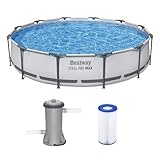
Bestway Steel Pro MAX 12' x 30" Above Ground Swimming Pool Set with Pump | Check Price On Amazon |
|
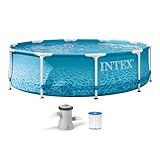
INTEX Beachside Metal Frame 10ft x 30in Round Pool Set w/Pump | Check Price On Amazon |

|
H2OGO! Kids Splash-in-Shade 8-Foot Round Steel Frame Above Ground Pool with Water Mister and Canopy Sunshade, Green Tropical Leaf Print | Check Price On Amazon |
What Tools Do You Need to Measure for a Pool Liner?
You need two flexible fiberglass surveyor’s tapes of at least 100 feet each, a rigid aluminum straightedge of six to eight feet, a plumb bob on a braided line, and a waterproof notebook. A pool liner measuring kit bundles these items with pre-printed data sheets formatted to the Pool & Hot Tub Alliance (PHTA) measurement standards.
By the Numbers
Pool Liner Measurement — What the Data Shows
Sources: Pool & Hot Tub Alliance (PHTA), industry manufacturer specification sheets, Larry’s Pool Service field data
Do not use a cloth tailor’s tape. Cloth stretches under tension and produces measurements that are short by 1/8 inch per foot. Do not use a single tape for both length and width. You will cross-check the two tapes against each other at multiple points. A 100-foot fiberglass long tape resists stretch to within 0.02 percent of length. A rigid straightedge lets you bridge across a radius or cove without the tape following the curve and reading long.
Quick Reference
Pool Liner Measurement — Key Terms Explained
Quick reference for the terms used throughout this guide
The straight-line distance between two fixed reference points on the pool deck, used as the baseline for all other measurements in a rectangular pool.
A weighted tape lowered vertically from a horizontal straightedge placed across the pool at the coping, used to measure wall depth at any point.
The curved transition where the pool wall meets the floor. A liner measurement must capture the cove radius so the liner material seats fully without bridging.
The flat bottom section of a deep-end hopper in a vinyl liner pool. Width and length of this pad must be measured independently from the slope panels.
The gap between the excavated earth wall and the finished pool wall structure. If the overdig was excessive, a standard liner will not fill the void and will stretch and tear.
A continuous plastic track embedded in the pool wall at the coping line that the liner’s bead wedges into. Measurement for bead type (standard, J-hook, or universal) determines the liner attachment method.
Cross-measuring the pool from corner to opposite corner to verify the structure is square. A difference of more than 1 inch between diagonals means the liner must be cut asymmetrically.
Protrusions into the pool envelope that require separate measurement templates. Each step riser, tread, and sidewall must be measured individually for a liner to wrap tightly.
Record every measurement on a standardized PHTA liner measurement form. Photograph each page. If a number is illegible later, the photo saves the job.

- Intelligent Navigation with Full Coverage: Equipped with 11 high-precision sensors and enhanced dual-path algorithms. The optimized WavePath cleaning pattern ensures systematic coverage with minimal overlap, while adaptive navigation analyzes pool layout in real time to eliminate missed spots
- Dual Filtration for Crystal-Clear Water: Advanced dual-layer filtration system features a replaceable 3-micron ultra-fine filter paired with a 180-micron standard filter. Effectively captures fine dust, sand, leaves, and debris for visibly cleaner and healthier pool water
- Comprehensive Pool Cleaning: Engineered to clean the pool floor, walls, waterline, and shallow areas (above 12 inches). The Caterpillar Treads system enhances mobility and climbing ability, ensuring thorough coverage across all pool zones
- Reliable Performance with 2-Year Warranty: Trusted by over 500,000 pool owners worldwide, this robotic pool cleaner delivers consistent, high-performance results. Built for durability and backed by a 2-year warranty and responsive customer support for worry-free ownership
How to Measure an Inground Vinyl Liner Pool: The Complete Walkthrough
Measuring an inground vinyl liner pool requires mapping the pool as a three-dimensional object, not just recording length by width. The manufacturer needs the exact shape of the floor, the wall height at every point, and the position of every step, bench, and curve. Any shape that is not a perfect rectangle requires a point-to-point mapping method called the A-B grid system.
Establish Your A-B Baseline for a Rectangular Pool
Set two permanent reference points on the pool deck at the midpoint of each long side. These are your A and B points. They must be fixed and marked with a permanent marker on the coping or deck. The distance between A and B becomes the reference dimension that all other measurements are taken from. Measure and record this distance to the nearest 1/8 inch.
From point A, measure perpendicularly to every corner, every break point in the wall, and every step edge. Record each measurement as a pair: distance along the A-B line plus distance perpendicular from A-B. This produces a coordinate map of the pool perimeter. Repeat the same process from point B as a verification pass. The two sets of numbers must agree within 1/4 inch at every point.
Measure Wall Height at Every Panel Using the Drop-Tape Method
Wall height is not uniform. A pool built twenty years ago has settled. The shallow-end wall height will differ from the deep-end wall height. You must measure wall height at every panel seam up to eight feet apart. Place a rigid aluminum straightedge across the pool at the coping directly above the point you are measuring. Hook a surveyor’s tape to the straightedge and drop a plumb bob to the floor exactly at the wall-floor junction.
Record the vertical distance to the nearest 1/8 inch. This is your drop-tape measurement. The manufacturer needs this number at every panel seam to cut the liner wall material to the correct height. If you measure only at the corners and assume the middle is the same, the liner will pull away from the wall where the pool has settled lower.
Map the Deep-End Hopper in Five Separate Measurements
The hopper is the funnel-shaped deep end. It has five distinct planes: the shallow floor, the transition slope, the deep-end side slopes, the deep-end end slope, and the flat hopper pad. Each plane must be measured independently. Start by measuring the length and width of the shallow-end floor where it is flat. Then measure the point where the floor begins to angle downward toward the deep end: this is the break point.
Measure the hopper pad (the flat deep-end floor) as its own rectangle. Record its length, width, and the exact distance from the shallow-end break point. Then measure the slope length from the break point to the hopper pad edge using the straightedge-and-drop method. For the side slopes, measure the horizontal distance from the hopper pad edge to the pool wall on both sides and the vertical drop at the midpoint.
Step-by-Step Guide
How to Measure a Freeform Inground Pool — Step by Step
8 steps · 2 to 3 hours for a typical 18×36 freeform pool
Draw the pool perimeter outline on graph paper at 1 inch = 4 feet scale
Walk the entire perimeter and sketch every curve. Mark every radius change point with a numbered flag. Do not approximate a kidney shape as an oval.
Set the A-B baseline along the longest straight section of the pool
If no straight section exists, stretch a baseline across the pool opening from the two furthest points on the perimeter. This A-B line is your X-axis for the entire coordinate map.
Measure perpendicular offsets from A-B to the pool edge every 2 feet along the baseline
At every 2-foot mark along A-B, measure the perpendicular distance to the pool wall on both sides. A freeform pool has a different offset at every station.
Drop-tape wall height at every 2-foot station and at every radius change point
Freeform pools often have varying wall heights. Do not assume symmetry. Measure both left and right sides independently.
Map the floor profile by taking drop-tape readings on a 4-foot grid across the entire pool
You need a depth reading at every grid intersection. A freeform pool floor is rarely a simple slope. You will find humps, depressions, and uneven settling.
Measure steps, benches, and tanning ledges as separate templates
Each protrusion gets its own dimensioned sketch. Include riser heights, tread depths, and the exact wall intersection points.
Identify and document every penetration: returns, skimmers, main drains, lights
Measure the exact center position of every wall fitting relative to the A-B baseline and the coping line. A skimmer faceplate opening must be located to within 1/4 inch.
Perform a full diagonal cross-check at 4 points across the pool
Pick two pairs of opposite points that form an X through the pool center. If the two diagonal measurements differ by more than 1 inch, redraw your coordinate map.
The measurement form for a freeform pool takes about two hours total for one person. Do not rush it.
How to Measure an Above-Ground Pool for a Replacement Liner
Above-ground pool measurement is simpler in geometry but has critical details that inground measurement does not. The wall height is uniform. The floor is flat except at the cove. The pool is a true circle or a true oval with straight sides and semicircular ends.
Measure the diameter of a round above-ground pool across the exact center in three directions 60 degrees apart. The three measurements must agree within 1/2 inch. If they do not, your pool is out of round. Record the smallest diameter because the liner must fit inside the pool wall without folds. An out-of-round pool needs an expandable liner designed to stretch up to 2 inches beyond the listed size.
For an oval above-ground pool, measure the straight-side length and the full width across the semicircular ends. Then measure the radius of each curved end independently. Many oval pools do not have perfectly semicircular ends. The manufacturer needs the exact radius to cut the liner end panels correctly. Also measure the wall height from the top rail to the cove where the wall meets the floor. Above-ground pool walls are typically 48, 52, or 54 inches, but verify with a tape measure. A 52-inch liner will not fit a 54-inch wall.
Product Comparison
Inground vs Above-Ground Liner Measurement — Side by Side
Key differences in measurement approach between pool types
| Feature | Inground Vinyl Liner Pool | Above-Ground Pool |
|---|---|---|
| Measurement time | 1.5 to 3 hours | 20 to 40 minutes |
| Method | A-B coordinate grid with drop-tape verticals | Direct diameter/circumference plus wall height check |
| Wall height | Varies point to point; measured every 4 feet | Uniform; measured once at 4 points for verification |
| Floor complexity | Sloped, hopper, or freeform; full grid map required | Flat with perimeter cove; no floor mapping needed |
| Fittings and penetrations | Multiple: skimmers, returns, drains, lights, steps | Skimmer and return only; positioned by liner overlap |
| Common measurement mistake | Measuring floor slope along the wall instead of across it | Ordering a 52-inch liner for a 54-inch wall |
For more detail on replacing an above-ground liner from start to finish, our step-by-step above-ground liner replacement guide covers the full installation process including coping strip removal and liner seating.
What Are the Most Common Pool Liner Measurement Mistakes?
Measurement errors that produce a failed liner almost always fall into one of five categories. Knowing them before you start the measuring process lets you avoid them entirely.
Mistake 1: Measuring the Old Liner Instead of the Pool Shell
A vinyl liner stretches over its service life. A liner that has been in the pool for ten years has stretched up to 3.5 inches across the width. If you pull the old liner out, lay it flat, and measure it, the new liner will be 3.5 inches too large. It will form wrinkles, trap debris, and abrade against the pool wall. Always measure the bare pool shell after the old liner is removed.
Mistake 2: Using a Single Measurement Method Without Cross-Checking
If you measure a 20-by-40-foot rectangle with only length-width-depth and do not perform diagonal cross-checks, you will not detect that the pool is 2 inches out of square. The liner will fit poorly at the corners. Always perform at least two independent measurement methods that must agree within tolerance before submitting to the manufacturer.
Mistake 3: Ignoring the Pool Floor Condition
A vermiculite or sand floor that has eroded, shifted, or developed soft spots changes the pool’s internal dimensions. Measure the floor after the old liner is out and after any floor repairs are complete. A floor that was patched with two inches of new material now has a smaller internal volume. Your measurements from before the repair are obsolete.
Mistake 4: Assuming Symmetry in Freeform Pools
A kidney-shaped pool is rarely symmetrical. The left lobe and right lobe have different radii. The wall height on the north side may differ from the south side due to years of frost heave. Measure every curve, every wall station, and every depth reading as if the pool is completely asymmetrical. The manufacturer will build to your numbers, not to an idealized shape.
Mistake 5: Forgetting to Account for Liner Material Thickness
Vinyl liner material ranges from 20 mil (0.020 inches) to 30 mil (0.030 inches) thick. This seems negligible but it is not. A 30-mil liner on a pool with tight-radius inside corners may not seat fully into the corner because the material itself occupies space. For pools with inside corner radii under 3 inches, specify a 20-mil liner and note the radius on the measurement form.
How Do You Measure Pool Liner Steps, Benches, and Tanning Ledges?
Steps and benches are the most frequently mis-measured features on a liner replacement. Each step is a three-dimensional object that protrudes into the pool envelope. The liner must wrap each step tightly, which means the manufacturer needs the dimensions of every riser face, every tread surface, and every sidewall.
Measure each step as a separate box. Record the width of the step (parallel to the pool wall), the depth of the tread (front to back), and the height of each riser. For corner steps, measure the diagonal face where the step meets the pool wall corner. For curved steps, use the same offset-measurement technique as a freeform pool perimeter: set a baseline along the step edge and record perpendicular offsets every 6 inches along the curve.
Benches that span the full width of the shallow end require a template that shows the bench face height, the seat depth, and the exact wall intersection points on both sides. A tanning ledge that sits at water level needs the ledge depth (typically 6 to 9 inches below coping), the horizontal surface dimensions, and the step-down point where the ledge transitions to the deeper pool floor. Before finalizing your measurements, you might find it helpful to explore different pool step designs and configuration ideas to ensure your template captures every structural detail the manufacturer needs.
Cost Reference
Pool Liner Measurement — Cost Impact by Method and Pool Size
All costs are estimates. Professional measurement fees range from $150 to $400 depending on pool complexity.
| Measurement method ↓ Pool size → | Small (up to 15×30) | Medium (16×32 to 20×40) | Large (20×44 and up) | Freeform / Custom |
|---|---|---|---|---|
| DIY with standard measuring kit | $50 to $100 Kit purchase only |
$75 to $150 Kit plus extra tapes |
$100 to $200 Kit plus second person |
$150 to $300 Kit plus 2 days time |
| Professional measurement service | $150 to $250 Work guaranteed |
$200 to $350 Guaranteed fit ★ most common |
$300 to $400 Work guaranteed |
$350 to $500 Work guaranteed |
| Measurement by liner installer (bundled) | Included with install Part of total quote |
Included with install Part of total quote |
Included with install Part of total quote |
Included with install Part of total quote |
| Cost of measurement error (reorder liner) | $800 to $1,200 Plus 3 to 6 week delay |
$1,200 to $1,800 Plus delay |
$1,800 to $2,500 Plus delay |
$2,500 to $4,000 No-refund custom cut |
Professional measurement fees are one-time. Reorder costs due to measurement errors include new liner fabrication, shipping, and the delay of the project. ★ highlights the most common scenario.
How to Submit Your Measurements to a Liner Manufacturer
Liner manufacturers require measurements on their proprietary forms. Do not send a list of numbers in an email and expect a correctly cut liner. Call the manufacturer before you begin measuring and request their current measurement form. Most manufacturers including GLI, Latham, and Tara require their own form filled out completely. Some accept a PHTA standard measurement form if it is accompanied by photographs of the pool shell.
The form will ask for the pool type (inground rectangular, inground freeform, inground hopper, above-ground round, above-ground oval), the bead type (standard bead, J-hook, universal, or overlap), and the liner material and thickness you want. Fill out every field. If a field does not apply (like a hopper pad for an above-ground pool), write N/A. A blank field means the manufacturer will call you for clarification, which adds three to five days to the production timeline.
Submit your completed form with a check payment or credit card authorization. Custom liners are non-returnable. Verify every measurement before you mail the form or upload the digital version. If you are uncertain about any number, our complete inground liner replacement cost and process guide explains how professional installers handle measurement verification and what a full turnkey replacement includes.
Myth vs Fact
Pool Liner Measurement — Common Myths Debunked
Separating fact from fiction on the most common liner measurement misconceptions
✗ Myth
You can measure the old liner and send those dimensions to the factory.
✓ Fact
Vinyl stretches 2 to 4 inches over a liner’s service life. An old-liner measurement always produces a new liner that is too large. It wrinkles, traps debris, and abrades. Always measure the bare pool shell.
✗ Myth
The original builder plans have the correct dimensions, so you do not need to remeasure.
✓ Fact
Concrete and vermiculite floors shift over decades. A pool built to a 20-by-40-foot plan may now measure 20 feet 1.5 inches by 39 feet 10 inches. Even half an inch of dimensional change creates visible liner problems.
✗ Myth
A laser measure is more accurate than a fiberglass tape for pool liner work.
✓ Fact
Laser measures bounce off water, reflective surfaces, and curved walls. They introduce errors of 1/8 to 1/4 inch per reading in a pool shell. A fiberglass surveyor’s tape under hand tension is the industry standard per PHTA measurement guidelines.
✗ Myth
If the pool was square when built, you can skip the diagonal check.
✓ Fact
Frost heave, ground settlement, and backfill pressure push pool walls out of square over time. A pool that was perfectly square at construction can be 1 to 3 inches out of square twenty years later. The diagonal check catches this.
✗ Myth
All 20-by-40 rectangular pools take the same liner dimensions.
✓ Fact
Wall height, corner radius, cove profile, and hopper dimensions vary between pools even when the nominal length and width are the same. Two 20-by-40 pools built by different contractors can require liners that differ by up to 4 inches in key dimensions.
Should You Pay a Professional to Measure Your Pool for a Liner?
A professional measurement from a certified pool liner measurement technician costs $200 to $400 for a typical residential pool. This fee is separate from the liner cost and the installation labor. The measurement technician carries their own liability insurance and guarantees the accuracy of their measurements. If the liner does not fit due to a measurement error, the technician pays for the replacement liner and the reinstallation labor.
For a standard rectangular inground pool without steps or a hopper, a careful homeowner can produce accurate measurements with a fiberglass tape and a PHTA measurement form. The factors that push the decision toward professional measurement are these: the pool is freeform or asymmetrical, the pool has built-in steps or benches, the deep end has a hopper with compound slopes, or the pool floor has been patched and resurfaced multiple times. A professional measurement is essential for a custom pool that has never had a liner before.
Consider this: the cost of a professional measurement is $300. The cost of a measurement error that requires a reordered custom liner is $1,200 to $2,500. The math strongly favors hiring a professional for any pool that is not a simple rectangle. If you want to get a clearer picture of the total financial commitment before you decide, use our pool liner cost calculator to estimate the full replacement expense including material and professional measurement.
For above-ground pools, professional measurement is rarely needed. The dimensions are simple. For $50 to $75, many pool retailers will send a technician to verify the size if you are not confident.
Buying Guide
Ask Yourself These Questions Before You Measure Your Own Pool Liner
Tap each card to reveal what your answer means for hiring a professional vs DIY measurement.
How Do You Account for a Pool That Is Out of Square?
A pool is out of square when the two diagonal measurements across the pool differ by more than 1 inch. To measure an out-of-square pool correctly, you do not force it to appear square on the measurement form. You measure what is actually there and let the manufacturer cut the liner asymmetrically.
Start by establishing the A-B baseline exactly as you would for a square pool. Measure perpendicular offsets from A-B to all four corners. You will find that opposite corners are not the same distance from the baseline. Record these numbers exactly. The manufacturer uses them to shift the liner’s corner cuts. Then measure the diagonal distances independently from the A-B measurements and include both sets of numbers on the form with a note that says “out of square: see diagonal measurements.”
The liner will be fabricated with one long corner and one short corner to match the pool. This works because vinyl liner material can be cut with angled corner panels that compensate for up to 3 inches of out-of-square condition in a 20-by-40-foot pool. Beyond 3 inches, the pool structure itself may be compromised and should be inspected before ordering a liner. If the pool safety is a concern during this work, review our guide to the best pool alarms for door, surface, and wearable options to keep the empty pool secure.
What Happens to Liner Fit After the Pool Floor Is Resurfaced?
Pool floor resurfacing adds material to the pool shell. A new vermiculite and cement floor applied at 1 to 2 inches thick reduces the pool’s internal length, width, and depth by that amount in every dimension. If you measured the pool before resurfacing and then resurface the floor, your measurements are no longer valid.
Always resurface the pool floor before measuring for the new liner. Measure the pool after the resurfacing material has cured to full hardness (typically 48 to 72 hours for vermiculite). The new measurements will be smaller than the old measurements by the thickness of the resurfacing material. If you are in the process of evaluating whether your pool needs resurfacing before the liner goes in, our pool resurfacing guide covers the cost, process, and how often it is needed for every pool surface type.
Does the Liner Material Thickness Affect How You Measure?
A pool liner’s material thickness ranges from 20 mil to 30 mil. A mil is 0.001 inch. A 30-mil liner is 0.030 inches thick. This difference matters in two measurement situations: tight inside corners and bead receiver channels. If your pool has an inside corner with a radius under 3 inches, a 30-mil liner cannot physically compress into that corner without forming a void behind it. Measure the inside corner radius with a radius gauge. If the radius is under 3 inches, specify a 20-mil liner and note the measured radius on the form.
For bead receiver channels, the liner bead must wedge into a slot that is cut to a specific dimension. Most bead receivers accept both 20-mil and 30-mil bead material. Some older bead receivers are cut for 20-mil bead only. Measure the bead receiver opening with a feeler gauge before ordering. If the receiver slot is under 28 mil wide, order a 20-mil liner regardless of thickness preference.
Can You Measure a Pool Liner With Water Still in the Pool?
You cannot accurately measure a pool for a replacement liner while water is present. Water pressure pushes the existing liner against the pool walls and floor. You cannot access the bare shell for measurement. When the water is drained and the liner is removed, the pool walls and floor may have shifted or deteriorated in ways that are invisible with water in the pool.
Drain the pool completely. Remove the old liner. Inspect the floor and walls for cracks, soft spots, or washout. Repair any damage. Then measure the bare shell. This is the only sequence that produces a liner that fits the pool as it actually exists today.
How Long Does It Take to Measure a Pool for a Liner?
A simple rectangular inground pool without steps or a hopper takes one person about 45 minutes to measure completely. A freeform inground pool with steps, benches, and a deep-end hopper takes two people about two to three hours. An above-ground pool takes one person about 20 minutes. These times assume the pool is empty, the old liner is removed, and all tools are on site.
Do not rush the measurement. A measurement error costs more time than measuring carefully. If you feel pressed for time, stop and resume the next day. Fatigue produces mistakes. The last 15 minutes of a measurement session produce more errors than the first hour.
What Is the Industry Tolerance for Pool Liner Fit?
A correctly manufactured and installed pool liner fits the pool shell with a maximum deviation of 1/4 inch at any point. At the coping, the liner bead seats fully in the receiver with no visible gap. On the walls, the liner contacts the pool wall uniformly without air pockets. On the floor, the liner lies flat on the substrate without bridging, wrinkles, or tension lines. At the corners, the liner material follows the corner radius without folding or bunching. At step and bench intersections, the liner wraps tightly with no more than 1/8 inch of play.
If your liner exhibits any of these problems, the cause is one of three things: measurement error, manufacturing error, or installation error. Measurement error is the most common cause. The measurement numbers sent to the factory did not accurately describe the pool’s actual dimensions. A liner that fits to within 1/4 inch at every point will last 10 to 15 years if the water chemistry is maintained. A liner that fits poorly will abrade, tear, or pull out of the bead receiver within the first three years.
What Are the Measurement Requirements for a Pool With a Vanishing Edge or Spa Overflow?
A vanishing-edge pool requires an additional set of measurements for the catch basin and the edge trough. Measure the catch basin as a separate rectangular pool using its own A-B baseline. Record the wall height of the catch basin independently from the main pool. The liner manufacturer needs to know the exact elevation difference between the main pool coping and the catch basin coping to cut the edge trough liner section correctly. If you are planning this type of installation, our infinity pool design visualizer can help you explore vanishing edge concepts before you commit to the detailed measurement process.
A pool with an attached spa overflow requires the spa interior to be measured as a separate liner. Treat the spa as a small rectangular or circular pool. Record all spa dimensions, including the spillway width and the elevation change at the overflow point. The main pool liner and spa liner are ordered on the same form but cut as separate pieces.
The single most important measurement for a pool liner is not the length or the width. It is the wall height at every panel because wall height variation is what causes liners to pull out of the bead receiver. Start your measurement session by measuring wall height at every panel seam with a drop tape. Record every number to the nearest 1/8 inch. Build the rest of your measurement map from those verified verticals. If the wall heights are correct, the liner seats properly and the floor measurements are less critical. If the wall heights are wrong, nothing else matters because the liner will fail at the coping first.
| Photo | Best Above-Ground Pools | Price |
|---|---|---|
|
|
Bestway Steel Pro MAX 12' x 30" Above Ground Swimming Pool Set with Pump | Check Price On Amazon |
|
|
INTEX Beachside Metal Frame 10ft x 30in Round Pool Set w/Pump | Check Price On Amazon |
|
|
H2OGO! Kids Splash-in-Shade 8-Foot Round Steel Frame Above Ground Pool with Water Mister and Canopy Sunshade, Green Tropical Leaf Print | Check Price On Amazon |