
Most pool owners overestimate liner lifespan by 3 to 5 years. A vinyl liner that looks fine at the waterline may be paper-thin at the corners, one sharp temperature swing away from a tear that drains thousands of gallons overnight.
Above ground and inground pool liner replacement follow the same basic principle but diverge sharply on cost, labor, and timing. Above ground liners run $200 to $800 for materials and take a skilled DIYer a weekend. Inground liners cost $2,500 to $5,500 installed and require a professional crew with specialized tools. The gap comes down to wall height, wall complexity, and the labor hours needed to fit the liner around steps, curves, and deep-end hoppers.
| Photo | Best Above-Ground Pools | Price |
|---|---|---|
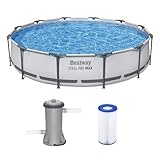
|
Bestway Steel Pro MAX 12' x 30" Above Ground Swimming Pool Set with Pump | Check Price On Amazon |
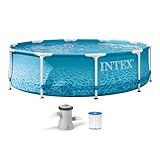
|
INTEX Beachside Metal Frame 10ft x 30in Round Pool Set w/Pump | Check Price On Amazon |

|
H2OGO! Kids Splash-in-Shade 8-Foot Round Steel Frame Above Ground Pool with Water Mister and Canopy Sunshade, Green Tropical Leaf Print | Check Price On Amazon |
This guide covers material cost breakdowns by pool type, labor pricing by region, liner thickness options from 20 mil to 30 mil, hidden costs most quotes leave out, and the exact sequence of measurements that determine whether your replacement runs $1,200 or $5,800. You will also find a cost-by-size permutation table, a step-by-step replacement walkthrough, and answers to questions most guides skip entirely.
By the Numbers
Pool Liner Replacement Cost — What the Data Shows
Sources: Pool & Hot Tub Alliance, contractor surveys, manufacturer pricing sheets
What Determines Pool Liner Replacement Cost?
A pool liner replacement quote bundles four separate costs that most homeowners never see itemized. The liner material itself accounts for 30 to 40 percent of the total. Labor captures 45 to 55 percent. Water delivery, if needed, adds $200 to $600. Old liner disposal and wall prep work fill in the rest.

- Intelligent Navigation with Full Coverage: Equipped with 11 high-precision sensors and enhanced dual-path algorithms. The optimized WavePath cleaning pattern ensures systematic coverage with minimal overlap, while adaptive navigation analyzes pool layout in real time to eliminate missed spots
- Dual Filtration for Crystal-Clear Water: Advanced dual-layer filtration system features a replaceable 3-micron ultra-fine filter paired with a 180-micron standard filter. Effectively captures fine dust, sand, leaves, and debris for visibly cleaner and healthier pool water
- Comprehensive Pool Cleaning: Engineered to clean the pool floor, walls, waterline, and shallow areas (above 12 inches). The Caterpillar Treads system enhances mobility and climbing ability, ensuring thorough coverage across all pool zones
- Reliable Performance with 2-Year Warranty: Trusted by over 500,000 pool owners worldwide, this robotic pool cleaner delivers consistent, high-performance results. Built for durability and backed by a 2-year warranty and responsive customer support for worry-free ownership
This happens because vinyl liner pools use a flexible PVC membrane stretched over a sand or cement floor and secured at the top by a track called coping. The liner holds the water and provides the visible surface. When it fails, water leaks through to the sand base or vermiculite floor beneath, and the pool structure itself is not damaged, but the liner must come out before water refills the pool.
This only works correctly when the replacement liner matches the original wall height, floor shape, and step configuration to within a quarter inch. If the new liner is cut wrong or stretched unevenly, the result is wrinkles that trap debris, stress the vinyl at fold points, and shorten liner life to as little as 3 seasons. Fix it by having the installer measure every dimension with a laser before ordering the replacement liner.
Above Ground Pool Liner Replacement: Cost Breakdown
Above ground pool liners cost $200 to $800 for materials and $1,200 to $2,200 for professional installation. The liner price depends on pool diameter, wall height, and material thickness measured in mils, which are thousandths of an inch. A 24-foot round pool with a 52-inch wall needs roughly 30 percent more vinyl than an 18-foot round pool, and that shows up directly in the price.
The vinyl gauge, or thickness, is the single biggest factor in material durability and cost. A 20-mil liner is the budget option at $150 to $300 for common sizes. A 25-mil liner, the most popular choice, runs $250 to $500. A 30-mil liner, which resists punctures from pool toys and pet claws far better, costs $400 to $800. The price difference between 20-mil and 30-mil is about $200 on a 24-foot round pool, and that $200 buys roughly 3 to 4 extra years of service life.
Overlap liners, which fold over the top rail and are secured with coping strips, are the cheapest style at $150 to $400. Beaded liners, which snap into a track at the top of the wall, run $200 to $500 and are easier to install because they do not require removing the top rail. Unibead or J-hook liners combine both attachment methods and cost $250 to $600.
Professional installation for an above ground pool adds $600 to $1,400. The job takes two workers 4 to 8 hours depending on pool size and access. The installer removes the old liner, inspects and smooths the sand base, sets the new liner in place, cuts openings for the skimmer and return, and fills the pool halfway before making final adjustments to eliminate wrinkles.
DIY installation eliminates labor cost but demands a second person for stretching and positioning the vinyl. A 25-mil overlap above ground pool liner in a common 24-foot round size costs roughly $300 to $450. Most DIYers spend a full Saturday and Sunday on the project.
For a typical 24-foot round above ground pool with a 52-inch wall and a 25-mil beaded liner professionally installed, the total cost runs $1,400 to $1,800 in most US markets. The same pool with a 20-mil overlap liner installed DIY drops to $400 to $600. The $1,000 gap buys a professionally stretched liner with no wrinkles, a warranty on the installation work, and zero risk of a misaligned skimmer cut that ruins a $400 liner.
Inground Pool Liner Replacement: Cost Breakdown
Inground vinyl liner replacement costs $2,500 to $5,500 installed, with the liner itself accounting for $1,200 to $3,000 of that total. The wide range exists because inground pools vary dramatically in shape, depth, and step configuration. A simple 16-by-32-foot rectangle with no steps and a flat bottom runs on the low end. A freeform pool with a 9-foot deep end hopper, swim-out benches, and built-in steps pushes the high end.
Inground liners use thicker vinyl than above ground liners as a rule. The standard specification is 27-mil or 28-mil vinyl, with premium options at 30-mil. The thicker material resists the greater water pressure at 8 to 10 feet of depth and withstands the constant stress at corners and transitions where the vinyl must stretch over concrete forms. A 28-mil inground liner for a 16-by-32-foot rectangle costs $1,400 to $1,800. The same pool in 30-mil runs $1,800 to $2,400.
This happens because inground liners are custom-fabricated to the exact dimensions of each pool. The manufacturer uses a laser-measured template to weld vinyl panels together on a factory floor. The liner arrives on site as a single enormous piece that weighs 200 to 400 pounds. The installer positions it, hooks the top bead into the coping track, and uses a powerful vacuum to suck the liner tight against the walls and floor while the pool fills with water.
Labor for inground replacement runs $1,200 to $2,500 and takes a crew of two to three workers one to two full days. The job includes draining the pool if it is not already empty, removing the old liner, repairing any damage to the vermiculite or sand floor, installing the new liner, cutting in all faceplates for lights, returns, skimmers, and drains, and filling and adjusting the liner as the water rises.
Water delivery for an inground pool is a cost most first-time owners do not anticipate. An average 20,000-gallon inground pool needs 5 to 10 truckloads of water at $150 to $300 per truck, adding $750 to $3,000. Our pool fill cost calculator can help you estimate your water delivery expenses. Using a garden hose costs $50 to $150 in municipal water charges but takes 24 to 48 hours. Many installers strongly prefer trucked water because it fills the pool fast enough to let the vacuum set the liner correctly before the vinyl can shift.
The detailed breakdown of every step, from draining to final chemical balance, is covered in our inground pool liner replacement process guide with cost examples for common pool sizes.
Above Ground vs Inground Liner Replacement: Cost Comparison Table
Use the table below to compare every cost component side by side and identify which expense categories apply to your pool type.
Cost Comparison
Above Ground vs Inground Liner Replacement — Full Cost Breakdown
All costs in USD. Prices verified at time of publication and vary by region.
| Cost Component | Above Ground | Inground |
|---|---|---|
| Liner material only | $200 to $800 | $1,200 to $3,000 |
| Standard liner thickness | 20 to 25 mil | 27 to 30 mil |
| Professional labor | $600 to $1,400 | $1,200 to $2,500 |
| Installation time | 4 to 8 hours | 12 to 20 hours (2 days) |
| Water delivery | $50 to $200 (hose fill) | $750 to $3,000 (trucked) |
| Old liner disposal | $50 to $150 | $150 to $300 |
| Floor/wall repairs if needed | $100 to $500 (sand base) | $500 to $2,000 (vermiculite) |
| Total installed range | $1,200 to $2,200 | $2,500 to $5,500 |
Costs reflect continental US pricing. Coastal metro areas add 15 to 30 percent. Remote locations add transport surcharges for both liner delivery and water trucks.
How Pool Size and Shape Change the Price
Pool volume and shape complexity drive inground liner cost more than any other factor. A rectangular pool with 90-degree corners is the cheapest shape to fit. Every additional corner, radius curve, step, bench, or depth transition adds fabrication labor at the factory and fitting labor on site.
A standard 16-by-32-foot inground rectangle with a 3-foot shallow end and 6-foot deep end holds roughly 17,000 gallons. Determine your pool’s exact volume with our pool volume calculator. The liner for this pool runs $1,400 to $1,800 in 27-mil vinyl. A 20-by-40-foot freeform pool of the same depth profile holds roughly 26,000 gallons, and its liner costs $2,200 to $3,000. The 50 percent surface area increase (quickly compute your pool’s surface area with our pool surface area calculator) produces roughly a 60 percent liner cost increase because the larger vinyl sheet requires more factory welding and is harder to handle on site.
Cost Reference
Inground Liner Cost by Pool Size and Liner Thickness
Material-only prices for rectangular pools with standard depth profile. Labor is additional.
| Pool size ↓ Liner gauge → | 27-mil standard | 28-mil upgraded | 30-mil premium |
|---|---|---|---|
| 14×28 ft · ~12,000 gal | $1,100 to $1,400 | $1,300 to $1,600 | $1,500 to $1,900 |
| 16×32 ft · ~17,000 gal | $1,400 to $1,800 ★ most common | $1,700 to $2,100 | $2,000 to $2,500 |
| 18×36 ft · ~22,000 gal | $1,700 to $2,100 | $2,000 to $2,500 | $2,300 to $2,900 |
| 20×40 ft · ~26,000 gal | $2,200 to $2,700 | $2,500 to $3,100 | $2,900 to $3,500 |
Prices are liner material only for rectangular pools with standard 3-ft to 6-ft depth transitions. Freeform, L-shape, or pools with built-in steps add 25 to 40 percent. ★ highlights the most common residential inground pool size.
What Most Pool Liner Quotes Leave Out
Hidden costs turn a $3,000 quote into a $4,500 invoice. The five most common surprise charges are floor repair, water delivery, permit fees, old liner disposal, and faceplate replacement. Each one is legitimate work, but installers who omit them from the initial quote create a false price comparison that makes their bid look lower than it really is.
Vermiculite floor repair is the most expensive hidden cost. The pool bottom, made of vermiculite cement troweled over the dirt excavation, develops cracks and soft spots over 10 to 15 years. A failing floor shows up as divots under the old liner. Small patches cost $200 to $500. Complete floor resurfacing runs $1,500 to $2,500 and adds a full day of labor before the new liner can go in.
If the floor is not repaired before the new liner is installed, the result is early vinyl failure at the low spots where water pressure stretches the liner into the depression. Fix it by having the installer inspect the floor with the old liner removed and photograph every crack before quoting the repair.
Permit fees add $100 to $400 in most municipalities. A pool liner replacement technically requires a building permit because the work involves draining and refilling thousands of gallons of water, and some towns require an inspection of the final installation. Unpermitted work can delay a home sale if the buyer’s inspector flags it.
Faceplate replacement runs $15 to $50 per plate. Every underwater light, return jet, skimmer, and main drain has a faceplate that sandwiches the liner against the pool wall fitting. The old faceplates are often corroded, stripped, or cracked by the time the liner comes out. Replacing all of them on a pool with two skimmers, three returns, one light, and a main drain adds $100 to $300 to the total.
When to Replace a Pool Liner: Signs and Timeline
A vinyl pool liner lasts 8 to 15 years depending on water chemistry, sun exposure, and how the pool is winterized. Liners in pools with properly balanced pH between 7.2 and 7.6 and cyanuric acid below 60 ppm consistently reach the high end of that range. Pools with pH that regularly drifts above 8.0 or below 6.8 destroy vinyl in 6 to 8 years because extreme pH chemically embrittles the plasticizer that keeps vinyl flexible.
The definitive signs a liner needs replacement are fading above the waterline that has turned white and brittle, visible threads or scrim showing through worn spots, water loss of more than half an inch per day that cannot be traced to plumbing, and tears longer than 3 inches at the coping track. Fading alone is cosmetic. Threadbare spots are structural. A liner worn to the scrim layer can fail catastrophically under the weight of thousands of gallons.
Patches extend liner life by 1 to 3 seasons on small punctures under 2 inches. A vinyl pool liner patch kit works on tears up to about 3 inches if the surrounding vinyl is still flexible. Patches do not work on brittle, faded vinyl because the patch adhesive cannot bond to material that has lost its plasticizer. Once the liner above the waterline turns chalky and cracks when you press it with a fingernail, patching is a waste of money.
Step-by-Step Guide
How to Replace an Above Ground Pool Liner — Step by Step
6 steps · 1 to 2 days with 2 people · DIY difficulty: moderate
Drain the pool completely
Use a submersible pump or the pool’s waste setting. Drain onto a lawn or storm drain, not into a sanitary sewer. Above ground pools must be empty for liner removal.
Remove the old liner
Disconnect the skimmer and return fittings. Release the liner from the coping track or top rail. Cut the old liner into manageable sections with a utility knife and remove.
Inspect and repair the sand base
Check the sand floor for divots, rocks, or root intrusions. Rake smooth and add new sand where needed. Any lump or depression will telegraph through the new liner.
Position and unfold the new liner
Lay the liner in the center of the pool and unfold it outward. Center the liner carefully because sliding it on sand creates friction that can cause thin spots. Two people are required for this step.
Attach the liner and eliminate wrinkles
Secure the liner at the top using your chosen method: overlap, bead, or J-hook. Fill with 6 inches of water, then work wrinkles outward from the center toward the walls. Continue filling and smoothing.
Cut openings and fill completely
When water reaches the bottom of the skimmer opening, cut the liner for the skimmer, return, and any other wall penetrations. Install new gaskets and faceplates. Fill to mid-skimmer level and balance chemicals.
Regional Price Differences Across the United States
Pool liner replacement costs shift 30 to 50 percent between low-cost and high-cost regions. The Southeast and Midwest see the lowest prices. Florida, Texas, Georgia, and the Carolinas benefit from dense competition among pool contractors, long swimming seasons that keep crews busy year-round, and proximity to liner manufacturing plants in the Southeast.
The Northeast and West Coast pay the highest prices. New York, New Jersey, Connecticut, California, and Washington combine high labor rates with shorter swimming seasons that concentrate all replacement work into a 3 to 4 month window. A liner replacement that costs $3,000 in Atlanta runs $4,200 to $4,800 in suburban New Jersey for the same pool size and liner grade.
Remote and rural locations face a freight surcharge that urban pools do not. Liner manufacturers ship from a handful of factories, and freight to a rural zip code can add $200 to $500 for the liner alone. Water delivery trucks charge by the mile from their fill station. A pool 30 miles from the nearest water truck depot pays double the delivery cost of a pool 5 miles away.
Liner Material Options: 20-Mil, 25-Mil, 27-Mil, 28-Mil, 30-Mil
Liner thickness measured in mils is a thousandth of an inch. A 20-mil liner is 0.020 inches thick, roughly the thickness of five sheets of printer paper stacked together. A 30-mil liner at 0.030 inches is 50 percent thicker. That extra 0.010 inches of vinyl makes a measurable difference in puncture resistance from pool toys, dog claws, and cleaning poles.
For above ground pools, 20-mil is the builder-grade option included with most new pool packages. It works adequately for pools with no sharp objects nearby and careful users. The 25-mil option is the sweet spot for value, offering noticeably better tear resistance for about $100 more on common sizes. The 30-mil option is worth the premium if the pool is surrounded by trees that drop branches or if large dogs share the yard.
For inground pools, 27-mil is the minimum accepted standard among reputable installers. The increased water depth and pressure at 8 to 10 feet create more stress on the vinyl than any above ground pool ever experiences. The 28-mil and 30-mil options add puncture resistance and UV-inhibitor packages that slow fading above the waterline. The premium for 30-mil over 27-mil is typically $300 to $600 on a standard inground pool, and that $300 to $600 buys 2 to 4 extra years of life before fading becomes objectionable.
A 30-mil premium inground pool liner includes a UV-protective topcoat that 20-mil and 25-mil liners lack. This topcoat is the primary reason premium liners resist fading for 12 to 15 years instead of 8 to 10. The chemical plasticizers in standard vinyl break down under UV radiation. The topcoat slows this breakdown by blocking roughly 80 percent of UV before it reaches the vinyl underneath.
If the topcoat is not present or degrades, the result is a liner that turns white, then brittle, then cracks at the waterline within 5 to 7 years. Fix it by choosing a liner with a stated UV-inhibitor package and maintaining cyanuric acid between 30 and 50 ppm so chlorine remains effective without being aggressive enough to attack the liner surface.
How Different Pool Surface Types Compare on Long-Term Cost
Vinyl liner pools represent one of three major inground pool surfaces, and the liner replacement cost is the key number in a 20-year ownership cost comparison. Understanding how vinyl stacks up against the alternatives helps you decide whether to replace the liner or switch to a different surface type when the current liner fails. Our side-by-side comparison of pool plaster, vinyl liner, and fiberglass surfaces breaks down the full 20-year cost including all major maintenance events.
Concrete pools with plaster surfaces cost more upfront but have different long-term maintenance rhythms. For gunite pool owners facing a resurfacing decision, our gunite pool guide on construction costs and maintenance expectations provides the numbers you need. Fiberglass pools offer a third alternative with their own economics, and our fiberglass pool pros and cons analysis and concrete pool pros and cons breakdown show how all three surfaces compare over decades of ownership.
Choosing the Right Pool Pump to Protect Your New Liner
A new liner is a significant investment, and the pool pump plays a direct role in protecting it. Pumps that run at excessive flow rates create turbulence that stresses liner seams and accelerates wear at the skimmer and return openings. Matching pump horsepower and flow rate to your pool volume and plumbing diameter extends liner life. Our guide to choosing the best inground pool pump for your setup explains the flow rate calculations that protect both your liner and your energy bill.
Common Mistakes That Destroy a New Liner in Under 3 Years
Improper chemical balance destroys more liners than physical damage. Letting pH drop below 7.0 for even a few weeks causes the vinyl plasticizer to leach out into the pool water. The liner wrinkles, turns brittle, and loses its ability to stretch. This damage is irreversible and is not covered under any manufacturer warranty because it results from chemical neglect rather than a manufacturing defect.
Chlorine shock poured directly onto a vinyl liner burns a white bleached spot into the surface instantly. Granular shock must always be pre-dissolved in a bucket of water before adding it to the pool. One scoop of undissolved calcium hypochlorite sitting on a vinyl liner for 30 seconds leaves a permanent white ring. The damage is cosmetic rather than structural, but it is ugly and permanent.
Filling a new liner with water that has a pH below 6.5 or above 8.5 stresses the vinyl before the pool is even swim-ready. Test the fill water before the trucks arrive. Municipal water typically comes out of the tap at pH 7.0 to 7.8. Well water can be anywhere from pH 5.5 to pH 8.5 depending on local geology. Adjust fill water pH before it reaches the liner.
Walking on a liner during installation creates footprints in the sand base that never completely smooth out. Installers wear soft-soled shoes or work in socks and step carefully. A DIY installer in work boots leaves permanent depressions that trap debris and stress the vinyl at the edges of each footprint.
What Makes a Vinyl Liner Fail: The Chemistry and Physics
Vinyl pool liner failure has two distinct mechanisms operating on different timelines. Chemical degradation attacks the plasticizer molecules, called phthalates, that give vinyl its flexibility. Plasticizer loss happens continuously and accelerates under three conditions: pH above 8.0, chlorine concentration above 5 ppm sustained for weeks, and water temperature above 85 degrees Fahrenheit.
This happens because chlorine in its active form, hypochlorous acid, is an oxidizing agent that attacks the carbon bonds in phthalate plasticizers. Low pH increases the proportion of active hypochlorous acid relative to the less aggressive hypochlorite ion. High pH shifts equilibrium toward hypochlorite, which is gentler on vinyl but weaker as a sanitizer. The practical lesson: keeping pH at 7.4 to 7.6 (use our pool pH calculator for precise adjustments) and free chlorine at 1 to 3 ppm minimizes plasticizer loss while maintaining adequate sanitation.
Mechanical failure occurs when physical stress exceeds the vinyl’s remaining tensile strength. This only occurs when the liner has already lost enough plasticizer to become brittle. A new 30-mil liner can stretch 200 to 300 percent before tearing. A 10-year-old liner with degraded plasticizer may tear at 30 to 50 percent stretch, and the tear point is almost always at a corner, a step transition, or a wrinkle fold.
If plasticizer loss is allowed to continue unchecked, the result is a liner that splits at the coping track on the first cold night of autumn when the vinyl contracts and no longer has the flexibility to stretch with the pool structure. Fix it by testing pH weekly and never allowing it above 7.8 for more than 48 hours. This single practice adds more years to liner life than any other maintenance decision.
DIY vs Professional Installation: When Each Makes Sense
Above ground pool liner replacement is a realistic DIY project for a handy homeowner with a helper. The tools required are basic: a submersible pump, a utility knife, a screwdriver set, a shop vacuum for smoothing the liner, and a garden hose. The risk of an expensive mistake is low because an above ground liner costs $200 to $500 to replace if the first attempt goes badly wrong.
Inground liner replacement is not a realistic DIY project. The liner alone costs $1,200 to $3,000 and is custom-fabricated to the pool. A mistake during installation wastes a liner that cannot be returned. The vacuum equipment needed to pull an inground liner tight against the walls costs $2,000 to $5,000 and requires 220-volt power. The weight and awkwardness of a 300-pound folded liner make positioning it correctly a job for an experienced crew.
The decision point is simple. If you own an above ground pool and have a helper for a weekend, DIY saves $600 to $1,400 in labor. If you own an inground pool, pay a professional. The labor cost of $1,200 to $2,500 is less than the cost of ruining one incorrectly installed custom liner, which you will then pay to remove and replace a second time.
How a DIY Inground Pool Kit Compares to Professional Liner Replacement
Some homeowners consider converting a liner pool to a different surface or even building a new pool when faced with a liner replacement bill. Our analysis of DIY inground pool kits covers what they cost and whether they produce a durable result. For most liner pool owners, replacing the liner is far cheaper than any alternative surface conversion, and the new liner immediately restores the pool to like-new appearance and function.
Does Homeowners Insurance Cover Pool Liner Replacement?
Standard homeowners insurance does not cover pool liner replacement from normal wear, aging, or chemical damage. The liner is considered a maintenance item like a roof or a water heater. It wears out, and replacement is the owner’s responsibility unless a covered peril causes the damage.
A covered peril that damages a pool liner typically falls under the “falling objects” or “windstorm” provisions. A tree branch that falls and tears the liner is usually covered. Wind-driven debris that punctures the liner during a named storm may be covered, but only if your policy includes windstorm coverage and the damage exceeds your deductible. Lightning strikes that cause electrical damage to pool equipment are typically covered, but the liner itself is rarely damaged by electrical events.
Flood insurance does not cover pool liner damage. A pool that overflows during a flood and tears the liner when the surrounding ground erodes is not covered by standard flood policies. The pool and its liner are considered part of the exterior property excluded from flood coverage.
Before filing a claim, check your deductible. Most homeowners deductibles are $1,000 to $2,500. A liner replacement that costs $2,500 with a $2,000 deductible nets you $500 from insurance while potentially raising your future premiums. In almost all cases, paying out of pocket for liner replacement is the better financial decision even when coverage technically applies.
How to Get Accurate Quotes and Compare Them
Get three quotes minimum, five quotes if you live in a competitive market. Ask each installer for a line-item breakdown showing liner material, liner gauge, manufacturer, labor, floor repair estimate, water delivery estimate, permit fee, disposal fee, and warranty terms. An installer who refuses to provide a line-item quote is likely hiding something.
Compare the liner gauge and manufacturer across quotes. A $3,000 quote for a 20-mil liner from an unknown brand is not a better deal than a $3,500 quote for a 27-mil liner from a major manufacturer with a 20-year prorated warranty. The cheaper quote costs more per year of expected service life.
Verify the installer’s insurance and worker’s compensation coverage. An uninsured installer who gets injured on your property can create a liability claim against your homeowners policy. Ask for a certificate of insurance and call the carrier to confirm it is current.
Buying Guide
Before You Hire — Pool Liner Replacement Checklist
Check off each point before signing a contract.
Myth vs Fact
Pool Liner Replacement — Common Myths Debunked
Separating fact from fiction on vinyl liner replacement decisions
✗ Myth
A thicker liner always lasts longer than a thinner one.
✓ Fact
Thickness improves puncture resistance, but liner lifespan depends primarily on water chemistry. A 20-mil liner in a pool with perfect pH balance outlasts a 30-mil liner in a pool with pH that regularly drifts above 8.0. The plasticizer degradation rate is chemistry-driven, not thickness-driven.
✗ Myth
You must drain the pool completely before the installer arrives for an inground replacement.
✓ Fact
Professional installers handle draining as part of the job. They use high-volume pumps that empty a pool in 4 to 6 hours. Homeowner draining risks liner float if groundwater is high, and incorrect pump placement can damage the existing liner or pool floor.
✗ Myth
A leaking liner always means you need a full replacement.
✓ Fact
Small punctures under 2 inches in flexible vinyl are patchable and can extend liner life by 1 to 3 seasons. Leaks at the coping track, multiple tears, or leaks in brittle faded vinyl indicate the liner has lost plasticizer and is failing structurally. Those require replacement.
✗ Myth
Above ground pool liners are universal and any brand will fit.
✓ Fact
Liners are sized to exact pool dimensions. A round 24-foot pool liner will not fit a round 27-foot pool. Overlap, beaded, and J-hook liners use different attachment methods that are not interchangeable. Order a liner matched to your exact pool diameter, wall height, and attachment style.
✗ Myth
The cheapest quote is the best deal.
✓ Fact
Low quotes often omit line items that appear as change orders later. Floor repair, water delivery, and faceplate replacement are the three most commonly omitted items. A higher quote that includes all three is usually cheaper than a low quote that bills them as extras after the old liner is out and the pool cannot be refilled until the work is done.
Why Does My New Pool Liner Have Wrinkles After Installation?
Wrinkles in a newly installed liner come from one of three causes. The liner was not centered properly before filling began, the sand or vermiculite base had uneven spots that were not smoothed, or the vacuum was not strong enough to pull the liner tight against the walls during filling. Wrinkles under the water are cosmetic and reduce liner life at the fold line. Wrinkles on the wall above the waterline can indicate the liner was cut too large or stretched unevenly during installation.
Above ground pool wrinkles on the floor are common in DIY installations and can often be worked out with a plunger while the pool is partially filled. Push the wrinkle toward the nearest wall in small increments. Inground pool wrinkles require the installer to return and use the vacuum system to reposition the liner, which is possible only within the first 48 hours after installation before the water weight fully seats the vinyl.
If the wrinkles appeared months after installation, the cause is likely a shifting sand base or a high water table pushing up from underneath. The only permanent fix is draining the pool, removing the liner, repairing the base, and reinstalling. This is an installer workmanship issue if it happens within the first year and should be covered under the installation warranty.
Can I Replace Just the Pool Liner Floor and Keep the Walls?
Pool liners are manufactured as a single piece of vinyl. The floor, walls, and coves are all part of one continuous sheet welded together at the factory. You cannot replace only the floor section because the floor vinyl is welded to the wall vinyl during fabrication. A tear in the floor means the entire liner must be replaced.
This is different from some commercial pool systems that use separate floor and wall panels, but those are not used in residential construction. Every residential vinyl liner pool uses a single-piece liner that covers the entire interior surface from coping track to coping track. The one-piece design is what makes the liner watertight without seams or gaskets below the waterline.
What Is the Difference Between Overlap, Beaded, and J-Hook Liners?
Overlap liners drape over the top of the pool wall and are held in place by plastic coping strips that snap over the top rail. They are the least expensive attachment method and the most common on older above ground pools. Installation requires removing the top rail, draping the liner over, and reinstalling the rail, which takes extra time.
Beaded liners have a small bead welded into the top edge that snaps into a track mounted on the inside of the pool wall. They install without removing the top rail, which makes them faster to install. The beaded track system costs more than overlap coping strips but produces a cleaner look because no vinyl is visible from outside the pool.
J-hook or unibead liners combine both systems. The top edge has a J-shaped hook that hangs over the wall, and a bead section that can be cut off to convert the liner to a standard beaded style. These liners work with either attachment system and are the most versatile option for pools where the coping style is unknown or might change.
Does a Pool Liner Need a Pad or Underlayment Underneath?
Above ground pools benefit from a foam or felt pad between the liner and the sand base. The pad smooths out minor sand imperfections, provides a small amount of thermal insulation that keeps the water slightly warmer, and adds puncture resistance against rocks or roots that work up through the sand over time.
A pool liner foam padding underlayment costs $50 to $150 for common above ground sizes. It is optional but recommended, especially for pools on rocky soil or with tree roots nearby. Inground vinyl liner pools sit on a vermiculite or sand-cement floor that provides a smooth surface without additional padding.
Can I Change the Pool Liner Color or Pattern During Replacement?
Yes, replacement is the ideal time to change liner color and pattern. Most manufacturers offer 10 to 30 patterns ranging from solid blue to mosaic tile prints to darker navy and charcoal colors that absorb more solar heat. Darker liners warm the pool water 3 to 5 degrees Fahrenheit compared to light blue liners in full sun, which can extend the swimming season by 2 to 3 weeks in northern climates.
Pattern choice is entirely personal preference with no structural impact. The only technical consideration is that very dark solid liners show calcium scale and fading more visibly than patterned liners with lighter backgrounds. A dark blue liner that fades will show a noticeable color shift after 5 to 7 years above the waterline where UV exposure is strongest.
How Long Does the Water Need to Circulate Before Swimming After Liner Replacement?
Wait 24 to 48 hours after the pool is full before swimming. The initial fill water needs time for chemical balancing. Add a metal sequestrant immediately to prevent iron or copper in the fill water from staining the new liner. Bring pH to 7.4 to 7.6 using a pH increaser for pools or muriatic acid depending on your fill water chemistry.
Add chlorine gradually over the first 24 hours rather than shocking immediately. A new liner is most chemically sensitive in the first week because the plasticizer layer on the surface has not yet been conditioned by pool water. Start with 1 to 2 ppm free chlorine and increase to 2 to 4 ppm over several days. Use a liquid drop test kit for accurate free chlorine measurements to avoid overdosing.
Run the pump continuously for the first 48 hours at a flow rate that achieves one turnover every 6 to 8 hours. For a 20,000-gallon pool, that means 42 to 55 GPM. This ensures the chemicals distribute evenly and the liner settles completely before anyone gets in the water.
What Causes a Pool Liner to Float and How Do I Prevent It?
Liner float occurs when groundwater pressure under the pool exceeds the water pressure inside the pool. This only happens when the pool is drained or partially drained and the surrounding soil is saturated with water. The liner lifts off the floor and walls, creating large bubbles that shift the liner out of position.
This happens because a drained pool creates a condition where the water table is higher than the water level inside the pool. The hydrostatic pressure from groundwater pushes the liner upward, and without the weight of pool water to resist it, the liner floats. The risk is highest in areas with high water tables, during wet seasons, and in pools with inadequate hydrostatic relief valves in the main drain.
If a liner floats, the result is a misaligned liner with permanent wrinkles and stretched areas that cannot be repositioned once the water is refilled. Fix it by never fully draining a vinyl liner pool without consulting an installer who can assess groundwater risk and install temporary well points to lower the water table during the replacement.
Should I Replace the Skimmer and Return Fittings When Replacing the Liner?
Replace the gaskets and faceplates every time. The skimmer body and return fittings themselves last 20 to 30 years and do not need replacement unless they are cracked or corroded. The gaskets that seal between the liner and the fitting are the critical wear items. Old gaskets harden and lose their ability to seal against the new liner.
Faceplates often show corrosion on the screws and edges after a decade underwater. Replacing all gaskets and faceplates costs $100 to $300 and eliminates the most common source of leaks after a new liner installation. A leaking skimmer gasket on a new liner forces a drain-and-repair job that costs more than the gasket replacement would have.
Can I Install a Pool Liner in Cold Weather?
Vinyl becomes stiff and difficult to work with below 50 degrees Fahrenheit. Most manufacturers specify a minimum installation temperature of 50 to 60 degrees. Cold vinyl resists stretching into corners and over steps, increasing the risk of wrinkles and thin spots. Installers in northern climates schedule liner replacements between May and October.
If an emergency replacement is necessary in cold weather, the installer can warm the liner indoors before installation and use heaters to keep the pool area above 55 degrees during the job. This adds $300 to $600 in heating and handling costs. The liner will still be stiffer than ideal, but a properly warmed liner installed by an experienced crew can produce an acceptable result in temperatures down to about 45 degrees.
For the typical replacement timeline in your area and the factors that shift pricing seasonally, our detailed inground pool liner replacement cost and process guide covers scheduling considerations by climate zone.
Pool liner replacement cost ranges from $1,200 for a DIY above ground replacement to $5,500 for a professionally installed inground liner in a complex pool. For a personalized estimate based on your pool’s dimensions and location, use our pool liner cost calculator. The single biggest cost driver is whether the pool sits above ground or in ground, followed by liner thickness, pool size and shape, and your regional labor market. Above ground pool owners with basic DIY skills can replace a liner for $400 to $800 in materials over a weekend. Inground pool owners should budget $3,000 to $4,500 with a professional installer and expect the job to take two full days. Three quotes, line-item comparisons, and a signed contract that includes floor repair and water delivery estimates will prevent the surprise charges that turn a fair price into an overrun.
| Photo | Best Above-Ground Pools | Price |
|---|---|---|
|
|
Bestway Steel Pro MAX 12' x 30" Above Ground Swimming Pool Set with Pump | Check Price On Amazon |
|
|
INTEX Beachside Metal Frame 10ft x 30in Round Pool Set w/Pump | Check Price On Amazon |
|
|
H2OGO! Kids Splash-in-Shade 8-Foot Round Steel Frame Above Ground Pool with Water Mister and Canopy Sunshade, Green Tropical Leaf Print | Check Price On Amazon |