
A 400,000 BTU gas heater can raise a 20,000-gallon pool from 60°F to 80°F in roughly 8 to 10 hours. A heat pump doing the same job takes 24 to 48 hours depending on air temperature and humidity.
Solar heating is the slowest option and the most variable. A properly sized solar system with full sun exposure can achieve the same 20-degree rise in 2 to 4 days of good weather. Cloud cover, panel angle, and nighttime heat loss all work against solar heating speed. The single factor that changes every one of these estimates by 40 to 60 percent is whether you use a solar cover while heating.
| Photo | Best Above-Ground Pools | Price |
|---|---|---|
|
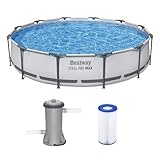
Bestway Steel Pro MAX 12' x 30" Above Ground Swimming Pool Set with Pump | Check Price On Amazon |
|
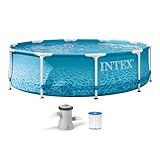
INTEX Beachside Metal Frame 10ft x 30in Round Pool Set w/Pump | Check Price On Amazon |

|
H2OGO! Kids Splash-in-Shade 8-Foot Round Steel Frame Above Ground Pool with Water Mister and Canopy Sunshade, Green Tropical Leaf Print | Check Price On Amazon |
By the Numbers
Pool Heating Time — Key Statistics
Sources: U.S. Department of Energy, pool heater manufacturer specifications
How Long Does It Take to Heat a Pool to 80 Degrees?
The short answer depends on your heater type and pool size. A 400,000 BTU gas heater raises a 20,000-gallon pool by 1 to 1.5 degrees per hour. A 140,000 BTU heat pump manages 0.5 to 1 degree per hour under warm air conditions.
This means a gas heater takes 8 to 14 hours to bring a cold pool to 80°F. A heat pump takes 24 to 48 hours for the same result. Solar heating takes 2 to 7 days depending on panel square footage, sun hours, and whether a cover is used overnight.

- Intelligent Navigation with Full Coverage: Equipped with 11 high-precision sensors and enhanced dual-path algorithms. The optimized WavePath cleaning pattern ensures systematic coverage with minimal overlap, while adaptive navigation analyzes pool layout in real time to eliminate missed spots
- Dual Filtration for Crystal-Clear Water: Advanced dual-layer filtration system features a replaceable 3-micron ultra-fine filter paired with a 180-micron standard filter. Effectively captures fine dust, sand, leaves, and debris for visibly cleaner and healthier pool water
- Comprehensive Pool Cleaning: Engineered to clean the pool floor, walls, waterline, and shallow areas (above 12 inches). The Caterpillar Treads system enhances mobility and climbing ability, ensuring thorough coverage across all pool zones
- Reliable Performance with 2-Year Warranty: Trusted by over 500,000 pool owners worldwide, this robotic pool cleaner delivers consistent, high-performance results. Built for durability and backed by a 2-year warranty and responsive customer support for worry-free ownership
These numbers assume you start around 60°F and target 80°F. A pool at 70°F only needs a 10-degree bump. That cuts all times in half. A pool at 50°F needs a 30-degree rise. That increases times by 50 percent. The math scales linearly because one BTU raises one pound of water by one degree Fahrenheit.
What Factors Determine How Fast Your Pool Warms Up?
Five variables control heating speed. Pool volume in gallons is the biggest one. More water means more pounds to heat. Heater output in BTUs is the second factor. Higher BTU ratings produce faster temperature gains.
Starting water temperature sets the baseline. Colder starting water requires more total BTUs. Target temperature determines the total degree rise needed. Heat loss rate from the pool surface is the fifth factor and the one most pool owners ignore. Evaporation at the water surface removes roughly 8,000 BTUs per gallon of water that evaporates.
Pool Volume: Gallons and Pounds of Water
Every gallon of pool water weighs 8.34 pounds. A 15,000-gallon pool contains 125,100 pounds of water. A 25,000-gallon pool holds 208,500 pounds. Raising 125,100 pounds of water by 1°F requires exactly 125,100 BTUs. That is the fundamental physics of pool heating.
Raising the same 125,100 pounds by 20°F requires 2,502,000 BTUs. A 400K BTU gas heater delivers about 336,000 BTUs per hour to the water after accounting for 16 percent heat loss through the flue. At that rate, the full 20-degree rise takes roughly 7.5 hours of continuous operation.
Heater BTU Output Ratings
Gas heaters for residential pools range from 150,000 to 400,000 BTUs. A 400K BTU unit heats twice as fast as a 200K BTU unit on the same pool. Most 20,000-gallon pools pair well with a 250K to 400K BTU gas heater. To find the exact size for your pool, try our pool heater calculator. Oversizing a gas heater does not damage anything.
Heat pumps are rated differently. They produce 70,000 to 140,000 BTUs per hour. But their output depends on outdoor air temperature and humidity. A 140K BTU heat pump at 80°F air temperature may only produce 90K BTUs at 60°F air temperature. This is why heat pump heating times stretch dramatically in cooler weather.
Solar heating output is measured by panel surface area. A typical residential solar system covers 300 to 500 square feet. Under full sun, solar panels deliver roughly 800 to 1,000 BTUs per square foot per day. A 400-square-foot system captures about 320,000 to 400,000 BTUs on a clear sunny day. That is equivalent to running a gas heater for one hour.
Starting Water Temperature
Pool water in spring might sit at 55°F to 65°F depending on climate zone. Heating from 55°F to 80°F is a 25-degree rise. That takes 25 percent longer than heating from 60°F to 80°F. The math is simple. A 400K BTU heater on a 20,000-gallon pool needs about 10.4 hours for a 25-degree rise versus 8.3 hours for a 20-degree rise.
Winter temperatures in unheated pools can drop into the 40s in some regions. Heating from 45°F to 80°F is a 35-degree climb. That requires 14.6 hours of continuous gas heater operation. Heat pumps struggle badly at those starting temperatures because the air is also cold. Heat pump output may drop to 50 percent of rated capacity.
Target Temperature and Swimming Comfort
Most swimmers find 78°F to 82°F comfortable for active swimming. Competitive swimmers prefer 77°F to 79°F per FINA regulations. Leisure swimming and family pools are typically kept at 82°F to 86°F. Therapy pools and spas run 88°F to 104°F.
Every degree above 78°F increases evaporation rate and heat loss. A pool at 86°F loses heat roughly 30 percent faster than a pool at 78°F. This means higher target temperatures require not only more initial heating time but also more energy to maintain. The ongoing cost difference between maintaining 80°F and 85°F can add $50 to $150 per month to a gas heating bill.
Gas Heater vs Heat Pump vs Solar: Complete Heating Time Comparison
Each heater type performs differently on the same pool. The table below compares heating times for a 20,000-gallon pool raised from 60°F to 80°F under typical conditions. Times shift proportionally for different pool sizes. A 10,000-gallon pool heats in half the time. A 30,000-gallon pool takes 50 percent longer.
Use the table below to find the heating time that matches your pool size and heater type.
Cost Reference
Pool Heating Time — Hours to Raise Temperature by 20°F (60°F to 80°F)
All values pre-calculated. Find your pool size row and heater type column.
| Pool Size ↓ Heater Type → | 400K BTU Gas | 250K BTU Gas | 140K BTU Heat Pump (80°F air) | Solar (400 sq ft, sunny) |
|---|---|---|---|---|
| 10,000 gallons | 4.2 hrs fastest option |
6.7 hrs | 12-14 hrs | 1-2 days |
| 15,000 gallons | 6.3 hrs | 10 hrs | 18-24 hrs ★ most common |
2-3 days |
| 20,000 gallons | 8.3 hrs | 13.3 hrs | 24-32 hrs | 3-4 days |
| 25,000 gallons | 10.4 hrs | 16.7 hrs | 30-40 hrs | 4-5 days |
| 30,000 gallons | 12.5 hrs | 20 hrs | 36-48 hrs | 5-7 days |
Heating times assume continuous operation with no heat loss from wind or evaporation. Add 30-50% more time if no solar cover is used. Heat pump output drops at air temperatures below 70°F. Solar times assume full sun on properly sized panels. ★ highlights the most common residential pool size and heater pairing.
Gas heaters provide the fastest initial heat. They are the only option for heating a pool from cold to swimming temperature in a single day. Heat pumps are slower but cost 60 to 80 percent less to operate per BTU of heat delivered. Solar is free to run after installation but dependent on weather and requires the most patience. For a detailed breakdown of the best gas pool heater options including 400K BTU models, see our complete buyer’s guide with efficiency ratings and installation costs.
How to Calculate Your Pool’s Exact Heating Time
The formula is straightforward. Total BTUs needed equals pool gallons multiplied by 8.34 pounds per gallon multiplied by the desired temperature rise in degrees Fahrenheit. Then divide that number by your heater’s effective BTU output per hour. The result is the number of hours needed.
For a 20,000-gallon pool needing a 20-degree rise, that is 20,000 × 8.34 × 20 = 3,336,000 BTUs. A 400K BTU gas heater delivers about 336,000 BTUs per hour to the water. That gives 3,336,000 ÷ 336,000 = 9.9 hours. In real conditions with some heat loss, expect 10 to 12 hours.
Why Real Heating Time Is Always Longer Than the Math
The formula above assumes perfect conditions. No heat loss. Real pools lose heat continuously during heating. Evaporation is the biggest thief. A 20,000-gallon pool at 70°F with 50 percent humidity and a light breeze loses 50,000 to 100,000 BTUs per hour from the surface alone.
This means your heater is fighting a simultaneous battle. It is adding heat to the water while the water is losing heat to the air. A solar cover eliminates roughly 70 percent of evaporative heat loss. That is why a cover cuts heating time nearly in half in breezy conditions. Wind accelerates evaporation dramatically. A 10 mph wind can double or triple the heat loss rate compared to still air.
Step-by-Step Guide
How to Calculate Your Pool’s Heating Time — Step by Step
5 steps · Takes about 10 minutes to complete
Calculate your pool volume in gallons
For rectangular pools: length × width × average depth × 7.48. For round pools: diameter × diameter × average depth × 5.9. Write down the exact number.
Determine your desired temperature rise
Subtract current water temperature from your target. Measure current temperature with a pool thermometer. Most pools in spring sit between 55°F and 65°F.
Calculate total BTUs needed
Multiply: gallons × 8.34 × temperature rise. Example: 20,000 × 8.34 × 20 = 3,336,000 BTUs. This is the raw energy requirement ignoring heat loss.
Find your heater’s effective hourly output
Gas heaters deliver about 84% of rated BTU to the water (the rest exits through the flue). A 400K BTU unit provides roughly 336K BTUs per hour. Heat pumps deliver close to 100% of their rated output at the current air temperature.
Divide and add a heat-loss margin
Total BTUs ÷ effective hourly output = base hours. Then add 25% if no solar cover is used. Add another 25% if windy conditions are expected. A 9.9-hour base time with no cover in a breeze becomes roughly 15 hours.
Always round your calculated time up. Heater cycling, minor heat loss, and real-world inefficiencies add 10 to 20 percent to theoretical heating times. Plan to start heating a full day before you need the pool at temperature if using a gas heater. Plan 2 to 3 days ahead if using a heat pump.
How Pool Size Affects Heating Duration
Heating time scales linearly with water volume. A 30,000-gallon pool takes exactly twice as long to heat as a 15,000-gallon pool using the same heater. There is no shortcut around the physics. Every pound of water demands its share of BTUs.
Small pools in the 5,000 to 10,000 gallon range heat surprisingly fast. A 400K BTU gas heater on a 7,500-gallon above-ground pool can raise the temperature by 20 degrees in under 3 hours. This is why above-ground pool owners often report being able to heat their pool from cold to swimming temperature in a single afternoon.
Average Pool Sizes and Their Heating Profiles
Most residential inground pools range from 15,000 to 25,000 gallons. A typical 16×32-foot rectangular pool with a shallow end of 3 feet and a deep end of 6 feet holds about 18,000 gallons. A large 20×40-foot pool with an 8-foot deep end can hold over 30,000 gallons.
Larger pools need larger heaters. Pairing a 250K BTU heater with a 30,000-gallon pool means 20-hour heating times. The same pool with a 400K BTU heater drops to 12.5 hours. Oversizing a heater costs more upfront but delivers faster recovery and shorter heating times. No pool owner ever complained their heater was too powerful.
How a Solar Cover Cuts Heating Time Dramatically
A solar cover or solar blanket is the single most cost-effective accessory for reducing pool heating time. Evaporation accounts for roughly 70 percent of heat loss from a residential pool. A solar cover blocks evaporation almost completely. It also traps solar energy during daylight hours, adding 5 to 15 degrees of passive heating per week in sunny conditions.
Covering your pool at night with a solar blanket can reduce heating time by 30 to 50 percent. The cover pays for itself within a single swimming season through reduced energy costs. You can check the upfront investment and payback period with our pool cover cost calculator. A standard solar cover reel makes deploying and removing the cover a one-person job taking under two minutes.
This happens because water molecules at the surface need energy to escape as vapor. That energy comes from the pool water as heat. Stopping evaporation stops the primary cooling mechanism. Pools with covers also show more stable overnight temperatures. An uncovered pool can lose 5 to 10 degrees on a cool night. A covered pool loses 1 to 3 degrees.
What Starting Water Temperature Means for Heating Time
Starting temperature sets the total degree climb. A pool at 65°F needs a 15-degree rise to reach 80°F. A pool at 55°F needs a 25-degree rise. That is a 67 percent increase in required BTUs. The same pool with the same heater takes 67 percent longer.
Pool owners in warmer climates have a natural advantage. A Florida pool in March might sit at 68°F to 72°F without any heating. Getting to 80°F requires only an 8 to 12 degree rise. A 400K BTU heater on a 20,000-gallon pool in Florida might reach swimming temperature in 4 to 5 hours. The same pool in New England starting at 52°F in May needs 12 to 14 hours.
Seasonal Guide
Pool Heating — Month-by-Month Action Guide for Temperate Climates
What to expect and how to plan heating around seasonal conditions
Off-season / closed
How Weather and Ambient Temperature Impact Heating Speed
Air temperature directly affects heat pump performance. A heat pump extracts heat from outdoor air and transfers it to the pool water. When air temperature drops below 50°F, most residential heat pumps stop producing useful heat entirely. At 60°F air temperature, output is roughly 70 percent of rated capacity. At 80°F, output reaches 100 percent.
Wind is the enemy of pool heating regardless of heater type. A 15 mph wind can strip heat from the water surface two to three times faster than still air. Wind breaks such as fences, hedges, or pool enclosures reduce this loss significantly. Pool owners in exposed locations should budget for longer heating times and higher fuel costs.
Humidity plays a role too. Dry air accelerates evaporation. The same pool on a dry Arizona afternoon loses heat faster than on a humid Florida afternoon at the same temperature. This is why pool covers are especially valuable in arid climates. They trap a layer of humid air above the water surface that blocks evaporation.
How Long Does It Take to Heat a Pool by 10 Degrees?
Heating a pool by exactly 10 degrees takes half the time of a 20-degree rise. A 400K BTU gas heater on a 20,000-gallon pool needs about 5 hours to add 10 degrees. A 140K BTU heat pump needs 12 to 16 hours. Solar heating in full sun can add 10 degrees in a single sunny day with a cover.
This is the most common real-world heating scenario. Your pool sits at 70°F after a few cool nights and you want it back to 80°F by afternoon. Starting the gas heater at 6 AM gives you swimming temperature by noon. Starting a heat pump the evening before ensures the pool is ready by the following morning. Small temperature bumps are where heat pumps and solar really shine because the long runtime is not a problem when the target is modest.
How Long Does It Take to Heat an Above-Ground Pool?
Above-ground pools heat faster than inground pools for two reasons. They typically hold less water. A 24-foot round above-ground pool with a 52-inch wall holds about 14,000 gallons versus 20,000 or more for a typical inground. The smaller volume means shorter heating time with the same heater.
Above-ground pools also have exposed walls that absorb ambient heat from the air and sunlight. An inground pool loses heat to the surrounding earth at roughly 50°F to 60°F year-round. The above-ground pool’s walls are in contact with warmer air during the day. This heat gain is modest but measurable. Above-ground pool owners regularly report heating times 15 to 20 percent shorter than inground pools of the same gallonage.
Why Pool Heaters Lose Efficiency and Take Longer Over Time
A gas heater that once heated your pool in 8 hours now takes 11 or 12 hours. This is rarely a water chemistry problem. It is almost always a heater maintenance issue. Scale buildup inside the heat exchanger is the most common culprit. Calcium deposits act as an insulator between the hot combustion gases and the pool water passing through the exchanger tubes.
Scale as thin as 1/16th of an inch can reduce heat transfer efficiency by 15 to 20 percent. The heater burns the same amount of gas but less heat reaches the water. The solution is descaling the heat exchanger or replacing it if the buildup is severe. If your heater is taking longer than it used to but you have not changed anything else, the heat exchanger is the first place to look. For issues with the heater failing to start at all, see our guide on diagnosing a pool heater that will not turn on including electrical and gas supply checks.
Soot buildup on the combustion side of the exchanger also reduces efficiency. This happens when the gas-to-air mixture is too rich. The burner produces a yellow flame instead of blue. Soot coats the exchanger fins and blocks heat transfer. Annual heater inspection and cleaning prevents this efficiency loss. Ignition system problems can also cause delayed starts that add up to longer effective heating times. Our article on pool heater ignition failure causes and repairs covers the most common starting problems and their fixes.
Step-by-Step: How to Heat Your Pool as Quickly as Possible
Speed requires preparation. The fastest possible heat-up combines the right heater, a clean system, a solar cover, and strategic timing. Follow these steps in order when you need the pool warm by a specific time. Every skipped step adds hours to the total heating time.
Start by cleaning the pump basket and skimmer baskets. Restricted water flow through the heater reduces heat transfer. A dirty filter slows flow and wastes energy. Backwash or clean the filter before starting a long heating run. Maximum flow rate through the heat exchanger maximizes the BTUs transferred to the water per minute.
Deploy the solar cover immediately. Do not wait until after heating. The cover prevents evaporative heat loss during the entire heating period. An uncovered pool loses 50,000 to 100,000 BTUs per hour while you are simultaneously trying to add 336,000 BTUs per hour with the heater. You are throwing away 15 to 30 percent of your heating budget without a cover.
Set the heater to its maximum temperature setting. Run the pump continuously. Do not use a timer or variable speed schedule that might shut off the pump mid-cycle. Heaters have internal safety switches that shut off the burner if water flow stops. Interrupted heating cycles add hours to the total time.
Start heating early in the day if using a heat pump or solar. Air temperatures are warmer during daylight hours. Heat pump efficiency peaks in afternoon warmth. Solar panels obviously need direct sun. Gas heaters do not care about time of day. They produce the same BTUs at midnight as at noon.
For the ultimate speed strategy, combine heating sources. Run the gas heater while solar panels are also collecting heat. Both systems feed the same pool. The gas heater provides the bulk of the temperature rise. Solar adds a supplemental 1 to 3 degrees on a sunny day. The combination can cut total heating time by 10 to 15 percent compared to gas alone. For pools looking at solar as the primary heat source, our guide to the best solar pool heaters covers panel sizing, installation cost, and expected temperature gains by region.
Myth vs Fact
Pool Heating — Common Myths Debunked
Separating fact from fiction on the most common pool heating misconceptions
✗ Myth
Running the heater at a higher thermostat setting heats the pool faster.
✓ Fact
Pool heaters operate at a single fixed BTU output regardless of thermostat setting. Setting the thermostat to 90°F instead of 80°F does not make the heater burn more gas per hour. It simply delays the shutoff point. A 400K BTU heater always produces 400K BTUs per hour while running.
✗ Myth
Turning the heater off and on as needed saves money compared to maintaining temperature.
✓ Fact
This is true only if the pool will not be used for several days. Reheating a cold pool from scratch uses more total energy than maintaining temperature overnight. The crossover point is about 3 days of non-use. For daily or every-other-day swimming, maintaining a set temperature costs less than cycling on and off.
✗ Myth
Heat pumps do not work below 50°F so they are useless in cooler climates.
✓ Fact
Modern cold-climate heat pumps operate effectively down to 35°F to 40°F air temperature. They still produce heat at reduced output. But the real point is seasonal timing. In cooler climates, heat pumps extend the swimming season by 2 to 3 months on either end when daytime air temperatures are in the 60s and 70s.
✗ Myth
A bigger heater always costs more to operate.
✓ Fact
A 400K BTU heater burns more gas per hour than a 250K BTU unit. But it runs for fewer hours to achieve the same temperature rise. The total gas consumed is nearly identical. The larger heater may actually use slightly less total gas because shorter runtime means less cumulative heat loss from the pool surface during the heating period.
✗ Myth
Solar pool heating does not work on partly cloudy days.
✓ Fact
Solar panels capture diffuse radiation through cloud cover at 30 to 50 percent of full-sun output. A partly cloudy day still delivers useful heat. Only heavy overcast with rain stops solar collection entirely. Even then, panels with good southern exposure on a bright overcast day will add measurable heat.
How Long Can You Expect a Pool Heater to Last?
Gas pool heaters typically last 5 to 10 years with proper maintenance. Heat pumps last 10 to 15 years. Solar panels last 15 to 25 years with no moving parts to wear out. The wide range in gas heater lifespan depends on water chemistry, usage hours, and maintenance frequency. Heaters in pools with consistently low pH below 7.0 fail in 2 to 3 years as acidic water corrodes the copper heat exchanger.
Proper water chemistry extends heater life dramatically. Maintain pH between 7.4 and 7.6. Keep calcium hardness between 200 and 400 ppm. Avoid chlorine levels above 5 ppm at the heater inlet. High chlorine accelerates corrosion of metal components. Annual professional inspection catches scale buildup and soot accumulation before they cause permanent damage.
What Temperature Is Considered Swimming Temperature?
Swimming temperature is subjective but has clear ranges. Therapeutic pools for arthritis and physical therapy run 86°F to 92°F. Family leisure pools are typically 82°F to 86°F. Lap swimming and exercise prefer 78°F to 82°F. Competitive swimming follows FINA standards of 77°F to 82.4°F. Water below 77°F feels cold to most people within seconds of entry.
Children and elderly swimmers prefer warmer water in the 84°F to 88°F range. Their bodies lose heat faster relative to body mass. Toddlers and infants in swimming lessons need water at least 86°F per American Red Cross guidelines. Setting your target temperature based on who swims most often determines how many degrees you need to add and how long heating will take.
Can You Heat a Pool Overnight?
Gas heaters can and do heat pools overnight. They produce the same BTU output regardless of outdoor temperature or time of day. The only downside to overnight heating with gas is the absence of solar gain to supplement the heater output. Running a gas heater from 10 PM to 8 AM delivers a full 10 hours of heat input. On a 20,000-gallon pool with a 400K BTU heater, that raises the temperature by roughly 20 degrees. The pool is ready by morning.
Heat pumps struggle with overnight heating in most climates. Nighttime air temperatures are lower. Heat pump output drops proportionally. Running a heat pump overnight in air below 60°F delivers only 50 to 70 percent of rated output. It works but takes significantly longer than daytime operation. Solar heating obviously does nothing at night. A solar-heated pool depends entirely on the cover to retain the day’s gains until morning.
Does a Pool Heat Faster With the Pump on High Speed?
Yes. Pool heaters have a minimum flow rate requirement for the pressure switch to activate. Below roughly 25 to 30 GPM for most residential heaters, the internal safety switch prevents the burner from firing. But higher flow rates above the minimum improve heat transfer efficiency somewhat. Running the pump at a higher speed moves more water through the heat exchanger per minute.
The improvement is modest. Doubling the flow rate from 40 GPM to 80 GPM might improve heat transfer by 5 to 8 percent. The bigger benefit of higher pump speed is ensuring the pressure switch stays engaged and the heater does not cycle off due to flow fluctuations. A dirty filter, a closing skimmer valve, or air in the system can reduce flow below the switch threshold. Running the pump faster provides a safety margin that prevents nuisance shutdowns during long heating runs.
How Much Does It Cost to Heat a Pool to Swimming Temperature?
Gas heating a 20,000-gallon pool from 60°F to 80°F costs $30 to $70 in natural gas depending on local rates. At the national average of $1.20 per therm, a 400K BTU heater burning for 10 hours consumes 40 therms at a cost of roughly $48. For a precise estimate based on your local energy rates, use our swimming pool heating calculations. Propane costs are higher. A 400K BTU propane heater at $3.50 per gallon burns about 4.5 gallons per hour. A 10-hour heating run costs $150 to $175 in propane.
Heat pump costs for the same 20-degree rise run $8 to $20 in electricity. A 140K BTU heat pump draws about 6 to 8 kW per hour. Over 30 hours of operation at the national average of $0.14 per kWh, the total is $25 to $35. This is why heat pumps dominate in regions with moderate electricity rates and long swimming seasons. The per-degree cost of heating with a heat pump is 60 to 80 percent lower than gas.
What Is the Fastest Way to Heat a Pool?
A 400,000 BTU gas heater combined with a solar cover is the fastest setup available to residential pool owners. The gas heater provides maximum BTUs per hour. The cover eliminates evaporative heat loss that would otherwise steal 15 to 30 percent of those BTUs. This combination can raise a 20,000-gallon pool from 60°F to 80°F in 8 to 10 hours.
For pools with both gas heat and solar panels, run both simultaneously. The gas heater provides the bulk of the temperature rise. Solar panels add an extra 1 to 3 degrees on a sunny day at zero fuel cost. The combination does not shorten heating time dramatically but does reduce total gas consumption. Every BTU collected by the solar panels is a BTU the gas heater does not have to produce.
Does a Pool Cover Actually Reduce Heating Time?
A solar cover reduces heating time by 30 to 50 percent. Evaporation accounts for roughly 70 percent of heat loss from a residential pool. The cover blocks evaporation. It also traps solar radiation during daylight, adding passive heat. A clear solar cover transmits sunlight into the water. A blue or opaque cover absorbs some of that energy. Clear covers produce the best heating results.
Pool owners who consistently use a liquid solar cover as an alternative to a physical blanket report about half the benefit. Liquid covers form a monomolecular layer on the water surface that reduces evaporation by 30 to 50 percent. They are less effective than a physical cover but better than nothing for pools where a blanket is impractical. The temperature retention difference is measurable. A pool at 80°F with a physical cover loses 1 to 3 degrees overnight. A pool with a liquid cover loses 3 to 6 degrees. An uncovered pool loses 5 to 10 degrees.
Why Does My Pool Lose Heat So Fast at Night?
Nighttime heat loss is driven by three mechanisms. Radiation is the largest. The warm pool surface radiates infrared heat directly into the cold night sky. Clear nights produce the most radiative heat loss because there are no clouds to reflect the infrared back down. Evaporation continues through the night, accelerated by the temperature difference between the warm water and cooler night air.
Convection adds to the loss as wind moves across the water surface. The combination of radiation, evaporation, and convection can strip 5 to 10 degrees from an uncovered pool overnight when the air temperature drops into the 50s. A solar cover interrupts all three mechanisms. It blocks radiation, eliminates evaporation, and prevents wind contact with the water surface. The result is overnight heat loss reduced to 1 to 3 degrees.
Can You Swim While the Pool Is Heating?
Yes. Swimming while the heater is running is safe. The water entering the pool from the return jets is only 3 to 5 degrees warmer than the pool water. It mixes rapidly and poses no burn risk. Gas heaters and heat pumps are designed to operate with swimmers in the water. The circulation system continues to function normally.
The only caution is that swimming temporarily increases heat loss. Moving water at the surface accelerates evaporation. Splashing and activity mix the warm surface layer with cooler water below, lowering the average temperature more rapidly. If speed is your priority, wait until the pool reaches temperature before swimming. If enjoyment is the priority, swim whenever the water feels good. The heater will continue working.
What Pool Temperature Is Too Cold to Swim In?
Water below 70°F triggers cold shock response in most people. Involuntary gasping, rapid breathing, and increased heart rate occur within seconds of immersion. The National Center for Cold Water Safety classifies water below 70°F as dangerous for unsupervised swimming. Water between 60°F and 70°F allows only 30 to 60 minutes of safe swimming before muscle function begins to deteriorate. Water below 60°F causes incapacitation within 30 minutes.
For recreational swimming, 70°F is the practical minimum for most adults. Water in the 70°F to 75°F range feels cool but is swimmable for 30 to 60 minutes with activity. Below 70°F, most people describe the water as unpleasantly cold and voluntarily exit within minutes. This is relevant to heating decisions because heating from 55°F to 70°F gets you to the edge of swimmable. The additional 10 degrees from 70°F to 80°F is where the pool transitions from tolerable to genuinely comfortable.
How Often Should You Run the Pool Heater?
Run the heater whenever you want the pool at swimming temperature. There is no minimum or maximum runtime from a maintenance perspective. Heaters are designed for continuous operation. The decision is purely economic. Every hour the heater runs costs money. Maintaining temperature costs less per day than cycling off and reheating, but only if the pool is used at least every 2 to 3 days.
For weekend-only swimming, let the pool cool during the week. Start the heater Friday evening or early Saturday morning. The pool reaches temperature by Saturday afternoon. Maintain temperature through Sunday evening, then let it cool. This pattern uses less total gas or electricity than maintaining 80°F all week for two days of use. For daily swimming, set the thermostat and leave it. The heater cycles on and off automatically to maintain the set point.
Why Is My Pool Heater Taking Longer Than It Used To?
Three problems cause extended heating times on previously well-performing systems. Scale buildup inside the heat exchanger is the most common. Calcium deposits insulate the exchanger tubes. Less heat reaches the water per minute of burner operation. The heater runs longer to reach the same temperature. Annual descaling or professional heat exchanger cleaning restores efficiency.
A dirty filter reduces water flow through the heater. Low flow triggers the pressure switch to cycle the burner off and on. The heater spends less time firing and more time waiting for the switch to re-engage. Backwashing or cleaning the filter often solves this. If your heater has been taking longer over several seasons and you have already checked the filter and flow rate, the heat exchanger likely needs attention. A pool heater descaling kit can remove moderate scale buildup without replacing the exchanger.
The third cause is declining burner efficiency from soot accumulation. A yellow instead of blue flame indicates incomplete combustion. Soot coats the exchanger fins on the fire side. Heat transfer drops. The solution is a professional burner cleaning and air-to-fuel ratio adjustment. This is best performed by a qualified gas technician during annual heater service. For a complete diagnostic approach when the heater fails to start rather than just runs slowly, our guide on systematic troubleshooting for a non-starting pool heater walks through the diagnostic sequence from thermostat to ignition.
Quick Reference
Pool Heating — Key Terms Explained
Quick reference for the terms used throughout this guide
— The amount of energy needed to raise one pound of water by 1°F. Pool heating is measured in BTUs per hour.
— The component inside a gas heater where hot combustion gases transfer heat to pool water through copper or cupronickel tubes.
— The efficiency ratio for heat pumps. A COP of 5 means the heat pump delivers 5 BTUs of heat for every 1 BTU of electricity consumed.
— The unit natural gas is billed in. One therm equals 100,000 BTUs. A 400K BTU gas heater burns 4 therms per hour at full output.
— A safety device inside the heater that prevents the burner from firing unless adequate water flow is detected through the heat exchanger.
— Heat removed from pool water when surface molecules escape as vapor. Each gallon of evaporated water removes approximately 8,000 BTUs.
— A floating cover made of UV-stabilized polyethylene with air bubbles that reduces evaporation and traps solar heat in the pool water.
— An electric pool heater that extracts heat from outdoor air using a refrigeration cycle and transfers it to pool water at 4 to 6 times the efficiency of electric resistance heating.
— The difference between starting water temperature and target water temperature, expressed in degrees Fahrenheit. Heating time is directly proportional to delta T.
— Heat lost through the exhaust vent of a gas heater. Approximately 16 percent of the gas energy exits the flue rather than transferring to the water.
Heating a pool to swimming temperature is a straightforward physics problem with a clear answer for any given pool and heater combination. The formula is always the same: gallons times 8.34 times temperature rise divided by effective hourly BTU output. A solar cover cuts the result by 30 to 50 percent. Good water chemistry and clean equipment prevent efficiency loss over time. Gas delivers speed. Heat pumps deliver low operating cost. Solar delivers free heat with patience. Choose based on how quickly you want to swim and how much you want to spend per degree.
| Photo | Best Above-Ground Pools | Price |
|---|---|---|
|
|
Bestway Steel Pro MAX 12' x 30" Above Ground Swimming Pool Set with Pump | Check Price On Amazon |
|
|
INTEX Beachside Metal Frame 10ft x 30in Round Pool Set w/Pump | Check Price On Amazon |
|
|
H2OGO! Kids Splash-in-Shade 8-Foot Round Steel Frame Above Ground Pool with Water Mister and Canopy Sunshade, Green Tropical Leaf Print | Check Price On Amazon |