
Bonding and grounding are not interchangeable terms. A pool that is grounded but not bonded can still kill a swimmer.
This guide covers equipotential bonding, equipment grounding, NEC Article 680 code requirements, the step-by-step bonding process for inground and above-ground pools, inspection checkpoints, and the real cost of doing it right — with specific wire sizes, connection methods, and testing procedures for every pool type.
| Photo | Best Above-Ground Pools | Price |
|---|---|---|
|
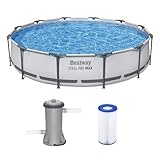
Bestway Steel Pro MAX 12' x 30" Above Ground Swimming Pool Set with Pump | Check Price On Amazon |
|
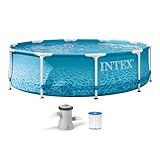
INTEX Beachside Metal Frame 10ft x 30in Round Pool Set w/Pump | Check Price On Amazon |

|
H2OGO! Kids Splash-in-Shade 8-Foot Round Steel Frame Above Ground Pool with Water Mister and Canopy Sunshade, Green Tropical Leaf Print | Check Price On Amazon |
By the Numbers
Pool Bonding and Grounding — What the Research Shows
Sources: NFPA 70 (NEC), CPSC, CDC, PHTA
What Is Pool Bonding and What Is Pool Grounding?
Pool bonding creates an equipotential plane that equalizes voltage across all metal components and the water. Pool grounding provides a low-resistance path for fault current to trip a circuit breaker.
Bonding connects every conductive surface — the pool shell rebar, metal ladder cups, light niches, pump motors, heater casings, diving board bases, and the water itself — with a continuous #8 AWG solid copper wire. Grounding runs a separate equipment grounding conductor from the pump motor, heater, and other electrical devices back to the main electrical panel’s ground bus.

- Intelligent Navigation with Full Coverage: Equipped with 11 high-precision sensors and enhanced dual-path algorithms. The optimized WavePath cleaning pattern ensures systematic coverage with minimal overlap, while adaptive navigation analyzes pool layout in real time to eliminate missed spots
- Dual Filtration for Crystal-Clear Water: Advanced dual-layer filtration system features a replaceable 3-micron ultra-fine filter paired with a 180-micron standard filter. Effectively captures fine dust, sand, leaves, and debris for visibly cleaner and healthier pool water
- Comprehensive Pool Cleaning: Engineered to clean the pool floor, walls, waterline, and shallow areas (above 12 inches). The Caterpillar Treads system enhances mobility and climbing ability, ensuring thorough coverage across all pool zones
- Reliable Performance with 2-Year Warranty: Trusted by over 500,000 pool owners worldwide, this robotic pool cleaner delivers consistent, high-performance results. Built for durability and backed by a 2-year warranty and responsive customer support for worry-free ownership
The two systems serve completely different purposes. Bonding prevents voltage gradients that cause electric shock drowning (ESD). Grounding clears electrical faults by tripping the breaker.
A bonded pool keeps all metal at the same electrical potential. If stray voltage enters the water from a faulty light or nearby utility line, the voltage rises equally everywhere. No current flows through a swimmer’s body because there is no voltage difference to drive it. This happens because copper bonding wire provides a conductive path with less than 1 ohm of resistance, forcing current to flow through the wire rather than through pool water or human tissue.
This only works when every single metal component connects to the bonding grid without any gaps or corroded connections. If the bonding wire is broken or missing at one ladder cup, a voltage gradient of 5 to 15 volts can develop between that ladder and the water — enough to paralyze muscles and cause drowning.
Grounding, by contrast, is a single wire path for fault current. If a pump motor winding shorts to its casing, the grounding conductor carries that current to the panel, tripping the breaker in under 0.1 seconds. Without grounding, the pump casing stays energized at 120 volts until someone touches it.
Quick Reference
Pool Bonding and Grounding — Key Terms Explained
Quick reference for the terms used throughout this guide
A conductive connection that equalizes voltage between all metal components and water so no voltage gradient exists anywhere in the pool area
Muscle paralysis and drowning caused by low-level AC current (5-30 milliamps) flowing through the body in fresh water due to a voltage gradient
The complete network of #8 AWG solid copper wire, rebar, and listed connectors that forms the equipotential plane around a pool
The green or bare copper wire inside power cords and conduit that carries fault current back to the panel to trip the circuit breaker
The section of the National Electrical Code that governs all electrical installations for swimming pools, spas, hot tubs, and fountains
A difference in electrical potential between two points — in pools, a gradient as small as 1-2 volts per foot can cause electric shock drowning
A listed device or fitting that electrically connects the pool water to the bonding grid, required by NEC 680.26(C) for all permanent pools
A bonding clamp, lug, or split bolt that is UL-listed specifically for pool bonding — standard electrical connectors are not code-compliant for pool use
Why Is Pool Bonding and Grounding Required by Code?
Pool bonding is required because undetected voltage gradients in pool water cause electric shock drowning — a silent, invisible hazard that leaves no physical marks and is frequently misdiagnosed as ordinary drowning. The National Electrical Code (NEC) Article 680 mandates equipotential bonding for every permanently installed pool in the United States.
According to the Consumer Product Safety Commission (CPSC), 33 pool-related electrocutions occurred in the U.S. between 1990 and 2016, with an additional 60 serious non-fatal electrical shock incidents reported. The actual number of electric shock drownings is believed to be higher because the cause is often unrecognized by first responders and medical examiners.
Stray voltage enters pools through several pathways: faulty underwater lights with deteriorated seals, compromised pump motor windings, underground utility lines within 25 feet of the pool, and even through the earth itself from nearby substation grounding systems. In fresh water, which has higher electrical resistance than the human body, current preferentially flows through swimmers rather than through the water.
This happens because the human body’s salt content makes it roughly 300 to 500 ohms of resistance, while fresh pool water can measure 1,000 to 5,000 ohms depending on dissolved solids. Current takes the path of least resistance — and that path is often the swimmer. This only occurs when a voltage gradient exists between two points that a swimmer bridges with their body.
If the bonding grid is complete and intact, all metal parts and the water exist at the same potential. Stray voltage raises the potential of everything equally. No gradient means no current flow means no shock. Fix a broken bonding connection by checking continuity with a digital multimeter between every metal component and the bonding wire — resistance must read below 1 ohm at every connection point.
Grounding requirements serve a separate but equally critical function. NEC 680.21 requires all pool motors to connect to an equipment grounding conductor sized per NEC 250.122. This conductor must run with the circuit conductors inside the same conduit or cable assembly. The purpose is purely fault clearing — if a hot conductor touches the motor frame, the ground wire provides a low-impedance path that draws enough current (typically 100 to 200 amps on a 20-amp circuit) to trip the breaker in under 0.05 seconds.
The full cost breakdown of pool electrical systems including bonding and grounding covers the complete investment picture for new pool construction and renovation projects.
What Is the Difference Between Bonding and Grounding in a Pool?
Bonding and grounding are fundamentally different electrical systems that serve different safety purposes — and they must never be connected to each other at the pool equipment pad. The bonding grid floats at whatever potential the surrounding earth and any stray voltage sources impose on it, while the grounding system connects directly to the service panel’s neutral-ground bond point.
A bonding system consists of a continuous #8 AWG solid bare copper wire that loops around the pool perimeter 18 to 24 inches from the inside pool wall, buried 4 to 6 inches deep. This wire attaches to the pool’s structural steel (rebar), every metal component within 5 feet of the water’s edge, underwater light niches, pump motors, heater casings, and a listed water bonding device.
The grounding system uses a separate insulated copper conductor (green or bare) that runs from each electrical device back to the equipment grounding bus in the subpanel or main panel. This conductor is sized per NEC Table 250.122 — typically #12 AWG for a 20-amp pump circuit, #10 AWG for a 30-amp heat pump circuit.
Connecting the bonding grid to the grounding system defeats the purpose of both. If stray voltage enters the bonding grid from a source outside the pool and the grid is connected to ground, that voltage now travels to the panel ground bus and energizes every grounded appliance in the house. The only place bonding and grounding connect is at the main service panel’s single neutral-ground bond point — and pool equipment must never create a second connection downstream.
| Feature | Bonding | Grounding |
|---|---|---|
| Purpose | Equalize voltage to prevent shock | Clear faults by tripping breaker |
| Wire type | #8 AWG solid bare copper | Insulated copper per NEC 250.122 |
| Connected to earth? | No — floats at local potential | Yes — connected to ground rod at panel |
| What it protects | Swimmers in the water | Anyone touching equipment |
| NEC reference | 680.26 | 680.21, 250.122 |
| Required for | All permanent pools, all metal parts within 5 ft of water | All electrical pool equipment with conductive enclosures |
Use the table above to understand which system protects against which hazard before planning your pool electrical installation.
How Is Pool Bonding Done? Step-by-Step Installation Guide
Pool bonding installation follows a specific sequence that starts before the concrete shell is poured and continues through equipment pad wiring and final inspection testing. The process connects every conductive element within reach of the water into a single electrically continuous network using #8 AWG solid bare copper bonding wire and UL-listed pool bonding clamps.
Step-by-Step Guide
How to Bond a Swimming Pool — Step by Step
8 steps · Estimated total time: 4 to 8 hours for new construction · Must be inspected before backfill or pour
Install the perimeter bonding loop around the pool shell
Run a continuous #8 AWG solid bare copper wire in a loop around the entire pool, positioned 18 to 24 inches from the inside pool wall, buried at a depth of 4 to 6 inches below finished grade. Splices are only permitted using listed irreversible compression connectors or exothermic welding. Twist-on wire connectors are not code-compliant for bonding.
Bond the pool structural steel (rebar) at four points
Attach the bonding loop to the pool’s steel reinforcing bar using listed direct burial bonding clamps at a minimum of four equally spaced points around the pool perimeter. Each connection must be made with a clamp listed for concrete encasement and direct burial. The rebar itself becomes part of the bonding grid once connected.
Bond all metal components within 5 feet of the water
Connect ladder cups, handrail sockets, diving board stands, slide legs, and any metal fittings within 5 horizontal feet of the pool’s inside wall. Use brass or copper split bolt connectors listed for pool bonding. Each component gets its own bonding jumper back to the perimeter loop.
Install the water bonding device
Install a listed water bonding fitting in the pump suction line or a bonded metal pool light niche that is in direct contact with the pool water. NEC 680.26(C) requires the water bond to have at least 9 square inches of conductive surface area in contact with the water. A salt chlorine generator cell does not qualify as a water bond.
Bond underwater light niches
Connect the bonding wire to the external bonding lug on every wet-niche and dry-niche light housing using a listed pool light bonding connector. The bonding lug on the niche must be used — the conduit alone is not a code-compliant bonding path. The #8 bonding wire runs through the conduit with the light cord for wet-niche fixtures.
Run bonding wire to the equipment pad
Extend the bonding loop to the equipment pad and connect it to the external bonding lug on the pump motor, heater, filter (if metal), salt chlorine generator control box, automation panel, and any other metal equipment enclosures. Each piece of equipment requires its own bonding jumper. The equipment grounding conductor inside the power cord or conduit is separate and must not connect to the bonding wire at the pad.
Test bonding continuity before backfill or concrete pour
Use a digital multimeter with continuity function to verify less than 1 ohm resistance between every bonded component and the bonding wire. Test between the bonding wire and each piece of rebar, each metal fitting, each light niche, and the water bond. Any reading above 1 ohm indicates a poor connection that must be remade before inspection.
Pass electrical inspection before covering any bonding work
The bonding grid, perimeter loop, all connections, and the water bond must be visible and accessible for the electrical inspector. Bonding is inspected separately from the branch circuit wiring. The inspector will check wire gauge, connector listings, bonding of all required components, and continuity. Do not backfill trenching or pour the concrete deck until bonding has passed inspection.
The bonding grid must be completely installed and verified before any concrete deck work begins. For a complete understanding of pool construction costs that include proper electrical, see our comprehensive pool construction cost guide with electrical line items.
What Are the NEC Article 680 Bonding Requirements for Different Pool Types?
Inground Concrete and Gunite Pools
Concrete pools with steel rebar reinforcement have a head start on bonding. The rebar cage itself forms a conductive grid if it is properly tied with steel tie wire at every intersection — but wire ties alone are not code-compliant bonding connections.
NEC 680.26(B)(1) requires the rebar to be bonded at four points around the perimeter using listed direct-burial clamps or exothermic welds. The steel shell is considered effectively bonded once these four connections are made. The perimeter loop must still encircle the pool and connect to all metal fittings, the water bond, and the equipment pad.
A exothermic welding kit for copper-to-steel connections produces the most reliable and permanent bonding connection between copper wire and rebar. This method fuses the copper and steel at the molecular level and eliminates the corrosion potential that exists at mechanical clamp connections.
Fiberglass Pools
Fiberglass pools have no structural steel, so the bonding grid relies entirely on the perimeter loop and a bonded metal component in the water. The perimeter loop encircles the pool at the same 18 to 24 inch distance and 4 to 6 inch depth as other pool types.
The water bond becomes especially critical for fiberglass pools because there are fewer metal components naturally in contact with the water. A listed water bonding device with at least 9 square inches of conductive surface must be installed in the circulation plumbing. The gelcoat surface of a fiberglass pool is non-conductive, so the water bond is the primary connection between the bonding grid and the pool water.
Vinyl Liner Pools
Vinyl liner pools require bonding of the metal wall panels, metal coping, and any metal bracing or supports behind the liner. The vinyl liner itself is non-conductive and acts as an insulator between the water and the pool structure.
A water bonding device is mandatory for vinyl liner pools because the liner isolates the water from the bonded metal walls. Install the water bond fitting in the pump suction line before the pool equipment. All metal wall panel sections must be bonded together with jumpers at each panel joint using listed copper bonding jumpers.
Above-Ground Pools
Above-ground pools with metal walls and metal top rails require bonding of the metal structure and a water bonding device. NEC 680.26(B)(5) specifies that above-ground pool bonding must use the same #8 AWG solid copper wire and listed connectors as inground pools.
The metal wall and top rail assembly must be bonded at a minimum of four points around the pool. The water bond can be achieved through a metal skimmer body or a listed inline water bonding device. A complete above-ground pool bonding kit includes the wire, clamps, water bond fitting, and pump bonding lug needed for a code-compliant installation.
Common Myths About Pool Bonding Debunked
Myth vs Fact
Pool Bonding Myths — Common Misconceptions Debunked
Separating fact from fiction on the most common pool bonding misconceptions
Myth
Grounding the pump motor bonds the entire pool.
Fact
Grounding clears faults. Only the equipotential bonding grid equalizes voltage across all pool components. A grounded pump does nothing to prevent voltage gradients between a ladder and the water. Bonding and grounding serve completely different safety functions and must be installed as separate systems.
Myth
A salt chlorine generator cell acts as an adequate water bonding device.
Fact
Salt cells do not meet the 9 square inch conductive surface area requirement in NEC 680.26(C). They are not listed as water bonding devices. A separate listed water bonding fitting must be installed even when a salt chlorine generator is present in the system.
Myth
Plastic or resin pool components eliminate the need for bonding.
Fact
Non-conductive components reduce what must be bonded but the pool water itself must still be bonded. Stray voltage enters the water independently of equipment choices. The water bond and perimeter loop remain mandatory regardless of how many plastic fittings are used.
Myth
You can connect the bonding wire to a ground rod to satisfy bonding requirements.
Fact
A ground rod does not create an equipotential plane. NEC 680.26 explicitly prohibits using the grounding electrode system as a substitute for the bonding grid. The bonding grid must physically interconnect all metal parts — a ground rod at the equipment pad bonds nothing to the ladder 30 feet away.
Myth
Older pools built before bonding codes are grandfathered and safe.
Fact
While the pool may be legally non-conforming, it is not electrically safe by current standards. Stray voltage does not care about grandfather clauses. Any renovation that involves replacing equipment, adding a salt system, or replacing a light fixture triggers the requirement to bring bonding up to current code per most local amendments.
Myth
If the pool equipment is GFCI protected, bonding is unnecessary.
Fact
GFCIs protect against line-to-ground faults on equipment circuits. They do nothing to protect against voltage gradients entering the pool water from outside sources like underground utility lines, nearby substations, or faulty dock wiring at lakeside pools. Only the bonding grid addresses these external stray voltage hazards.
How Much Does Pool Bonding Cost?
Pool bonding costs range from $1,500 to $3,500 for an existing pool to be retrofitted by a licensed electrician, depending on pool size, deck material, and access to the perimeter. New pool construction includes bonding in the electrical rough-in budget, typically $800 to $1,500 as part of the overall electrical contract. To see a full breakdown of inground pool construction costs, use our Inground Swimming Pool Cost Calculator.
The materials cost for a DIY bonding installation on a standard 18-foot by 36-foot inground pool runs approximately $400 to $700. This includes 250 to 350 feet of #8 AWG solid bare copper wire, 8 to 12 listed bonding clamps, a water bonding fitting, exothermic welding supplies or irreversible compression connectors, and a bonding lug kit for the equipment pad.
Retrofit bonding on an existing pool costs significantly more because the perimeter loop must be trenched into an existing concrete or paver deck, connections must be made to rebar exposed by chipping concrete, and a water bonding device must be added to existing plumbing. The labor dominates the cost at $100 to $200 per hour for a licensed pool electrical contractor.
For pool renovation projects, the timing is ideal to address bonding gaps. During resurfacing, when the old plaster or liner is removed, the rebar and shell are accessible for bonding verification and upgrades. Our Pool Renovation Cost Calculator helps you budget for the resurfacing project that may include electrical updates. Our pool resurfacing guide covers the electrical inspection opportunities during renovation that can save on retrofit costs.
DIY vs Hiring an Electrician for Pool Bonding: Which Option Is Safer?
Hiring a licensed electrician with documented pool bonding experience is the only safe option for most pool owners. A bonding installation error that creates a 3-ohm resistance instead of the required sub-1-ohm path is invisible to the naked eye but leaves the pool dangerously unprotected.
DIY bonding is possible for experienced homeowners who understand NEC 680, own a calibrated digital multimeter, and are willing to pull an electrical permit and pass inspection. The physical work — trenching, clamping, welding — is not inherently complex. The risk is in missing a required connection or using non-listed connectors that corrode and fail within 2 to 3 years.
The comparison of DIY pool work versus hiring licensed professionals covers the broader decision framework for electrical, plumbing, and structural pool projects.
A bonded pool tested and verified by an electrician costs $1,500 to $3,500. An improperly bonded pool can cost a life. The equipment and water testing that a professional performs after installation — voltage gradient measurement, continuity verification at every lug, and ground fault testing — requires tools and training most homeowners do not have.
How to Test Your Pool Bonding System
Testing pool bonding requires a digital multimeter capable of measuring resistance below 1 ohm with an accuracy of 0.1 ohm. Standard hardware store multimeters often lack the resolution needed for this test. A milliohm meter or high-resolution digital multimeter with a zeroing function is the correct tool.
Test continuity between the bonding wire and every metal component: ladder cups, handrail sockets, light niche rims, diving board bases, pump motor frame, heater jacket, and the water bond fitting. Each reading must be below 1.0 ohm. A reading of 2 to 5 ohms indicates a corroded or loose connection that must be cut off and remade with a new listed connector.
For the water bond test, clip one probe to the bonding wire at the equipment pad and suspend the other probe in the pool water within 12 inches of the water bonding device. Resistance should read below 3 ohms. Higher readings suggest the water bond fitting has scaled over or lost surface contact and needs cleaning or replacement.
Test the isolation between bonding and grounding systems by measuring resistance from the bonding wire to the equipment grounding conductor at the pump. The reading should show an open circuit (infinite resistance or OL on the meter display). Any continuity between bonding and grounding at the pool pad is a code violation that must be located and corrected before the pool is used.
Pool Bonding Code Requirements and Inspections
NEC Article 680.26 requires equipotential bonding for all permanently installed pools, storable pools with a water depth over 42 inches, and all spas and hot tubs. The specific bonding requirements have expanded in each NEC code cycle since the 2008 edition, which first mandated the perimeter bonding loop and water bonding device.
Local electrical inspectors check for: #8 AWG solid bare copper wire (stranded is not permitted for the perimeter loop), listed connectors at every attachment point, bonding of all metal parts within 5 horizontal feet of the pool water, bonding at a minimum of four points to the pool structural steel, presence of a listed water bonding device with adequate surface area, and the separation of bonding and grounding conductors at the equipment pad.
Inspectors also verify that the bonding wire is continuous with no unlisted splices. Compression connectors and split bolts used for bonding must be listed for direct burial and marked “DB” on the connector body. Standard electrical split bolts from the hardware store are not acceptable for pool bonding even if they are made of copper or brass.
The electrical inspection for bonding occurs before the concrete deck pour or backfill because the perimeter loop and connections must be visible. A second inspection after equipment installation verifies the equipment pad bonding and grounding are correct and separate.
Buying Guide
Before Your Pool Bonding Inspection — Verification Checklist
Check off each point before calling for your electrical inspection.
What Happens When Pool Bonding Fails?
A bonding failure means one or more metal components in the pool area are no longer at the same electrical potential as the rest of the bonded grid. The result is a voltage gradient — a difference in potential between two points that a swimmer can bridge with their body.
In fresh water, the human body conducts electricity approximately 3 to 5 times more readily than the surrounding water. A voltage gradient as small as 2 volts AC across the chest can induce 10 to 30 milliamps of current — enough to cause muscle paralysis and prevent a swimmer from moving or calling for help.
Electric shock drowning occurs at current levels far below what would trip a GFCI or circuit breaker. A GFCI trips at 4 to 6 milliamps of leakage current on the protected circuit. A swimmer in the water experiencing a voltage gradient is not part of the GFCI-protected circuit and receives no protection from it. This is why bonding is not optional or redundant — it is the only defense against a category of hazard that no other safety device addresses.
This condition only occurs when the bonding grid has a break, a corroded connection, or a missing bond on one component. If the condition is detected before an incident, fix it by locating the failed connection with a multimeter, cutting out the corroded section, and installing a new listed connector with anti-oxidant compound rated for direct burial.
Why Does My Pool Need Bonding If It Already Has GFCI Breakers?
GFCI breakers protect only the equipment circuits they serve. They monitor current flow on the hot and neutral conductors and trip when the difference exceeds 4 to 6 milliamps — indicating current is leaking to ground somewhere, possibly through a person.
A GFCI cannot detect voltage gradients in pool water caused by external sources. If a buried utility line 20 feet from the pool develops a fault, current flows through the earth and into the pool water. This current does not pass through the GFCI-protected pump circuit. The GFCI sees no imbalance and does not trip. The bonding grid equalizes this voltage across all pool components so no gradient forms — and no current flows through swimmers.
Can I Install Pool Bonding Myself Without an Electrician?
Yes, you can install pool bonding yourself if you pull an electrical permit, follow NEC 680.26 exactly, use only listed connectors, and pass inspection. The physical work involves trenching, clamping, and making mechanical or welded connections.
The risk is entirely in the details. A clamp torqued to 25 inch-pounds instead of the manufacturer-specified 35 inch-pounds may read 1.2 ohms on installation day and 15 ohms two years later after corrosion sets in. Without a calibrated milliohm meter and the knowledge to interpret the readings, you cannot verify the installation is actually protective.
What Is a Water Bond and Why Is It Required?
A water bond is a listed conductive device with at least 9 square inches of surface area in direct contact with pool water, connected to the bonding grid with #8 AWG solid copper wire. It ensures the water itself is part of the equipotential plane.
Without a water bond, all metal components could be at the same potential while the water sits at a different potential. A swimmer entering the water would bridge the two potentials and complete a circuit. The water bond eliminates this by tying the water electrically to every metal component through the bonding grid.
How Often Should Pool Bonding Be Inspected?
Pool bonding should be tested for continuity every 3 to 5 years, during any major equipment replacement, and after any deck or coping renovation that involved concrete cutting or demolition near the pool shell. The bonding grid is buried and inaccessible once the deck is poured, so periodic electrical testing is the only way to verify it remains intact.
A licensed pool electrician can perform a complete bonding system test in about 1 to 2 hours. The test measures resistance from each accessible bonded component back to the main bonding wire and checks the water bond integrity. The test costs $200 to $400, significantly less than the cost of discovering a bonding failure after an incident.
Does an Above-Ground Pool Need Bonding?
Yes, above-ground pools with metal walls or metal structural components require equipotential bonding per NEC 680.26. The same #8 AWG solid copper wire, listed connectors, water bonding device, and equipment pad bonding requirements apply to above-ground pools as inground pools.
Above-ground pools with fully non-metallic frames and walls may not require structural bonding but still require a water bond and equipment pad bonding. The pump motor, any metal heater components, and metal light fixtures must be bonded regardless of the pool wall material.
What Is the Difference Between a Bonded Pool and a Grounded Pool?
A bonded pool has all metal components and the water connected to a common equipotential grid that floats at whatever potential the local environment imposes. A grounded pool has its equipment connected to the earth through the electrical service grounding electrode system.
A pool can be grounded without being bonded — this is a dangerous condition where equipment fault protection exists but swimmer protection from voltage gradients does not. A pool cannot be safely bonded to the grounding system because this would import any voltage on the grounding system directly into the pool water. The two systems must remain electrically separate except at the main service panel’s single neutral-ground bond.
Can I Bond My Pool to a Copper Water Pipe Instead of Running a Perimeter Loop?
No. NEC 680.26 specifically requires a perimeter bonding loop around the pool. An underground metal water pipe is not a code-compliant substitute for the perimeter loop. The perimeter loop ensures a consistent bonding reference point encircling the entire pool at a controlled distance.
Metal underground water piping within 5 feet of the pool must be bonded to the perimeter loop, but the pipe cannot replace the loop. The loop must be #8 AWG solid bare copper wire installed as a continuous ring around the pool structure.
Does Pool Bonding Protect Against Lightning Strikes?
No. Pool bonding is an equipotential system for 60 Hz AC power system voltage, not a lightning protection system. Lightning protection requires a separate system designed to NFPA 780 standards with dedicated air terminals, down conductors, and a low-impedance path to earth.
The pool bonding grid may incidentally carry some lightning current if a strike occurs nearby, but it is not designed or rated for this purpose. Never connect the pool bonding grid to a lightning protection system without consulting a certified lightning protection installer. Connecting the two systems incorrectly can route lightning current through the pool water.
What Happens If My Pool Was Built Before Bonding Codes?
Pools built before the 2008 NEC bonding requirements may have no bonding grid or an incomplete one. These pools are considered non-conforming but are not automatically illegal. The pool can be operated, but the owner assumes the electrical safety risk.
Any renovation that involves replacing equipment, resurfacing, adding a salt system, or replacing light fixtures triggers current NEC bonding requirements through the locally adopted building code. The inspector will require the pool to be brought up to current bonding standards as part of the permit approval for the renovation work.
Why Does My Electrician Say Bonding and Grounding Must Never Connect at the Pool Pad?
Connecting the bonding grid to the grounding conductor at the equipment pad creates a parallel neutral-to-ground bond downstream of the main service panel. This violates NEC 250.24(A)(5) and creates a shock hazard by placing neutral current on the bonding grid during normal operation.
If the bonding grid is connected to ground at the pad and a neutral fault occurs in the house, the bonding grid and pool water become part of the neutral return path. Swimmers in the pool would be exposed to neutral current flowing through the water. The only permitted connection between bonding and grounding is at the single neutral-ground bond in the main service disconnect.
How Do I Know If My Pool Is Properly Bonded?
Hire a licensed electrician with pool experience to perform a bonding verification test. The electrician will use a calibrated milliohm meter to measure resistance from each metal component to the bonding wire at the equipment pad.
Readings below 1 ohm on every component indicate a functional bonding grid. A reading of 2 ohms or higher on any single component means that connection is failing. If multiple components show high resistance, the perimeter loop wire itself may be broken and require excavation to repair. The test takes about 1 to 2 hours and provides documented proof of bonding integrity.
Pool bonding creates an invisible electrical safety net that protects swimmers from hazards no other device can detect. The #8 AWG solid copper wire, properly installed and tested to below 1 ohm at every connection, is the difference between a pool that is electrically safe and one that is not.
Verify your pool’s bonding system with a licensed pool electrician every 3 to 5 years. For comprehensive pool protection planning that includes covers and safety equipment, see our complete pool cover guide covering every type of safety and winter cover. If you are evaluating the overall investment in pool safety systems, our comparison of solar covers, safety covers, and winter covers explains which cover types provide additional layers of protection for your pool. To estimate the cost of a safety cover installation, use our Pool Cover Cost Calculator.
| Photo | Best Above-Ground Pools | Price |
|---|---|---|
|
|
Bestway Steel Pro MAX 12' x 30" Above Ground Swimming Pool Set with Pump | Check Price On Amazon |
|
|
INTEX Beachside Metal Frame 10ft x 30in Round Pool Set w/Pump | Check Price On Amazon |
|
|
H2OGO! Kids Splash-in-Shade 8-Foot Round Steel Frame Above Ground Pool with Water Mister and Canopy Sunshade, Green Tropical Leaf Print | Check Price On Amazon |