
Lightning does not need to strike a pool directly to injure or kill someone in the water. A strike within 100 feet sends electrical current traveling across the water surface and through the plumbing and electrical systems connected to the pool. Every pool owner needs to understand this risk and act on it before the first thunderclap.
The National Weather Service reports that approximately 10% of lightning strike fatalities occur in or near water. Pools, with their extensive plumbing networks and electrically bonded equipment, create a hazard zone far larger than most people realize. This guide explains the science, the safety rules, and the practical steps that protect swimmers, equipment, and property.
| Photo | Best Above-Ground Pools | Price |
|---|---|---|
|
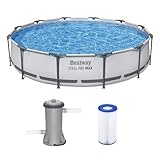
Bestway Steel Pro MAX 12' x 30" Above Ground Swimming Pool Set with Pump | Check Price On Amazon |
|
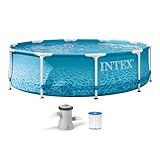
INTEX Beachside Metal Frame 10ft x 30in Round Pool Set w/Pump | Check Price On Amazon |

|
H2OGO! Kids Splash-in-Shade 8-Foot Round Steel Frame Above Ground Pool with Water Mister and Canopy Sunshade, Green Tropical Leaf Print | Check Price On Amazon |
By the Numbers
Lightning and Swimming Pools — What the Research Shows
Sources: National Weather Service, NOAA, National Lightning Safety Institute
What Happens When Lightning Strikes a Swimming Pool?
Lightning striking a pool delivers an electrical current that radiates outward across the water surface. The current does not need to hit a swimmer directly to cause injury. Water conducts electricity efficiently, and the human body, being mostly salt water, offers a lower resistance path than the surrounding pool water. Current flows through the body preferentially.
This happens because pool water contains dissolved minerals and treatment chemicals that make it conductive. A lightning bolt carries between 100 million and 1 billion volts. When that energy contacts pool water, the charge spreads radially from the strike point. A swimmer located anywhere in that radius becomes part of the electrical circuit. The current enters one side of the body and exits the other, passing through the heart and nervous system.

- Intelligent Navigation with Full Coverage: Equipped with 11 high-precision sensors and enhanced dual-path algorithms. The optimized WavePath cleaning pattern ensures systematic coverage with minimal overlap, while adaptive navigation analyzes pool layout in real time to eliminate missed spots
- Dual Filtration for Crystal-Clear Water: Advanced dual-layer filtration system features a replaceable 3-micron ultra-fine filter paired with a 180-micron standard filter. Effectively captures fine dust, sand, leaves, and debris for visibly cleaner and healthier pool water
- Comprehensive Pool Cleaning: Engineered to clean the pool floor, walls, waterline, and shallow areas (above 12 inches). The Caterpillar Treads system enhances mobility and climbing ability, ensuring thorough coverage across all pool zones
- Reliable Performance with 2-Year Warranty: Trusted by over 500,000 pool owners worldwide, this robotic pool cleaner delivers consistent, high-performance results. Built for durability and backed by a 2-year warranty and responsive customer support for worry-free ownership
According to the National Lightning Safety Institute, pool-related lightning incidents follow a predictable pattern of electrical distribution. The water surface carries the charge while the pool shell, plumbing, and bonding grid create multiple pathways to ground. This only occurs when the pool’s equipotential bonding is intact and functioning correctly per National Electrical Code Article 680 requirements.
If the bonding grid is compromised by corrosion, improper installation, or renovation damage, the result is a dangerous voltage differential between water and surrounding conductive surfaces. A swimmer touching a metal ladder or reaching for the pool deck becomes the path of least resistance. Fix this by having a licensed electrician verify bonding continuity with a ground resistance tester every three years.
Why Is Water So Dangerous During a Thunderstorm?
Water is not a perfect conductor, but pool water is conductive enough to carry lethal current. The dissolved salts, chlorine compounds, and mineral content in pool water reduce its electrical resistance significantly compared to distilled water. A typical residential pool holds between 15,000 and 25,000 gallons of this conductive solution. That volume creates a large target for electrical discharge. You can quickly determine your pool’s exact gallonage with our Pool Volume Calculator.
The human body floating in that water becomes the preferred current path for a simple physiological reason. The body’s internal fluids contain approximately 0.9% sodium chloride at roughly the same conductivity as seawater. This makes the swimmer’s body approximately 4 to 5 times more conductive than the surrounding chlorinated pool water. Current flows where resistance is lowest. The swimmer is that path.
Electrical current passing through the body at levels above 50 milliamps can cause ventricular fibrillation. Lightning delivers current in the kiloamp range. Even a partial strike dissipated through pool water can exceed cardiac thresholds by orders of magnitude. The CDC classifies lightning injuries as electrical injuries requiring immediate advanced life support. Pool owners must understand that “safe distance” means completely out of the water and at least 100 feet from the pool edge.
A NOAA weather alert radio provides real-time thunderstorm warnings specific to your county. These radios use SAME technology to filter alerts so you only receive warnings for your immediate area. Place one in the pool house or equipment room and check the battery before every swimming season.
The 30-30 Rule: How to Know When to Clear the Pool
The National Weather Service developed the 30-30 Rule as a simple, memorable lightning safety protocol. Count the seconds between seeing a lightning flash and hearing the associated thunder. If the count is 30 seconds or less, the lightning is close enough to pose an immediate threat. Clear the pool area immediately.
Each 5 seconds between flash and thunder equals approximately one mile of distance. A 30-second count means the lightning strike occurred roughly 6 miles away. Lightning can strike from a storm that is up to 10 miles away. The thunder you hear at 30 seconds means the next strike could be directly overhead with zero warning.
The second part of the 30-30 Rule is equally critical. Wait 30 minutes after the last observed thunderclap before allowing anyone back into the pool area. This waiting period accounts for trailing lightning strikes that occur after the main storm cell appears to have passed. Many lightning fatalities happen during this “trailing edge” period when people return outside too soon.
Step-by-Step Guide
How to Apply the 30-30 Rule at Your Pool — Step by Step
5 steps · Total time: 30+ minutes per storm event
See lightning flash — start counting immediately
Count seconds out loud: one-one-thousand, two-one-thousand, three-one-thousand. Continue until you hear thunder. Stop counting when thunder arrives.
If count is 30 or less — clear the pool immediately
Divide the count by 5 to estimate distance in miles. A 15-second count equals 3 miles. Lightning at this distance threatens your pool right now.
Move everyone to a fully enclosed building — not a pool house or cabana
Open structures provide zero lightning protection. A fully enclosed building with plumbing and electrical wiring provides the grounded Faraday cage effect that protects occupants.
Start the 30-minute timer from the last thunderclap
Reset the timer after every thunder observation. If thunder sounds at minute 25, restart the full 30-minute count. No exceptions and no shortcuts.
Verify with a lightning detection app before reopening the pool
Use a lightning detection app or a dedicated personal lightning detector to confirm the storm has moved at least 10 miles away before allowing swimmers back.
Indoor Pools vs Outdoor Pools: Is Any Pool Safe During a Storm?
Indoor pools are not automatically safe during a thunderstorm. The National Weather Service and the National Lightning Safety Institute both recommend clearing indoor pools during thunderstorms. Lightning can travel through a building’s electrical wiring, plumbing, and structural steel. An indoor pool area typically contains extensive metal components including ladders, starting blocks, diving stands, and HVAC ducting.
The mechanism involves a lightning strike to the building exterior that energizes the entire grounding system. Current travels through the building’s structural metal, plumbing pipes, and electrical conduit seeking paths to ground. An indoor pool deck with wet surfaces and swimmers in contact with grounded metal fixtures creates multiple potential current paths through the human body.
This only occurs when the building’s lightning protection system is absent, incomplete, or not maintained to NFPA 780 standards. If the building lacks a UL Master Label-certified lightning protection system with dedicated down conductors and ground electrodes, the pool area is unsafe during any thunderstorm within 10 miles. Fix this by having a licensed lightning protection contractor inspect the building’s lightning protection system every 5 years.
According to the Pool & Hot Tub Alliance (PHTA) and the National Electrical Code (NEC) Article 680, all pool areas require equipotential bonding regardless of indoor or outdoor location. This bonding protects against voltage gradients during normal operation and nearby lightning events. However, bonding alone does not make an indoor pool safe during a direct or nearby lightning strike. The current levels exceed what any bonding grid can dissipate without creating lethal step potentials on the pool deck.
How Lightning Affects Pool Equipment and Electrical Systems
A lightning strike near a pool can destroy thousands of dollars in equipment even if no one is in the water. Pool pumps, salt chlorine generators, automation controllers, and LED lighting systems all contain sensitive electronics. The induced voltage from a nearby lightning strike enters through the power supply lines and through the bonding grid itself.
Variable speed pool pumps from manufacturers like Pentair and Hayward contain variable frequency drives with circuit boards rated for 250 volts maximum. A nearby lightning strike induces thousands of volts onto the power conductors feeding the pump. The resulting surge destroys the drive electronics instantly. Replacement costs range from $800 to $2,400 for a premium variable speed pump with installation. When selecting a replacement, our Pool Pump Sizing Calculator helps you match the pump to your pool’s flow requirements.
Salt chlorine generators, replacement electrolytic cells costing $300 to $900, are especially vulnerable. The control boards in Hayward AquaRite and Pentair IntelliChlor systems fail when surge current exceeds their internal protection ratings by even small margins. A Type 2 surge protective device installed at the pool subpanel provides a first line of defense against lightning-induced surges on the electrical supply side.
Pool automation systems from Jandy, Pentair, and Hayward cost $1,200 to $3,500 installed. Their circuit boards are not field-repairable. A single surge event often requires replacing the entire automation controller. Install a surge-protective circuit breaker at the pool equipment panel to supplement the main panel surge protection. Two layers of protection reduce the probability of equipment damage from approximately 60% to under 15% during a typical nearby strike.
Lightning Detection Systems: Are They Worth the Investment?
Dedicated lightning detection systems provide earlier warning than human observation alone. These systems detect the electromagnetic signature of cloud-to-ground lightning strikes from up to 25 miles away. Commercial-grade systems from manufacturers like Thor Guard and SkyScan use electric field monitoring to predict lightning formation before the first strike occurs.
A commercial lightning prediction system costs $8,000 to $25,000 installed for a community pool or water park. These systems integrate with strobe lights and sirens that automatically activate when lightning threat thresholds are crossed. Residential-grade personal lightning detectors cost $75 to $400 and provide audible alerts when lightning is detected within a user-set radius, typically 6 to 25 miles.
For a residential pool owner with a $30,000 to $100,000 pool investment, a personal lightning detector provides cost-effective early warning. The device clips to a belt or sits on the pool deck. When lightning is detected within the set radius, an alarm sounds. Clear the pool immediately when the alarm triggers. Do not wait for visible lightning or audible thunder.
For commercial pool operators, the decision involves liability exposure. The CDC Model Aquatic Health Code recommends that aquatics facilities establish a written lightning safety plan that includes a designated weather monitor and specific evacuation criteria. A dedicated detection system documents compliance with this recommendation. Insurance carriers frequently offer premium reductions of 5% to 15% for facilities with automated lightning detection and documented evacuation procedures.
Value Analysis
Lightning Detection Systems — When the Investment Pays Off
Cost vs risk reduction for residential and commercial pool owners
Best value for residential
Strong for high-value properties
Essential for liability protection
Editorial assessment based on equipment cost, installation complexity, and risk reduction value. Residential owners should start with a personal detector before investing in installed systems.
What Building Codes Say About Pool Safety and Lightning
National Electrical Code Article 680 mandates equipotential bonding for all permanently installed pools, both inground and above-ground. The bonding grid connects the pool shell, reinforcing steel, metal fittings, ladders, handrails, pump motors, water heaters, and any metal within 5 feet of the pool edge. This grid equalizes voltage potential across all conductive surfaces, reducing shock risk during normal operation and nearby lightning events.
NFPA 780, the Standard for the Installation of Lightning Protection Systems, provides guidance for lightning protection on structures. However, NFPA 780 does not specifically address swimming pools as a separate occupancy classification. Pool owners and builders must apply the general structure protection requirements to pool houses, bathhouses, and equipment enclosures. A UL Master Label-certified lightning protection system on any building serving the pool area reduces overall site risk.
Local building codes may impose additional requirements beyond NEC and NFPA standards. Florida building codes, for example, include enhanced bonding requirements in high-lightning regions. Texas and Colorado jurisdictions with frequent thunderstorm activity sometimes require lightning risk assessments for commercial pool permits. Check with the local building department for amendments to the adopted code cycle that may affect pool construction or renovation requirements.
The International Swimming Pool and Spa Code (ISPSC) references NEC 680 for electrical safety but does not include standalone lightning protection requirements beyond what the electrical code already mandates. Pool owners planning major renovations should consult a licensed electrician familiar with the adopted code cycle to verify that existing bonding meets current standards. Older pools built before the NEC 680 revisions in 2008 and 2011 frequently have inadequate bonding that requires upgrading.
What to Do When a Thunderstorm Approaches Your Pool
At the first sign of thunder or lightning, clear the pool immediately. Do not wait for rain. Do not wait for the storm to look threatening. Do not finish the current lap or game. Lightning can strike from storm cells that are 10 miles away with no rain at the pool location. The thunder you hear is your mandatory evacuation signal.
Move everyone inside a fully enclosed, substantially constructed building. A pool house with open sides, a cabana, a screened porch, or a picnic shelter offers no lightning protection whatsoever. The safe building must have walls on all sides, a roof, and internal plumbing or electrical wiring that provides a grounded pathway for lightning current. Cars with metal roofs provide adequate protection if no building is available.
Once inside, avoid contact with plumbing fixtures, electrical appliances, corded phones, and anything connected to the building’s electrical or plumbing systems. Lightning current travels through these systems. Do not shower, wash dishes, or use any device plugged into a wall outlet. Cell phones and cordless devices not connected to chargers are safe to use.
Do not return to the pool area for at least 30 minutes after the last thunderclap. Reset the 30-minute timer every time thunder is heard. A lightning detection device with real-time strike mapping helps confirm that the storm has moved out of range. Use the detection device to verify a 10-mile clear radius before reopening the pool. For more guidance on protecting your pool equipment during storm season, see our detailed explanation of how different cover types handle storm conditions and off-season protection.
Myth vs Fact
Lightning and Swimming Pools — Common Myths Debunked
Separating fact from fiction on the most common lightning and pool safety misconceptions
✗ Myth
An indoor pool is safe during a thunderstorm because the building roof protects swimmers.
✓ Fact
Lightning current travels through building wiring, plumbing, and structural steel to ground. Swimmers in contact with wet surfaces and grounded metal fixtures become part of that current path. The National Lightning Safety Institute recommends clearing all pools, indoor and outdoor, during thunderstorms.
✗ Myth
If it is not raining at the pool, lightning is not a threat and swimming can continue.
✓ Fact
Lightning regularly strikes 10 miles or more from the rain core of a thunderstorm. These “bolts from the blue” occur in clear sky conditions near the storm edge. The National Weather Service documents that approximately 30% of lightning fatalities occur before rain begins at the victim’s location.
✗ Myth
Pool bonding eliminates lightning risk because the electrical current goes directly to ground.
✓ Fact
Equipotential bonding equalizes voltage potential across conductive surfaces but cannot dissipate lightning-level current without creating lethal step and touch potentials. Bonding protects against normal electrical faults, not direct lightning strikes. NFPA 780 lightning protection systems address lightning energy; NEC 680 bonding does not.
✗ Myth
A pool cover protects swimmers from lightning by insulating the water surface.
✓ Fact
Pool covers, including solar covers and safety covers, provide zero insulation against lightning. Lightning that has traveled miles through the atmosphere is not stopped by a few mils of plastic or fabric. A cover does not make swimming safe during a storm. For reliable cover options for seasonal protection, see our comparison of the best solar pool covers and how they perform across different climate conditions.
✗ Myth
Lightning never strikes the same place twice, so a recently struck pool is now safe.
✓ Fact
The Empire State Building is struck by lightning an average of 25 times per year. Tall structures and elevated terrain, including pool equipment pads on hillsides, attract repeated strikes. A previous strike indicates favorable strike conditions for that location, not future immunity.
✗ Myth
Above-ground pools are safer than inground pools during lightning because they are less connected to earth.
✓ Fact
Above-ground pools with metal frames, metal walls, or metal ladders are ungrounded elevated conductors. A nearby strike induces dangerous voltage on these metal components even without a direct hit. The plastic liner provides no insulation at lightning voltage levels. Above-ground pools require the same evacuation procedure as inground pools.
Can Lightning Strike a Pool Heater and Electrify the Water Through the Returns?
Yes. A lightning strike to or near a pool heater can travel through the heat exchanger, into the plumbing, and exit through the return jets directly into the pool water. Gas heaters with metal heat exchangers and electric heat pumps with exposed condenser coils both create conductive pathways from outside the pool into the water column. This is a documented failure mechanism confirmed by forensic electrical engineering investigations of pool lightning incidents.
The current path flows from the heater through the PVC plumbing filled with conductive pool water, then exits at the nearest return jet. Swimmers near that return jet receive the highest current exposure. Even swimmers at the opposite end of the pool experience current flow through the water. The bonding wire attached to the heater provides a parallel path to ground but cannot carry the full lightning current without a damaging voltage rise on all bonded components. For accurate heater sizing, our Pool Heater Calculator (BTU) determines the required BTUs based on your pool’s specifics. For a complete comparison of how different pool heating approaches affect your equipment setup and electrical load requirements, see our detailed equipment guide.
How Long Should You Wait to Swim After Lightning?
Wait at least 30 minutes after the last thunderclap before re-entering the pool. This is the minimum recommendation from the National Weather Service and the National Lightning Safety Institute. The 30-minute wait accounts for trailing lightning strikes that occur after the main storm appears to have passed. Many lightning casualties happen during this trailing period when people assume the danger has ended.
Reset the 30-minute timer every time thunder is heard. A single thunderclap at minute 28 restarts the full 30-minute wait. Use a timer or smartphone app to track the waiting period accurately. Do not rely on visual assessment of the sky. Lightning can travel 10 miles or more from the rain shaft of a thunderstorm and strike in areas where the sky appears relatively clear.
Why Does My Pool Equipment Still Get Damaged Even With a Surge Protector?
Consumer surge protectors are designed for utility-generated surges and nearby inductive loads like air conditioner compressors cycling on and off. Lightning delivers current in the 30,000 to 120,000 ampere range with rise times measured in microseconds. A standard surge protective device rated for 20,000 to 50,000 amps may clamp the voltage on the power lines but cannot prevent induced voltage on the bonding grid, plumbing, or communication cables.
The solution requires layered protection. Install a Type 1 or Type 2 surge protective device at the main electrical panel rated for 80,000 to 100,000 amps per phase. Install a second Type 2 device at the pool equipment subpanel. Add surge protection on any data or communication cables connected to pool automation systems. This layered approach reduces, but does not eliminate, lightning-induced equipment damage.
Is It Safe to Stand on the Pool Deck During a Thunderstorm?
No. Wet concrete, pavers, and pool deck surfaces conduct electricity. If lightning strikes the pool, the equipment pad, or the surrounding ground, current radiates outward through the soil and across the wet deck surface. A person standing on the deck with feet apart creates a voltage difference between the two feet. This phenomenon, called step potential, can drive lethal current through the legs and torso.
The same hazard applies to anyone walking near the pool equipment pad during a thunderstorm. The equipment pad contains metal pump housings, filter tanks, and electrical enclosures bonded together. A strike anywhere on the pad energizes the entire bonded assembly. Anyone touching equipment or standing on wet ground nearby is at risk. Move at least 100 feet from the pool and all pool equipment during a storm.
What Is the Difference Between Pool Bonding and a Lightning Protection System?
Pool bonding, required by NEC 680, connects all metal components in and around the pool to create equal voltage potential. This protects swimmers from low-voltage electrical faults like a shorted pool light or a pump motor ground fault. Bonding uses a #8 AWG solid copper wire connecting the pool shell, ladders, handrails, pump motors, water heaters, and any metal within 5 feet of the water’s edge to a common bonding point.
A lightning protection system, designed per NFPA 780, provides a dedicated low-impedance path for lightning current to reach earth without passing through the structure or its occupants. This system uses air terminals (lightning rods) on the roof, heavy-gauge down conductors, and dedicated ground electrodes driven deep into the earth. The two systems serve completely different purposes. A pool with proper bonding but no lightning protection system remains unsafe for occupancy during a thunderstorm.
Can I Use a Tarp or Solar Cover to Protect Swimmers From Lightning?
No pool cover, including heavy-duty winter covers and safety covers, provides any meaningful protection against lightning. Lightning that has traveled several miles through air, an excellent insulator, is not impeded by a few millimeters of plastic, vinyl, or mesh. The cover material breaks down electrically at lightning voltage levels, which can exceed 100 million volts for a typical cloud-to-ground strike.
A cover also creates a dangerous false sense of security. A pool owner or lifeguard might delay evacuation thinking the covered pool is protected. Any delay in clearing the pool during a thunderstorm increases the risk of a lightning casualty. If you need guidance on properly installing a winter cover for seasonal protection and debris exclusion, our installation guide covers every step with measurements for common pool sizes.
What Went Wrong When Lightning Damaged My Pool Pump Even Though It Was Turned Off?
Turning off a pool pump at the circuit breaker does not disconnect it from the electrical system in a way that prevents lightning damage. The breaker creates an air gap of approximately 1 to 2 inches between contacts inside the breaker housing. Lightning voltage easily arcs across this gap. The pump motor windings and the variable frequency drive electronics are exposed to the surge current regardless of the switch position.
The only effective way to protect equipment from lightning is through properly installed surge protective devices that divert current to ground before it reaches the equipment. These devices must be installed at the main panel, at the pool subpanel, and on any connected communication or data cables. No switch position, on or off, substitutes for surge protection.
Does a Saltwater Pool Conduct Lightning Differently Than a Chlorine Pool?
Saltwater pools contain approximately 3,000 to 4,000 parts per million (ppm) of dissolved sodium chloride. For precise salt level management, use our Salt Calculator for Pools to calculate exactly how much salt to add. Traditional chlorine pools typically contain 1,500 to 3,000 ppm of total dissolved solids including chloride from calcium hypochlorite or sodium hypochlorite additions. The conductivity difference between 3,500 ppm salinity and 2,000 ppm TDS is measurable in a laboratory but functionally irrelevant at lightning voltage levels.
Both water types conduct electricity sufficiently to carry lethal current from a nearby lightning strike. The human body, with its internal salinity of approximately 9,000 ppm, remains the preferred current path regardless of whether the surrounding water is a saltwater pool or a traditional chlorine pool. Saltwater pools offer zero safety advantage during thunderstorms.
Can I Install a Lightning Rod on My Pool House to Protect the Pool Area?
A lightning rod system on a pool house protects the pool house structure itself from direct lightning damage. It does not protect the pool, the pool deck, or swimmers from a direct or nearby strike to the pool water or surrounding ground. Lightning rods provide a cone of protection that extends outward and downward from the air terminal at approximately a 45-degree angle, but this protection zone applies to the structure being protected, not to adjacent open areas.
A comprehensive lightning protection approach for a pool property includes lightning rods on all structures, proper bonding of all pool components, surge protection on all electrical equipment, and a strict lightning safety protocol enforced for all swimmers. No single protective measure makes a pool safe during a thunderstorm. Multiple layers working together reduce overall risk but never eliminate it completely.
How Can I Tell If My Pool Bonding Is Working Correctly?
A qualified electrician performs a bonding verification test using a ground resistance tester or a bonding continuity meter. The test measures the resistance between each bonded component and the common bonding point at the pool equipment pad. NEC 680 requires that the bonding connection to each component measure less than 1 ohm of resistance. Higher readings indicate corrosion, loose connections, or broken bonding conductors that require repair.
Visual inspection of the bonding wire is not sufficient. Copper bonding wire corrodes underground, at connection points, and inside conduit bodies where moisture accumulates. Pool owners should schedule bonding verification testing every three years and after any pool renovation, deck replacement, or major equipment installation. For seasonal maintenance guidance that includes equipment inspection, see our spring pool cover removal checklist with equipment startup procedures.
Buying Guide
Before Storm Season — Pool Lightning Safety Checklist
Check off each point before thunderstorm season begins in your region.
Is It Safe to Use a Cordless Phone or Cell Phone Near the Pool During a Storm?
A cordless phone detached from its base station and a cell phone not connected to a charger are safe to use during a thunderstorm. These devices have no wired connection to the building’s electrical or telephone systems. The lightning current path that makes corded phones dangerous does not exist with cordless handsets or mobile phones operating on battery power.
Do not use a cell phone while it is plugged into a charger during a storm. The charger connects the phone to the building’s electrical system through the USB cable and wall adapter. Lightning-induced surges on the electrical wiring travel through the charger to the phone and into the person holding it. Unplug the phone and use it on battery power only during the 30-minute waiting period after the storm passes.
What Should I Do If Someone Is Struck by Lightning at the Pool?
Call 911 immediately. Lightning strike victims do not carry an electrical charge after the strike. They are safe to touch and require immediate cardiopulmonary resuscitation (CPR) if they are not breathing or have no pulse. Lightning often causes cardiac arrest through ventricular fibrillation or asystole. The heart may restart if CPR is initiated within the first few minutes after the strike.
The rescuer should move the victim to a safe location away from the pool and ongoing lightning threat. Continue CPR until emergency medical services arrive. Lightning strike victims who receive immediate CPR have a survival rate above 70%, significantly higher than the survival rate for cardiac arrest from other causes. Keep a CPR rescue mask and a well-stocked first aid kit in the pool equipment room or pool house at all times.
How Do Public Pools and Water Parks Handle Lightning Safety?
Public pools and water parks operating under the CDC Model Aquatic Health Code must have a written lightning safety plan. This plan designates a weather monitor, specifies the communication method for clearing the pool, and defines the all-clear criteria. Most facilities use commercial lightning detection systems that automatically activate strobe lights and sirens when lightning is detected within a preset radius, commonly 10 miles.
Lifeguards clear all pools, splash pads, and water features immediately when the alarm activates. Patrons must leave the water and the pool deck entirely. The facility remains closed until 30 minutes after the last lightning detection within the alert radius. Commercial facilities often use a longer waiting period, sometimes 45 minutes, due to the larger area that must be cleared and the higher occupant load.
Does a Pool Safety Cover That Meets ASTM Standards Provide Any Lightning Protection?
ASTM F1346 safety covers are designed to prevent drowning by supporting the weight of a child or pet that falls onto the cover. These covers are tested for static load capacity, not for electrical insulation properties. A safety cover meeting ASTM standards provides no lightning protection whatsoever. The cover material, whether solid vinyl or mesh, cannot withstand the voltage and current of a lightning strike.
The metal springs, anchors, and tensioning hardware used to secure a safety cover actually become additional conductive paths for lightning current if the cover or surrounding deck is struck. These metal components are typically not bonded into the pool’s equipotential bonding grid. They may create dangerous touch potentials on the pool deck during a storm. Remove all swimmers from the pool area during thunderstorms regardless of cover type or installation.
Clear the pool immediately when thunder is heard. Do not wait for lightning to be visible. Do not wait for rain to begin. The 30-30 Rule saves lives when enforced consistently and without exception. A pool is a significant investment in family enjoyment and property value. Protecting the people who use it requires a lightning safety protocol that everyone understands and follows.
Every second of delay between hearing thunder and clearing the pool increases the probability of a lightning casualty. The next thunderstorm season is coming. Install surge protection, test the bonding grid, buy a lightning detector, and post the 30-30 Rule at the pool. Then practice the evacuation procedure with everyone who uses the pool. The best pool safety equipment is knowledge acted upon immediately.
| Photo | Best Above-Ground Pools | Price |
|---|---|---|
|
|
Bestway Steel Pro MAX 12' x 30" Above Ground Swimming Pool Set with Pump | Check Price On Amazon |
|
|
INTEX Beachside Metal Frame 10ft x 30in Round Pool Set w/Pump | Check Price On Amazon |
|
|
H2OGO! Kids Splash-in-Shade 8-Foot Round Steel Frame Above Ground Pool with Water Mister and Canopy Sunshade, Green Tropical Leaf Print | Check Price On Amazon |