

A pool loses water every day. Most owners panic when they see the level dropping, but not all water loss means a leak. Knowing the difference between normal evaporation and a real leak saves you hundreds in unnecessary detection calls and thousands in water damage from ignored problems.
A typical residential pool loses 1/4 to 1/2 inch of water per day to evaporation during warm seasons. Anything beyond 1/2 inch daily, or water loss that continues during cool, humid weather, signals a probable leak. This guide covers every method to measure, diagnose, and fix pool water loss before it becomes a structural or financial disaster.
| Photo | Best Above-Ground Pools | Price |
|---|---|---|
|
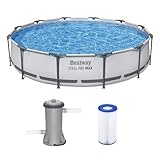
Bestway Steel Pro MAX 12' x 30" Above Ground Pool, Round Metal Frame Outdoor Swimming Pool Set with Filter Pump & Type III A/C Cartridge, Gray | Check Price On Amazon |
|
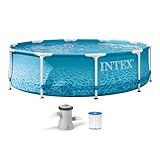
INTEX 28207EH Beachside Metal Frame Above Ground Swimming Pool Set: 10ft x 30in – Includes 330 GPH Cartridge Filter Pump – Puncture-Resistant Material – Rust Resistant – 1185 Gallon Capacity | Check Price On Amazon |

|
H2OGO! Kids Splash-in-Shade 8-Foot Round Steel Frame Above Ground Pool with Water Mister and Canopy Sunshade, Green Tropical Leaf Print | Check Price On Amazon |
By the Numbers
Pool Water Evaporation and Leak Statistics
Sources: U.S. Department of Energy, EPA WaterSense, PHTA Technical Manual
How Much Pool Water Evaporation Is Normal Per Day?
A pool in summer loses 1/4 to 1/2 inch of water every 24 hours from evaporation alone. In a 20,000-gallon inground pool measuring 16 by 32 feet, that half-inch equals roughly 200 gallons per day. Put another way, a typical rectangular pool evaporates 1,200 to 2,400 gallons per month during peak summer heat.
This range varies dramatically with temperature, humidity, wind, and sun exposure. The same pool in Phoenix, Arizona with 110 degree air, 10 percent humidity, and 15 mph winds can lose 3/4 inch or more daily. That same pool in Atlanta, Georgia during a humid August week might lose only 1/8 inch per day.

- Intelligent Navigation with Full Coverage: Equipped with 11 high-precision sensors and enhanced dual-path algorithms. The optimized WavePath cleaning pattern ensures systematic coverage with minimal overlap, while adaptive navigation analyzes pool layout in real time to eliminate missed spots
- Dual Filtration for Crystal-Clear Water: Advanced dual-layer filtration system features a replaceable 3-micron ultra-fine filter paired with a 180-micron standard filter. Effectively captures fine dust, sand, leaves, and debris for visibly cleaner and healthier pool water
- Comprehensive Pool Cleaning: Engineered to clean the pool floor, walls, waterline, and shallow areas (above 12 inches). The Caterpillar Treads system enhances mobility and climbing ability, ensuring thorough coverage across all pool zones
- Reliable Performance with 2-Year Warranty: Trusted by over 500,000 pool owners worldwide, this robotic pool cleaner delivers consistent, high-performance results. Built for durability and backed by a 2-year warranty and responsive customer support for worry-free ownership
The U.S. Department of Energy confirms that pool evaporation rates follow the same physics as any open body of water. Evaporation accelerates with warmer water, cooler and drier air, and stronger wind across the surface. A heated pool loses water significantly faster than an unheated pool at the same ambient temperature.
This happens because evaporation is a phase change from liquid water to water vapor at the pool surface. Heat energy breaks hydrogen bonds between water molecules, allowing them to escape into the air. This only occurs when the air directly above the water surface is below 100 percent relative humidity. If humidity is high, the air is already saturated with water vapor and evaporation slows to near zero.
If air humidity is low and wind speed is high, dry air constantly replaces the moist boundary layer above the water, and evaporation accelerates dramatically. The result is water loss that can look identical to a leak. Fix it by covering the pool with a solar cover or pool blanket when not in use, which blocks 95 percent of evaporative loss.
What Factors Control Pool Evaporation Rates?
Five environmental factors determine how fast your pool loses water. Understanding each one helps you distinguish evaporation from a leak before calling an expensive detection service.
Water Temperature vs Air Temperature
The greater the temperature difference between pool water and the air above it, the faster evaporation occurs. A pool heated to 85 degrees on a 65-degree night loses water rapidly because the warm water has enough kinetic energy for surface molecules to escape into the cooler, lower-humidity night air.
Pools with gas heaters or electric heat pumps set at 82 to 86 degrees lose 30 to 50 percent more water per day than unheated pools. If you run your heater October through April and notice water loss jumps, the heater is creating the temperature differential. This is normal physics, not a leak.
Wind Speed Across the Pool Surface
Wind strips away the thin layer of humid air that sits right above the water surface. That layer normally acts as a partial barrier to evaporation. When wind removes it and replaces it with drier air, evaporation accelerates. A 15 mph wind can double the evaporation rate compared to calm conditions, according to research published in the ASHRAE Handbook on HVAC Applications.
Pools in open areas without fences, hedges, or windbreaks lose water faster than sheltered pools. If your yard is windy and your water loss tracks with windy days, evaporation is the cause. If water drops steadily even on still, humid days, start looking for a leak.
Humidity Levels
Relative humidity is the single strongest predictor of daily evaporation. At 90 percent humidity, evaporation nearly stops regardless of temperature. At 10 percent humidity, water molecules escape the surface continuously. The Pool & Hot Tub Alliance technical manual notes that evaporation rate is almost directly proportional to the vapor pressure deficit between water surface and ambient air.
A dry desert climate produces evaporation rates 3 to 5 times higher than a coastal or southeastern climate at the same temperature. If you live in Las Vegas, Phoenix, or inland Southern California, normal evaporation for your pool may be 1/2 to 3/4 inch daily. Do not assume a high evaporation rate means a leak if you live in an arid region.
Pool Surface Area
Evaporation is a surface phenomenon. Water molecules escape only at the air-water interface. A larger pool surface loses more total gallons for the same evaporation rate. A 16-by-32-foot pool with 512 square feet of surface loses roughly twice as many gallons per day as an 8-by-16-foot pool with 128 square feet, even if both lose the same quarter-inch of depth.
This matters for cost calculations. A half-inch water loss on a large pool means 300 to 400 gallons daily. On a small above-ground pool, half an inch is only 80 to 120 gallons. Total water cost tracks surface area, not pool volume or depth.
Splash-Out and Backwash Loss
Active swimmers push water over the edge. A weekend with six kids doing cannonballs can splash out 50 to 100 gallons. Backwashing a sand filter for 2 to 3 minutes uses 200 to 400 gallons of water each time. If you backwash weekly and have active swimmers, these losses add up fast.
Track backwash water separately from your evaporation measurement. A bucket test only isolates evaporation from actual water loss. It cannot tell you if the water you see missing went out the backwash line or over the deck during a pool party.
For a complete guide on setting up a maintenance routine that tracks water chemistry alongside water loss, see the full pool maintenance schedule and checklist which covers weekly testing, seasonal adjustments, and water level management throughout the year.
How to Measure Pool Water Loss: The Bucket Test Step by Step
The bucket test is the only reliable DIY method to separate evaporation from a leak. It costs nothing and takes 24 hours. It works because a bucket of water placed on the pool steps experiences the same evaporation conditions as the pool itself, but it cannot lose water to a leak. If the pool water level drops more than the bucket water level drops, you have a leak.
Step-by-Step Guide
How to Perform a Pool Bucket Test for Leak Detection
6 steps · 24 hours total · Zero cost
Turn off the auto-fill and pump for 24 hours
Disable any automatic water leveler or fill valve. Turn off the pool pump at the breaker. You need still water with no circulation for an accurate test. Mark the current water level on the skimmer face plate with a piece of tape.
Fill a 5-gallon bucket three-quarters with pool water
Use pool water, not tap water. The water inside the bucket must start at the same temperature as the pool to experience identical evaporation conditions. Place the bucket on the second or third pool step so the water inside is at the same level as the pool surface outside.
Weigh the bucket down with a brick or rock
Place a clean brick or a large rock inside the bucket to prevent it from tipping or floating. Do not let the brick sit above the water surface inside the bucket. It must be fully submerged to avoid introducing a temperature differential.
Mark the water level inside and outside the bucket
Use a permanent marker on the inside of the bucket wall to draw a line exactly at the water surface. On the outside of the bucket, use a second piece of tape or a marker to mark the pool water level against the bucket exterior. Both marks must be precise.
Wait 24 hours and measure both marks
After exactly 24 hours, measure the distance from each mark to the new water surface. Use a ruler with 1/16-inch precision. Measure the drop inside the bucket first. That is your evaporation baseline for the day. Then measure the drop in the pool outside the bucket.
Compare the two measurements
If the pool water level dropped the same amount as the bucket water level (within 1/8 inch), evaporation accounts for all the loss. No leak. If the pool dropped more than the bucket by 1/4 inch or more, you have a leak. The difference between the two measurements equals your leak rate per day.
Run the bucket test twice. Do it once with the pump off for 24 hours to measure static loss. Then run it again with the pump running for 24 hours. If water loss is higher with the pump running, the leak is on the pressure side of the plumbing, which means water is escaping under pressure when the pump is on and you have a return-line leak.
Evaporation vs Leak: The 7 Signs That Point to a Leak
Beyond the bucket test, seven physical signs tell you whether water loss is evaporation or a leak. Most of these signs are visible without any tools if you know where to look.
1. Water Loss Continues in Cool or Humid Weather
Evaporation drops to near zero when the air is humid and cool. If your pool loses 1/4 inch per day in October with 70-degree water and 80 percent humidity, that is not evaporation. It is a leak. Track water loss daily for a week and compare loss on dry windy days to loss on calm humid days.
If the rate stays consistent regardless of weather, you have a leak somewhere. Evaporation rate fluctuates daily. Leak rate is constant.
2. Wet Spots or Soggy Ground Around the Pool
A persistent wet area in the grass or landscaping near the pool equipment pad, between the pool and the equipment, or downhill from the pool shell signals an underground plumbing leak. The ground should not feel spongy or saturated within 10 feet of the pool edge.
Underground return-line leaks often saturate the soil for days or weeks before the water reaches the surface. If you notice a patch of grass that is greener and grows faster than surrounding grass near the pool, the extra water from a leak is fertilizing it.
3. Cracks or Gaps in the Pool Shell or Tile Line
Concrete and gunite pools develop hairline cracks from ground movement and settlement. Most cracks under 1/8 inch wide at the tile line are cosmetic. Cracks that run vertically down the pool wall or across the floor, especially in areas where water loss is concentrated, indicate structural leaks.
Vinyl liner pools leak at seams, corners, around stair gaskets, and at the bottom where the liner meets the wall. A single puncture from a sharp object or a separated seam can lose thousands of gallons per month. Inspect the liner for tears, wrinkles that have shifted, or pulling away from the coping track.
4. Air Bubbles in the Return Jets or Pump Basket
Air bubbles coming from the return jets when the pump is running mean air is being pulled into the suction side of the plumbing. A suction-side leak lets air in when the pump is on and lets water out when the pump is off. Check the pump strainer basket lid O-ring first. It is the most common air entry point.
If a new O-ring and a properly tightened lid do not stop the bubbles, the suction line has a crack or a loose fitting underground. A replacement pump lid O-ring costs under $15 and fixes most bubble problems immediately.
5. Unexplained Chemical Consumption
A leak constantly removes treated water and replaces it with untreated fill water. If you add chlorine tablets and muriatic acid more frequently than normal and cannot maintain stable levels, a leak may be the cause. Calculate your normal weekly chemical usage over a season. If it spikes 30 percent or more without a corresponding increase in bather load, test for a leak.
6. The Pool Deck Is Settling or Cracking
Underground water from a plumbing leak erodes the soil supporting the pool deck. Concrete deck sections that were once level may tilt or develop new cracks. Pavers may sink in one area but not others. This is a late-stage sign of a significant leak that has been active for months or years.
Soil erosion under the deck or the pool shell is the most expensive consequence of an ignored leak. It requires mudjacking, foam injection, or full deck replacement, costing $3,000 to $15,000 depending on the extent of the damage.
7. The Water Level Drops Below the Skimmer
A leak at the skimmer throat, at the tile line, or in the upper wall lets the water level stabilize just below the leak point. If your pool consistently drops to a specific level and then stops losing water, you have pinpointed the vertical location of the leak. A pool with a true bottom drain leak or a main drain plumbing leak keeps losing water indefinitely.
Mark the exact level where the water stops dropping. Inspect everything at that elevation: the skimmer mouth, the return jet fittings, the light niche conduit, and the tile grout line. One of them is the source.
Common Pool Leak Locations and How to Find Each One
Pool leaks cluster in predictable locations. Knowing where to look saves hours of searching and often lets you fix the problem without a professional.
Skimmer Throat and Skimmer Housing
The plastic skimmer housing bonds to the concrete pool shell at the throat. That bond cracks over time from freeze-thaw cycling and ground movement. Water escapes at the hairline gap between the plastic and the concrete. Use pool leak detection dye in a syringe and squirt it near the skimmer opening with the pump off.
If the dye streams into a crack instead of drifting aimlessly, you found the leak. A two-part epoxy pool putty applied underwater seals skimmer separations permanently. A tube of underwater pool epoxy putty costs $12 to $25 and cures hard within 24 hours.
Return Jet Fittings and Wall Fittings
Each return jet fitting screws into a threaded fitting embedded in the pool wall. The threaded connection loosens over time. The gasket between the fitting and the wall deteriorates. Tighten the fitting by hand or with a pool fitting wrench. If the wall around the fitting has hairline cracks radiating outward, the pool shell itself is cracked at that fitting.
Plumbing leaks at the back of the return fitting inside the wall require cutting into the pool deck or the shell to access. These are not DIY repairs. Call a leak detection company with pressure-testing equipment for return-line diagnosis.
Main Drain and Hydrostatic Valve
The main drain at the deep end connects to a hydrostatic relief valve beneath it. That valve opens when groundwater pressure exceeds pool water pressure, preventing the pool from popping out of the ground in high water table areas. If the valve fails or debris holds it partially open, pool water drains continuously into the ground beneath the pool.
A main drain plumbing leak is the hardest to confirm without diving. Dye testing at the main drain grate with the pump off shows whether water is being pulled into the drain line. If the dye disappears downward, the drain line has a crack or a separated fitting.
Light Niche and Conduit
The pool light sits in a niche, and the electrical conduit runs from that niche up through the pool wall to a junction box above ground. The conduit connection at the back of the niche is a common leak point. If water gets into the conduit, it travels up the pipe and leaks out at the junction box or inside the niche housing.
Test the light niche by removing the light from the wall and dye-testing around the niche housing and the conduit entry. Never attempt electrical repairs on a pool light yourself. Hire a licensed electrician who specializes in pool equipment.
Equipment Pad Plumbing and Fittings
The pump, filter, heater, and chlorinator have multiple threaded connections, union fittings, and O-ring seals that degrade. A slow drip at a PVC union on the equipment pad loses 100 to 500 gallons per month. Tighten union nuts by hand first. Replace the O-ring inside the union if tightening does not stop the drip.
The multiport valve on a sand or DE filter has a spider gasket that wears out. A worn spider gasket allows water to leak out the backwash line continuously, even in filter mode. If water trickles from the backwash pipe while the filter is running, replace the spider gasket. The part costs $15 to $30.
For a complete walkthrough of equipment pad startup procedures that include inspecting every fitting and connection before opening, our step-by-step guide on how to open a pool and inspect every equipment connection covers priming the pump, checking for air leaks, and verifying filter operation before the season starts.
How Much Does a Pool Leak Cost You in Water and Chemicals?
A small leak costs more than most pool owners realize. Even a slow drip adds up across a full season of 24-hour-per-day loss. Here is a realistic breakdown for a 20,000-gallon pool with moderate water rates at $4 per 1,000 gallons.
Cost Reference
Pool Leak Annual Cost by Leak Size and Water Rate
All values pre-calculated. Find your leak size and water rate to see your real annual cost.
| Leak rate per day ↓ / Water rate per 1,000 gal → | $3/1,000 gal | $5/1,000 gal | $8/1,000 gal | $12/1,000 gal |
|---|---|---|---|---|
| Slow drip · 50 gal/day | $55/yr | $91/yr | $146/yr | $219/yr |
| Small leak · 200 gal/day | $219/yr | $365/yr ★ most common | $584/yr | $876/yr |
| Moderate leak · 500 gal/day | $548/yr | $913/yr | $1,460/yr | $2,190/yr |
| Large leak · 1,000+ gal/day | $1,095/yr | $1,825/yr | $2,920/yr | $4,380/yr |
Annual water cost calculated as: gallons/day × 365 days × water rate per gallon. ★ highlights the most common leak scenario. Chemical replacement costs add 40 to 60 percent to the water cost total shown above.
Water cost is only half the picture. A 200-gallon-per-day leak also loses the chemicals in that water. Chlorine, cyanuric acid, calcium, and salt replacement for a full season of 200 gallons daily adds $150 to $300 to the annual cost. The combined water and chemical cost of a moderate leak often exceeds the one-time cost of a professional leak detection and repair within 18 months.
When to Call a Professional Leak Detection Service
Professional leak detection costs $250 to $500 for the inspection and diagnosis. It is worth calling when the leak is not visible and you have ruled out evaporation with a bucket test. Leak detection companies use pressurized gas testing, acoustic listening devices, and helium tracer gas to locate underground plumbing leaks without digging.
If your pool loses more than 1 inch of water per day, or the water loss rate is accelerating, call a professional immediately. The soil erosion under the pool shell or deck from a large leak can cause structural damage in weeks, not months. Leak detection companies with certifications from the American Leak Detection Association or equivalent training are listed on the PHTA website.
Underground plumbing leaks on the pressure side of the system require cutting concrete deck sections for access. This is a $1,500 to $4,000 repair depending on depth, deck material, and whether multiple lines need replacement. A full replumb of an inground pool with new schedule 40 PVC lines from the equipment pad to the pool costs $4,000 to $8,000 for typical 50-foot runs.
How to Prevent Excessive Pool Evaporation
Evaporation is uncontrollable physics, but you can reduce it by up to 95 percent with the right equipment and habits. The single most effective tool is a pool cover.
Use a Solar Cover or Safety Cover
A solar pool cover or bubble blanket floating on the water surface stops evaporation almost completely. It also retains heat. The U.S. Department of Energy reports that solar covers reduce pool heating costs by 50 to 70 percent while cutting evaporation by 90 to 95 percent. A solar cover reel makes deployment and removal a one-person job in under two minutes.
For winter months or long periods without pool use, a solid safety cover blocks all evaporation and keeps debris out. Mesh safety covers allow some evaporation but prevent large debris. Both are significantly better than leaving the pool uncovered for six months.
Install a Windbreak
A solid fence, hedge row, or privacy screen on the prevailing wind side of the pool reduces wind speed across the water surface by 40 to 60 percent. Wind reduction directly reduces evaporation by a proportional amount. A 6-foot solid fence 10 feet from the pool edge cuts surface wind speed effectively without shading the pool.
Lower the Pool Temperature
Every degree of pool temperature above ambient air temperature increases the evaporation driving force. Lowering your heater set point from 86 degrees to 82 degrees cuts evaporation rate by roughly 15 percent while saving $100 to $300 per year in natural gas or electricity for heating. If you do not swim daily, turn the heater down between uses.
For the seasonal transition when evaporation spikes due to temperature swings between summer and fall, our guide to properly closing and winterizing a pool to prevent water loss covers lowering the water level, blowing out lines, and installing a winter cover that eliminates evaporation entirely until spring.
Standing Water and Secondary Problems from Leaks
A pool leak that saturates the surrounding soil creates secondary problems beyond water cost. Standing water near the pool breeds mosquitoes, damages landscaping, and attracts pests. Mosquitoes need only 1/4 inch of standing water to complete their breeding cycle in 7 to 10 days.
Soggy soil around the pool equipment pad also accelerates corrosion on metal components like heater cabinets, pump motor housings, and electrical conduit. Rust and electrical faults from moisture exposure cause equipment failures that are easily preventable by fixing the leak source.
If standing water near your pool has already created a mosquito problem, our guide on how to eliminate mosquitoes around your pool and backyard covers water treatment options, larvicide application, and landscaping changes that interrupt the breeding cycle without harming pool water quality.
Myth vs Fact
Pool Evaporation and Leaks – Common Myths Debunked
Separating fact from fiction on the most common pool water loss misconceptions
✗ Myth
If the water level drops, my pool definitely has a leak.
✓ Fact
Evaporation alone removes 1/4 to 1/2 inch daily in warm, dry, or windy weather. A 20,000-gallon pool can lose 200 gallons per day to evaporation with zero leak. Always run a bucket test before assuming a leak. Do not skip the bucket test just because the water is dropping.
✗ Myth
A vinyl liner pool cannot leak because the liner holds all the water.
✓ Fact
Vinyl liners puncture, tear at corners, separate at seams, and pull away from the coping track. A single puncture from a sharp dog claw or a dropped object underwater can lose 500 gallons daily. Dye testing at seams, corners, stair gaskets, and the liner-to-skimmer gasket finds vinyl liner leaks quickly.
✗ Myth
Turning off the pump stops the leak from getting worse.
✓ Fact
Suction-side leaks leak water when the pump is off, not when it is running. A suction line crack or loose fitting on the pump intake side pulls air into the system when the pump runs and leaks water out into the ground when the pump stops. The water loss may be worse with the pump off. Run the bucket test twice: once with pump on, once with pump off.
✗ Myth
I can find the leak by adding dye to the pool water and watching where it goes.
✓ Fact
Dye testing only works when you already know approximately where the leak is and you are confirming the exact location. Squirt concentrated dye from a syringe within 1 to 2 inches of a suspected crack or gap with the pump off. If the dye streams into the crack, you confirmed the leak spot. Dye cannot find an underground plumbing leak; it diffuses too quickly in open water to be useful for whole-pool searching.
✗ Myth
Pool leak sealants added to the water will fix any leak.
✓ Fact
Liquid leak sealers only work on very small, slow seeps in the pool shell or at fittings. They cannot seal plumbing leaks because the sealant never reaches the underground pipe under enough pressure to form a permanent plug. For any leak larger than a slow seep, sealant is a temporary delay that costs you more in wasted chemicals than calling a professional. A pipe leak needs physical repair, not a bottle of sealant.
✗ Myth
An above-ground pool does not need a bucket test because you can see leaks on the ground outside.
✓ Fact
Above-ground pools lose water through the bottom drain connection, the skimmer return fitting, and pinhole punctures in the liner that are nearly invisible. A pinhole can lose 200 gallons daily through the bottom without ever showing visible wetness on the pool wall exterior. A bucket test is just as essential for above-ground pools as for inground pools.
Can a Pool Leak Cause Structural Damage to My Property?
Yes. A pool leak that saturates the soil under the pool shell, under the deck, or near the house foundation causes expensive structural damage over time. Saturated soil loses its load-bearing capacity. Concrete pool shells can crack or shift when the supporting soil washes away or becomes unstable from continuous water intrusion.
Pool decks settle into the void created by eroded soil, producing trip hazards and large cracks. PVC plumbing lines can shift and separate at glued joints when the bedding material washes out from under the pipe. Foundation damage to adjacent structures occurs when the leak saturates soil near the house footing, causing differential settlement. These repairs cost $5,000 to $25,000 and are generally not covered by homeowners insurance unless the leak was sudden and accidental rather than gradual.
What Is the Difference Between a Suction-Side Leak and a Pressure-Side Leak?
A suction-side leak occurs on the plumbing between the skimmer or main drain and the pump intake. When the pump is running, the suction-side plumbing is under negative pressure and pulls air into the system through the leak. You see air bubbles in the pump basket, air in the return jets, and the pump may lose prime overnight. When the pump is off, the negative pressure releases and water leaks out of the same crack or fitting into the surrounding soil.
A pressure-side leak occurs on the plumbing between the pump discharge and the return jets in the pool wall. When the pump is running, water is forced out of the leak under pressure. Water loss is highest when the pump runs. When the pump is off, a pressure-side leak may stop entirely or reduce to a slow drip. Pressure-side leaks are easier to locate because they often produce visible wet spots in the ground between the equipment pad and the pool.
Why Does My Pool Lose More Water at Night Than During the Day?
Nighttime evaporation is often higher than daytime evaporation when the water is warmer than the air. A heated pool at 85 degrees on a 60-degree night has the largest temperature differential of the entire 24-hour cycle. The pool surface releases heat as infrared radiation into the clear night sky, and water molecules with enough kinetic energy escape into the cooler, drier night air.
Wind speeds also tend to be lower during the day in many regions and pick up in the evening, further accelerating nighttime evaporation. If your pool loses 1/2 inch overnight but only 1/8 inch during the day, you are seeing the combined effect of a warm pool, cool night air, low nighttime humidity, and evening wind. Run a bucket test over a single overnight period to confirm that the overnight loss is evaporation, not a leak.
How Much Water Should I Expect to Add to My Pool Each Week?
A properly sealed pool with no leak, covered when not in use, in a moderate climate should need 1 to 2 inches of fill water per week during summer. For a 16-by-32-foot pool with 512 square feet of surface area, 1 inch of water loss equals about 320 gallons. At typical municipal water rates, that weekly top-off costs $1 to $5.
If you add more than 3 inches of water weekly despite using a cover and having the heater set below 84 degrees, run a bucket test. Pools in arid climates with daily highs above 100 degrees, single-digit humidity, and consistent wind may need 3 to 4 inches weekly from evaporation alone with no leak present.
Can I Use Food Coloring Instead of Professional Leak Detection Dye?
Food coloring works in a pinch but professional pool leak detection dye is concentrated, heavier than water, and designed to stay cohesive in a visible stream. Food coloring disperses too quickly in pool water, making it hard to see the direction of flow. A syringe of concentrated dye costs $8 to $15 and gives reliable results. For confirming a suspicious crack or fitting gap, use the real product.
Does a Saltwater Pool Evaporate Faster Than a Chlorine Pool?
Salt dissolved in water slightly reduces the evaporation rate because salt ions lower the vapor pressure of water at the surface. The effect is tiny at pool salt concentrations of 2,700 to 3,400 ppm. At these levels, the evaporation rate from a saltwater pool is less than 1 percent lower than a non-salt pool at the same temperature, humidity, and wind conditions. For practical purposes, evaporation rate is identical between the two pool types.
How Do I Know If My Auto-Fill Is Masking a Leak?
An automatic pool water leveler masks leaks by continuously adding water to replace what is lost. You will never see the water level drop. Instead, watch your water bill. If your water usage spikes by thousands of gallons per month with no change in household use, turn off the auto-fill for 48 hours and run a bucket test. A leak that the auto-fill has been hiding for months can show up as a $200 to $400 spike on a single monthly water bill.
Should I Fix a Small Leak Immediately or Can I Wait Until the End of the Season?
Fix any confirmed leak as soon as possible. A leak that starts small grows over time as water continues to erode the material around the crack or gap. A pinhole in a vinyl liner becomes a tear. A hairline crack at the skimmer throat widens with thermal cycling. A slow drip at a PVC union washes away the pipe bedding and causes the pipe to sag and separate completely. Waiting six months turns a $50 epoxy repair into a $3,000 deck cut and replumb.
A pool is an investment that holds 20,000 to 40,000 gallons of water next to your home’s foundation. Treating water loss as an inconvenience rather than a structural warning is the most expensive mistake a pool owner can make. Run the bucket test today. You will know within 24 hours whether your water loss is normal evaporation or a problem that needs attention. Most leaks are fixable for under $500. Most structural repairs from ignored leaks cost over $5,000.
| Photo | Best Above-Ground Pools | Price |
|---|---|---|
|
|
Bestway Steel Pro MAX 12' x 30" Above Ground Pool, Round Metal Frame Outdoor Swimming Pool Set with Filter Pump & Type III A/C Cartridge, Gray | Check Price On Amazon |
|
|
INTEX 28207EH Beachside Metal Frame Above Ground Swimming Pool Set: 10ft x 30in – Includes 330 GPH Cartridge Filter Pump – Puncture-Resistant Material – Rust Resistant – 1185 Gallon Capacity | Check Price On Amazon |
|
|
H2OGO! Kids Splash-in-Shade 8-Foot Round Steel Frame Above Ground Pool with Water Mister and Canopy Sunshade, Green Tropical Leaf Print | Check Price On Amazon |
