Most pool owners pick a liner based on color and pattern, and you can explore various styles with our pool liner design visualizer. The thickness spec determines whether that liner lasts 5 years or 15 years.
A vinyl pool liner measured at 20 mil costs about $800 to $1,200 for a typical inground pool. The same pool fitted with a 30 mil liner runs $1,800 to $2,500 and lasts nearly twice as long.
| Photo | Best Above-Ground Pools | Price |
|---|---|---|
|
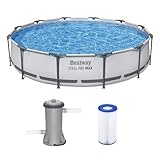
Bestway Steel Pro MAX 12' x 30" Above Ground Swimming Pool Set with Pump | Check Price On Amazon |
|
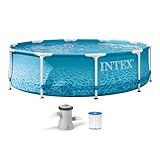
INTEX Beachside Metal Frame 10ft x 30in Round Pool Set w/Pump | Check Price On Amazon |

|
H2OGO! Kids Splash-in-Shade 8-Foot Round Steel Frame Above Ground Pool with Water Mister and Canopy Sunshade, Green Tropical Leaf Print | Check Price On Amazon |
By the Numbers
Vinyl Pool Liner Thickness — What the Data Shows
Sources: Pool & Hot Tub Alliance technical manuals, manufacturer specifications, pool builder surveys
This guide covers every vinyl pool liner thickness option available — 20 mil, 27 mil, 28 mil, 30 mil, and 40 mil — with cost comparisons, durability data, installation considerations, and recommendations for inground pools, above-ground pools, and specific climate conditions.
What Does “Mil” Mean in Vinyl Pool Liner Thickness?
A mil is one-thousandth of an inch (0.001 inch). A 20 mil pool liner is 0.020 inches thick. A 30 mil liner measures 0.030 inches.

- Intelligent Navigation with Full Coverage: Equipped with 11 high-precision sensors and enhanced dual-path algorithms. The optimized WavePath cleaning pattern ensures systematic coverage with minimal overlap, while adaptive navigation analyzes pool layout in real time to eliminate missed spots
- Dual Filtration for Crystal-Clear Water: Advanced dual-layer filtration system features a replaceable 3-micron ultra-fine filter paired with a 180-micron standard filter. Effectively captures fine dust, sand, leaves, and debris for visibly cleaner and healthier pool water
- Comprehensive Pool Cleaning: Engineered to clean the pool floor, walls, waterline, and shallow areas (above 12 inches). The Caterpillar Treads system enhances mobility and climbing ability, ensuring thorough coverage across all pool zones
- Reliable Performance with 2-Year Warranty: Trusted by over 500,000 pool owners worldwide, this robotic pool cleaner delivers consistent, high-performance results. Built for durability and backed by a 2-year warranty and responsive customer support for worry-free ownership
Do not confuse mil with millimeter. One mil equals 0.0254 millimeters. A 30 mil liner is approximately 0.76 millimeters thick, not 30 millimeters. This distinction matters because confusing the two units leads to wildly wrong expectations about liner feel and durability.
Pool liner vinyl is manufactured by calendering — pressing heated PVC compound between massive rollers under controlled pressure and temperature. This happens because PVC resin, plasticizers, and UV inhibitors must be fused into a uniform sheet at the molecular level. The calender gap setting determines the final thickness, with tolerances held to within plus or minus 10 percent of the stated mil rating according to ASTM D1593 standards for vinyl sheeting.
This calendering process only produces consistent thickness when the PVC compound is properly formulated with the right balance of plasticizers. If the plasticizer ratio is too low, the sheet becomes brittle and cracks during folding or installation. The result is seam splits within the first three years of service. Fix it by sourcing liners from manufacturers who certify their plasticizer content and test each production batch for cold-crack resistance at minus 10 degrees Fahrenheit.
Virgin vinyl contains no recycled content and holds its plasticizers longer than reprocessed vinyl. Reprocessed or regrind vinyl loses flexibility faster because the polymer chains break during each heating cycle, reducing the material’s ability to retain plasticizer molecules. For every 10 percent of regrind content in the vinyl sheet, liner lifespan drops by roughly 1 to 2 years according to industry durability testing by major liner manufacturers.
What Vinyl Pool Liner Thickness Options Are Available?
Vinyl pool liners come in thicknesses ranging from 20 mil to 40 mil. The five standard thickness grades are 20 mil, 27 mil, 28 mil, 30 mil, and 40 mil. Each serves a different pool type and budget level.
Twenty mil is the entry-level thickness found almost exclusively in above-ground pool liners and budget inground replacements. Twenty-seven mil and 28 mil are often grouped together as the standard inground thickness — most mid-range liner replacements use one of these two gauges. Thirty mil represents the heavy-duty option for inground pools in harsh climates or pools with high bather loads. Forty mil is the premium commercial-grade thickness, used primarily for public pools, competition pools, and luxury residential installations where maximum longevity is the priority.
Some manufacturers market 25 mil liners as a step between 20 mil and 27 mil. These are less common but available from select brands like Swimline and Blue Wave for above-ground pools. Above-ground pool liners in 25 mil offer a noticeable durability improvement over 20 mil without the cost jump to 27 mil or higher.
20 Mil Vinyl Pool Liners: Budget Option for Above-Ground Pools
Twenty mil liners are the thinnest commonly available pool liners. They are standard equipment on most new above-ground pools and represent the lowest-cost replacement option for both above-ground and inground pools.
These liners typically last 5 to 8 years in an inground pool with proper water chemistry and reasonable bather loads. In above-ground pools with direct sun exposure on the walls, lifespan drops to 4 to 6 years because UV radiation degrades the thin vinyl faster. The primary failure mode is puncture — a 20 mil liner tears at roughly one-third the force required to tear a 30 mil liner when tested under ASTM D882 tensile strength protocols.
Keep a 20 mil above-ground pool liner as a budget-friendly replacement when the existing liner shows fading or minor cracking but the pool structure is in good shape. These liners work best in moderate climates with partial shade and pools used less than four months per year.
27 Mil and 28 Mil Vinyl Pool Liners: The Standard for Inground Pools
Twenty-seven mil and 28 mil are functionally equivalent thickness grades. The difference of one mil (0.001 inch) is within manufacturing tolerance and does not meaningfully affect durability or feel. Most pool builders refer to this category simply as standard inground thickness.
A 27 mil or 28 mil liner lasts 8 to 12 years in a typical residential inground pool with proper care. This thickness provides adequate puncture resistance for normal family use with occasional pool toys and a standard bather load of 4 to 6 people. The vinyl at this thickness has enough body to resist stretching during installation without being so thick that fitting corners and steps becomes difficult.
Latham Pool Products and Loop-Loc are two major manufacturers offering 27 mil inground pool liners with UV inhibitors rated for 10 years of direct sun exposure before significant fading occurs. This thickness category accounts for roughly 60 percent of all inground pool liner replacements according to industry distributor surveys.
30 Mil Vinyl Pool Liners: Heavy-Duty Residential Option
Thirty mil liners are the heavy-duty choice for residential pools. The extra 2 to 3 mils over standard thickness translates to a measurable improvement in tear resistance, puncture resistance, and UV degradation resistance.
These liners last 12 to 15 years under normal residential conditions. In pools with high bather loads — more than 8 swimmers daily during the season — a 30 mil liner resists the stretching and abrasion that causes premature failure in thinner liners. The mechanism is straightforward: thicker vinyl has more polymer chains per square inch to distribute stress, so concentrated force from a dropped pool brush or a dog’s claws spreads over a larger cross-section of material rather than tearing through.
A 30 mil inground vinyl pool liner costs approximately 40 to 60 percent more than the equivalent 27 mil liner for the same pool dimensions. For a typical 16 by 32 foot inground pool, expect to pay $1,800 to $2,500 installed versus $1,200 to $1,800 for 27 mil. The per-year cost over the liner’s lifespan is actually lower with 30 mil because the extra 4 to 7 years of service more than offsets the higher upfront price.
40 Mil Vinyl Pool Liners: Commercial and Luxury Grade
Forty mil is the thickest vinyl pool liner available for residential installation. This thickness is standard for commercial pools, hotel pools, water parks, and competition venues where durability demands exceed typical backyard use.
These liners last 15 to 20 years or more when properly maintained. The 40 mil vinyl resists chemical damage better than thinner grades because the thicker cross-section means surface-level chlorine degradation takes far longer to compromise the structural integrity of the liner. A 40 mil liner can lose 5 mils of thickness to decades of chlorine exposure and still have 35 mils of sound material remaining — more than a brand-new 30 mil liner.
Commercial-grade 40 mil commercial pool liners are manufactured by companies like RenoSys and Natare for public aquatic facilities. For residential pools, the cost premium is substantial — $2,500 to $3,500 or more for a typical inground pool installation. The weight of 40 mil vinyl also makes installation more labor-intensive, adding $300 to $500 in labor costs compared to 30 mil installation.
How Does Liner Thickness Affect Durability and Lifespan?
Liner thickness is the single largest factor in how many years a vinyl liner remains watertight and attractive. A 30 mil liner outlasts a 20 mil liner by 7 to 10 years in the same pool under identical conditions. Thickness affects durability through four primary mechanisms: puncture resistance, UV degradation resistance, chemical resistance, and seam integrity.
Puncture resistance increases non-linearly with thickness. A 20 mil liner punctures under approximately 12 pounds of focused force when tested with a standard probe under ASTM D4833 puncture test conditions. A 30 mil liner requires roughly 28 pounds. A 40 mil liner withstands over 45 pounds. This happens because the force required to tear through a polymer sheet scales with the cross-sectional area of material, and the cross-sectional area increases proportionally with thickness.
UV degradation resistance improves with thickness for a different reason. Vinyl liner formulations include UV inhibitors — typically titanium dioxide and organic UV absorbers — that are blended throughout the material. In a 20 mil liner, UV radiation penetrates through a larger percentage of the total thickness per year of sun exposure. A 30 mil liner has 50 percent more material depth for UV rays to travel through before reaching the underlying polymer, effectively giving the same UV inhibitor concentration a longer effective service life.
This UV protection only works when cyanuric acid levels in the pool stay below 50 ppm. Above 50 ppm CYA, the chlorine becomes so stabilized that it loses effectiveness, and pool owners often compensate by raising chlorine levels. That elevated chlorine concentration accelerates surface degradation of the vinyl regardless of thickness. For more detail on how resurfacing decisions interact with liner choices, see our guide on pool resurfacing costs and how often you need it.
Chemical resistance relates to thickness in a sacrificial manner. The surface of any vinyl liner degrades slowly from continuous exposure to chlorine at 1 to 3 ppm free chlorine. With a thicker liner, more material exists beneath the surface layer to maintain structural integrity. A 20 mil liner that loses 3 mils of surface material to chemical degradation over 8 years has lost 15 percent of its total thickness. A 30 mil liner losing the same 3 mils has lost only 10 percent of its total thickness and retains more strength.
20 Mil vs 27 Mil vs 30 Mil vs 40 Mil: Which Thickness Is Right for Your Pool?
The right thickness depends on your pool type, climate, bather load, and budget. Most residential inground pool owners get the best value from a 27 mil or 28 mil liner. Owners who plan to stay in their home more than 10 years should strongly consider upgrading to 30 mil for the longer service life and lower per-year cost.
Use the table below to match liner thickness to your specific pool situation.
Product Comparison
Vinyl Pool Liner Thickness — Side by Side Comparison
Detailed comparison across the four standard thickness grades for residential pools
| Feature | 20 Mil | 27/28 Mil | 30 Mil | 40 Mil |
|---|---|---|---|---|
| Typical lifespan (inground) | 5-8 years | 8-12 years | 12-15 years | 15-20+ years |
| Puncture resistance | ~12 lbs force | ~20 lbs force | ~28 lbs force | ~45+ lbs force |
| Installed cost (16×32 inground) | $800-$1,200 | $1,200-$1,800 | $1,800-$2,500 | $2,500-$3,500+ |
| Best for | Above-ground pools, budget replacements | Most residential inground pools | High-use pools, harsh climates | Commercial, luxury, permanent homes |
| Cost per year over lifespan | $100-$240 | $100-$225 | $120-$208 | $125-$233 |
| Installation difficulty | Easy | Moderate | Moderate | Difficult, heavier material |
Costs are estimates for a typical 16×32 foot rectangular inground pool with standard depth. Actual costs vary by region, installer, and liner pattern selection.
For above-ground pools, 20 mil is the standard and often the only readily available thickness. Some manufacturers offer 25 mil above-ground liners that provide a meaningful durability improvement. The cost difference between a 20 mil and 25 mil above-ground liner is typically $50 to $150 — a worthwhile upgrade if you plan to keep the pool for more than 3 years. Our guide on how to replace an above-ground pool liner walks through the full process step by step.
What Factors Beyond Thickness Determine How Long a Vinyl Liner Lasts?
Thickness is important but it is not the only variable. Water chemistry, installation quality, ground preparation, and UV exposure all affect liner longevity independently of thickness. A poorly installed 30 mil liner fails sooner than a properly installed 20 mil liner.
Water chemistry is the most controllable factor. Maintaining pH between 7.4 and 7.6, total alkalinity between 80 and 120 ppm, and free chlorine between 1 and 3 ppm prevents the chemical degradation that shortens liner life. When pH drops below 7.0 for extended periods, the acidic water attacks the plasticizers in the vinyl, making the liner brittle and prone to cracking at the seams and corners. Fix it by testing pH weekly with a liquid drop test kit accurate to 0.1 ppm and adding soda ash to raise pH back into range.
Installation quality matters as much as the liner material itself. A liner stretched too tight during installation develops stress concentrations at corners, stairs, and light niches where the vinyl is forced to conform to complex shapes. These stress points become the origin of tears years later. A liner installed with proper vacuum suction behind it conforms evenly to the pool shell without localized over-stretching.
For a detailed breakdown of what a full inground liner replacement involves and what it costs, read our guide on inground pool liner replacement cost and process. The installation steps for any thickness are similar but heavier liners like 30 mil and 40 mil require more manpower to position correctly.
Ground preparation beneath the liner directly affects puncture resistance. A smooth, compacted sand or grout base with no rocks, roots, or debris eliminates the sharp points that concentrate force and puncture even thick liners. A pool liner pad or underlayment fabric adds an additional barrier between the ground and the liner, effectively increasing puncture resistance by distributing point loads across a wider area. This $100 to $200 addition can extend liner life by 2 to 3 years regardless of thickness.
How Much Does Vinyl Pool Liner Thickness Affect the Cost?
Liner thickness drives cost through two channels: the material cost of the liner itself and the labor cost of installation. The material cost increase from 20 mil to 30 mil is typically 40 to 60 percent. The labor increase is smaller — roughly 10 to 20 percent — because the same installation process applies regardless of thickness, though heavier liners take more time and manpower to position.
For a typical 16 by 32 foot rectangular inground pool, the installed cost breakdown by thickness looks like this. Twenty mil runs $800 to $1,200 total installed. Twenty-seven or 28 mil runs $1,200 to $1,800 installed. Thirty mil runs $1,800 to $2,500 installed. Forty mil runs $2,500 to $3,500 installed. These ranges include the liner, coping strips or track, gaskets, faceplates, and professional installation labor. To get a personalized estimate for your specific pool, use our pool liner cost calculator.
The per-year cost calculation often favors thicker liners. A 20 mil liner at $1,000 lasting 6 years costs $167 per year. A 30 mil liner at $2,200 lasting 14 years costs $157 per year. The 30 mil option saves $10 per year in real cost while providing a thicker, more puncture-resistant pool surface the entire time. This calculation assumes you own the pool for the full lifespan of the thicker liner — if you plan to sell the home in 5 years, the upfront savings of a thinner liner may make more financial sense.
How to Choose the Right Liner Thickness for Your Specific Pool
Start by identifying your pool type. Above-ground pools use 20 mil as standard with 25 mil as an available upgrade. Inground pools should use 27 mil or 28 mil as a minimum, with 30 mil recommended for long-term ownership, harsh climates, or high-use pools.
Consider your climate. Pools in southern states with year-round sun exposure and water temperatures above 85 degrees Fahrenheit for 4 or more months per year benefit from 30 mil liners because the combination of UV radiation and warm water accelerates plasticizer loss. Pools in northern climates that are closed and covered for 6 to 8 months per year can use 27 mil liners with less concern because the liner spends half its life protected from UV exposure and heat.
Evaluate your bather load. A family of four using the pool on weekends puts minimal stress on a liner. A household with four children, frequent pool parties, and a dog that swims regularly subjects the liner to far more abrasion, scratching, and impact. In high-use scenarios, stepping up from 27 mil to 30 mil can prevent the premature liner replacement that otherwise occurs at year 7 or 8 instead of year 12 or 13.
Factor in safety equipment that may contact the liner. Pool alarms mounted on doors or pool edges can involve installation near the liner area, and choosing the right equipment matters. See our recommendations for the best pool alarms for doors, surfaces, and wearable use to protect swimmers without damaging your liner.
Factor in your ownership timeline. If you plan to stay in your home for 10 or more years, the 30 mil liner costs less per year than the 27 mil option. If you plan to sell within 5 years, the thinner liner reduces your upfront cost without affecting resale value because most homebuyers cannot distinguish a 27 mil liner from a 30 mil liner and will not adjust their offer based on liner thickness.
Quick Reference
Vinyl Pool Liner — Key Terms Explained
Quick reference for the terms used throughout this guide
— One-thousandth of an inch (0.001 inch). A 30 mil liner is 0.030 inches thick. Not to be confused with millimeter.
— Vinyl made from new, non-recycled PVC resin. Retains plasticizers longer than reprocessed vinyl and resists cracking better.
— Chemical additives that give vinyl its flexibility. Phthalate-based plasticizers are most common. Plasticizer loss causes vinyl to become brittle.
— The manufacturing process that presses heated PVC compound between rollers to create uniform sheets of controlled thickness.
— Compounds like titanium dioxide blended into vinyl to absorb or reflect ultraviolet radiation, slowing UV degradation of the liner.
— The track or channel at the top of the pool wall that holds the liner bead in place. Available in aluminum or plastic.
— A measure of how well vinyl remains flexible at low temperatures. Tested at minus 10 degrees Fahrenheit per ASTM standards.
— A geotextile fabric placed between the ground and the liner to prevent punctures from rocks, roots, and rough spots on the pool floor.
— Vinyl made partially from recycled material. Loses plasticizers faster than virgin vinyl due to broken polymer chains from previous heating cycles.
— The grooved track that accepts the liner bead during installation. Must be clean and undamaged for a secure liner fit.
Common Myths About Vinyl Pool Liner Thickness
Several persistent myths about vinyl liner thickness lead pool owners to make decisions based on incorrect information. Understanding what thickness can and cannot do prevents spending money on features that do not deliver the expected benefit.
Myth vs Fact
Vinyl Pool Liner Thickness — Common Myths Debunked
Separating fact from fiction on the most common liner thickness misconceptions
✗ Myth
A thicker liner eliminates the need for a liner pad or underlayment.
✓ Fact
Even a 40 mil liner can be punctured by a sharp rock concentrated over a small area. A liner pad distributes point loads across a wider surface, reducing puncture risk by roughly 60 percent regardless of liner thickness. Use both for maximum protection.
✗ Myth
All 30 mil liners are the same quality regardless of manufacturer.
✓ Fact
Thickness is only one quality metric. Plasticizer type and concentration, UV inhibitor loading, and the percentage of virgin versus regrind vinyl all vary between manufacturers. A 30 mil liner from a premium manufacturer using 100 percent virgin vinyl and high-grade UV inhibitors will outlast a 30 mil budget liner by 3 to 5 years.
✗ Myth
A 30 mil liner feels noticeably thicker underfoot than a 20 mil liner.
✓ Fact
The difference between 0.020 inches and 0.030 inches is imperceptible to human touch underwater. Both thicknesses feel smooth and flexible underfoot. The durability difference is real but the tactile difference is not something a swimmer can detect.
✗ Myth
Above-ground pools cannot use liners thicker than 20 mil.
✓ Fact
Above-ground pools can use 25 mil and sometimes 27 mil liners. The limitation is typically availability, not compatibility. Most above-ground liner patterns are only manufactured in 20 mil because that is the volume product. Specialty retailers can source thicker above-ground liners for pools with unusual dimensions or high sun exposure.
✗ Myth
A thicker liner compensates for poor water chemistry maintenance.
✓ Fact
No liner thickness can withstand chronic low pH below 7.0 or sustained chlorine above 5 ppm without accelerated degradation. Chemical damage affects the surface layer regardless of how much material sits beneath it. A 40 mil liner in poorly maintained water fails faster than a 20 mil liner in perfectly balanced water.
Vinyl Liner Thickness and Installation: What You Need to Know
Installation complexity increases with liner thickness. A 20 mil liner is lightweight and flexible, making it relatively easy for two people to position and fit. A 40 mil liner is substantially heavier and stiffer, requiring three or four people and more careful handling to avoid creasing the material before it is set.
The vacuum fitting process — where a vacuum pump removes air from behind the liner to pull it tight against the pool walls — works the same for all thicknesses. Thicker liners require slightly more vacuum suction to conform fully to corners and steps because the stiffer material resists bending. Professional installers using a pool liner vacuum pump rated at 2 to 3 CFM can install any thickness successfully with the right technique.
Seam construction varies by thickness. Thicker liners use wider heat-welded seams with more material overlap because the additional thickness provides more surface area for the weld to bond. A properly welded seam on a 30 mil liner is actually stronger relative to the surrounding material than a seam on a 20 mil liner because the weld penetration depth is greater relative to total thickness.
Measure your pool with a 100-foot measuring tape designed for pool dimensioning before ordering any liner. Once you have your measurements, our pool surface area calculator can help you verify the total square footage needed for the liner. Measurement errors cause more installation problems than thickness mismatches. A liner that is two inches too short in one dimension will be overstretched at installation and fail years early regardless of whether it is 20 mil or 40 mil.
How Long Does a 20 Mil Pool Liner Last Compared to a 30 Mil Liner?
A 20 mil pool liner in an inground pool lasts 5 to 8 years under normal residential conditions. A 30 mil liner in the same pool lasts 12 to 15 years. The 30 mil liner provides roughly double the service life for approximately 50 to 60 percent more upfront cost. This makes the 30 mil option more economical over the full ownership period for homeowners who stay in the property long enough to realize the extended lifespan.
In above-ground pools, 20 mil liners typically last 5 to 10 years depending on sun exposure and usage. Above-ground pool walls are exposed to UV radiation on the exterior, which accelerates vinyl degradation from both sides compared to inground pools where the back of the liner is protected by the pool shell. A 25 mil above-ground liner adds approximately 2 to 3 years to this lifespan for a modest price increase.
Can You Use a 40 Mil Pool Liner in a Residential Pool?
Yes, you can install a 40 mil liner in any residential inground pool. The liner track or coping system that holds the liner bead is the same for all thicknesses because the bead itself is standardized at approximately 0.080 to 0.100 inches regardless of the sheet thickness behind it. The bead is the folded-over edge that locks into the coping track, and it is purpose-formed during manufacturing to fit standard track dimensions.
The practical considerations for 40 mil liners are cost and weight. The material cost is significantly higher than 30 mil, and the heavier sheet requires more labor for positioning during installation. For most residential pools, 30 mil represents the sweet spot between durability and cost. Forty mil makes sense for pools with unusually high usage patterns — daily swimming by a large family, year-round operation in warm climates, or pools used for exercise and training where constant water agitation accelerates chemical off-gassing at the surface.
What Is the Best Thickness for an Above-Ground Pool Liner?
Twenty mil is the standard thickness for above-ground pool liners and works well for most situations. For above-ground pools in full sun or pools used more than five months per year, a 25 mil liner provides a noticeable durability upgrade for an additional $50 to $150. The thicker material resists UV degradation better and is less prone to puncture from pool vacuum heads and cleaning tools.
Above-ground pool owners planning to keep their pool for more than five years should consider 25 mil if their pool dimensions allow it. Not all above-ground pool sizes are available in 25 mil — check with the liner manufacturer before committing to a thickness upgrade. The most common above-ground pool sizes like 24-foot round and 15 by 30 foot oval are typically available in both 20 mil and 25 mil options.
Does a Thicker Pool Liner Prevent Wrinkles?
No, liner thickness does not prevent wrinkles. Wrinkles form when a liner is not properly stretched and fitted during installation or when groundwater pressure pushes the liner upward from below. A thicker liner is actually slightly more prone to wrinkling during installation because the stiffer material does not drape and conform as easily as thin vinyl.
Wrinkle prevention depends entirely on installation technique and site conditions. Proper vacuum fitting during installation, a smooth and compacted base material, and effective groundwater drainage around the pool shell prevent wrinkles regardless of liner thickness. If wrinkles appear after installation, the cause is almost always installation error or groundwater, not the liner thickness specification.
How Much More Does a 30 Mil Liner Cost Than a 20 Mil Liner?
A 30 mil liner costs approximately 50 to 80 percent more than a 20 mil liner for the same pool dimensions. For a typical 16 by 32 foot inground pool, the installed cost difference is roughly $800 to $1,300. The material cost accounts for about 70 percent of this difference, with the remaining 30 percent coming from increased labor time for handling the heavier material.
Over a 14-year lifespan, the 30 mil liner at $2,200 costs approximately $157 per year. A 20 mil liner at $1,000 lasting 6 years costs $167 per year, plus the inconvenience and cost of a second replacement at year 6 or 7. The true cost comparison should include two 20 mil replacements against one 30 mil replacement over a 12 to 14 year period, at which point the 30 mil liner saves $400 to $600 in total ownership cost.
Is a 27 Mil Liner the Same as a 28 Mil Liner?
Yes, 27 mil and 28 mil liners are functionally identical. The 1 mil difference (0.001 inch) falls within standard manufacturing tolerances for vinyl sheet production. Manufacturers label their products as either 27 mil or 28 mil based on their specific calender settings and marketing preferences rather than any meaningful performance difference.
When comparing liners between brands, treat 27 mil and 28 mil as the same thickness category. Base your comparison on other factors: virgin vinyl content, UV inhibitor package, pattern selection, warranty length, and price. The distinction between 27 mil and 28 mil should not influence your purchase decision.
What Happens If I Choose the Wrong Liner Thickness?
Choosing a liner that is too thin for your pool’s conditions results in premature failure. A 20 mil liner in a high-use inground pool in full sun may fail in 3 to 4 years instead of the expected 5 to 8. The failure typically presents as small punctures around steps and corners, seam separation, or large tears that develop from minor impact damage that a thicker liner would have survived.
Choosing a liner that is thicker than necessary has no downside beyond the higher upfront cost. A 40 mil liner in a pool that would function perfectly with 27 mil will not cause any problems related to fit, feel, or water chemistry. The only penalty is financial — you paid for durability you did not need. If the extra cost fits your budget, the worst outcome is that your liner lasts 20 years instead of 12.
How Do I Know What Thickness My Current Pool Liner Is?
Check the original documentation from your pool builder or the liner manufacturer. The specification sheet for your liner lists the thickness in mil. If documentation is not available, examine a small sample of the liner material at a return fitting or skimmer faceplate opening where the vinyl edge is visible.
Use a digital thickness gauge calibrated in mils to measure the liner edge directly. Most liners lose 1 to 3 mils of thickness over their service life due to surface wear and plasticizer loss, so a current measurement of 25 mil likely indicates an original 27 or 28 mil liner. A measurement below 17 mil on a liner that was originally 20 mil indicates the liner is near end of life and should be scheduled for replacement.
Does Liner Thickness Affect How the Pool Water Feels or Looks?
No, liner thickness has no perceptible effect on water feel, appearance, or swimming experience. The water chemistry, filtration quality, and surface smoothness determine how the water feels. Liner thickness affects only durability and longevity.
The color and pattern of the liner affect the water’s appearance far more than thickness. A light blue liner makes water look bright and tropical regardless of whether the vinyl is 20 mil or 40 mil. A dark blue or charcoal liner creates a deeper, more reflective water appearance. Choose thickness for durability and choose pattern for aesthetics — these decisions operate independently.
Buying Guide
Before You Buy — Vinyl Pool Liner Checklist
Check off each point before making your liner purchase decision.
Can I Patch a Thick Vinyl Pool Liner the Same Way as a Thin One?
Yes, vinyl liner patching works identically across all thicknesses. The patch material adheres to the surface of the liner regardless of how thick the liner is beneath. Use a vinyl pool liner patch kit rated for underwater application with the same vinyl composition as your liner to ensure proper bonding.
The key to a successful patch is surface preparation, not liner thickness. Clean the area thoroughly, cut the patch with rounded corners to prevent peeling, apply adhesive to both surfaces, and hold firm pressure for the full cure time specified by the patch kit manufacturer. A properly applied patch on a 40 mil liner lasts as long as a properly applied patch on a 20 mil liner.
Why Does My Pool Builder Recommend a Specific Thickness?
Pool builders recommend specific thicknesses based on their experience with warranty claims and long-term performance in your local climate. Builders in southern states with intense UV exposure typically recommend 28 mil or 30 mil minimum because they have seen thinner liners fail prematurely in those conditions. Builders in northern climates may feel comfortable recommending 27 mil because UV exposure is lower and pools are covered for half the year.
Builders also factor in their relationship with specific liner manufacturers. Some builders have exclusive relationships with manufacturers like Latham, Loop-Loc, or GLI and recommend the thickness options those manufacturers offer in the patterns their customers prefer. Ask your builder to explain the specific reasons for their thickness recommendation rather than accepting it without context.
Vinyl pool liner thickness is the specification that determines whether your pool surface lasts five years or fifteen years. A 27 mil or 28 mil liner is the right choice for most residential inground pools, providing 8 to 12 years of service at a mid-range installed cost of $1,200 to $1,800 for a typical pool. A 30 mil liner is the upgrade worth making if you plan to own your pool for more than a decade, delivering 12 to 15 years of durability at a lower cost per year than thinner options.
For above-ground pools, 20 mil remains the standard, with 25 mil offering a meaningful improvement in UV resistance and puncture protection for a modest additional cost. Choose your liner thickness based on how long you plan to own the pool, how much sun exposure the pool receives, and how heavily the pool is used. Pair the right thickness with proper water chemistry and quality installation to get every year of service your liner can deliver.
| Photo | Best Above-Ground Pools | Price |
|---|---|---|
|
|
Bestway Steel Pro MAX 12' x 30" Above Ground Swimming Pool Set with Pump | Check Price On Amazon |
|
|
INTEX Beachside Metal Frame 10ft x 30in Round Pool Set w/Pump | Check Price On Amazon |
|
|
H2OGO! Kids Splash-in-Shade 8-Foot Round Steel Frame Above Ground Pool with Water Mister and Canopy Sunshade, Green Tropical Leaf Print | Check Price On Amazon |